Artisan's AI SDR: What the Pricing Page Publishes
Artisan prices its AI SDR in contacts per month rather than in currency. That substitution tells you what the company thinks it is selling, and where the risk sits.

For an enterprise buyer, Artisan's pricing page lists SOC 2 Type II certification, SSO and SAML, and audit logs, but no price: plans are sized on lead volume, mailboxes and dialer seats, around 2,500 or 6,000 leads contacted a month. It publishes no figure for the meetings Ava books.
Key takeaways
- Artisan's pricing page shows volume, not price: about 2,500 leads contacted a month on Team, about 6,000 on Scale, custom on Enterprise, each marked "Pricing scoped on your plan".
- The security claims an enterprise review asks for are on the pricing page: SOC 2 Type II, SSO and SAML, audit logs, with advanced controls on Enterprise.
- The 250M+ verified B2B contacts are included on every plan rather than sold as credits; price moves with lead volume, mailboxes and dialer seats.
- No meetings figure is published. Estimate it from your own reply, interest and booking rates applied to the contracted volume, and pilot before scaling.
Reviewed and updated September 19, 2026
Evaluated for an enterprise buyer, Artisan's AI SDR clears the security basics on its own pricing page and leaves the commercial questions to a sales call. The page lists SOC 2 Type II certification, SSO and SAML, and audit logs, with advanced security controls on Enterprise; it publishes no price, sizing plans on lead volume, mailboxes and dialer seats; and it publishes no figure for how many meetings Ava books. Artisan is also not Alta, a separate AI sales company that searches sometimes merge with it.
Artisan's pricing page does not contain a price. What it contains instead is a pair of volume numbers: roughly 2,500 leads contacted per month on the entry tier, roughly 6,000 on the tier above it, and a third tier described only as custom. Where a figure would normally sit, the page says "Pricing scoped on your plan" and offers a link to talk to sales.
That is worth pausing on rather than complaining about, because the substitution tells you what the company thinks it is selling. The unit of the deal is contact volume, and everything else about the commercial arrangement is settled in a conversation.
A disclosure before going further. RevenueFlow runs outbound as a service and is paid on attended qualified meetings, so we compete for budget with tools like this one, though not in the same shape. Everything below comes from Artisan's own pages as they rendered on 13 August 2026, re-read for this update.
Artisan AI Inc., the name in its site footer, lists offices in San Francisco and New York on its About page, and its flagship product is the AI BDR agent described below. The pricing question on this page is the one its own pages decline to answer.
Artisan's own pages call the product a set of AI employees rather than software, with Ava presented as an AI BDR that takes over a job rather than a tool a rep operates, and that framing is a statement about how the vendor expects the purchase to be justified internally.
For context behind the quote-only pricing, and for a buyer weighing it against Alta, the company searches pair it with, Artisan's own blog announced a $25M Series A on 9 April 2025, led by Glade Brook Capital with participation from HubSpot Ventures and others.
Evaluating Artisan for an Enterprise Buyer: Security and Procurement
An enterprise review asks the same handful of questions of every vendor, and Artisan's pages answer some of them directly. The certification, identity and logging claims are on the pricing page itself. The site footer links a DPA and a trust center; the trust center answered this site's reads with a browser challenge, so its contents are not described here, and a buyer should request the SOC 2 report and the subprocessor list through it or through sales.
| Question | What Artisan's pages say |
|---|---|
| Price | "Pricing scoped on your plan" on every tier |
| What moves the price | Lead volume, mailboxes and dialer seats |
| Security certification | SOC 2 Type II certified |
| Identity and logging | SSO / SAML and audit logs; advanced controls on Enterprise |
| Data processing terms | A DPA and a trust center linked in the site footer |
| Contact database | 250M+ verified B2B contacts, included on every plan |
| Whose name and domain send | Your reps' names, your own sending domains |
| Meetings per month | No figure published |
The one line in that table that changes the legal review is the last but one. Ava sends in your reps' names from your own domains, so your organisation is the sender of record for everything the agent writes, and the approval and logging controls are what let you show who authorised what.
How many meetings can Ava book a month?
Artisan does not say, and nobody outside a pilot on your own list can say it honestly either. The pricing page counts leads contacted, around 2,500 a month on Team and 6,000 on Scale, and the meetings that volume produces depend on rates that belong to your market and your message rather than to the software. The honest estimate is arithmetic on your own numbers, and a vendor case study is not a substitute for them.
How does Artisan price its contact database?
It does not price it separately. The pricing page lists 250M+ verified B2B contacts among the things every plan includes, alongside every campaign type and CRM sync, and the FAQ says plans are sized on lead volume, mailboxes and dialer seats. The database is bundled into the volume you buy rather than metered as credits.
What Artisan sells
Artisan sells an AI sales agent called Ava, which the site describes as an AI BDR. The published pitch is that Ava finds prospects, writes and sends outreach across email and social, handles replies autonomously and books meetings, with human reps stepping in for the live conversations and the calls.
The pricing page organises this into three tiers.
Some concrete things are published across all tiers and are worth having. The platform claims access to more than 250 million verified B2B contacts. It states SOC 2 Type II certification with SSO and SAML support and audit logs, which is the specific set of words an enterprise security review will ask for. An AI dialer is offered as a per-seat add-on. The FAQ says plans are sized on lead volume, mailboxes and dialer seats, which is the closest the page comes to naming its pricing variables.
Volume is an input, not an outcome
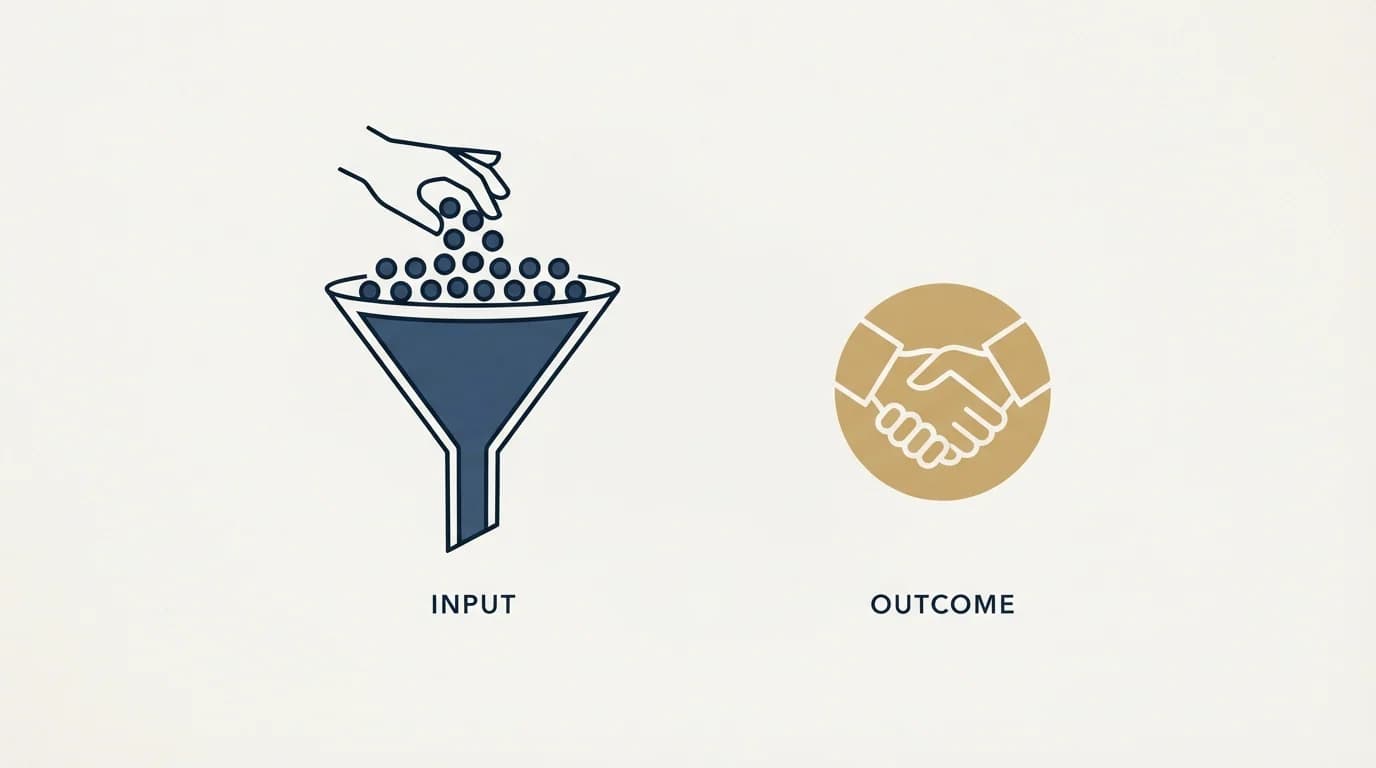
The two headline numbers count people contacted. They do not count replies, meetings or anything a sales leader is measured on, and no published figure on the page bridges that gap.
This matters more for an AI SDR than for a human one, because contact volume is the one thing this category can scale without limit and the one thing that carries the most risk when it goes wrong. Six thousand contacts a month is a substantial sending programme. Whether it produces a good quarter or a burnt domain depends on targeting, on message quality and on how the sending is spread, and those are decisions rather than throughput.
Artisan's own page is unusually direct about where that risk lands. It states that Ava sends in your reps' names, from your own sending domains. That is the right architecture for making the outreach read as human, and it also means the deliverability consequences of the volume accrue to your domains rather than to the vendor's. Anyone evaluating a tool in this category should read that sentence twice, because the same sentence appears in some form on most of them and it is where the liability sits.
The control surface is published too, and it is better than average. The FAQ describes approving messages before they send, locking tone and calls to action, setting banned phrases, and coaching the writing. The page summarises the posture as autonomous by default and adjustable by design. A buyer who intends to use the approval step should confirm that it survives at 6,000 contacts a month, because manual approval and autonomous volume pull in opposite directions and only one of them is the product's default.
What you cannot work out from the page
Three things a buyer needs are not published anywhere on it.
The first is any price at all, so no comparison against a human SDR's fully loaded cost, against an agency retainer, or against a rival tool can be made from public information. The vendor comparison pages the site links, against 11x and against AiSDR, do not resolve this either, since a comparison written by one party is positioning rather than evidence.
The second is what happens to the volume allowance you do not use, or what happens when you exceed it. A number written with a tilde is a sizing guide, and whether it behaves as a cap, a target or a billing threshold is a contract question.
The third is the mailbox count behind the volume. The FAQ names mailboxes as a pricing variable without saying how many the tiers assume, and mailbox count is what determines whether a given monthly volume is sent gently or aggressively. Two programmes sending that monthly volume from very different numbers of inboxes are not running the same risk.
There is a fourth thing, and it is the one that decides whether the purchase works. Nothing on the page defines what a booked meeting has to be in order to count. That is not a criticism of Artisan specifically, since a software vendor is selling capability rather than outcomes and has no business defining your qualification bar. It is a warning about how the buying decision is usually framed. A team that compares an AI SDR against an agency or against a hire is comparing a tool that produces activity against services that produce meetings, and the comparison only means something once somebody has written down what a meeting worth having looks like. Do that first, then price the options against it.
A related limitation appears on the human side of the org chart, where SDR compensation plan definitions decide whether reps chase calendar entries or real conversations.
Reading it against the human alternative
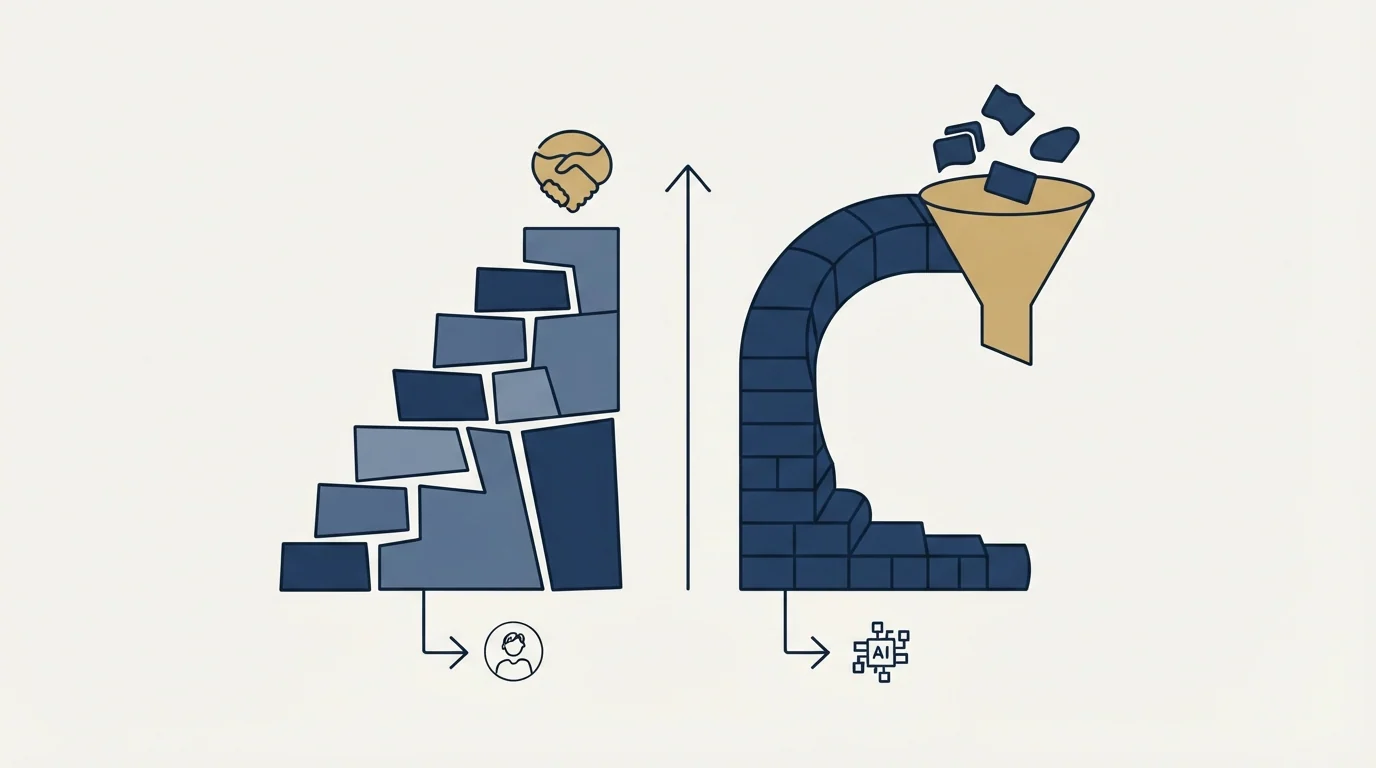
The reason the missing price is so awkward is that everyone evaluating this category is implicitly running one calculation: is this cheaper than a person. That calculation is harder than it looks in both directions.
On the tool side, the visible subscription is not the whole cost. Sending infrastructure, the mailboxes the FAQ names as a pricing variable, the domains they run on, and the time somebody spends steering the thing all sit on top of it, and the last of those is routinely assumed to be zero and is not. On the human side, a fully loaded SDR is considerably more than a salary once employer costs, tooling, management time and the ramp period before they are productive are counted, and any honest comparison has to build that number from the buyer's own market rather than from a benchmark found online.
What the tool genuinely changes is the shape of the risk rather than only its size. A hire is a slow, expensive commitment that fails slowly and visibly. A volume-priced agent is a fast, reversible commitment that can fail quickly and quietly by contacting several thousand of the wrong people in your own name before anyone reads the replies. Neither of those is worse in the abstract. They ask for different things from whoever is supervising, and the second one asks for more attention in the first month than most buyers plan for.
Where we differ from standard practice
Much of the advice on this page reflects how outbound is commonly run. We run it differently, and since this page sits on our site it is worth saying where the difference is and what it costs us.
Standard practice: a sequence
- A sequence of messages to each prospect over several weeks
- Later messages often land in the same email thread
- Every contact is reached more than once, so a distracted reader gets another chance
- The later messages go only to people who did not answer the first
- Reputation cost accrues on the sending domain across everything else it sends
What we do: one message per campaign
- One message, then that campaign is finished for that contact
- No thread replies and no bumps
- A non-responding audience becomes a new campaign with a genuinely different premise, not a reminder
- More of the work moves into targeting and into the one message
- We reach each contact less often, and that is the cost we accept
The reasoning is mechanical rather than moral. A follow-up arrives underneath a message the recipient has already seen and chosen not to answer, so it is delivered to the population most likely to mark it as spam, and the reputation cost of that lands on the sending domain across every campaign running on it. We set that cost against the replies a sequence recovers and decided the trade was not worth it. The full argument, with the numbers from our own campaigns, is in why we stopped using follow-ups.
The relevance to this category is direct. A tool sold on contact volume has every incentive to make the volume easy to consume, and the cheapest way to consume it is to reach the same people more often. Whichever tool you buy, decide that question deliberately rather than letting the default decide it, and know which domains absorb the consequence.
Who it suits

The model fits a team that already has a working motion and wants to widen it without hiring, has somebody who will own the output rather than assuming the software owns it, and is buying into a security posture the published certifications actually satisfy. The Enterprise tier's forward-deployed strategist is a real acknowledgement that the software alone does not close the gap, and that is more honest than the category's usual framing.
It fits less well if you are buying it to avoid deciding who your buyer is. Every AI SDR is a machine for executing a hypothesis faster, so a weak hypothesis arrives at more people sooner. It also fits less well if you need a published price to build a business case before you can justify a sales call, because there is not one to build on.
If you are working out where these tools sit against people and agencies, we have written up the category in AI SDR, the job boundaries in SDR vs AI SDR vs GTM engineer, and what the agents do well and badly in AI sales agent. For the human comparison, outsourced SDR pricing has the numbers. Our own terms are on the free campaign page.
Pricing and features verified as of mid-2026. Verify current terms with the vendor before relying on them.
Frequently asked questions.
Frequently asked questions- How does Artisan hold up on security and procurement?
- Its pricing page lists SOC 2 Type II certification, SSO and SAML, and audit logs, with advanced security controls on the Enterprise tier, and its footer links a DPA and a trust center. The commercial side is quote-only. Ask for the SOC 2 report, the subprocessor list and a written price broken down by volume, mailboxes and seats.
- How many meetings can Artisan's Ava book per month?
- Artisan publishes no meetings figure. Its pricing page counts leads contacted, about 2,500 a month on Team and 6,000 on Scale. Meetings depend on your reply rate, the share of replies that show interest and the share that book and attend, so estimate them from your own campaign history and confirm with a pilot on your own list.
- How does Artisan price access to its contact database?
- It does not price the database separately. The pricing page lists 250M+ verified B2B contacts among the things every plan includes, and its FAQ says plans are sized on lead volume, mailboxes and dialer seats. The data is bundled into the contact volume you buy rather than metered as credits.
- How much does Artisan cost?
- The pricing page does not say. Every tier reads "Pricing scoped on your plan" with a link to talk to sales, and the FAQ names lead volume, mailboxes and dialer seats as the variables. The AI dialer is a per-seat add-on. Any comparison with a hire, an agency or another tool starts from a written quote.
About the author.

B2B cold email experts helping companies generate qualified leads through done-for-you outreach campaigns.
RevenueFlow Team
Explore more.
Ready to scale your outreach?
We build GTM engines that book real meetings. See the receipts.
Related articles.
Inbound vs Outbound Sales: How the Two Motions Differ
Inbound and outbound sales compared as motions: what the rep knows at first touch, what each costs, the team each needs, and the metrics that belong to each.
Readymode Pricing: The Seat Is Dear for What Is Inside It
Readymode publishes $199 and $249 per licence per month, near the top of the dialer range. What the seat includes that others bill separately, and when that pays.
PhoneBurner Pricing: What the Seat Price Covers
PhoneBurner publishes all three seat prices in both billing states. The metered resource is contact imports, not minutes, and the spam layer is an add-on at every tier.
Multi-Threading in Sales: Who the Second Contact Should Be
Six contacts on an opportunity and one real relationship is still single-threaded. Which second person to add, when to ask, and how to tell whether it worked.
Koncert Dialers: Line Counts Published, Price Is Not
Koncert publishes the parallel line ceiling on every tier, which most of this category will not. It publishes no price. What its pages state, and what the quote decides.
Sales Productivity: Four Different Ratios Wear the Same Name
Sales productivity names four ratios that share no denominator, and improving one can move another the wrong way. The version you mean decides what happens next.