SDR Comp Plans: The Definition You Are Really Paying For
An SDR comp plan is three numbers and one definition, and the definition decides the rest. What to pay on, how to write acceptance, and what a bad month is made of.
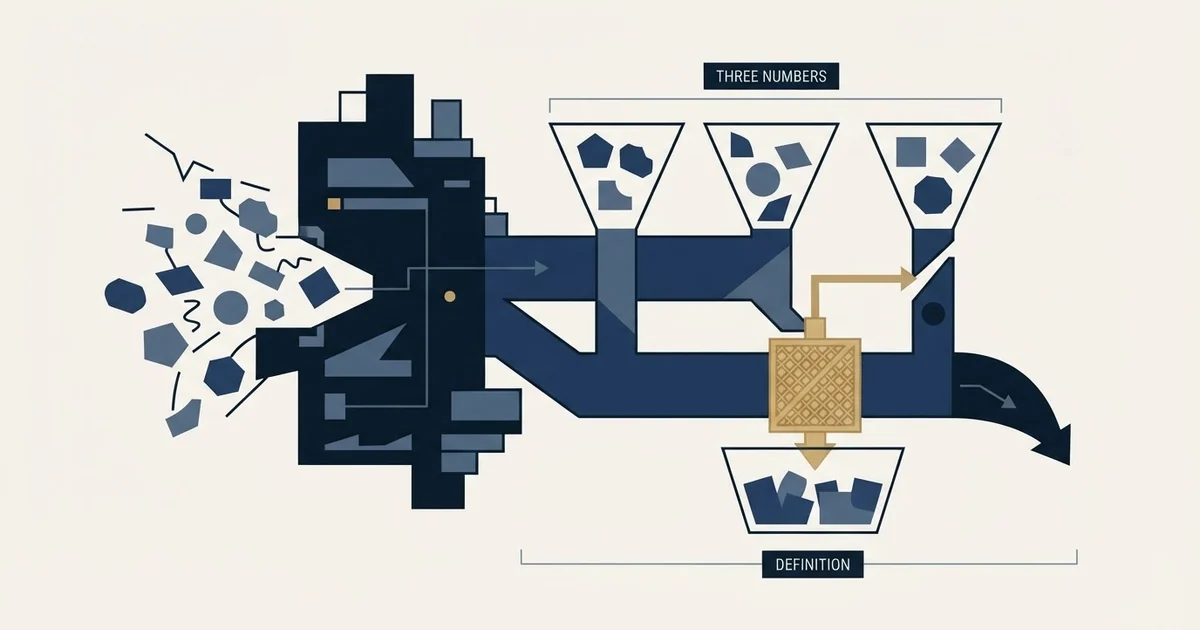
An SDR compensation plan sets a base, a variable, a quota and the unit those are counted in. The unit does most of the work: bookings pay for calendar entries, accepted meetings pay for conversations a seller will keep. Write the acceptance criteria before the quarter, with a decision window and a list of invalid reasons.
Key takeaways
- The unit you pay on decides behaviour more than the base, the variable and the quota combined.
- If you pay on accepted meetings, the acceptance definition is the plan and everything else is arithmetic.
- Rejection needs a stated window, or the right to reject becomes a way to defer paying.
- Budget, timing and authority are facts about the prospect, so they are not valid grounds for rejection.
Reviewed and updated August 28, 2026
An SDR finishes the quarter over quota and gets paid in full. In the same week the account executives they feed tell their manager that several of those meetings were not worth holding: wrong company size, wrong person, someone who agreed to a call to end a conversation. Both statements are true, nobody has cheated, and the plan produced exactly the behaviour it was written to produce.
That gap is what an SDR compensation plan is really about. The money questions get all the attention, and they are the easy half. The hard half is one definition, and a plan that leaves it unwritten will pay out on it anyway.
The plan is three numbers and one definition
Every SDR plan, however it is dressed, contains four things.
A base salary, paid whatever happens. A variable component, paid against performance. A quota, which is the performance the variable is measured against. And a unit, which is the thing being counted.
The first three are negotiated openly and revised annually. The fourth is usually inherited from whatever the CRM happened to make easy to report, and it decides more about the outcome than the other three combined, because it is what the rep will optimise. A quota of sixteen is meaningless until somebody says sixteen of what, and answers it in a way two people would apply identically.
The rest of this page is mostly about the unit, then about the three numbers, then about the exceptions that decide what a bad month looks like.
What to pay on, and what each choice buys
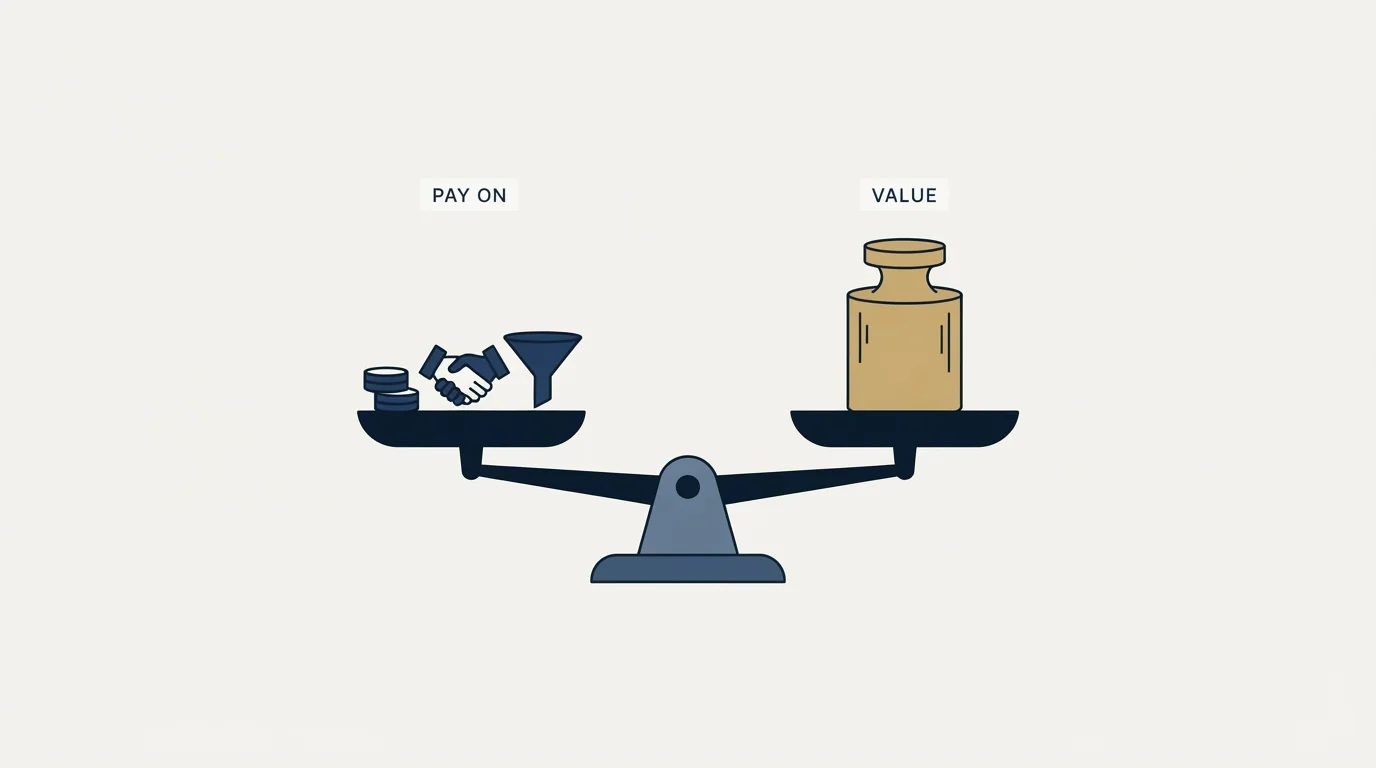
There are five candidate units, and they sit on a spectrum from easy to count and easy to game, through to hard to count and hard to game.
Meetings booked. A calendar invite exists. Cheap to measure, immediate, and the version most new plans start on. It pays for a booking rather than for a conversation, which means it pays identically for a qualified prospect and for somebody who accepted an invitation to stop being emailed.
Meetings held. The prospect turned up. This removes the pure no-show, which is a real improvement for one line of plan text, and it removes nothing else. A held meeting with the wrong person is still a held meeting.
Meetings accepted. The receiving seller confirmed, against written criteria, that the meeting met them. This is the unit that closes the gap in the opening scene, and it is the one that causes arguments, because it makes one person's pay depend on another person's judgement.
Opportunities created. A qualified opportunity exists in the pipeline. Further from the SDR's control, closer to the thing the business wants, and it introduces a lag between the work and the payment that a monthly plan handles badly.
Closed revenue. Furthest from control, longest lag, and it pays an SDR for an AE's quarter. It appears in plans as a small kicker rather than as a primary, and that is the right size for it.
- Rewards volume of calendar entries
- Fast to measure and pay
- Invites meetings that exist to be counted
- Held removes the no-show and nothing else
- Right only where the list is genuinely narrow
- Rewards a meeting the seller will keep
- Requires written criteria and a decision window
- Makes one person's pay depend on another's judgement
- Fails when the criteria are unwritten or moved
- The unit most plans should use
- Rewards work that becomes pipeline
- Hardest to game and hardest to control
- Introduces a lag a monthly plan handles badly
- Pays the SDR for the closer's quarter
- Right as a kicker, wrong as the primary
The choice is not really about fairness. It is about which failure you would rather have, because each unit has one. Pay on bookings and you will get bookings. Pay on accepted meetings and you will get a monthly argument about acceptance. Pay on revenue and you will get an SDR who cannot tell from their own week whether they are doing well.
The acceptance definition is the plan
A buyer asking what the commission per qualified meeting is has already found the only number that matters, because the rate is meaningless until the acceptance definition underneath it is written down and agreed.
If the unit is an accepted meeting, then the definition of acceptance is the compensation plan, and everything else is arithmetic on top of it.
Written down before the quarter starts, it is a contract. Written down after the first dispute, it is a negotiation the SDR will lose. Left unwritten, it becomes whatever the receiving seller believed at the moment they were asked, which varies by seller, by mood and by how full their calendar is.
A definition that survives contact with a real dispute has four properties. It is written, in the plan document rather than in somebody's memory of a kickoff. It is testable by a third party, so that a manager who was not on the call can rule on it. It has a decision window, after which an unflagged meeting counts, because an open-ended right of rejection is a right to defer paying. And it names what is not a reason, which is the half that gets left out.
That last one matters most. A meeting is a conversation with the right person at a fitting company, not a good outcome. "They were not engaged", "it went nowhere" and "they did not buy" are judgements about the meeting's result, and paying an SDR on results they do not control is a different plan wearing the acceptance plan's clothes. Budget, timing and authority belong in the same category: they are facts about the prospect's situation that an SDR cannot manufacture and frequently cannot discover before a call.
Our own commercial arrangement takes exactly this position, which is why it is worth stating as a documented practice rather than as advice. We are paid on attended meetings that meet criteria agreed with the client in writing before anything sends, with budget, timing and authority deliberately outside the definition, and with a stated window in which a meeting can be flagged. An internal SDR plan is the same instrument with the client replaced by an account executive. The full version of what qualified has to mean when money depends on it is in qualified appointment.
The three numbers

With the unit settled, the money is comparatively simple.
Pay mix is the split between base and variable. An SDR's mix belongs closer to the base end than a closer's does, and the reason is structural rather than generous: the SDR controls activity and message quality, and does not control the list, the offer, the territory or whether the market is buying this month. Paying a large variable against a small span of control produces income volatility that reflects the market rather than the work, and the observable consequence is turnover in a role where ramp is already expensive. The mechanics of how a mix and a quota combine into a promise are in OTE in sales.
Quota is where a plan becomes real or fictional. Derive it from your own numbers rather than from a benchmark: what the current list, the current message and the current headcount actually produced last quarter, adjusted for one thing you are deliberately changing. A quota set from somebody else's published figure is a quota set from somebody else's list quality, and list quality is most of the variance. Which of those numbers an SDR genuinely controls, and which of them measure the list they were handed, is worked through in SDR metrics.
Rate falls out of the first two once the quota is set. Target earnings divided by target units gives the per-unit rate at plan, and that number is worth computing even when the plan pays in tiers, because it is the figure a rep will do arithmetic with on a Tuesday afternoon.
- Step 1Define the unit
Name what is being counted, in writing, testable by somebody who was not there.
- Step 2Set the quota from your own history
What this list and this message produced, adjusted for one deliberate change.
- Step 3Choose the pay mix
Base-weighted for a role with a narrow span of control. Volatility that reflects the market is not motivation.
- Step 4Derive the rate
Target earnings over target units. Compute it even for a tiered plan, because the rep will.
- Step 5Write the exceptions
No-shows, rejected meetings, ramp, leave, and what happens when the list runs out.
Accelerators, clawbacks and the exceptions that decide a bad month
An accelerator raises the rate above a threshold, usually plan. It is worth having, and it is worth checking against a specific question: what does the accelerator pay for when the number was made by an unusually good list rather than by unusually good work? A plan that accelerates hard on volume will pay most in the quarter a great list landed, which is the quarter it was least needed. The general design of tiers, thresholds and the clauses that decide a bad quarter is set out in sales commission.
Clawback on no-shows is the exception every plan needs and many skip. If the unit is a held or accepted meeting the problem does not arise, because an unheld meeting was never a unit. If the unit is a booking, decide in advance whether a no-show is deducted, and be aware that deducting it converts the plan into a held-meeting plan with extra steps and worse morale.
Rejected meetings need a window and a route of appeal, both written. Without a window, rejection becomes a budget lever. Without an appeal, the definition is whatever the rejecting party says it is.
Ramp is the exception that costs most when it is missing. A new SDR carries full cost from week one and produces at plan somewhere between the second and fourth month depending on the motion. A ramped quota is not a favour to the rep; it is what stops the plan reporting a hiring decision as an individual failure. The fully loaded cost that ramp is being measured against is built in SDR salary and the real number.
- Yes: The unit is named and a third party could apply it
- Yes: The quota is derived from this team's own last quarter
- Yes: The pay mix reflects how much of the outcome the rep controls
- Yes: Ramped quota exists for anyone under four months in seat
- Yes: No-show treatment is stated rather than assumed
- No: Rejection has a window after which an unflagged unit counts
- No: The reasons that are NOT valid grounds for rejection are listed
A worked example, with invented numbers

The figures below are invented for illustration. They are not benchmarks, they are not drawn from any client, and they exist only to show how the four decisions interact.
Take an invented SDR whose plan pays 80 percent base and 20 percent variable, against an illustrative target of 60,000 a year in whatever currency you use. Variable at plan is therefore an illustrative 12,000 a year, or 1,000 a month. Set the unit as an accepted meeting and the invented monthly quota at 10.
| Line (every figure invented, illustrative only) | At plan | A weak month | A strong month |
|---|---|---|---|
| Accepted meetings | 10 | 6 | 14 |
| Attainment | 100% | 60% | 140% |
| Variable earned before accelerator | 1,000 | 600 | 1,000 |
| Accelerated portion (units above 10, at 1.5x) | 0 | 0 | 600 |
| Variable paid | 1,000 | 600 | 1,600 |
| Per-unit rate at plan | 100 | 100 | 100 |
Three things fall out of that table and none of them is about the money. The per-unit rate of 100 is the number the rep will use to decide whether an eleventh meeting is worth chasing on the last afternoon of the month, so it should be a number you are comfortable having them optimise against. The weak month costs the rep 400 of an illustrative 1,000 and costs the business four of the ten meetings it planned for, which is an asymmetry worth being deliberate about. And the strong month pays 1,600 whether the fourteenth meeting was excellent or merely acceptable, which is why the acceptance definition carries the weight rather than the accelerator.
Run the same table with the unit set to bookings rather than accepted meetings and every figure stays identical while the meaning changes completely. That is the point of the exercise.
What the plan cannot fix
Compensation is a poor instrument for problems that are not about effort, and three of the four things that most limit SDR output are not.
The list. An SDR working a badly built list will underperform a plan no matter what it pays, and paying more simply buys faster failure. When output is flat, the list is the first place to look, not the last.
The offer. No rate per meeting makes a weak premise land with a stranger.
Capacity and territory. Two reps on the same plan with different territories are on different plans. The manager's read on which of the six inputs is currently the constraint is usually available before anyone reaches for the comp document, and outbound for SDR managers is written around finding it.
The fourth thing, effort, is the one comp actually moves, and it is rarely the binding constraint on a team that is already trying.
One structural note for anyone comparing plans across roles: the manager's plan is a different instrument built on different logic, because a manager is paid for a team they do not personally sell into. Borrowing its shape for an SDR, or the reverse, produces a plan that is internally consistent and aimed at the wrong behaviour. That version is worked through in sales manager compensation plans.
The short version
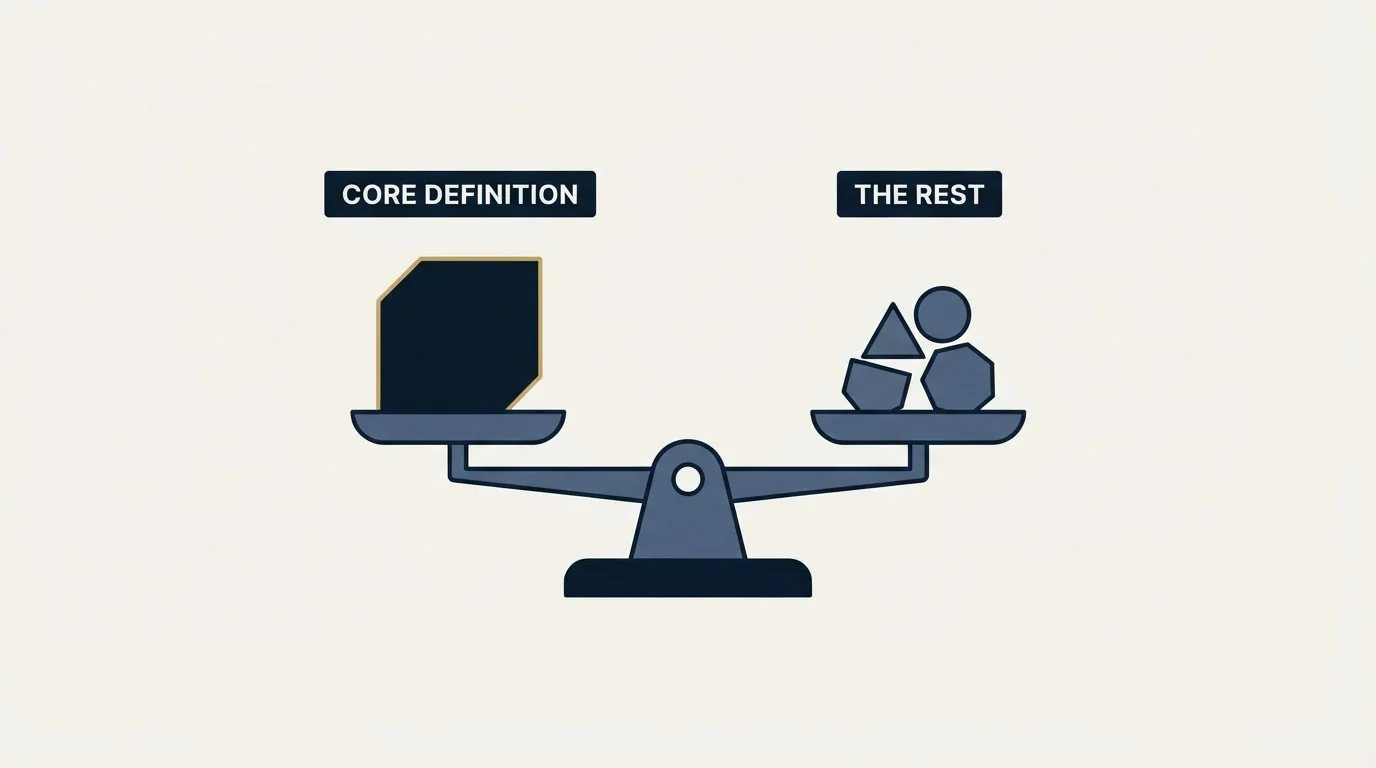
An SDR comp plan is three numbers and one definition, and the definition decides the rest. Choose the unit first: bookings pay for calendar entries, accepted meetings pay for conversations a seller will keep, and revenue pays an SDR for somebody else's quarter.
If the unit is an accepted meeting, write the acceptance criteria before the quarter, make them testable by a third party, give rejection a window after which an unflagged meeting counts, and name what is not a valid reason. Keep budget, timing and authority outside the definition, because they are facts about the prospect rather than measures of the work.
Then set the quota from your own history rather than a published benchmark, weight the mix toward base for a role with a narrow span of control, derive the per-unit rate and check that you are happy for a rep to optimise against it. Write the ramp, the no-show and the rejection exceptions in advance, because those are what a bad month is actually made of.
And when the number is flat, check the list before the plan. If the constraint turns out to be supply rather than effort, that is the half we run, on criteria agreed in writing before anything sends: see what a first campaign produces.
Frequently asked questions.
Frequently asked questions- What should an SDR be paid on?
- Accepted meetings, in most cases: a meeting the receiving seller confirms against written criteria. Paying on bookings rewards calendar entries rather than conversations, and paying on closed revenue pays an SDR for an account executive's quarter with a lag they cannot read from their own week. Revenue works as a small kicker on top, not as the primary unit.
- What base to variable split works for an SDR?
- Weight it toward base, further than you would for a closer. An SDR controls activity and message quality but not the list, the offer, the territory or whether the market is buying this month. A large variable against a narrow span of control produces income swings that track the market rather than the work, and the visible cost of that is turnover in a role where ramp is expensive.
- How do you stop SDRs booking junk meetings?
- Change the unit, not the rate. A booking-based plan pays identically for a qualified prospect and for somebody who accepted an invitation to stop being emailed, so no amount of coaching removes the incentive. Move to accepted meetings with written criteria, a decision window after which an unflagged meeting counts, and a named appeal route, then hold the criteria still for a quarter.
- Should SDRs lose commission for a no-show?
- Decide it in advance and write it down. If the unit is a held or accepted meeting the question does not arise, because an unheld meeting was never a unit. If the unit is a booking, deducting no-shows converts the plan into a held-meeting plan with extra steps and worse morale, so it is usually cleaner to change the unit than to add the clawback.
About the author.

B2B cold email experts helping companies generate qualified leads through done-for-you outreach campaigns.
RevenueFlow Team
Explore more.
Ready to scale your outreach?
We build GTM engines that book real meetings. See the receipts.
Related articles.
President's Club in Sales: How the Criteria Decide Who Goes
A rep finishes at 134 percent of plan and the bar was 135. What a President's Club actually buys, and the two ways to set the criteria.
Inbound vs Outbound Sales: How the Two Motions Differ
Inbound and outbound sales compared as motions: what the rep knows at first touch, what each costs, the team each needs, and the metrics that belong to each.
The Agoge Sequence: What Sam Nelson Actually Built
A documented 15-touch, 27-day cadence built by Sam Nelson at Outreach. What the primary sources say, which part transfers, and where our own practice differs.
Sales Rep Coaching: The Cadence That Survives a Busy Quarter
Coaching that changes behaviour needs an artifact on the table and one named focus. The weekly loop, and the three layers a flat number can be hiding.
Readymode Pricing: The Seat Is Dear for What Is Inside It
Readymode publishes $199 and $249 per licence per month, near the top of the dialer range. What the seat includes that others bill separately, and when that pays.
PhoneBurner Pricing: What the Seat Price Covers
PhoneBurner publishes all three seat prices in both billing states. The metered resource is contact imports, not minutes, and the spam layer is an add-on at every tier.