Clearout Pricing: Never-Expiring Credits, Three Ways to Buy
Clearout renders its prices in the browser only. The three purchase routes, the three priced cards, the add-on rate card, and what a credit buys on each product.
As rendered from Clearout's pricing page on 4 September 2026, Freemium is $0 for 100 lifetime credits, Starter $16 a month beside a struck $19.5 for 3,000 credits, and Pro 10K $32 beside a struck $40 for 10,000, with auto top-up from $40 for 5,000 credits. Credits never expire. A verification costs one credit, a found email four.
Key takeaways
- The served page carries no currency figure at all; the prices exist only once the page's script runs, so a plain fetch reads a fully priced vendor as publishing nothing.
- Three purchase routes buy the same non-expiring credit: annual badged at twenty percent under the one-time rate, monthly at ten percent under it, and pay as you go with an auto top-up from a 5,000-credit minimum.
- A verification costs one credit and an unknown result nothing, while a found email costs four credits or two for a role address, so a balance spent on finding lasts a quarter as long as one spent on verifying.
- Tiers are named up to five million credits but only Starter and Pro 10K carry readable figures in the render; subscriptions and top-ups are non-refundable and a plan switch charges the full new amount.
Reviewed and updated September 4, 2026
Clearout's pricing page returns no price to a plain request. The document is nearly a megabyte, it carries every plan name, the whole credit vocabulary and a long FAQ, and it contains not one currency figure, because the numbers are written into the page by its own script after it loads. A fetch that stops at the page's served bytes concludes that Clearout publishes no pricing, and that conclusion is wrong. Rendered in a browser, the page carries a three-way billing toggle, three priced cards, a plan comparison to five million credits and a full add-on rate card.
This page walks what that render shows, what the vendor's separate pricing and billing guide says a credit buys on each of its products, and the terms that decide the real cost. Every figure is as published on Clearout's pricing page and pricing guide on 4 September 2026, read from a rendered copy of the page and from the guide's own bytes. Where the render leaves a figure unreadable, this page says so rather than filling it in.
Three ways to buy the same credit
The pricing page opens with a toggle carrying three options. Annual, whose badge states twenty percent less than the one-time rate. Monthly, whose badge states ten percent less than the one-time rate. And One Time, labelled pay as you go. The vendor's pricing guide describes the same three routes in prose: a monthly or annual subscription for recurring requirements, a one-time purchase to top up for sudden or one-off needs, and a third mechanism called auto credit replenishment that tops the balance up automatically at the pay-as-you-go rate whenever it falls below a threshold the customer sets, with a minimum top-up of 5,000 credits.
So a credit has one price on the one-time route and two discounted prices on the two subscription routes, and the same credit is worth the same thing whichever way it was bought. That is what makes the next term matter more than the discount.
Credits never expire, and they roll over
The pricing page's FAQ answers the question directly: credits do not reset each month, and with all subscription plans unused credits roll over and never expire. The pricing guide repeats it, purchased credits never expire and unused subscription credits roll over automatically, and adds one qualification: credits bought at a discount may carry an expiry date under the terms of the specific deal.
That term turns a subscription into a banked balance rather than a monthly quota, which changes the arithmetic on the toggle. Annual billing buys credits at the lowest published rate and delivers them as a lump that does not decay. Monthly billing buys the same credits at the ten percent saving its badge states and delivers them in twelve instalments that also do not decay. The difference between the three routes is the rate and the cash timing, never the shelf life.
New accounts receive 100 free credits at sign-up, valid on any service, per the pricing guide. The pricing page's free card describes the same allowance as 100 credits for lifetime, one time, with no expiry.
The three priced cards
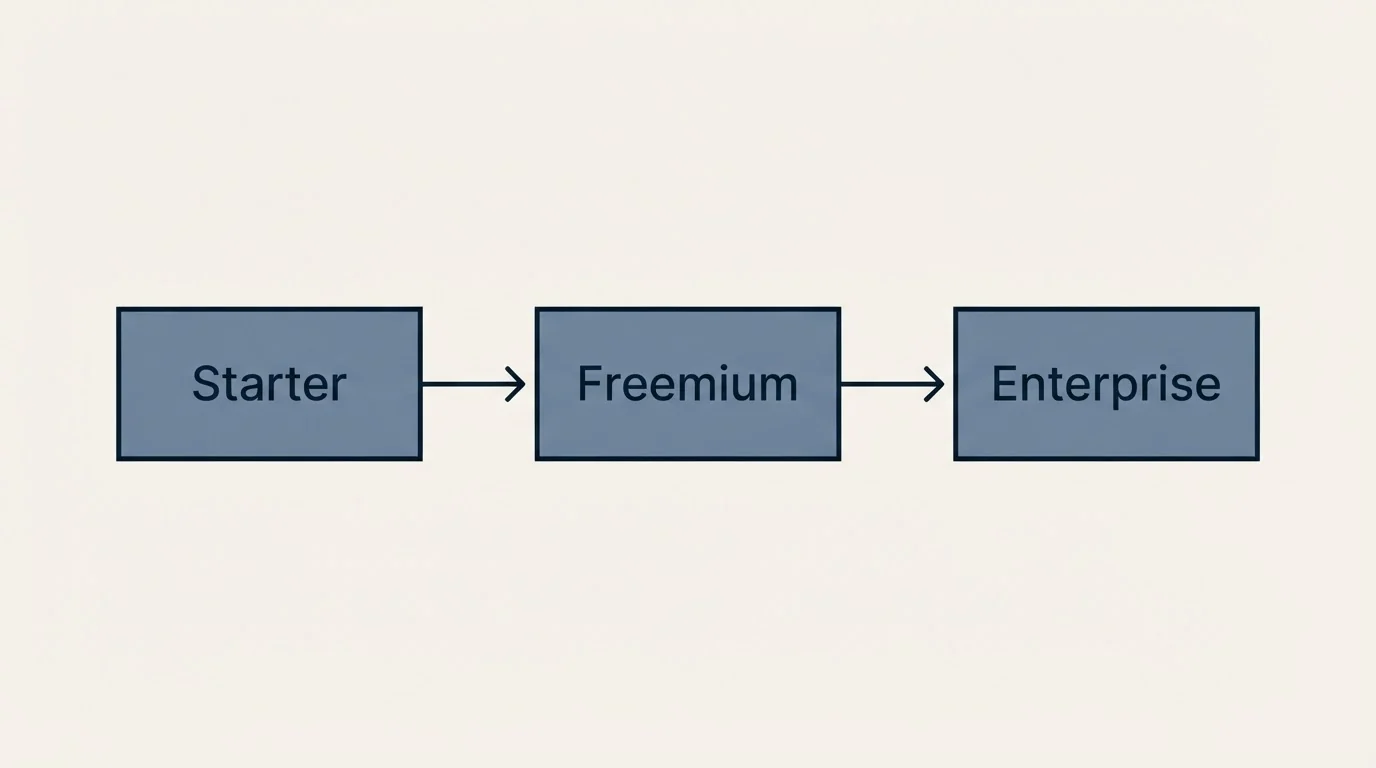
The rendered page carries three cards with a figure and a fourth without one.
Freemium is 100 credits at $0 a month, with the allowance stated as a lifetime one-time grant. The card lists one parallel bulk verification run, limited CRM and email-platform integrations, an estimated forty valid form submissions through the form-guard product, one parallel bulk finder run, an estimated forty real-time validations through the data-pulse product, API rate limits of three requests a minute on both the verification and finder APIs, twenty prospect searches a month, and email support only.
Starter is 3,000 credits a month. The card prints two figures, a struck $19.5 and a live $16 a month, and states the credits carry no expiry and unused ones roll over. Two parallel bulk verification runs, unlimited CRM and email-platform integrations, an estimated 1,200 form submissions, two parallel finder runs, 1,200 data-pulse validations, API limits of 25 requests a minute for verification and 14 for the finder, 600 prospect searches a month with one parallel bulk prospect enrichment run, and chat and email support.
Pro 10K is 10,000 credits a month, marked best value. The card prints a struck $40 and a live $32 a month. Three parallel verification runs, an estimated 4,000 form submissions, two parallel finder runs, 4,000 data-pulse validations, API limits of 55 and 40 requests a minute, 2,000 prospect searches with two parallel enrichment runs, and email, chat and live-meeting support.
Enterprise carries no figure and a contact button, with a dedicated account manager, priority support, a volume commitment stated as ten million or more, on-premise deployment, white-label and rebranding, unlimited team seats and flexible contract terms.
On the two-figure cards, dividing the live figure by the struck one gives 0.80 on Pro 10K and about 0.82 on Starter, which is consistent with the render having opened on the annual option, whose badge states twenty percent less than the one-time rate. The served markup does not mark which option is active, so a reader should confirm the toggle state on the live page before quoting either figure as a monthly commitment. What can be stated without that confirmation is the pair: Starter is either $16 or $19.5 a month for 3,000 credits depending on the route, and Pro 10K is $32 or $40 for 10,000.
- Badged as the largest saving against one time
- Credits delivered for the year
- Never expire and roll over
- Non-refundable once bought
- Badged as a smaller saving against one time
- Credits arrive each month
- Never expire and roll over
- Switching plans requires the full new amount
- No subscription
- Auto replenishment at the same rate from a minimum block
- Threshold and amount set by the customer
- Never expire, discounted deals excepted
The ladder above Pro 10K is named but not priced in the render
The plan comparison table on the rendered page lists nine columns: Freemium, Starter, Pro 10K, Pro 50K, Pro 100K, Pro 250K, Pro 500K, Pro 1M and Pro 5M, with credit counts of 100, 3,000, 10,000, 50,000, 100,000, 250,000, 500,000, 1,000,000 and 5,000,000. The rows that rendered to text cover bulk verification concurrency, from one file at a time on Freemium to five files at a time on the two largest tiers, and the table sits behind a show-more control.
The prices for the six tiers above Pro 10K did not render into readable text in the copy read for this page. So this page can state that those tiers exist and how many credits each carries, and cannot state what they cost. A buyer sizing above 10,000 credits a month should read those figures off the live page or from the add-on card, where one pay-as-you-go rate is printed.
The one pay-as-you-go rate the page does print

The add-on section prices auto credit replenishment as starting at $40 for 5,000 credits. The pricing guide states that auto replenishment charges the pay-as-you-go rate, so that card is the one place the one-time rate per credit is readable: eight tenths of a cent a credit at the 5,000 block, which is arithmetic on the two published numbers. Set against the Pro 10K card's live figure, ten thousand credits a month at $32 is about a third of a cent a credit, so the subscription route is materially cheaper per credit than the top-up route at those two published points.
The rest of the add-on card prices capacity rather than credits. An additional parallel bulk verification run is $49 a month, as is an additional parallel bulk finder run and an additional parallel prospect enrichment run. An additional 100 requests a minute on the verification API is $99 a month, and the same on the finder API. An additional team seat is $25. An additional 100 allowed or blocked domains is $49. None of those consume credits; they raise the rate at which credits can be spent.
What a credit buys on each product
The pricing guide is where the credit becomes a unit, and it is more precise than most pages in this category. Clearout charges only for what it calls a billable service action, a definitive and actionable result, and lists what is free.
| Product | Credits charged | Not charged |
|---|---|---|
| Email verifier | 1 per valid, invalid or catch-all result | Unknown status |
| Email finder | 4 per non-role email, 2 per role-based email | No email found |
| Form guard | 2 per name, email or phone validated | Unknown status |
| Data pulse | 2 per contact field validated | Unknown status |
| Prospect | 4 or 2 per email as above, 2 per valid or invalid phone | No phone or email found |
| Prospect enrichment | 1 per email, 1 per phone, only on a successful return | No enrichment found |
| Reverse lookup | 4 or 2 per email as above, 2 per valid or invalid phone | No phone or email found |
Duplicates within the same uploaded list are not charged, and the guide states that the charges are the same across the app, the API, webhooks and third-party integrations, with a request billed once when API and webhook are combined.
Two rows in that table decide most bills. A verification costs one credit and an unknown costs nothing, so a 3,000-credit Starter allowance verifies up to 3,000 addresses with a definitive result and any number that come back unknown. A found email costs four credits, or two where the address is role-based, so the same allowance finds at most 750 personal addresses, which is the figure the Starter card itself prints as 750 or more discoverable. The two products draw on one balance at a four-to-one ratio, and a team that finds as well as verifies should size on the finder.
- Yes: Credits never expire and unused subscription credits roll over
- Yes: Unknown verification results and not-found emails cost nothing
- Yes: Duplicates inside one uploaded list are not charged
- Yes: Plans can be switched between monthly and annual and between tiers at any time
- No: Switching plans charges only the difference
- No: Subscriptions and auto top-up payments are refundable
The refund and guarantee terms
The pricing guide publishes a refund policy with unusually specific conditions. A refund can be requested within thirty days if results do not meet expected deliverability, which the guide illustrates as a bounce rate above ten to twenty percent, and an approved refund covers only the addresses that bounced rather than the whole list. A request is not considered if more than a quarter of the purchased credits have been used, on the grounds that the 100 free credits exist to evaluate the service first. Subscriptions are non-refundable. Auto replenishment payments are non-refundable.
The deliverability guarantee attached to the safe-to-send category has its own boundaries, stated on the same page: mail must be sent within twenty-four hours of verification to qualify, and educational domains, free consumer providers such as Yahoo and AOL, and mail servers behind aggressive anti-spam settings, with Office 365 named, are excluded from the guarantee because the receiving server may claim an address is valid and bounce it anyway.
That last clause is the vendor stating, in its own terms, the limit every verifier shares. A server that accepts every address cannot be made to disclose which mailboxes exist, which is why this site treats accept-all domains as a tail to bank rather than mail, and why the sequencing argument in this site's email verification tools guide puts a cheap verifier first and a finder second rather than the other way round.
Where this vendor fits
Clearout bundles a verifier, a finder, a form validator, a CRM monitor and a prospecting product on one credit balance, and the guide's credit table is the honest way to compare it with single-product vendors. On verification it charges one credit per definitive result and nothing for an unknown, which is the billing shape that makes brute-force verification of guessed patterns affordable, as set out in this site's waterfall enrichment guide. On finding it charges four credits a found address, which puts the finder at four times the verifier's unit and is the number to compare against a dedicated finder's per-credit rate.
For a verifier that publishes the checks it runs and prices verification at half a search, this site's page on the Hunter email verifier is the closest comparison in shape. For the competitive set, the generated Clearout alternatives page carries the comparison table, and this page does not repeat it.
The short version
Clearout's pricing page is client-rendered, so a plain fetch shows no price and a browser shows a three-way toggle whose badges state annual at twenty percent under the one-time rate and monthly at ten percent under it. Rendered on 4 September 2026 the cards read Freemium at $0 for 100 lifetime credits, Starter at $16 live beside a struck $19.5 for 3,000 credits a month, and Pro 10K at $32 beside a struck $40 for 10,000, with tiers named to 5,000,000 credits whose prices did not render. Auto top-up starts at $40 for 5,000 credits. Credits never expire and roll over. A verification costs one credit, a found email four or two, and unknowns, misses and in-list duplicates cost nothing. Subscriptions and top-ups are non-refundable, and plan switches charge the full new amount.
If you would rather see the whole motion running on your own ICP before committing to a verification vendor, start a free campaign and we will build the list, the copy and the sending infrastructure around it.
Pricing and features verified as of September 2026. Verify current terms with the vendor before relying on them.
Frequently asked questions.
Frequently asked questions- How much does Clearout cost per month?
- Rendered on 4 September 2026, Clearout's pricing page shows Freemium at $0 for 100 lifetime credits, Starter at $16 a month beside a struck $19.5 for 3,000 credits, and Pro 10K at $32 beside a struck $40 for 10,000 credits, with an Enterprise card priced by conversation. The live figure sits about twenty percent under the struck one, consistent with the page's annual option, so confirm the toggle before quoting.
- Do Clearout credits expire?
- No. The pricing page's FAQ states that credits do not reset each month and that with all subscription plans unused credits roll over and never expire. The vendor's pricing guide repeats that purchased credits never expire, with one qualification: credits bought at a discount may carry an expiry date under the terms of that specific deal. New accounts also get 100 free credits valid on any service.
- How many credits does Clearout charge per verification or per found email?
- The pricing guide charges one credit for a valid, invalid or catch-all verification result and nothing for an unknown; four credits for a found non-role email and two for a role-based one, with nothing charged when no email is found; two credits per field validated by form guard or data pulse; and two per valid or invalid phone in the prospect and reverse lookup products. Duplicates within one list are free.
- Does Clearout offer pay-as-you-go pricing?
- Yes. The toggle's third option is a one-time purchase labelled pay as you go, and the pricing guide adds auto credit replenishment, which tops the balance up at the pay-as-you-go rate whenever it falls below a threshold the customer sets, with a minimum of 5,000 credits. The add-on card prints that route's one readable figure: replenishment starts at $40 for 5,000 credits, and the payments are non-refundable.
About the author.

B2B cold email experts helping companies generate qualified leads through done-for-you outreach campaigns.
RevenueFlow Team
Explore more.
Ready to scale your outreach?
We build GTM engines that book real meetings. See the receipts.
Related articles.
Icypeas Pricing: Four Tiers, Plus VAT, No Credit Expiry
Icypeas prices four finder tiers plus VAT, a credit menu on the top tier, and credits that never expire. Every figure at both billing states, and the per-action table.
Seamless.AI Email Finder: How It Works, What a Credit Buys
How Seamless.AI's email finder resolves a contact in real time, what one Universal Credit buys, the Total AI score on every address, and what the Chrome extension reads.
SalesQL Pricing: Four Plans, Priced Per Credit
SalesQL publishes four plans on a monthly-first pricing page. Here is the dated ladder, the per-profile credit meter, the seat limits, and what the page leaves out.
GetProspect Pricing: Three Plans and Two Annual Figures
GetProspect prices Free, Starter and a three-position Growth plan, plus verification credits that never expire. Every figure, and the annual price the page gives twice.
Enrow Pricing: Three Billing States, Two Currencies
Enrow prices per verified result across monthly, annual and pay-as-you-go tabs in euros and dollars. The ladder, the credit meter and the currency clause.
LeadGibbon Pricing: Three Monthly Plans, No Annual Tab
LeadGibbon publishes three monthly plans and no annual rate. The dated ladder, the verified-emails-only meter, the rollover rule, and what the page does not publish.