Cognism Review: Which Claims on Its Pages a Buyer Can Test
Cognism publishes a screening step against 15 DNC lists, a 30-day refresh cadence, and pipeline percentages nobody can check. Only two of those are testable.
Cognism is the European-first data vendor, built around phone-verified mobiles and a compliance step it says screens against 15 do-not-call lists globally. Its concrete claims, including a 30-day refresh on director-level records, can be tested on a data sample. Its published pipeline percentages cannot.
Key takeaways
- Cognism's data page states it cross-checks against 15 do-not-call lists globally and refreshes director-level and above records on a 30-day basis, both specific enough to test on a sample.
- The same page carries 4.6/5 on G2 in one block and 4.5/5 in another on a single fetch, which is why a rating quoted on a vendor page should be checked at the platform on the day you decide.
- Cognism describes a popularity score that prioritises which records get refreshed, so freshness favours ICPs that many customers query and drifts for unusual segments.
- Published outcome figures, including an average 20 to 40 percent pipeline increase, are vendor-selected, unaudited and detached from any baseline, so they evidence nothing about your team.
Reviewed and updated September 1, 2026
Cognism's own data page carries a block of headline statistics under the heading "Data coverage and claims that count." Fetched as raw HTML on 16 August 2026, every one of those figures reads as a zero, because they are animated counters that a browser fills in after the page paints. The numbers exist; they simply are not in the document.
That is a small technical detail with a useful lesson attached. The most quotable claims a vendor makes are often the ones least anchored to anything you can check, while the substantive figures sit in ordinary prose further down the same page. This review works from the prose.
A practical note, since a large share of the search traffic around this vendor is people trying to contact Cognism rather than evaluate it: the company publishes a contact form, a help centre and a separate profile-removal path, and the existence of that third route is itself an evaluation signal for a supplier whose whole positioning is compliance-first.
Who is writing the Cognism reviews you can find
Before the product, the search results. A pull of both "cognism review" and "cognism reviews" returns the same set twice over: Trustpilot, Cognism's own customer-reviews page, Gartner Peer Insights, G2, a Reddit thread asking whether Cognism is good for the USA, a YouTube walkthrough, and detailed review posts published by Warmly, Artisan, Skrapp and ZoomInfo's content operation.
Those last four all sell products that compete with Cognism. That does not make their reviews wrong, and several are more thorough than the vendor's documentation, but the conclusion at the bottom of each is a commercial asset for the publisher. The rating platforms themselves return a 403 to a plain fetch, so no aggregate score is quoted here from any of them.
The Reddit thread is the honest signal in that set, and its question is the right one: the recurring buyer doubt about Cognism is not whether the data is good, it is whether the data is good in the United States, because the product's reputation was built in Europe.
The vendor quotes two different G2 ratings on one page
A detail worth recording, since it is exactly the kind of thing a review should catch. Cognism's data page carries "4.6/5 on G2" in one block and "4.5/5 on G2" in another, on the same page, on the same fetch. Its customer-reviews page carries "4.5/5 on G2" and "4.7/5 on Capterra" alongside "Trusted by 4000+ Companies Worldwide."
Neither figure is dishonest. Review scores move continuously and page components are updated on different schedules, which is precisely why a rating copied onto a marketing page is a snapshot of an unknown date rather than a fact. The correct treatment of any of them, including the ones in this paragraph, is to check the platform yourself on the day you are deciding.
The claims specific enough to test

Underneath the marketing, Cognism publishes several claims that are unusually concrete, and concrete claims are testable claims.
Its data page states that the compliance step cross-checks data against 15 do-not-call lists globally, described as more than any other B2B data provider, which is a claim that sits alongside what GDPR actually requires of B2B outbound rather than replacing it. It states that director-level and above data is refreshed on a 30-day basis. Its data FAQ describes phone-verified mobiles as premium records that go through additional manual and automated verification, and says to expect a 3x improvement in connect rates compared with an industry average it does not define. The technographic database is described as covering over 20,000 technologies.
The DNC figure is the one that matters most for buyers in regulated markets, because a screening step is either happening or not, and a vendor that names a number can be asked which lists and for which countries. The 30-day refresh claim is checkable too: export a set of director-level records, re-export the same set five weeks later, and count how many fields moved.
- Step 1Scoring and matching
A confidence score per data point, fused from public registries, press releases, company sites and news
- Step 2Verification
Machine learning and systematic testing applied to emails and mobile numbers
- Step 3Compliance checks
Cross-checked against a stated 15 do-not-call lists globally
- Step 4Human validation
Data scientists making manual deletions and edits, feeding corrections back
- Step 5Feedback loop
A popularity score prioritising which records get refreshed first
The last step in that process is the most interesting and the least discussed. Cognism describes building a popularity score from usage, and using it to decide which profiles get prioritised for freshness checks. Read that as a buyer: records that many customers query stay fresh, and records nobody queries drift. If your ICP is unfashionable, the refresh promise applies to you more weakly than to a team selling into the same accounts as everyone else.
The claims that cannot be tested
The same pages carry a different class of number. An average 20 to 40 percent pipeline increase for Cognism customers. One customer reporting 34 percent higher connect rates, 15 percent more meetings and 22 percent quarterly pipeline growth. Another reporting a 300 percent increase in weekly dials, another a 33 percent pipeline increase in three months, another that Cognism converted 60 percent better than a US competitor in a European test.
These are real claims from named companies published by the vendor. They are also selected by the vendor, unaudited, and detached from any baseline. A pipeline figure moves with headcount, territory, offer and season, and no case study in this category isolates the data source from everything else that changed. Nothing here is a forecast for your team.
- Screening against a stated 15 DNC lists, and which countries they cover
- A 30-day refresh cadence on director-level and above records
- Coverage of your exact segment, measured on a data sample
- Whether a record carries a phone-verified mobile or a standard one
- An average 20 to 40 percent pipeline increase across customers
- Named-customer connect rate, meeting and pipeline percentages
- A 3x connect-rate improvement against an undefined industry average
- Any G2 or Capterra score quoted on a vendor page
The compliance page is the part worth reading twice
The claim that draws buyers to Cognism is compliance, and unusually for this category the detail behind it is published rather than asserted. Three things on the compliance FAQ are worth a buyer's attention.
The first answers the DNC question the data page raises. Where the marketing page says 15 lists globally, the compliance FAQ enumerates them: TPS and CTPS in the UK, plus the US, Australia, New Zealand, Germany, France, Ireland, Spain, Portugal, Croatia, Sweden and Belgium, with a note that the company is working to register in further registries. That is thirteen named entries against a headline of fifteen, which is not a contradiction so much as a marketing page rounding up a moving list. It also means the question in the checklist below is already half answered in public, and the remaining half, which countries your own calling actually touches, is a short email.
The second is the lawful basis, stated plainly: legitimate interest under Article 6.1(f) of the GDPR, supported by what the page calls a notified database. Notification is the mechanism that makes that basis workable, since a legitimate-interest claim carries an obligation to tell people they are in the database so they can object.
The third is the sentence buyers skim past. Each party acts as an independent controller, customers are responsible for their own compliance, and the page states that a customer's use of the data happens outside Cognism's control and visibility. The vendor's compliance work covers the vendor. Your send is your processing, with your own basis and your own suppression duty, exactly as it is with every other provider in this category.
What "Cognism data" actually includes

People searching for the data rather than the company are usually asking one of two things: what is in the database, and how it reaches them.
On the first, the vendor sells contact and company records plus a layer it calls signal data: hiring trends, funding alerts, M&A alerts, news signals, intent topics, and technographics described as covering over 20,000 technologies. The pitch for that layer is timing rather than reach, on the argument that a contact without context only tells you who to write to and not when.
Deciding how that signal layer feeds a pipeline often means pairing Cognism with a CRM, and the cross-category comparison with HubSpot CRM explains why teams typically run both rather than choosing one.
That is the right argument, and it comes with a discipline attached. A signal earns its place only if it changes the first line of the message in a way that could not have been written last month. Used as a volume multiplier it is a more expensive way to send the same email. It also matters that a genuine signal, a funding round or a role change, is what makes a fresh approach to a previously silent contact legitimate: we send one message per campaign and never bump, so a new signal means a new campaign with a new angle rather than a follow-up under the old one.
On delivery, the same records are sold through several surfaces: the web app, a browser extension, CRM enrichment, an API, and a data-as-a-service feed into a warehouse. Which surface you buy changes the unit economics more than the tier name does, because a warehouse feed and a rep clicking reveal are entirely different consumption patterns.
Delivery surfaces and pricing tiers matter even more when weighed against a lighter alternative, so see how Cognism stacks up against Datanyze on technographics and budget fit.
What Cognism is actually for
Strip the claims back and the product has a clear centre of gravity. It is the European data vendor with a compliance posture built for European sales, and the phone-verified mobile is its premium unit. The case study the vendor leads with on its reviews page is explicitly about a US company whose US-centric tooling failed in EMEA.
Teams trying to work out whether Cognism even belongs in the same conversation as a conversation-intelligence platform can see why the two are complementary in this comparison of Cognism and Gong.
That framing is a better buying guide than any score. If you sell into Europe, particularly DACH and the Nordics, and you place phone calls, this is a shortlist vendor and the DNC screening is doing real work for you. If you sell into North America only, the product is competing against tools with deeper US coverage and lower prices, and the compliance machinery you are paying for is protecting you from risks a US-only motion carries less of.
Buyers weighing that regional split against a lighter, LinkedIn-focused alternative can see how the two stack up in this side-by-side comparison with ContactOut.
Our own motion is email and LinkedIn rather than phone, so the phone-verified premium that justifies Cognism's price for many buyers sits idle on our stack. That is a statement about fit rather than quality: a vendor whose best unit is one you never use is an expensive way to buy the unit you do.
Pricing is a conversation rather than a rate card: the pricing page carries no plan figures at all, on a fetch made 16 August 2026, and directs you to request tailored pricing instead. The delivery surface changes the economics more than the plan name does, so the API, the browser extension and a warehouse feed should each be priced as a separate question rather than bundled into one number.
Testing it properly
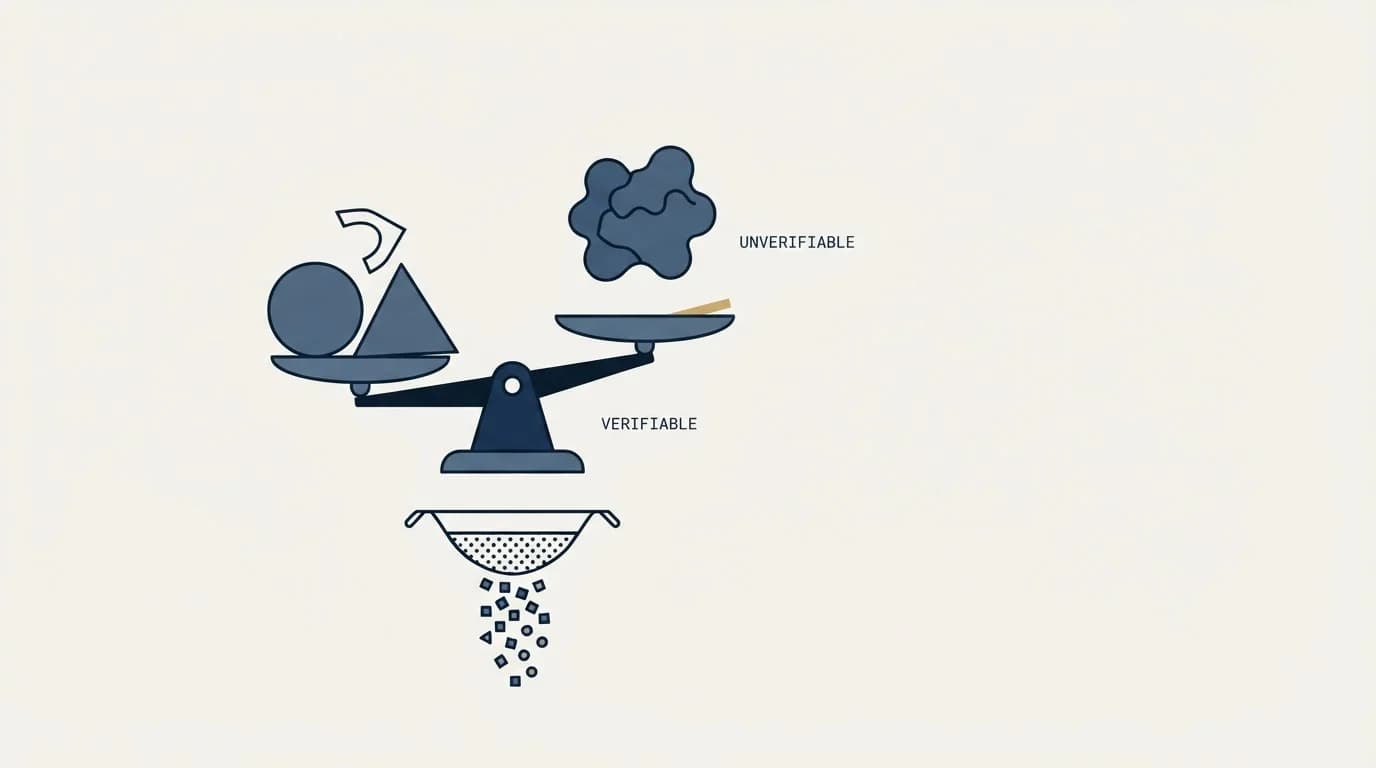
Cognism offers a free data sample, which is the right thing to ask for and the right thing to design carefully.
- Yes: Specify the exact segment you sell to, by geography, title and company size
- Yes: Ask what proportion of the sample carries phone-verified mobiles rather than standard numbers
- Yes: Verify every email independently, outside the vendor's own verification
- Yes: Check the named DNC registries against the countries you actually dial
- Depends: Re-request the same records five weeks later to test the 30-day refresh claim
- No: Treat the published pipeline percentages as a forecast for your team
The question in that list vendors answer least comfortably is the phone-verified proportion, since it decides whether you are buying the premium unit or the standard one at the premium price. The DNC coverage question is easier here than at most vendors, because the registries are already named on the compliance page and the only thing left to confirm is the overlap with your own calling territory. The sampling method itself matters as much as the questions, and the protocol for testing data accuracy on your own market applies here unchanged.
Who it fits
Cognism fits European outbound, calling teams, and companies whose legal function has an opinion about prospect data. It fits a US-only email motion poorly on economics rather than quality. The realistic alternatives, including the cheaper European tools in the same bracket, separate mostly on price and on whether you need the compliance layer.
Whichever vendor wins, the data is one input. The list still needs verifying at send time, the sending still needs infrastructure separate from your primary domain, and the campaign is still one message with a fresh angle rather than a sequence. If you would rather buy the meetings than assemble the stack, we run the whole motion on a pay-per-qualified-meeting basis.
Pricing and features verified as of mid-2026. Verify current terms with the vendor before relying on them.
Sources: Cognism data, Cognism customer reviews, Cognism compliance, Cognism pricing
Frequently asked questions.
Frequently asked questions- Is Cognism worth it for US-only teams?
- It is a harder case. The product's centre of gravity is European data and compliance, and its own lead case study is about a US company whose US-centric tooling failed in EMEA. For North America alone you are competing against tools with deeper US coverage at lower prices, and paying for compliance machinery that a US-only motion leans on less.
- What is Cognism's phone-verified data?
- The vendor describes phone-verified mobiles as premium records that pass additional manual and automated verification, and says to expect a 3x improvement in connect rates against an industry average it does not define. The useful question for a trial is what proportion of your sample carries a phone-verified number rather than a standard one.
- How good is Cognism data quality?
- Its process is more documented than most: confidence scoring, machine verification, screening against a stated 15 do-not-call lists, human correction and a usage-driven refresh priority. None of that answers coverage on your segment, which only a data sample verified independently outside the vendor's own checks can settle.
- Why do so many Cognism reviews come from other software companies?
- Because review keywords sell software. Warmly, Artisan, Skrapp and ZoomInfo's content operation all publish Cognism reviews and all sell competing products. The posts are often detailed and the recommendation at the end is a revenue asset for the publisher, so read them for mechanics and check any load-bearing claim against the vendor's own pages.
About the author.

B2B cold email experts helping companies generate qualified leads through done-for-you outreach campaigns.
RevenueFlow Team
Explore more.
Ready to scale your outreach?
We build GTM engines that book real meetings. See the receipts.
Related articles.
The Real Cost per 1,000 Emails, Verifications and Data Credits in 2026
Unit prices computed from verified vendor plans: $1.00 per 1,000 emails sent, $2.00 per 1,000 verifications and $19.60 per 1,000 enrichment credits.
Firmographic Data Providers: What Six of Them Publish
Six firmographic data providers read from their own pages: the fields each sells, the coverage each states, how the data is delivered, and who prints a price.
Free Tiers and Trials in Sales Tools: What $0 Gets You Across 386 Vendors
37.0% of 386 verified sales tools have a permanent free plan. The median free data tier gives 50 credits and the median free sending plan 2,500 emails a month.
Zeliq Pricing: One Seat Rate and a Credit Meter
Zeliq prices one self-serve seat in dollars with a credit meter that never expires. Both billing states, the three credit rates, the top-up ladder and the Custom floor.
Bookyourdata Pricing: 25 Packs, Priced Per Contact
Bookyourdata sells credits in twenty-five packs with no subscription. The dated ladder, the per-contact rates rendered in the browser, the guarantee rule and BeSpoke.
Salesgear Pricing: Two Ladders Under One Plan Title
Salesgear's page is titled as one plan and carries a Data ladder and an Outreach ladder. Both at both billing states, what each meters, and the two vendor-side conflicts.