Cognism vs Salesforce: Cross-Category Comparison
Compare Cognism (data enrichment tool) and Salesforce (crm platform) side by side. Understand how these tools fit different stages of your sales workflow.
The Cognism Salesforce integration is set up by an admin in the Cognism web app, on Salesforce Professional or above with API access. Cognism imports selected Salesforce fields for matching and enrichment, and exports Leads, or Contacts with Accounts, under update rules: Apply if blank or Override. Salesforce publishes prices; Cognism does not.
Key takeaways
- Cognism's help centre says its Salesforce integration needs Professional edition or above with API access, is enabled by an admin, and runs user-based or as a managed service.
- Exports create Leads, or Contacts with Accounts, and each mapped field follows an update rule: Apply if blank, or Override every time you export or sync.
- Cognism matches Leads on email or name plus city, Contacts on email or name plus company, and follows the Salesforce duplicate rules without overriding them.
- Salesforce's pricing page lists Starter Suite at $25 up to Max at $550 per user per month; Cognism's pricing page shows no currency figure at all.
Reviewed and updated September 19, 2026
Cognism's Salesforce integration runs both ways, and Cognism's own help centre documents each direction: Cognism imports the Salesforce fields an admin selects so it can match and enrich records, and exports Leads, or Contacts with Accounts, back into Salesforce under update rules the admin sets. The money is less symmetrical. Five paid Salesforce tiers run from $25 to $550 per user per month on its own pricing page, with the annual ones marked as such. Cognism's pricing page has no price on it at all, so one line of the budget can be modelled this afternoon and the other needs a sales conversation first.
Cognism Salesforce integration: how to set it up and what syncs
An admin connects it in the Cognism web app under Settings, Integrations, Salesforce, Connect Integration, on Salesforce Professional edition or above with API access enabled; Salesforce Essentials is not supported. The admin picks a user-based setup, where each rep logs in with their own Salesforce credentials, or a managed service with one central login, then sets field mappings and update rules before anyone exports.
Cognism's help article refers to Salesforce's Professional edition and says to ask your Account Manager to enable API access on it. Salesforce's own pricing table today sells Pro Suite, and shows the Web Services API absent from Free Suite and Starter Suite, as an additional $25 per user per month on Pro Suite, and included on Core, Advanced and Max.
What moves in which direction. Export runs from Cognism into Salesforce: from lists, search results, contact profiles and the Chrome extension, as a Lead or as a Contact and Account, and revealing a contact first uses a credit. Import runs the other way. Cognism's export article lists data import, which it calls bi-directional sync, as a prerequisite, and its selective data import lets an admin choose which Contact, Lead and Account fields are imported into Cognism for enrichment; required matching fields are always included and cannot be deselected. Search results then show whether a record already exists in Salesforce.
Cognism Salesforce configuration. Under Integrations, Salesforce, Configure, an admin sets export rules (whether users may create new Leads, Contacts and Accounts, update existing ones, or export a Contact that cannot be associated with an Account), field mappings for Leads, Contacts and Accounts that apply to the web app and the browser extension alike, and static fields such as a Lead Source of Cognism. Each mapped field carries an update rule: Apply if blank, where Cognism updates the field only if it is empty in Salesforce, or Override, where Cognism updates the field every time you export or sync. Currency is not converted, so $100,000 mapped to a GBP field is written as GBP 100,000.
Duplicates. Cognism uses the matching and duplicate rules active in your Salesforce org and does not override them. Its help centre recommends matching Leads and Contacts against each other, and it documents how an export looks for an existing record:
| Object | Matched on |
|---|---|
| Lead | Email address, or first name + last name + city |
| Contact | Email address, or first name + last name + company |
| Account | Domain, domain within the website, company name + city, or company name |
| Match found | Updated under your update rule: Apply if blank, or Override |
| Salesforce finds one Cognism missed | Still updated under the same rule |
HubSpot, and the other connectors. Cognism's HubSpot integration is admin-led in the same way: an admin enables it and configures field mappings before other users log in, it exports contacts from Cognism to HubSpot, and the connection needs HubSpot's App Marketplace Access, Edit Properties, and View and Edit Contacts & Companies permissions. Selective data import covers HubSpot as well as Salesforce. Cognism's integrations page also lists Pipedrive, Bullhorn, Microsoft Dynamics, Salesloft, Outreach and Zapier.
Cognism data enrichment for Salesforce. Cognism sells CRM Enrichment as an add-on to its Standard or Pro prospecting packages or as a standalone product, to automatically enrich and maintain your CRM records. Its pricing page says: "Enrich a contact once, and we keep it up to date." Credits are only used again when key details change, like a job move.
The Short Answer
Buy Salesforce first if the pipeline is the mess, and Cognism first if the list is. The reason to start with Salesforce in a tie is that Cognism's pricing page shows no rate to plan against, so it costs a sales conversation and a quote before the year is even budgeted.
Cognism and Salesforce do not compete. Cognism finds and verifies the people, Salesforce keeps track of what happens after they answer, and the integration above is how a team running outbound at volume joins the two.
What Each One Is, From Its Own Pages
Cognism sells sales prospecting in Standard and Pro packages, each with 5 seats included, plus CRM Enrichment and Data-as-a-Service. Pro adds mobile data, on-demand verification and buying intent. One credit reveals one contact, viewing a contact already revealed costs nothing, and the same credits work across the prospecting platform, Enrich and the API.
Salesforce sells Sales Cloud as suites and editions priced per user per month, from Starter Suite at $25 to Max at $550, with a Free Suite at $0 in its comparison table.
What Each Side Does in a Cold Outbound Run
Neither of these tools sends cold volume, and that decides what each is for. Cognism produces a list, Salesforce keeps the history of what happened to it, and the sending sits in a third place.
The house rule is one message per campaign: no bumps, no thread replies, and no second LinkedIn message landing under the one somebody already ignored. That is why list quality carries so much weight here. With a single message per prospect there is no follow up to rescue a bad address, so an unusable row is a lost prospect rather than a delayed one.
The deliverability consequence is harder. A wrong address produces a hard bounce, and enough of those damage the sender reputation of the sending domain. Where sending inventory is shared across campaigns that damage reaches every campaign on it, so list hygiene before a send costs less than repairing a domain after one.
Salesforce covers the other half. Replies have to land where a human will see them, and a meeting counts only when it meets criteria agreed in writing before launch: a qualified appointment nobody logged is indistinguishable from one that never happened.
Pricing Comparison

Cognism Pricing
Cognism's pricing page names two prospecting packages, Standard and Pro, each with 5 seats included, and two more products, CRM Enrichment and Data-as-a-Service, with a talk-to-sales route on each and no currency figure anywhere in its visible text. Each seat includes an allocation of credits, one credit reveals one contact, and additional credits can be bought at any point. API access requires a Prospecting seat.
Source: Cognism Pricing
Salesforce Pricing
| Plan | Price |
|---|---|
| Free Suite | $0/mo |
| Starter Suite | $25/mo |
| Pro Suite | $100/mo |
| Core | $195/mo |
| Advanced | $395/mo |
| Max | $550/mo |
Prices are per user per month in US dollars. Starter Suite is billed monthly or annually at the same rate; Pro Suite, Core, Advanced and Max are the per user per month price billed annually, which is how the page labels them.
Source: Salesforce Sales Pricing
Pricing Context
A direct price comparison is not possible on this pair, because Cognism's pricing page shows no ladder to compare against. Salesforce's tiers are public and Cognism's are a quote, so the two halves of this budget are known with very different confidence.
What the Pair Costs at a Realistic Team Size
Vendor tables price a seat or a credit. A budget prices a team, so here is the same decision worked end to end. Both inputs are invented for the arithmetic: a team of five that wants roughly 500 new verified contacts a month.
On the CRM side, and on the rate Salesforce's pricing page shows, five seats on Starter Suite at $25 per seat per month comes to $1,500 for the year, and Starter Suite carries the same rate monthly or annually. Five Pro Suite seats at $100 billed annually come to $6,000. Those totals are illustrative, and a per-seat CRM price scales with headcount, so five people cost five times one.
Cognism's pricing page shows no currency figures anywhere in its visible text, so the absence of rates on that page is confirmed rather than assumed. Its packages include 5 seats each, so for this invented team the Cognism line is one quote; ask how many credits the five seats carry, because 500 contacts a month is 500 credits on its one-credit-per-contact rule.
| Line, year one, illustrative | Amount |
|---|---|
| Salesforce, five Starter Suite seats | $1,500 |
| Cognism, 500 contacts a month | quote |
| Pair | $1,500 plus whatever the enrichment line comes back at |
The enrichment line moves with volume, so model it at the volume you intend to send. Against a realistic cost of a booked meeting both lines are small, which is why the order of purchase matters more than the total.
When to Choose Cognism
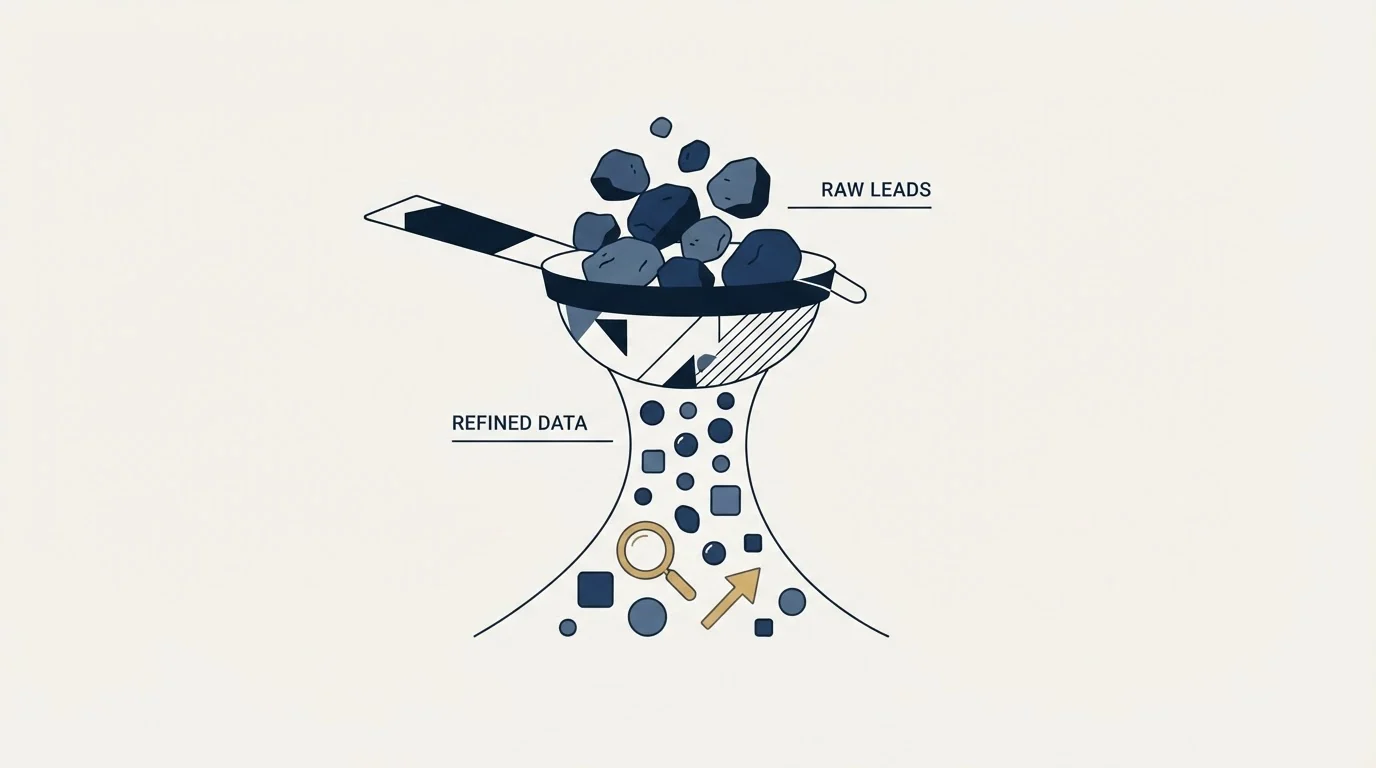
Choose Cognism when the list is the part that is failing: a large share of rows with no usable contact, employers that are out of date, or a campaign that cannot start because nobody can reach the people on it.
When to Choose Salesforce
Choose Salesforce when the pipeline is the part that is failing: replies with nowhere to be logged, next steps depending on somebody remembering, or a manager who cannot tell you what happened to last month's list.
Do You Need Both, and in Which Order?
Two questions decide the order, and both are answerable in an afternoon.
The first is where the work is stopping. Pull fifty rows out of whatever stores your prospects today and count how many carry a usable direct email, a current employer and a title that matches what the person does now. If a large share fail, the data is the bottleneck and Cognism goes first. If most pass and nobody knows who followed up, Salesforce goes first.
The second is who else has to see it. A CRM is a shared system that survives a rep leaving; enrichment output can sit in a spreadsheet for a while without anybody being hurt. That asymmetry is the honest reason to lean toward Salesforce when the two look equally urgent. There is also a case for buying neither yet: a team sending its first few hundred messages a month learns more from the replies than from either tool, and the purchase becomes obvious once doing it by hand costs a day a week, which is also roughly the point at which a vendor quote stops being a waste of the meeting.
Rolling the Second Tool In Without Breaking the First
Adding the second tool is where the pair usually goes wrong, and the failure has one shape: two systems writing the same field with different ideas about what is true. Cognism's settings give that decision a home, so make it before anything is connected.
Choose the integration type first: user-based, where each rep's own Salesforce login and permissions govern the export, or a managed service, where one central login exports for everyone and team members who are not mapped cannot export. Then set the export rules: who may create new records, who may update existing ones, and whether a Contact that cannot be associated with an Account may export at all.
Map the fields and pick an update rule for each. The rule that survives contact with a sales team is that anything a human typed after speaking to somebody outranks anything a vendor fetched, which is Apply if blank; keep Override for fields where Cognism should always win.
Activate the record matching and duplicate rules in Salesforce before the first sync. Cognism follows them rather than overriding them, and its help centre recommends matching Leads and Contacts against each other; CRM enrichment writing into a wrongly matched record is harder to unpick than one that wrote nothing.
Then export one segment and read fifty finished records by hand before opening it up. Check coverage as well as accuracy, because the match rate is not something a pricing page will tell you, and agree how records stay current, since data decay makes a one-off pass a snapshot with a short life.
Choose the integration type
User-based, with each rep's own Salesforce login, or a managed service with one central login.
Set the export rules
Who may create records, who may update them, and whether a Contact with no Account can export.
Map fields and pick update rules
Apply if blank wherever a person typed the value; Override only where Cognism should win.
Activate Salesforce matching rules
Match Leads and Contacts against each other before the first export.
Export one segment
Read fifty finished records by hand, then widen.
Using Both Together
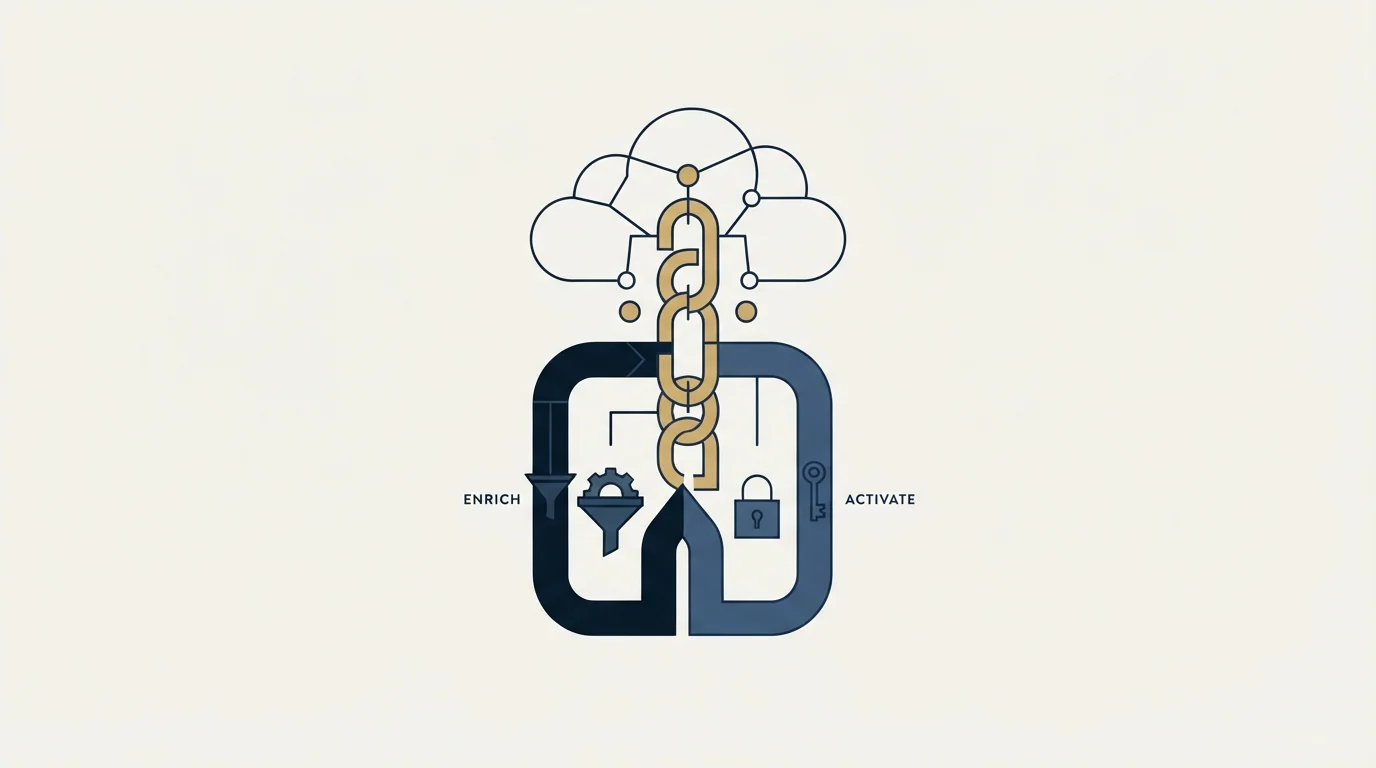
The practical version is narrower than it sounds. Cognism runs before the campaign and produces rows; Salesforce runs after it and keeps what came back. The only place they have to meet is the moment a row becomes a record, and getting that handoff right is most of the value of the pair. Agree what counts as a meeting at the same time, because meetings are qualified against criteria written down before launch rather than judged afterwards.
The Decision Shortcut
If the whole decision has to fit in a sentence: buy Salesforce first unless the list is visibly the thing that is broken, because Salesforce costs a number you can read today and Cognism costs a conversation.
- A pipeline exists and it is full of dead contacts. Buy Cognism. A second CRM will not fix a data problem.
- A list exists and nobody can tell you what happened to it. Buy Salesforce.
- Neither exists and the budget covers one. Buy Salesforce and source by hand for a quarter.
Where one side of a stack shows no price on its pricing page, the advantage in ordering sits with the side that does. That is a procurement fact rather than a product one, and it still orders the purchases correctly.
How These Figures Were Checked
Every figure on this page comes from the vendor's own pricing page, checked against a dated copy of that page rather than from memory, and attributed to the surface it appeared on.
Salesforce's ladder was re-read on its pricing page, and every rate above is on it. Cognism's pricing page was readable and carries no currency figure in its visible text, which is a confirmed absence rather than a failed fetch. The integration steps come from Cognism's help centre articles on setting up, configuring, exporting to and deduplicating against Salesforce.
The illustrative budget above is arithmetic on those published rates, and the team size and contact volume behind it are invented.
Related Reading
- Best Cognism Alternatives in 2026
- Best Salesforce Alternatives in 2026
- Apollo.io vs Cognism: Data Enrichment Tool Comparison
- Cognism vs ZoomInfo: Data Enrichment Tool Comparison
- HubSpot CRM vs Salesforce: CRM Platform Comparison
If you would rather have this run for you, RevenueFlow books qualified meetings on a pay-per-meeting basis and publishes client results.
Pricing and features are taken from the vendors' own pages. Verify current terms with the vendor before relying on them.
Frequently asked questions.
Frequently asked questions- How do you integrate Cognism with Salesforce?
- Cognism's help centre says an admin opens Settings in the Cognism web app, goes to Integrations, Salesforce, Connect Integration, and connects a production or sandbox org. Salesforce must be Professional edition or above with API access enabled. The admin chooses user-based logins or a managed service, then configures field mappings and update rules before users export.
- What Salesforce and HubSpot integration features does Cognism provide?
- For both CRMs Cognism exports records from its web app and Chrome extension using admin-defined field mappings, and imports selected CRM fields for matching and enrichment. On Salesforce it adds export rules, per-field update rules (Apply if blank or Override), a choice of Lead or Contact and Account, and matching against your Salesforce duplicate rules.
- Does Cognism enrich existing Salesforce records?
- Yes, through CRM Enrichment, which Cognism's pricing page offers as an add-on to its Standard or Pro packages or as a standalone product to automatically enrich and maintain CRM records. The page says a contact enriched once is kept up to date, with credits only used again when key details change, like a job move.
- How much do Cognism and Salesforce cost together?
- Only the Salesforce half can be read. Its pricing page lists Starter Suite at $25 per user per month and Max at $550, so five Starter seats cost $1,500 a year, illustratively. Cognism's pricing page shows no price: its packages include 5 seats and a credit allocation, so the Cognism line is a quote to request.
About the author.

Tim Carden is CMO / CTO at RevenueFlow, which builds and operates outbound revenue engines for B2B companies. Studied at McGill University.
Tim Carden · CMO / CTO
Connect on LinkedIn →Explore more.
Ready to scale your outreach?
We build GTM engines that book real meetings. See the receipts.
Related articles.
AroundDeal vs Salesflare: Data Enrichment Tool vs CRM Platform Comparison
Compare AroundDeal (data enrichment tool) and Salesflare (CRM platform) side by side. See pricing, features, and integrations to decide which one, or both, your stack needs.
Evaboot vs Microsoft Dynamics 365 Sales: Data Enrichment Tool vs CRM Platform Comparison
Compare Evaboot (data enrichment tool) and Microsoft Dynamics 365 Sales (CRM platform) side by side. See pricing, features, and integrations to decide which one, or both, your stack needs.
Agile CRM vs LeadIQ: CRM Platform vs Data Enrichment Tool Comparison
Compare Agile CRM (CRM platform) and LeadIQ (data enrichment tool) side by side. See pricing, features, and integrations to decide which one, or both, your stack needs.
Anymail Finder vs Pipeline CRM: Data Enrichment Tool vs CRM Platform Comparison
Compare Anymail Finder (data enrichment tool) and Pipeline CRM (CRM platform) side by side. See pricing, features, and integrations to decide which one, or both, your stack needs.
AroundDeal vs Maximizer: Data Enrichment Tool vs CRM Platform Comparison
Compare AroundDeal (data enrichment tool) and Maximizer (CRM platform) side by side. See pricing, features, and integrations to decide which one, or both, your stack needs.
Breakcold vs Bulk Email Checker: CRM Platform vs Data Enrichment Tool Comparison
Compare Breakcold (CRM platform) and Bulk Email Checker (data enrichment tool) side by side. See pricing, features, and integrations to decide which one, or both, your stack needs.