The Cold Calling Framework That Converts at 10%
Most sales teams are leaving money on the table with their cold calling approach. Here's how to double your conversion rate by changing when you personalize, how you open, and how you handle objections.
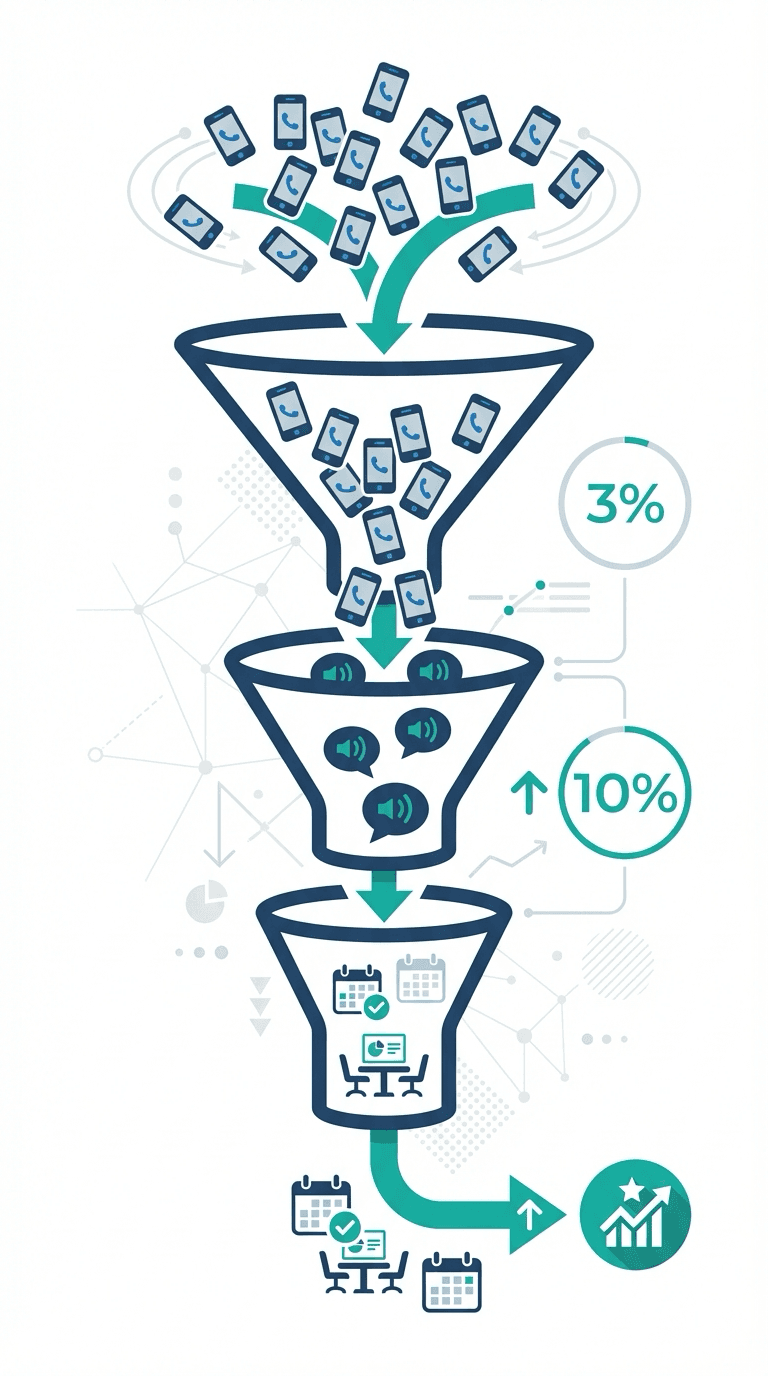
Top-performing cold callers convert at 10% by using just-in-time personalization (researching only after someone answers), dropping confirmation openers, leading with exclusive offers instead of meeting requests, keeping pitches to 60 seconds, and using the 'Mr. Miyagi Method' of agreeing with objections before redirecting to business outcomes. The framework shifts from asking for time to offering selective value, which increases conversation-to-meeting conversion by 50%.
Key takeaways
- Just-in-time personalization (researching only after someone picks up) saves wasted effort on prospects who don't answer and makes references feel more natural than pre-call research.
- Every second after 45 seconds in a pitch causes a 10% drop in prospect attention, making 60-90 word pitches (30-45 seconds) optimal for maintaining engagement.
- Improving conversation-to-meeting conversion from 6.7% (1-in-15) to 10% (1-in-10) creates a 50% pipeline increase from the same dial volume.
- The 'Mr. Miyagi Method' for objections (agreeing first, then redirecting to business outcomes) prevents defensive responses that kill conversations.
- Using selectivity framing ('we've specifically chosen your company') reverses the power dynamic from asking for time to offering exclusive value.
Reviewed and updated September 5, 2026
The Cold Calling Framework That Converts at 10%
Most sales teams treat cold calling like it's 2010.
They spend hours researching before each call. They ask "Is this John?" like they're not sure who they called. They fight objections like they're in a debate club.
Then they wonder why they're converting at 3-5%.
Here's what actually works in 2025:
The Numbers That Matter
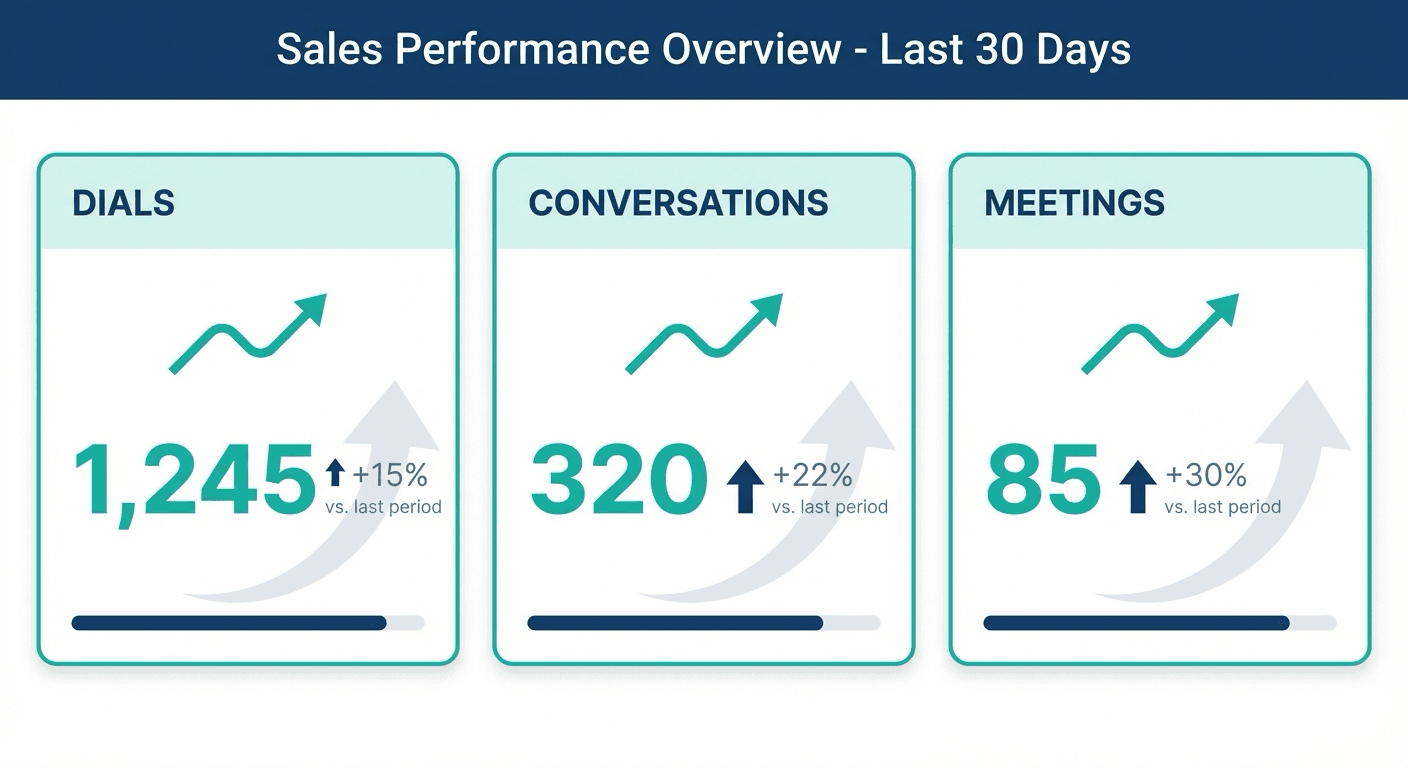
Before we talk tactics, look at the metrics. If you're not tracking these, you're flying blind:
The Three Core Metrics
- Dials - Raw volume of attempts
- Conversations - Actual decision-maker discussions
- Meetings Booked - The outcome that matters
Most teams obsess over dials. The real leverage is in your conversation-to-meeting conversion rate.
Going from 1-in-15 (6.7%) to 1-in-10 (10%) conversations converting to meetings is a 50% increase in pipeline from the same effort.
Here's how you get there:
1. Just-In-Time Personalization (Not Just-In-Case)
Stop spending 10 minutes researching prospects before you dial.
The old way: Research everything about a prospect, take notes, then call them (and they don't answer).
The new way: Only personalize when you get a live connect.
When they pick up:
- Quick tab to their LinkedIn (3 seconds)
- Grab one specific detail (portfolio companies, focus area, company name)
- Reference it naturally in your opener
Why this works:
- You're not wasting time on prospects who won't answer
- The personalization is fresh and genuine (you literally just saw it)
- You avoid LinkedIn automation flags from mass-viewing profiles
Example: "Hey Sarah, I was just looking at [Company Name] and saw you focus on PE firms in B2B professional services..."
The personalization feels more natural because it IS more natural.
2. Drop the Confirmation Opener
"Is this Sarah?"
Nobody says this in real life. You called them. You know who they are. Act like it.
Instead of: "Hi, is this Sarah Johnson?"
Try: "Hey Sarah, this is [Name] from [Company]..."
This does two things:
- Shows confidence (you're not second-guessing yourself)
- Saves 5 seconds to get to value faster
If you have the wrong person, they'll tell you. But 95% of the time, you have the right person, so stop wasting everyone's time confirming it.
3. Lead With The Offer, Not The Meeting
Most reps are trying to book a call.
Top performers are trying to give something valuable.
The psychology shift: You're not asking for their time. You're offering them something exclusive.
The Selectivity Frame
"We've specifically chosen your company to run a complimentary pilot campaign..."
Notice the language:
- "Specifically chosen" (not "calling everyone")
- "Your company" (not "companies like yours")
- "Complimentary pilot" (they're getting something, not giving something)
This flips the dynamic. You're the selector, not the selected.
4. The 60-Second Rule
Your pitch should be 60-90 words maximum. That's 30-45 seconds at a normal speaking pace.
Why? Because every second after 45 seconds, you lose 10% of prospects who zone out or get impatient.
What to cut:
- Long company backstories
- Lists of every service you offer
- Multiple case studies
- Detailed explanations of your process
What to keep:
- Who you help (specific)
- What outcome you deliver (specific)
- Why they specifically were chosen
- The offer/next step
Example of a tight pitch:
"Sarah, we work exclusively with PE firms in B2B services. We run complimentary pilot campaigns that generate qualified meetings for your portfolio companies. We've specifically chosen you because of your focus on professional services. I'd love to show you what we could do for one of your portfolio companies. Do you have 20 minutes this week?"
That's 59 words. 30 seconds. Clear, specific, valuable.
5. The Mr. Miyagi Method: Agree, Then Redirect
Remember Karate Kid? Mr. Miyagi never blocked attacks head-on. He deflected them.
Do the same with objections.
The Old Way (Fighting):
Prospect: "We already have a system in place."
Rep: "But our system is better because..."
This triggers defensiveness. Now they have to defend their current system.
The Mr. Miyagi Way (Agreeing, then Redirecting):
Prospect: "We already have a system in place."
Rep: "That's great. Most PE firms do. What we've found is that even firms with solid systems are struggling to hit LP revenue targets in this market. That's specifically why we're offering this pilot. Can I ask: are you currently hitting your portfolio company growth targets?"
See the difference?
- You agreed (validated them)
- You reframed the context (the system isn't the issue, the results are)
- You redirected with a question (now they're thinking about their challenges, not their system)
Common Objections & Mr. Miyagi Responses:
"Send me an email."
- Agree: "Absolutely, I'll send that over."
- Redirect: "Quick question first: are you currently running any outbound for your portfolio companies?"
- Offer: "Great, I'll send the email and also book a placeholder for 15 minutes on Thursday so we can discuss if it makes sense for you. Does 2pm or 4pm work better?"
"We're not interested right now."
- Agree: "I completely understand. Timing isn't always right."
- Redirect: "Just so I know for the future, are you running outbound internally or is this something you might explore down the road?"
- Offer: "Got it. I'll touch base in Q2 when planning cycles typically open up. Sound good?"
"How did you get my number?"
- Agree: "Fair question. I'd wonder the same thing."
- Redirect: "We specifically research PE firms investing in B2B services. Your portfolio caught our attention."
- Offer: "Since I have you, let me share really quickly why we reached out..."
6. Sell the Offer, Not the Call
Nobody wants to take a sales call. Everyone wants to get value.
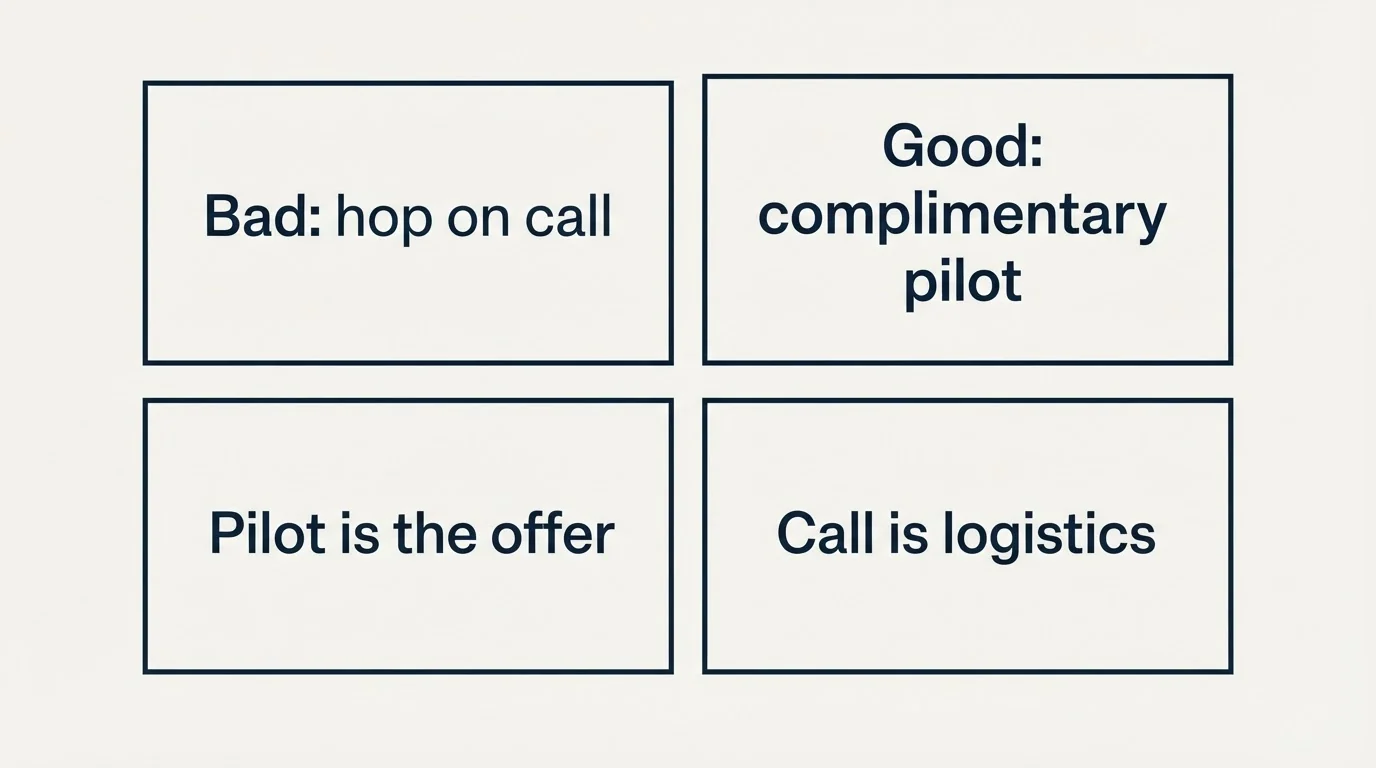
Bad positioning: "I'd love to hop on a call and show you what we do."
Good positioning: "I'd love to run a complimentary pilot for one of your portfolio companies. We typically generate 8-12 qualified meetings in 30 days. Are you open to seeing if this could work for you?"
The offer is the pilot campaign. The call is just logistics.
- Research everything about a prospect, take notes, then call them (and they don't answer).
- Hi, is this Sarah Johnson?
- I'd love to hop on a call and show you what we do.
- Only personalize when you get a live connect.
- Hey Sarah, this is [Name] from [Company]...
- I'd love to run a complimentary pilot for one of your portfolio companies.
The Conversion Math
Let's put this all together with real numbers:
Before the framework:
- 1,000 dials per week
- 30 conversations (3% connect rate)
- 2 meetings (6.7% conversion)
After the framework:
- 1,500 dials per week (more volume because less prep time)
- 45 conversations (3% connect rate, more dials = more conversations)
- 4-5 meetings (10% conversion)
Result: You just went from 2 meetings per week to 4-5. That's a 150% increase.
Not from working harder. From working smarter.
The Action Plan
Starting today:
- Track your metrics - Know your dial-to-conversation rate and conversation-to-meeting rate
- Personalize on connect, not before - Save 80% of research time
- Drop confirmation openers - Dive right in with confidence
- Shorten your pitch to 60 seconds - Cut everything that doesn't directly drive value
- Practice the Mr. Miyagi method - Agree first, redirect second
- Sell the offer - Position what you're giving them, not asking from them
The Uncomfortable Truth
Most sales reps won't implement this.
They'll read it, nod along, and keep doing what they've always done.
Because this approach feels uncomfortable. It requires confidence. It requires you to believe your offer is actually valuable enough that you're doing them a favor by reaching out.
But if you implement even half of these principles, you'll see your conversion rate climb within a week.
And when you're converting at 10% instead of 6.7%, suddenly cold calling becomes your most profitable channel.
The phone isn't dead. Your approach might be.
Time to fix that.
Related Reading
- Why Cold Calling Should Be Your Go-To Strategy for Booking Calls If You Have a Small TAM
- The Fastest Rep to Call Wins the Deal: Why Most B2B Sales Reps Lose in the 48 Hours After a Prospect Replies
- 15 Objection Handling Email Templates That Actually Work
If you would rather have this run for you, RevenueFlow books qualified meetings on a pay-per-meeting basis and publishes client results.
Frequently asked questions.
Frequently asked questions- What is just-in-time personalization in cold calling?
- Just-in-time personalization means researching prospects only after they answer the phone, not before you dial. When someone picks up, you quickly check their LinkedIn (3 seconds), grab one specific detail like their focus area or company name, and reference it naturally in your opener. This saves time on prospects who won't answer, makes personalization feel more genuine, and avoids LinkedIn automation flags from mass-viewing profiles before calls.
- Why should I stop asking 'Is this Sarah?' when cold calling?
- Confirmation openers like 'Is this Sarah?' waste time and signal uncertainty. You called them, so you know who they are. Instead, lead with confidence: 'Hey Sarah, this is [Name] from [Company].' This saves 5 seconds to deliver value faster and projects confidence rather than second-guessing yourself. If you have the wrong person, they'll tell you, but 95% of the time you're right, so don't waste everyone's time confirming.
- How long should a cold calling pitch be?
- Your pitch should be 60-90 words maximum, which equals 30-45 seconds at normal speaking pace. After 45 seconds, you lose 10% of prospects every additional second as they zone out or get impatient. Cut company backstories, service lists, and multiple case studies. Keep only who you help (specific), what outcome you deliver, why they were chosen, and the next step. A tight pitch maintains attention and increases conversion.
- What is the Mr. Miyagi Method for handling objections?
- The Mr. Miyagi Method means agreeing with objections first, then redirecting to business outcomes instead of fighting them head-on. When a prospect says 'We already have a system,' respond with 'That's great. Most PE firms do,' then reframe: 'What we've found is even firms with solid systems struggle to hit LP revenue targets in this market.' This validates the prospect, prevents defensiveness, and shifts focus from their current solution to their actual business challenges.
- How do you convert conversations to meetings at 10%?
- Lead with an offer rather than asking for a meeting. Use selectivity framing like 'We've specifically chosen your company to run a complimentary pilot campaign.' This flips the dynamic: you're offering something exclusive, not requesting their time. Combined with just-in-time personalization, dropping confirmation openers, 60-second pitches, and the Mr. Miyagi objection method, this framework converts 1-in-10 conversations to meetings versus the typical 1-in-15, creating 50% more pipeline from the same effort.
About the author.

Tim Carden is CMO / CTO at RevenueFlow, which builds and operates outbound revenue engines for B2B companies. Studied at McGill University.
Tim Carden · CMO / CTO
Connect on LinkedIn →Explore more.
Ready to scale your outreach?
We build GTM engines that book real meetings. See the receipts.
Related articles.
The NEPQ Sales Process: Seven Phases
Connection through presentation, in the order 7th Level publishes them, plus where a sequence built for one decision maker starts to strain in a committee purchase.
Cross-Sell vs Upsell: Different Trigger, Different Owner
An upsell has a trigger that arrives on its own. A cross-sell has none and needs a diagnosis somebody funds. That is the difference that decides the work.
Monthly Sales Meeting Agenda: What the Month Decides
The weekly meeting triages deals in flight. The monthly one closes a period and changes the list. Six blocks, ninety minutes, one output each.
Sales Activity Tracking: What the Record Has to Say
Most activity tracking fails at capture rather than analysis. The unit you count decides what every later number can mean, and no tool fixes a wrong choice.
Sales Call Planning: The Plan a Booked Call Needs
A call cannot produce a commitment nobody named in advance. The four fields a call plan carries, and why the ask has to be decided before the meeting opens.
Lifecycle Stage, Lead Status, Deal Stage: Three Fields
Lifecycle stage records position, lead status records activity, and deal stage lives on the deal. Merging them breaks funnel reporting in ways nobody notices for a year.