Freshsales vs Salesforce: CRM Platform Comparison
Compare Freshsales and Salesforce side by side. See pricing, features, and integrations to choose the right crm platform for your needs.
Freshsales vs Salesforce comes down to who will run the CRM. Freshsales publishes Growth, Pro and Enterprise at $9, $39 and $59 per user a month billed annually and arrives configured; Salesforce runs from a $0 Free Suite to Max at $550 and suits teams with an admin and enterprise requirements.
Key takeaways
- Freshsales' pricing page serves Growth, Pro and Enterprise at $9, $39 and $59 per user a month billed annually, and its rendered page can show pounds instead, £7, £29 and £49, depending on where it is viewed from.
- Salesforce's Sales Cloud ladder runs Free Suite $0, Starter Suite $25, Pro Suite $100, Core $195, Advanced $395 and Max $550, with only Starter Suite billed monthly.
- At twelve seats, Freshsales Pro costs $468 a month against $1,200 for Salesforce Pro Suite, before any Salesforce configuration work.
- Freshsales puts territory management and contact scoring on Pro and forecasting insights on Enterprise; Salesforce sells Sales Planning as an add-on below Max.
Reviewed and updated September 19, 2026
Salesforce's sales pricing page publishes the same ladder in six currencies at once: $25 USD, 25 euros, AU$35, 3,000 yen, 250 Swedish krona and 20 pounds for the Starter Suite. It also puts Billed annually on every tier above that one. Freshsales publishes three tiers in dollars at $9, $39 and $59, and in Freshsales vs Salesforce the gap between the two entry prices understates the gap between the two companies.
Freshsales vs Salesforce for Small Business: The Short Answer
For most teams under about fifty people, Freshsales is the better choice: it is cheaper at every paid tier, it arrives configured, and its published add-ons are limited to branded documents and the Freddy AI Agent. Salesforce is the right choice when the requirement is genuinely enterprise: custom objects, deep integration, an admin who owns the platform, and a compliance or reporting need that a mid-market CRM will not survive.
Buying Salesforce for a ten-person sales team is a decision about the next five years rather than about this one, and it should be made deliberately rather than because it is the name everybody knows.
Where They Actually Differ
Salesforce is a platform first. Its pricing page runs through Agentforce, sales quoting and forecasting, Sales Planning for territories and quotas, and access to AgentExchange, the marketplace Salesforce's own pages now describe as formerly AppExchange, and the last of those is the point: the product is expected to be extended rather than merely used.
Freshsales is an application. Scoring, pipelines, phone, territories and forecasting are inside it, and the shape they take is the shape Freshworks chose.
Since Freshsales already includes deal tracking, teams curious about pairing it with call analysis might explore how it compares with revenue intelligence tools for coaching and forecasting.
That distinction shows up in staffing rather than in features. Salesforce assumes somebody owns it, and a business without that person gets an expensive, half-configured system. Freshsales assumes nobody does, and a business that wants deep customisation will eventually feel the walls.
Pricing Comparison
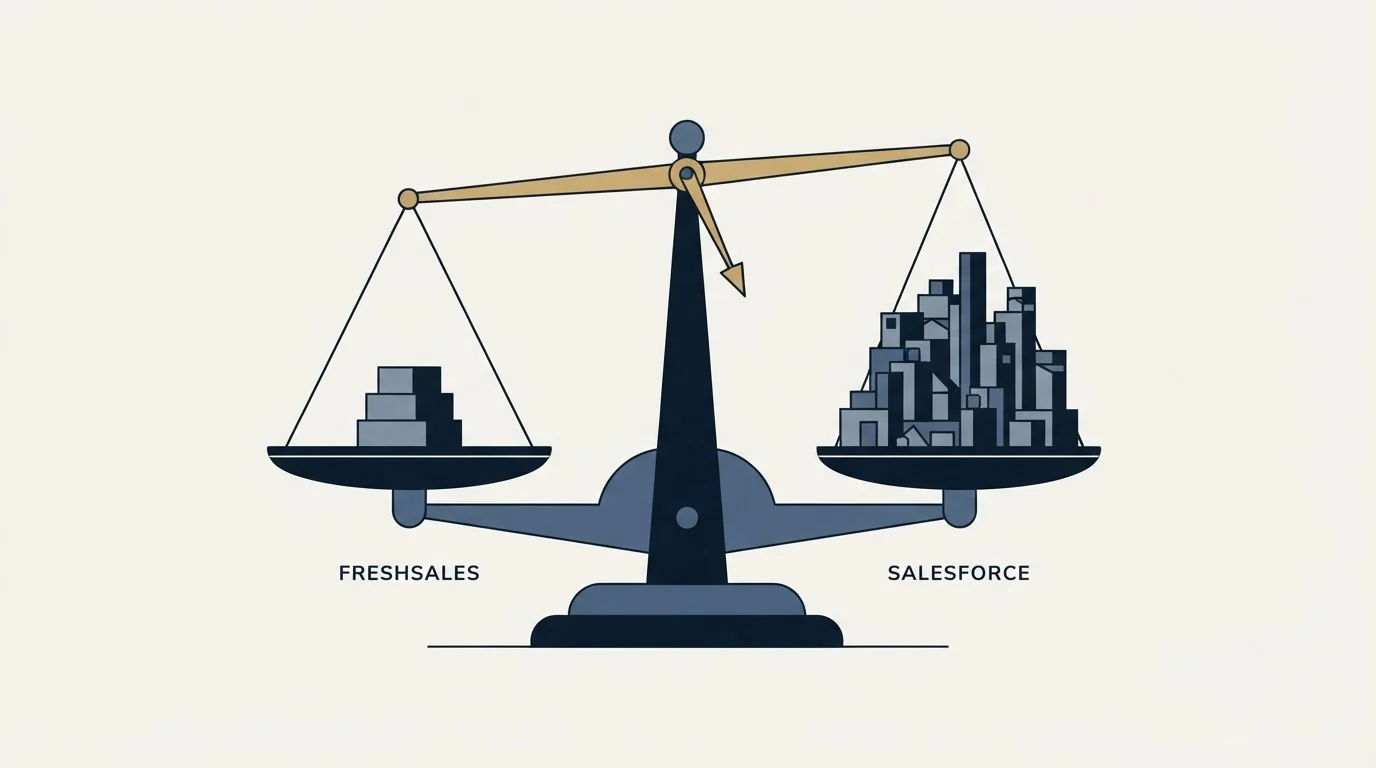
Freshsales Pricing
| Plan | Price |
|---|---|
| Growth | $9/mo |
| Pro | $39/mo |
| Enterprise | $59/mo |
Source: Freshsales Pricing
Those are the dollar figures Freshworks' pricing page serves in its HTML. Rendered in a browser from this network, the same page switches to pounds and shows £7, £29 and £49, so the currency a visitor sees depends on where they are browsing from.
Salesforce Pricing
| Plan | Price |
|---|---|
| Free Suite | $0/mo |
| Starter Suite | $25/mo |
| Pro Suite | $100/mo |
| Core | $195/mo |
| Advanced | $395/mo |
| Max | $550/mo |
Starter Suite is billed monthly or annually at the same rate; every paid tier above it is the per user per month price billed annually.
Source: Salesforce Sales Pricing
What The Ladders Actually Say
The Freshsales half of this page previously claimed a free tier. There is none: the pricing page publishes Growth, Pro and Enterprise at $9, $39 and $59 per user a month billed annually, with a 21-day trial instead of a free plan.
On the Salesforce side, one detail changes a budget. Starter Suite at $25 per user a month is billed monthly or annually, and every tier above it, Pro Suite at $100, Core at $195, Advanced at $395 and Max at $550, is billed annually. A team that wanted month-to-month flexibility above the entry tier does not have that option. Drawn on one scale, Freshsales' top plan, Enterprise at $59, still sits below Salesforce's Pro Suite at $100.
The currency behaviour is worth noting for anyone outside the United States. Salesforce renders the whole ladder in several currencies in the same document, so the number a visitor sees depends on which one the page decides to show, and euro and dollar prices are not a straight conversion of each other.
Working Out What You Would Pay
Twelve users on a normal mid-market sales process. Invented headcount, used to compare the two ladders. Every number below that is not a published price is invented.
On Freshsales, twelve Pro seats at $39 billed annually is $468 a month, which covers scoring, deal insights, sales sequences and territory management. Moving all twelve to Enterprise at $59 for forecasting insights and field-level permissions makes it $708.
On Salesforce, twelve Pro Suite seats at $100 billed annually is $1,200 a month, and twelve Core seats at $195 is $2,340.
| Twelve seats on | Sum | Per month |
|---|---|---|
| Freshsales Pro | 12 × $39 | $468 |
| Freshsales Enterprise | 12 × $59 | $708 |
| Salesforce Pro Suite | 12 × $100 | $1,200 |
| Salesforce Core | 12 × $195 | $2,340 |
So the like-for-like comparison at twelve seats is roughly $468 against $1,200, before anybody has been paid to configure the Salesforce org. The gap is real and it is not the whole story: a business that will need custom objects and an AgentExchange ecosystem in two years is paying that premium for optionality rather than for features it uses today.
Feature Overlap, Honestly
The chart below claimed each column was exclusive to one vendor, and on this pair that was particularly indefensible: both products publish workflow automation, forecasting and territory management. The columns now describe what each vendor chooses to put on its own page.
Where each capability first appears is the more useful comparison than whether it appears at all. Freshsales puts contact scoring and territory management on Pro at $39 and forecasting insights on Enterprise at $59. Salesforce lists sales quoting and forecasting on Pro Suite at $100 and advanced forecast and pipeline management from Core at $195; its comparison table sells Sales Planning, the territory and quota product, as an add-on up to Core and includes it in Max at $550, and offers lead scoring for purchase on Core before including it from Advanced at $395.
| Capability | Freshsales | Salesforce |
|---|---|---|
| Forecasting | Forecasting insights on Enterprise, $59 | Quoting and forecasting on Pro Suite, $100; advanced forecast and pipeline management from Core, $195 |
| Territories | Territory management on Pro, $39 | Sales Planning an add-on up to Core; included in Max, $550 |
| Scoring | Contact scoring on Pro, $39 | Lead scoring for purchase on Core; included from Advanced, $395 |
What Freshsales Lists
The entries that earn Freshsales its place are the ones included rather than added. Its pricing page puts chat, email and phone into Growth, and contact scoring and territory management into Pro, inside the seat price.
The same page names two add-ons, branded documents at $19 a user a month and the Freddy AI Agent at $49 per 100 sessions. Integrations sit elsewhere, in the Freshworks Marketplace covered below. A short add-on list is also why a Freshsales budget survives contact with a finance team.
What Salesforce Lists
AgentExchange, the marketplace Salesforce's pages describe as formerly AppExchange, is the entry that justifies the price for the businesses that need Salesforce. The marketplace means an unusual requirement usually has an answer already built, which is worth a great deal in a regulated or complex business.
Custom objects are the other one. A company whose data model does not fit leads, contacts, accounts and opportunities will eventually need them, and no amount of configuration in a mid-market CRM substitutes.
Integrations
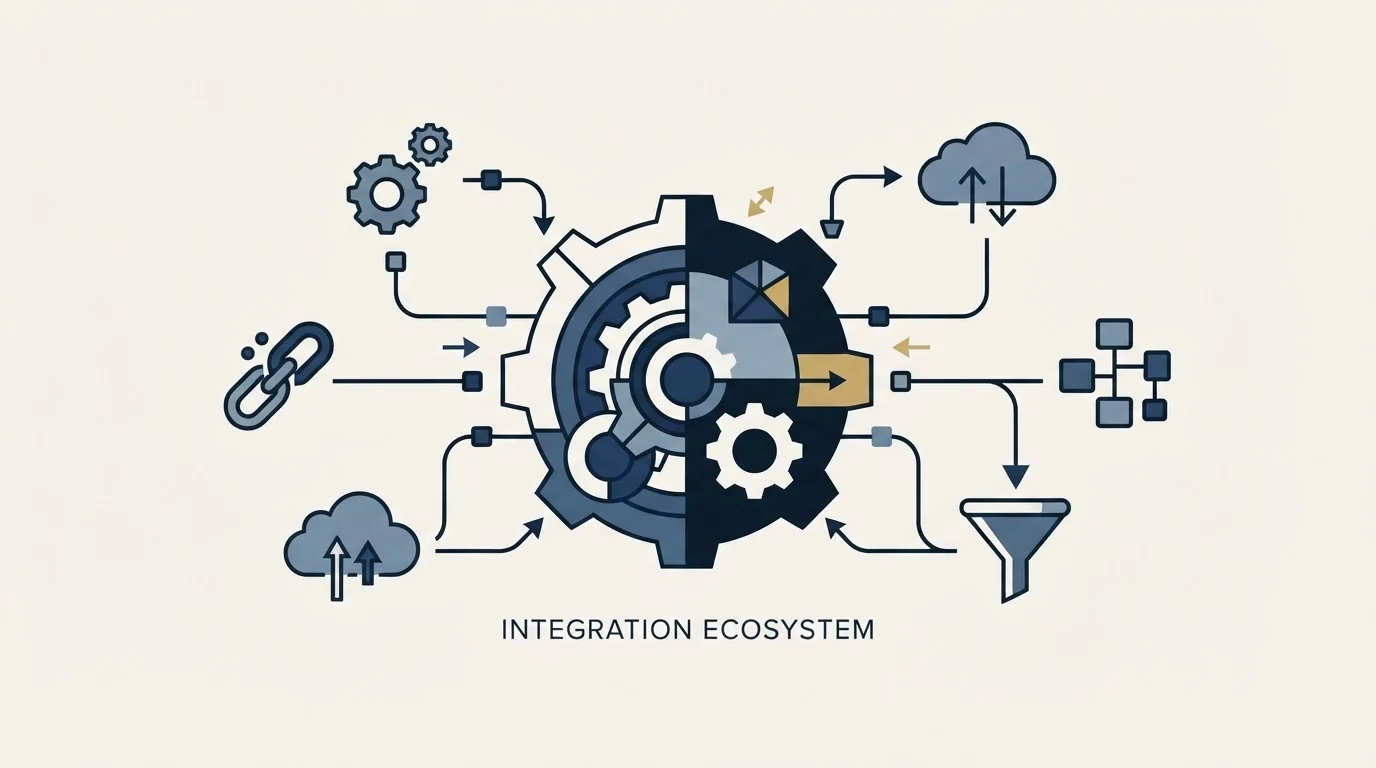
Salesforce's pricing page lists email integration with Gmail or Outlook, bundles Slack at every tier from Slack Free up to Slack Enterprise+ on Max, includes Tableau Next from Core, and gives Pro Suite access to AgentExchange. Tableau and the marketplace are the tell: this is a platform sold alongside analytics and an app ecosystem, which describes a different class of buyer.
Freshsales puts chat, email and phone into its Growth plan, and the Freshworks Marketplace lists a Freshsales app that shows Freshsales leads, contacts, deals and accounts inside Freshdesk tickets. It is a shorter surface aimed at a company that wants the CRM to work on Monday rather than to be built out over two quarters. Freshworks keeps a separate integrations directory for Freshsales, so check your own tools there before committing.
Freshworks serves the Freshsales pricing page under its CRM path, titled Freshsales Pricing & Plans.
Who Should Pick Which
Pick Freshsales when the team is under about fifty people and nobody's job title contains the word administrator. It costs roughly a third of Salesforce's price at the nearest tiers, $9 against $25, $39 against $100 and $59 against $195, and it does not need a project to deploy.
Pick Salesforce when the requirement includes custom objects, complex approvals, or an integration that only exists on AgentExchange. Those are real constraints and no price comparison outweighs them.
Pick Salesforce if the company is already committed elsewhere in the estate. A business running Slack, Tableau and MuleSoft is already paying for the ecosystem, and the marginal cost of the CRM is smaller than the sticker suggests.
Where Each One Sits In A Cold Outbound Stack
Both products are the record at the end of a cold outbound stack. Neither holds sending domains or warms mailboxes, and cold volume through either one would leave via the company's own addresses.
Salesforce's advantage in that position is reporting depth: attributing a booked meeting through to closed revenue is genuinely easier when the data model can be extended to match how the business actually works.
RevenueFlow campaigns send one message per campaign, with no bumps and no thread replies, and meetings are qualified against criteria agreed in writing before launch. That written definition is the thing to encode in whichever CRM you choose, and it is worth resisting the temptation to replace it with a scoring model. Budget, timing and authority are never billing conditions, so a lead score that quietly reintroduces them will disagree with the contract.
Switching Between Them
Freshsales to Salesforce is a project rather than a migration, and the honest budget includes somebody's time for months rather than days. The data moves; the process has to be rebuilt in a system that will let you build it wrong.
Salesforce to Freshsales is usually a simplification exercise, and the thing that breaks it is custom objects. Anything modelled outside the standard entities has no destination, so audit that before committing to a date.
In both directions the reporting history is the part that hurts. Export it, and accept that year-on-year comparisons across the cut will need a footnote for at least a year.
Getting Started
- Ask whether anybody will own the CRM as part of their job
- Note that Freshsales has no free tier, only a 21-day trial
- Read the Freshsales rates as annual, since the page defaults to that toggle
- Check the Salesforce billing terms, since only Starter Suite offers monthly
- List any custom object or approval requirement before comparing prices
- Judge on whether the pipeline is accurate a month after go-live
The Bottom Line
At twelve seats the like-for-like comparison is roughly $468 a month against $1,200, before configuration. That gap buys extensibility, an ecosystem and a data model that bends, and a business that will need those is right to pay it.
Most teams under fifty people will not need them for years. Freshsales is the cheaper answer and, for a team without a dedicated administrator, usually the one that ends up actually being used.
Related Reading
- Best Freshsales Alternatives in 2026
- Best Salesforce Alternatives in 2026
- Close vs Salesforce: CRM Platform Comparison
- Copper vs Salesforce: CRM Platform Comparison
- Close vs Freshsales: CRM Platform Comparison
- B2B Prospecting: How the List Gets Built
If you would rather have the pipeline filled for you, RevenueFlow books qualified meetings on a pay-per-meeting basis and publishes client results.
Pricing and features are taken from the vendors' own pages. Verify current terms with the vendor before relying on them.
Frequently asked questions.
Frequently asked questions- Is Freshsales or Salesforce better for a small business?
- For most teams under about fifty people, Freshsales. It is cheaper at every paid tier, at $9, $39 and $59 per user a month billed annually against Salesforce's $25, $100 and $195, and it arrives configured. Salesforce earns its price when a business needs custom objects, complex approvals or an integration that only exists on its AgentExchange marketplace.
- How much does Salesforce cost compared with Freshsales?
- Salesforce's pricing page lists Free Suite at $0, Starter Suite at $25, Pro Suite at $100, Core at $195, Advanced at $395 and Max at $550 per user a month, with every tier above Starter billed annually. Freshsales' page serves $9, $39 and $59 per user a month billed annually, and its rendered page can switch to pounds depending on where it is viewed from.
- Does Freshsales have a free plan?
- Its pricing page lists three paid plans, Growth, Pro and Enterprise, and a 21-day trial on the fully loaded CRM. When the trial ends you choose a plan and pay by card, or the account is suspended. Salesforce, by contrast, lists a Free Suite at $0 per user a month at the bottom of its Sales Cloud ladder.
- Which is better for forecasting, Freshsales or Salesforce?
- Both publish forecasting at different tiers. Freshsales lists forecasting insights on its Enterprise plan at $59 per user a month. Salesforce lists sales quoting and forecasting on Pro Suite at $100 and advanced forecast and pipeline management from Core at $195. A team that forecasts across territories should also price Salesforce's Sales Planning add-on.
About the author.

Tim Carden is CMO / CTO at RevenueFlow, which builds and operates outbound revenue engines for B2B companies. Studied at McGill University.
Tim Carden · CMO / CTO
Connect on LinkedIn →Explore more.
Ready to scale your outreach?
We build GTM engines that book real meetings. See the receipts.
Related articles.
AroundDeal vs Salesflare: Data Enrichment Tool vs CRM Platform Comparison
Compare AroundDeal (data enrichment tool) and Salesflare (CRM platform) side by side. See pricing, features, and integrations to decide which one, or both, your stack needs.
Evaboot vs Microsoft Dynamics 365 Sales: Data Enrichment Tool vs CRM Platform Comparison
Compare Evaboot (data enrichment tool) and Microsoft Dynamics 365 Sales (CRM platform) side by side. See pricing, features, and integrations to decide which one, or both, your stack needs.
Agile CRM vs Copper: CRM Platform Comparison
Compare Agile CRM and Copper side by side. See pricing, features, and integrations to choose the right CRM platform for your needs.
Agile CRM vs LeadIQ: CRM Platform vs Data Enrichment Tool Comparison
Compare Agile CRM (CRM platform) and LeadIQ (data enrichment tool) side by side. See pricing, features, and integrations to decide which one, or both, your stack needs.
Kommo vs Luru: CRM Platform vs Sales Engagement Platform Comparison
Compare Kommo (CRM platform) and Luru (sales engagement platform) side by side. See pricing, features, and integrations to decide which one, or both, your stack needs.
Agile CRM vs Capsule CRM: CRM Platform Comparison
Compare Agile CRM and Capsule CRM side by side. See pricing, features, and integrations to choose the right CRM platform for your needs.