The Traditional SDR Function Is Dying: The GTM Engineer
From San Francisco to Singapore, growth teams ask the same question: how do we generate pipeline without adding more SDRs? The answer is a different role.
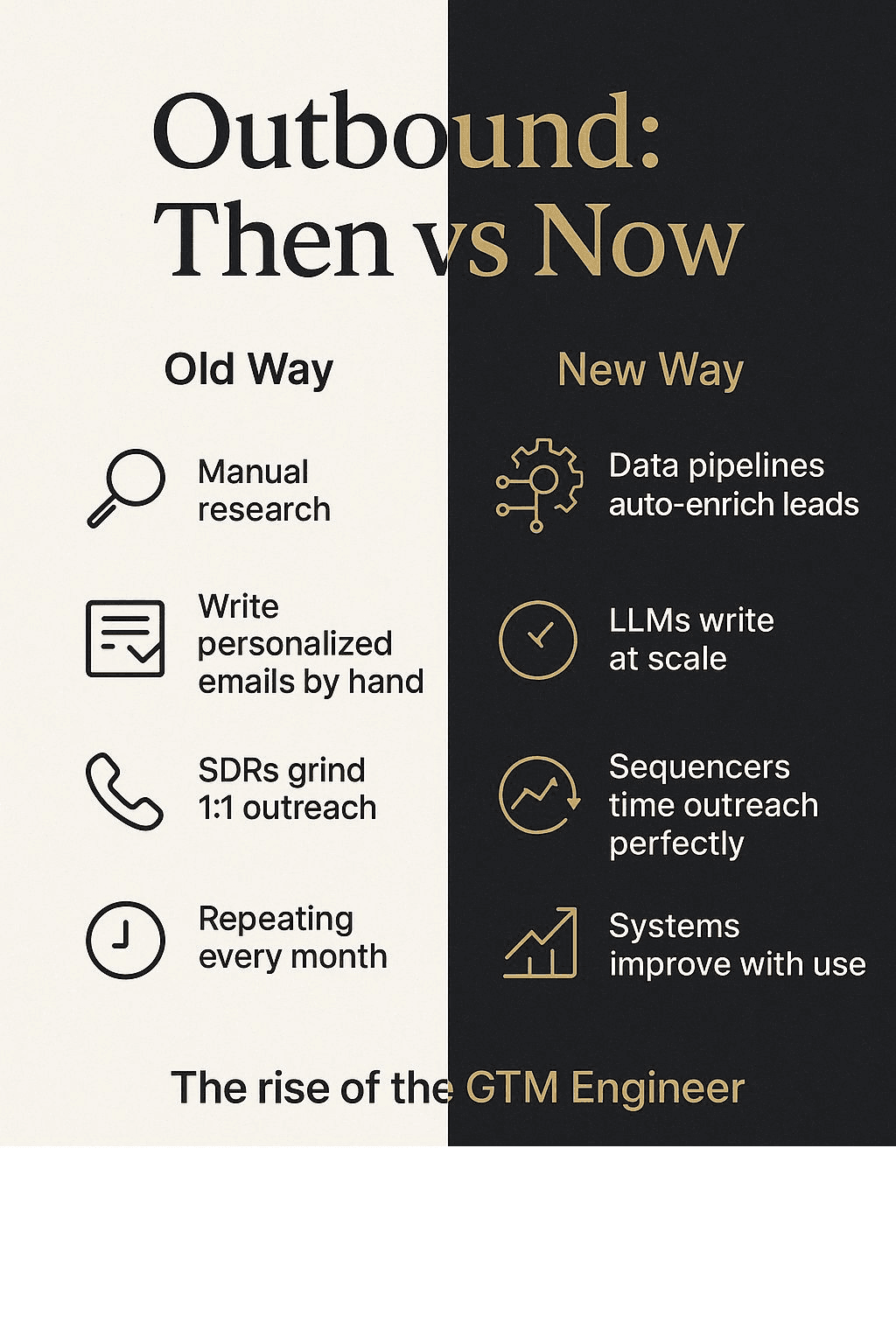
A GTM engineer builds the systems that generate pipeline instead of working a list by hand: enrichment pipelines, automated research, targeting logic and reply routing. The output is infrastructure that makes each subsequent campaign cheaper, which is why the work resembles data engineering.
Key takeaways
- Four capabilities matured together, enrichment, language models, sequencers and intent data, and between them they removed most of the manual labour that justified SDR headcount.
- SDR output scales with hours worked and stops when the person does; system output scales with the quality of the system and keeps running.
- The most reliable hiring path is promoting a curious SDR from within rather than recruiting a stronger technical resume with no commercial instinct.
- Two things do not transfer: the apprenticeship SDRs get from being ignored, and the judgment to decide not to send, which is often the role's most valuable output.
Reviewed and updated September 5, 2026
The Traditional SDR Function Is Dying
From San Francisco to Singapore, growth teams are asking the same question: how do we generate pipeline without adding more SDRs?
A decade ago that question had an obvious answer, which was that you could not. Scaling outbound meant hiring. More people, more emails, more calls. Books like Predictable Revenue codified the model, and for a long time it worked exactly as advertised.
The maths has changed underneath it.
What Changed
Four capabilities matured at roughly the same time:
- Data enrichment that uncovers prospect details automatically
- Language models that personalise without human effort
- Sequencers that automate outreach and timing
- Intent data that identifies when an account is actually in market
Individually, each is a productivity improvement. Together they remove most of the manual labour that justified the headcount.
The old way had SDRs manually researching prospects, writing emails, and setting meetings. Repetitive tasks consumed the day and output was capped by hours available.
It is digging a foundation with a spoon when an excavator exists.
The change is easiest to see in the shape of the output curve rather than in any single task. A person's output rises with hours worked and stops when they do. A system's output rises with the quality of the system and keeps running while nobody is watching. Those two curves cross somewhere, and the crossing point has moved a long way down as the four capabilities above matured.
- Output scales with hours worked and stops when the person does
- Research is done account by account, by hand
- Personalisation competes with volume for the same hours
- Capacity is added by hiring, with a ramp
- Knowledge lives with the individual
- The apprenticeship is built into the daily work
- Output scales with the quality of the system and runs unattended
- Research is a workflow applied to thousands of accounts
- Personalisation is generated from enriched data
- Capacity is added by improving the workflow
- Knowledge lives in the system, if it is documented
- The apprenticeship has to be deliberately replaced
The New Role
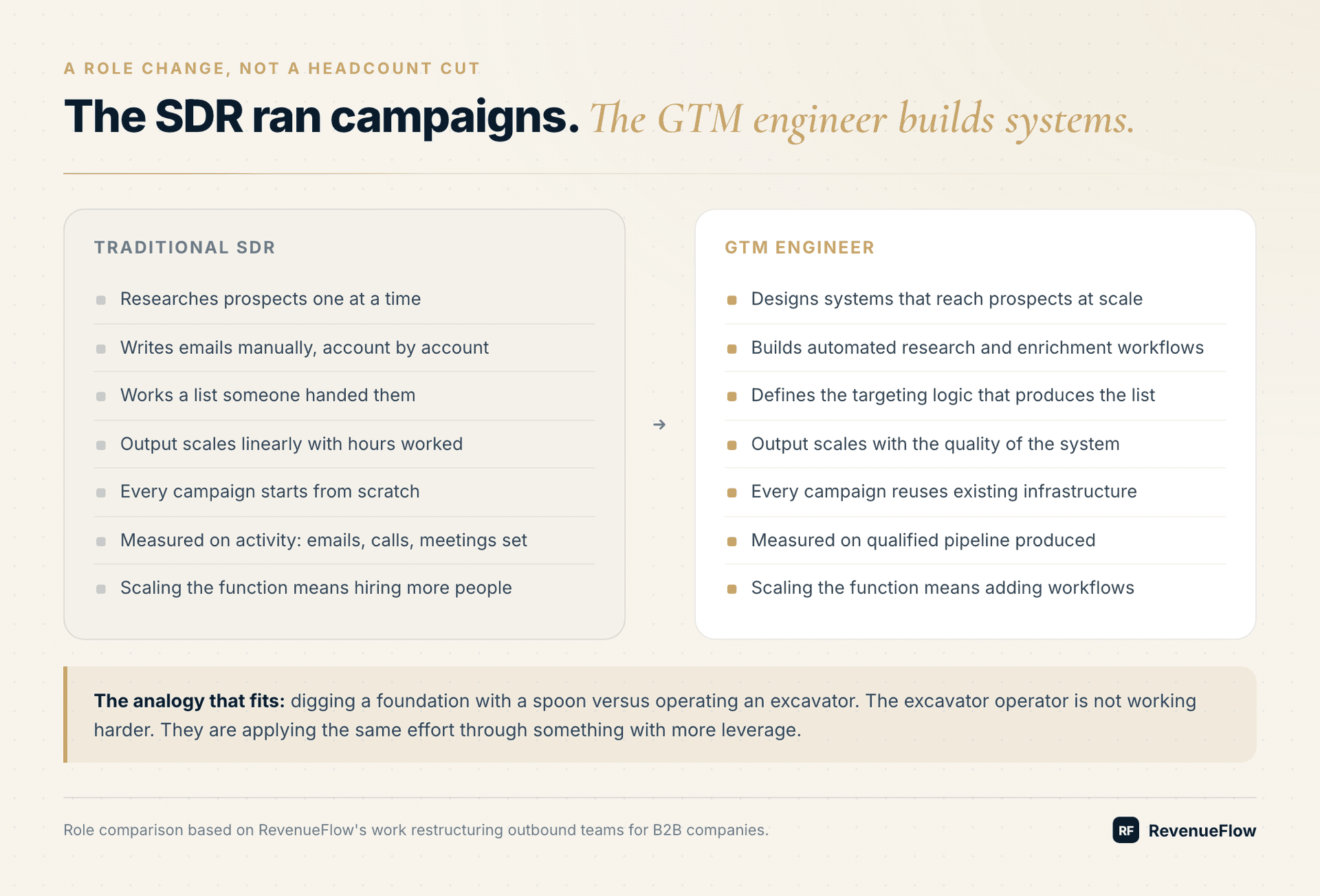
GTM engineers replace traditional SDRs with a more technical, systems-oriented approach. They:
- Design scalable systems for reaching prospects
- Build and maintain automated research workflows
- Handle complex targeting while automation manages the repetition
- Create reusable systems instead of one-off campaigns
The distinction that matters is the last one. An SDR runs a campaign. A GTM engineer builds infrastructure that makes the next campaign cheap.
That changes the shape of the output curve. SDR output scales linearly with hours worked, and stops when the person does. System output scales with the quality of the system, and keeps running.
What A GTM Engineer Actually Does
They automate what SDRs did manually, at a scale a person could not reach.
Where an SDR would research fifty accounts a week, a GTM engineer writes a workflow that researches five thousand, enriches them across multiple providers, scores them against ICP criteria, and produces a ranked list.
Where an SDR would write personalised emails one at a time, a GTM engineer builds a system that generates them from enriched data and tests which framings work.
Where an SDR would check a shared inbox, a GTM engineer builds classification and routing so replies reach an owner in minutes.
The work is closer to data engineering than to sales, which is why it is hard to hire for.
It is worth being concrete about what the day looks like, because the job title suggests something more glamorous than the work. A GTM engineer spends most of a week on data quality: reconciling records that three providers disagree about, finding why an enrichment step silently returned nothing for a segment, writing the check that catches it next time. The campaigns are the visible output; the plumbing is the job.
The second thing that fills the week is deciding what not to send. A system that can contact five thousand accounts will contact five thousand accounts, and somebody has to hold the line on which of them should hear from you. That judgment does not automate, and it is the part that separates a GTM engineer from a scripting exercise.
The Hiring Problem Nobody Warns You About
This role sits awkwardly in most organisations, and it is worth understanding why before you post the job.
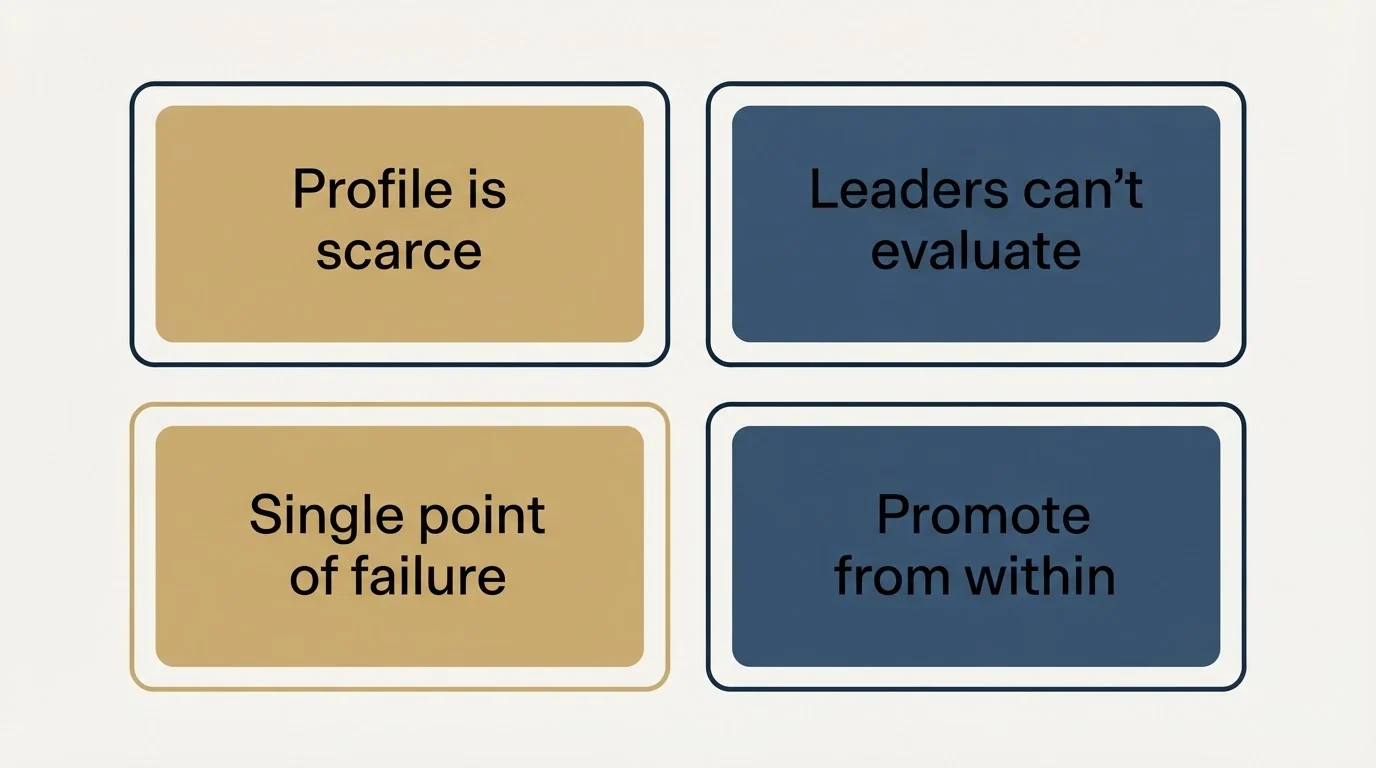
- No: The profile does not exist in quantity.
- No: Sales leaders cannot evaluate the work.
- No: It creates a single point of failure.
- Yes: The most reliable path we have seen is promoting from within.
The profile does not exist in quantity. You need someone comfortable with APIs and data who also understands what makes a sales message land. Those skills rarely co-occur, and the people who have both are already employed.
Sales leaders cannot evaluate the work. A VP of Sales can tell whether a rep is good. They usually cannot tell whether a data pipeline is well built, which makes hiring and managing the role genuinely difficult.
It creates a single point of failure. When one person owns the system that produces all your lead flow, their departure is a serious event. Documentation and a second pair of hands matter more here than in most roles.
The most reliable path we have seen is promoting from within. A curious SDR who has been automating parts of their own job with spreadsheets and Zapier is often a better bet than an external hire with a stronger technical resume and no commercial instinct.
If you do promote internally, budget for the gap honestly. Someone moving from running sequences to building the system that runs them needs months rather than weeks, and the pipeline they were personally producing stops during that period. Teams that skip this step end up with a half-built system and a rep who no longer has a quota they can hit.
What Does Not Transfer
Two things get lost in this transition, and pretending otherwise makes the case weaker.
The apprenticeship disappears. Building lists and getting ignored is how SDRs learn what a good account looks like and what a bad message sounds like. Automate that and the learning path goes with it. Teams need a deliberate replacement, usually structured exposure to calls and account reviews.
Volume is not the same as judgment. A system will confidently target the wrong segment at scale. The GTM engineer's most valuable output is often a decision not to send, and that decision needs commercial context the system does not have.
There is a third loss that gets less attention: the informal market feedback an SDR team generates. Twenty people making calls hear objections, competitor mentions and pricing reactions every day, and some of that reaches product and marketing by accident. A system produces reply-rate data, which is a much narrower signal. Teams that make this transition well replace the accident with something deliberate, usually a standing review of what replies actually said rather than how many there were.
What This Means For How Outbound Gets Run
The role change has a practical consequence for campaign design that is worth stating, because it is where the leverage actually shows up.
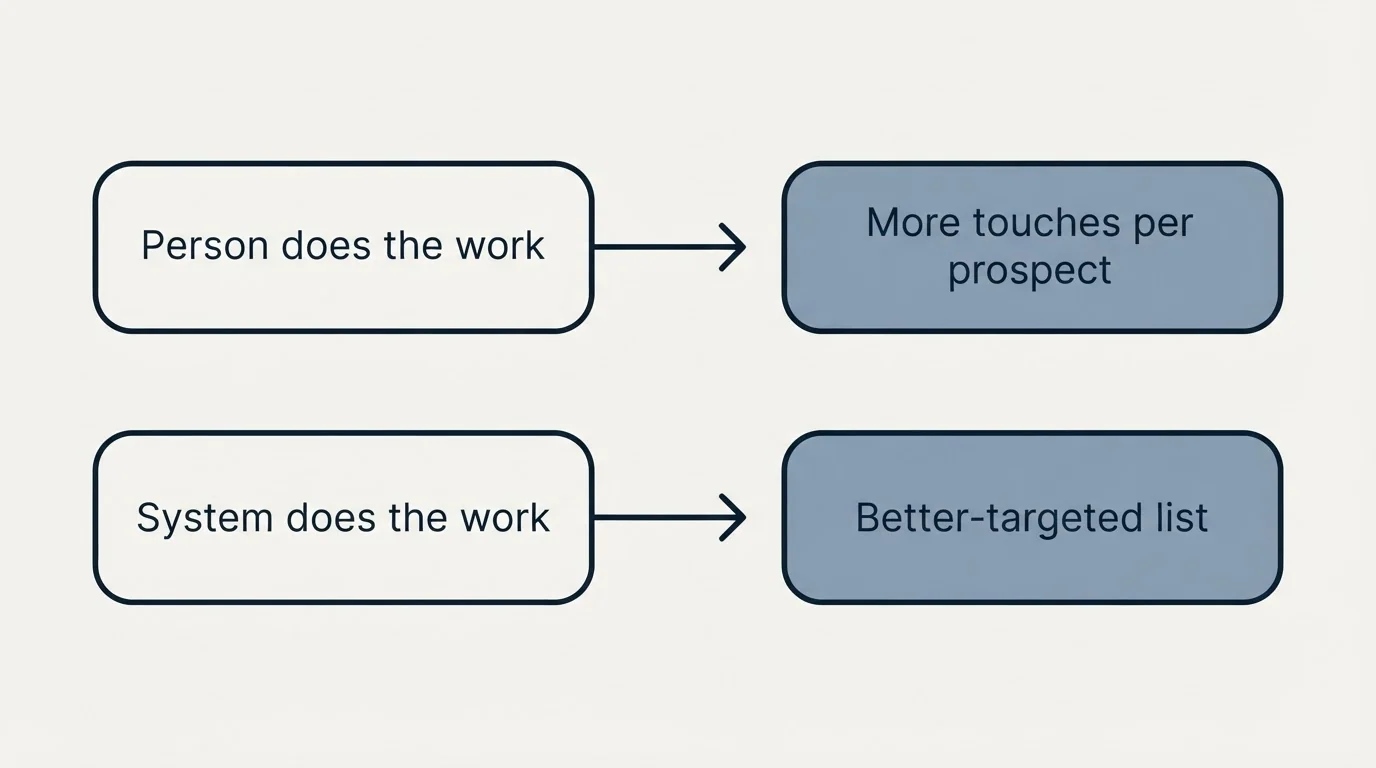
When a person is doing the work, the natural way to get more from a list is to touch each prospect more times. Cadences exist partly because a rep who has already researched an account may as well follow up on it. When a system is doing the work, the natural way to get more is to widen and sharpen the list, because the marginal cost of a better-targeted new prospect is close to the marginal cost of a repeat touch on an existing one.
That is the reasoning behind sending one message per prospect per campaign, with no bumps and no thread replies. A second message under the one somebody ignored reads as a bump whatever the campaign structure says, and it is available to a rep as a cheap option in a way it is not to a system that could instead have targeted someone better. The discipline is easier to hold once the work is systematised, which is one of the less obvious benefits of the transition.
The same logic applies to qualification. A rep under quota pressure has an incentive to loosen what counts as a meeting. A system does not care, which makes it far easier to hold meetings to criteria agreed in writing before launch, with budget, timing and authority kept out of the definition entirely.
The Honest Summary
The SDR function is not dying because SDRs were bad at their jobs. It is dying because most of what the job consisted of became automatable, and what remains is a smaller, more senior role.
The companies handling this well are moving their existing people into that role rather than replacing them. The ones handling it badly are cutting headcount first and discovering afterwards that nobody knows how to operate what they bought.
The failure mode is specific enough to name. A team buys an enrichment tool, a sequencer and a data provider, reduces the SDR headcount to fund them, and then discovers that the tools produce a list rather than a pipeline. Somebody still has to decide what good looks like, check that the enrichment did what it claimed, and hold the line on who should not be contacted. That somebody is the role this article is about, and the tools do not come with one.
The six product shapes behind the GTM platform label breaks down which job in a stack each platform actually replaces, which is useful once a GTM engineer starts choosing which systems to build. What a GTM engineer is covers the role definition in more depth, the SDR tasks worth automating first is the practical starting list, and restructuring a sales team around high-leverage work covers the organisational side of the same change.
Related Reading
- What Is a GTM Engineer?
- SDR Tasks You Can Automate
- AI-Powered GTM Platform: The Six Product Shapes
- Restructure Your Sales Team Around High-Leverage Work
If you would rather have the system run for you than build it, RevenueFlow books qualified meetings on a pay-per-meeting basis.
Pricing and features are taken from the vendors' own pages. Verify current terms with the vendor before relying on them.
Frequently asked questions.
Frequently asked questions- What is a GTM engineer?
- Someone who builds the systems that generate pipeline rather than working a list by hand. The work is closer to data engineering than to sales: automated research workflows, enrichment pipelines, targeting logic and reply routing. The output is infrastructure that makes each subsequent campaign cheaper to run than the last one.
- Should we replace our SDRs with a GTM engineer?
- Not by cutting headcount first. The companies handling this well move existing people into the role; the ones handling it badly reduce headcount to fund tools and then find the tools produce a list rather than a pipeline. Somebody still has to decide what good looks like and hold the line on who should not be contacted.
- Can you hire a GTM engineer externally?
- You can, and the profile is scarce because it needs comfort with APIs and data alongside an instinct for what makes a sales message land. Those skills rarely co-occur and the people who have both are usually employed. Promoting a curious SDR who has already been automating parts of their own job tends to work better.
- What gets lost when outbound is systematised?
- Three things. The apprenticeship SDRs get from building lists and being ignored, the judgment to decide not to send at scale, and the informal market feedback a calling team generates by accident. Each needs a deliberate replacement, usually structured call exposure and a standing review of what replies actually said.
About the author.

Ben Carden is CRO at RevenueFlow, which builds and operates outbound revenue engines for B2B companies. Previously at Gartner Enterprise. Studied at London School of Economics.
Ben Carden · CRO
Connect on LinkedIn →Explore more.
Ready to scale your outreach?
We build GTM engines that book real meetings. See the receipts.
Related articles.
Outsourced SDR vs In-House: The Cost Math on Your Numbers
The comparison most teams run is a salary against a retainer. Here is how to build both sides fully loaded, divide by meetings held, and adjust for ramp.
Demand Generation Agency vs Cold Outbound: Which You Need
Demand gen builds awareness, outbound harvests it. 2026 pricing for both, a three-test decision rule, and the market conditions where each one fails.
Cold Email Agency: What You Get and What It Costs
What a cold email agency delivers, 2026 pricing across retainer, per-meeting and hybrid models, the in-house comparison, and when hiring one is wrong.
Cross-Sell vs Upsell: Different Trigger, Different Owner
An upsell has a trigger that arrives on its own. A cross-sell has none and needs a diagnosis somebody funds. That is the difference that decides the work.
Xactly Competitors: Nobody Publishes a Price
Five sales compensation platforms, none publishing a rate. What their own pages say about the unit each bills on, the setup fee, and what sits outside the subscription.
PartnerStack Alternatives, Priced Five Ways
Every page ranking for a PartnerStack alternative sells one. These five are grouped by how they charge, with each rate read off the vendor's own page.