How to Book Sales Meetings with Retail
Retail buyers go dark from mid-October to January. Here is the targeting, timing, sequence structure, and offer that turns retail outreach into booked meetings.
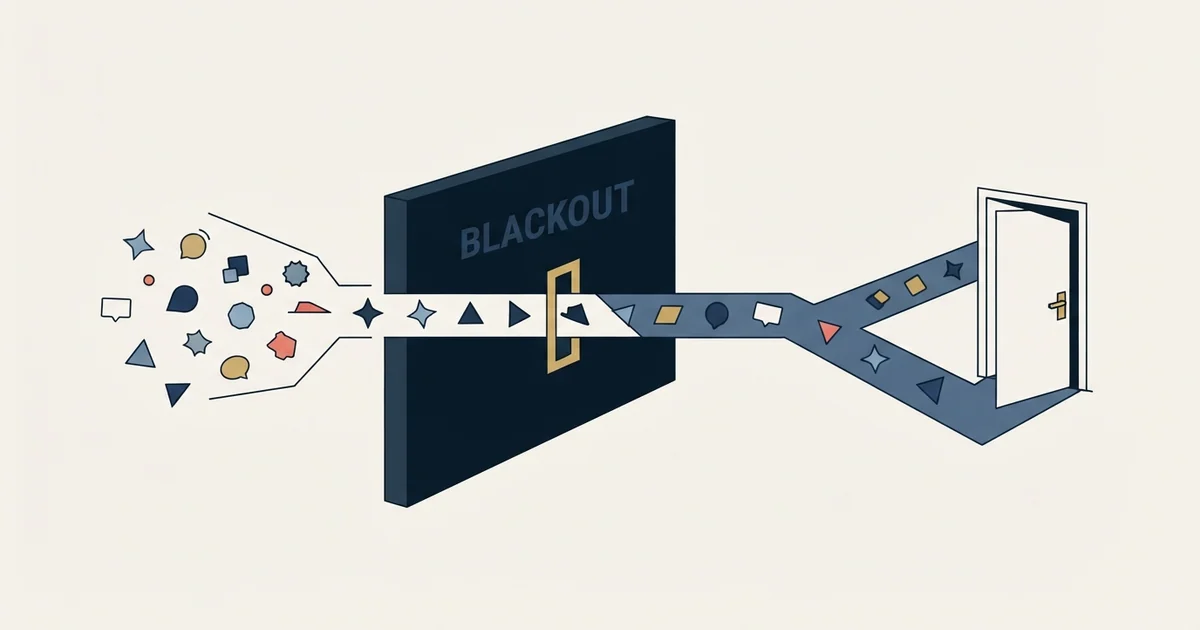
To book meetings with retail, pick one buying center (merchandising, store operations, supply chain, ecommerce, marketing, or IT), target directors at chains of 50 to 500 stores, send between late January and September while avoiding the mid-October to January peak freeze, run four single-message campaigns across the retail year, and offer a pilot scoped to one district or ten stores.
Key takeaways
- The retail fiscal year starts on the Sunday closest to February 1, so late January through April is the strongest outreach window and mid-October through early January should be avoided entirely.
- Belkins' 2025 study of 7.5 million cold emails found VPs replied at 0.32 percent per email and organizations with 10,000+ employees at 0.22 percent, so enterprise retail requires far more volume than mid-market chains.
- Woodpecker's analysis of 20 million+ emails found campaigns under 50 contacts averaged 5.8 percent reply rates versus 2.1 percent for campaigns of 500 to 1,000-plus contacts.
- The first follow-up is the highest-performing single step at an 8.4 percent reply rate, and adding one follow-up raises total replies by roughly 66 percent, which is why we send a second contact as its own campaign weeks later rather than as a reply in the same thread.
- Store count from the retailer's own locator, plus corporate versus franchise status, is more reliable than firmographic data from generic B2B databases.
- Plan for 1 to 2 booked meetings per 100 well-researched retail prospects, which means 400 to 800 prospects in campaigns to book eight meetings a month.
Reviewed and updated September 1, 2026
How to Book Sales Meetings with Retail: A Step-by-Step Playbook
The retail fiscal year starts on the Sunday closest to February 1, not January 1. Source: NRF 4-5-4 Calendar. That one detail explains why so many outbound campaigns aimed at retailers stall out. Sellers run their big Q4 push in October and November, which is precisely when every store operator, merchant, and IT director inside a retail organization has gone dark for peak season. The same email sent in the second week of February, when new budgets have just unlocked and post-holiday retros are still fresh, gets a reply.
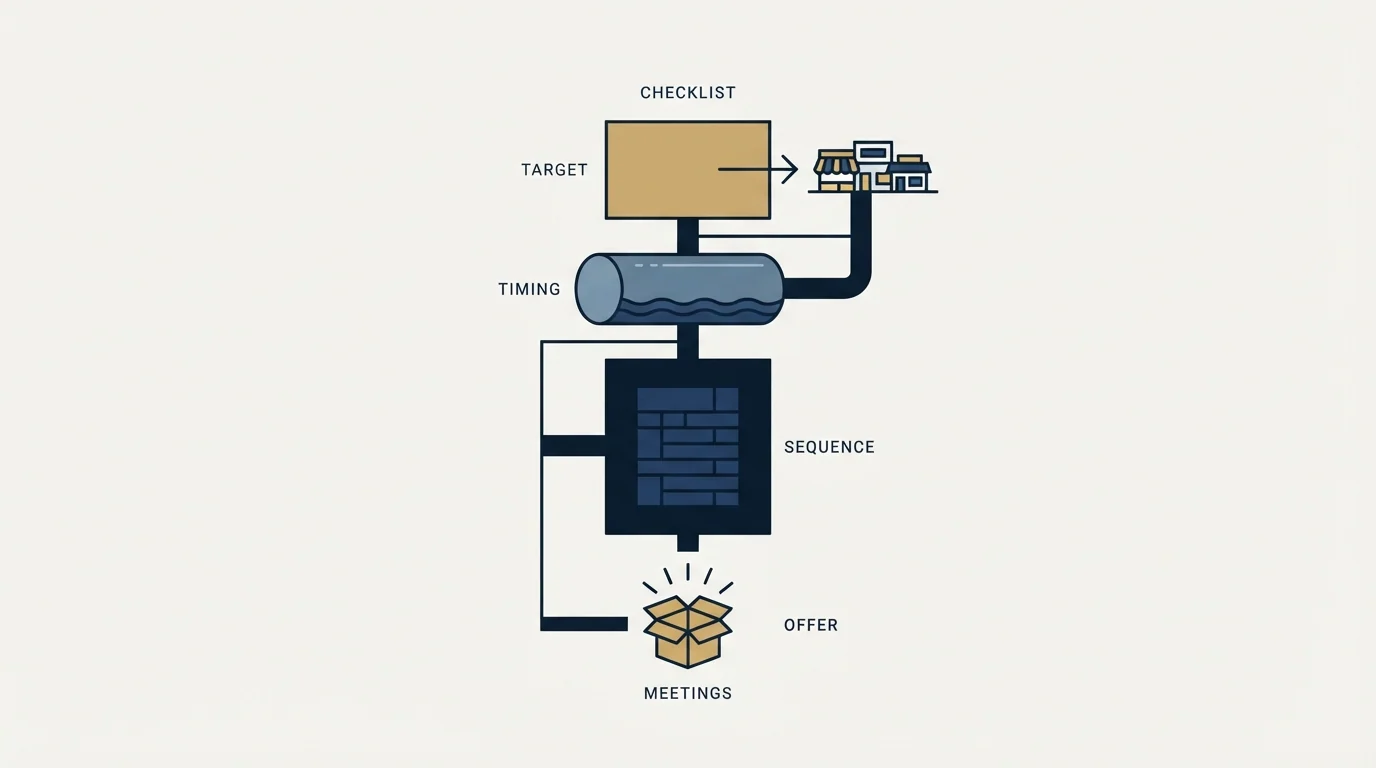
Booking meetings with retail decision makers is a timing problem, a targeting problem, and an offer problem, in that order. This playbook covers each one, plus campaign structure, templates, objection handling, and the meetings-per-100-prospects outcome you should plan for.
Step 1: Pick the Buying Center Before You Pick the Titles
Retail organizations are unusually siloed. A 600-store specialty chain runs at least six separate purchasing worlds, and a pitch that lands hard in one is meaningless in another. Choose one before you build a list.
| Buying center | Owns | Typical trigger for a meeting |
|---|---|---|
| Merchandising / buying | Assortment, vendor selection, margin | Line review windows, category resets, a gap in assortment |
| Store operations | Labor, task management, compliance, in-store execution | Payroll pressure, new store openings, turnover spikes |
| Supply chain / DC | Inventory, replenishment, freight, fulfillment | Stockouts, carrier changes, DC automation projects |
| Ecommerce / digital | Site, conversion, digital merchandising, app | Replatform, conversion decline, new fulfillment models |
| Marketing / retail media | Customer acquisition, loyalty, retail media network | Loyalty relaunch, CDP projects, media revenue targets |
| IT / asset protection | Systems, POS, shrink, security | POS refresh cycles, shrink reporting, compliance audits |
The mistake is emailing "retail" as if it were one buyer. Pick the buying center whose budget line your product sits on, then write everything downstream from there.
Step 2: Target the Titles That Can Say Yes, Plus the One Who Can Say "Bring It to Me"
Store count matters more than headcount when deciding how high to aim.
Under 50 stores (or under roughly $100M revenue): go straight to the top. Founder, President, COO, VP of Retail. Belkins' 2025 study of 7.5 million cold emails found founders and owners replied at 0.57 percent per email versus 0.42 percent for C-level and 0.32 percent for VPs, and companies with 0 to 10 employees replied at 0.72 percent versus 0.22 percent at organizations with 10,000 or more. Source: Belkins. Smaller retail chains are simply easier to reach, and the person you reach can commit.
50 to 500 stores: target the director layer. Director of Store Operations, Director of Ecommerce, Senior Category Manager, Director of Supply Chain. These people own a P&L line, sit in weekly business reviews, and can pull a vendor into a meeting without a procurement process.
500-plus stores and enterprise retail: target two levels at once. Send to the VP as sponsor and to the director who lives inside the problem daily. Either path produces a calendar invite. Expect materially lower per-email response at this size and compensate with tighter list quality.
For brands chasing shelf space, the target is narrower: the buyer or category manager for your exact subcategory, plus the divisional merchandise manager above them. Never the CEO.
Step 3: Build the List Around Store Count, Banner, and Observable Signals
Retail firmographics from generic databases are unreliable. Parent companies, banners, and franchise groups get merged into one record, so you end up emailing a franchisee about an enterprise system they do not control.
Build the list with these inputs instead:
- Store count from the retailer's own store locator. The single most useful sizing variable in retail, and it is public.
- Corporate versus franchise. Franchised locations rarely buy corporate systems. Verify before you spend a campaign slot.
- Ecommerce stack. Platform, checkout, reviews, and search tooling are detectable from the site and tell you whether the digital team is mid-replatform.
- Job postings. A retailer hiring a Director of Workforce Management is telling you which project has budget this quarter.
- New store announcements and closures. Expansion means operations spend. Closures mean cost projects.
- Conference rosters. NRF Big Show in January, Shoptalk in spring, and Groceryshop in fall publish speakers and sessions, surfacing executives actively working on a problem.
Keep campaign lists small. Woodpecker's analysis of more than 20 million cold emails found campaigns of under 50 contacts averaged a 5.8 percent reply rate while campaigns of 500 to 1,000-plus averaged 2.1 percent. Source: Woodpecker. A 60-account list segmented by banner and store count outperforms a 2,000-account blast, because the research required to write a credible retail email is only possible at small volume.
Step 4: Send Against the Retail Calendar, Not Your Own
This is the highest-leverage adjustment available and almost nobody makes it.
| Window | Status | Why |
|---|---|---|
| Late Jan through April | Best | New fiscal year, fresh budget, post-holiday retros, NRF momentum |
| May through July | Good | Projects scoped for pre-peak implementation, calmer store operations |
| August through mid-Sept | Narrow | Last window for anything that must be live before peak |
| Mid-Oct through early Jan | Avoid | Peak season, IT change freezes, store leadership fully deployed |
Two extra rules. Anything requiring technical implementation has to be pitched at least two quarters before it needs to be live, because most retailers freeze system changes from roughly mid-October through the first week of January. And for brands pursuing shelf space, the only date that matters is the category's line review, which typically runs six to nine months ahead of the reset. Ask when it is, then time outreach to land eight to ten weeks before.
Within the week, Belkins found Wednesday and Thursday morning sends between 8 AM and noon performed best at 0.54 percent. Source: Belkins. Send in the recipient's local time zone, which for retail headquarters means Bentonville, Minneapolis, Columbus, and Dallas more often than New York.
Step 5: One Message Per Campaign, Spread Across the Retail Calendar
Retail leaders are in stores, in the DC, or in back-to-back business reviews. Stopping after one campaign is a wasted list. Running several messages at one buyer inside three weeks is a different mistake, and the one that costs you the domain.
- Campaign 1, email. One observation, one proof point, one soft ask. Then that campaign is finished for that contact.
- Campaign 1, LinkedIn, day 3. Connection request with no pitch. Vendor networking is normal in retail, so acceptance rates are high.
- Campaign 1, phone, day 10. Corporate lines get answered at retail headquarters far more often than at software companies. Before 9 AM works, and the call carries its own reason rather than a reminder about the email.
- Campaign 2, about six weeks on. New subject line, new angle. Reference a peer banner or an operational metric.
- Campaign 3, the next open window. Value asset: a benchmark, a teardown, a one-page checklist for their category.
- Campaign 4, on the next trigger. A short message that leaves the door open and asks for a redirect.
Woodpecker's data shows the first follow-up is the single highest-performing step at an 8.4 percent reply rate, and adding just one follow-up increases total replies by roughly 66 percent. Source: Woodpecker. We take the second contact seriously and send it differently: as its own campaign weeks later, with a new subject line and a new premise, only to the people who did not answer the first. A message threaded under an ignored one is delivered to the readers most likely to mark it as spam, and the reputation cost is charged to the sending domain across every other campaign it carries. The full argument, with the numbers from our own campaigns, is in why we stopped using follow-ups.
Step 6: Use an Offer That Fits How Retail Buys
Retail buyers evaluate everything against store-level economics and peer behavior. Two things move them.
Peer proof. Retail is a small industry where executives move between banners constantly. Naming a comparable retailer (similar store count, similar category, ideally a non-competitor) does more than any feature list.
A pilot small enough to approve without a committee. "Ten stores for one quarter" or "one region" is an ask a director can sponsor. A full-chain rollout requires procurement, legal, and a budget cycle.
For the CTA, interest-based asks outperform calendar links here. "Worth a look?" or "Want the 10-store pilot outline?" get replies from people who will not click a scheduling link from a stranger. Book the meeting on the second exchange.
Retail Cold Email Templates
Template 1: Store Operations Director
Subject: {{company}} store labor question

Hi {{first_name}},

You're running {{store_count}} stores across {{region}}, which means your
district managers are probably spending a chunk of every week reconciling
task completion across banners instead of coaching.

We handle that problem for {{peer_retailer_1}} and {{peer_retailer_2}}, both
in the {{store_count_band}}-store range. The usual starting point is a
single district for one quarter so you can see the audit data before
committing anything chain-wide.

Worth a look, or is store ops focused elsewhere this half?

{{sender_name}}
Why this works: Store count and region prove the list was built with real research. The pilot is scoped to one district, which is inside a director's authority. The closing question gives an easy, non-committal reply path and surfaces timing objections early.
Template 2: Ecommerce or Digital Director
Subject: Noticed on {{company}}.com

{{first_name}},

Went through {{company}}.com checkout on mobile this morning. You're running
{{observed_detail}}, which usually means {{specific_consequence}} on
mobile conversion during peak.

{{peer_retailer}} had the same setup and we worked through it before their
Q4 freeze. Happy to send the two-page teardown of what we found on your site,
no call needed.

Want it?

{{sender_name}}
Why this works: The observation is verifiable and specific to their property, so it cannot be mistaken for a mail merge. The ask is for permission to send an asset rather than for time, which converts better on a first touch. Mentioning the freeze signals that the sender understands retail operating rhythm.
Template 3: Category Buyer or Merchant (Brands Seeking Shelf Space)
Subject: {{category}} line review timing

Hi {{first_name}},

We sell {{product_line}} in {{competing_retailer}} and {{competing_retailer_2}},
where the line is doing {{velocity_metric}} per store per week in the
{{category}} set.

I'd like to be in front of you before the {{category}} review. Two questions:
is the review still on the {{month}} cycle, and are you the right person for
{{subcategory}} or should I be talking to someone else on the team?

{{sender_name}}
Why this works: It leads with distribution and velocity, the only two things a merchant cares about at first contact. Asking about review timing is a low-friction question a buyer can answer in one line, and the second question routes the email correctly if the target is wrong.
Template 4: The Re-Approach With a New Angle
Best for: a later campaign to retailers that did not answer an earlier one. Its own subject line, sent as a new email rather than a reply into the old thread.
Subject: the {{metric}} number from {{peer_retailer}}

{{first_name}}, one data point worth having.

{{peer_retailer}} ran the {{metric}} comparison across their {{store_count}}
locations last {{season}} and found {{finding}}. I put the methodology in a
one-pager so your team could run the same check internally without us.

Want me to send it over? And if this belongs with {{likely_other_title}}
instead, happy to redirect.

{{sender_name}}
Why this works: It carries new information and its own reason to exist rather than asking whether an earlier email was seen. Offering the methodology for internal use lowers the perceived sales pressure. The redirect question converts silence into referrals, which is how a meaningful share of retail meetings actually get booked.
Step 7: Handle the Four Objections You Will Actually Get
- No: "We're in code freeze."
- No: "Send it to procurement."
- No: "We already use {{incumbent}}."
- No: "No budget until next fiscal."
"We're in code freeze." Agree, then book for after. "Makes sense, nobody's touching systems until January. Worth 20 minutes in the first week of February so it's scoped before fiscal planning locks?" That converts a rejection into a dated commitment.
"Send it to procurement." Procurement kills unsponsored vendors. Ask for the sponsor first: "Happy to. Before I do, is this something your team would actually want, or is procurement where vendor emails go to be filed?"
"We already use {{incumbent}}." Do not attack the incumbent. Position around the gap: "Most {{incumbent}} customers we work with keep it for {{core_use_case}} and use us for {{adjacent_gap}}. If that gap isn't real for you, I'll stop here."
"No budget until next fiscal." In retail this is frequently true, and it is a timing signal. Get the fiscal date, get the planning date (usually eight to twelve weeks before), and schedule for the planning window.
Step 8: What a Realistic Outcome Looks Like Per 100 Prospects
Published benchmarks measure replies, not meetings, and they mix per-email and per-prospect denominators, so treat any single number carefully. Woodpecker's per-campaign figures are the most useful anchor for a campaign-level read: 5.8 percent reply rate under 50 contacts, roughly 4 to 5 percent at 50 to 200, and 2.1 percent at 500 to 1,000-plus. Source: Woodpecker.
Modeling from those figures for a tightly researched retail programme of 100 prospects across a full set of campaigns:
- 4 to 6 total replies
- 1 to 3 of those positive enough to warrant a conversation
- 1 to 2 booked meetings
At enterprise scale, plan on the low end or below, since Belkins recorded 0.22 percent per-email reply rates at organizations of 10,000 or more employees. Source: Belkins. At smaller chains where you reach an owner or President directly, the top of that range is achievable.
The practical implication: booking eight retail meetings a month requires 400 to 800 well-researched prospects in campaigns, not 50. Retail programs fail more often from underbuilt volume than from bad copy.
Your Retail Meeting-Booking Checklist
- One buying center chosen, correct budget owner identified
- Titles matched to store count band, two-level approach above 500 stores
- Store count verified from the retailer's own locator, corporate versus franchise confirmed
- Send window checked against the retail calendar and any code freeze
- Campaign segments kept under 200 contacts each
- Four single-message campaigns across the retail year, using email, LinkedIn, and phone
- At least one named peer retailer of comparable size in the copy
- Offer scoped to a pilot a director can approve alone
- Interest-based CTA on the one message, calendar link only after a reply
If You'd Rather Have This Done for You
Running a retail outbound program means maintaining banner-level list data, tracking fiscal and line review calendars across dozens of accounts, and keeping deliverability healthy across multiple sending domains. RevenueFlow handles that operation end to end, from list build to booked meeting. Book a strategy call and we'll map your retail target list, buying centers, and send calendar before you write a single email.
Related Reading
- Cold Email for Retail: The Complete Guide to B2B Outreach
- Retail Cold Email Benchmarks: 2026 Performance Data
- Cold Email for Partnerships: Building Strategic Business Relationships
If you would rather have this run for you, RevenueFlow books qualified meetings on a pay-per-meeting basis and publishes client results.
Frequently asked questions.
Frequently asked questions- What job titles should I target to book meetings with retailers?
- It depends on chain size. Under 50 stores, go to the President, COO, or VP of Retail. Between 50 and 500 stores, target directors such as Director of Store Operations, Director of Ecommerce, or Senior Category Manager, since they own a P&L line and can pull a vendor into a meeting. Above 500 stores, email both a VP sponsor and the director closest to the problem.
- When is the worst time to cold email retail decision makers?
- Mid-October through the first week of January. Retailers are in peak season, store leadership is deployed to the floor, and most organizations enforce a technology change freeze during that window. The best window is late January through April, when the new retail fiscal year has started and budgets have unlocked.
- How many meetings should I expect per 100 retail prospects?
- Plan for 1 to 2 booked meetings per 100 well-researched prospects across a full set of single-message campaigns, based on published reply-rate benchmarks of roughly 4 to 5 percent for campaigns of 50 to 200 contacts. Enterprise retail with 500-plus stores runs lower, while smaller chains where you can reach an owner directly run higher.
- How do I respond when a retailer says they are in code freeze?
- Agree with them and book a dated meeting for after the freeze lifts. Something like: nobody is touching systems until January, so is 20 minutes in the first week of February worth it to get this scoped before fiscal planning locks? This converts a rejection into a calendar commitment instead of a vague follow-up later.
- What kind of offer converts best in retail outreach?
- A pilot small enough for one person to approve without a committee, such as ten stores for a quarter or a single district or region. Pair it with peer proof from a comparable retailer of similar store count and category. Full-chain rollout pitches trigger procurement, legal, and budget cycles, which stalls the first meeting.
About the author.

Ben Carden is CRO at RevenueFlow, which builds and operates outbound revenue engines for B2B companies. Previously at Gartner Enterprise. Studied at London School of Economics.
Ben Carden · CRO
Connect on LinkedIn →Explore more.
Ready to scale your outreach?
We build GTM engines that book real meetings. See the receipts.
Related articles.
Cold Email for Influencer Outreach: Partner with Creators
Learn how to use cold email to build authentic influencer partnerships that drive real results for your brand, with proven templates and strategies.
Cold Email for Product Feedback: Complete Strategy Guide
Learn how to use cold email to gather valuable product feedback from users and prospects. Includes proven templates, feedback frameworks, and response optimization techniques.
Cold Email for PR: How to Pitch Journalists and Get Coverage
Learn how to craft cold emails that get journalists to open, read, and respond to your pitches. Includes real templates, timing strategies, and a complete PR outreach checklist.
Cold Email for Reviews: Complete Strategy Guide
Learn how to use cold email to generate authentic product reviews on G2, Capterra, and other platforms. Includes proven templates, compliance guidelines, and review generation frameworks.
Cold Email for Link Building: How to Get Quality Backlinks
Learn how to use cold email outreach to build high-quality backlinks that improve your SEO rankings, with proven templates and strategies that get responses.
Cold Email for Focus Groups: Complete Strategy Guide
Learn how to use cold email to recruit qualified participants for focus groups. Includes proven templates, screening strategies, and group composition frameworks.