ARR Became a Marketing Metric: How to Vet the Claim
Cluely retracted $7M and admitted to $5.2M. Decagon is valued at 128 times revenue. Here are the six questions that separate real revenue from a headline.
Vet an ARR claim by asking whether the figure is disclosed or analyst-estimated, whether it is ARR, run rate or bookings, how much survived a renewal or break clause, what net revenue retention is, for three references past month 12, and what revenue multiple the vendor carries. Bloomberg called ARR the least-trusted number in software.
Key takeaways
- Cluely's founder retracted a $7M ARR claim in March, and the real figure was $5.2M.
- Decagon is valued at $4.5B on roughly $35M of revenue, a multiple of 128 times revenue.
- TechCrunch reported that a $14M ARR claim was largely contracted revenue, with roughly $3M surviving past the trial window.
- Grade every vendor figure as disclosed, analyst-estimated or retracted before repeating it, because vendors quote estimates of their own revenue as if disclosed.
- Net revenue retention is the hardest metric to fake and the one vendors volunteer least often.
- Bloomberg called ARR the least-trusted number in software in an April piece on the metric.
Reviewed and updated September 5, 2026
ARR Became a Marketing Metric: How to Vet a Vendor's Revenue Claim
A company that has never raised a dollar makes $500M a year in AI. You have never once seen it post.
That company is Midjourney, and the gap between how loud a vendor is and how much money it makes is now wide enough to build a buying process around.
I pulled the latest reported ARR for 15 AI application companies, then graded every figure by how reliable it is: disclosed by the company, estimated by an analyst, or retracted. The grading turned out to be more useful than the ranking.
Sierra AI is the cleanest disclosed example in the set: the company published its own $100M ARR milestone post, and its founder later posted the $200M figure under his own name, which is a disclosure with a reputation attached rather than an audited number.
What the ranking showed
At the top, ElevenLabs at $500M in voice and audio, Midjourney at roughly $500M and bootstrapped, Perplexity at roughly $450M in AI search.
Then four companies landed on $300M in four unrelated industries: OpenEvidence in clinical AI, now used by 860,000 doctors, Harvey in legal, Glean in enterprise search, and Suno in music.
Then the middle, where the quiet compounding happens. Magnific at $230M, bootstrapped, built in Spain with no US funding. Sierra at $200M in customer support. Synthesia at $150M in AI video. Cresta at $100M in contact centers. Gamma at $100M with 50 people and no sales team. n8n at roughly $100M in workflow automation.
And the bottom, where valuation and revenue stop touching. Decagon is valued at $4.5B on roughly $35M of revenue, which is 128 times revenue. Cluely's founder publicly retracted a $7M ARR claim in March, and the real number was $5.2M.
Bloomberg ran a piece in April calling ARR the least-trusted number in software. Foundation labs and AI coding tools are excluded from the list above, since both are an order of magnitude bigger and would flatten the chart.
Why this is a buyer's problem, not just an investor's
You are not underwriting these companies. You are signing a contract with one and building a workflow on top of it. Three things make a vendor's revenue quality your problem anyway.
A company priced far above its revenue has to grow into the number, and the usual responses are a pricing change, an aggressive upsell motion, or a pivot away from the use case you bought. A vendor with weak retention redirects product and support investment into firefighting, which you feel as slower fixes. And consolidation is active in this category, so whether your vendor is a likely acquirer or a likely target tells you how much to build on top of it.
The three grades, and how to tell them apart
- The company stated the figure publicly and attached its name to it
- Usually in a funding announcement, a press release or a founder post
- Still unaudited
- Directionally useful
- Often stale by a funding cycle
- Frequently repeated as fact by the vendor's own marketing once it is favourable
- Cluely is the clean example
- A $7M claim retracted in March
- The actual number at $5.2M
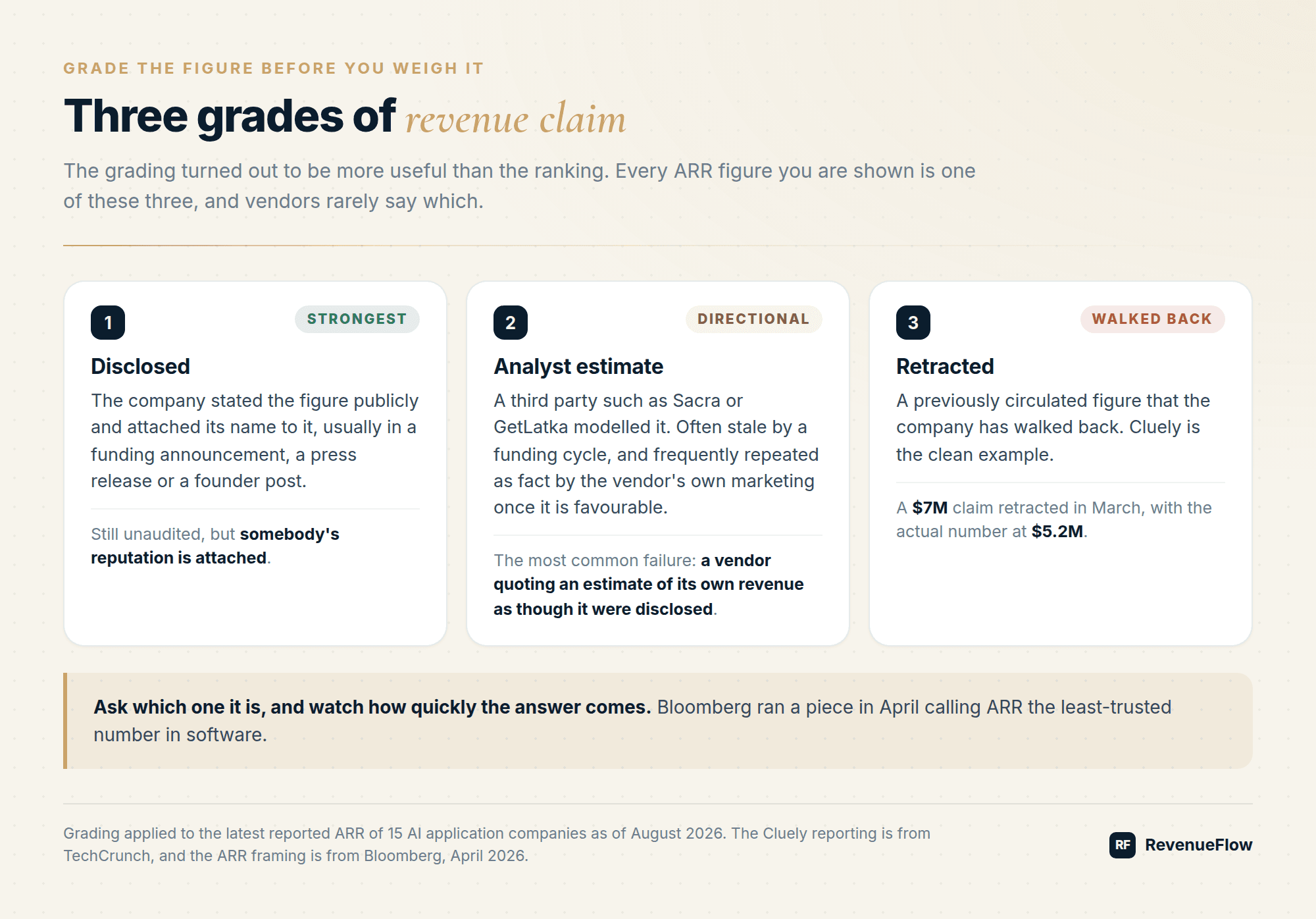
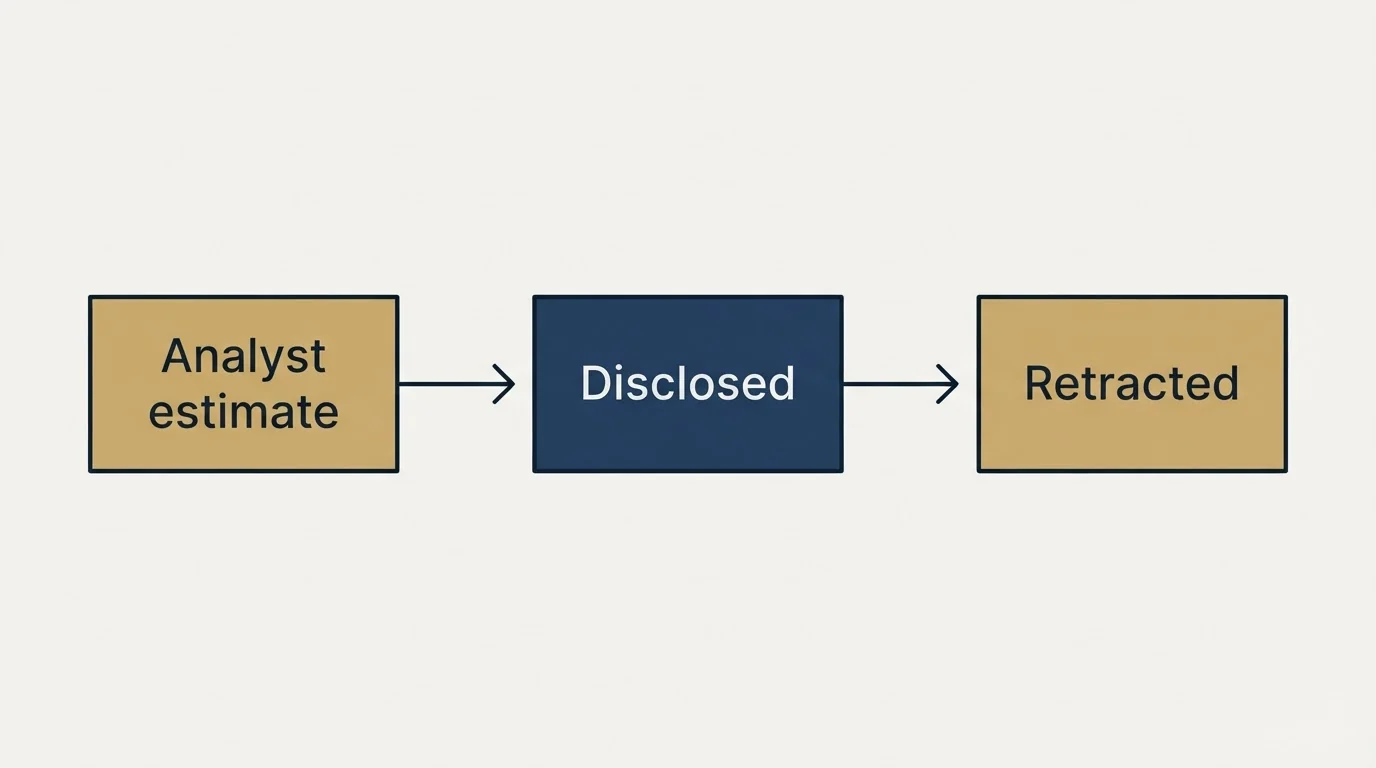
Disclosed. The company stated the figure publicly and attached its name to it, usually in a funding announcement, a press release or a founder post. Still unaudited, but somebody's reputation is attached.
Analyst estimate. A third party such as Sacra or GetLatka modelled it. Directionally useful, often stale by a funding cycle, and frequently repeated as fact by the vendor's own marketing once it is favourable.
Retracted. A previously circulated figure that the company has walked back. Cluely is the clean example: a $7M claim retracted in March, with the actual number at $5.2M.
The most common failure is a vendor quoting an analyst estimate of its own revenue as though it were disclosed. Ask which one it is and watch how quickly the answer comes.
The six questions
Run these before signing, in this order. They take one call.
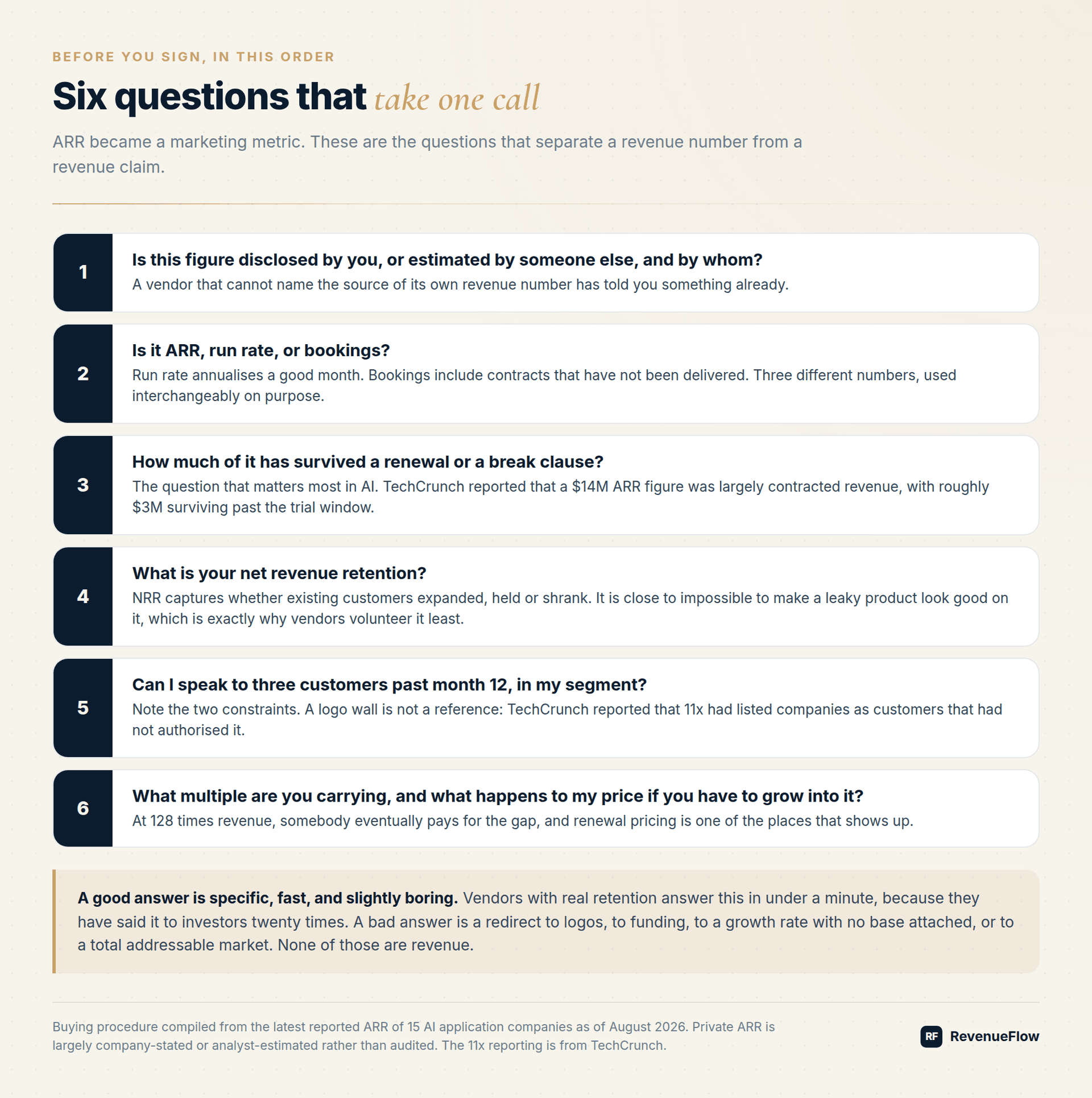
- Is this figure disclosed by you or estimated by someone else, and by whom? A vendor that cannot name the source of its own revenue number has told you something already.
- Is it ARR, run rate, or bookings? Run rate annualises a good month. Bookings include contracts that have not been delivered. They are three different numbers and they get used interchangeably on purpose.
- How much of it has survived a renewal or a break clause? This is the question that matters most in AI, and the 11x case is why. TechCrunch reported that a $14M ARR figure was largely contracted revenue, with roughly $3M surviving past the trial window.
- What is your net revenue retention? NRR captures whether existing customers expanded, held or shrank. It is close to impossible to make a leaky product look good on it, which is exactly why vendors volunteer it least.
- Can I speak to three customers past month 12, in my segment? Note the two constraints. A logo wall is not a reference: TechCrunch reported that 11x had listed companies as customers that had not authorised it, including one that said a trial performed significantly worse than its human SDRs.
- What multiple are you carrying, and what happens to my price if you have to grow into it? At 128 times revenue, somebody eventually pays for the gap, and renewal pricing is one of the places that shows up.
What a good answer sounds like
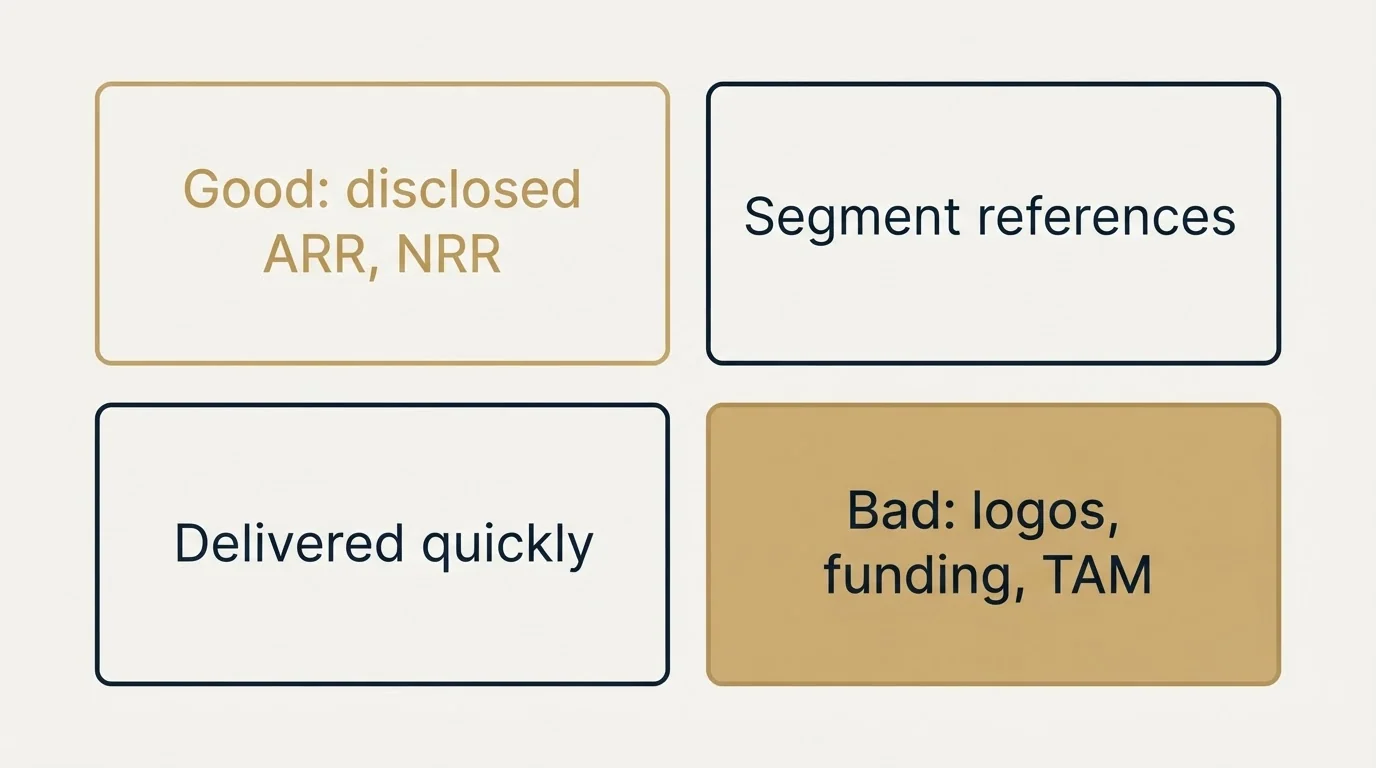
Specific, fast, and slightly boring. "That is our disclosed ARR as of the last quarter, roughly 80 percent of it is on annual contracts past first renewal, NRR is in the low hundreds, and here are three customers in your segment." Vendors with real retention answer this in under a minute, because they have said it to investors twenty times.
A bad answer is a redirect to logos, to funding, to a growth rate with no base attached, or to a total addressable market. None of those are revenue.
The pattern, and the caveat that goes with it
Across this list, the companies with the loudest distribution tend to have the smallest numbers, and the quiet compounders sit in the middle at $100M to $230M with a fraction of the coverage.
The caveat matters as much as the pattern. Volume of marketing is not itself evidence of weak revenue. Gamma is at $100M with 50 people and no sales team, and it is not quiet. What the list actually shows is that attention and revenue are uncorrelated, which means feed presence carries no information about whether a vendor will still be shipping in two years. You have to check.
Run the six questions on whatever you are evaluating this quarter, including the tools we write about. The reviews worth reading do the same work: HeyReach in LinkedIn outreach, RB2B and its alternatives in visitor identification, and the full GTM software valuation ranking for the valuation side of the same picture.
The same discipline applies to the AI agent revenue table, where the outbound agents sit at the bottom, and to any AI SDR or AI sales agent pitch that leads with a revenue milestone instead of a retention number.
Build the thing people pay for. The feed is not the market.
We build AI-native pipeline systems and you pay per qualified meeting, not a retainer. No paying for activity. You only pay when we book you a qualified sales meeting. See if you qualify.
Revenue figures are the latest reported as of mid-2026. Private ARR is largely company-stated or analyst-estimated rather than audited. The 11x and Cluely reporting is from TechCrunch, and the ARR framing is from Bloomberg, April 2026.
Frequently asked questions.
Frequently asked questions- How do I check if a software vendor's ARR claim is real?
- Ask whether the number is disclosed by the company or estimated by a third party, and which third party. Then ask whether it is ARR, run rate or bookings, since those are three different figures used interchangeably. Finally ask how much of it has survived a renewal or a break clause, which separates contracted revenue from retained revenue.
- What is the difference between ARR, run rate and bookings?
- ARR is recurring revenue under contract on an annualised basis. Run rate annualises a recent period, so one strong month can be multiplied by twelve. Bookings include contracts signed but not yet delivered or paid. A vendor quoting the most flattering of the three without saying which one it is has answered your question already.
- Why is ARR called the least-trusted number in software?
- Because private ARR is unaudited and self-reported, and the definition has stretched to include run rates, pilots and contracts that later churn. Bloomberg made the point in an April piece after a founder publicly retracted a $7M claim that was actually $5.2M. Investors and buyers now treat the figure as a marketing output rather than an accounting one.
- What single question should I ask a software vendor before signing?
- Ask for net revenue retention. It captures whether existing customers expanded, held or shrank over the last year, and it is nearly impossible to make a leaky product look good on it. Follow it with a request for three customer references in your segment who are past month twelve, which a logo wall does not substitute for.
- Does a high valuation multiple matter to a buyer, not just an investor?
- Yes. A vendor priced far above its revenue has to grow into the number, and the usual responses are repricing, an aggressive upsell motion, or a pivot away from the use case you bought. Weak retention also pulls product and support investment into firefighting, which reaches you as slower fixes and thinner roadmap delivery.
About the author.

Tim Carden is CMO / CTO at RevenueFlow, which builds and operates outbound revenue engines for B2B companies. Studied at McGill University.
Tim Carden · CMO / CTO
Connect on LinkedIn →Explore more.
Ready to scale your outreach?
We build GTM engines that book real meetings. See the receipts.
Related articles.
The European GTM Tool Map: 33 Tools by City
HeyReach hit $10M with 23 people in Skopje. lemlist reached $53M with no primary VC. Here is the European GTM tooling map and what it changes for buyers.
The AI Sales Agent Earning $3M a Year: What Actually Scales
I ranked 15 AI agent startups by reported ARR. Legal and clinical agents clear $300M, the three outbound agents total $41M, and one missing ingredient explains it.
ZoomInfo Renamed Its Ticker to GTM. It Now Trades Under $1B
ZoomInfo took the ticker GTM in May 2025. By late July 2026 it traded under $1B. Here is what the GTM software category is actually worth, with dates attached.
The Tel Aviv AI Map: 24 Companies and a $32B Exit
Google closed a $32B acquisition in Tel Aviv and 23 more AI companies sit within 3km. The map, the exit velocity behind it, and what it means for your stack.
The 15 Most Valuable AI Companies Founded After ChatGPT
The 15 most valuable AI companies founded after ChatGPT are worth about $160B. The top sales agent company ranks last at $1.2B, and the gap has a cause.
Per-Seat Pricing Is Dying: The Market Is Pricing the Funeral
Six go-to-market software companies lost $224B in 19 months. Every one ships AI, so AI is not the variable. Seat pricing is, and HubSpot proved it publicly.