Klenty Pricing: Starter Is Per Month, the Rest Per User
Klenty prices Starter per month for the account and Growth and Plus per user, at annual and quarterly states. The units, the minutes and the separate dialer ladder.
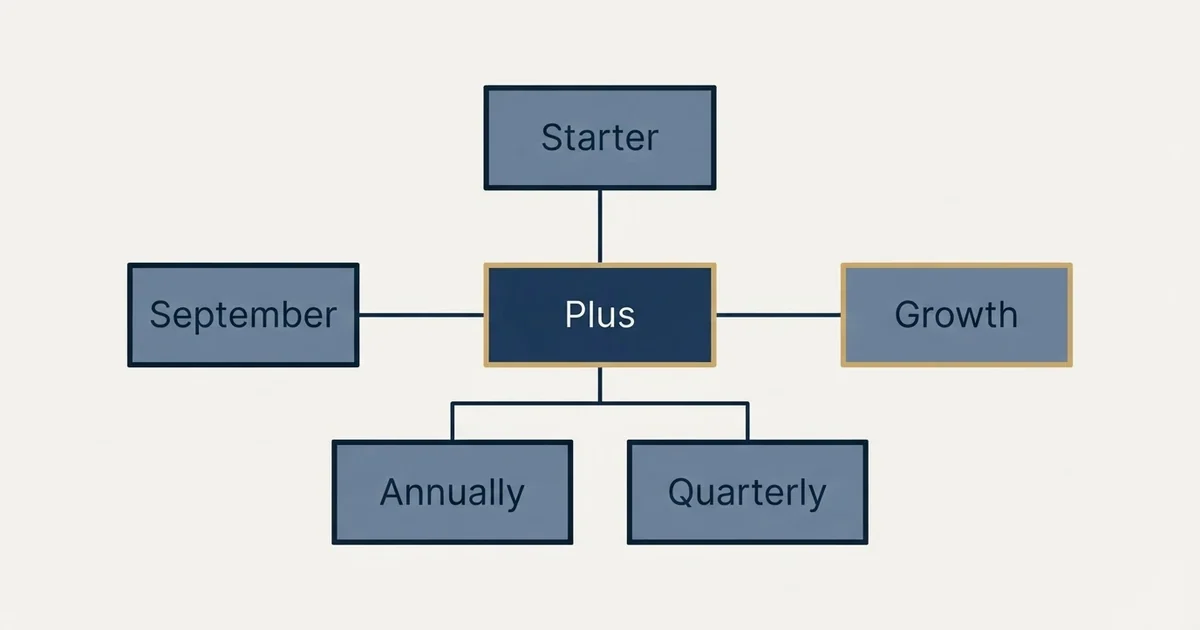
Klenty pricing on its sales engagement page is $50 a month for the account on Starter, and $70 on Growth and $99 on Plus per user a month, all billed annually, or $60, $85 and $119 billed quarterly. A separate dialer page lists Basic at $40, Pro at $80 and Scale at $140 per user.
Key takeaways
- Starter is priced per month for the account with 15,000 contacts and 75,000 emails a month, while Growth and Plus are priced per user, so moving up changes the meter as well as the rate.
- Klenty's pricing pages carry annual and quarterly billing and no monthly state; the annual saving is about a sixth on the sales engagement cards and reaches 20% only on the dialer's Basic and Pro cards.
- Calling is metered twice: 200 and 1,000 included minutes a user on Growth and Plus, then the dialer page's stated rate of about $0.021 a minute for US calls above the allowance.
- Klenty's support centre names the plans Startup, Growth, Pro and Enterprise and prices the entry plan per seat, which contradicts the pricing card and belongs on the demo call.
Reviewed and updated October 1, 2026
Klenty's pricing page prices its entry plan and its two upper plans on different units, and prints them in the same row of cards, which is how a team of five reads one number and budgets for another. Starter is priced per month for the account. Growth and Plus are priced per user per month. The support centre article on the same subject prices Starter per seat, which contradicts the card, and names a set of plans the pricing page no longer uses.
That unit difference is the whole difficulty with this page, and none of the pages ranking for the query mention it. Everything below was first read from Klenty's own pricing surfaces on 4 September 2026 and has been re-read against the same pages since, with every figure attributed to the surface it appears on.
Klenty pricing: what each plan costs
Klenty pricing runs on two ladders. The Sales Engagement page lists Starter at $50 a month for the account, and Growth at $70 and Plus at $99 per user a month, all billed annually, or $60, $85 and $119 billed quarterly. The separate Sales Dialer page lists Basic at $40, Pro at $80 and Scale at $140 per user a month billed annually. Neither page has a monthly billing state.
The Sales Engagement ladder at both billing states
As published on Klenty's sales engagement pricing page on 4 September 2026, the page renders its annual state by default and carries an Annually and Quarterly toggle labelled with a saving of up to 20 percent. In the annual state Starter is $50 per month billed annually, Growth is $70 per user per month billed annually, and Plus is $99 per user per month billed annually. Enterprise carries no card on the page; the support centre routes it to a custom quote.
The quarterly state is not in the served bytes. It rendered only after a click in a browser, and in that state the same page read on the same day shows Starter at $60 per month billed quarterly, Growth at $85 per user per month billed quarterly and Plus at $119 per user per month billed quarterly. So the toggle's saving label describes the top of a range. On this page the annual discount is about a sixth on every card, 16.7% on Starter, 17.6% on Growth and 16.8% on Plus, arithmetic on the page's own figures rather than a rate the page states. No card on this page reaches the 20 percent the label advertises; the dialer page, below, is where it does.
Beside the three cards sits one add-on, the Parallel and Power Dialer at $45 per user per month, which carries no billing state on its card and did not change when the toggle was clicked.
Read the units on the cards twice, because they are the finding. The Starter card says per month. The Growth and Plus cards say per user per month. A five person team on Starter pays the account rate once; the same team on Growth pays the per user rate five times, so the step from Starter to Growth is a change of meter for that team rather than the $20 step the page's headline figures suggest.
Put illustrative numbers on it, using only the annual rates on the cards. A five person team pays $50 a month on Starter, $350 on Growth and $495 on Plus. At ten users Growth is $700 and Plus $990, while the Starter card still reads $50, if its per month unit holds, which the support centre disputes below.
What the entry plan actually meters
Starter is metered on volume rather than seats, and the card publishes the two allowances: 15,000 monthly contacts and 75,000 monthly emails. Its feature list is email only: deliverability controls the page names as custom domain tracking, random intervals and email volume control; email analytics, API connections, Zapier and CSV uploads; A/B testing and an engagement live feed; and personalisation through merge fields, Liquid templates, preview and edit, and approve before sending.
That is an email sequencer for an account, priced for the account. It is also the plan the support centre article describes differently. Read through the headless leg on 4 September 2026, that article says Klenty offers four plans it names Startup, Growth, Pro and Enterprise, states that every plan sends 500 emails a day, and prices the entry plan at $50 a month per seat when paid annually. Its own section headings read Starter, Growth, Plus and Enterprise, and its text prices the third plan as Pro at $99 a month per seat, so the article disagrees with itself as well as with the card. The pricing page names the plans Starter, Growth and Plus, prices Starter per month rather than per seat, and publishes monthly allowances rather than a daily cap. The two vendor surfaces disagree on the plan names and on the unit of the entry tier, and the pricing page is the one a buyer is quoted from, so this article follows the card and records the conflict rather than averaging it.
The pricing page
- Plans named Starter, Growth and Plus
- Starter at $50 per month, billed annually
- 15,000 contacts and 75,000 emails a month
- No Enterprise card
The support centre article
- Plans named Startup, Growth, Pro and Enterprise
- The entry plan at $50 a month per seat, paid annually
- 500 emails a day on every plan
- Headings that read Starter, Growth, Plus and Enterprise
What Growth and Plus add
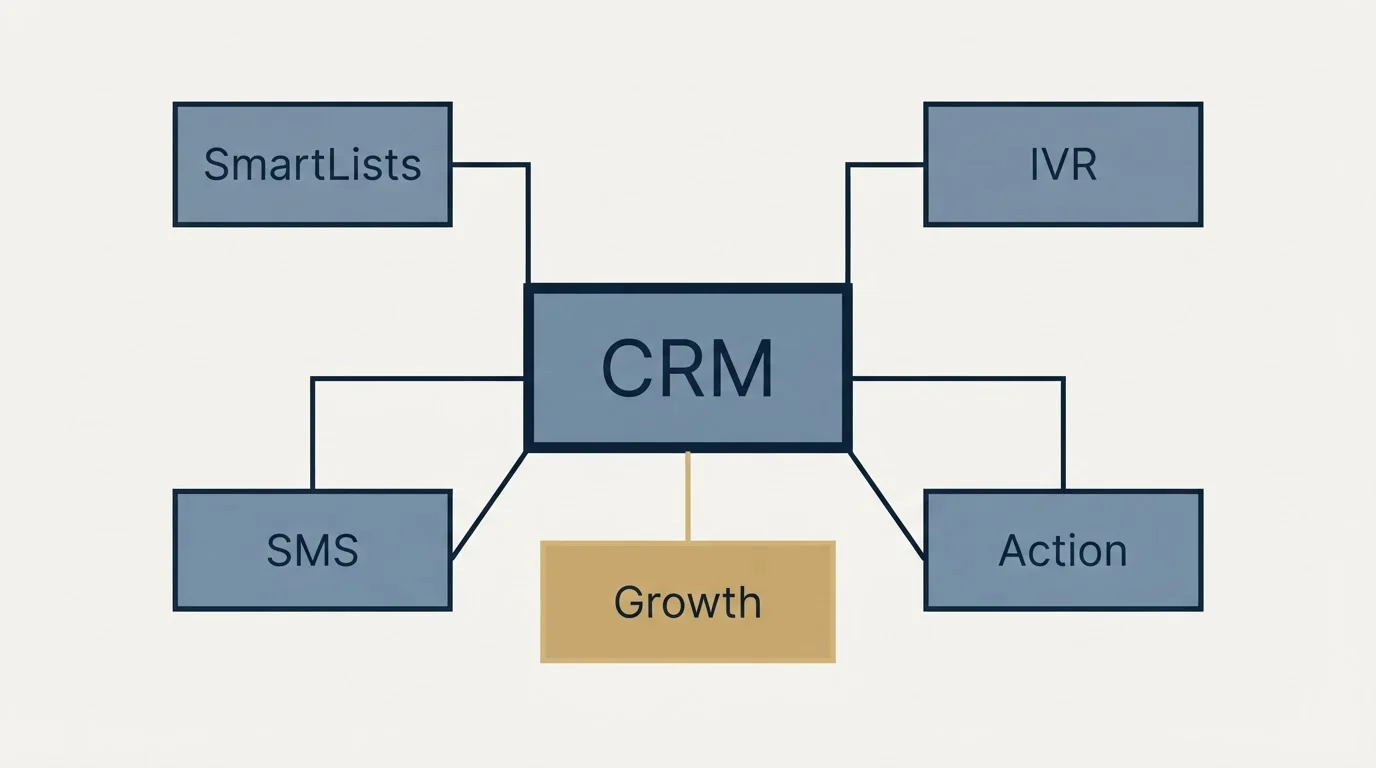
Growth is the card the page marks as most popular, and its description names a team with a sales approach who need a clean and updated CRM. It carries 200 included minutes and adds everything the page groups under cold calling: number auto-rotation, number reputation management, SmartLists, AI voicemail and IVR detection, AI outcome detection, a Rep360 view, AI conversation tracking and topics. It adds multichannel outreach through a one-click dialer, social selling and SMS automation, and the CRM layer: sales stage automation, a CRM plugin, auto import and export, and triggers and actions.
Plus carries 1,000 included minutes and a data allowance of 4,000 credits covering phone and email, and adds the account-based selling group (Action AI, account prioritisation, stages, coverage, execution and an account panel), a call coaching group (AI battlecards, live transcription, coaching summaries, AI objection detection and an AI call scorecard) and goals.
The included minutes turn the per user tiers into a second meter. A rep who calls will consume 200 minutes on Growth in a few working days, and what happens above the allowance is answered on the dialer page rather than on this one.
The dialer is a second ladder on a second page
Klenty publishes a separate Sales Dialer pricing page, and it is the page to read if calling is the reason you are looking. As published there on 4 September 2026, Basic is $40 per user per month billed annually with 500 included minutes, Pro is $80 per user per month billed annually with 2,000 minutes and the parallel and power dialers, and Scale is $140 per user per month billed annually with unlimited US dialing and five US numbers. A Call Intelligence add-on is $25 per user per month billed annually on the same page. That page carries its own Annually and Quarterly toggle. Driven to the quarterly state, the same cards read $50, $100 and $170 per user per month billed quarterly and the Call Intelligence add-on $30, so the annual saving is exactly 20% on Basic and Pro, 17.6% on Scale and 16.7% on Call Intelligence. Basic and Pro are the only cards on either page that reach the saving the toggle advertises. Basic includes one US number, Pro two and Scale five, and the FAQ prices extra US numbers at $1.15 per number per month.
The dialer page's FAQ is where the overage sits. It states that the included minutes refresh monthly and apply to calls within the US and Canada, that once they run out additional minutes cost approximately $0.021 per minute for the US, that the clock starts when a prospect answers or when a call reaches voicemail, and that "Unanswered calls (no pickup, busy line) don't consume credits." On Scale, US calls are not metered at all. The dialer trial is separate from the platform trial: fourteen days after a demo call, with a US number and 100 minutes of calling credit.
For a team deciding how many lines to dial at once, the page that matters is not the price card. Parallel dialing works through why the line count follows from the connect rate and what a cancelled call costs, using the vendors' own documentation.
Trial, cancellation and billing terms the page states
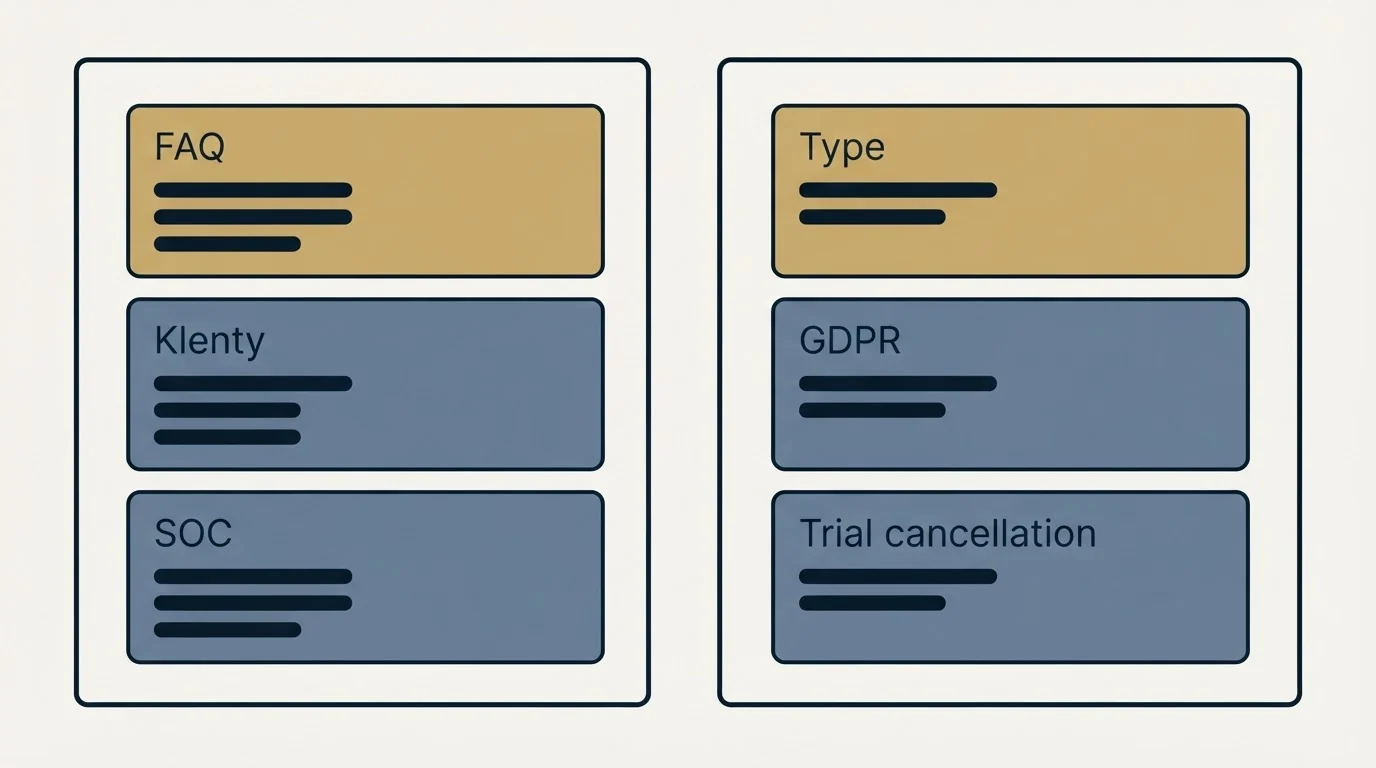
The platform trial is fourteen days with full access and a cap of 200 emails sent to prospects, no card required, and the FAQ states that an account that does not upgrade is deactivated. Upgrading is by card. The FAQ answers the cancellation question in one line, "Klenty is a pay as you go service", and adds that there are no cancellation fees and no charge for the subsequent billing period.
Read those two sentences against the billing states. Pay as you go on a page whose two states are annual and quarterly means the shortest commitment on the published ladder is a quarter; there is no monthly state on the page. That is a category pattern rather than a Klenty quirk, and a team comparing this ladder against a monthly-billed rival is comparing a quarter's commitment against a month's.
Support is published as 24 hours a day, five days a week, and the page carries a claim of a response inside two and a half minutes, which is the vendor's own figure about itself. Security is stated as SOC 2 Type II and GDPR compliance.
| Card | Annual / quarterly | Saving |
|---|---|---|
| Sales engagement page | ||
| Starter, per account | $50 / $60 | 16.7% |
| Growth, per user | $70 / $85 | 17.6% |
| Plus, per user | $99 / $119 | 16.8% |
| Dialer add-on, per user | $45 / $45 | none |
| Sales dialer page | ||
| Basic, per user | $40 / $50 | 20% |
| Pro, per user | $80 / $100 | 20% |
| Scale, per user | $140 / $170 | 17.6% |
| Call Intelligence, per user | $25 / $30 | 16.7% |
Why the ranking pages disagree with the page
Search the query and the results are the vendor's pricing page, its support article, a dialer competitor's page on Klenty dialer pricing, three reviews and two comparison pages. They agree on the three annual figures and they stop there. None states the unit difference on the Starter card, none quotes the quarterly state, and one of them publishes an Enterprise band it labels as vendor intelligence, which is a guess with a confident name. Klenty's own pages publish no Enterprise figure on any surface read on 4 September 2026.
The site's own cold email pricing guide carries a single entry figure for Klenty in a table dated February 2026 with no billing state beside it, which is the same shape as the ranking pages and is why this page exists.
The wider lesson is the one Salesloft's pricing page teaches from the opposite direction. A vendor that publishes figures still leaves the units and the states to the reader, and a figure copied without its unit is a different number from the one the vendor printed.
What this platform sells, and where it does not fit
Klenty describes itself as a sales engagement platform for sales teams, its homepage leads with a sales dialer built for the US market, and its customer stories quote heads of business development and directors of marketing on automated cadences. The unit of the product is the rep, and the whole ladder above Starter is priced accordingly.
That is the right unit for a team of named reps working a CRM, each with a phone and a calendar. It is the wrong unit for cold outbound at volume, which needs many dedicated sending mailboxes and very few humans. Per user pricing charges for the resource such a programme has least of. The category question, and the point at which an engagement platform earns its price, is worked through in sales engagement platforms.
One doctrine note, because the product is built around cadences. A cadence sends a prospect several messages over several weeks, and every message after the first reaches only the people who saw the previous one and chose not to answer. RevenueFlow runs one message per campaign, with no bumps and no thread replies. Any platform will let you run it either way, and email sequence software sets out what the choice costs in both directions.
The short version
As published on Klenty's pricing pages on 4 September 2026, Starter is $50 per month billed annually for the account with 15,000 contacts and 75,000 emails a month, Growth is $70 and Plus $99 per user per month billed annually, with a quarterly state of $60, $85 and $119 that renders only after a click, and a $45 per user dialer add-on. The separate dialer ladder on its dialer page runs $40, $80 and $140 per user per month billed annually with 500, 2,000 and unlimited US minutes, a $25 Call Intelligence add-on, and a stated overage of about $0.021 a minute. Driven to its quarterly state, the dialer ladder reads $50, $100 and $170. The support centre prices the entry plan per seat under a different name, which is the conflict to settle before signing.
For the field around it, the site's own Klenty alternatives page sets the product against the rest of the category. If the constraint is the supply of qualified conversations rather than the software that sequences them, see what a first campaign produces against a qualification standard agreed in writing before launch.
Pricing and features are taken from the vendor's own pages: Klenty's sales engagement pricing page, its sales dialer pricing page and its support centre plans article, with both quarterly states captured in a browser after a click. Verify current terms with the vendor before relying on them.
Frequently asked questions.
Frequently asked questions- How much does Klenty cost per user?
- Klenty's sales engagement pricing page lists Growth at $70 and Plus at $99 per user per month billed annually, or $85 and $119 per user per month billed quarterly. Starter is priced differently, at $50 a month for the whole account billed annually, or $60 quarterly, with 15,000 contacts and 75,000 emails a month included.
- Does Klenty offer monthly billing?
- Klenty's pricing pages carry two billing states, annual and quarterly, and no monthly state. The FAQ calls the service pay as you go, with no cancellation fees and no charge for the following billing period, so the shortest published commitment is a quarter. A team comparing Klenty against a monthly-billed rival should hold both tools to the same state.
- What does the Klenty dialer cost?
- Two things carry that name. The sales engagement page lists a Parallel and Power Dialer add-on at $45 per user per month. The separate sales dialer page lists Basic at $40, Pro at $80 and Scale at $140 per user per month billed annually, or $50, $100 and $170 quarterly, with 500, 2,000 and unlimited US minutes.
- How do I compare Klenty pricing with other tools?
- Fix the billing state first, since Klenty publishes annual and quarterly prices and no monthly one. Then read the unit on each card: Starter is per month for the account, while Growth and Plus are per user. Add the calling minutes you need above the 200 or 1,000 included, and treat any third party Enterprise figure as a guess, since Klenty publishes none.
About the author.

Ben Carden is CRO at RevenueFlow, which builds and operates outbound revenue engines for B2B companies. Previously at Gartner Enterprise. Studied at London School of Economics.
Ben Carden · CRO
Connect on LinkedIn →Explore more.
Ready to scale your outreach?
We build GTM engines that book real meetings. See the receipts.
Related articles.
Growbots Pricing: Every Volume Step, Package and Credit
Growbots prices outreach by emails a day in six steps on two packages, sells database leads as a monthly line, and its help centre still documents the ladder it retired.
YAMM Pricing: Priced by the Google Account You Send From
YAMM prices by whether you send from a consumer Gmail or a Workspace account, then by seats. The three tabs, the daily quotas and their conditions, and the refund rules.
Saleshandy Review: The Meter Is Prospects, Not Seats
Every Saleshandy Outreach tier includes unlimited email accounts and no per-seat fee. What it meters instead is active prospects and monthly email volume.
Lemlist API: What You Can Automate, and What You Cannot
The lemlist API uses HTTP Basic auth with a leading colon, limits every route to 20 requests per 2 seconds per key, and ships on every published plan.
QuickMail Review: The Warm-Up It Handed Off
QuickMail retired its own warmer for a MailFlow integration and sends through your provider's servers. Two documented facts that decide the fit faster than a rating.
GMass Review: What the 4.8 Rating Measures
GMass carries a 4.8 from 9.2K Chrome Web Store ratings, and its own FAQ says subscribing cannot raise Gmail's limits. Both facts belong in the same review.