Parallel Dialing: The Line Count Is the Whole Decision
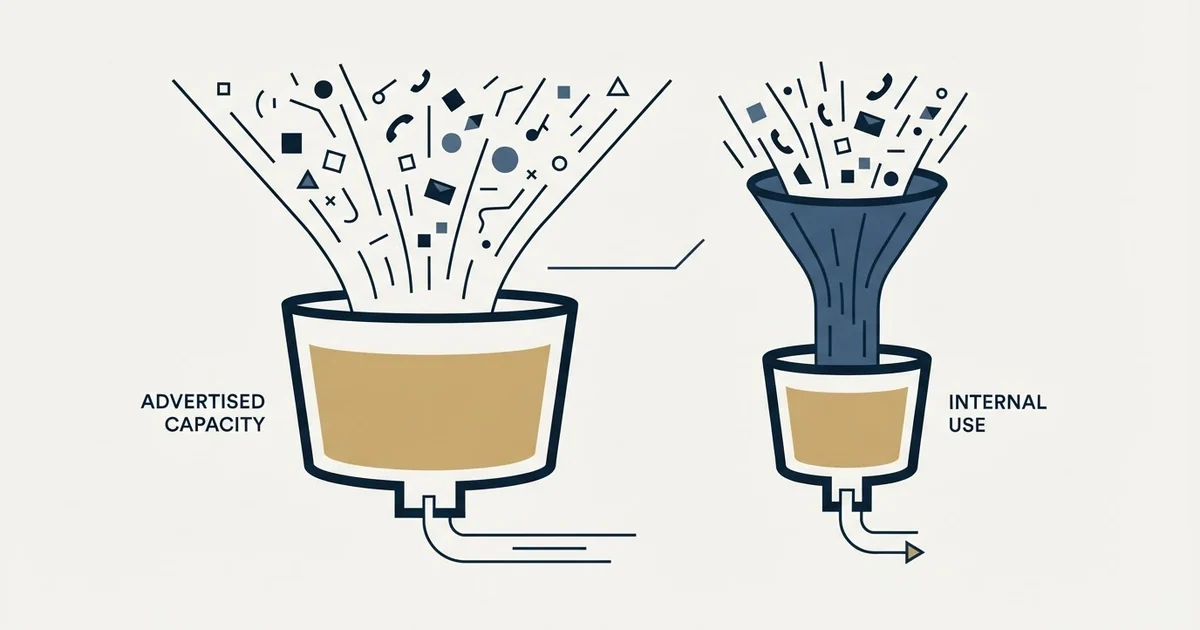
Orum's help centre publishes the line count its own team uses, and it is half the ceiling its product page advertises. That gap is the whole subject.
A parallel dialer places several calls at once for one rep and bridges whoever answers first, cancelling the rest. The line count should follow your connect rate: Orum's own documentation targets a connection every 90 to 120 seconds. Higher settings raise collisions, abandoned calls and cancelled sequence tasks.
Key takeaways
- Orum's support documentation states that its own team runs 4 to 5 lines at a roughly 5% connect rate, while its platform page advertises support for up to 10 lines simultaneously.
- The best-practice target published by that documentation is a connection every 90 to 120 seconds, which adapts to list quality in a way that a fixed line count does not.
- The FTC's Telemarketing Sales Rule guide defines an abandoned call as one where a live person answers and is not connected to a representative within two seconds of their completed greeting, and caps the safe harbour at three percent of calls answered by a live person.
- Orum documents that cancelled calls do not complete call tasks in Outreach or Salesloft, so activity data undercounts what happened and the cancelled prospects need a slower second pass.
Reviewed and updated October 1, 2026
Orum's help centre publishes the number its own sales team dials at, and it is not the number on the product page. The help article on parallel dialing says: "Here at Orum, we have a roughly 5% connect rate and our team calls between 4-5 numbers at a time." The platform page for the same product advertises the ability to "run up to 10 lines simultaneously."
Both statements are true and they are answering different questions. One is the ceiling the software supports. The other is the setting that works. The gap between them is the entire subject of parallel dialing, because the line count is very close to the only decision a buyer makes after signing.
What a parallel dialer does differently
A power dialer places one call per rep at a time and moves to the next number as soon as the current call ends. A parallel dialer places several calls at once for the same rep and bridges the rep to whoever answers first, dropping the rest.
The one-at-a-time end of that range has its own economics, and keeping a live rep on every connection is how the least aggressive mode in the category is defined.
The experience for the rep changes more than the description suggests. Orum's own documentation is blunt about it: "You will not hear the phone ring or the prospect's initial greeting. Instead, you will be transferred once the AI has determined you're live with a prospect." The rep hears a beep, the screen changes, and a stranger is already talking. Orum's guidance to its users is to "speak immediately in order to reduce hang-ups," which tells you what the first second of these calls sounds like from the other end.
The detection layer is what makes it work at all. Orum's platform page says its system "detects 20+ languages and knows the difference between a human, a screener, a voicemail, and a dial tree," and advertises sub half-second connects. Klenty sells the same capability as AI voicemail detection on a dialer it documents as dialing 2 to 10 lines. The quality of that classifier decides whether the rep is handed a person or an answering machine, and it is the part of the product least visible in a demo. What that dialer costs as an add-on and as a separate per user ladder, beside Klenty's sequencing plans, is read on this site's Klenty pricing page.
- Rep hears the ring
- Rep hears the greeting
- One prospect per attempt
- No calls are cancelled
- Fewer conversations per hour
- Rep hears a beep, then a person
- No ring, no opening greeting
- Several prospects dialled per attempt
- Unanswered attempts are cancelled
- More conversations per hour
The line count follows from the connect rate
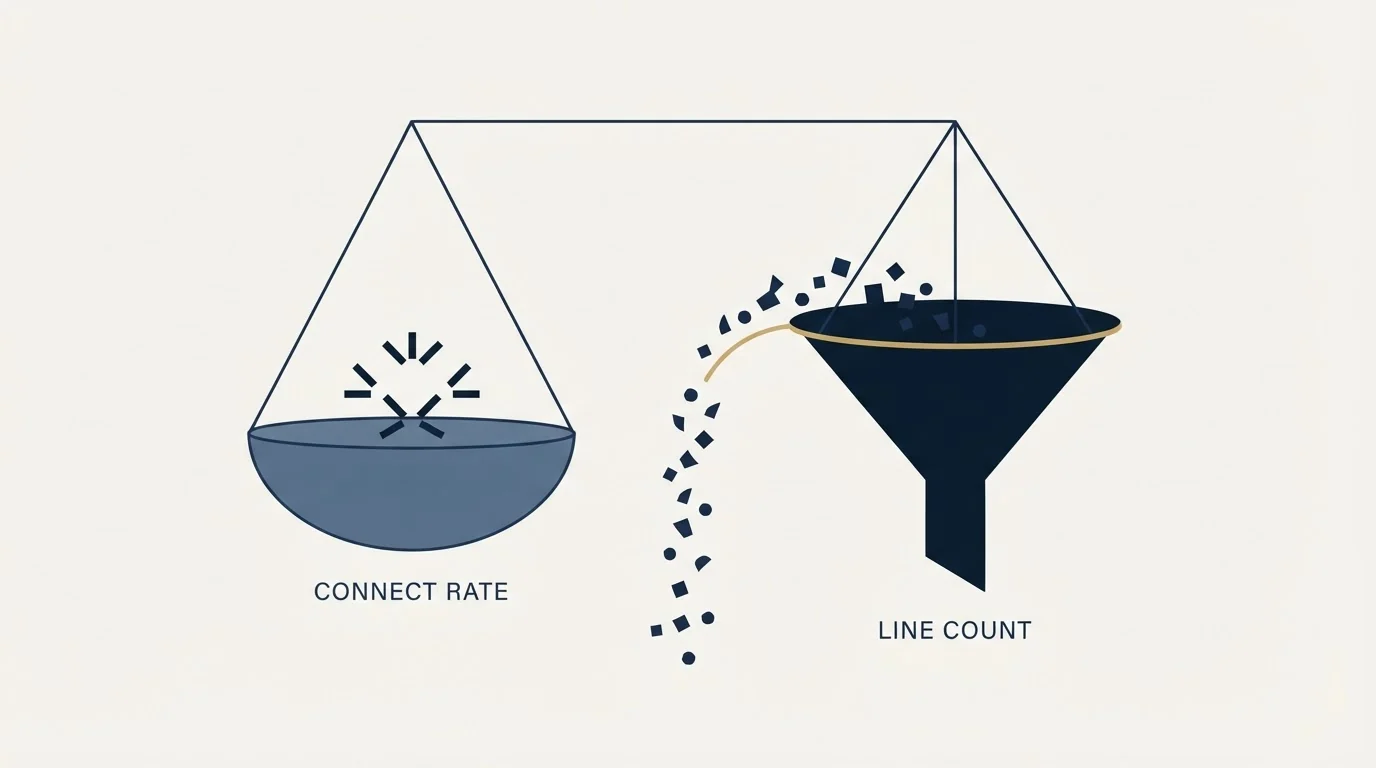
The arithmetic is simple and it runs in the opposite direction to intuition.
Orum's help article states it plainly: "If your connect rate is 10%, that means on average you'll have to dial 10 numbers to reach one person." Set the line count near that ratio and each cycle produces roughly one conversation. Set it far above the ratio and each cycle produces several people picking up at once, of whom the rep can speak to exactly one.
The guidance that follows is the useful part, and it is a target rather than a number: choose "a parallel number that gets you connected roughly every 90-120 seconds." If the rep is connecting faster than that, the setting is too high. If connections are sparse, it is too low. That formulation survives changes in list quality, market and time of day, which a fixed line count does not.
The consequence is uncomfortable for the way this category is sold. A team calling a well-researched list of direct mobiles has a high connect rate, which means it needs fewer lines, which means it gains least from the most aggressive setting. The teams that benefit most from ten lines are the ones dialling the worst data. Our page on dialer modes and what a seat costs works the same inversion through the four modes.
What happens when two people answer
Vendors describe the collision behaviour consistently. Orum calls it "the law of firsts": the system connects the rep to the first detected human and cancels the others. Its documentation notes the odds rise with the setting, specifically "if you have a high connect rate and are dialing 10 people at once."
The person who was cancelled hears silence or a recording. That artefact has a regulatory name. The Federal Trade Commission's Telemarketing Sales Rule guide defines an outbound call as abandoned "if a person answers it and the telemarketer does not connect the call to a sales representative within two seconds of the person's completed greeting," and its safe harbour caps abandonment at "three percent of all calls answered by a live person," requires letting the phone ring "for 15 seconds or four rings," requires a recorded message identifying the seller when no rep is available, and requires records proving all of it. The same guide names the cause directly, describing abandoned calls as often resulting from dialers "simultaneously calling multiple consumers for every available sales representative."
For genuine business-to-business calling the guide states that "Most phone calls between a telemarketer and a business are exempt from the TSR," with carve-outs including retail sales of nondurable office or cleaning supplies. That does not make the artefact free. It moves the consequence from a regulator to the carrier reputation systems and to the person who answered, and the full picture of which rules apply to a B2B call is worth having straight before choosing a setting.
The cost nobody models: cancelled calls
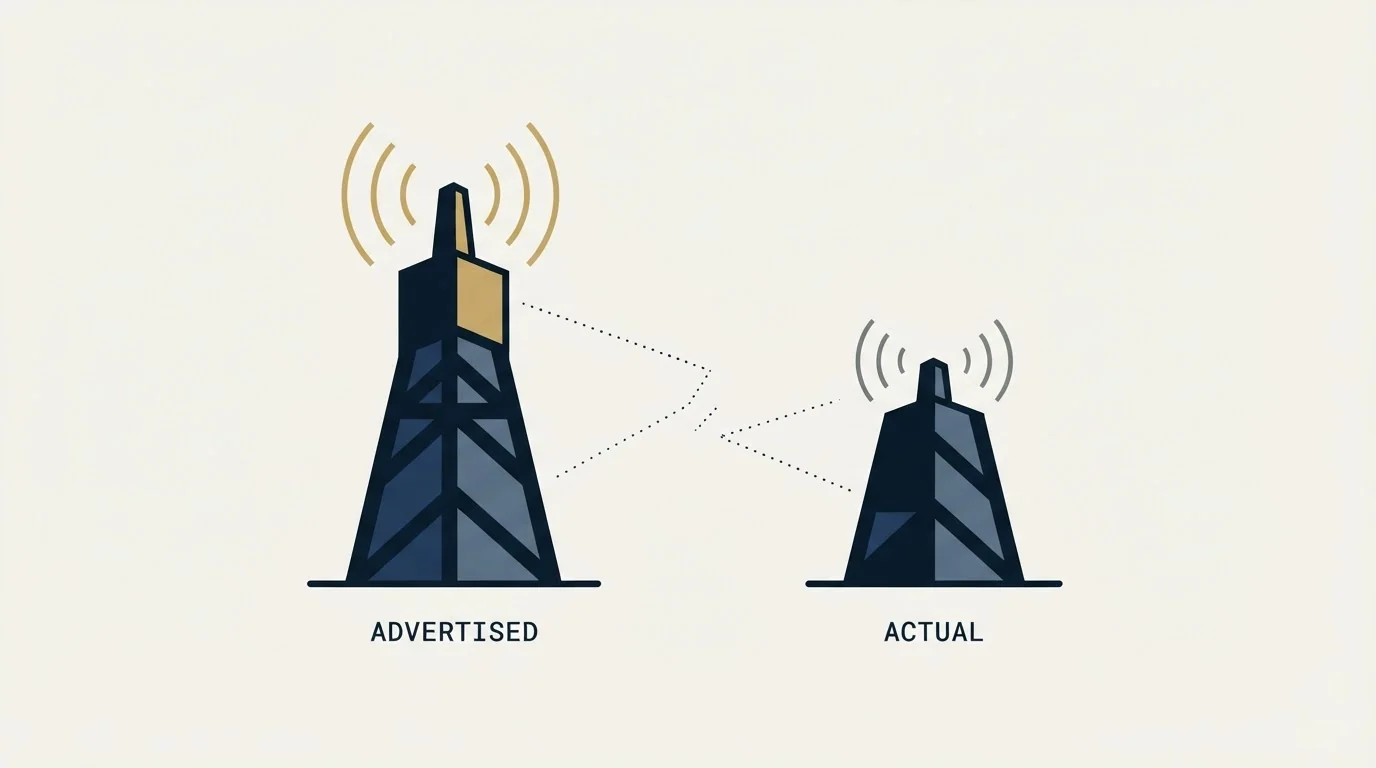
This is the operational detail that decides whether a parallel dialer fits an existing process, and it is buried in a support article rather than on any product page.
Orum's documentation, describing use alongside Outreach and Salesloft, states that "Orum will NOT complete call tasks when a call is canceled. For example, if you're calling 5 people at once and you are connected, we will cancel on 4 calls." Those four prospects were dialled. Nothing was recorded against them, and the step they were sitting on does not advance.
Two things follow. The activity data in the system of record undercounts what happened, so any measure of touches per prospect is wrong in a direction nobody notices. And the cancelled prospects accumulate: Orum's documentation says they collect at the bottom of the list, that the system pauses when it reaches them again, and that reps often switch to power dialing to finish those off. The practical read is that a parallel dialer is a volume instrument for the top of a list and a power dialer is the instrument that finishes it.
- Step 1Dial five
Five numbers ring simultaneously for one rep
- Step 2Detect
The classifier sorts human from voicemail, screener and dial tree
- Step 3Bridge one
The rep is connected to the first detected human, mid-greeting
- Step 4Cancel four
The rest are dropped; the vendor documents that their call tasks are not completed
- Step 5Requeue
Cancelled prospects collect at the end of the list for a later, slower pass
Three lines, ten lines, and what the vendors publish
The multi-line variants are the same instrument at different settings. A triple line dialer, sometimes written as a three line dialer, is a parallel dialer capped at three simultaneous calls, and it is the conservative end of the range rather than a separate product category. Searches for it tend to land in real-estate calling software, where the shape of the list and the compliance picture are different from B2B.
Published ceilings vary more than the marketing suggests, and one vendor publishes two different ones. Kixie's pricing page describes its top plan as PowerDial "up to 4 lines simultaneously" and its feature table repeats "Up to 4 lines," while the navigation on the same site advertises the power dialer as "Auto-dial up to 10 numbers in parallel." Klenty's feature page documents dialing 2 to 10 and executing 150 to 350 dials per hour. JustCall sells ten parallel lines. Orum supports up to ten and lets an administrator cap it at the organisation level or per rep, with a setting of one disabling parallel dialing entirely.
That per-rep cap is the underrated feature. Orum's documentation suggests adjusting at the rep level for new users, "to ensure they are comfortable in the platform before calling 5+ prospects at a time," which is a reasonable read of the ramp problem: the mode is hardest for the least experienced person on the team.
The per-vendor detail behind those numbers sits in the individual write-ups: Kixie's PowerDialer, Orum's dialer and the Nooks dialer.
- Yes: Measure your actual connect rate on this list before setting a line count
- Yes: Tune to a connect every 90 to 120 seconds rather than to a fixed number of lines
- Yes: Check whether cancelled calls complete tasks in your sequencer
- Yes: Cap the line count for reps in their first weeks
- Yes: Plan a power-dialing pass for the cancelled remainder
- No: Start at the vendor maximum because the plan allows it
What a parallel dialer will not fix

It multiplies dials against the list it is given. If a third of the mobile numbers belong to people who left two years ago, the result is reaching the wrong person faster, on more lines, while the numbers doing the dialling acquire spam labels. Number reputation is the recurring cost in this category and it is covered alongside the seat economics in our dialer modes piece, with the wider stack of purchases in the four things people think are one.
RevenueFlow runs cold email and LinkedIn rather than phone, so nothing here is drawn from operating one of these platforms; it is drawn from vendor documentation. The one habit that does transfer is the measurement discipline. We send one message per campaign, with no bumps and no thread replies. If the written half is the gap, we will build the first campaign.
Vendor behaviour verified against Orum's platform and support pages, Kixie's pricing and power dialer pages, Klenty's parallel dialer feature page and JustCall's parallel dialer page, all fetched 17 August 2026. Regulatory statements quote the FTC's published Telemarketing Sales Rule compliance guide and are not legal advice. Verify current terms before relying on them.
Frequently asked questions.
Frequently asked questions- What is the difference between a parallel dialer and a power dialer?
- A power dialer runs one line per rep and the rep hears the call ring. A parallel dialer runs several lines at once and bridges the rep to the first detected human. Orum's documentation notes that on parallel mode you never hear the ring or the greeting, and advises reps to speak immediately once the screen changes.
- How many lines should a parallel dialer run?
- Set it from your measured connect rate rather than from the plan maximum. Orum's guidance is to pick a number that produces a connection roughly every 90 to 120 seconds, and it notes that connecting very frequently means the setting is too high. Its own team runs four to five lines at a roughly five percent connect rate.
- Is parallel dialing legal for B2B calling?
- The FTC's compliance guide states that most phone calls between a telemarketer and a business are exempt from the Telemarketing Sales Rule, with carve-outs including retail sales of nondurable office or cleaning supplies. That is not legal advice, and the abandoned-call artefact still carries carrier and reputation consequences.
- What is a triple line dialer?
- A parallel dialer capped at three simultaneous calls, also written as a three line dialer. It is the conservative end of the same range rather than a separate product, and searches for the term often return real-estate calling software, where list shape and compliance differ from B2B prospecting.
About the author.

B2B cold email experts helping companies generate qualified leads through done-for-you outreach campaigns.
RevenueFlow Team
Explore more.
Ready to scale your outreach?
We build GTM engines that book real meetings. See the receipts.
Related articles.
PhoneBurner Pricing: What the Seat Price Covers
PhoneBurner publishes all three seat prices in both billing states. The metered resource is contact imports, not minutes, and the spam layer is an add-on at every tier.
Koncert Dialers: Line Counts Published, Price Is Not
Koncert publishes the parallel line ceiling on every tier, which most of this category will not. It publishes no price. What its pages state, and what the quote decides.
The Nooks Dialer: A Calling Floor With a Platform Attached
The distinctive thing Nooks sells is the room the dialer sits in. That decides whether it fits your team far more than the dialing does.
Kixie's PowerDialer: Two Published Line Counts, No Price
Kixie's navigation advertises ten parallel lines. Its pricing table says four. The number in the plan table is the one you are buying.
Orum: The Nine-Seat Floor and Its Own Line Count
Orum's entry plan caps parallel dialing at five lines. Its support centre says its own team runs four to five. The upgrade buys other things.
Inbound vs Outbound Sales: How the Two Motions Differ
Inbound and outbound sales compared as motions: what the rep knows at first touch, what each costs, the team each needs, and the metrics that belong to each.