What Cold Calling Is, and Which Rules Apply to a B2B Call
A cold call is an unsolicited call to someone who never asked. The definition matters less than the FTC line, which exempts most business-to-business calling.
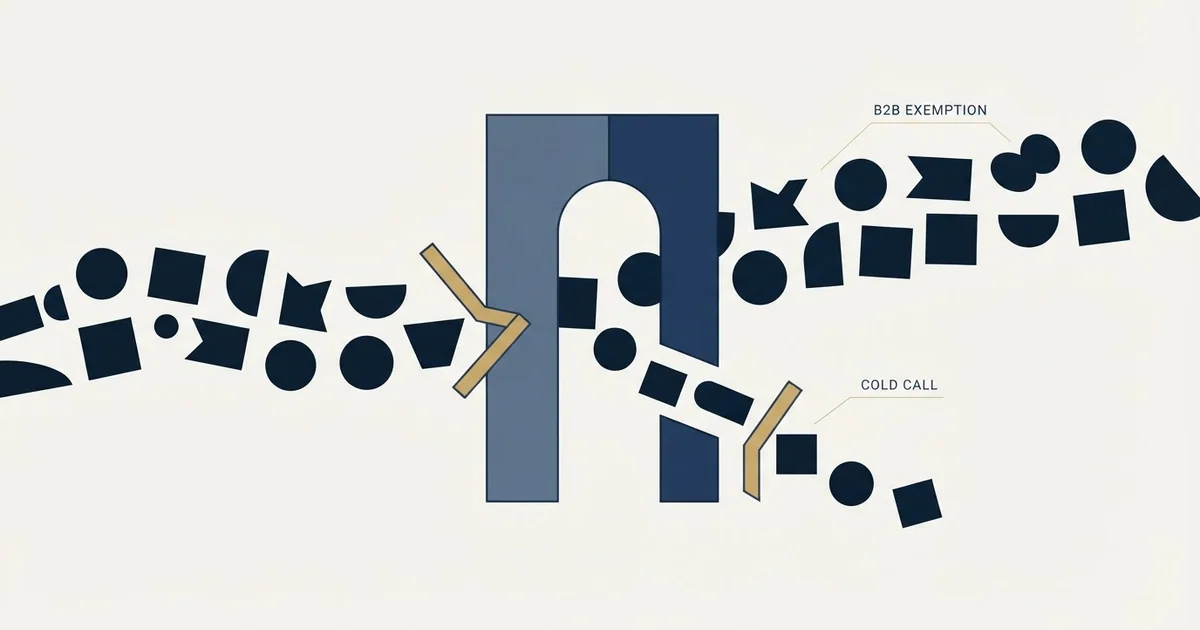
Cold calling is an unsolicited phone call to a person who has not asked to hear from you, placed to start a commercial conversation. The FTC's own compliance guide states that most calls between a telemarketer and a business are exempt from the Telemarketing Sales Rule, with narrow exceptions worth knowing before dialling.
Key takeaways
- The FTC guide states that most phone calls between a telemarketer and a business are exempt from the Telemarketing Sales Rule.
- The National Do Not Call Registry prohibition does not apply to business-to-business calls, per the same guide.
- Calling an employee at work about a personal purchase is not a business-to-business call and loses the exemption.
- Calling and written outbound fail differently: calling fails loudly and immediately, written outbound fails quietly through non-delivery.
Reviewed and updated September 2, 2026
A rep opens a list, dials a number nobody gave them permission to dial, and asks a stranger for eight minutes. That is the whole of cold calling, and almost every argument about it turns out to be an argument about one of three things: what counts as cold, which rules apply, and what the call is supposed to produce.
The definition itself is short. A cold call is an unsolicited telephone call to a person who has not asked to hear from you, made to start a commercial conversation. The prospect has no prior relationship with the caller, has not enquired, has not downloaded anything, and is not expecting the call. Everything else that gets described as cold calling is warmer than that: calling a lapsed customer, calling someone who filled in a form, calling a referral, calling an account your colleague met at a conference. Those calls have a reason attached that the recipient can verify in their own memory, which changes how they open and how often they convert.
What separates a cold call from the alternatives
The useful distinction is not the temperature word. It is what the recipient is able to do with the interruption in the first four seconds.
A written message waits. Someone reads it when they choose to, and the cost of ignoring it is zero. A call does not wait. It takes the recipient out of whatever they were doing, which is both the entire advantage and the entire problem. The advantage is that you find out today. The problem is that you have borrowed attention rather than requested it, and the opening has to be worth the theft.
The same split changes one common objection, since asking where an address came from is a different question in writing than it is on a call.
That difference has a practical consequence for how the two channels are planned. Written outbound is a volume instrument: the message is fixed, the list is large, and the reply rate does the sorting. Calling is a depth instrument: the list is smaller, the caller adapts in real time, and the same person can be reached again in a way that does not read as pestering, because a phone conversation is two-way correspondence rather than a broadcast. Our own written channels run one message per campaign for exactly that reason. The phone does not carry the same constraint, and pretending it does produces bad advice.
- Answer rate is the gate
- You learn the outcome today
- Adapts inside one conversation
- Caller time is the binding cost
- Reaching a small market repeatedly is normal
- Deliverability is the gate
- Outcome arrives over days
- Message is fixed before send
- Infrastructure is the binding cost
- One message per campaign, no bumps
- Connection acceptance is the gate
- Profile context is visible to both sides
- Message limits cap volume
- Account safety is the binding cost
- A second message lands under the first, so we do not send one
Is cold calling marketing or sales?
The question sounds like semantics and decides who owns the budget, so it is worth answering. Cold calling is usually run as a marketing channel and staffed as a sales function. It is a marketing channel in the sense that matters commercially: it is a paid route to a stranger's attention, it competes for budget against email, paid media and events, and it is judged on cost per meeting like any of them. It is a sales function in the sense that the work is a live conversation held by a person who has to think, which no marketing team is set up to manage.
Where it goes wrong is when the two owners disagree about the metric. Marketing counts conversations produced. Sales counts meetings held that turned into pipeline. Those two numbers can move in opposite directions for a quarter before anyone notices, so agree which one the programme reports on before it starts.
Cold calling and telemarketing are not the same job
The two words get used interchangeably and describe different work. Telemarketing in its classic form tries to complete a transaction on the call: a script, a price, a card number, one attempt. B2B cold calling almost never tries to close anything. It tries to establish that a problem exists, that this person owns it, and that a longer conversation is worth putting in a diary. The pitch is a meeting, and the product barely gets described.
That difference shows up in how the two are staffed. A telemarketing floor is measured on calls handled and conversion on the call. A B2B calling team is measured on meetings held and, further down, on whether those meetings turned into pipeline that the account executives agreed was real. Anyone quoting call-centre productivity figures at a B2B calling programme is measuring the wrong job.
Which rules actually apply, and the part most articles get backwards
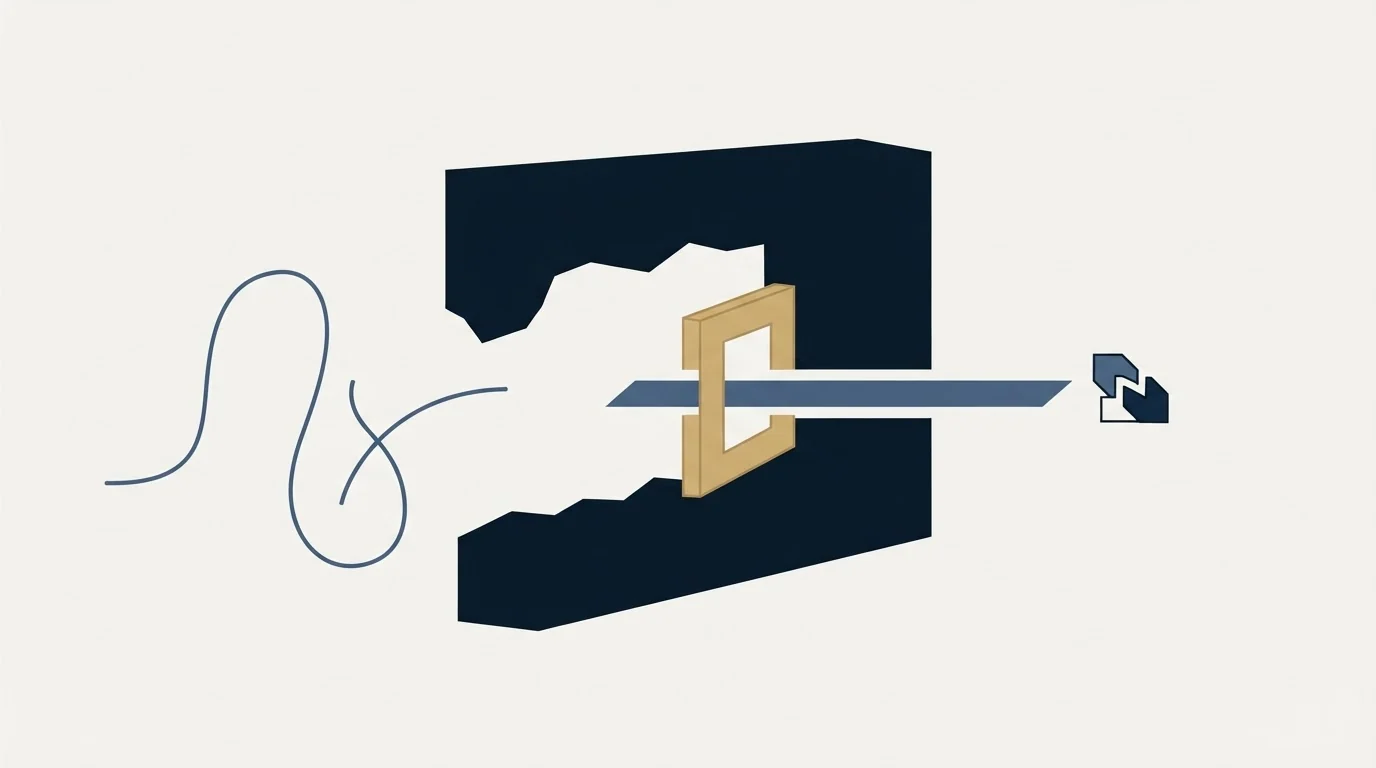
Cold calling in the United States is governed mainly by the Federal Trade Commission's Telemarketing Sales Rule. The FTC's own compliance guide is unusually direct about business calling, and it says something most cold calling advice never mentions.
"Most phone calls between a telemarketer and a business are exempt from the TSR," the guide states, in the section covering business-to-business solicitation calls. The exemption is broad, and it has a small number of specific holes rather than vague ones. Calls placed to induce the retail sale of nondurable office or cleaning supplies are not exempt, and the guide is precise about what nondurable means: "paper, pencils, solvents, copying machine toner, and ink," anything that depletes when used. Software, copiers, computers, mops and buckets are treated as durable and stay outside the carve-out.
The National Do Not Call Registry follows the same line. The FTC guide states that the prohibition on calling numbers on the Registry "does not apply to business-to-business calls." The Registry is a consumer protection, and a company's main line is not a consumer.
The regulation itself is tighter than the guide and worth reading once. 16 CFR 310.6(b)(7) exempts "telephone calls between a telemarketer and any business to induce the purchase of goods or services", and names exactly two things the exemption does not reach: the nondurable-supplies case above, and "the requirements of § 310.3(a)(2) and (4)". Those two are the anti-deception provisions, prohibiting "misrepresenting, directly or by implication" a material aspect of what is sold and "making a false or misleading statement to induce any person to pay for goods or services". So the residue of the rule that still binds a business-to-business caller is the obligation to tell the truth, which is a better summary of the compliance position than any list of mechanics.
There is one trap inside all of that, and it is the one worth memorising. The guide notes that "telemarketing calls that solicit consumers at their work," meaning calls to a business line that ask an individual employee to buy something for their own personal use, "are not business-to-business solicitations and are not exempt." Calling a facilities manager about a facilities contract is business calling. Calling the same person at the same desk about a personal insurance policy is not.
- Yes: The call is to a business, about something the business would buy
- Yes: The purchase is for the company, not for the individual personally
- Yes: You are not selling nondurable office or cleaning supplies at retail
- Yes: You are not soliciting a charitable contribution from the employee
- Depends: State law and non-US jurisdictions are checked separately, because the exemption above is a federal one
For the calls that are covered, the FTC guide sets out mechanics worth knowing even when they do not bind you, because they describe what regulators consider abusive. A call counts as abandoned "if a person answers it and the telemarketer does not connect the call to a sales representative within two seconds of the person's completed greeting." The safe harbour allows abandonment of "no more than three percent of all calls answered by a live person," measured per campaign or per 30-day period, requires letting the phone ring "for 15 seconds or four rings," and requires a recorded message naming the seller when no representative is available. Prerecorded sales pitches fail this test by construction, because a recording is not a sales representative. Calls before 8am or after 9pm are named as abusive, and records have to be kept for two years.
Voicemail left behind after an abandoned call raises its own consent question, and the two products sharing one name explains why regulators treat them differently.
Outside the United States the defaults invert. Several jurisdictions treat unsolicited business calling as opt-out by register or opt-in by consent rather than exempt, so a list that is clean in Ohio is not automatically clean in Manchester or Munich. Check the destination country before the first dial, not after the first complaint.
What a cold call is supposed to produce
The output of a cold call is a booked conversation with a named person, and nothing else. It is not a sale, not a demo watched on the spot, and not a promise to think about it. Teams that judge calling on anything other than meetings held end up optimising for pleasant conversations, which are free to obtain and worth nothing.
Three variables set the result, in this order.
The list decides most of it. A correct mobile number for a person who owns the problem beats any script, and a wrong number is unrecoverable at any level of skill. That is why the phone-number quality problem swallows more calling programmes than technique ever does.
A companion piece on finding and enriching contact data explains how that kind of platform helps teams source the accurate numbers a calling list depends on.
The opening decides the rest of the conversation. Whatever is said in the first ten seconds has to give the recipient a specific reason why this call is happening to them today, and that reason is a property of the research behind the list. The first ten seconds and the list behind them is where most of the improvement available to a calling team actually sits.
The market size decides whether the channel is the right one at all. A team with a few thousand qualifying accounts can afford to reach each of them by hand, and a team with a hundred thousand cannot. That is the reasoning behind running calling as the primary motion when the addressable market is small, and it inverts as the market grows.
Where calling sits next to everything else
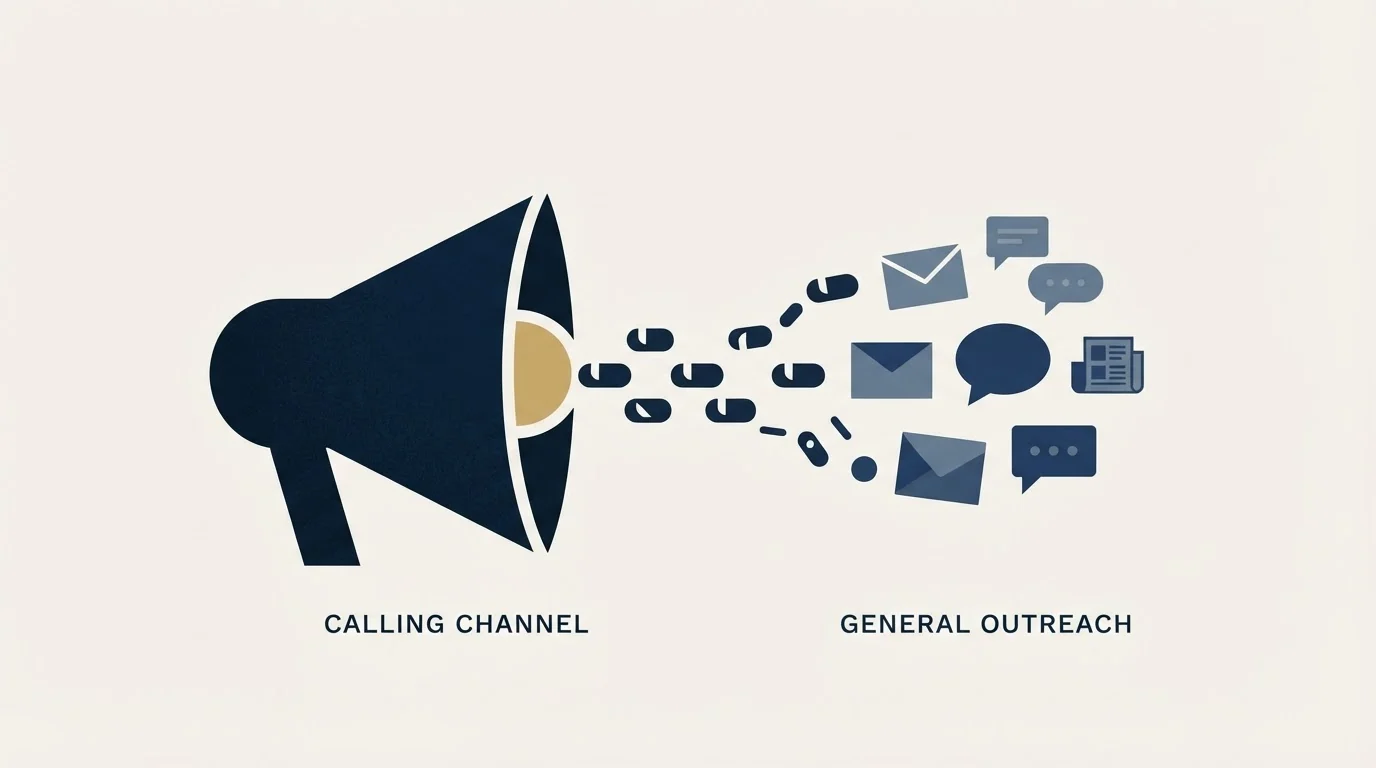
Channels differ mostly in how quickly they answer and how much they cost per attempt. Sorting them that way, rather than by which one somebody likes, is the practical version of a channel strategy, and it is worth doing on paper before hiring anyone. Our own comparison of how fast each lead generation channel answers lays that out.
RevenueFlow does not sell cold calling. We build and run cold email and LinkedIn outbound, and we say so plainly on pages like this one because the alternative is writing calling advice with a thumb on the scale. If the phone is the right channel for your market, the honest options are an in-house caller, a specialist firm, or a hybrid where calling handles the top accounts and written outbound handles the rest. The SDR role as it exists after automation is a useful reference point for what you are actually hiring when you hire for this.
What we can say from the buying side is that calling and written outbound fail differently. Calling fails loudly and immediately, in the form of a caller with nothing to do and no meetings on the board. Written outbound fails quietly, in the form of messages that were never delivered. Loud failure is easier to manage, which is a genuine argument for the phone that rarely gets made.
If written outbound is the part you would rather not run yourself, that is the part we do, and our outbound programmes are built around a single message per campaign with nothing scheduled behind it.
Regulatory citations verified against the FTC's own compliance guide as of mid-2026. Rules change and vary by state and country. Verify current obligations with the FTC and with counsel before running a calling programme.
Frequently asked questions.
Frequently asked questions- Is cold calling legal in the United States?
- For business-to-business calling, largely yes. The FTC's compliance guide states that most phone calls between a telemarketer and a business are exempt from the Telemarketing Sales Rule, and that the Do Not Call Registry prohibition does not apply to business calls. Narrow exceptions exist, state law adds obligations, and other countries set the opposite default.
- What is the difference between cold calling and telemarketing?
- Telemarketing in its classic form tries to complete a transaction on the call, with a script, a price and one attempt. B2B cold calling almost never tries to close. It establishes that a problem exists and that the person owns it, then asks for a diary slot. The product often barely gets described.
- Does the Do Not Call Registry apply to business numbers?
- The FTC's guide states the Registry prohibition does not apply to business-to-business calls, because the Registry is a consumer protection. The exception is a call to a business line that solicits an individual employee to buy something for their own personal use, which the guide says is not a business-to-business solicitation.
- Is cold calling still worth doing?
- It depends mostly on market size. A team with a few thousand qualifying accounts can reach each of them by hand and calling competes well. A team with a hundred thousand cannot, and written channels reach further per unit of effort. Work the arithmetic on your own addressable market before hiring anyone.
About the author.

B2B cold email experts helping companies generate qualified leads through done-for-you outreach campaigns.
RevenueFlow Team
Explore more.
Ready to scale your outreach?
We build GTM engines that book real meetings. See the receipts.
Related articles.
Appointment Setting for Business Brokers: The Seller Meeting
What a bought meeting with a business owner has to be for a brokerage: the three-part qualification, the confidentiality rules, the licence line and the owner's reasons.
Cold Calling for PPC Agencies: What You Can See First
A paid media prospect is partly readable before the call and has already been told by the platform what to do when a stranger rings about its ads.
SDR Outsourcing for Logistics Companies: The Brokerage Line
What an outside sales development team may do in a freight company's name, the calling and email rules it inherits, and which arrangement survives a bid-shaped market.
SDR Outsourcing for Business Brokers: The Fee Timing
Whether a success-fee brokerage should rent sales development at all: the fee timing, the texts that limit what an outside person may say about value, and who signs.
LinkedIn Outreach for Banks: A Regulated Message
How a bank's relationship managers use LinkedIn to reach business owners: what the FFIEC guidance, FINRA's notices and LinkedIn's own rules require, and where to stop.
Cold Calling for Chemical Companies: Who Picks Up
A chemical cold call rarely arrives first. It reaches a formulator who has already been comparing suppliers on a screen, for one of three published reasons.