Voicemail Drop: Two Products Under One Name
Voicemail drop names two different products. One saves a rep seconds after a call that rang; the other is a delivery channel the FCC ruled on in 2022.

Voicemail drop names two products. A dialer-side drop plays a pre-recorded message into a mailbox after a call that already rang, saving the rep the repetition. Ringless voicemail inserts a message without ringing at all, and the FCC ruled in 2022 that it is a call under the TCPA requiring consent.
Key takeaways
- Dialer-side drops attach to a call that rang; ringless or direct-to-voicemail delivery never rings the handset, and the two carry different regulatory positions.
- The FCC's declaratory ruling published at 87 FR 76425 found that ringless voicemail to wireless phones requires consent because it is a call made with an artificial or prerecorded voice.
- The TCPA provision at issue attaches to the number dialed and the technology used, so business-to-business status does not remove the question.
- Which of your direct dials are mobile is a contact-data problem that has to be answered before the feature is switched on, not after.
Reviewed and updated October 1, 2026
Two different products are sold under the name voicemail drop, and a B2B team that does not separate them will make a compliance decision without knowing it made one. In the first, a rep dials a prospect, the call goes unanswered, and one click plays a pre-recorded message into the mailbox while the rep moves on to the next number. In the second, no call is placed at all: a message is inserted into the voicemail server directly, and the handset never rings.
The first is a keystroke saver attached to a call that happened. The second is a delivery channel of its own. United States regulators have addressed the second one specifically, and the answer they gave is the reason the distinction is worth holding onto.
Vendors selling the second product market it as a ringless voicemail service, and the ruling applies to the service whatever the marketing calls it, because the Commission addressed the delivery method rather than the seller.
What the dialer-side drop actually does
The mechanics are simple and every dialer implements them roughly the same way. A rep records one or more messages in advance and picks one during a live call once it is clear the call is going to voicemail. The dialer takes over from there, waits for the right moment, plays the recording, and releases the rep.
Kixie's own explainer on the feature sets out the three ways the drop gets triggered, and the differences matter more than they look. Beep detection waits for the tone at the end of the greeting before playing. Silence detection waits for the line to go quiet instead, which the same page notes is the option that still works when a greeting has no beep, at the cost of a short silence at the head of the message. Manual selection leaves the timing entirely with the rep, which is the most reliable and saves the least time.
Outreach documents the feature at the account level rather than the individual one: its support article states that admins have to enable Voicemail Drop in the org-level settings for Outreach Voice before any user can configure their own set of pre-recorded voicemails. That page also carries the vendor's own caution, that some calling destinations may require prospects to opt in to receiving pre-recorded or AI-generated voicemails, and advises speaking with legal counsel.
That caution, on a product help page, is the shape of the whole subject.
- The number is dialed and rings normally
- The rep is on the line and hears the greeting
- A pre-recorded message replaces a live one
- Time saved is per unanswered call
- The call appears in call records like any other
- The handset does not ring
- No live call leg to the recipient
- Messages can be sent in volume without dialing
- Addressed directly by the FCC in 2022
- Sold as a separate category of service
The rule the second product runs into
The Telephone Consumer Protection Act does not care whether a call is business to business. Its central prohibition attaches to the technology and to the number. The statute makes it unlawful to make any call, other than for emergency purposes or with the prior express consent of the called party, using an automatic telephone dialing system or an artificial or prerecorded voice, to numbers assigned to cellular telephone service and similar services (47 U.S.C. 227). The implementing rule carries the same language and adds that where the call includes or introduces an advertisement, or constitutes telemarketing, what is required is prior express written consent (47 CFR 64.1200).
A pre-recorded voicemail is an artificial or prerecorded voice by any ordinary reading, which is why the question of whether a ringless message counts as a call at all became the whole argument. The Federal Communications Commission answered it. In a declaratory ruling and order published in the Federal Register on 14 December 2022, the Commission "finds that 'ringless voicemail' to wireless phones requires consumer consent because it is a 'call' made using an artificial or prerecorded voice and thus is covered by" the TCPA, and denied the petition asking it to rule the other way (87 FR 76425, CG Docket No. 02-278, FCC 22-85).
The ruling closed the argument that ringless delivery escapes the statute by never ringing. It did not create a business-to-business exemption, because the provision it interpreted does not have one. This is the same structure our reading of what the B2B calling exemption does not cover describes: the Telemarketing Sales Rule steps back from most business calling, and this statute does not, because its restrictions are written around the number dialed and the technology used rather than around who is buying.
This page is a plain-English reading of the cited sources rather than legal advice, and it is written about United States federal rules. Nothing here substitutes for counsel who knows your jurisdiction and your list.
Which means the list is the exposure, not the tactic
The practical consequence lands on the data rather than on the script. The restriction attaches to numbers assigned to cellular services, and a modern B2B prospect list is full of mobile direct dials that are not labelled as such.
A team that cannot say which of its direct dials are mobile cannot answer the question the rule asks. That is a contact-data problem before it is a legal one, and it has the awkward property of being invisible until somebody asks. Line-type fields from data vendors are claims rather than facts, they are inconsistent between providers, and they age as numbers port between carriers. The conservative default, treating an unlabelled number as though it might be a mobile, removes the exposure and costs reach. Deciding that after the list is loaded means deciding it under pressure.
- Yes: Whether the tool places a call that rings, or inserts a message without ringing
- Yes: Which numbers on the list are mobile, held as a field rather than an assumption
- Yes: What consent, if any, exists for the numbers being messaged
- Yes: Whether state rules add requirements on top of the federal position
- Yes: Who reviews the recording before it is used at volume
- No: Assuming a business-to-business list removes the question
- No: Enabling it org-wide because one rep asked for it
What it buys, stated honestly
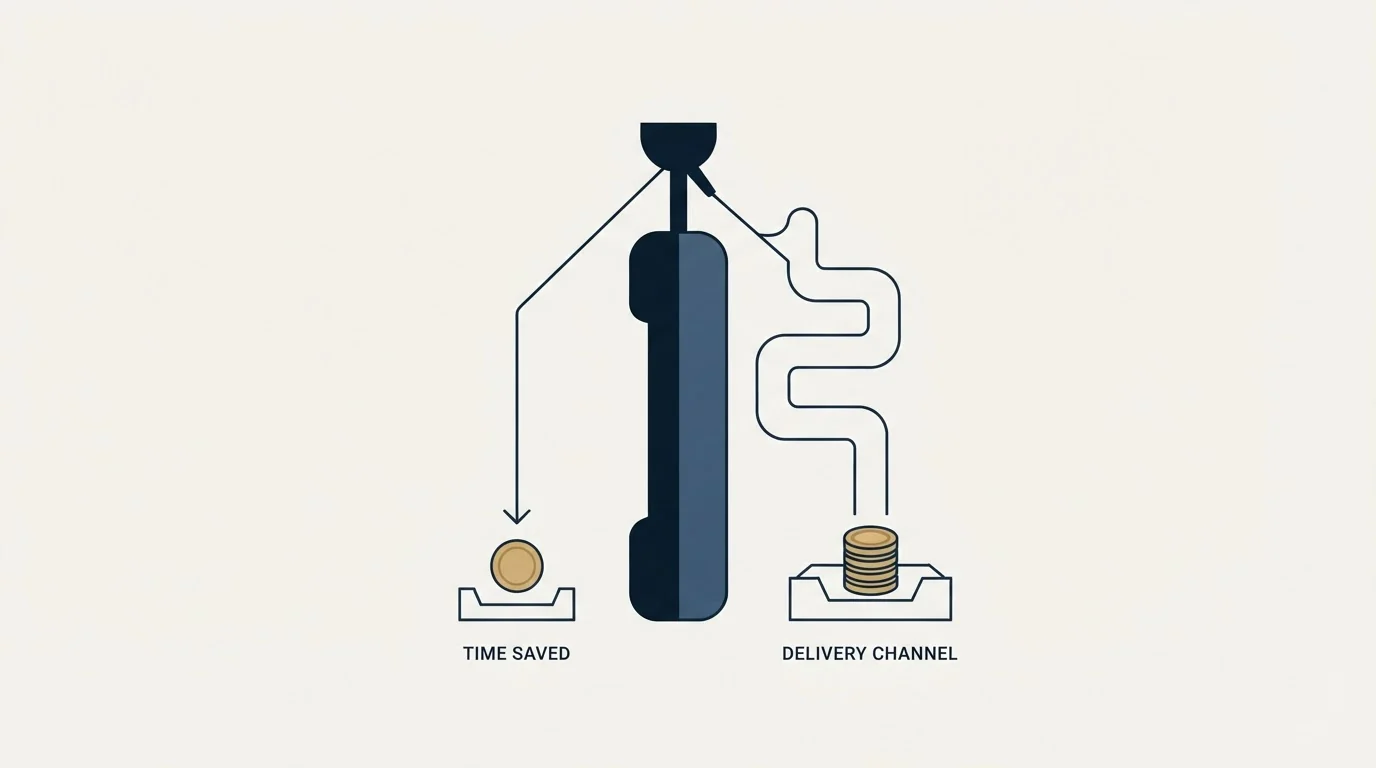
The case for the dialer-side drop is time, and it is a real case. Kixie's explainer works the arithmetic on its own page with a hundred dials a day, most of which reach voicemail, and a message of half a minute to a minute each, which is how the vendor arrives at a saving measured in hours per rep per week. Treat that as the vendor's worked example rather than as a measurement of your team, because it assumes a connect rate and a message length that are properties of your list rather than of the feature.
The structure of the saving is sound even where the inputs are not. Voicemail time is the least productive time in a calling day, it scales linearly with dial volume, and it is the same message every time, which is precisely the profile of work worth automating. It belongs in the same category as the logging and dispositioning that an automated calling system removes, which is unglamorous administrative time rather than selling time. The arithmetic that decides which dialer mode to run works the same way: the gains come from removing waste rather than from improving the odds of any individual call.
What it costs is subtler. A dropped voicemail is a broadcast object. It cannot say the prospect's name, it cannot reference the thing that made you call, and the recipient can usually tell. The vendor advice on this is to record several variations, which helps with fatigue rather than with relevance. A rep leaving forty identical messages a day is running a channel with no personalisation into the mailbox of people who are already skeptical of unknown numbers.
Producing several recorded variations has a tooling cost behind it, and how Descript meters editor seats pools two of its three allowances across one shared drive.
Sales voicemail scripts get written for the second situation and used in the first, which is where teams come unstuck: a dropped recording cannot name the account, the trigger or anything the rep just heard on the greeting, so a script that depends on any of those has to be spoken live or not at all.
There is a second cost that sits next to the first. Voicemails generate callbacks to whichever number was displayed, and if the programme is rotating numbers for reach, those callbacks arrive on lines nobody is watching. That interacts badly with the number-reputation trade described in the same dialer piece: the tactics that maximise answer rates are the ones that make the return path hardest to service, and a missed callback from someone who listened to the whole message is the most expensive missed call in the programme.
- Step 1Number is dialed
An ordinary outbound call leg. Caller ID and number reputation are already in play before anything is recorded.
- Step 2Call goes unanswered
The common case on cold lists. The greeting starts and the rep hears it.
- Step 3Drop is triggered
Beep detection, silence detection or manual selection. The trade is between time saved and the first seconds of the message being lost.
- Step 4Rep is released
The dialer finishes the message while the rep moves on. This is the entire productivity gain.
- Step 5Callback arrives, or does not
It lands on the number that was displayed. If nobody owns that line, the message was left for nothing.
Where it fits against written outbound
The comparison teams usually want is against email, and the honest answer is that the two fail differently rather than that one wins. A voicemail is unskippable in a way an email is not, and it is also unsearchable, unforwardable and impossible to reply to at the recipient's convenience. Volume is capped by dialing time even with the drop enabled, so the ceiling on the channel is how many accounts one caller can actually cover rather than how fast the messages can be recorded. Comparing email and calling on how each one fails is the more useful frame than comparing them on effort.
RevenueFlow runs email and LinkedIn and does not run phone outreach for clients, so this page describes the feature as it applies to teams who do. Our own written doctrine is one message per campaign, with no bumps and no thread replies. A team that would not send a second email to a non-replier should think carefully before leaving a second recorded voicemail, because the recipient experiences it as the same thing.
The recorded message has a LinkedIn equivalent with much tighter published limits on who can receive one and how long it can run, and what those limits leave an outbound team able to do is set out in LinkedIn voice notes.
The short version
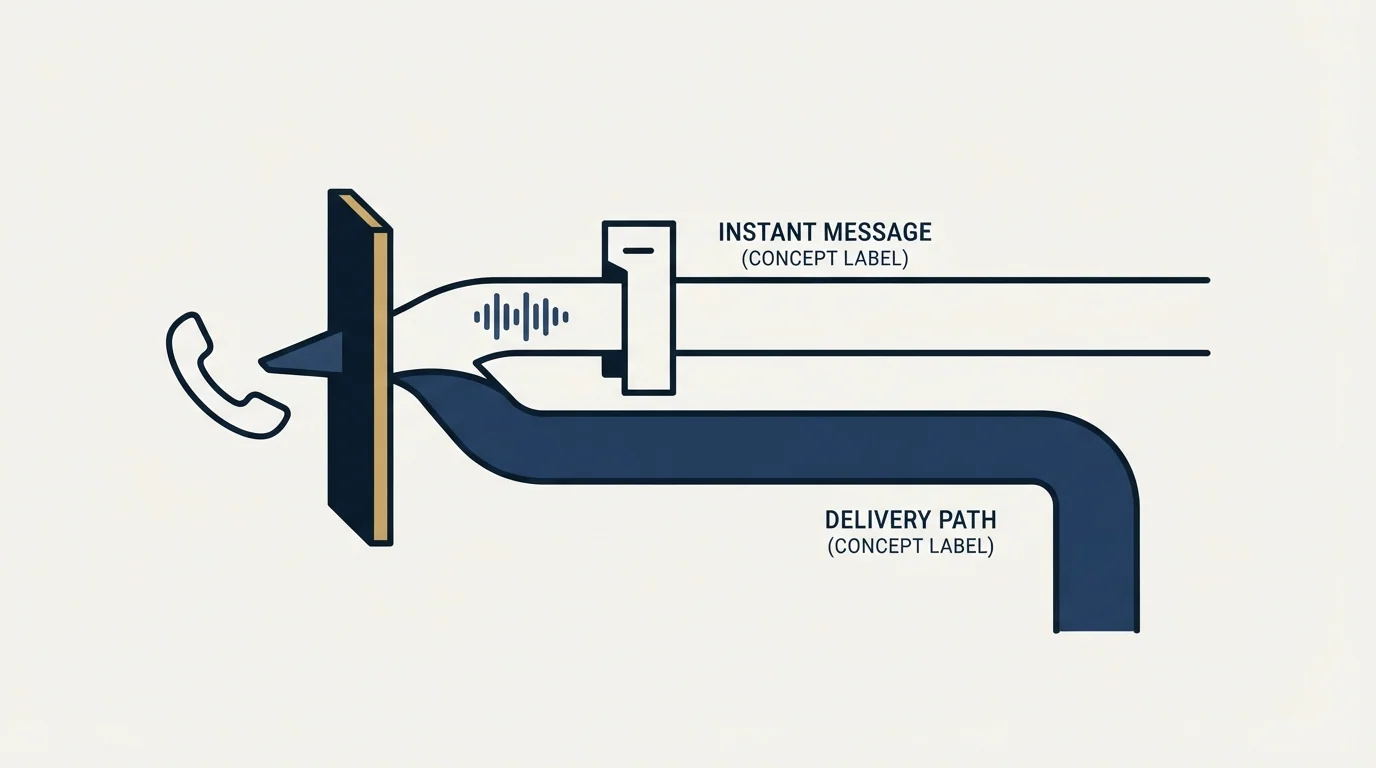
Voicemail drop names two products. The dialer-side version saves the seconds a rep spends repeating the same message after a call that already rang, and its value is real, structural and bounded by dial volume. The ringless version is a delivery channel, and the FCC's 2022 declaratory ruling put it squarely inside the TCPA by finding that a ringless voicemail to a wireless phone is a call made with an artificial or prerecorded voice that requires consent.
Neither version has a business-to-business exemption to fall back on, because the statute at issue is written around the number and the technology. That makes the mobile-versus-landline composition of your list the first question, ahead of the script, the vendor and the recording. Vendors themselves say as much on their help pages.
If the honest conclusion is that the calling channel carries more risk than your list can support, see what a first written campaign produces instead.
Vendor documentation and regulatory sources verified as of mid-2026 from the pages linked above. Rules change and state law varies. Verify current requirements with the vendor and with counsel before relying on any of this.
Frequently asked questions.
Frequently asked questions- What is the difference between voicemail drop and ringless voicemail?
- A dialer-side voicemail drop happens inside a call that was placed and rang. The rep hears the greeting, clicks once, and the dialer plays a pre-recorded message while the rep moves on. Ringless or direct-to-voicemail delivery places the message without ringing the handset at all, which makes it a delivery channel rather than a keystroke saver.
- Did the FCC rule that ringless voicemail is legal?
- The Commission ruled the opposite of what the petitioner asked for. Its declaratory ruling and order, published in the Federal Register on 14 December 2022, found that ringless voicemail to wireless phones requires consumer consent because it is a call made using an artificial or prerecorded voice, and denied the request to declare it outside the TCPA.
- Does the business-to-business exemption cover voicemail drops?
- Not for this statute. The Telemarketing Sales Rule does step back from most business-to-business calling, but the TCPA provision covering artificial and prerecorded voices is written around the number dialed and the technology used rather than around who is buying. Nothing in it asks whether the call was business to business.
- How do dialers decide when to play the recording?
- Three ways, according to Kixie's explainer on the feature. Beep detection waits for the tone at the end of the greeting. Silence detection waits for the line to go quiet instead, which still works when a greeting has no beep but can clip the start of the message. Manual selection leaves the timing with the rep and saves the least time.
About the author.

B2B cold email experts helping companies generate qualified leads through done-for-you outreach campaigns.
RevenueFlow Team
Explore more.
Ready to scale your outreach?
We build GTM engines that book real meetings. See the receipts.
Related articles.
SDR Outsourcing for Financial Services: The Third Party
What a bank, broker-dealer, adviser or agency's regulators say about an outside team that speaks for it, the licensed line, and which arrangement survives due diligence.
LinkedIn Outreach for Banks: A Regulated Message
How a bank's relationship managers use LinkedIn to reach business owners: what the FFIEC guidance, FINRA's notices and LinkedIn's own rules require, and where to stop.
Cold Calling for PPC Agencies: What You Can See First
A paid media prospect is partly readable before the call and has already been told by the platform what to do when a stranger rings about its ads.
Cold Calling for Chemical Companies: Who Picks Up
A chemical cold call rarely arrives first. It reaches a formulator who has already been comparing suppliers on a screen, for one of three published reasons.
LinkedIn Outreach for Utilities: Selling to the Sector
How a vendor selling to utilities uses LinkedIn next to a published sourcing process: the three ownership models, the registration gate and what a message may ask.
Cold Calling for Telecom Companies: A Carrier's Own Rules
What only a telecom company meets on the phone: the FTC exemption that stops at its contractor, the verified carrier change, and the CPNI limit on lists.