Email and Cold Calling: Compare Them on How They Fail
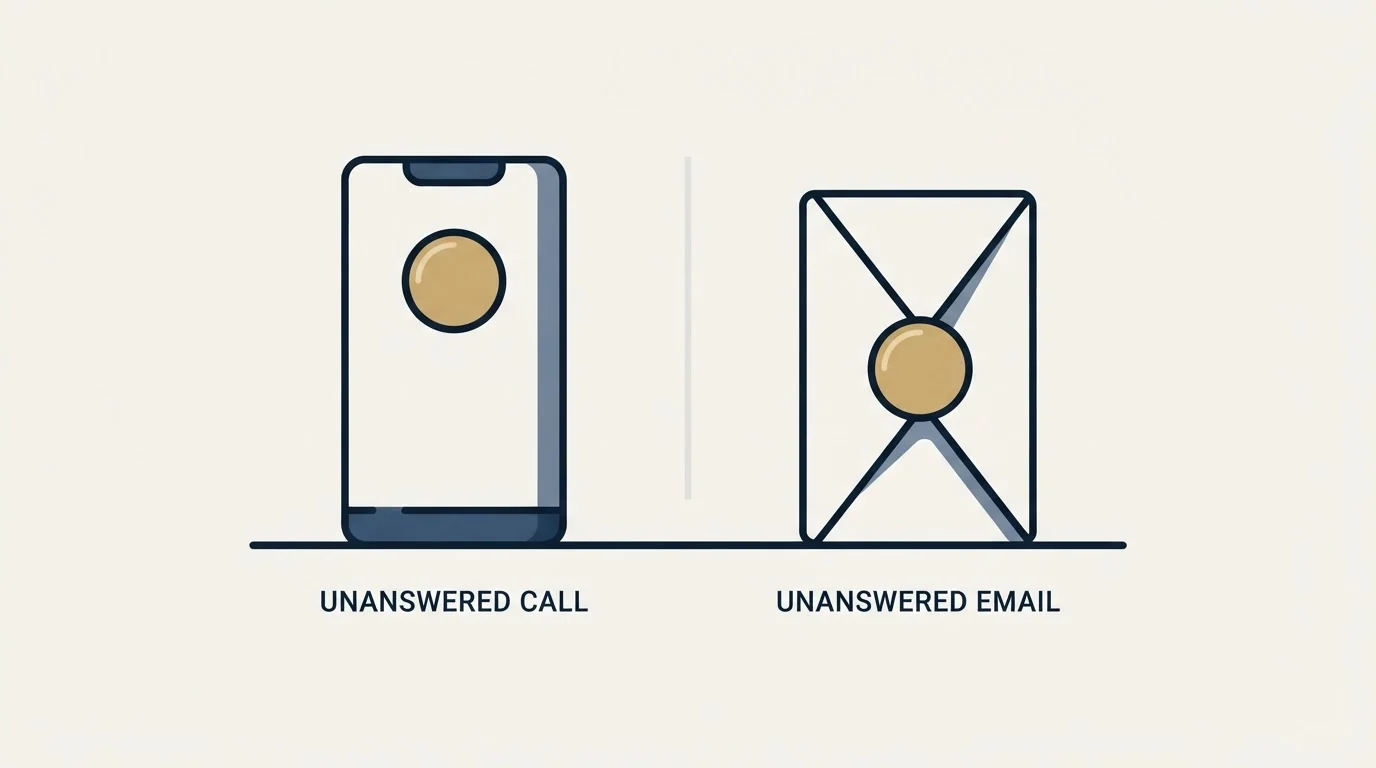
An unanswered email and an unanswered call look identical in a CRM. They cost different amounts, teach you different things, and scale in opposite ways.
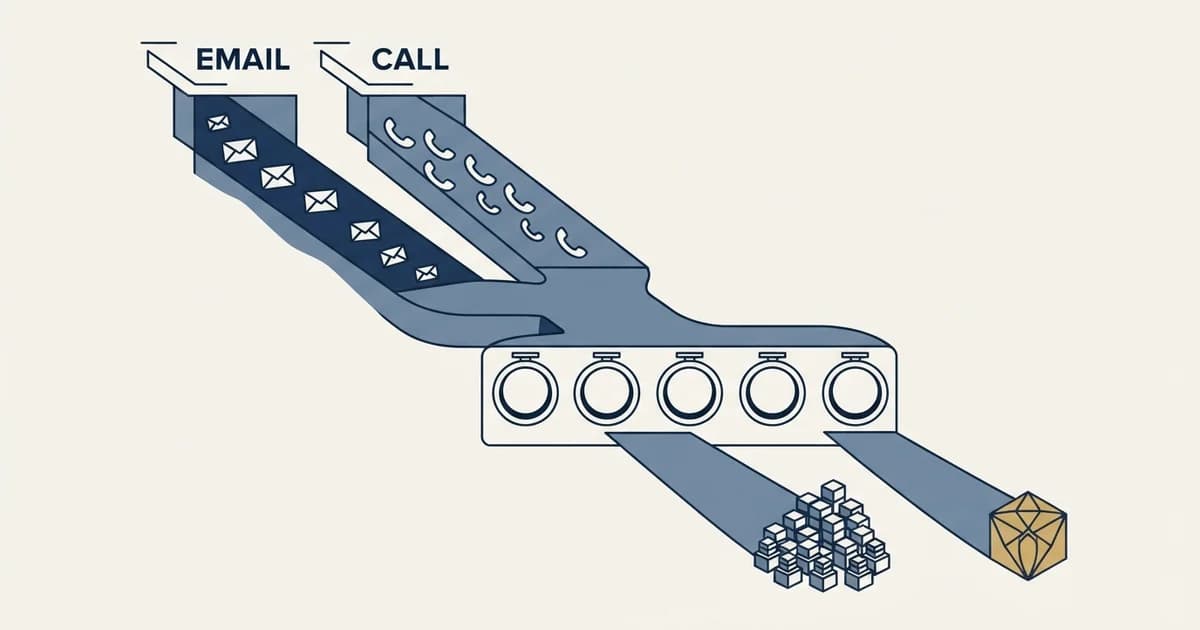
Email is a coverage instrument: failures are nearly free, carry no information, and scale without adding people. Calling is a research instrument: every attempt costs a person's attention, and a connected call yields reasons an email reply never will. Addressable set size and deal value usually decide which one you can afford.
Key takeaways
- A failed email costs almost nothing and teaches nothing; a failed call costs a full unit of human attention whether it rings out or reaches a switchboard.
- A connected call surfaces objections in their raw form, including the campaign-invalidating kind that never appears in a written reply.
- Published reply and success rates for the two channels use different denominators and different populations, so the comparison cannot be settled by reading.
- Both channels fail the same way for the same reason: contacting people who do not have the problem being described, which reads as a copy problem and is a list problem.
Reviewed and updated August 28, 2026
In a CRM, an email nobody replied to and a call nobody answered look like the same row: contacted, no response. They are not remotely the same event, and treating them as one is why the choice between the two channels gets argued in the wrong terms.
Most comparisons of cold email and cold calling line the two up on volume, cost and personalisation and declare a winner. The more useful comparison is what each one costs you when it does not work, and what it tells you when it does.
What a failure costs on each side
An unanswered email costs a few seconds of a sending system's attention. The sender is not present when it fails. A thousand of them fail while the seller is doing something else entirely, and the marginal cost of the thousand-and-first is close to nothing.
An unanswered call costs a person standing still. Whoever dialled was fully occupied for the duration, and the cost is the same whether the phone rang out, hit a switchboard, or reached a voicemail nobody checks. That cost does not fall with volume. It is the same for the first dial of the day and the four-hundredth.
- Marginal cost per attempt approaches zero
- The sender is absent while it fails
- Failure carries no information at all
- Scales by adding sending capacity
- Constrained by deliverability and list quality
- Costs a person's full attention per attempt
- Failure and success cost the same
- A connected call yields reasons, objections and context
- Scales only by adding people
- Constrained by hours in the day
What a success tells you on each side
Here the asymmetry runs the other way, and it runs hard.
A reply to a cold email tells you that someone read a message and felt strongly enough to type. That is real signal, and it is thin. You learn their answer without learning much about the question they were actually asking themselves.
A connected call tells you why. You hear the objection in its natural form, before it has been tidied into a sentence someone was willing to put in writing. You hear which words in your positioning mean nothing to them. You find out that the problem you named is real but owned by a different department, which is the kind of thing that quietly invalidates a whole campaign and almost never appears in an email reply.
That is the honest case for the phone, and it is a research case before it is a volume case. Twenty connected conversations with the right kind of company will teach a team more about its own market than two thousand sent emails, and cost roughly the same in hours.
This is also the argument for adding one beside the other rather than replacing it. A team whose pipeline is already filled by calling and which needs a second channel is not looking for a better instrument, it is looking for coverage of the accounts a bounded number of dialing hours cannot reach, and written outbound is the only channel whose marginal cost per attempt makes that arithmetic work. The mistake to avoid is importing the calling cadence into the inbox, because the two acts do not impose the same thing on the recipient and a second unsolicited message is not a second dial.
Which one the situation is choosing for you
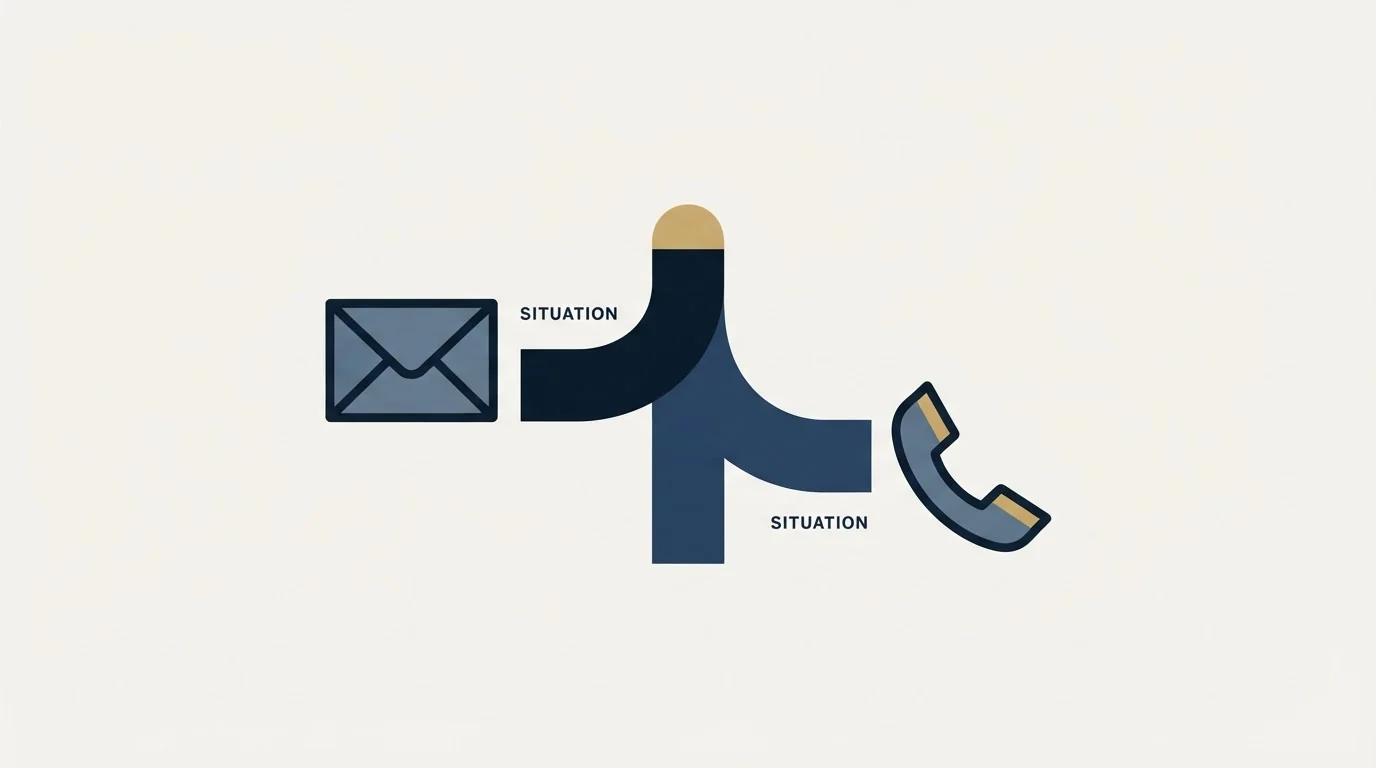
Most of the time the decision is made by arithmetic rather than preference, and two numbers make it.
A market whose buyers already field several calls a day is the clearest case for reading this trade honestly, because an audience saturated on one channel raises the cost per conversation there without changing anything about the other.
How many companies could plausibly buy. A caller covers a bounded number of accounts a week, and that ceiling does not move much. Email covers a list of any size in the time it takes to send. When the addressable set is small enough that a person can genuinely work all of it, the phone stops being expensive in relative terms, because there is nothing else to spend the coverage on. When the set runs to tens of thousands, calling can only ever touch a sample, and the sample has to be chosen deliberately. Our piece on calling into a small addressable market works through that side in detail.
What a customer is worth. A high contract value absorbs the cost of a person's hour easily. A low one does not, and no amount of calling skill changes that. This is the calculation that quietly decides most channel debates before anyone has an opinion about openers.
Once channel choice is settled by contract value, the harder question is who owns that decision inside the handoffs between marketing and sales.
- Step 1Count the addressable set
How many companies could plausibly buy, after the disqualifications you would make anyway
- Step 2Price an hour against the deal
What a customer is worth, and therefore what one hour of attention can justify
- Step 3Decide what you are buying
Coverage of the whole set, or depth on a chosen part of it
- Step 4Pick the instrument
Coverage points to email and LinkedIn; depth on a shortlist points to the phone
Why the published comparison numbers do not settle anything
Search this comparison and you will find confident percentages on both sides. They are almost never comparable, because the denominators are different and rarely stated.
A cold email "reply rate" is usually replies over emails delivered, and sometimes replies over emails sent, which are different numbers whenever deliverability is imperfect. Some sources count any reply, including automatic out-of-office messages and bounce notifications, which can inflate the figure severalfold in a holiday month. A cold calling "success rate" might be meetings over dials, meetings over connects, or meetings over conversations, and those three can differ by an order of magnitude on the same afternoon of work.
Then there is the population. A published rate belongs to whoever measured it: their market, their list quality, their deal size, their year. A 3% figure from a tool vendor's aggregate across every customer they have is a fact about that aggregate and tells you very little about a specialist product sold to hospital procurement teams.
The practical consequence is that the comparison cannot be resolved by reading. It can be resolved cheaply by running a bounded test of the channel you have not tried, on your own list, with the denominators written down before you start. Two weeks of one person's time answers the question for your market permanently, which is less than most teams spend arguing about it.
Where we stand, and why
RevenueFlow runs cold email and LinkedIn outreach for clients. We do not run calling programmes, and this page is not an argument that calling does not work. It works, and there are situations where we would tell a company to pick up the phone instead of hiring us.
The reason we build on email and LinkedIn is coverage economics. Our clients typically have addressable sets in the thousands, and the job is to reach all of them with something specific enough to be worth reading. That is a problem with a known shape: list quality, deliverability, and a message worth a reply. Adding a phone motion to it would change the cost structure completely, because the phone half would need people in proportion to the list, and it would not make the email half work better.
Where we would send someone elsewhere: a very small addressable set of very large deals, a market where the buyer genuinely does not use email in a way you can reach, or a product where the first conversation is the demo. In those cases a calling team, or an agency that runs one properly, is a better purchase than we are.
Which makes whether an outbound provider runs the phone at all a scoping question to ask on the first call rather than an assumption to carry into month two. Providers split cleanly here: some are written-channel operations, some are calling floors, and some sell both while delivering one properly. The answer is checkable in one question about who makes the calls and where they sit, and it decides which of the two failure profiles above you are buying. We run email and LinkedIn and no phone motion, which is the version of that answer we owe anyone asking.
Untangling the two meanings of omnichannel agencies explains when adding a further outbound channel is worth paying for, versus just contacting the same people more often.
The thing both channels get wrong in the same way
The failure that ruins both is identical, and it is not a channel failure at all. It is calling or emailing people who do not have the problem you are describing.
On the phone this shows up as a conversation that stays polite and goes nowhere. In the inbox it shows up as silence, which is easier to misread as a copy problem. Both are usually a list problem, and both get treated as a delivery problem because delivery is the part that feels controllable. The single highest-leverage work in either channel is deciding who is on the list, which is why building an ICP that actually changes the target list is worth more attention than the message templates that get all the discussion.
The cold call appointment setting page makes the same argument from the phone side, and arrives at the same place from the opposite direction.
One structural difference worth naming
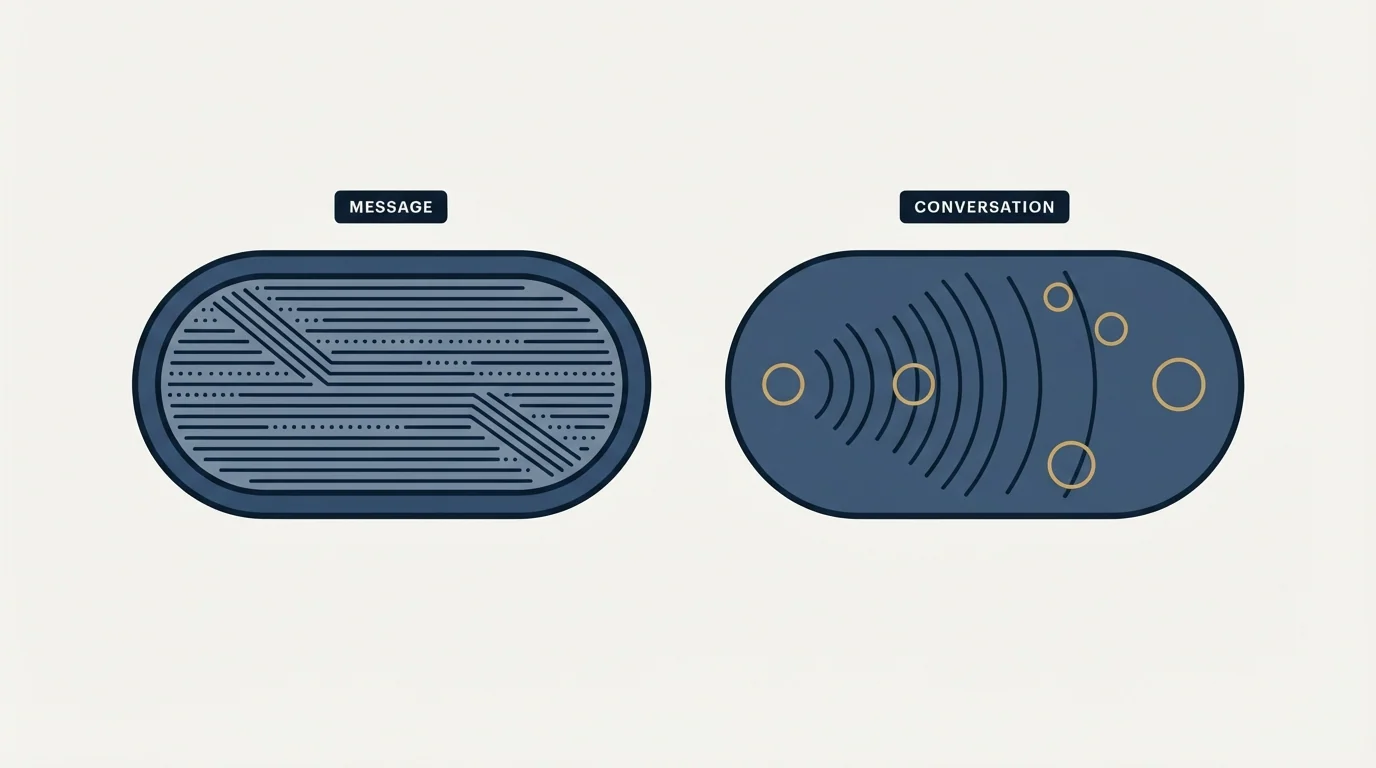
Email and telephone are not the same kind of act, and it matters for how each one should be run.
A phone call is two-way correspondence. The person can interrupt, ask something back, and end it. Whatever happens, it resolves inside a few minutes and both parties know how it went.
An unsolicited email is one-directional until the recipient chooses otherwise. Nothing about it resolves, and the sender has to decide what silence means. Our answer is that silence means no. We send one message per campaign. If there is a genuinely different reason to approach a company later, that is a separate campaign with its own premise rather than a reminder about the first one, and the difference is not cosmetic: it forces the second approach to be worth sending on its own terms.
Plenty of calling advice imports the opposite habit into the inbox, and it is the single most common way a functional email programme starts damaging its own sending reputation. The logic that justifies dialling an account more than once does not transfer, because the two acts do not impose the same thing on the recipient. A second call costs the seller an hour and the recipient a decision they can make in four seconds. A second unsolicited message sits in an inbox alongside the first one, permanently, and the recipient's only mechanism for ending it is to mark the sender as unwanted. That mechanism is exactly what the sending reputation is made of.
The short version
Cold email and cold calling are not competing versions of the same activity. Email is a coverage instrument whose failures are cheap and uninformative. Calling is a research instrument whose failures are expensive and whose successes are unusually rich. The size of your addressable set and the value of a customer usually decide which one you can afford, well before anyone's opinion about scripts enters the room.
If coverage is your problem and you would rather not build the sending infrastructure yourself, that is what we do. If depth on twenty accounts is your problem, buy a phone team.
Positions described here reflect how we run outbound as of mid-2026.
Frequently asked questions.
Frequently asked questions- Is cold email or cold calling more effective?
- The question is missing two inputs. Count how many companies could plausibly buy, and what one is worth. A small set of high-value accounts justifies a person's hour per attempt, which is what calling costs. A large set of moderate-value accounts does not, and email is the only instrument that can cover it. Effectiveness follows from those two numbers.
- Should I do both cold email and cold calling?
- You can, provided each is resourced honestly. The failure mode is adding calling to an email programme without adding people, which produces a small amount of bad calling and a distracted team. Calling capacity scales with headcount and nothing else. If you cannot fund the hours, running one channel properly beats running two badly.
- Does RevenueFlow do cold calling?
- No. We run cold email and LinkedIn outreach, because our clients typically have addressable sets in the thousands and the job is coverage. Calling is a real channel and there are situations where we would recommend it instead: a very small set of very large deals, or a market that genuinely cannot be reached by email.
- Why do cold email and cold calling stats vary so much?
- Because the denominators differ and are rarely stated. A reply rate may be over sent or over delivered, and may or may not exclude out-of-office replies and bounces. A calling success rate may be over dials, connects or conversations, which differ by an order of magnitude. The underlying market and deal size differ too.
About the author.

B2B cold email experts helping companies generate qualified leads through done-for-you outreach campaigns.
RevenueFlow Team
Explore more.
Ready to scale your outreach?
We build GTM engines that book real meetings. See the receipts.
Related articles.
Appointment Setting for Business Brokers: The Seller Meeting
What a bought meeting with a business owner has to be for a brokerage: the three-part qualification, the confidentiality rules, the licence line and the owner's reasons.
Cold Calling for Food and Beverage Companies: Three Doors
Cold calling for a food or beverage company: who picks up at a chain, a distributor and an independent grocer, where each publishes its door, and when the phone is wrong.
Win Rate Benchmarks: Which Figures State a Population
A catalogue of the published average sales win rates, sorted by whether the page names the population behind its own number. Most do not.
LinkedIn Outreach for Banks: A Regulated Message
How a bank's relationship managers use LinkedIn to reach business owners: what the FFIEC guidance, FINRA's notices and LinkedIn's own rules require, and where to stop.
Cold Calling for PPC Agencies: What You Can See First
A paid media prospect is partly readable before the call and has already been told by the platform what to do when a stranger rings about its ads.
Cold Calling for Consulting Firms: The Partner's Hour
Cold calling for a consulting firm: who it dials and who picks up, why partner-led economics argue against the phone, the client's fiscal year, and when to skip it.