Omnichannel Agencies: One Word, Two Unrelated Purchases
Half the vendors on an omnichannel agency shortlist unify retail customer experience. The other half send strangers email and calls. Tell them apart first.
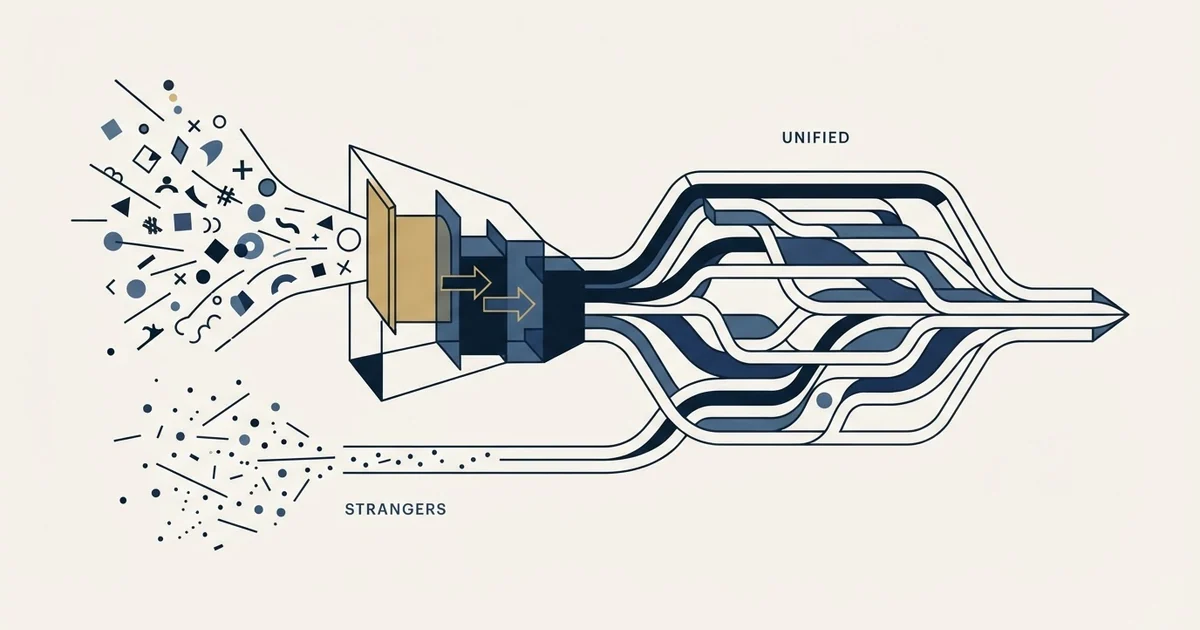
Omnichannel agency describes two unrelated businesses: customer-experience unification for existing customers, and multi-channel outbound to strangers. Case studies separate them faster than homepage language. Within outbound, an extra channel is worth paying for when it reaches people the first cannot, and not when it contacts the same people more often.
Key takeaways
- The case studies are the tell: outcomes about existing customers mean a customer-experience vendor, outcomes about meetings with strangers mean an outbound vendor.
- Coordination is worth a premium when an additional channel reaches people the first channel cannot, and not when it applies more pressure to people already reached.
- SalesHive's pricing page treats channel mix as an explicit quote variable, phrased as phone only or phone plus email, which prices the phone as an addition rather than a default.
- Callbox publishes an estimated $15,000 to $30,000 per month for one Campaign Pod; most others in the category publish no figures at all.
Reviewed and updated September 21, 2026
Search for omnichannel agencies and the results contain two entirely different businesses wearing the same word. One group unifies a retailer's customer experience across stores, apps, websites and support. The other sends strangers email, LinkedIn messages and phone calls to book sales meetings. Both are legitimate, neither is a version of the other, and the shortlist a buyer assembles by searching the term is frequently half full of vendors who cannot do the job.
That same one-word-two-purchases confusion shows up in phone work itself, where recruiter cold calling explains why the candidate call and the client call succeed on entirely different terms.
Sorting that out is the first job, and it takes about a minute once you know the tell.
Buyers searching for omnichannel marketing services are usually looking at one of two unrelated purchases, and naming which one you are buying settles most of the comparison.
A multi-channel marketing agency and an omnichannel one are the same shortlist under two labels, and the split that matters is still whether the vendor unifies customer experience or contacts strangers on your behalf.
Omnichannel sales agency or CX agency: the two meanings
An omnichannel sales agency books meetings with companies that have never heard of you, across email, LinkedIn and often the phone. An omnichannel CX agency does something unrelated: it joins up the experience existing customers get across stores, apps, websites and support. The two share a search result and almost nothing else.
Omnichannel customer experience. The buyer is usually a marketing or digital leader at a company with existing customers across several surfaces. The problem is that those surfaces contradict each other: the app does not know what the store did, the email says something the support agent has not been told. The work is data integration, journey design, personalisation and measurement. The vendor looks like a strategy consultancy or a digital agency, and the case studies are about customer retention and lifetime value.
Omnichannel outbound. The buyer is a founder or sales leader who needs meetings with companies who have never heard of them. The problem is pipeline. The work is list building, message writing, sending infrastructure and booking. The vendor looks like a sales agency, and the case studies are about meetings and cost per opportunity.
| Omnichannel CX | Omnichannel sales | |
|---|---|---|
| Buyer | A marketing or digital leader | A founder or sales leader |
| Problem | Surfaces contradict each other | Not enough pipeline |
| Work | Data unification and journey design | Lists, messaging and sending infrastructure |
| Case studies cite | Retention and lifetime value | Meetings booked |
| Priced as | Consulting or a project | Monthly per team or unit of capacity |
The fastest tell is the case studies. If the outcomes are about customers a company already has, it is the first category. If they are about meetings with companies that were strangers, it is the second. The homepage language is almost useless for this, because both categories describe themselves as unifying the customer journey.
The rest of this page is about the second one, because that is the purchase most people searching from a sales context are actually making.
What multi-channel coordination actually buys
The pitch for an omnichannel outbound agency is that channels reinforce each other, so the whole exceeds the sum. Sometimes that is true and it is worth being precise about when.
Coordination genuinely helps in two ways. It gives you more than one route to a person who is only reachable on one of them, which matters when your buyer is genuinely absent from an inbox. And it lets a seller pick the channel that suits the message: something short and specific works on LinkedIn, something that needs a paragraph and a link works in email.
Coordination does not create attention that was not there. If a company has no interest in the problem you describe, being contacted about it on three channels rather than one does not change the answer. It changes how many times they decline.
That distinction decides whether a multi-channel proposal is worth its premium. Ask what the additional channel is for: reaching people the first channel cannot, or applying more pressure to people it already reached. Only the first is worth paying for.
What the vendors actually publish

Pricing in this category is mostly quoted rather than published, and the exceptions are informative.
SalesHive's pricing page prices the channel mix explicitly. It names three variables behind a quote, and one of them is "Channel mix", with the options given as "Phone only or phone plus email". Team model and daily volume are the other two, each with published tiers, and the page states "No setup fees." (SalesHive pricing). That is a useful data point: a vendor treating channel count as a price lever rather than as an included philosophy, and pricing the phone as the thing you add rather than the thing you start with.
Callbox publishes a band. Its lead generation pricing page sells in Campaign Pods, each described as a dedicated outreach unit for one segment or persona, and the estimator's default of one pod displays an estimated monthly investment of $15,000 to $30,000, with exact pricing after consultation. A pod is described as including a dedicated SDR, multi-channel outreach, enriched contact data, campaign manager oversight and weekly reporting (Callbox lead generation pricing). Note the domain: callbox.com is an unrelated call-tracking company.
Most others publish nothing. Martal's pricing page describes tier structures and pilot lengths without figures, and CIENCE publishes a rate card while quoting SDR capacity separately. The pattern across the category is that the multi-channel claim is universal and the price attached to it is usually not disclosed until a call.
| Vendor | What sets the price | Published figure |
|---|---|---|
| SalesHive | Team model, channel mix (phone only or phone plus email), daily volume of 100+, 250+ or 500+ touches | None; no setup fees |
| Callbox | Campaign Pods, each a dedicated SDR for one segment or persona | $15,000 to $30,000 a month for one pod, an estimate |
The question that separates coordination from a pricing story
An agency running three channels for you has to answer one thing convincingly: who decides which channel a given prospect gets, and on what basis.
If the answer is a rule that references something real about the prospect, coordination is being done. If the answer amounts to everyone gets everything, the three channels are three separate campaigns sharing an invoice, and the coordination is in the proposal rather than in the work.
Ask for a clear answer
- Who decides which channel a prospect gets, and on what evidence
- What happens on the other channels when a prospect replies on one
- Whether reporting credits meetings to a channel or only the programme
- Whether the extra channel reaches new people or the same people again
Read the answer closely
- Whether the price changes if a channel is removed
- Whether one team runs every channel or three teams share a manager
The reply-handling question is the one that catches the most vendors. In a genuinely coordinated programme, a reply on any channel stops the others immediately. In a stitched-together one, a prospect who replies to an email can receive a LinkedIn message two days later from the same agency, which is the clearest possible demonstration that the channels were never joined.
Where we sit, plainly

RevenueFlow runs cold email and LinkedIn outreach. We do not run phone programmes and we do not describe ourselves as an omnichannel agency, because two channels is not omnichannel and the word has been stretched far enough already.
The reason we stop at two is coverage economics rather than principle. Email and LinkedIn both scale without adding a person per prospect, so a small team can cover a list in the thousands. Phone does not, which makes it a different business with different unit costs, and bolting it on would change our cost structure without making the other two work better. Our comparison of email and calling sets out that trade in full.
If you genuinely need phone coverage as well, an agency that runs a calling floor properly is a better purchase than one that added a phone line to a marketing retainer. Buy it from someone who has been doing it for years, and check how they answer the reply-handling question above.
Phone coverage is one channel with its own separate cost structure, and direct mail's per piece costs and account targeting reveals another with entirely different economics.
Comparing offers without being talked out of the comparison
Two structural points make this category hard to shop, and both have a defence.
Deliverables are stated in units the vendor controls rather than units you care about: attempts made, prospects targeted, emails sent. A programme can hit every one of those numbers and produce nothing you can sell. Insist on the meeting definition in writing and on what happens when a meeting does not meet it. Our page on comparing appointment setting agencies on pricing models works through how each model shifts risk, and B2B lead generation companies covers the same ground for the wider category.
Channel count is presented as quality. More channels reads as more thorough, and it is equally often a way to make a bigger retainer feel proportionate. The test is the one above: does the extra channel reach people the others cannot.
A third point, less structural and more practical: get the comparison onto one page before any of the calls. Vendors in this category are quoted rather than listed, which means every number arrives in a different format, attached to a different scope, in a conversation designed to be persuasive. Writing down the four things you will compare beforehand, and refusing to add a fifth because a vendor was good at describing it, is most of the discipline. The four worth fixing in advance: what a qualified meeting is, who owns the data at the end, what the monthly cost is with nothing added, and what happens in month one if nothing works.
That last one separates vendors more sharply than price does. Some publish a pilot period with a stated length, some offer month-to-month cancellation, and some ask for a year. None of those is wrong on its own, and the combination of a long commitment with a vague meeting definition is the one to walk away from, because it removes both of the mechanisms you would otherwise have for correcting a bad fit.
The short version
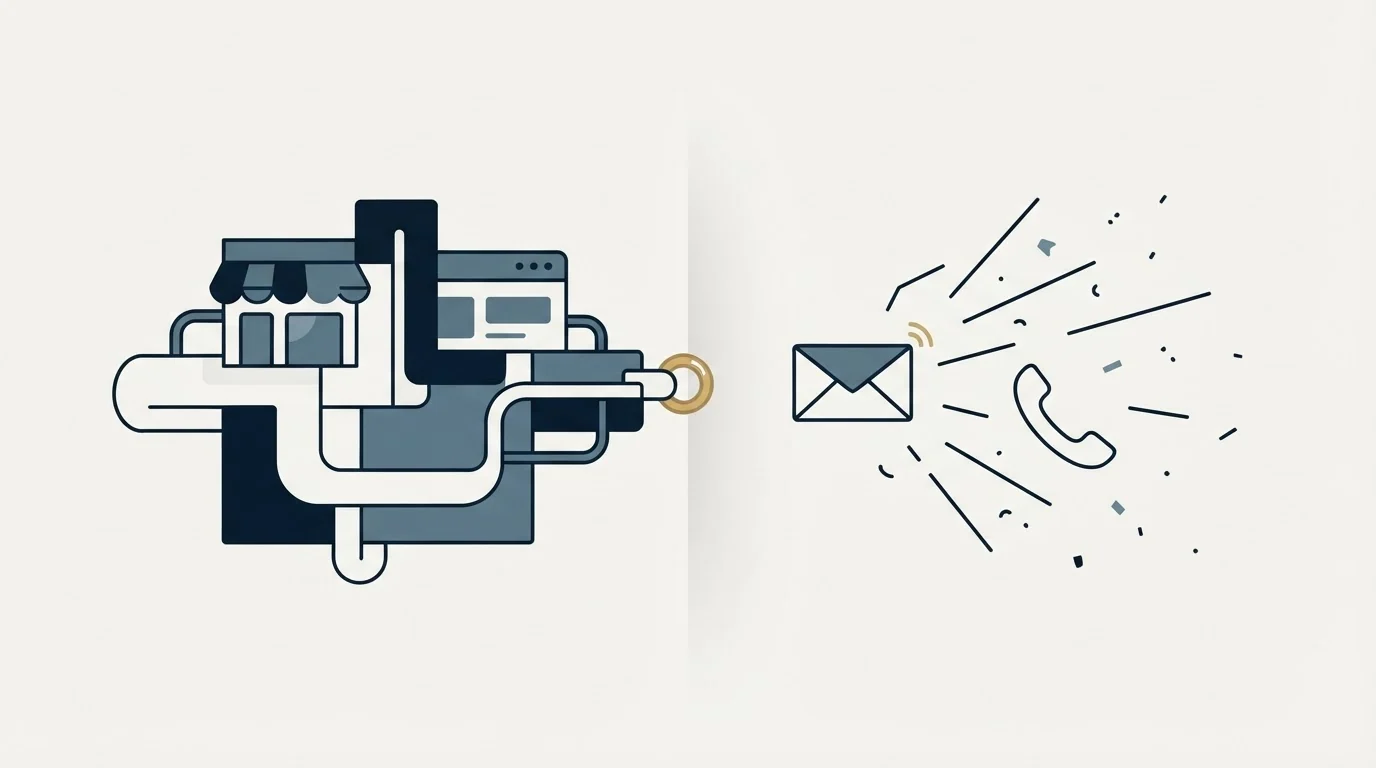
Omnichannel agencies come in two unrelated kinds, and the case studies tell you which one you are talking to faster than anything on the homepage. Within outbound, coordination is worth paying for when an extra channel reaches people the first one cannot, and not when it simply contacts the same people more often. Ask who decides the channel for a given prospect and what happens when they reply, because those two answers separate a coordinated programme from three campaigns on one invoice.
If two channels run properly is what you actually need, that is what we do, and RevenueFlow is paid only for meetings that are actually attended. See if you qualify.
Vendor pricing is taken from the vendors' own pages. Confirm current terms with the vendor before relying on them.
Frequently asked questions.
Frequently asked questions- What is an omnichannel agency?
- Two different things share the label. One unifies a company's experience across stores, apps, sites and support for customers it already has. The other runs outbound across email, LinkedIn and phone to book meetings with strangers. They have different buyers, deliverables and pricing, and searching the term returns both mixed together.
- Is multi-channel outbound better than single channel?
- It depends on whether the extra channel reaches new people. If your buyer is genuinely hard to reach by email, a second channel adds coverage and is worth paying for. If it contacts the same people again through another door, you are buying frequency rather than reach, and the premium is harder to justify.
- How much do omnichannel outbound agencies cost?
- Mostly quoted rather than published. Callbox's pricing page displays an estimated $15,000 to $30,000 per month for one Campaign Pod. SalesHive publishes no figure but names channel mix, team model and daily volume as the three variables behind a quote. Martal and several others describe structures and pilots without numbers.
- What should I ask an omnichannel agency before signing?
- Ask who decides which channel a given prospect receives and on what evidence, and what happens on the other channels when someone replies on one. A coordinated programme stops the rest immediately. Also fix your comparison in advance: the meeting definition, data ownership, the monthly cost with nothing added, and the commitment length.
About the author.

B2B cold email experts helping companies generate qualified leads through done-for-you outreach campaigns.
RevenueFlow Team
Explore more.
Ready to scale your outreach?
We build GTM engines that book real meetings. See the receipts.
Related articles.
Win Rate Benchmarks: Which Figures State a Population
A catalogue of the published average sales win rates, sorted by whether the page names the population behind its own number. Most do not.
Sales Kickoff Agendas: Five Published, Session by Session
Five publishers print a sales kickoff agenda. They agree on four blocks and disagree on session length, rehearsal and where the agenda comes from.
SDR Outsourcing for Logistics Companies: The Brokerage Line
What an outside sales development team may do in a freight company's name, the calling and email rules it inherits, and which arrangement survives a bid-shaped market.
SDR Outsourcing for Business Brokers: The Fee Timing
Whether a success-fee brokerage should rent sales development at all: the fee timing, the texts that limit what an outside person may say about value, and who signs.
Sales Cycle Length Benchmarks: What Each Figure Counts
The published B2B sales cycle benchmarks, sorted by what each page says it counted. The same number means two different things in two of them.
Sales Enablement Charters: What the Published Ones Ask For
Six publishers set out what a sales enablement charter should contain. Five describe a document nobody can check, and one writes a definition with inspection in it.