Direct Mail for B2B: What It Costs, What an Agency Adds
Two direct mail markets share one name. Route saturation posts to Postal Customer at 26 cents. Addressed B2B mail reaches a named person for two to four times that.
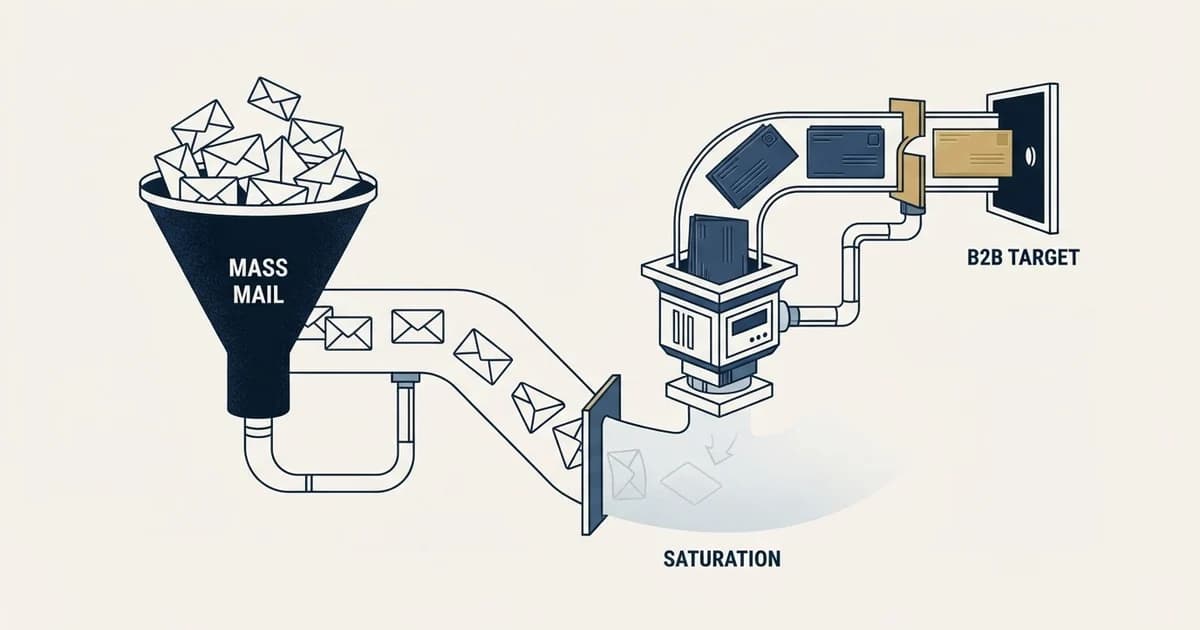
Direct mail splits into route saturation, which USPS addresses to Postal Customer at about 26 cents a piece, and addressed mail to a named person, published from roughly 62 cents a letter plus platform fees. Only the second reaches a target account list, and it works as an account-based tactic rather than a volume channel.
Key takeaways
- USPS lists EDDM Retail Marketing Flats at $0.26 per piece and states pieces are addressed to Postal Customer, so named accounts cannot be reached.
- Lob's pricing page publishes print and postage from $0.828 a letter on its free tier, falling to $0.628 on its $550 a month Growth tier.
- Address verification is priced separately, from $0.05 each, and an unverified B2B list means paying twice for returned pieces.
- Mail is the slowest common channel to answer, which makes it the wrong first test and a reasonable one on a short, high-value list.
Reviewed and updated September 2, 2026
A letter to one named executive costs somewhere between sixty cents and a dollar to print and post before anyone has designed it, written it, or worked out who should receive it. That number is the whole argument for and against direct mail in B2B, and most articles about hiring a direct mail agency never state it.
There are two direct mail markets sharing one name, and almost every buying mistake in this category comes from shopping in the wrong one. This piece separates them, works through the published costs on each side, and sets out what an agency adds beyond print and postage. RevenueFlow does not run direct mail. We build and run cold email and LinkedIn outbound, and we write this because clients keep asking how the channels compare.
Direct mail vs email marketing is the wrong comparison to run on cost alone, because the two channels differ most in how quickly they tell you anything.
GMass mail merge inside Gmail explains how that faster email channel sends from a real mailbox, though Google's daily ceiling and shared sending reputation shape its own limits.
Direct mail lead generation is the same arithmetic under a different name, and the cost per reply is what decides whether the channel earns a place beside email.
The two markets
The first market is route saturation, and the United States Postal Service sells it directly as Every Door Direct Mail. Its own page describes the mechanism plainly: mailpieces "are simply addressed to 'Postal Customer' and your mail will be delivered to every address on your selected routes." You choose neighbourhoods rather than people. The retail version requires at least 200 and allows up to 5,000 pieces a day per ZIP code, and no mailing list is involved at any point.
The postage is the cheapest in the category. The USPS page lists EDDM Retail Marketing Flats at $0.26 per piece, and the business mail entry version "as low as $0.259 per piece." The same page names the intended customer: "Great for small businesses, restaurants, realtors, and local political campaigns."
That sentence is the whole test. A channel that cannot address a named person cannot reach a named account, so route saturation is structurally unavailable for B2B outbound however attractive the postage looks. If the agency you are speaking to leads with EDDM, they sell into the other market.
The second market is addressed mail to a list you supply, which is the one B2B buyers actually want. It costs two to four times as much per piece, it reaches the individual you chose, and it is really an account-based tactic wearing a postal stamp.
- Choose carrier routes, not people
- No mailing list involved
- USPS lists $0.26 per piece retail
- 200 to 5,000 pieces a day per ZIP code
- USPS names local businesses and political campaigns as the fit
- Requires a verified list with job titles
- Print and postage published from about $0.62 a letter
- Volume is set by your target account list, not by geography
- Works as an account-based tactic alongside other channels
- Address accuracy becomes a line item
What a piece actually costs
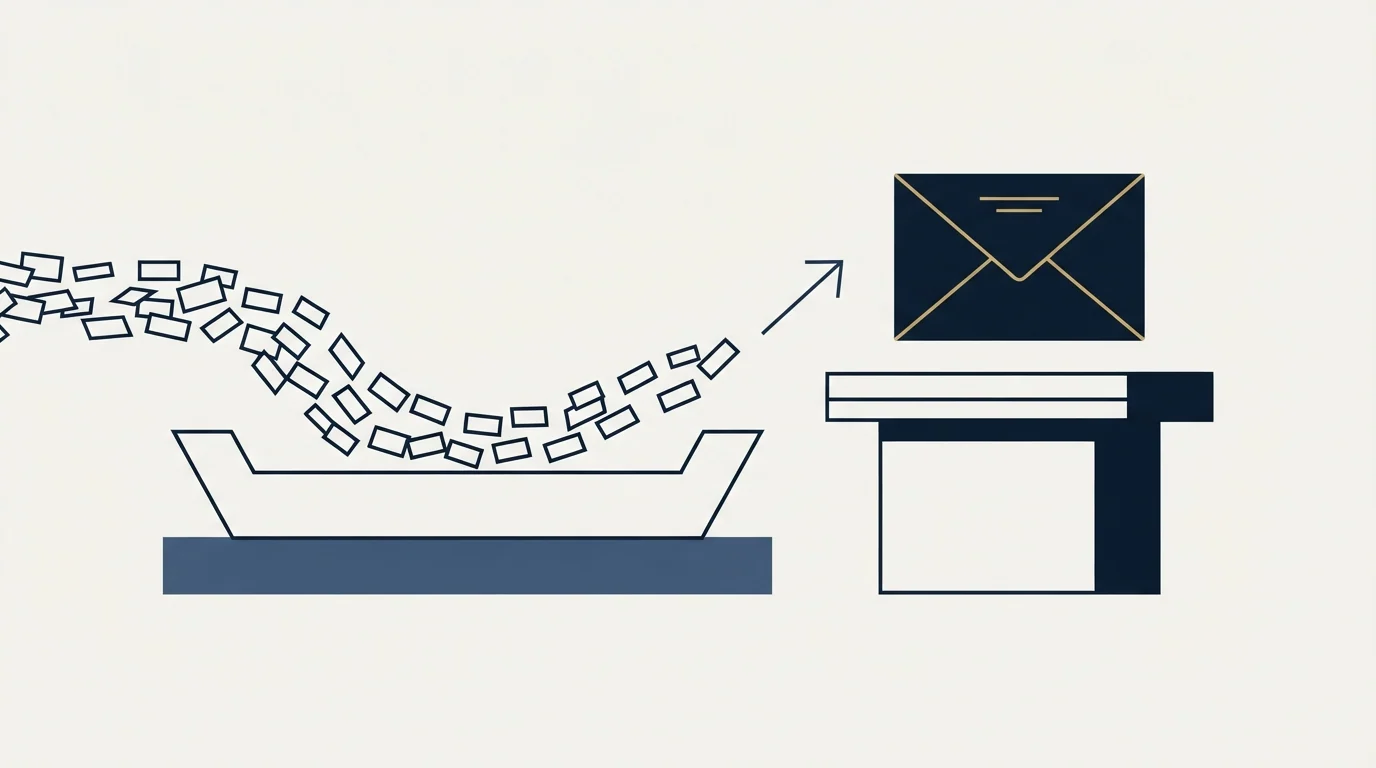
Lob publishes the clearest per-piece pricing in this category, and its pricing page separates the platform fee from the print and postage in a way that makes the arithmetic possible.
The platform tiers run from a free plan covering up to 6,000 mailings a year with one user, to a Startup plan "Starting at $260 / month" covering up to 75,000 mailings a year with three users, to a Growth plan "Starting at $550 / month" covering up to 150,000 mailings a year with five users, with an enterprise tier above that.
Print and postage sit on a separate line and fall as the tier rises. The free tier lists print and postage "Starting at $0.905/postcard" and "$0.828/letter." The Startup tier lists $0.645 per postcard and $0.658 per letter. The Growth tier lists $0.615 per postcard and $0.628 per letter.
Address verification is priced again on top: $0.05 per additional verification on the free tier, $0.025 with 1,000 included for $25 a month, and $0.009 with 50,000 included for $450 a month. That line looks trivial and is not, because an unverified B2B address list decays faster than an email list and every returned piece is paid for twice.
USPS, per piece, route saturation only
Lob print and postage, free platform tier
Lob print and postage at $550 a month
per month, up to 150,000 mailings a year
The arithmetic that decides it
Run this before talking to an agency, because it takes five minutes and it usually settles the question.
Take your target account list and count the named individuals you would actually mail. Multiply by the per-piece figure from the tier your volume lands in, adding the platform fee if the volume needs a paid tier. At the Growth tier's published letter rate, a thousand letters is a little over six hundred dollars in print and postage. Add creative, add the list work, add the agency's fee, and you have the campaign cost.
Now decide how many meetings would justify it. Not what response rate you expect, which nobody can tell you honestly for your market, but how many meetings make the spend worthwhile. Divide the campaign cost by that number and you have the cost per meeting the channel has to beat. Compare it against the same figure for your other channels, computed the same way.
Two things fall out of that exercise reliably. Direct mail rarely competes on cost per meeting at volume, and it frequently wins on a short list of high-value accounts where the alternative is not being seen at all. The correct use of the channel follows from the arithmetic rather than from anyone's enthusiasm for it.
Cost per lead is the wrong comparison metric here, because a piece of mail does not produce a lead object at all: it produces a response through some other channel, which then gets attributed to whatever touched it last. Our piece on why cost per lead misleads in B2B covers that attribution problem, and mail is its sharpest case.
Three questions that separate the vendors quickly

Agency websites in this category look alike, and the differences that matter are not on them. Three questions sort the field in one call.
Ask what proportion of their work is addressed mail to supplied B2B lists rather than saturation mail. A shop whose volume is mostly local retail saturation is good at printing and posting and has no experience of the problem you have, which is reaching eleven named people at one company. Neither answer is wrong; only one of them matches the job.
Ask who owns address accuracy, and what happens commercially when pieces come back. In addressed B2B mail the return rate is the quality signal, and a vendor with no answer here has never been held to it. Verification is a priced line item at the platform layer, so it is reasonable to expect it to be a priced line item in the engagement too.
Ask them to describe the measurement design for a campaign that has not been run yet. Anyone who has actually measured mail will reach for a unique destination, a dedicated number, a code, or a holdout group without prompting. Anyone who describes reporting on volume mailed is describing a print job.
A destination built for that job answers to conversion rather than to search, and the split between ranking and converting pages shows why one page rarely serves both.
What an agency adds beyond print
A production vendor prints and posts. An agency should be adding four things, and it is worth asking which of them are actually in scope.
Deciding which of those four additions an agency should provide often comes down to how the fee is structured, a question the piece on what a retainer fee actually buys works through in detail.
The list. Verified postal addresses with correct job titles are harder to buy than email data, and the quality of that file sets the ceiling on everything else. Ask who sources it, how it is verified, and what happens to the pieces that come back.
The creative and the physical format. Format is doing more work in mail than copy is: what the thing feels like when it arrives determines whether it is opened, and that is a production decision rather than a writing one.
The connection to everything else. A piece of mail that arrives with nothing around it produces a response you cannot see. Mail works in B2B as part of a coordinated approach to a named account list, which is the definition of an account-based programme, and the agencies worth paying know that. Our overview of what an account-based marketing agency provides sets out what that scope usually contains and what it costs, and what ABM actually means without the vendor pitch is the plainer starting point.
The measurement. Mail has no open rate and no delivery receipt in the sense digital channels have, so measurement has to be designed in before the send: unique landing pages, unique phone numbers, dedicated codes, or a holdout group. An agency that cannot describe its measurement design before the campaign will not be able to tell you afterwards whether it worked.
Where mail sits against the other channels
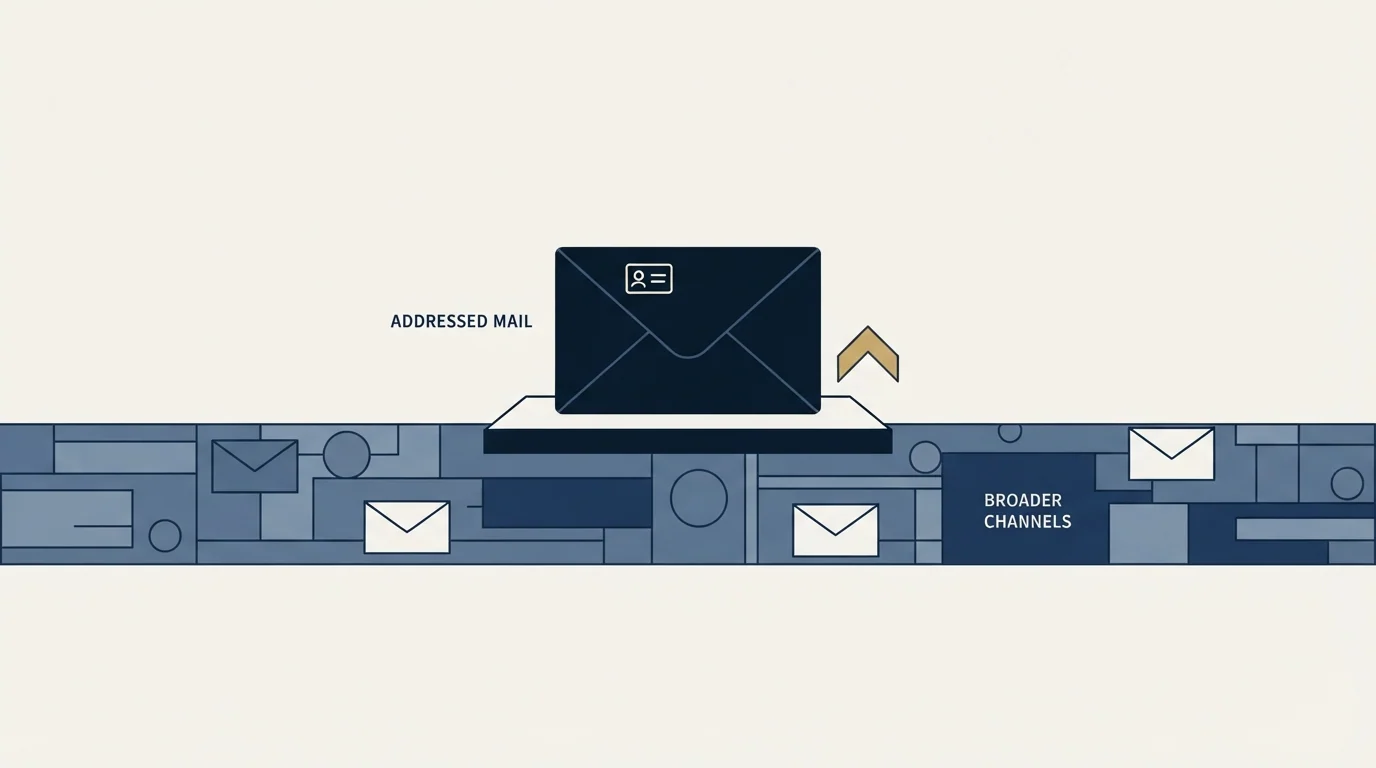
Channels differ most in how quickly they answer, and mail is the slowest of the common options: production takes days, delivery takes days, and the response arrives over weeks. That is a real cost when you are trying to learn something about a market, and it is the reason mail is usually the wrong first test. We have sorted the options that way in our overview of lead generation channels by how fast they answer.
Where mail genuinely wins is attention on a small, high-value list. A physical object on a desk is not competing with forty other physical objects, which is the opposite of the situation in an inbox. Buying that advantage at a dollar a piece across fifty accounts is a sensible experiment. Buying it across fifty thousand is a budget looking for a rationale.
If the channel you actually need is the one that reaches a large addressable market cheaply and answers within a fortnight, that is the half we run. We will build the first campaign and run it through our outbound programmes on one message per prospect, with nothing scheduled behind it.
Pricing verified against Lob's own pricing page and the USPS Every Door Direct Mail page as of mid-2026, with dated snapshots retained. Postal rates and vendor tiers change. Verify current terms before relying on them.
Frequently asked questions.
Frequently asked questions- How much does B2B direct mail cost per piece?
- Lob's pricing page publishes print and postage starting at $0.905 per postcard and $0.828 per letter on its free tier, dropping to $0.615 and $0.628 on the Growth tier at $550 a month. Add creative, list work and any agency fee on top of that, plus address verification priced from five cents.
- Can you use Every Door Direct Mail for B2B?
- Not for named accounts. The USPS page states that EDDM pieces are addressed to Postal Customer and delivered to every address on the routes you choose, with no mailing list involved. USPS names small businesses, restaurants, realtors and local political campaigns as the fit, which describes a different buyer entirely.
- What does a direct mail agency do beyond printing?
- Four things worth paying for: sourcing and verifying a postal list with correct job titles, choosing a physical format that gets opened, connecting the mail to the rest of the approach to those accounts, and designing measurement before the send. An agency that reports on volume mailed is describing a print job.
- How do you measure a B2B direct mail campaign?
- Design it before sending, because mail has no open rate and no delivery receipt. The usual instruments are a unique landing page, a dedicated phone number, a per-recipient code, or a holdout group left unmailed. Anyone who cannot describe that design in advance will not be able to report on it afterwards.
About the author.

B2B cold email experts helping companies generate qualified leads through done-for-you outreach campaigns.
RevenueFlow Team
Explore more.
Ready to scale your outreach?
We build GTM engines that book real meetings. See the receipts.
Related articles.
SDR Outsourcing for Logistics Companies: The Brokerage Line
What an outside sales development team may do in a freight company's name, the calling and email rules it inherits, and which arrangement survives a bid-shaped market.
SDR Outsourcing for Business Brokers: The Fee Timing
Whether a success-fee brokerage should rent sales development at all: the fee timing, the texts that limit what an outside person may say about value, and who signs.
Appointment Setting for Business Brokers: The Seller Meeting
What a bought meeting with a business owner has to be for a brokerage: the three-part qualification, the confidentiality rules, the licence line and the owner's reasons.
B2B Lead Lists for Aviation Companies: Build or Buy
Aviation is one of the few industries whose accounts are published by its regulator, which changes what is worth buying and what is worth downloading yourself.
LinkedIn Outreach for Banks: A Regulated Message
How a bank's relationship managers use LinkedIn to reach business owners: what the FFIEC guidance, FINRA's notices and LinkedIn's own rules require, and where to stop.
Cold Calling for PPC Agencies: What You Can See First
A paid media prospect is partly readable before the call and has already been told by the platform what to do when a stranger rings about its ads.