Cold Call Appointment Setting: The First Ten Seconds
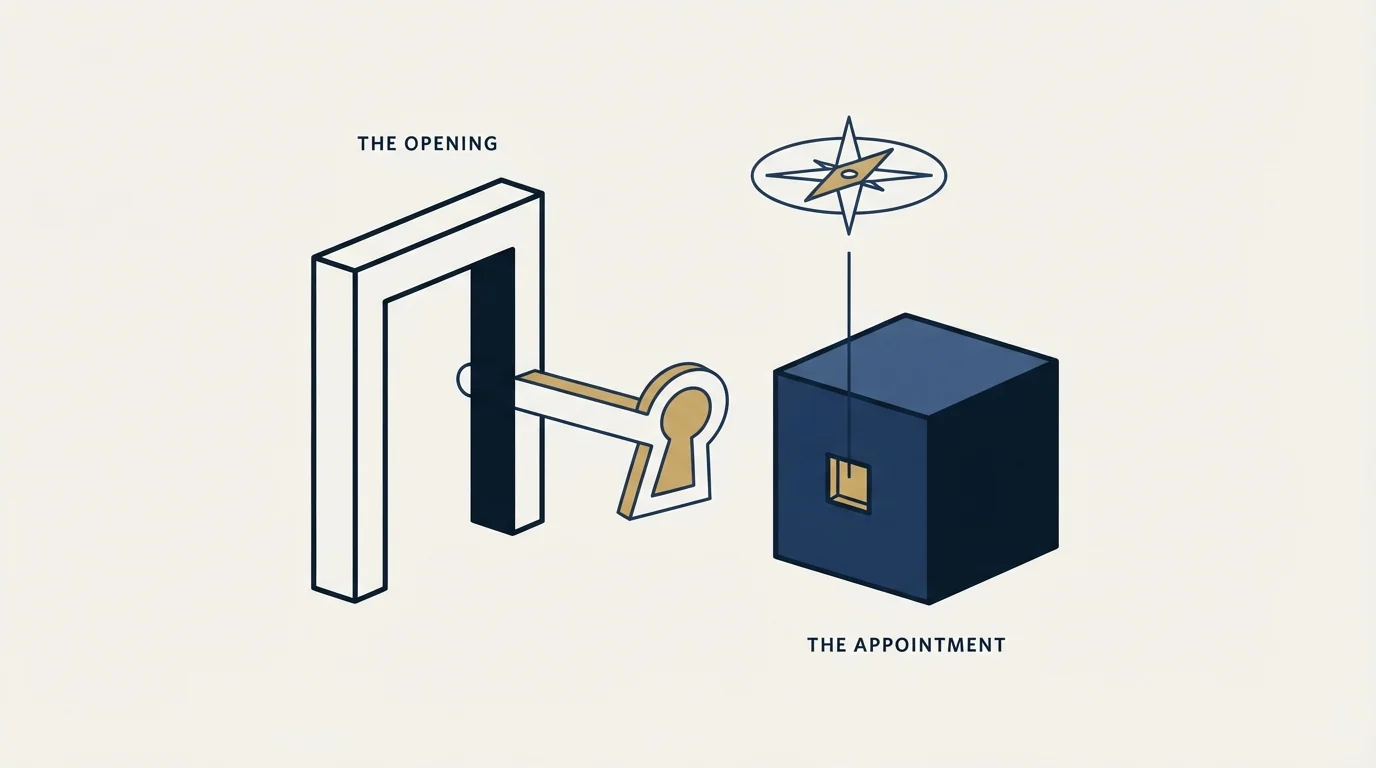
The opening decides the call, and what wins it is a specific reason for phoning this person today. That is a property of the list before it is a property of the script.
A cold call appointment setter phones people who did not ask to be phoned, establishes quickly that the call is worth continuing, works out whether a real problem exists and books a meeting for somebody else to run. The opening decides the outcome, and it rests on having a specific checkable reason for calling this account.
Key takeaways
- A well-delivered call to somebody without the problem fails while a clumsy call to somebody dealing with it frequently succeeds, which is why targeting returns more than phrasing.
- Send me an email is usually a polite exit, and asking what specifically should be in it separates the genuine cases without an argument.
- Connect rate reports on the phone data, conversation rate on the opening and the targeting together, and only qualified held meetings reflect commercial value.
- Practising the first fifteen seconds repeatedly improves results faster than running whole role-plays with a colleague who wants the call to go well.
Reviewed and updated September 2, 2026
The first ten seconds of a cold call decide the other ninety. Not the pitch, not the objection handling, and not the script's clever opening line. Whether the person on the other end concludes that this is a human being with a specific reason for calling them, or a stranger reading from a page.
Everything worth knowing about cold-call appointment setting follows from that, including why volume alone stops working and why the list matters more than the words.
What the job actually is
A cold-call appointment setter phones people who did not ask to be phoned, establishes in a few seconds that the call is worth continuing, works out whether there is a real problem, and books a meeting for someone else to run.
Three constraints shape it. The window is short, most calls end quickly, and the person is interrupted rather than receptive. Those are not obstacles to overcome with enthusiasm; they are the operating conditions, and a good setter works with them rather than against them.
Most published appointment setting tips work on the third of those conditions, the interruption, and the first two are settled before anybody dials.
The role is frequently confused with two others. A closer runs the deal that follows. A call-centre floor runs the same motion at volume with less judgement per call, a model covered in call-centre appointment setting. This piece is about the call itself. For the role it sits inside, what a sales development rep does covers the wider job.
The opening, which is most of the job
Two things have to happen immediately: the person needs to know why you specifically called them, and they need a reason to give you thirty more seconds.
Say why them. Not a compliment about their company, a reason. Something specific and checkable that made them worth the call today. This is the single largest difference between calls that continue and calls that end, and it is a property of the list rather than of delivery.
Where the sector is banking specifically, bank cold calling scripts show what that opening reason has to survive when the prospect already has a bank.
Be honest that it is a cold call. Attempts to disguise it read as evasive within a sentence, and a straightforward acknowledgement buys more goodwill than any framing device. That move is the one usually sold as a pattern interrupt, and the label is useful only up to a point: saying plainly that this is a cold call works because it is true and unexpected, and any version of it that hardens into a recognisable device stops being unexpected the second time a buyer hears it, which is why the reason for calling carries the opening rather than the phrasing wrapped around it.
Ask for a short, specific amount of attention. A defined ask is easier to grant than an open one.
Then stop talking. The instinct under pressure is to fill silence with more pitch. The silence is where the other person decides, and filling it removes their opportunity to engage.
- Step 1Name the reason for calling them
Specific, checkable, about them. This is a list property before it is a script property.
- Step 2Ask for a defined amount of time
A bounded ask is easier to say yes to than an open-ended conversation.
- Step 3Ask how it works today
Easier to answer than a question about pain, and the problems surface unprompted.
- Step 4Check fit against written criteria
Two or three checkable questions, asked plainly rather than disguised as conversation.
- Step 5Book, or end it cleanly
A specific slot, or an honest statement that this is not a fit and why.
Why the list beats the script
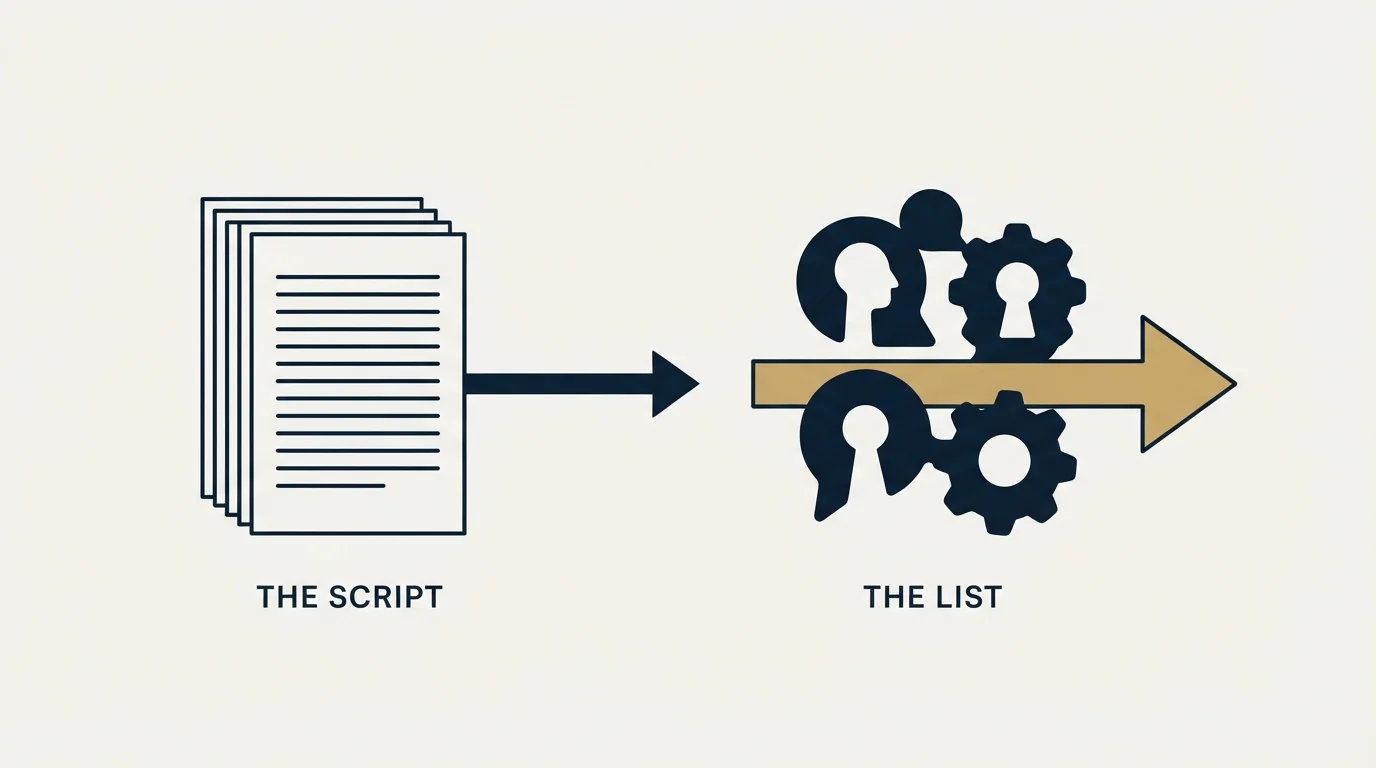
Setters and their managers spend most of their improvement effort on wording, because wording is what feels controllable. The larger variable is who is being called.
That is also why the appointment setting scripts published as samples read so alike: they all carry the same five moves, and the line that decides the call is the reason for phoning this account today, which comes off the list rather than out of the script.
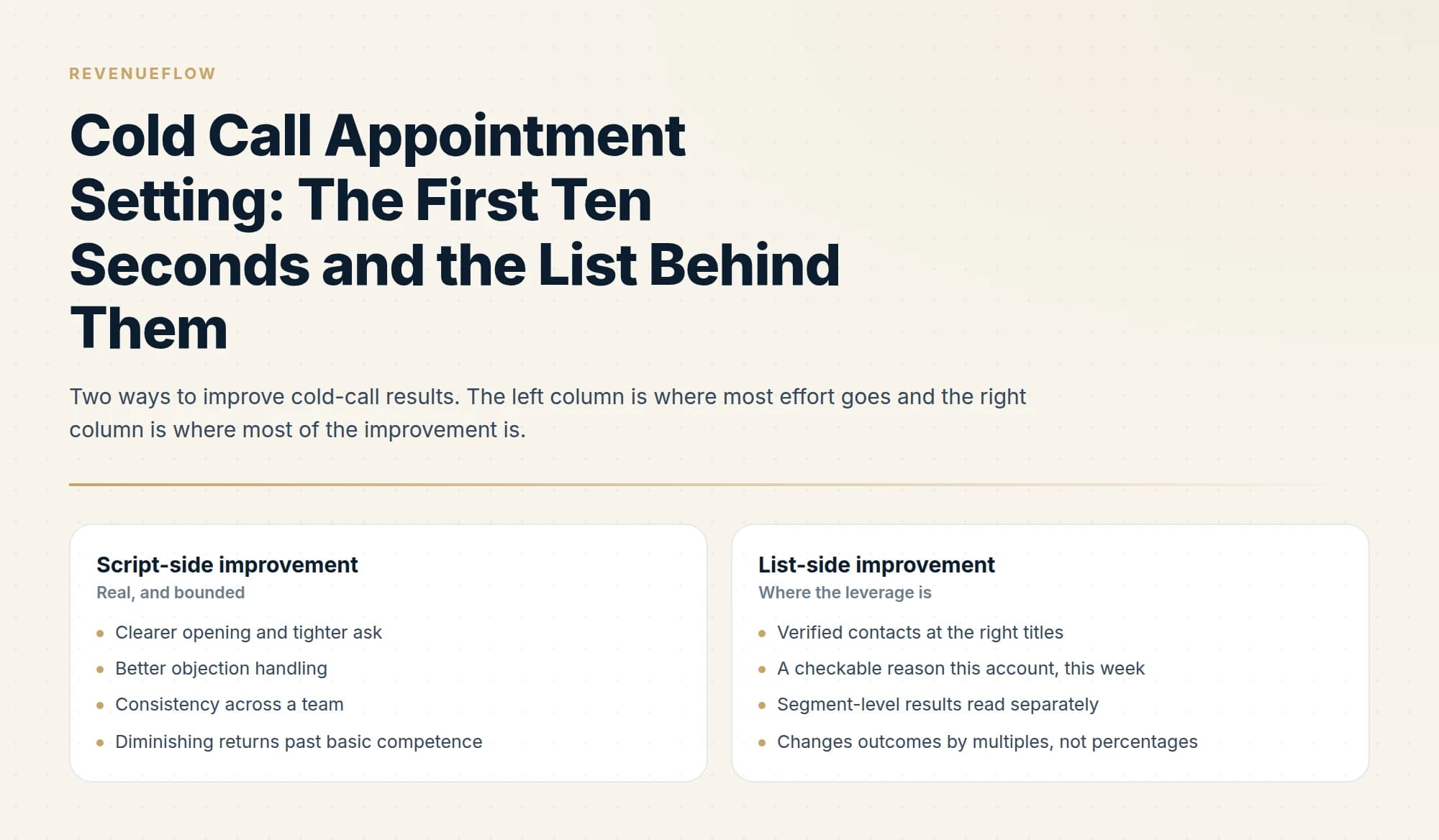
A well-delivered call to someone without the problem fails. A clumsy call to someone actively dealing with it frequently succeeds anyway. That asymmetry means time spent on targeting returns more than time spent on phrasing, up to a reasonable floor of competence.
The practical version: before rewriting the script, check contact coverage on the list, check whether connect and conversation rates differ by segment, and check whether the reason-for-calling is actually specific to the accounts being dialled. If one segment converts and two do not, that is a targeting finding available in days, and no script change will surface it.
- Clearer opening and tighter ask
- Better objection handling
- Consistency across a team
- Diminishing returns past basic competence
- Verified contacts at the right titles
- A checkable reason this account, this week
- Segment-level results read separately
- Changes outcomes by multiples, not percentages
Objections, and the two that are not objections
Most of what sounds like resistance in the first minute is reflex rather than a considered position.
"Send me an email" is usually a polite exit and occasionally genuine. The distinguishing move is to agree and then ask one question: what specifically should be in it. Someone genuinely interested answers; someone exiting says whatever comes to mind, and you have your answer without an argument.
"We already have someone for that" is information rather than a refusal. The useful follow-up is about what they wish the current arrangement did better, which is a question people enjoy answering and which qualifies the account either way.
What genuinely ends a call is "I'm not the right person", and the correct response is to ask who is and thank them. Setters trained to push through this waste time and damage the account.
The one to respect immediately is a request not to be called again. Log it, suppress it, and move on. Beyond being the right thing to do, calling suppression is a compliance obligation and the accountability sits with the company whose product is being sold.
Measuring it without lying to yourself
Four numbers, and only one of them is the one usually reported.
Connect rate tells you about the data. Low connect rate is a phone-number quality problem, not a performance problem.
Conversation rate, meaning connects that get past the opening, tells you about the opening and the targeting together.
Held meetings, not booked. The gap between the two is where the incentive problem lives, and it should be watched weekly.
Qualified and held, against criteria written before dialling started. This is the only one that reflects commercial value.
Dials are an input. They belong in a diagnostic conversation and not on a scorecard, because a setter measured on dials will produce dials at the cost of the preparation that makes calls work.
- Yes: Phone data has been verified, not just collected
- Yes: Each account has a specific, checkable reason for the call
- Yes: Qualification criteria are written down before the first dial
- Yes: Suppression covers customers, live deals and prior do-not-call requests
- Yes: Results are read by segment rather than blended
- No: The setter is measured primarily on dial volume
- Depends: Whether your deal size supports the cost per conversation
Practising without spending accounts
Cold calling is a skill that improves with repetition, and repetition on a finite list is expensive. Three ways to get the reps without the cost.
Call the tier you would not otherwise call. Most lists have accounts that fit loosely: too small, slightly off-segment, geographically awkward. They are the practice ground. A new caller who spends a week there arrives at the real list having made two hundred calls rather than none.
Record and review, always. A caller who listens back to their own opening twice a week improves faster than one coached weekly without recordings, because the gap between what they think they said and what they said is usually large and always instructive.
Practise the first fifteen seconds specifically, not whole calls. The opening is where the outcome is decided and it is the shortest thing to drill. Ten repetitions of an opening takes five minutes and improves more than one full role-play.
The thing to avoid is the internal role-play as the primary training method. A colleague pretending to be a prospect is a cooperative participant who wants the call to go well, which trains a caller for a conversation that never happens. Real calls to low-stakes accounts teach the actual job.
Manager-side, the discipline is to protect the practice period from the pipeline. A caller pushed onto the priority list in week one because the quarter is tight will spend the best accounts learning, and those accounts do not come back.
Costing that floor is a separate exercise, and what a Readymode licence already includes covers line items that usually arrive as a separate invoice.
Where calling fits alongside everything else
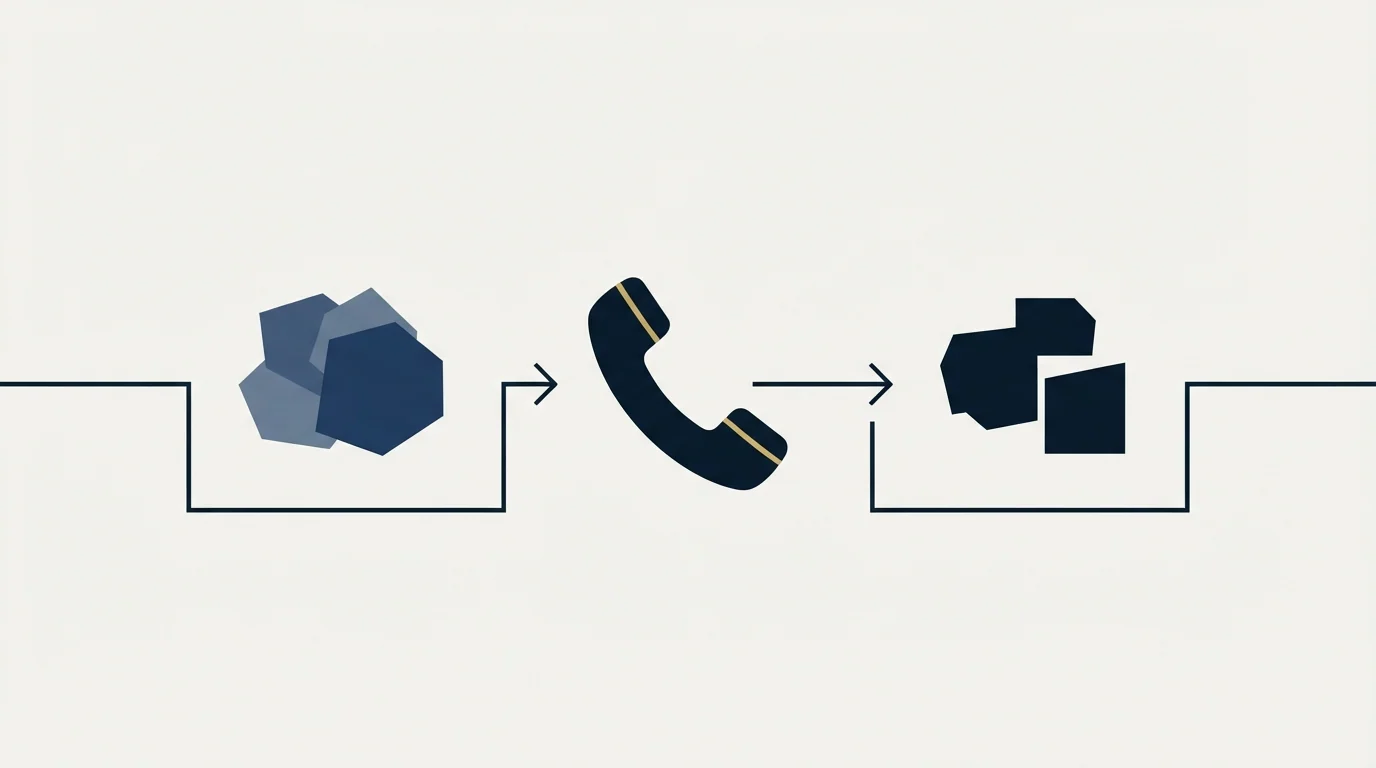
Phone is the most expensive outbound channel per attempt and the highest information per attempt. You learn something from a conversation that you cannot learn from a non-reply, which is why it earns its place on accounts that matter even when cheaper channels are carrying the volume.
Outsourcing the calling itself raises its own question, since providers like Superhuman Prospecting list conflicting pricing pages for calling services that make the real entry cost hard to pin down.
The sequencing that works for most teams is to use cheap channels across the whole list, read which segments respond, then concentrate calling on the accounts and segments that showed something. Committing phone time before that signal exists spends the most expensive resource evenly across accounts that were never going to answer. The channel arithmetic by deal size is in outbound channel mix by deal size.
It also pairs unusually well with email in one specific way: a call placed the same week as a written message reaches a name the person has already seen, which measurably changes how the opening lands. That is a sequencing decision rather than an extra channel, and it costs nothing to arrange beyond agreeing who works which accounts in which week.
One thing we do not do, on the phone or anywhere else, is chase silence. We run one message per campaign and no bump sequences, and the equivalent discipline on the phone is that an account which has been called and did not engage goes back into the pool for a genuinely different angle later rather than into a call-again queue.
The short version
Cold-call appointment setting is won in the first ten seconds, and what wins it is a specific, checkable reason for calling this person today, which is a property of the list rather than the script. Improve targeting before phrasing. Treat "send me an email" as a question to be tested rather than an objection to be handled. Measure connect rate, conversation rate, held meetings and qualified held meetings, and keep dial counts off the scorecard. Respect a do-not-call request the first time.
If you would rather buy the outcome than build the function, we work on a pay-per-qualified-meeting basis with the criteria agreed in writing beforehand, and you can see what a campaign would look like for your market.
Frequently asked questions.
Frequently asked questions- How should a cold call open?
- Say why you called this person specifically, using something checkable rather than a compliment about their company. Acknowledge plainly that it is a cold call, since attempts to disguise it read as evasive within a sentence. Ask for a short defined amount of attention, which is easier to grant than an open request. Then stop talking and let them decide.
- Does the script or the list matter more?
- The list, by a wide margin. Script work is real and bounded, improving clarity, objection handling and consistency, with diminishing returns past basic competence. List work changes outcomes by multiples: verified contacts at the right titles, a checkable reason for this account this week, and results read separately by segment rather than blended into one number.
- Which cold call metrics are worth tracking?
- Four. Connect rate, which reports on phone data quality rather than performance. Conversation rate, meaning connects that get past the opening. Held meetings rather than booked ones, since the gap between them is where the incentive problem lives. And qualified held meetings against criteria written before dialling. Dials are an input and belong in diagnosis, not on a scorecard.
- How can a new caller practise without burning good accounts?
- Call the tier you would not otherwise call: accounts slightly too small, off-segment or geographically awkward. Record and review, because the gap between what a caller thinks they said and what they said is large and instructive. Drill the first fifteen seconds specifically rather than whole calls, since that is where the outcome is decided and it takes minutes to rehearse.
About the author.

B2B cold email experts helping companies generate qualified leads through done-for-you outreach campaigns.
RevenueFlow Team
Explore more.
Ready to scale your outreach?
We build GTM engines that book real meetings. See the receipts.
Related articles.
Readymode Pricing: The Seat Is Dear for What Is Inside It
Readymode publishes $199 and $249 per licence per month, near the top of the dialer range. What the seat includes that others bill separately, and when that pays.
PhoneBurner Pricing: What the Seat Price Covers
PhoneBurner publishes all three seat prices in both billing states. The metered resource is contact imports, not minutes, and the spam layer is an add-on at every tier.
Koncert Dialers: Line Counts Published, Price Is Not
Koncert publishes the parallel line ceiling on every tier, which most of this category will not. It publishes no price. What its pages state, and what the quote decides.
Cold Calling Prospecting: Start From the Coverage Ceiling
One caller covers accounts in the low hundreds a week, not the low thousands. That ceiling decides whether calling is your coverage channel or a sample.
Sales Tonality: The 38 Percent Figure and Its Author
Almost every guide to sales tonality opens with the same statistic. Its author published a scope note saying it does not apply, and the genre never carried it.
The Nooks Dialer: A Calling Floor With a Platform Attached
The distinctive thing Nooks sells is the room the dialer sits in. That decides whether it fits your team far more than the dialing does.