Automated Cold Calling Systems: What It Cannot Touch
A dialler raises dials per hour and leaves connect rate and conversation quality untouched, so it multiplies whatever the process already produced per dial.
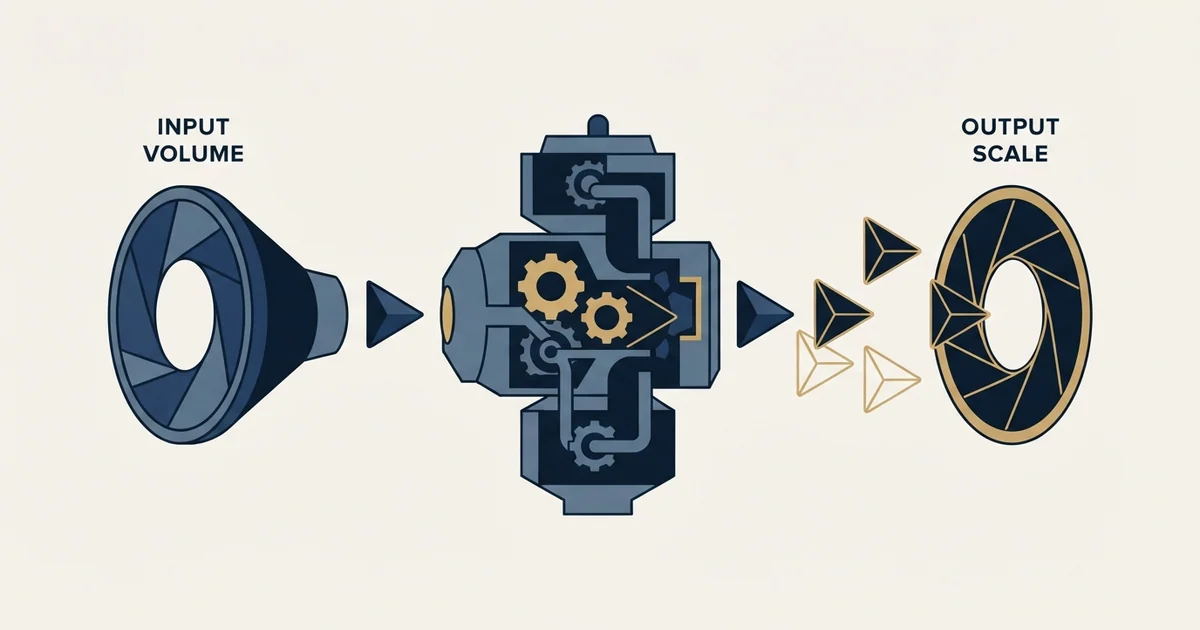
Automated cold calling covers three different products: dial automation, workflow automation, and voice automation. The first raises throughput and changes nothing else. The third is a separate decision, because United States rules treat an artificial or prerecorded voice as a different act from a person dialling, with its own consent requirements.
Key takeaways
- Dial automation raises dials per hour and leaves the connect rate and conversation rate exactly as it found them, so it multiplies an existing result rather than creating one.
- A dialler exhausts a finite list roughly three times faster, and list replenishment is the constraint that most commonly leaves the tool idle after a productive first fortnight.
- FCC delivery restrictions cover calls made with an automatic telephone dialing system or an artificial or prerecorded voice, which is a different instrument from the FTC business-to-business telemarketing exemption sellers usually rely on.
- Workflow automation is the least discussed of the three and frequently the largest real saving, because it removes minutes from every call rather than seconds from the unanswered ones.
Reviewed and updated September 2, 2026
A power dialler will take a rep from roughly 40 dials an hour to well over 100. That is a real and immediate change, and it is the only one the software makes on its own. The connect rate stays where it was, the conversation stays as good or bad as it was, and the meeting rate follows the two of them exactly as before.
That sentence is the whole economic case for automated cold calling, and also the whole warning. Automation multiplies whatever the process was already producing per dial, including zero.
What the automation layer actually does
Strip the marketing language off the category and there are three distinct things being sold under one label, with very different profiles.
The recording layer next to a dialer splits the same way, where Circleback's automations rather than its transcript are what a buyer is actually choosing between.
Dial automation. Software places the calls so the rep does not. Power diallers work one number at a time and connect the rep when someone answers; parallel or predictive diallers work several at once and hand over whichever connects first. The rep still has every conversation. What is removed is the dead time: dialling, waiting through rings, hanging up on voicemail.
Workflow automation. Call logging, dispositioning, recording, list ordering and CRM writeback. Unglamorous, and often the part that pays for the whole tool, because it removes administrative minutes from every single call rather than seconds from the unanswered ones.
A separate piece on Pipedrive's native document feature explains how storage location and versioning shape whether that writeback stays trustworthy over time.
Voice automation. A synthetic voice conducts the conversation. This is a categorically different product from the first two, and the difference is legal before it is technical.
- Raises dials per hour
- Leaves connect rate unchanged
- Leaves conversation quality unchanged
- Ordinary telemarketing rules apply
- Payback is straightforward arithmetic
- Logging, dispositions, recording, writeback
- Saves minutes on every call
- Improves the data you manage from
- Low risk
- Frequently the largest real saving
- An artificial voice conducts the call
- A different consent regime applies
- Recipient reaction is a brand question
- Recording and disclosure obligations
- Assess before piloting, not after
The arithmetic, done honestly
Dial automation is bought to raise throughput, so the calculation is throughput against cost, and it is short enough to do on paper.
Start with a rep at 40 dials an hour across a four-hour calling block, which is 160 dials a day. At a 5% connect rate that is 8 conversations. Take dial automation to 110 dials an hour and the same block produces 440 dials and 22 conversations, assuming the rep can sustain the pace, which is a genuine assumption rather than a rounding detail. Conversations are cognitively expensive and 22 in four hours is a different job from 8.
Against that, count the licence, the number provisioning, the setup, and the increased burn rate on the list. That last one is the item most teams forget. A dialler does not create prospects. It exhausts a finite list roughly three times faster, and if list replenishment cannot keep up, the tool spends most of the quarter idle after a very productive first fortnight.
One vendor in that market puts its licence on the page, and Salesfinity's self serve seat is a single workspace that cannot become a team without a quote.
The numbers above are illustrative and the ratios will differ in your market. What transfers is the structure: measure your own dials per hour before buying, because the vendor's improvement claim is quoted against a baseline that is not yours.
- Step 1Measure the current baseline
Dials per hour, connect rate and conversation rate as three separate numbers
- Step 2Decide which automation you need
Dial, workflow, or voice. They solve different problems and carry different risk
- Step 3Check the list can feed it
A three-fold increase in burn rate needs a three-fold increase in replenishment
- Step 4Confirm the regulatory position
Especially before anything places calls with an artificial or prerecorded voice
The line where automation becomes a different act
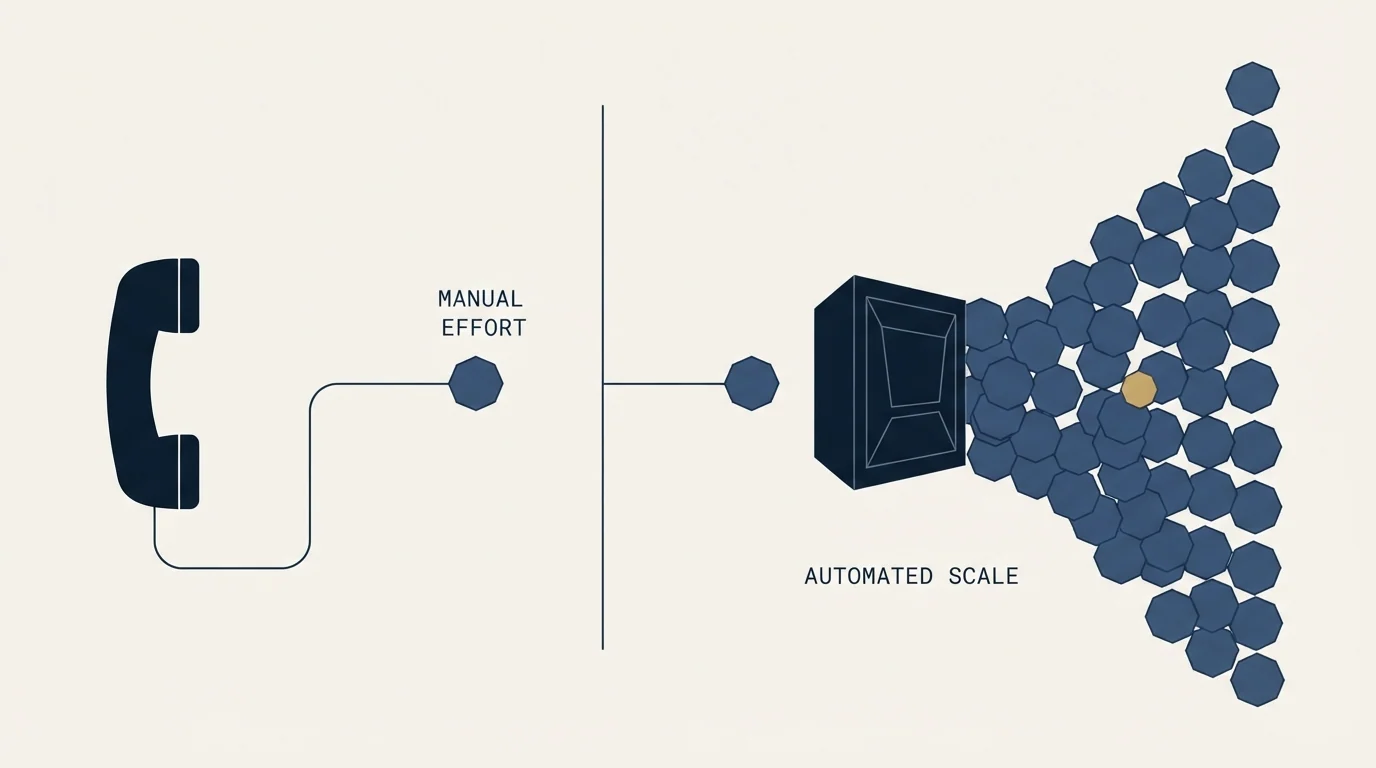
This is the part that a software comparison will not tell you, and it is the single most consequential thing on this page.
United States law does not treat "a person dialling a business" and "a system placing calls" as the same activity. The Federal Communications Commission's delivery restrictions state that no person or entity may "initiate any telephone call (other than a call made for emergency purposes or is made with the prior express consent of the called party) using an automatic telephone dialing system or an artificial or prerecorded voice" to the categories of line the rule enumerates (47 CFR 64.1200).
Two things follow that matter commercially.
The first is that the business-to-business comfort many sellers rely on comes from a different rule, and it does not carry across. The Federal Trade Commission's Telemarketing Sales Rule does exempt "Telephone calls between a telemarketer and any business to induce the purchase of goods or services", subject to carve-outs (16 CFR 310.6). That is a different instrument from the FCC restriction above, and the reason the exemption cannot be borrowed is worth spelling out, because it is structural rather than a matter of interpretation.
The FCC restriction is keyed to the line, not to the person. The categories it protects at paragraph (a)(1)(iii) are numbers "assigned to a paging service, cellular telephone service, specialized mobile radio service, or other radio common carrier service". Nothing in that test asks whether the person answering is a consumer or a purchasing manager. Business-to-business prospecting runs overwhelmingly on mobile numbers, so a synthetic-voice programme aimed squarely at businesses is inside the rule anyway, and the FTC's business exemption does not reach it.
Note also that the trigger at (a)(1) is disjunctive: "using an automatic telephone dialing system or an artificial or prerecorded voice". The artificial-voice branch stands on its own and does not depend on how the dialling equipment is classified, which is where most of the technical argument in this area has been spent.
The second consequence is that "AI cold caller" products sit squarely in that artificial-voice territory, whatever the product page calls the technology. A tool being new does not place it outside a rule written in general terms about artificial voices.
What the TSR does leave behind for an exempt B2B caller is worth knowing, because it is short. The two provisions the exemption explicitly does not cover are the anti-deception ones: 16 CFR 310.3 prohibits "Misrepresenting, directly or by implication" material aspects of what is being sold, and prohibits "Making a false or misleading statement to induce any person to pay for goods or services". So the residue of the Rule that binds a business-to-business caller is essentially the obligation to tell the truth. That is a better one-line summary of the compliance position than any list of mechanics, and it is the part a script written for a machine to read aloud should be checked against.
There is also the ordinary calling-hours provision, which prohibits calls outside "8:00 a.m. and 9:00 p.m. local time at the called person's location" (16 CFR 310.4). Read that alongside the exemption rather than on its own: where the business-to-business exemption applies, the §310.4 requirements are among the things it exempts. It matters anyway, because state law commonly imposes calling windows of its own, and because a list that has drifted from business lines onto personal mobiles has drifted out of the exemption at the same time. Automation makes both easier to breach by accident, since a machine working a national list at 8am your time is calling the West Coast at 5am and does not know which numbers stopped being business numbers.
None of this is legal advice, state law can be stricter than the federal position, and rules outside the United States differ substantially. The reason it belongs in a buying evaluation is that the question is much cheaper to answer before the system is running than after.
The second-order effect nobody quotes: what volume does to your caller ID
Raising dials per hour raises something else at the same rate, and it is the part that shows up a month later.
Carriers and handset makers apply spam labelling to inbound calls, and the signals that feed it include patterns a high-volume dialler produces by construction: many short calls from one number, a low answer rate, and a burst of attempts in a narrow window. A programme that triples its dial count from the same handful of numbers is generating three times the volume of exactly the pattern that gets a number flagged. The consequence is a connect rate that starts drifting down for reasons that have nothing to do with the reps, on a schedule that lags the change by weeks and therefore never gets attributed to it.
Vendors have a standard answer, which is number rotation: spread the volume across a pool so no single number accumulates the pattern. It genuinely helps, and it has a cost worth understanding before you accept it as a feature. A rotating pool means the number on the recipient's screen is not stable, so a prospect cannot recognise a returned call, cannot call you back on the number that rang them, and cannot look you up from it. Teams that sell into a small market often find that trade a bad one, because being recognisable is worth more to them than raw volume.
The honest way to hold both facts: automation makes the reputation question urgent rather than optional. Check how your outbound numbers are being presented before you triple the volume flowing through them, and treat any drift in connect rate after adoption as a reputation hypothesis first.
What the automation cannot reach
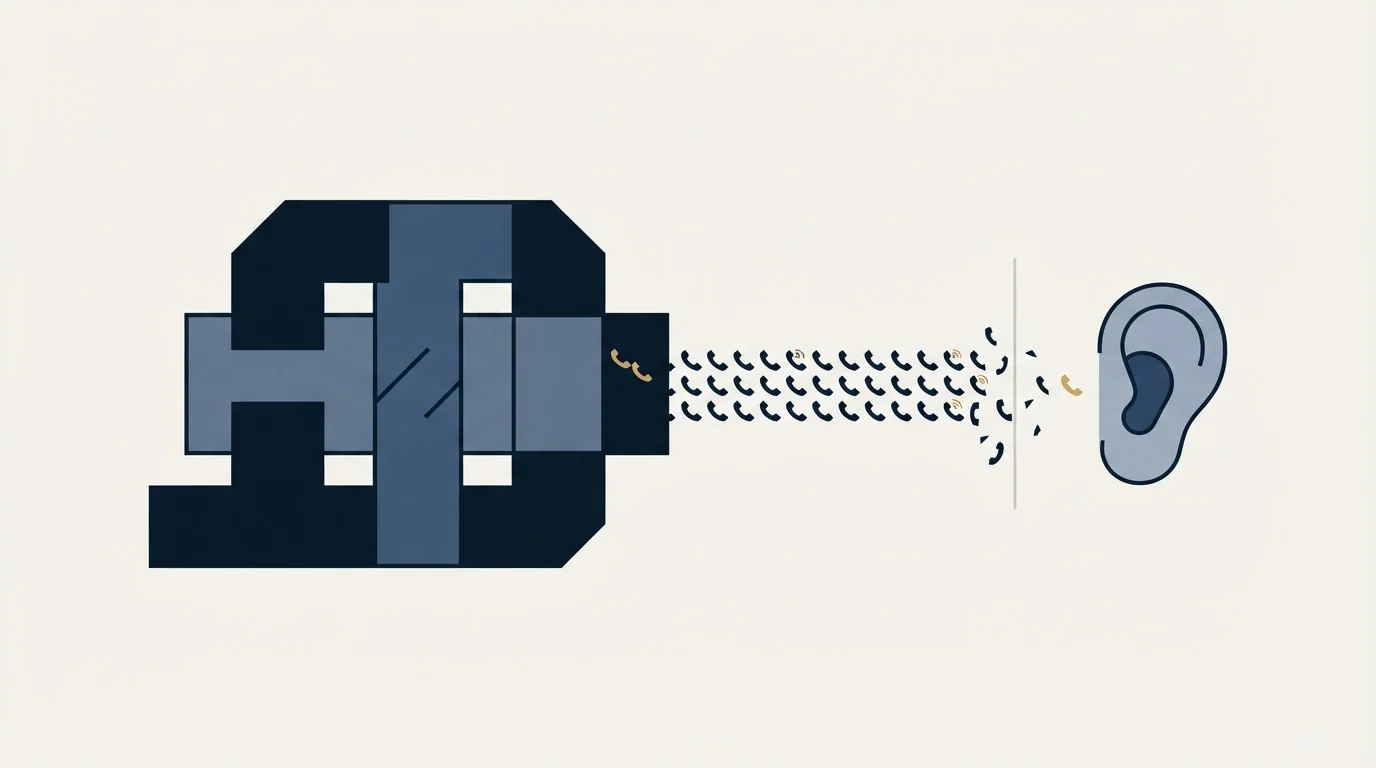
Three of the four things that decide whether a calling programme works sit outside the software entirely.
Who is on the list. A dialler applies the same multiplier to a well-chosen list and a badly-chosen one. Our cold call appointment setting piece makes the case that the opening line is largely determined by list selection, and automation does nothing to that relationship.
Whether the numbers reach people. Dial automation increases attempts against whatever numbers you hold. If a large share are main switchboards or stale records, it increases the rate at which you reach nobody.
What the person says when someone answers. This is where the value of a call is created and it remains entirely human in every product except voice automation, where it becomes a scripting and compliance problem instead.
The comparison of scheduling tool pricing tiers breaks down how OnceHub and Calendly price their seats once a call turns into a booked meeting.
The fourth thing, throughput, is the one the software genuinely owns. That is a real contribution and worth paying for. It is just a smaller share of the outcome than the category name implies.
How this compares to the other ways of getting calls made
Automation is one of three answers to "we need more calls made" and the alternatives are worth pricing against it. Hiring is the expensive, high-quality answer. Delegating the dialling to a lower-cost operator is the cheap one, and our piece on cold calling with a virtual assistant explains why that model fails at the judgment half of the call and works well on everything around it. Automation is the middle answer: it changes the throughput of the people you already have.
For the broader question of what an automated seller does and does not replace, our AI SDR piece works through the same distinction on the email side, where the technology arrived earlier and the limits are clearer.
The short version
An automated cold calling system raises dials per hour and leaves connect rate and conversation quality exactly where it found them, so it multiplies an existing result rather than producing a new one. Measure your own baseline before buying, confirm the list can survive triple the burn rate, and treat any product that speaks with a synthetic voice as a separate decision with a regulatory question attached, not as a faster dialler.
If the underlying problem is that nobody has time to run outreach at all, we run the email and LinkedIn side of that as a service and do not require you to buy or operate anything.
Regulatory citations verified against the current eCFR text as of mid-2026. Rules change and vary by jurisdiction; confirm current requirements before relying on them.
Frequently asked questions.
Frequently asked questions- Do automated cold calling systems actually work?
- Dial automation reliably raises dials per hour, which is a genuine gain. It does not change how often someone answers or how the conversation goes, so it multiplies your existing result per dial. If that result is currently near zero, the tool produces a faster version of near zero. Measure your baseline three rates separately before buying.
- Is automated cold calling legal for B2B?
- Two separate rules apply. The FTC's Telemarketing Sales Rule exempts most business-to-business calls, subject to carve-outs including its misrepresentation prohibitions. Separately, FCC delivery restrictions govern calls made using an automatic telephone dialing system or an artificial or prerecorded voice, with their own consent requirements. State rules can be stricter. Get advice before deploying voice automation.
- What is the difference between a power dialler and an AI cold caller?
- A power dialler removes the mechanical work of dialling and connects a human rep when someone answers, so a person still has every conversation. An AI cold caller conducts the conversation with a synthetic voice. They are different purchases: one is a productivity tool, the other changes who is speaking and what regulatory regime applies.
- How much faster is a dialler than manual dialling?
- Vendors typically quote a two to three times improvement in dials per hour, measured against a baseline that is not yours. The honest way to size it is to count your own dials per hour across a normal calling block first. That number also tells you whether the constraint is dialling time at all, or list size, or reps having other work.
About the author.

B2B cold email experts helping companies generate qualified leads through done-for-you outreach campaigns.
RevenueFlow Team
Explore more.
Ready to scale your outreach?
We build GTM engines that book real meetings. See the receipts.
Related articles.
HubSpot Power Dialers: Pooled Minutes Are the Real Cap
HubSpot's calling minutes are pooled across the whole account rather than granted per seat. That changes the arithmetic of a calling programme more than the dialer does.
Salesforce Auto Dialers: Not on the Sales Cloud Rate Card
Salesforce prices six Sales Cloud editions and no telephony. That absence makes a dialer a separate purchase whatever else you compare when you compare editions.
Sales Automation Software for Small Business: Four Buys
One search returns four unrelated products, and on at least one vendor's published plan list the automation is gated above the tier a small team buys.
Calendly API: What You Can Automate and What You Cannot
Read access runs on any plan, webhooks need a paid one, and programmatic deletion is Enterprise-only. The scope decision that quietly breaks integrations, first.
Sybill: The Credit Meter Is the Number to Model
Sybill meters by credits per week rather than by seat, and its pricing page carries three different figures for the same two plans. Both facts change the model.
ConnectAndSell: What You Get for the Seat, and the Filings
ConnectAndSell sells conversations rather than dials, using human agents to get past gatekeepers. Its audited accounts and its sale add a second diligence question.