HubSpot Power Dialers: Pooled Minutes Are the Real Cap
HubSpot's calling minutes are pooled across the whole account rather than granted per seat. That changes the arithmetic of a calling programme more than the dialer does.
HubSpot documents calling minutes as aggregated and shared across all users in an account, with additional minutes purchasable. Aggressive dialing modes are generally a third-party purchase. Look up your subscription's pooled minute and phone-number allowances in HubSpot's Product and Services catalogue before planning call volume.
Key takeaways
- HubSpot states that calling minutes are aggregated and shared across all users in an account, so one heavy caller consumes everyone's headroom.
- Per-subscription minute and phone-number allowances are published in HubSpot's Product and Services catalogue rather than in the calling articles most people read.
- Twilio Connect is documented for calling countries outside HubSpot's supported list, on Sales Hub or Service Hub Professional and Enterprise seats, and cannot be set up on a trial.
- The higher your connect rate, the less parallel dialing helps, which inverts how the most aggressive mode is usually sold.
Reviewed and updated September 2, 2026
The constraint on calling from HubSpot is not the dialer. It is the minutes.
HubSpot's own documentation states that calling minutes are aggregated and shared across all users in a HubSpot account, and that if you run out you can purchase additional minutes. Pooled, not per seat. One rep having a heavy week draws from the same balance as everyone else, and the account hits the wall together rather than individually.
That is the fact to design around, and it is the one missing from almost every comparison of power dialers for HubSpot, because those comparisons are written by the vendors selling the dialers.
Pooled minutes change the arithmetic
A per-seat allowance and a pooled allowance behave differently under exactly the conditions a calling programme creates.
Per-seat, a rep who calls twice as much as the team average exhausts their own allowance and nobody else's. Pooled, that rep consumes the headroom of everyone else, and the person who discovers it is whoever tries to make the next call after the balance runs out.
HubSpot documents the per-subscription figures in its Product and Services catalogue rather than in the calling articles themselves, which means the number that governs your programme is not on the page most people read. Look it up against your own subscription before you plan volume, and look up the phone-number allowance in the same place, because that is pooled too.
Two design consequences follow.
Measure minutes per meeting, not minutes per rep. A pooled resource needs a single denominator across the account. Minutes consumed divided by meetings booked is the only number that tells you whether the calling programme is paying for itself, and it is computable from the first week.
Decide the allocation before the balance runs low, not after. A pooled resource with no allocation policy is allocated by whoever calls fastest. That may be the right answer, but it should be a decision rather than a race.
A companion piece on Pipedrive's shared API token budget covers a similar pooled-resource problem, where seats draw from one daily allowance rather than individual limits.
- One balance shared by every user
- A heavy caller consumes everyone's headroom
- The account runs out together
- Needs an allocation policy written in advance
- Additional minutes can be purchased
- Each user has an independent allowance
- Heavy use is contained to the heavy user
- Nobody else is affected by one rep's week
- No allocation policy required
- Under-users subsidise nothing
Where the third-party dialer comes in
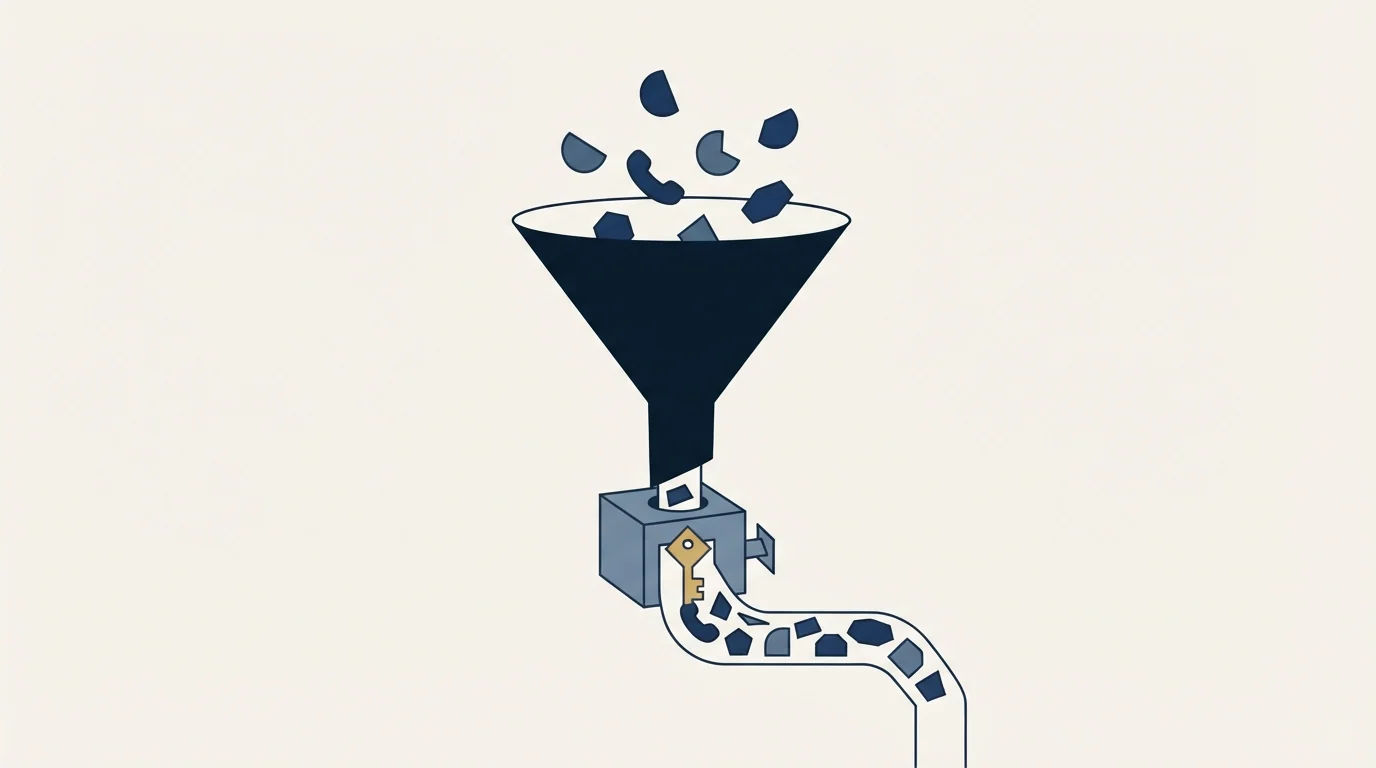
The reason "power dialer" is a search rather than a setting is that the aggressive dialing modes are generally a separate purchase, and the market for them around HubSpot is crowded.
Among those separate purchases sits a vendor selling conversations rather than dials, where human agents dialing past gatekeepers is the product and the filings are part of the diligence.
Before evaluating any of them, get the mode question right, because it decides more than the vendor does. Preview dialing shows the rep the record before connecting and suits complex or senior buyers. Power dialing places the next call automatically as one line per rep, which removes dead time without changing the odds on any single call. Parallel dialing places several calls at once per rep and connects whoever answers first. The full taxonomy, the two-second abandonment rule the Federal Trade Commission sets out, and what per-seat pricing looks like across the category are covered in our guide to dialer modes and what a seat costs.
The counterintuitive part is worth restating here because it is routinely inverted in sales conversations: the higher your connect rate, the less parallel dialing helps and the more it costs you in abandoned calls and labelled numbers. Teams calling a well-researched list of direct mobiles are usually the worst candidates for the most aggressive mode.
HubSpot also documents a second route for teams whose destinations sit outside its supported country list. Its knowledge base describes setting up an account with the third-party provider Twilio Connect to make calls in HubSpot, including to countries that are not on the supported list. Three constraints come with it. The article places the capability on Sales Hub or Service Hub Professional and Enterprise seats. Each user who wants to use it must connect Twilio to their own HubSpot account, and HubSpot recommends separate credentials per user rather than a shared login. And it states that a HubSpot trial cannot set up a Twilio Connect integration, which is worth knowing if you were planning to evaluate international calling during a trial.
What the CRM has to get back
Whatever you buy, the integration question is the same one every CRM integration asks: what does the CRM receive, and what does it match on when it decides which record a call belongs to?
The answers that matter are unglamorous.
Outcome, not just activity. A logged call with a duration and no disposition tells you a dial happened. A logged call with an outcome tells you what the list is worth. If the dialer writes back only the former, your calling data is a timesheet.
The record, not the number. A call has to attach to the contact, and a contact is matched on an identifier rather than on a phone string. A dialer that logs against a number creates orphan activity for every mobile that appears on two records.
Recording behaviour that is configurable by jurisdiction, because consent rules differ and a single global setting will be wrong somewhere.
The general shape of getting a record from an external tool into a CRM without creating duplicates, and the twenty-record test that surfaces the failure before it scales, is worked through in our guide to Apollo and HubSpot deduplication. The matching rules there are HubSpot's own and they govern anything writing in.
- Yes: Your subscription's pooled minute and phone-number allowances looked up in HubSpot's Product and Services catalogue
- Yes: An allocation policy for the pooled minutes, agreed before the balance runs low
- Yes: Dialing mode matched to the sale rather than to the demo
- Yes: Call outcomes, not only call activity, written back to the contact record
- Yes: Calls matched to a contact identifier rather than to a phone string
- Yes: Recording behaviour configurable per jurisdiction
- Yes: Phone-number accuracy measured on a sample of your own list before anything is signed
- No: Assuming the minute allowance is per user because that is how seats work
Number reputation is the cost nobody budgets for

Carriers and handset makers label suspected spam calls before the recipient decides whether to answer. The labelling systems watch call volume per number, answer rate, average call duration and complaint reports, and a number that dials heavily while producing short calls acquires a label. A labelled number stops connecting, and no amount of dialer throughput compensates for a number that goes to voicemail before it rings.
Two habits follow, and both are purchases rather than settings. Spread volume across a pool of numbers rather than burning one, which means number inventory is a recurring line item and belongs in the comparison alongside the seat price. And register the numbers you use through the carrier verification programmes rather than leaving them anonymous, which is administrative work somebody has to own.
Local presence, which shows the recipient a number in their own area code, sits inside the same trade. It lifts answer rates and it raises the annoyance when the person calls back and reaches a company two time zones away. Rotating heavily through local numbers is also the fastest way to acquire labels, so the tactic partially destroys its own advantage. HubSpot's own pooled allowance for phone numbers is the constraint on how wide that pool can get without a purchase, which is a second reason to look the figure up rather than assume it.
The reason this belongs in a page about dialers rather than in a page about telephony is that mode and reputation are the same decision. Parallel dialing produces the highest volume per number per hour, which is exactly the input the labelling systems watch. Choosing the most aggressive mode and then treating the resulting labels as a separate problem is a common and expensive sequence.
The number the whole thing rests on
A dialer multiplies dials. It does not improve them.
If a third of the mobile numbers on your list belong to somebody who left the company two years ago, a faster dialer reaches the wrong person faster, consumes pooled minutes doing it, and degrades the reputation of the numbers you call from. Carriers and handset makers label suspected spam calls before the recipient decides whether to answer, and a number that dials heavily and produces short calls acquires a label.
So measure phone-number accuracy on a sample of your own list, against your own market, before signing anything. The same discipline applies to any contact data: a vendor's published coverage figure was computed on the vendor's sample, and the only figure that means anything is the one you compute on your own records. That measurement is match rate, and the protocol for running it is in our guide to testing providers on your own list.
The HubSpot enrichment guide explains which match keys, credits and opt-out settings govern the account-wide data quality behind your contact records.
The second thing a dialer cannot supply is a reason for the call. The opening has to name something specific about that company today, and that specificity comes from the research behind the list rather than from the tool placing the call. The wider argument for what automation multiplies and what it cannot touch is in our piece on automated cold calling systems.
Where we sit

RevenueFlow does not sell calling, dialers, or telephony of any kind, and we do not run HubSpot. We run cold email and LinkedIn outbound on Email Bison and HeyReach, where the equivalent infrastructure question is deliverability rather than number reputation.
That makes this a documentation-grounded account rather than a walkthrough of a stack we operate. It also means the honest framing of the decision is available to us: a dialer is one purchase inside a calling programme, alongside data, recording, and CRM logging, and it is rarely the constraint. Our own campaigns send one message per prospect with nothing scheduled behind it, which is a deliberately different instrument from a dial sequence and answers a different question about the same market.
If you want the written half built and measured alongside whatever calling stack you land on, we will build the first campaign.
Pooled calling minutes, purchasable additional minutes, the Twilio Connect subscription requirement, its per-user setup guidance and its unavailability on trials are per HubSpot's own knowledge base, fetched 15 August 2026. Per-subscription minute and phone-number allowances are published in HubSpot's Product and Services catalogue and are not reproduced here. Verify current terms with the vendor before relying on them.
Frequently asked questions.
Frequently asked questions- Are HubSpot calling minutes per user or shared?
- Shared. HubSpot's documentation states that calling minutes are aggregated across all users in an account, and that additional minutes can be purchased if you run out. That makes heavy use by one rep a cost borne by the whole account, so the useful measurement is minutes consumed per meeting booked across the account rather than minutes per rep.
- Do I need a third-party dialer to call from HubSpot?
- For the aggressive dialing modes, generally yes, which is why the market around HubSpot is crowded with them. Get the mode decision right before the vendor decision: preview dialing suits complex or senior buyers, power dialing removes dead time without changing the odds on a call, and parallel dialing helps least on lists with a high connect rate.
- How do I call countries HubSpot does not support?
- HubSpot documents Twilio Connect for this, describing it as a way to make calls in HubSpot including to countries outside the supported list. It requires an assigned Sales Hub or Service Hub Professional or Enterprise seat, each user connects their own Twilio account with their own credentials, and it cannot be set up during a HubSpot trial.
- What should a dialer write back into the CRM?
- The call outcome, not just the fact of a call, because a duration with no disposition is a timesheet rather than data about the list. The activity has to attach to the contact record via an identifier rather than a phone string, since one mobile can appear on two records. Recording behaviour should be configurable per jurisdiction.
About the author.

B2B cold email experts helping companies generate qualified leads through done-for-you outreach campaigns.
RevenueFlow Team
Explore more.
Ready to scale your outreach?
We build GTM engines that book real meetings. See the receipts.
Related articles.
Salesforce Auto Dialers: Not on the Sales Cloud Rate Card
Salesforce prices six Sales Cloud editions and no telephony. That absence makes a dialer a separate purchase whatever else you compare when you compare editions.
ConnectAndSell: What You Get for the Seat, and the Filings
ConnectAndSell sells conversations rather than dials, using human agents to get past gatekeepers. Its audited accounts and its sale add a second diligence question.
Outbound AI Calling Agents: Four Pricing Models
A rate ladder, a hosting fee with the model billed separately, a $30,000 annual floor, and pure pay as you go. The shape decides which number to read.
CRM Setup: The Objects, Stages and Write-Back Loop
A vendor neutral CRM setup for an outbound team: the object model, stage exit criteria, the required field set, ownership rules and the campaign write-back loop.
Cold Outreach Automation: Where the Line Sits
Cold outreach automation is seven decisions, not one purchase. Four stages automate cleanly, two produce confident nonsense, and one is the feature we decline.
Sales Automation Software for Small Business: Four Buys
One search returns four unrelated products, and on at least one vendor's published plan list the automation is gated above the tier a small team buys.