Cold Outreach Automation: Where the Line Sits
Cold outreach automation is seven decisions, not one purchase. Four stages automate cleanly, two produce confident nonsense, and one is the feature we decline.
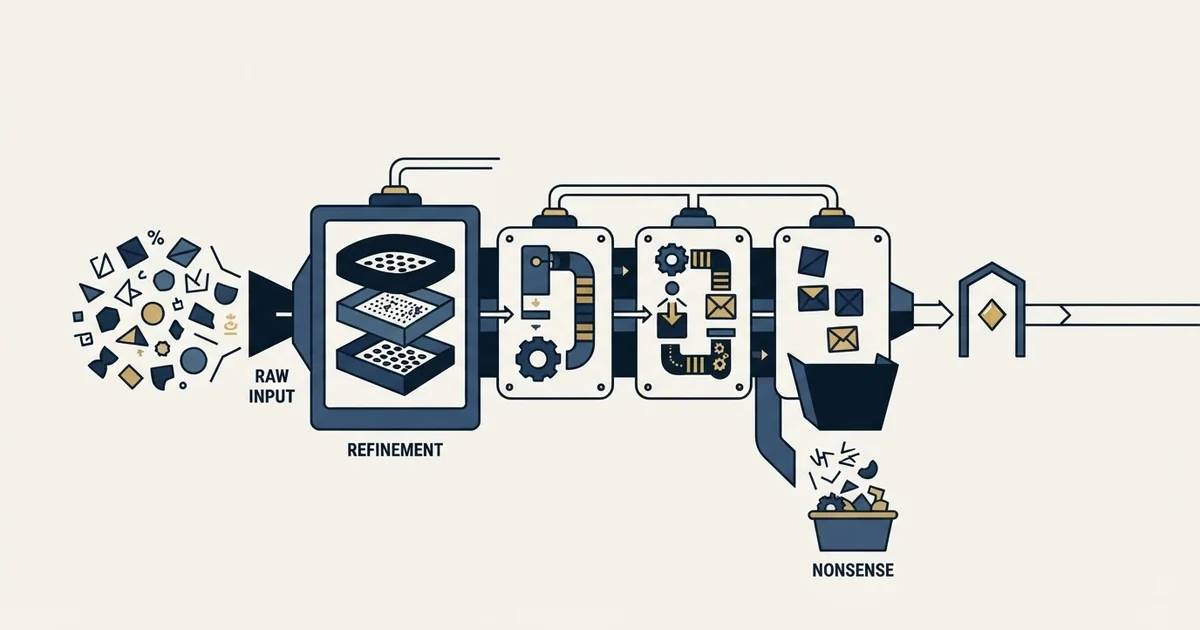
Cold outreach automation is seven separate decisions rather than one purchase. Verification, suppression, infrastructure, list retrieval, sending and reply routing automate cleanly because each has one correct output. Segment definition and the premise of the message do not, because their output is a judgement nobody would read.
Key takeaways
- Automate the stages whose output has exactly one correct answer, and keep a person on any stage that decides who hears from you and why.
- Google's Workspace help publishes a daily sending limit of 2,000 messages per user account and 500 for trial accounts, which is why volume forces a multi-mailbox setup long before those ceilings.
- Automating research is different from automating the sentence: retrieval is mechanical, and deciding the signal is a reason to write is the whole message.
- Switching every stage on in one week makes a change in the numbers unattributable, so enable them in an order where each output can be inspected first.
Reviewed and updated October 1, 2026
A team buys a sending platform on Monday, imports a list on Tuesday, and by Friday has automated the entire motion end to end. Six weeks later the reply rate has collapsed, two domains are landing in junk, and nobody can say which of the eleven automated steps caused it, because all eleven were switched on in the same week.
Cold outreach automation is sold as one purchase. It is seven separate decisions, and they do not all have the same answer.
Automated cold email outreach is the commonest form of it, and the same seven decisions apply whether the platform sends email alone or adds other channels.
The useful question is not which platform automates the most. It is which stages of your motion have exactly one correct output, which ones have an output that a person has to look at before it leaves the building, and which one gets worse every time it is automated. Sorting the stages that way costs an afternoon and it survives every tool change afterwards.
Outbound automation is the wider label the same seven stages get sold under, and the sort below applies to a phone or a social step for the same reason it applies to a sending one, which is whether the step has exactly one correct output.
The seven stages, and what each one produces
Write out what actually happens between deciding to run a campaign and a reply arriving, and you get seven stages rather than one workflow.
Segment definition produces a written statement of who is on the list and why. List building produces rows. Verification produces a smaller set of rows with a deliverability judgement attached. Infrastructure produces mailboxes that are authenticated, warmed and under a sending cap. Message construction produces the copy. Sending produces delivery attempts distributed across those mailboxes on a schedule. Reply handling produces a classified inbound message and an owner.
Each stage has an output you can inspect. That is the property that decides whether automating it is safe, because an automated stage whose output nobody ever looks at is not automation, it is an unattended process with a budget.
- Yes: List building against written filters, because the filters are the judgement and the rows are mechanical
- Yes: Verification and suppression, because the correct answer is the same every time and a human adds nothing
- Yes: Infrastructure: authentication, warmup, per-mailbox caps and rotation, because these are configuration
- Yes: Sending and scheduling, because distributing volume across mailboxes is arithmetic nobody should do by hand
- No: Segment definition, which decides who hears from you and cannot be delegated to a filter you did not write
- No: The premise of the message, which is the one thing a reader is actually evaluating
- No: Deciding what a reply means and what happens next, because the cost of getting it wrong lands on a person
The stages where automation is straightforwardly correct
Four of the seven should be automated as completely as your tooling allows, and a team doing any of them by hand is paying a person to be a worse computer.
Verification is the clearest case. Given an address, the question of whether it resolves, whether the domain has mail exchange records, and whether it has already been suppressed has one answer, and that answer does not improve because a human checked it. The same goes for suppression itself, which has to be global rather than per campaign: one record per person across every campaign you will ever run, keyed on the address.
Infrastructure is the second. Authentication records, warmup, per-mailbox daily caps and rotation across mailboxes are configuration, and configuration held in somebody's head is configuration that drifts.
The forcing function here is mailbox count, and it is worth grounding in the provider's own published numbers rather than in folklore. Google's Workspace administrator help on Gmail sending limits, fetched on 2 September 2026, publishes a daily sending limit per user account of 2,000 messages, 500 for trial accounts, with 3,000 external recipients per day and 10,000 total recipients per day. Those are the ceilings at which Google stops you, and a responsible cold sender runs an order of magnitude below them. Our own planning figure is roughly 20 sends per mailbox per day, which means a programme contacting a few hundred people a day is a programme running across a dozen or more mailboxes, and the moment there is more than one mailbox every scheduling question becomes a distributed state problem instead of a spreadsheet. That is the point at which building it yourself stops being cheaper, and cold email outreach platforms works through where the build case actually flips.
List building is the third, with one condition attached: automate the retrieval, never the criteria. Pulling rows on demand against written filters keeps a list fresh, because a static export starts decaying the moment it lands. Writing the filters is the stage above it and stays human.
Retrieval on LinkedIn meets a ceiling nobody can see, since what counts against the commercial use limit is published while the number itself is not.
Sending and scheduling is the fourth, and nobody argues about it.
The stages where automation produces confident nonsense
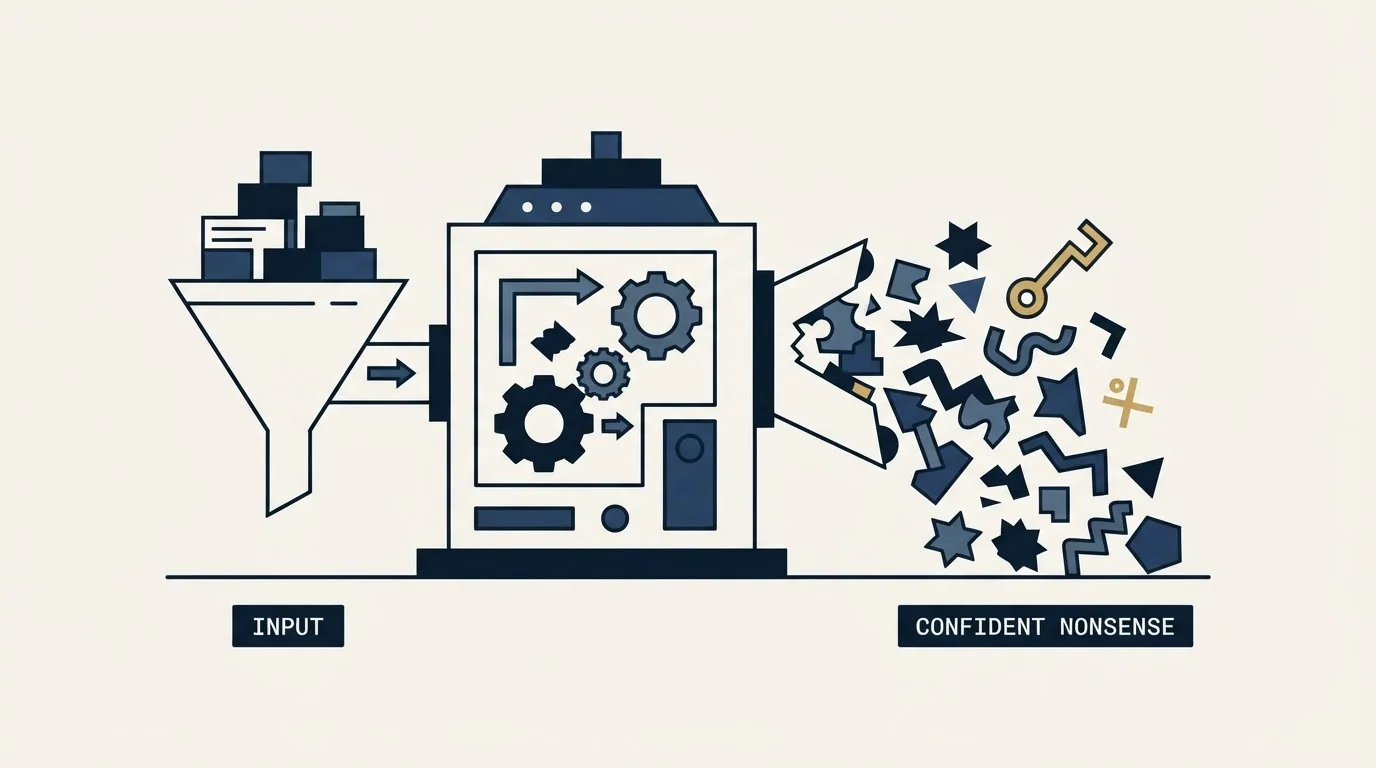
Segment definition and message construction are the two stages that decide whether a campaign was worth running, and both of them fail quietly when handed to software.
A segment is not a filter. A filter returns companies matching attributes you specified. A segment is a group about which one sentence is true, which is checkable by somebody who was not involved, and which is small enough to enumerate. Generating a filter automatically is fine. Generating the sentence automatically means the campaign now rests on a premise nobody has read.
The failure mode is specific. Automation applied to a wrong segment does not produce an error. It produces the wrong campaign, on schedule, to more people, and the only visible symptom is a reply rate that reads as a copy problem. Teams then rewrite the message, which cannot repair a list. The two decisions hiding inside that argument are separated properly in quality or quantity in outbound.
Message construction has the same shape one level down. Automated personalisation that inserts a company name and a scraped sentence produces a message that is technically about the recipient and reads as a template with a slot filled. The reader is evaluating whether the sender understood something specific about their situation, and a variable substitution is not that.
The honest version of automated personalisation is automating the RESEARCH and keeping the writing. Pulling the funding event, the job posting or the product change is retrieval, and retrieval is mechanical. Deciding that the funding event is the reason this company would care, this quarter, is the premise, and it is the whole message.
- Retrieve the signal: a hire, a posting, a filing, a launch
- Attach it to the record with a date
- A person decides whether it is a reason to write
- One premise is written once and covers the segment
- The reader gets a message about something that happened
- Retrieve the signal and generate prose around it
- Nobody reads the output before it sends
- Every message is individually plausible and collectively empty
- The premise is whatever the model inferred
- The reader recognises the shape within one line
The stage where the standard answer is the one we refuse
Every cold outreach automation product leads with sequencing: message one, wait three days, message two, wait five days, message three, stop on reply. It is the feature the category is built around, and it is what the product pages lead with.
We do not run it. Our documented practice is one message per campaign, with no bumps and no thread replies.
The reasoning is mechanical rather than moral. A follow-up is delivered underneath a message the recipient has already seen and chosen not to answer, which means it is aimed at the population most likely to mark it as junk, and the reputation cost of that lands on the sending domain across every campaign running on it. The full argument, and what the trade costs us, is set out in why we stopped using follow-ups.
The relevant point for an automation decision is what removing that feature does to the rest of the stack. A programme allowed five attempts per person can afford a loosely built list and a weak first message, because more attempts are coming. Removing them moves the entire burden onto segment definition and onto the one message, which are exactly the two stages automation handles worst. That is not a coincidence. It is why the sequencing feature exists.
Reply handling sits alongside sequencing in this stage, and it is where automation earns its place again, partly. Classifying inbound mail is genuinely hard, because a meaningful share of what comes back is not a human reply: out of office responses, delivery delay notices, ticketing acknowledgements and mailbox full warnings. Automating the detection and the routing is correct. Automating the response is not, because a positive reply reaching a person within the hour is one of the few levers that reliably decides whether a conversation becomes a meeting.
The order to switch things on
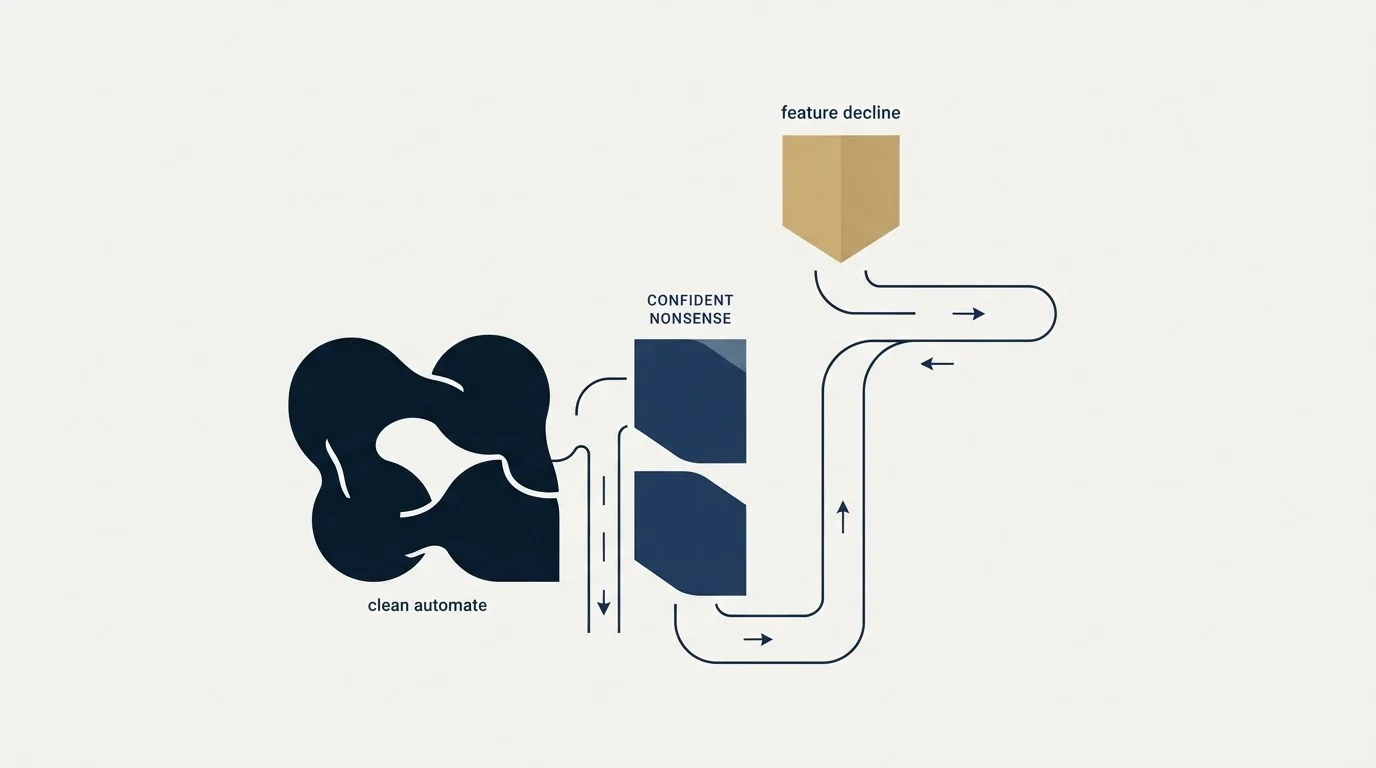
The failure at the top of this page came from switching everything on in one week. The repair is boring and it works.
- Step 1Write the segment by hand
One sentence true of every company on the list, checkable by somebody else in under a minute
- Step 2Automate verification and suppression
Global suppression keyed on the address, before any sending automation exists
- Step 3Automate the infrastructure
Authentication, warmup, per-mailbox caps and rotation, held in configuration rather than in memory
- Step 4Automate retrieval, not the sentence
Signals land on the record with a date; the premise is still written by a person
- Step 5Automate sending and reply routing
Scheduling across mailboxes and classification of inbound, with a named owner for anything positive
Each step produces something inspectable before the next one is enabled, which means a change in the numbers has one plausible cause rather than eleven. That is the entire value of the ordering. The stack that results is described category by category in the cold email tool stack, and the layer view of which jobs software has genuinely absorbed is in the five things SDRs get hired for.
What automation cannot reach
Worth stating plainly, because it is the assumption underneath most disappointment with the category.
Automation makes a working motion cheaper and faster. It does not make a broken one work. If the segment is wrong, automation disqualifies the right accounts at scale. If the premise is unclear, automation delivers an unclear premise to more people. The system amplifies the judgement you put into it in both directions, and the direction is decided before any tool is configured.
There is also an operating cost nobody quotes. Seven automated stages means several vendors, several sets of credentials, and something joining them together. That connective work does not disappear when the SDR does. It moves to whoever owns the system, and it is real work with a real weekly cost.
The short version
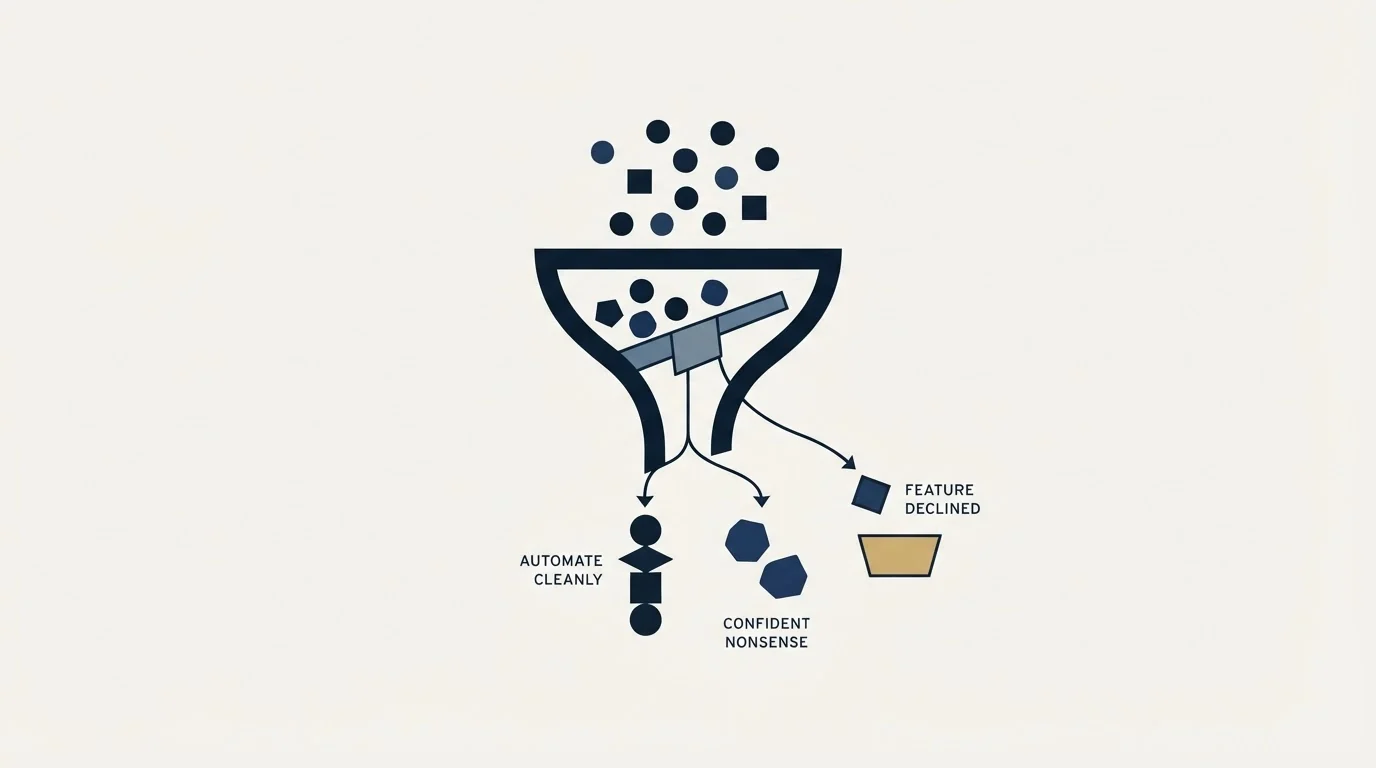
Cold outreach automation is seven decisions rather than one. Verification, suppression, infrastructure, list retrieval, sending and reply routing automate cleanly, because each has one correct output and no judgement inside it. Segment definition and the premise of the message do not, because their output is a judgement and an unread judgement is worse than a slow one.
The sequencing feature that the category is built around is the one we decline, and declining it shifts the whole burden onto the two stages automation handles worst. Switch things on in an order that keeps each change attributable, and keep a person on the output of anything that decides who hears from you and why.
If you would rather see a segment written by hand and a single message built against your own market before deciding what to automate, see what a first campaign looks like.
Frequently asked questions.
Frequently asked questions- What parts of cold outreach can actually be automated?
- Verification, global suppression, sending infrastructure, list retrieval against written filters, sending and scheduling, and the detection and routing of replies. Each has one correct output that a human review would not improve. What stays human is deciding who belongs on the list, writing the premise of the message, and deciding what a reply means and who owns it next.
- Does automating personalisation work?
- Automating the research works and automating the sentence does not. Pulling a funding event, a job posting or a product change is retrieval, and retrieval is mechanical. Generating prose around that signal without anybody reading it produces messages that are individually plausible and collectively empty, and a reader recognises the shape inside one line.
- Why not automate follow-up sequences?
- A follow-up lands underneath a message the recipient already saw and chose not to answer, so it reaches the population most likely to mark it as junk, and the reputation cost of that lands on the sending domain across every campaign running on it. We send one message per campaign with no bumps.
- Where should a team start?
- Write the segment by hand first, as one sentence true of every company on the list. Then automate verification and global suppression, then the infrastructure, then signal retrieval, then sending and reply routing. Enabling them in that order keeps every change attributable, so a drop in the numbers has one plausible cause rather than eleven.
About the author.

B2B cold email experts helping companies generate qualified leads through done-for-you outreach campaigns.
RevenueFlow Team
Explore more.
Ready to scale your outreach?
We build GTM engines that book real meetings. See the receipts.
Related articles.
Pipedrive Sequences: A 250-Item Cap and What the Tool Is For
Ten steps, 250 items and a per-sequence sending authorisation. Pipedrive's caps describe the audience the feature was designed for more clearly than its feature list.
LinkedIn Search Limits: What Counts and What Resets
LinkedIn publishes the rules governing its commercial use limit and not the number. What its own help pages say counts, what resets, and how to operate.
CRM Setup: The Objects, Stages and Write-Back Loop
A vendor neutral CRM setup for an outbound team: the object model, stage exit criteria, the required field set, ownership rules and the campaign write-back loop.
LinkedIn Boolean Search: What LinkedIn Actually Supports
LinkedIn publishes which Boolean operators work, the order they evaluate in, and a 15 operator cap on Sales Navigator. Everything else fails silently.
The Pipedrive API: A Daily Token Budget
Pipedrive prices API calls rather than counting them. The published token budget, the cost of each endpoint type, and the two ceilings a sync has to respect.
HubSpot Power Dialers: Pooled Minutes Are the Real Cap
HubSpot's calling minutes are pooled across the whole account rather than granted per seat. That changes the arithmetic of a calling programme more than the dialer does.