Salesfinity: A Seat That Cannot Become a Team
Salesfinity publishes $299 per user per month, which is rare in this category. The catch is that the self-serve seat is a single workspace with no team layer.
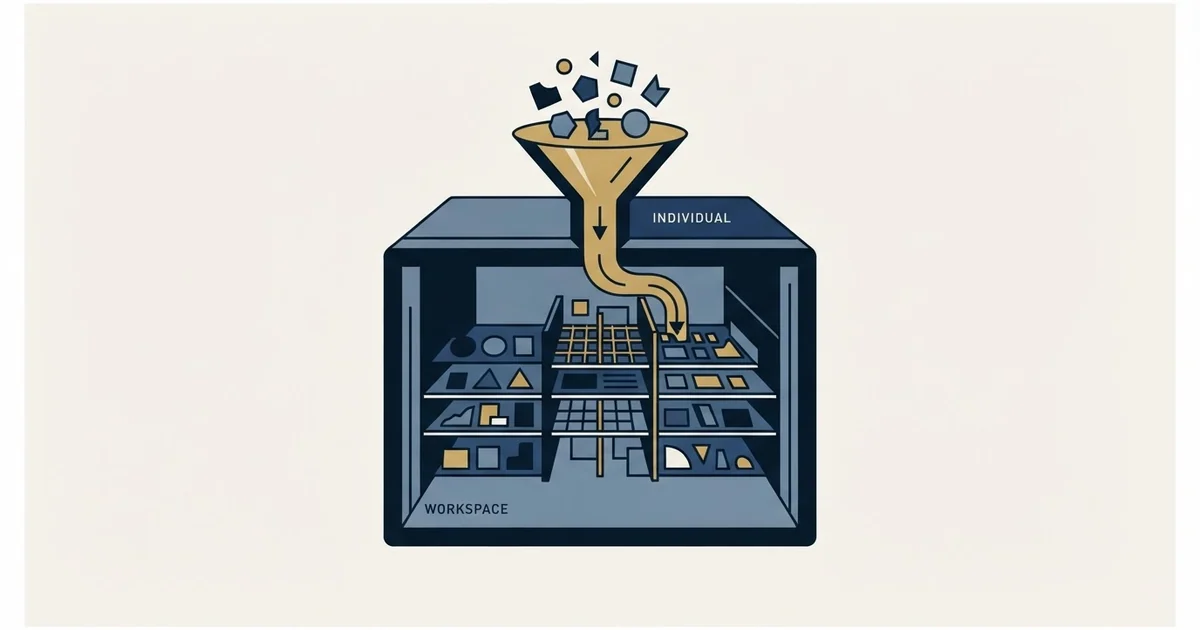
Salesfinity is a parallel dialer whose real emphasis is the phone-number enrichment and caller ID hygiene that runs before the dial. Its Gold plan publishes $299 per user per month self-serve, with Enterprise custom and billed annually. Gold seats are individual workspaces, so a team purchase means Enterprise.
Key takeaways
- Salesfinity publishes a price, $299 per user per month on the self-serve Gold plan, where most competitors in this category publish none.
- Gold seats are individual workspaces, so team administration and user invites only exist on the custom-priced Enterprise plan.
- Both plans cap parallel dialing at five lines, which is inside the range the category's own operators recommend.
- The differentiator sits upstream of the dial: waterfall phone enrichment across seven or more data providers, plus automated number rotation and carrier registration.
Reviewed and updated October 1, 2026
Salesfinity publishes a price, which in this category is unusual enough to be a feature. Its pricing page, fetched on 29 August 2026, gives Gold at "$299 / user / month" and describes it as "Self-serve. Start dialing today." with the note "Credit card, no sales call." Enterprise on that page is Custom, "billed annually".
No price appears on the Orum or Koncert pricing pages fetched for this comparison, and the ConnectAndSell page sets out a model rather than a number. A buyer trying to build a shortlist by reading rather than by booking four discovery calls can price exactly one of them, and that alone changes how the evaluation runs.
What that model buys is unusual for the category, since ConnectAndSell uses human agents brokering past exec admins to connect a rep directly to the named target.
That published number also makes a second fact legible, and it is the one that decides whether the self-serve route is available to you at all.
The seat that cannot become a team
The Gold plan carries a sentence that is easy to read past. The pricing page states that "Gold seats are individual workspaces", with team admin and user invites living in Enterprise.
So that $299 tier on the pricing page is a single-rep product. Two reps on Gold are two workspaces, not a team, with no shared administration, no permissions, no leaderboard and no manager view. The moment you want a floor rather than a seat, you are on the Enterprise plan, which is custom priced and billed annually.
That is the same structural constraint Orum sets as a nine-seat minimum, arriving from the opposite direction. Orum puts a floor larger than a small team. Salesfinity puts a ceiling on what the priced tier can be, which is one person. Either way the smallest team purchase is a conversation, and the figure on the page is the individual's price rather than the organisation's.
Worth establishing before a trial, because a pilot run on Gold seats is not a pilot of the product a manager would eventually buy.
- AI parallel dialer, up to 5 lines
- 10 rotating caller IDs with SmartGuard and SmartRotate
- SmartEnrich waterfall enrichment
- Boss Mode number scoring, 500 credits a month
- API and MCP access
- Individual workspaces, no team administration
- Everything in Gold
- Team management, permissions, multi-team
- AI coaching, objection training, battlecards
- Virtual salesfloor and leaderboard
- Boss Mode, 1,000 credits a month
- Dedicated customer success manager and support SLAs
- Unlimited dials, carrying an asterisk on the page
- Up to 5 parallel lines
- Native CRM sync
The line ceiling is five, and that is the category's real range
Both plans cap parallel dialing at five lines. Orum's platform page, fetched the same day, advertises up to ten lines simultaneously.
Read as a spec that is a loss. Read against the arithmetic it is closer to a position. The line count that produces conversations follows from your connect rate rather than from what the plan permits, and setting it far above that ratio produces several people answering at once, of whom the rep can speak to exactly one. Our piece on why the line count is the whole decision works that through and quotes the setting one vendor's own support documentation recommends, which sits inside five.
The uncomfortable corollary is worth restating because it inverts how the category is sold: the teams that benefit most from ten lines are the ones dialling the worst data. A five-line ceiling costs you nothing if your numbers are good, and if your numbers are bad the ceiling is not your problem.
Which is a useful way into what this vendor is actually selling.
The product is the data in front of the dial
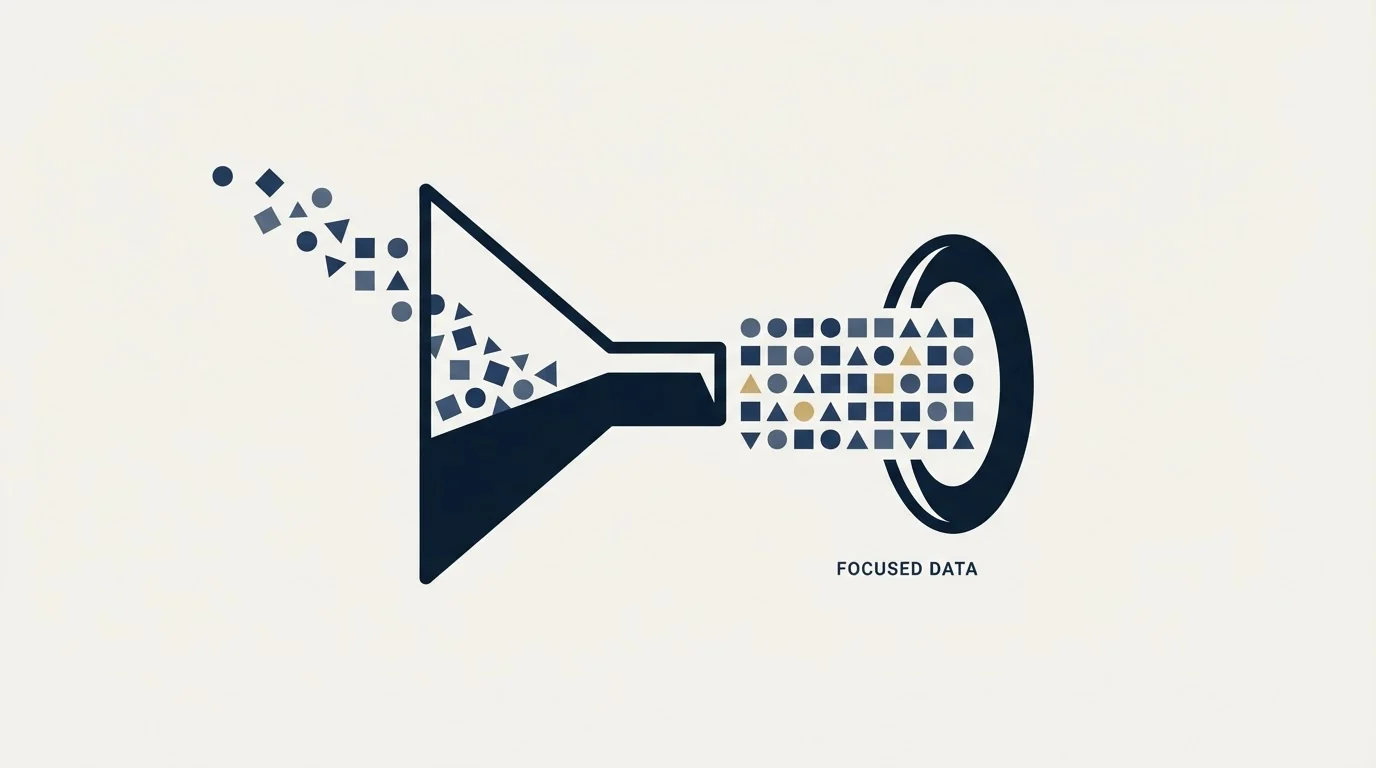
Most dialers sell throughput. Salesfinity's own homepage puts the emphasis one step upstream, offering "Waterfall phone enrichment across 7+ data providers", buying signals across hiring, funding and growth surfaced by what it calls Nurture AI, and "Deep account research and org charts, ready on demand". The pricing page carries the same thing as a named plan feature, "SmartEnrich waterfall enrichment", plus a number scoring product it calls Boss Mode metered in credits per month.
That is a different pitch from a faster dial, and it is the right one. A parallel dialer multiplies attempts against whatever list it is given, so if a third of the mobile numbers belong to people who left two years ago the result is reaching the wrong person faster, on more lines, while the numbers doing the dialling collect spam labels. Fixing the number before the dial attacks the constraint rather than the symptom.
The mechanism is the same waterfall logic used for email addresses, where providers are queried in sequence until one returns a usable result, and the economics work the same way. Our note on waterfall enrichment covers what the pattern does and does not guarantee. The short version is that a waterfall improves coverage and says nothing about whether the person it found is the right person, which stays a targeting question rather than a data one.
Number reputation gets the same treatment. The parallel dialer page describes SmartRotate as rotating numbers ahead of the spam filters and SmartGuard as covering carrier registration and STIR and SHAKEN attestation, and the plan includes ten rotating caller IDs. Caller ID allowances are a rate limit on your defence against spam labelling rather than a cosmetic count, so ten per user is a number to check against your intended rotation rate before signing.
- Yes: Decide whether you are buying a seat or a floor, since only the seat is self-serve
- Yes: Ask what the asterisk on unlimited dials refers to
- Yes: Check the ten caller IDs per user against your intended rotation rate
- Yes: Test the enrichment against numbers you already know are current
- Yes: Confirm what your sequencer records when a parallel call is cancelled
- No: Assume a five-line ceiling is the binding constraint on conversations
The second item is not pedantry. The pricing page states that every plan includes unlimited dials and attaches an asterisk to the word unlimited, and an asterisk on an unlimited claim always resolves to a fair use position somewhere. Better to read it before the quarter you actually need it.
Reading the operating claims
This vendor self-reports more operational detail than its peers, and the detail is unusually specific: a 99.7 percent uptime figure across millions of dials, a net promoter score of 77, a median first support response of two minutes and seventeen seconds with a median full resolution of thirty two minutes, 386 production deployments in a year, and a customer base described as 400 or more fast-growing B2B companies. Its parallel dialer page adds a 400 millisecond median connection speed.
Treat all of it as self-reported and unaudited, because that is what it is. What makes it more interesting than the usual outcome claims is that these are the kinds of numbers a customer could contradict from their own experience within a fortnight, which is a different sort of claim from a productivity multiple. A vendor that publishes a median support resolution time has made itself checkable, and the appropriate response is to check it during the trial rather than to discount it.
The compliance claims sit in the same bucket and are easier to verify: the site names SOC 2 Type II, ISO 27001 and GDPR, with continuous monitoring by a named compliance vendor. Ask for the reports rather than the badges, which is standard practice and not specific to this supplier.
Pricing and features verified as of August 2026. Verify current terms with the vendor before relying on them.
Where it sits in the field
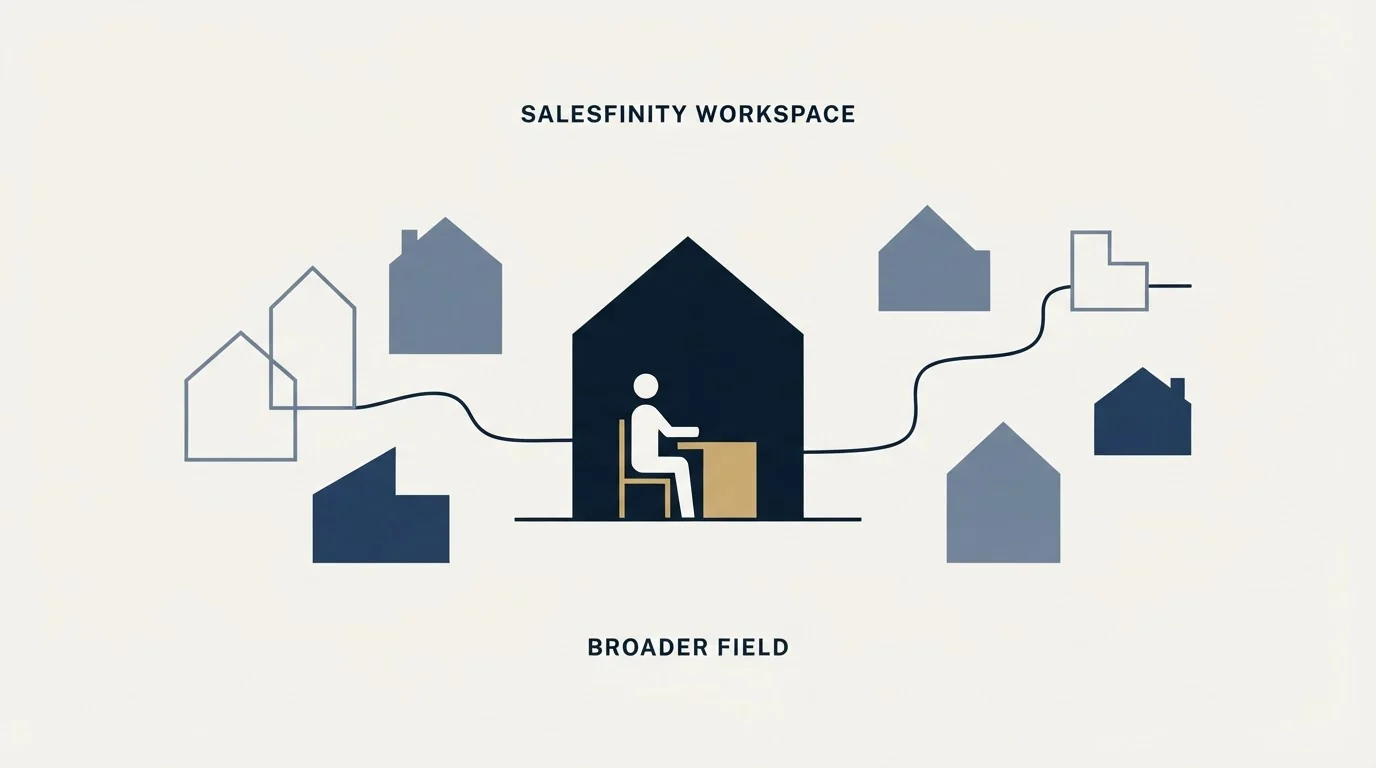
The dialer market divides by how much of the surrounding problem the vendor wants to own.
Orum is deliberately single purpose and assumes a sequencer underneath it. Nooks arrives attached to prioritisation, research and a coaching floor, and its AI Prospector layer pushes further into list building. Koncert sells several dialing modes including an agent-assisted one and wraps a sequencer, a phone product and enrichment around them.
Salesfinity sits closest to Nooks: a dialer with a data and research layer in front of it and a coaching layer above it, sold to SDR teams rather than to whole revenue organisations. Its self-serve price is the clearest advantage over all of them for an individual rep or a small pod, and the individual-workspace limitation is why that advantage stops at the point a manager gets involved.
Where we differ
RevenueFlow runs cold email and LinkedIn rather than phone, so nothing above comes from operating Salesfinity. Every figure and feature name here rests on salesfinity.ai's own pricing, home and AI parallel dialer pages as fetched on 29 August 2026, with the competing line ceiling from Orum's own platform page fetched the same day.
The point that transfers across channels is the one this vendor's own positioning makes. Volume instruments are downstream of the list, and the quality of the list plus the reason for the contact decide the quarter more reliably than the throughput of the tool does. That is why we send one message per campaign, with no bumps and no thread replies.
If the written half is the gap, we will build the first campaign and you can size the calling investment against a known reply volume.
The short version

Salesfinity is a parallel dialer whose real pitch is the enrichment and number hygiene in front of the dial, and it is one of the few vendors in this category to put a figure on the page at all: $299 per user per month on the self-serve Gold plan, with Enterprise custom and billed annually.
Two constraints decide fit before any feature does. Gold seats are individual workspaces on that page, so the priced tier cannot become a team without moving to Enterprise. And parallel dialing caps at five lines, which is a real ceiling and is also inside the range the category's own operators recommend, so it binds far less often than a spec comparison suggests.
Read the self-reported operating numbers as claims worth testing rather than as benchmarks, and test the enrichment against numbers whose current state you already know.
Sources: salesfinity.ai's pricing, home and AI parallel dialer pages for plan names, prices, feature descriptions and operating claims, and orum.com/platform/dialer for the competing line ceiling, all fetched 29 August 2026. Packaging changes, so verify current terms with the vendor.
Sources: Salesfinity pricing, Salesfinity home, Salesfinity AI parallel dialer, Orum dialer platform
Frequently asked questions.
Frequently asked questions- How much does Salesfinity cost?
- Its pricing page publishes Gold at $299 per user per month, available self-serve with a credit card and no sales call. Enterprise is custom and billed annually. Both plans state unlimited dials, with an asterisk attached to the word unlimited on the page, and both cap parallel dialing at five lines.
- Can a team buy the self-serve plan?
- Not as a team. The pricing page states that Gold seats are individual workspaces and that team administration and user invites live on Enterprise. Two reps on Gold are two separate workspaces with no shared permissions, leaderboard or manager view, so a pilot run on Gold is not a pilot of what a manager would eventually buy.
- Is a five-line limit a problem?
- Rarely. The useful line count follows from your connect rate, because setting it far above that ratio produces several people answering at once when the rep can only speak to one. The teams that benefit most from ten lines are usually the ones dialling the worst data, which is a data problem rather than a throughput one.
- What does the enrichment layer actually do?
- The vendor describes waterfall phone enrichment across seven or more data providers, buying signals surfaced from hiring, funding and growth, and account research available on demand. A waterfall queries providers in sequence until one returns a usable number, which improves coverage and says nothing about whether the person found is the right buyer.
About the author.

B2B cold email experts helping companies generate qualified leads through done-for-you outreach campaigns.
RevenueFlow Team
Explore more.
Ready to scale your outreach?
We build GTM engines that book real meetings. See the receipts.
Related articles.
ConnectAndSell: What You Get for the Seat, and the Filings
ConnectAndSell sells conversations rather than dials, using human agents to get past gatekeepers. Its audited accounts and its sale add a second diligence question.
Sybill: The Credit Meter Is the Number to Model
Sybill meters by credits per week rather than by seat, and its pricing page carries three different figures for the same two plans. Both facts change the model.
Circleback: The Automations Are the Product, Not the Notes
Circleback publishes real prices and an unusually wide automation surface. What the notes contain matters less than where they land and who maintains the rules.
Pipedrive Pricing: Half the Numbers Online Are Retired
Pipedrive renamed every plan in 2025, so most pricing write-ups quote a retired rate card. The five inputs that actually decide your bill, from the vendor's own docs.
Pipedrive vs Salesmate: Where Outreach Sits in the Price
Both run a good deal board. The purchase turns on where each vendor puts sequences, quotes and a team inbox in its ladder, and how many line items you end up holding.
Apollo and Clay Integration: What Connects, Who Meters What
Clay's docs list one Apollo source and eleven actions. How the account connects, which way each action moves data, and which vendor bills each step.