LinkedIn Voice Notes: 60 Seconds, 1st Degree Only
LinkedIn publishes three limits on voice messaging and they decide the play before the script does. What they rule out, and the one slot that survives.
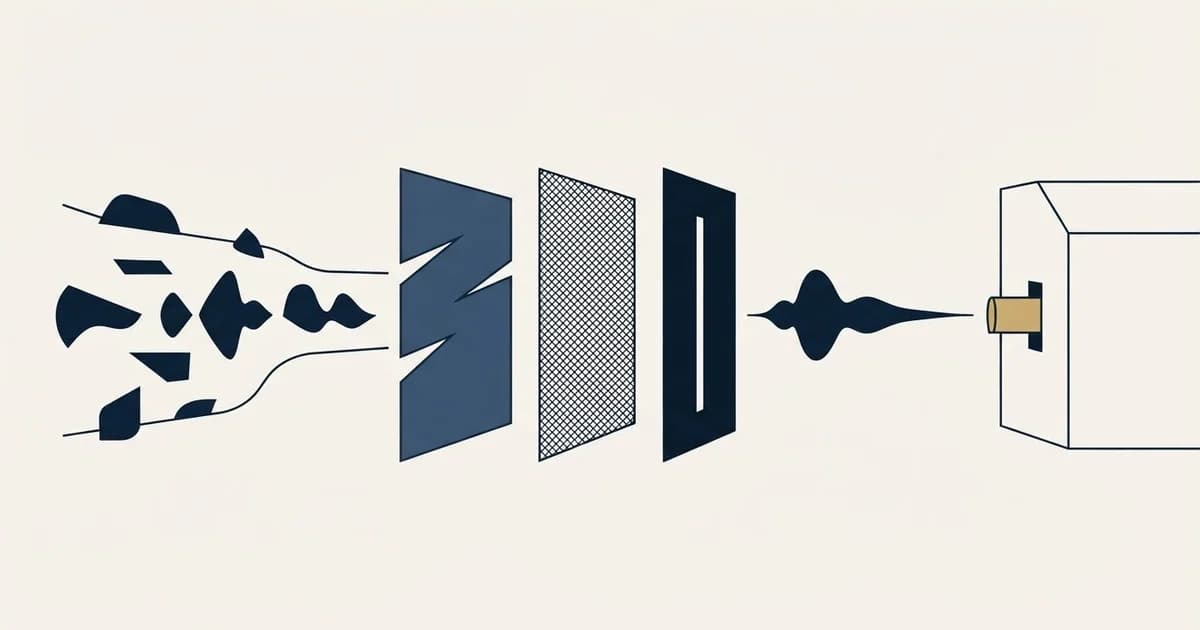
LinkedIn's help page states that voice messages go to 1st-degree connections or group chats, can run up to one minute, and are available only in the mobile app. Those three limits make a voice note a post-acceptance first message rather than a prospecting tool, so connection acceptance rate is the ceiling on the play rather than recording time.
Key takeaways
- A voice note cannot open a conversation with a stranger, so the acceptance rate on connection requests sets the ceiling on this channel and switching format does not move it.
- One minute is roughly a hundred and fifty words, which leaves room for one idea and one ask and nothing the listener has to write down.
- The common recommendation to send a voice note to somebody who ignored a text message puts a second message in the same thread under the first, which reads as a bump whatever the campaign structure is called.
- No reply-rate figure appears on this page because none of the pages promoting the tactic names a study, a population or a period behind theirs.
Reviewed and updated September 2, 2026
An SDR reads that voice messages get noticed on LinkedIn, blocks out a Monday morning, and opens the recording control on a desktop browser. It is not there. They find it on their phone an hour later, open a target account, and discover the microphone icon is missing on that conversation too, because the person is a second-degree connection they have never spoken to.
Both of those are documented behaviour rather than bugs, and between them they decide almost everything about whether this channel is worth building a play around. LinkedIn publishes three constraints on its own help page and they are the whole brief.
What LinkedIn's own page says
LinkedIn's help article on voice messaging states that you can send them "to communicate quickly and naturally with your 1st-degree connections or in group chats". It states that "Voice messages can be up to one minute long." And under a heading it labels as important to know, it states that "This feature is only available on the LinkedIn mobile app." The page carried a relative last-updated marker of one year when it was fetched on 2 September 2026.
Presence carries the same first-degree boundary, since the green dot shows only for connections, which leaves a cold target list with no dots to watch.
Three sentences, three constraints, and each one removes a different play that vendors and blog posts in this space recommend.
- Voice messages go to 1st-degree connections or group chats
- A message can run up to one minute
- The feature is available only in the mobile app
- The page is a help article rather than a product spec
- Sending a voice note as the first touch to somebody who has not accepted a request
- A long narrative pitch that needs more than sixty seconds to make sense
- Recording forty of them at a desk between other browser work
- Any workflow that assumes desktop parity with text messaging
The first constraint is the one that reorders the whole channel. A voice note cannot open a conversation with a stranger, so it is never a prospecting tool in the way a connection request or a cold email is. It is something that becomes available after the connection is accepted, which means the acceptance rate on your requests, not the recording, is the number that governs how many voice notes you can send at all. The weekly invitation limit is therefore the real ceiling on this play, and it does not move because you switched formats.
The response-rate claims in this category are not checkable
The pages ranking for this phrase are close to unanimous that voice notes lift reply rates, though the five of them read for this article on 2 September 2026 put no checkable figure on the lift. None of the ones read for this piece names the study, the population, the sample size or the period behind the figure, and several attribute it to nobody at all.
That is worth saying plainly rather than repeating with a hedge. A reply-rate multiple measured on somebody else's list, in a market you cannot see, using a definition of a reply you cannot check, tells you about their list rather than about yours. No figure appears on this page for that reason, and the honest version of the case for voice notes does not need one.
The case that survives is structural. The format is scarce because it is inconvenient to produce, it cannot be templated in the way a text message can, and it forces the sender to say something specific because sixty seconds of generic audio is more obviously generic than sixty seconds of generic text. Those three properties are true whatever anybody's reply rate is, and all three erode the moment the format stops being scarce.
The bump problem, which is where most advice on this goes wrong

A recurring recommendation in this category is to send a voice note to somebody who did not answer a text message. That is the specific thing we do not do, and the reason is not squeamishness.
On LinkedIn a second message physically lands in the same thread, directly underneath the one the person already read and chose not to answer. The recipient evaluates it in the context of that decision, and no campaign structure changes where the message appears. Switching the format to audio makes it more conspicuous rather than less, which is the opposite of what the tactic is trying to achieve. Our position on no-reply retargets on this channel is absolute for that reason, and the fuller argument, including what the policy costs us, is in why we stopped using follow-ups.
That leaves one honest slot for a voice note, and it is a narrow one. The connection was accepted, the person has not been written to yet, and the note is the first message in that thread rather than the second.
- Step 1Connection request sent
With or without a note, against a list built on a stated reason to write. This is where the volume ceiling lives.
- Step 2Request accepted
Acceptance is what makes the format available at all, and acceptance rate is a list-quality number rather than a copy number.
- Step 3Decide the format once
Text or voice, chosen before anything is sent, on whether the premise is easier to say than to write.
- Step 4Send one message
Whichever format was chosen. There is no second attempt in the other format, because it lands in the same thread.
What fits in sixty seconds
A minute of speech is roughly a hundred and thirty to a hundred and sixty words at an unhurried pace, which is shorter than it sounds and shorter than most people's first take. The practical consequence is that the recording has room for one idea and one ask, and the structure that survives is close to the structure of a good written first touch.
Name yourself and the company in the first five seconds, because a voice message from an unidentified voice is a message the listener spends its opening seconds trying to place.
State the reason you are writing to this person specifically, in one sentence, and make it a fact about their company rather than a fact about yours. This is where the format earns its keep, because a specific observation is easier to say out loud convincingly than to write without sounding assembled.
Make one ask, and make it small enough to answer in a sentence. A question that can be answered with a yes, a no or a redirect is answerable by voice or by text, which matters because the reply will almost always come back as text.
Stop early. A recording that runs to the limit reads as somebody who did not know what they wanted to say, and the limit is a ceiling rather than a target.
Two things not to do. Do not read a script, because the only advantage the format has over text is that it does not sound written. And do not use it to deliver information the listener needs to keep, such as a date, a figure or a link, because audio is unsearchable, unforwardable and impossible to skim. Anything the reader has to act on later belongs in text.
Automation, and what LinkedIn says about it

Several products advertise sending voice messages in bulk. LinkedIn's own help page on prohibited software and extensions is unambiguous about the category, stating that "we don't permit the use of any third party software" including crawlers, bots, browser plug-ins and extensions that scrape, modify the appearance of, or automate activity on its website, and listing among the prohibited acts to "Use bots or other unauthorized automated methods to access the Services, add or download contacts, send or redirect messages, create, comment on, like, share, or re-share posts, or otherwise drive inauthentic engagement". The same page adds that a member using such tools is in violation of the User Agreement and that "they risk having their accounts restricted or shut down". That page carried a relative last-updated marker of two years when it was fetched on 2 September 2026.
The published position and the market's behaviour have been in tension for years, and what that actually means operationally is a question about detection risk and operating rates rather than about approval, because approval is not on offer. What a restriction looks like when it arrives, and which behaviours precede it, is in LinkedIn account restricted.
The narrower point for this format is that a mobile-only feature produced at volume is not being produced by a person holding a phone, and the same LinkedIn page lists among the prohibited acts the use of "unauthorized automated methods to access the Services, add or download contacts, send or redirect messages". A team deciding whether the channel is worth running should weigh that against a play whose ceiling is already set by acceptance rate rather than by recording time.
- Yes: The person is a 1st-degree connection, so the feature is available at all
- Yes: This is the first message in the thread rather than a follow-up to one that went unanswered
- Yes: The reason for writing is a fact about their company that you can say out loud in one sentence
- Yes: The ask can be answered in a sentence, by voice or by text
- Yes: Nothing in the message is a date, a figure or a link the listener has to keep
- No: It is going out because a text message was ignored
- No: It is being produced at a volume no person could record by hand
- No: It runs the full minute because the limit was treated as a target
Where it sits against the rest of the channel
The comparison teams reach for is voice against text, and the more useful frame is what each format costs to produce at the volume you actually run. A text message costs seconds and can be reviewed before it goes. A voice message costs a minute of a person's attention plus whatever they spend re-recording it, cannot be reviewed by anybody else without listening to it, and cannot be corrected after sending in the way a follow-up sentence corrects a written one.
That production cost is the reason the format stays scarce, and scarcity is the whole of its current advantage. It is also the reason it does not scale, which is a feature rather than a defect for a team whose ceiling is acceptance rate anyway.
The phone-channel version of the same idea, a recorded message dropped into a voicemail box, is a genuinely different product with a different regulator attached, and it is covered in voicemail drop. The wider question of how LinkedIn and email divide the work in one programme is in multichannel lead generation.
The short version

LinkedIn publishes three constraints on voice messaging and they decide the play. Messages go to 1st-degree connections or group chats, they can run up to one minute, and the feature exists only in the mobile app. Together those make a voice note a post-acceptance message rather than a prospecting tool, so the acceptance rate on connection requests is the ceiling, not recording time.
Nobody ranking for this topic grounds their reply-rate multiples in a named study, so no figure appears here. The structural case is enough: the format is scarce, it resists templating, and it forces specificity. All three properties disappear as it becomes common.
The recommendation to send a voice note to somebody who ignored a text is the one to reject. On this platform the second message lands in the same thread under the first, so changing format makes it more conspicuous as a bump rather than less. Choose the format once, before anything is sent, and send one message.
Sixty seconds is about a hundred and fifty words. One idea, one ask, your name in the first five seconds, and nothing the listener has to write down.
If you would rather have the list and the sequencing built before anybody records anything, we plan the first campaign for free, with the meeting criteria agreed in writing before anything sends.
Voice-message limits and the automation policy are quoted from LinkedIn's own help pages, fetched 2 September 2026. LinkedIn changes product behaviour without notice. Verify current terms on the help centre before relying on them.
Sources: LinkedIn Help, send voice messages in LinkedIn Messaging, LinkedIn Help, prohibited software and extensions
Frequently asked questions.
Frequently asked questions- Can you send a LinkedIn voice message to someone you are not connected to?
- No. LinkedIn's own help article states that voice messages go to your 1st-degree connections or to group chats, so the feature becomes available only after a connection request has been accepted. That single constraint is what makes a voice note a post-acceptance message rather than a prospecting tool, and it means the number governing how many you can send is the acceptance rate on your requests rather than how fast you can record.
- How long can a LinkedIn voice message be?
- LinkedIn's help page states that voice messages can be up to one minute long. At an unhurried speaking pace a minute is roughly a hundred and thirty to a hundred and sixty words, which is shorter than most first takes. Treat the limit as a ceiling rather than a target: a recording that runs to the full minute usually reads as somebody who had not decided what they wanted to say before pressing record.
- Can you send LinkedIn voice messages from a desktop?
- Not according to LinkedIn's own help page, which states under a heading it labels as important to know that the feature is only available on the LinkedIn mobile app. Several third-party products advertise desktop and bulk sending. LinkedIn's prohibited software page states that it does not permit third party software that automates activity on the site, and that members using such tools risk having their accounts restricted or shut down.
- Should a voice note be used as a follow-up when someone ignores a message?
- We do not do it, and the reason is structural rather than stylistic. On LinkedIn a second message lands in the same thread directly under the one the person already read and chose not to answer, so the recipient evaluates it against that decision. Switching to audio makes it more conspicuous as a repeat rather than less. Decide the format once before anything is sent, and send one message.
About the author.

B2B cold email experts helping companies generate qualified leads through done-for-you outreach campaigns.
RevenueFlow Team
Explore more.
Ready to scale your outreach?
We build GTM engines that book real meetings. See the receipts.
Related articles.
LinkedIn Invitations: The Rules LinkedIn Publishes
What an invitation actually buys, why the note allowance depends on which LinkedIn page you read, and what withdrawing one costs you.
LinkedIn Prospecting: Three Routes and What Each Costs
Connection requests, InMail and content each reach a prospect differently. How to pick a route, build a list that gets accepted, and stay inside the limits.
The LinkedIn Green Dot: What Active Status Shows
LinkedIn's green dot and white-centred ring, as LinkedIn's own pages define them, who can see them, and why a cold list shows presence for only some prospects.
LinkedIn Connection Limit: The Number It Does Not Publish
LinkedIn publishes no weekly invitation figure. It publishes three restriction triggers, and one of them is how many of your invitations went ignored.
LinkedIn Outreach for Banks: A Regulated Message
How a bank's relationship managers use LinkedIn to reach business owners: what the FFIEC guidance, FINRA's notices and LinkedIn's own rules require, and where to stop.
LinkedIn Message Types: Five Routes and What Silence Costs
Five ways to put a message in front of someone on LinkedIn, priced differently on the way out and priced very differently when nobody replies.