Multichannel Lead Generation: Coverage or Sequencing
Multichannel covers two decisions that behave nothing alike. One adds people the first channel cannot reach. The other adds touches to people you already contacted.
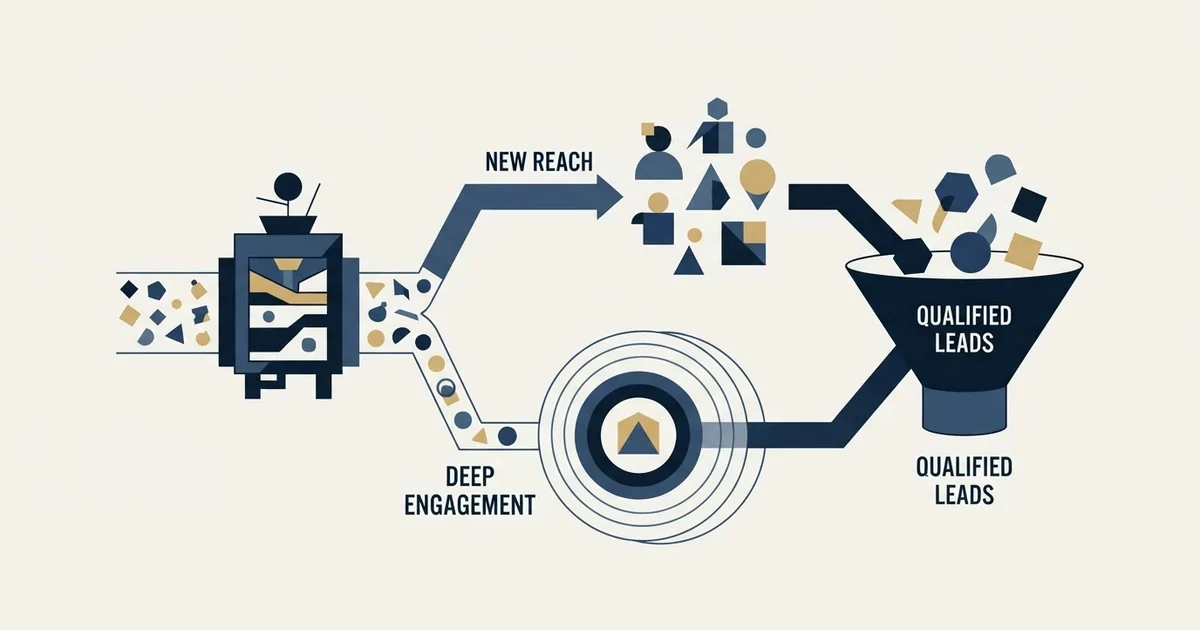
Multichannel lead generation means running more than one outbound channel against the same market. The word covers two different decisions: coverage, where a second channel reaches people the first cannot, and sequencing, where it reaches the same people again. Coverage adds population. Sequencing adds touches per person, and its cost lands on shared sending reputation.
Key takeaways
- Coverage and sequencing share one word and have opposite failure modes: coverage fails quietly and costs effort, while sequencing fails on the recipient's side and charges a shared sending domain or LinkedIn account.
- Count the coverage gap as a number before adding a channel, because if the unreachable remainder is small then the second channel is a sequencing decision and should be argued as one.
- Report reply rates per channel rather than blended, since an email reply rate and a LinkedIn response rate divide by different populations and the second one is decided by the platform.
- Published multichannel lift percentages state neither the population nor the ending event, so they describe somebody else's targeting effort wearing a channel label.
Reviewed and updated October 1, 2026
A team adds LinkedIn to an email programme, keeps the same target list, and reports a multichannel motion in the next board pack. Six weeks later the reply rate has not moved and the LinkedIn account is restricted. Nobody made an obvious mistake. The word multichannel was doing two jobs at once, the team bought the second one without noticing, and the second one is the expensive half.
Multichannel lead generation means running more than one outbound channel against the same market. That definition is not contested. What is contested, and what almost nothing published on the subject separates, is whether the second channel reaches different people or the same people again.
Multichannel sales outreach is the same object under the phrase the tool vendors prefer, and it usually describes the sequencing half rather than the coverage half.
Multi-channel prospecting is the same object under the phrase most vendors prefer, and the split between coverage and sequencing is what decides whether adding a channel is worth it.
Two decisions live inside one word
The first decision is coverage. You have a market, one channel reaches part of it, and a second channel reaches a part the first cannot. Some buyers are unreachable by email because their address does not resolve or their filtering is brutal. Some are reachable on LinkedIn and nowhere else. Adding a channel here widens the population, and the arithmetic is simple addition.
The second decision is sequencing. You have a person, you already reached them through one channel, and you reach them again through another. Nothing about the population changed. What changed is how many times one human hears from you, and through how many surfaces.
- The population gets larger
- Each person still receives one approach
- Cost scales with the number of people added
- Measured as reach against the addressable set
- Nothing about the recipient experience changes
- The population is unchanged
- Each person receives two or more approaches
- Cost scales with touches per person
- Measured as touches per contact, which is an input rather than an outcome
- The recipient experience changes considerably
Read a typical multichannel playbook and it will describe a connection request on day one, an email on day three, a second email on day six, and a call on day eight, all aimed at one person. That is not coverage. That is sequencing, sold under a word that sounds like coverage, and the reason the distinction matters is that the two have completely different failure modes.
Cross channel marketing automation is the platform expression of that same word, and buying one settles the tooling question without settling the decision underneath it, which is whether the second channel is adding reach or adding repetition.
Coverage fails quietly. You add LinkedIn, you reach some number of people email could not, and either they respond or they do not. The cost of getting it wrong is the effort you spent.
Sequencing fails on the recipient's side, and the damage lands somewhere other than the campaign. A person who has already declined to answer receives another approach through another surface, and the mechanism they have available for ending it is a complaint. That complaint is recorded against a sending domain or an account, and both are shared with everything else you send.
What each channel is genuinely for
Before deciding whether to add one, it is worth being precise about what each of the three common ones does, because the choice is usually made on availability rather than on fit.
Email is a coverage instrument. Its marginal cost per attempt is close to nothing, it reaches a list of any size in the time it takes to send, and it fails silently, which means a failure teaches you nothing at all. Its constraints are deliverability and list quality rather than hours.
LinkedIn is an identification instrument with a narrow messaging channel attached. It tells you who holds a role, how long they have held it, what they post about and who they know, which is information email cannot supply. Its messaging capacity is small and rationed, and the platform's published restriction triggers include invitations that are ignored or left pending, which converts targeting into an account-safety question rather than a performance one. That mechanism is worked through in the three routes to a stranger on LinkedIn.
The phone is a research instrument. It costs a person's full attention per attempt whether or not anybody answers, and a connected call returns objections, context and the words the buyer actually uses, which is worth more per conversation than anything a reply rate contains. Comparing email and calling on how they fail sets out the trade in full, and the short version is that the size of your addressable set and the value of a customer decide which one you can afford long before anybody has an opinion about openers.
We run the first two and not the third. That is a scope statement rather than a verdict on calling.
- Step 1Count what the first channel cannot reach
How many people in the addressable set have no working address, or sit behind filtering you cannot clear. That count is the coverage case, and it is measurable before spending anything.
- Step 2Decide which motion you are buying
A second channel for the unreachable people, or a second touch for the people already contacted. These are different purchases and they are priced the same way in most proposals.
- Step 3Price the second channel per person reached
Not per message sent. A channel that costs an hour of a person's attention per conversation is a different instrument from one that costs a fraction of a penny per attempt.
- Step 4Decide what a failure costs on each surface
Silence in an inbox costs almost nothing. An ignored invitation counts against a LinkedIn account. The two are not interchangeable inputs.
Why the published lift numbers cannot settle it
Search this term and you will find confident percentages attached to multichannel outreach, usually framed as a lift against single channel. They are not usable, and the reason has nothing to do with anyone being dishonest.
A lift claim of that shape needs three things stated before it means anything: what the starting population was, what the ending event was, and whether the multichannel group and the single channel group were the same kind of list. In practice a multichannel programme is run by a team that has already invested in targeting, and a single channel programme frequently is not, so the comparison is between two different levels of effort wearing a channel label. Why a conversion rate needs both of its ends named covers the general form of this, including the two ways a rate moves when nothing about the motion changed.
There is a practical version of the same warning, and it applies before the denominator argument even starts. A lift figure that surfaces in a set of search results has not necessarily survived the journey from wherever it began. Numbers of this kind travel by repetition, shedding a little more of their context at each hop, until the figure is sitting beside pages that never contained it and whatever original measurement existed is no longer locatable. Before using one, open the page and find it there.
The number you can act on is your own, measured per channel, over a population you can describe. Reach against the addressable set answers the coverage question. Replies per person contacted, held separately per channel, answers whether the second channel is earning its cost.
Where we differ from standard practice
Our own position costs us volume and it is worth stating plainly, because most multichannel advice recommends the opposite.
We run cold email and LinkedIn, and we run them as one message per campaign. A campaign carries a single message built on a single premise and sends it once. There are no bumps and no thread replies.
That constraint changes what multichannel can mean here. Email and LinkedIn each run their own campaign against their own premise, and a LinkedIn message opens its own thread rather than following on from an email. It is not a sequence with two surfaces in it.
The reasoning is mechanical. A repeat approach is delivered to the population that already saw the first one and chose not to answer, which is the population most likely to complain, and the reputation cost of that complaint lands on the sending infrastructure across every campaign running on it. On LinkedIn the same logic is sharper, because a second message lands directly beneath the one that was ignored, in a permanent visible thread, which reads as a bump whatever the campaign structure claims. The full argument, including what the position costs us, is in why we stopped using follow-ups.
The cost is real. A reader who was interested but distracted gets no second attempt from us, and some conversations are lost that way. We take that trade because the alternative spends an asset that every other client on the same infrastructure is also relying on.
What to do if you are adding a second channel
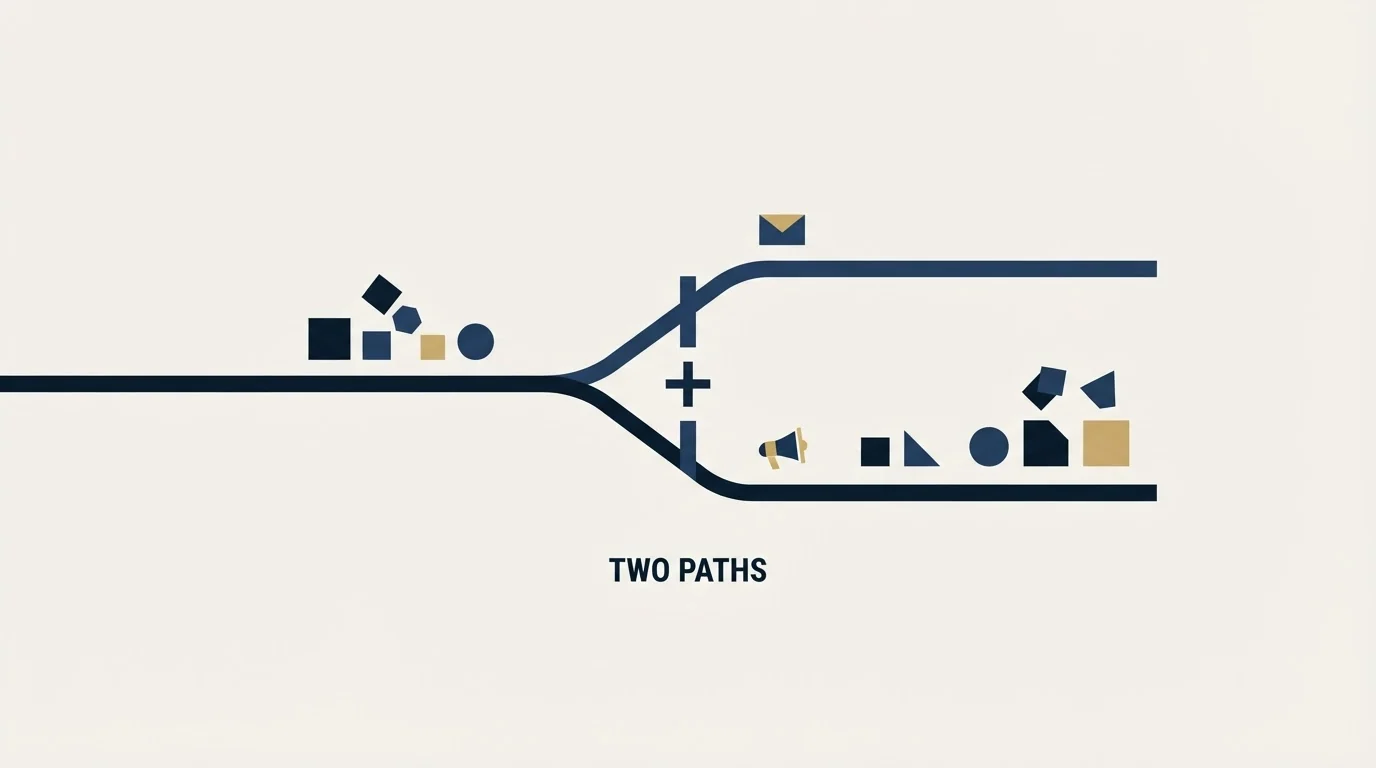
The useful sequence is short, and the work in it happens before anything sends.
Establish the coverage gap first, as a count rather than an impression. Take the addressable set, count how many have a verified reachable address, and the remainder is the population a second channel would be for. If that remainder is small, the second channel is a sequencing decision and should be argued as one.
Give each channel its own premise. A message that works in an inbox and the same message pasted into a connection note is one campaign wearing two coats, and the recipient can tell. The premise that suits the few words a connection note allows is not the premise that suits an email, and writing them separately is what makes the second channel a second channel rather than a second delivery of the first.
Measure them separately, all the way down. Blending reply rates across channels produces a number belonging to neither, and the two have different denominators anyway: an email reply rate divides by messages delivered, and a LinkedIn response rate divides by invitations accepted, which is a population the platform decides rather than you.
And price the account risk explicitly before you start, because it is the one input that does not appear on any proposal. A restricted LinkedIn account is usually somebody's personal one, and that conversation is much better had before the restriction than after it.
- Yes: The coverage gap is a counted number, not an impression
- Yes: Each channel has its own premise, written separately
- Yes: Reply rates are reported per channel with their own denominators
- Yes: Whose LinkedIn account carries the restriction risk is agreed in advance
- Yes: Suppression covers both channels before either one sends
- No: The second channel exists to contact the same people again
- No: The two channels share one message with the formatting adjusted
Where it sits next to the other choices
Multichannel is a decision about running two things at once, which makes it a different question from which single channel to start with. If the real question is which one answers fastest for the least commitment, sorting the channels by how quickly they tell you anything is the frame that settles it, and the answer is frequently to run one channel properly before adding a second.
If the question arrived as a proposal from an agency, it is worth knowing that the word is used for two unrelated purchases on that side of the table too. Untangling what an omnichannel agency is actually selling covers when a further channel is worth paying for against when it is a way of contacting the same list more often.
The short version
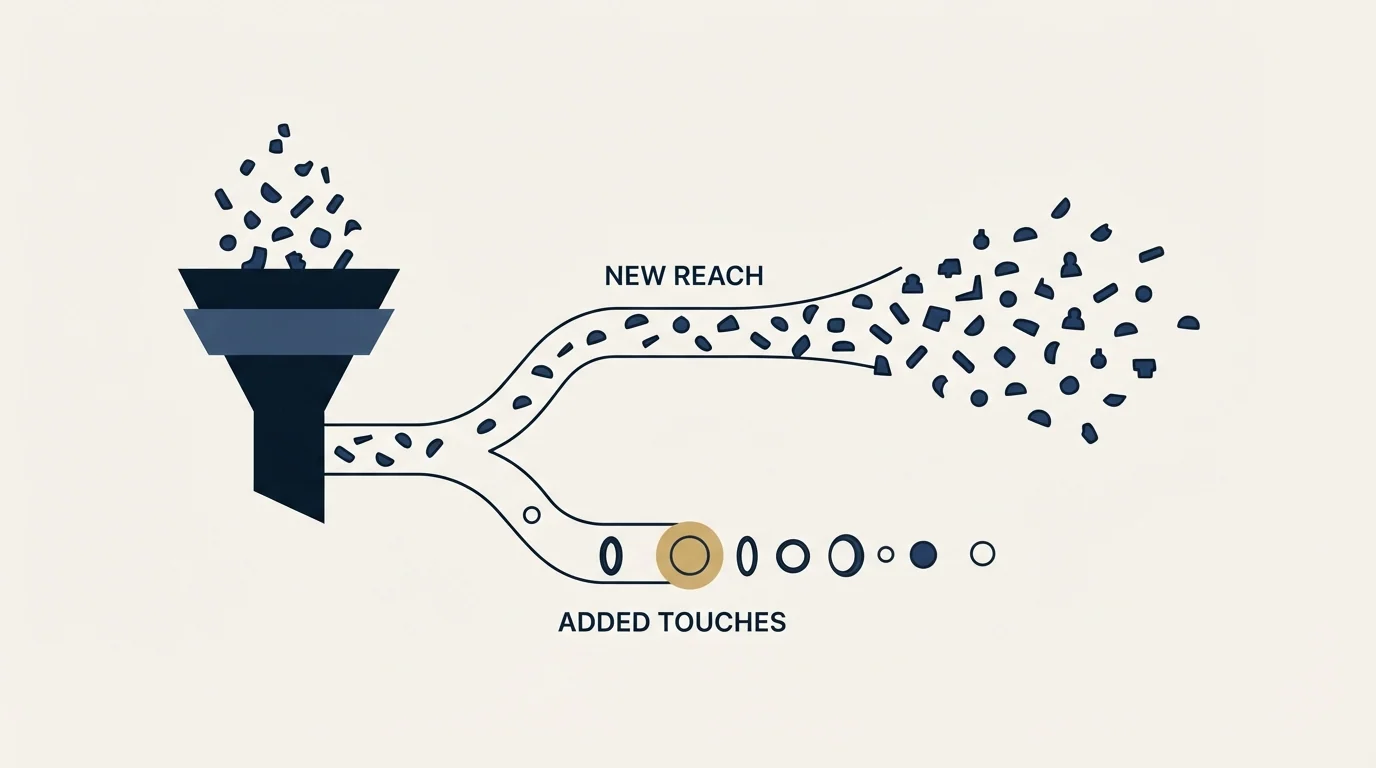
Multichannel lead generation covers two decisions that behave nothing alike. Coverage adds people the first channel cannot reach, and its arithmetic is addition. Sequencing adds touches to people you already contacted, and its cost lands on shared sending reputation and on somebody's LinkedIn account rather than on the campaign.
Count the coverage gap before deciding, price each channel per person reached rather than per message sent, give each one its own premise, and report their rates separately because their denominators are not the same object. Treat published lift percentages as claims about somebody else's populations, and measure your own.
We run email and LinkedIn as separate single message campaigns rather than as one sequence with two surfaces. If you would rather see what that produces against your own market before deciding whether a second channel is the answer, see what a first campaign looks like.
Frequently asked questions.
Frequently asked questions- What is multichannel lead generation?
- Running more than one outbound channel against the same market, most commonly email and LinkedIn, sometimes with phone alongside. The definition is not the difficult part. What decides whether it works is whether the second channel reaches people the first one could not, or reaches the same people a second time, because those two motions cost different things.
- Is multichannel better than a single channel?
- It depends which of the two motions you are buying. Adding a channel that reaches people your first channel cannot is straightforwardly additive. Adding a channel that contacts the same people again buys touches rather than reach, and the cost of that lands on shared sending reputation and on account health rather than on the campaign budget.
- Which channels should a B2B team run together?
- Email carries coverage because its marginal cost per attempt is close to nothing. LinkedIn carries identification, since it shows who holds a role and what they do, while its messaging capacity is small and rationed. The phone carries depth, and it costs a person's full attention per attempt whether or not anybody answers.
- How should multichannel results be measured?
- Separately, per channel, with the denominator named. Reach against the addressable set answers whether coverage improved. Replies per person contacted, held apart by channel, answers whether the second channel earns its cost. A blended figure across channels belongs to neither of them, because the populations underneath are not the same object.
About the author.

Ben Carden is CRO at RevenueFlow, which builds and operates outbound revenue engines for B2B companies. Previously at Gartner Enterprise. Studied at London School of Economics.
Ben Carden · CRO
Connect on LinkedIn →Explore more.
Ready to scale your outreach?
We build GTM engines that book real meetings. See the receipts.
Related articles.
Apollo.io for Lead Generation: Protecting Your Domain
Search, enrich, verify, then send somewhere else. A four-stage Apollo workflow that keeps credit costs down and keeps sending reputation away from your data vendor.
5 ABM Campaign Examples and How Each One Is Built
Five worked account-based campaign examples, each built on the same five fields: account set, tier, plays in order, owner and handoff, and the exit condition.
Field Marketing in B2B: What a Programme Costs Per Meeting
Two different practices answer to the name field marketing. The B2B one runs dinners and roadshows for named accounts, and it divides like any other channel.
Email Marketing Database: What a Bought One Costs
Three different objects are sold under this one phrase, and the platforms ranking for it forbid the version half the results are selling.
Average Landing Page Conversion Rate: What It Measures
Four published answers to one question span more than four to one. What each dataset actually counted, and why none of them applies to a page fed by cold outbound.
Two Agencies, One Target List: Who Owns Which Accounts
Two outbound suppliers on one market will contact the same companies unless the buyer splits it first. How to cut the list, run the exclusion feed and check the overlap.