Lead411 Review: The Export Unit and the Unlimited Asterisk
Lead411 meters exports rather than credits, and its homepage and pricing page disagree about whether that comes with caps. The disagreement is the useful part.
This Lead411 review reads the vendor's own pages: it meters exports, not credits, with Spark at $49 a month for 1,000 exports and Ignite from $150. Unused exports roll over, and intent data is annual only. Its homepage and pricing page disagree about caps and accuracy, so the 50-export trial is the evidence that matters.
Key takeaways
- Lead411's pricing page sells Spark at $49 a month for 1,000 exports or $490 a year for 12,000, Ignite from $150 a month, and Blaze by conversation with unlimited exports a year.
- An export is the whole record, so a contact with a direct dial costs the same as one with only an email, unlike credit models that charge extra for the phone number.
- Buyer intent data and unlimited data are annual only, API access starts at Ignite, and unused exports roll over to the next billing cycle on every plan.
- The homepage promises no credit limits or export caps and 97% verified emails, while its footnote narrows that figure and its own FAQ gives 96%+, so the trial is the real test.
Reviewed and updated September 18, 2026
Search for a Lead411 review and the first page is almost entirely scores: Trustpilot, G2, Capterra, Gartner Peer Insights, TrustRadius, plus one Reddit thread asking how people feel about it and one catalogue entry published by a company that sells a competing sending tool. Aggregate scores answer whether people like a product. They do not answer the question that decides a purchase here, which is whether an export-priced database with an unusual rollover policy costs less per usable record than the credit-priced tools it sits beside.
Lead411 publishes enough on its own surfaces to answer that, including a claim on its homepage that its pricing page contradicts and a pricing page that now contradicts itself. Those contradictions are the most useful thing on either page.
Lead411 review: the short verdict
Lead411 is a B2B contact database that meters exports rather than credits: Spark is $49 a month for 1,000 exports, Ignite starts at $150 a month, and Blaze is quoted. It suits phone-heavy SMB and mid-market teams with uneven demand, because a record with a direct dial costs the same export as one without and unused exports roll over. Its own pages disagree about caps and accuracy, so test before trusting either.
The unit is an export, not a credit
Almost every vendor in this category meters you in credits, where a credit buys a data point and a phone number costs several. Lead411 meters you in exports. The pricing page, fetched 16 August 2026, sells Spark at 1,000 exports a month and its annual equivalent at 12,000 exports a year, with Ignite starting higher and Blaze priced by conversation for unlimited exports.
That difference matters more than it looks. Under a credit model, revealing an email and a mobile for the same person is charged twice and the phone reveal is usually the expensive half. Lusha's pricing page is a clean example: 1 credit for a verified email, 5 credits for a phone number, so one contact carrying both costs 6. Under an export model the record is the unit, so a contact carrying a direct dial costs the same as one carrying only an email. A team that genuinely needs phone numbers gets a structurally better deal here than the per-credit pricing on comparable tools, and a team that only sends email is paying for reach it will never use. Our own motion is email and LinkedIn rather than phone, so on our stack the phone half of any B2B data purchase sits permanently idle, which is exactly the case where an export model stops being an advantage.
The full ladder runs from a seven-day trial through Spark at $49 a month or $490 a year, Ignite from $150 a month or $1,500 a year, and Blaze by conversation, all read off the vendor's pricing page on 16 August 2026. What follows is the part a review has to add: which of the claims around that ladder survive contact with the vendor's own pages.
That pricing ladder contrasts with a broader question addressed elsewhere, Copper as CRM versus Lead411 as data source, for teams that need both pipeline tracking and lead sourcing.
The word "unlimited" appears on three surfaces and means different things
Lead411's homepage describes the product as a B2B leads database built for outbound teams that need accurate leads, direct dials and buyer intent data "without credit limits or export caps."
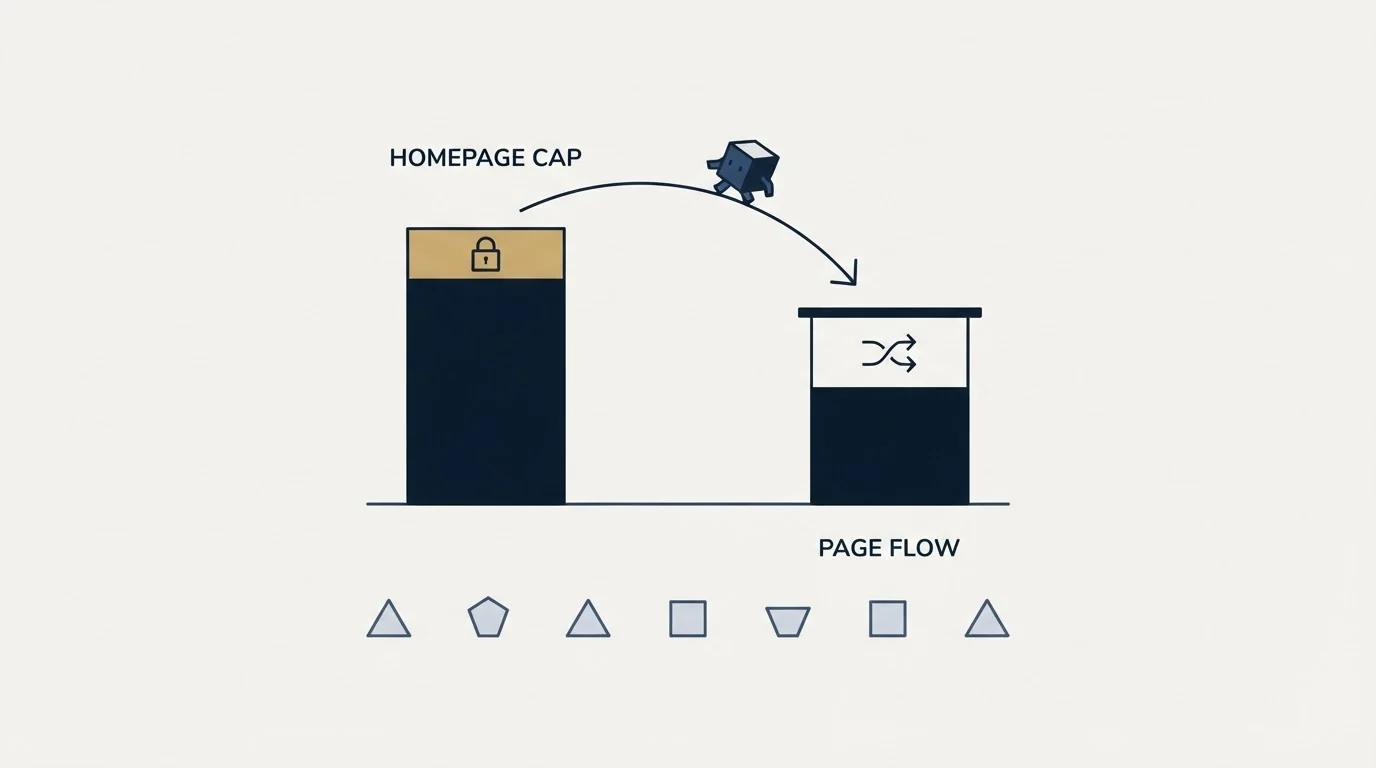
The pricing page sells plans by export count. Spark is 1,000 exports a month. Ignite starts at 1,000 or more. Only Blaze carries "Unlimited Exports / Year", and the pricing page states plainly that "Buyer Intent and Unlimited Data is available on Annual Subscriptions."
The pricing page then argues with its own cards. Its FAQ, asked how Lead411 differs from ZoomInfo or Apollo, answers that "Unlike other platforms, there are no data caps or daily limits," a few inches below a Spark card that sells 1,000 exports a month.
The statements are all on the vendor's own site and they do not agree. The reading that reconciles them is that the homepage is describing the top of the range and the pricing page is describing the range, which is ordinary marketing rather than deception. The practical consequence is not ordinary at all: a team that buys on the homepage promise and lands on a monthly Spark plan has bought a capped product with no buyer intent data, and will discover both facts in the first week.
| Where | What it says |
|---|---|
| Homepage headline | A leads database "without credit limits or export caps" |
| Pricing page, Spark card | 1,000 exports a month, at $49 |
| Pricing page, FAQ | "no data caps or daily limits" |
| Pricing page, Blaze card and header | Unlimited exports a year, and "Buyer Intent and Unlimited Data is available on Annual Subscriptions" |
The 97 percent figure, and the sentence underneath it

The homepage leads with access to "97% verified email addresses and direct phone numbers." Further down the same page, in smaller type, the qualifier appears: the 97 percent deliverability average "is by non-spam messaging/subject lines and only for optimized verified emails."
The same homepage then gives a second number. Its FAQ, answering how accurate the data is, says "Lead411 offers 96%+ accuracy on email deliverability," which is neither the headline figure nor bound by the footnote.
lead411.com, homepage
"Access 97% verified email addresses and direct phone numbers." 1
"(*97% deliverability average is by non-spam messaging/subject lines and only for optimized verified emails)" 2
FAQ: "Lead411 offers 96%+ accuracy on email deliverability" 3
- 1The headline covers email addresses and direct phone numbers together.
- 2The footnote limits it to optimised verified emails and makes it depend on your own copy.
- 3The FAQ gives a different figure for email deliverability, with no footnote attached.
Read carefully, that footnote does two things. It restricts the figure to a subset of the database, the optimised verified emails, rather than to everything you can export. And it makes the number conditional on your copy, since deliverability measured on non-spam messaging is measuring your sending as much as their data.
This is not unique to Lead411. Every accuracy figure in this category is a measurement of a population under conditions, and the conditions are usually in the footnote. What it means for a buyer is that the headline number cannot be compared across vendors at all, because no two of them define the population the same way. The only comparable number is the one you generate yourself by running the same list through two tools and verifying both outputs independently, which is what our guide to comparing email verification tools sets out.
Rollover is the genuinely unusual feature
Buried in the included-features list on the pricing page: "Rollover Exports - All unused exports rollover to your next billing cycle."
Unused allowance surviving the billing cycle is rare enough in this category that it is worth naming as a real differentiator rather than a feature-list item. Most credit models expire the balance monthly, which quietly converts uneven usage into waste. Outbound demand is uneven by nature: a market research sprint, a conference list, a quarter where the team is closing rather than prospecting.
The caveat that applies to every rollover policy applies here too, and it is about the data rather than the accounting. A record exported today and mailed in four months is a different record. People change jobs, and this category's databases also shed people continuously through opt-out and deletion requests. Rollover makes it cheap to hoard exports and data decay makes hoarding them a bad idea, so the sane use of the policy is smoothing a lumpy month rather than banking a year.
The feature list is flatter than the category norm

One more thing on the pricing page is easy to skim past. The included-features block lists international search, a currently-hiring filter, technology stack search, lead scoring, the Chrome extension and saved searches as included in all subscriptions rather than gated to a tier.
That is a flatter product than most competitors ship. Technographic filtering and hiring signals are commonly sold as an upgrade or an add-on elsewhere, and here they sit on the entry plan. It changes what a cheap plan is for: rather than a stripped database you outgrow, the entry tier is the full search surface with a smaller export allowance attached, which is a better shape for testing whether the filters can actually isolate your segment before you commit to volume.
The two things that are gated remain gated, and they are the two that cost money: buyer intent data and unlimited exports, both annual only. So the honest summary of the packaging is that Lead411 gates volume and intent, and gives away the search sophistication that competitors charge for. API access is the third gate: the pricing page lists it on Ignite and Blaze and leaves it off Spark.
One more naming wrinkle is worth raising on a sales call. The homepage says "Bombora pricing is included with our Pro subscription," and the pricing page sells no plan called Pro: its tiers are Spark, Ignite and Blaze. Ask which tier that sentence means before assuming intent comes with your plan.
A comparison with SignalHire weighs that intent-and-volume gating against a credit-based, multi-platform alternative aimed at budget-conscious teams.
What the review sites can and cannot settle
Two things about the aggregate scores are worth stating rather than restating.
The ratings on G2, Capterra, Gartner Peer Insights and TrustRadius could not be fetched for this article; those platforms return a 403 to a plain request, so no rating is quoted here. Lead411's own homepage does make a claim about them, that "G2 lists Lead411 as #1 in their list of top Zoominfo competitors and Apollo.io competitors." That is a vendor citing a third party about itself, which is a claim about the source rather than a verified fact, and category rankings on review platforms move with review velocity and category definitions.
The second point is structural. Several of the detailed reviews that rank for this term are published by companies selling data or sending tools of their own. They are frequently more thorough than the vendor's documentation, and the recommendation at the end is a revenue asset for the publisher. Read them for the mechanics, discount the conclusion, and check anything load-bearing against the vendor's pages.
Testing it properly in seven days
The trial is the only evidence that answers your question, and its shape is fixed: the pricing page's Pilot Light tier gives seven days and 50 exports, with the homepage describing the same allowance as up to 50 direct-dial mobile numbers or verified email addresses. Fifty records is a small sample, so spend it deliberately rather than browsing.
Fifty exports also tells you something about the sales process. Lead411's pricing page invites a conversation for its upper tiers and states that it will "match or beat most Enterprise Competitor Pricing Quotes," which means a quoted price is a negotiating position rather than a rate card. Bring a competitor quote to that conversation.
Who it fits
Lead411 fits a team that wants direct dials and a predictable per-record cost, is willing to commit annually to unlock intent data and unlimited exports, and has uneven month-to-month demand that rollover protects. It fits an SMB or mid-market outbound team better than an enterprise data programme, which is also how the vendor positions itself.
Choosing between platforms gets easier alongside the contactout and lead411 comparison, which weighs LinkedIn-focused enrichment against Lead411's verified-email and intent-data strengths.
It fits poorly if you send email only, since half the value in an export-priced record is the phone number, and if you need a rate card rather than a quote, since two of the three tiers are priced by conversation. The alternatives worth comparing it against split roughly along that line, and UpLead's per-credit pricing is the cleanest contrast if email is all you need.
The close and lead411 cross-category comparison explains why a CRM built for deal tracking and an enrichment tool for lead sourcing usually work best together rather than as rivals.
Whichever way that goes, the tool is one input. The list still needs verifying, the sending still needs infrastructure that is not your primary domain, and the campaign still needs to be one message rather than a sequence. If you would rather buy the outcome than assemble the stack, we run the whole motion on a pay-per-qualified-meeting basis.
Pricing and features are taken from the vendors' own pages. Verify current terms with the vendor before relying on them.
Sources: Lead411 pricing, Lead411 homepage
Frequently asked questions.
Frequently asked questions- Is Lead411 worth it?
- It is worth it for teams that need direct dials and predictable per-record costs, because Lead411 charges one export per record whether or not it carries a phone number, and unused exports roll over. It is poorer value for email-only teams, and for anyone needing intent data on a monthly plan, since the pricing page reserves buyer intent and unlimited data for annual subscriptions.
- How much does Lead411 cost?
- Lead411's pricing page lists Spark at $49 a month for 1,000 exports, or $490 a year for 12,000 exports with buyer intent data. Ignite starts at $150 a month or $1,500 a year and adds API access. Blaze is priced by conversation and carries unlimited exports a year. A free Pilot Light trial gives 50 exports over seven days.
- Does Lead411 really have no export caps?
- Only on its top tier. The homepage says no credit limits or export caps, and the pricing page FAQ says no data caps or daily limits, but the Spark card sells 1,000 exports a month and Ignite starts at 1,000 or more. Only Blaze lists unlimited exports, sold annually. Read the plan card, not the headline, before you buy.
- How accurate is Lead411's email data?
- Lead411's homepage claims 97% verified email addresses, with a footnote limiting that deliverability average to optimised verified emails sent with non-spam messaging. Its FAQ separately claims 96%+ accuracy on email deliverability. Neither figure can be compared across vendors, so verify a trial export of 50 records independently before trusting any accuracy number.
About the author.

B2B cold email experts helping companies generate qualified leads through done-for-you outreach campaigns.
RevenueFlow Team
Explore more.
Ready to scale your outreach?
We build GTM engines that book real meetings. See the receipts.
Related articles.
Firmographic Data Providers: What Six of Them Publish
Six firmographic data providers read from their own pages: the fields each sells, the coverage each states, how the data is delivered, and who prints a price.
Bookyourdata Pricing: 25 Packs, Priced Per Contact
Bookyourdata sells credits in twenty-five packs with no subscription. The dated ladder, the per-contact rates rendered in the browser, the guarantee rule and BeSpoke.
Is Clay Free? The Free Plan, the Trial and Where Each Stops
Clay's free plan, its 14-day trial and the no-charge-on-a-miss rule are three different things. What each holds and where it stops, from clay.com on 19 September 2026.
Seamless.AI Email Finder: How It Works, What a Credit Buys
How Seamless.AI's email finder resolves a contact in real time, what one Universal Credit buys, the Total AI score on every address, and what the Chrome extension reads.
Autobound Pricing: One-Time Credit Packs, Not Seats
Autobound's pricing page sells one-time credit packs for a signal data API, not seats. The six packs, the per-endpoint meter, and what a company costs.
Apollo Integrations: What Connects, and on Which Plan
Apollo's integrations marketplace sorted by job: what its own pages say each CRM sync moves, which plan ticks which integration, and what a sync costs.