Lusha Email Data: The Legal Basis and What It Leaves to You
Lusha claims legitimate interest for its own processing and states it holds no opt-in consent for your outreach. What that division of labour means before you send.
Lusha describes its data as aggregated from public sources and relies on legitimate interest as its legal basis. Its documentation states it holds no opt-in consent for third-party outreach, and assigns the buyer two duties: establishing a valid legal basis for sending, and managing opt-outs so opted-out contacts are never contacted again.
Key takeaways
- Lusha's compliance page states the company relies on legitimate interest and does not collect active opt-in consent from individuals for third-party outreach, so buying the data does not transfer a completed legal assessment to the sender.
- The same page declines to confirm that unsolicited B2B email outreach in Switzerland is automatically compliant, which makes jurisdiction a list-building filter rather than an afterthought.
- Lusha describes its sourcing as aggregation from public sources, which predicts strong coverage on outward-facing senior roles and thin coverage on operational roles with no public footprint.
- Suppression belongs outside the data vendor, because a removal request submitted to the vendor takes a contact out of future pulls without touching the copy already in your sending platform.
Reviewed and updated September 1, 2026
A prospect replies to a campaign asking one question: where did you get my email address. Most senders have no answer beyond the name of the tool, and the tool's marketing pages are written for buyers rather than for that moment. Lusha is one of the few contact-data vendors that publishes a direct answer, and it sits in the documentation rather than on the product pages.
Lusha's category as a data enrichment tool is easier to place next to Gong's sales engagement platform, which explains why the two are often used together rather than compared head to head.
Lusha's own support documentation tells customers what to say. Its privacy and compliance section states that if someone you have contacted asks where you got their information, you can tell them it came from Lusha, described on that page as a B2B data provider that "aggregates professional contact information from public sources". The same page points the contact at Lusha's data page, its GDPR page and its trust centre, and notes that a person who wants their details removed can submit a request through Lusha's removal form, where "Removal is free and processed automatically".
That is a usable answer, and it is worth knowing before you need it. What matters more for anyone about to send at volume is the sentence that sits one page over, because it defines the legal position you are actually operating from.
The legal basis, stated plainly by the vendor
Lusha's compliance guidance for B2B outreach is unusually direct about where the responsibility sits. The page states that Lusha's data practices are aligned with major privacy laws including GDPR and CCPA, and that the company "relies on legitimate interest as the legal basis" for processing and providing business contact information.
Then it adds the sentence that changes how you should plan a campaign: Lusha "does not collect active opt-in consent from individuals specifically for third-party outreach".
Read those two together and the arrangement is clear. Legitimate interest is a lawful basis under GDPR, and it is the basis most B2B data vendors operate on. It is also a basis that has to be assessed against the specific processing being done, by the party doing it. Buying a record from a vendor that relies on legitimate interest does not transfer a completed assessment to you. It gives you data whose supplier believes its own collection is lawful, and leaves the question of whether your outreach is lawful exactly where it started.
Lusha says so itself. Under customer responsibilities the page assigns two things to the buyer: ensuring you have a valid legal basis for using the data in your outreach, and managing opt-out requests so that people who opt out are not contacted again. The page closes by noting that Lusha provides tools and data but "does not offer legal advice".
- Aggregates business contact information from public sources
- Relies on legitimate interest as its legal basis for processing
- Operates a free removal form, processed automatically
- Maintains Do Not Call tables and opt-out contact handling in-product
- Establishing a valid legal basis for your own outreach
- Managing opt-out requests so opted-out people are not contacted again
- Knowing the data protection and marketing law in your region
- Including a clear and accessible opt-out in every message
The regional carve-out worth reading twice
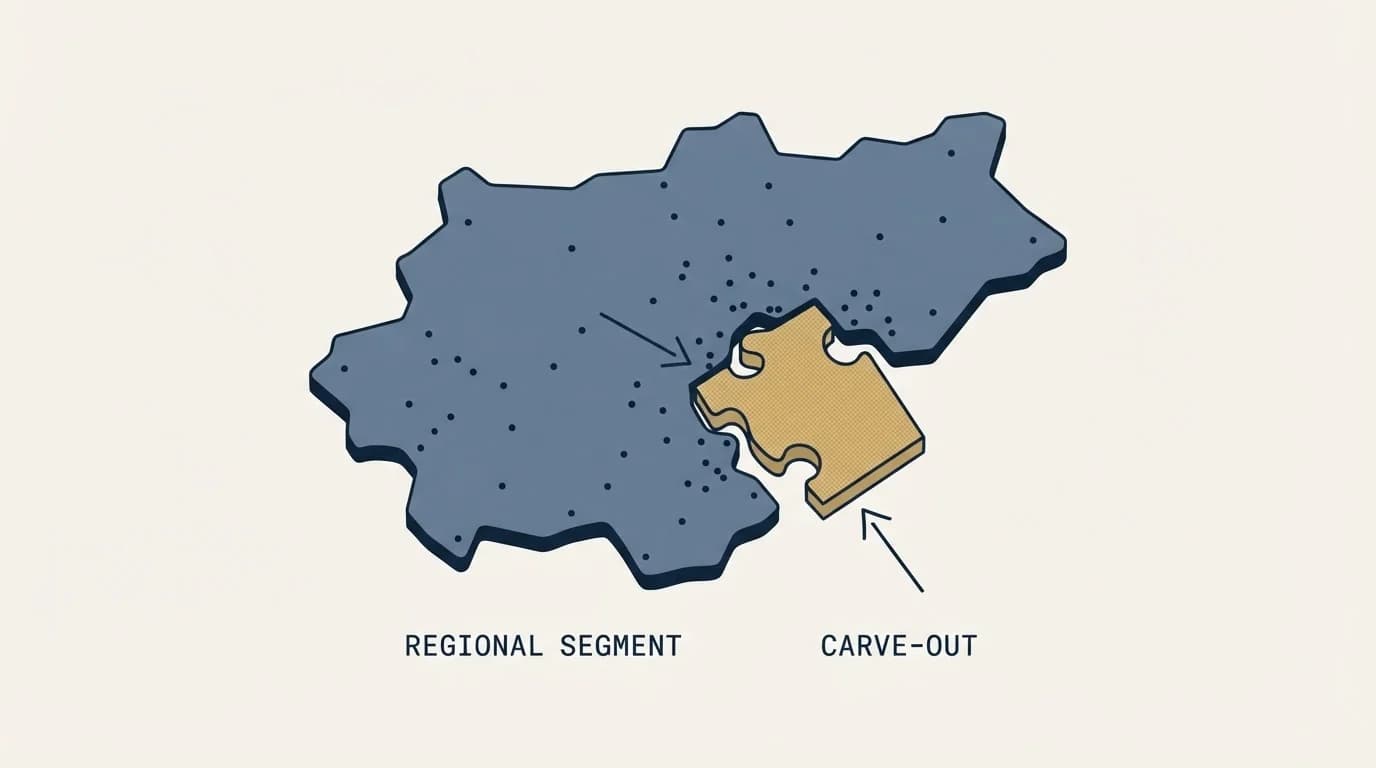
Most vendor compliance pages generalise. Lusha's names specific jurisdictions, and one of the entries is a refusal rather than a reassurance.
On Spain, the guidance is ordinary: comply with GDPR principles, use the data for legitimate purposes, communicate professionally, provide opt-out options. On Switzerland, the page states that "Lusha does not confirm that unsolicited B2B email outreach in Switzerland is automatically compliant", and tells customers to evaluate local legal requirements themselves.
A vendor declining to make a compliance claim about a specific country is more informative than a vendor making one. It tells you which markets carry enough legal ambiguity that the supplier will not stand behind them, and it tells you where your own legal review needs to be real rather than a formality. If your target list crosses into Switzerland, that sentence is the one to hand to whoever signs off on the campaign.
The practical consequence for list building is that jurisdiction becomes a segmentation axis rather than an afterthought. A list assembled by role and company size, with no geographic gate, inherits whatever legal exposure its most restrictive country carries. Splitting by market before send costs one filter and makes the exposure visible.
Where the email addresses come from, and what that predicts
Lusha's description of its sourcing as aggregation from public sources is the vendor's own characterisation, and it is the right level of specificity to quote. It is also enough to predict how the data will behave on your list.
Aggregated public-source data has a characteristic shape. Coverage is strongest where people publish themselves, which means senior and outward-facing roles at companies with a web presence. It thins out in the places outbound teams often care about most: operational roles that never appear on a website, businesses in sectors with low digital footprint, and any company whose staff are deliberately not discoverable. Freshness follows the same pattern, because a record only updates when something public changes.
None of that is a criticism of the vendor. It is the structural property of the sourcing method, and it is why the useful evaluation question is never the published coverage figure. The question is coverage on your segments, measured on your own sample. The method for running that test is the same one that applies to every provider in the category, and it is set out in our guide to waterfall enrichment: draw a sample from your real targets, record how many returned any address and how many returned one on the company domain, and verify with something other than the tool being tested.
- Step 1Segment by jurisdiction
Split the list by market before enrichment, so the most restrictive country does not set the risk profile for the whole campaign.
- Step 2Record the source per contact
Keep the provider name against every address. A reply asking where you got the data is answerable in seconds or not at all.
- Step 3Suppress before send
Load opt-outs, prior unsubscribes and any do-not-contact list as suppression, not as a review step.
- Step 4Verify separately
Run addresses through a verifier that is not the finder that supplied them, so you are measuring accuracy rather than the provider's confidence.
- Step 5Send one message
Our documented practice is one message per campaign with a clear opt-out, and a new campaign on a new angle rather than a reminder on the old one.
Opt-out management is an architecture decision

Lusha assigns opt-out management to the customer, and the product carries surfaces for it: the documentation index lists Do Not Call tables and opt-out contacts as their own sections, alongside guidance on why contacts are excluded from a bulk reveal.
The trap is treating suppression as something that happens inside one tool. Opt-outs arrive in several places at once. Someone clicks unsubscribe in an email. Someone replies asking to be removed. Someone submits a removal request to the data vendor directly, which takes them out of future pulls but does nothing about the copy of their record already sitting in your sending platform. Those three routes produce three different states, and only the first is usually automated end to end.
The version that survives an audit keeps one suppression list that every campaign reads from, fed by all three routes, held outside whichever data vendor is current. That way changing enrichment provider does not reset your opt-out history, which is the failure mode that turns a tidy compliance story into an awkward one. Our own stack keeps suppression at the sending layer for exactly this reason, so a vendor swap cannot silently reintroduce a contact who asked to be left alone.
The same logic applies to the opt-out in the message itself. Lusha's guidance names a clear and accessible opt-out mechanism as a general guideline for B2B outreach using its data. That is a copy decision as much as a legal one, and it belongs in the template rather than in a signature nobody reads. What the legal picture looks like across regimes is covered in more depth in our writing on GDPR compliance and on whether cold email is legal, and the Canadian regime, which is stricter than most, has its own treatment in CASL compliance for cold email.
What this means when you are choosing between providers
Compliance posture is rarely the axis people compare data vendors on. Coverage and price dominate, and both are easier to put in a spreadsheet.
It deserves a column anyway, for a reason that shows up months after purchase. The cost of a weak position here is not a fine in the ordinary case. It is that a reply you cannot answer, or a removal request you cannot honour across systems, forces an operational change under time pressure. Deciding in advance which jurisdictions you will send into, and holding suppression somewhere durable, costs almost nothing at setup and is expensive to retrofit.
Three questions separate providers usefully, and all three are answerable from public documentation rather than from a sales call. What legal basis does the vendor claim, and does it say so in writing. Does the vendor make jurisdiction-specific claims, and does it decline to make any. What does the vendor explicitly assign to the customer. Lusha answers all three on its documentation host, which is more than several of its competitors do, and the answers are what this article has quoted rather than characterised.
For the coverage and price half of the comparison, our roundup of alternatives to Lusha covers where each provider tends to be strong, and the mechanics of testing any of them on your own segments are in email verification tools.
- Yes: The list is segmented by jurisdiction and you know which markets are in scope
- Yes: Provider name is stored against every contact record
- Yes: One suppression list, held outside the data vendor, feeds every campaign
- Yes: Every message carries a plain opt-out in the body
- Yes: Someone has read the vendor's own compliance page rather than its marketing page
- No: Relying on the vendor's legal basis as though it covers your sending
- No: Treating a removal request to the vendor as removal from your own database
The short version
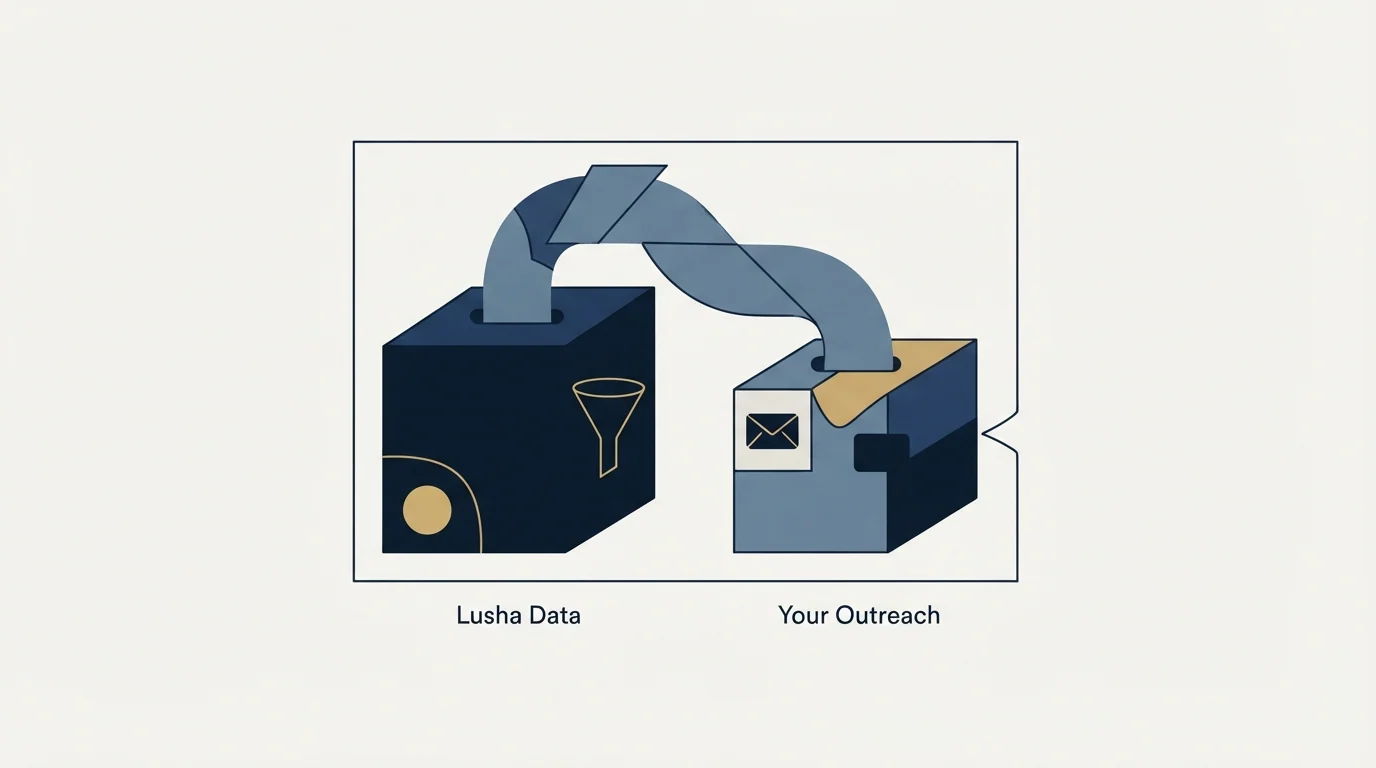
Lusha publishes more about its legal position than most contact-data vendors, and what it publishes is a division of labour rather than a guarantee. The vendor claims legitimate interest for its own processing, states plainly that it holds no opt-in consent for your outreach, declines to vouch for unsolicited B2B email in at least one named country, and hands you the legal basis and the opt-out handling.
That is a workable arrangement for a B2B sender who plans for it. It is a poor one for a sender who assumed the purchase came with cover. The difference between the two is a jurisdiction filter, a durable suppression list, and having read the compliance page before the campaign rather than after the reply.
If you want the list, the copy and the sending infrastructure assembled with those decisions already made, see what a first campaign looks like.
Vendor documentation quoted here was verified against raw page bytes from docs.lusha.com in mid-2026. Verify current terms with the vendor before relying on them, and treat legal questions as legal questions.
Frequently asked questions.
Frequently asked questions- Where does Lusha get its email addresses?
- Lusha's own support documentation describes the company as a B2B data provider that aggregates professional contact information from public sources, and tells customers they may say exactly that if a contact asks. That sourcing method predicts the coverage pattern: strongest on people who publish themselves, thinnest on roles that never appear online.
- Is Lusha GDPR compliant?
- Lusha states its practices are aligned with GDPR and CCPA and that it relies on legitimate interest as its legal basis for processing business contact data. That covers the vendor's own processing. Its documentation separately assigns you responsibility for having a valid legal basis for your outreach, so the vendor's position does not answer the question for your campaign.
- What do I say when someone asks how I got their email?
- Lusha's documentation gives the answer directly: tell them the data came from Lusha, a B2B data provider aggregating professional contact information from public sources, and point them at Lusha's data page, GDPR page and trust centre. If they want removal, Lusha's removal form is free and the request is processed automatically.
- Does removing a contact from Lusha remove them from my campaigns?
- No, and treating it as though it does is the common failure. A removal request to the vendor affects future pulls from that vendor. Any copy of the record already loaded into your sending platform is untouched. Keep one suppression list outside the data vendor so changing provider cannot reintroduce someone who asked to be left alone.
About the author.

B2B cold email experts helping companies generate qualified leads through done-for-you outreach campaigns.
RevenueFlow Team
Explore more.
Ready to scale your outreach?
We build GTM engines that book real meetings. See the receipts.
Related articles.
Firmographic Data Providers: What Six of Them Publish
Six firmographic data providers read from their own pages: the fields each sells, the coverage each states, how the data is delivered, and who prints a price.
Bookyourdata Pricing: 25 Packs, Priced Per Contact
Bookyourdata sells credits in twenty-five packs with no subscription. The dated ladder, the per-contact rates rendered in the browser, the guarantee rule and BeSpoke.
Salesgear Pricing: Two Ladders Under One Plan Title
Salesgear's page is titled as one plan and carries a Data ladder and an Outreach ladder. Both at both billing states, what each meters, and the two vendor-side conflicts.
Zeliq Pricing: One Seat Rate and a Credit Meter
Zeliq prices one self-serve seat in dollars with a credit meter that never expires. Both billing states, the three credit rates, the top-up ladder and the Custom floor.
Is Clay Free? The Free Plan, the Trial and Where Each Stops
Clay's free plan, its 14-day trial and the no-charge-on-a-miss rule are three different things. What each holds and where it stops, from clay.com on 19 September 2026.
Video Prospecting Tools by Job: What Each One Is For
Ten video prospecting tools sorted by the job each vendor's own page describes: record and share, personalise at volume, avatars, hosting and interactive demos.