Sales Champion: The Advocate Inside the Account, and the Test That Finds One
A sales champion is someone inside the buying organisation with preference for the purchase, influence over colleagues, and a personal stake in the outcome. The identifying test is behavioural: a champion does something costly for the deal when the seller is not in the room. The phrase also carries a separate career sense.
Key takeaways
- Three conditions have to hold at once: preference for the outcome, influence over other people internally, and something the champion personally gains or loses.
- The reliable test is behavioural, since a champion spends their own time or standing on the deal when the seller is absent, while warmth costs nothing and proves nothing.
- A champion with no route to the person who releases budget is a friendly contact with a good argument, which is why champion and economic buyer are tracked separately.
- The phrase carries a second, unrelated career sense meaning a top-performing salesperson, which is what most recruitment and careers writing on the term is about.
A sales champion is a person inside a buying organisation who wants the purchase to happen, has enough standing to affect whether it does, and carries some personal stake in the outcome. They are not employed by the seller and they are not neutral: they argue the case internally, in meetings the seller will never attend, and in most complex B2B deals they are the reason the deal survives the parts of the process that happen out of sight.
The term also travels under a second meaning, and the two sit side by side in search results. In career and recruitment writing, a sales champion is a high-performing seller, and articles under that heading are about how to become one. Both usages are legitimate. This entry covers the buyer-side sense, which is the one used in deal reviews, opportunity qualification and every methodology that has a slot for it.
What a champion has, and what merely looks like one
Three things have to be present at once, and each of them is commonly assumed rather than checked.
Preference. The champion wants this outcome specifically. Somebody who is pleasant, curious and generous with their time may simply be a helpful person, and helpfulness is distributed fairly evenly across vendors in an evaluation.
Influence. They can move other people's opinions inside their own organisation. Influence is not the same as seniority in either direction: a respected senior engineer often carries more weight on a technical purchase than the director who nominally owns the budget, and a title with no internal credibility carries none at all.
Stake. Something changes for them personally if the purchase happens or fails. It might be a target they are measured on, a project they are known for, a problem that is making their week harder, or visible credit for solving something. A stake is what keeps them arguing when the process gets tedious, which is where most deals are actually lost.
Remove any one of those and you have a familiar figure who is not a champion. Preference without influence is a supporter. Influence without preference is a risk. Preference and influence without a personal stake is a friendly contact who will help until helping becomes inconvenient.
- Takes the meeting and enjoys it
- Shares information freely
- Says the product looks good
- Goes quiet when the process gets political
- Cannot explain what they gain if it happens
- Genuinely wants the outcome
- Has a real problem the purchase would solve
- Is not in the meetings where money is discussed
- Can describe the internal process but not steer it
- Often the right person to help you find the champion
- Argues the case when the seller is absent
- Spends internal credibility to move it forward
- Tells you unwelcome news early
- Can name who else has to agree and why
- Has something to gain or lose personally
The two senses of the phrase, and how to tell which one you are reading
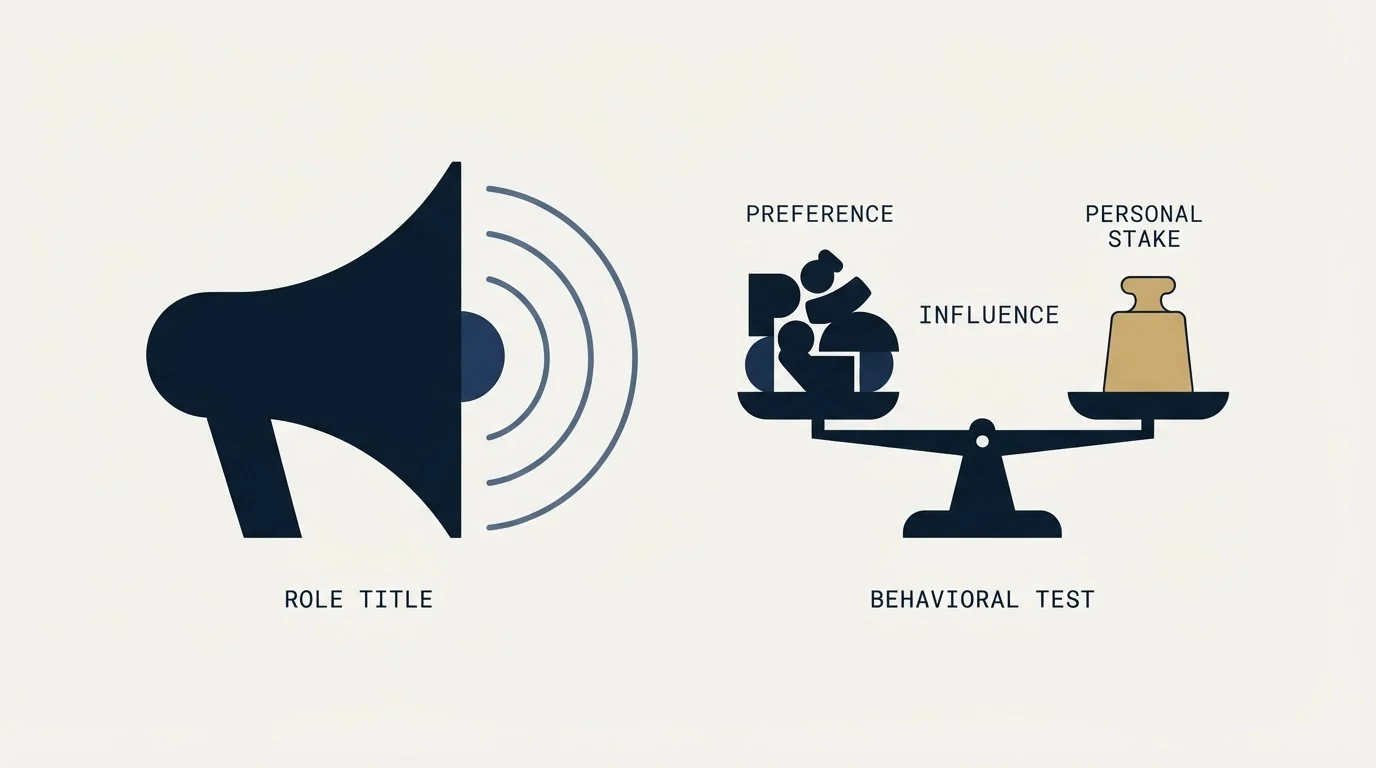
Search for the term and the results split cleanly. One group of pages, mostly from careers and recruitment publishers, treats a sales champion as an outstanding salesperson and offers advice on becoming one: habits, discipline, resilience, how top performers organise their week. The other group, mostly vendor glossaries and sales methodology writing, means the internal advocate described here.
The two are unrelated, and the ambiguity is worth naming because it costs people time. If a page is telling you what to do personally, it is using the career sense. If it is telling you what to look for in an account, it is using the buyer-side sense. Deal reviews, qualification checklists and opportunity fields always mean the second, and this entry follows that usage throughout.
The buyer-side sense also appears as a named component in most structured qualification frameworks, usually as a single field somebody has to fill in. That is where the definitional slack becomes expensive: a field labelled champion accepts any name typed into it, and nothing about the record distinguishes a person who has argued the case internally from a person who once said the demo went well.
The test that actually identifies one
There is a single reliable test, and it is behavioural rather than conversational: a champion will do something costly for you when you are not in the room.
Costly means it consumes something of theirs. Time on a document they had no obligation to write. Political capital spent asking a peer to attend a meeting. A calendar hold placed on a senior colleague. An honest warning that the budget conversation went badly before you would otherwise have discovered it. None of these are enthusiastic statements, and all of them are evidence.
The value of the test is that it is impossible to fake by accident. Warmth costs nothing, so it tells you nothing. Anybody who is polite will say encouraging things about a solution they like. The moment something is asked that requires effort or exposure, the picture resolves, and it resolves in one interaction rather than over several months of pleasant conversation.
The corollary is that a champion has to be identified by asking for something rather than by observing sentiment. Sellers who avoid asking, on the theory that they are preserving goodwill, arrive at the end of a quarter with a well-liked relationship and no information about whether it can carry weight.
- First conversationInterest
Genuine curiosity, which distinguishes almost nobody at this stage
- After discoveryPreference
They express a view about which direction is right, which still costs them nothing
- First askEffort
They spend their own time or standing on something you requested
- Internal reviewAdvocacy
They argue the case in a meeting you are not in and report back honestly
- Commercial stageExposure
They attach their own name to the recommendation in front of somebody senior
Where the textbook definition breaks
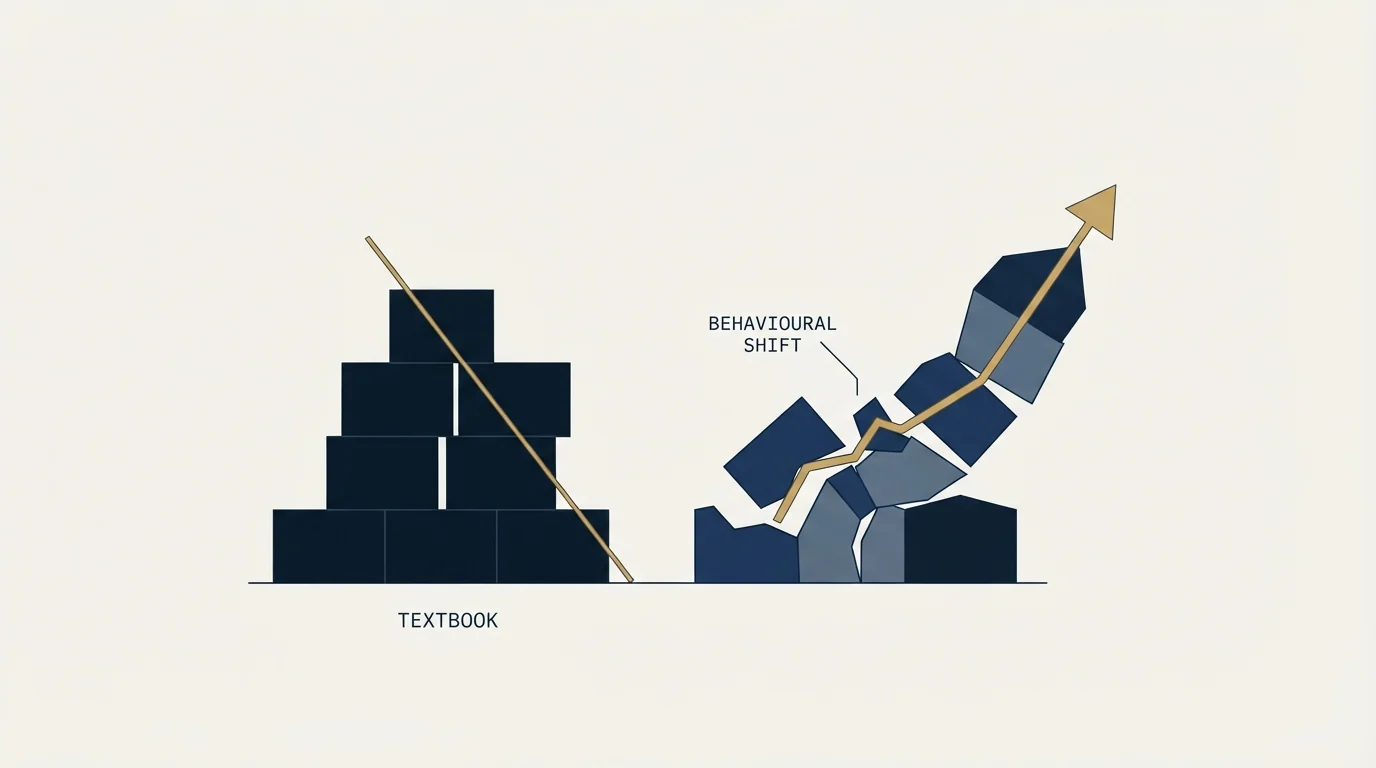
Enthusiasm is read as influence, and the two are unrelated. The most engaged person in an evaluation is frequently the one with the least to lose by being engaged. Deal reviews record enthusiasm because it is easy to observe and pleasant to report, and a forecast built on it is a forecast built on somebody's manner.
A champion without access to money is a friendly contact with a good argument. If they cannot reach the person who releases budget, either directly or through somebody who trusts them, their advocacy stops at a boundary. This is why the champion and the economic buyer are tracked as separate facts in every serious qualification framework: knowing you have one says nothing about whether you have the other.
Champions move, and the deal does not always survive it. People change roles, take other jobs, get reorganised or lose an internal argument that had nothing to do with your purchase. A deal that depends entirely on one person is one internal announcement away from starting over, and that risk is invisible in any pipeline report.
Being sponsored is not the same as being backed. A champion who is new, junior or already carrying a controversial position may want the purchase and be unable to spend anything on it. Their standing is a property of their organisation rather than of their intent, and it is far harder to assess from outside than most sellers assume.
A champion can be genuinely wrong about their own company. They may misjudge the approval path, underestimate how long procurement takes, or believe a budget exists that does not. Their information is first-hand and their conclusions are still guesses, which is why claims about process are worth confirming against a second person on the buying committee.
- Yes: They have done something for the deal that cost them time or standing
- Yes: You can state what they personally gain if the purchase happens
- Yes: They have named the other people whose agreement is required
- Yes: They have delivered at least one piece of unwelcome news early
- Yes: They can reach the person who releases the money, directly or through somebody
- Depends: Somebody else in the account would carry it if they left tomorrow
- Depends: Their account of the approval process has been confirmed by a second person
How to work with one well

Give them material built for the meeting they are actually walking into. A champion's real problem is representing your case accurately in a room where you have no voice, to people whose objections you will never hear. That means a short document written for the audience rather than for you: the business case in the language of the person who has to approve it, the answers to the two objections your champion already flagged, and nothing that requires them to defend a claim they cannot verify.
Ask early rather than late. The first ask is the cheapest one, and it is the one that tells you whether the relationship can carry the deal at all. Leaving it until the commercial stage means discovering the answer at the point where there is no time left to do anything about it.
Never make them the only route into the account. Coverage across the distinct roles in a purchase is ordinary good practice, and it protects the champion as much as the seller: a purchase supported by one voice is easy for an opponent to characterise as one person's preference. Approaching a second person because the first one went quiet is a different act, and it is not one we perform. What is legitimate is addressing distinct roles on their own terms, one message each, written for that person's own accountability rather than as pressure applied through a colleague. Multithreading early in a high-value pursuit sets out why the timing of that coverage matters more than the volume of it.
Finally, be honest in the qualification record. Marking somebody as a champion because the conversations are going well is the single most common source of forecast error in complex deals, and the cost lands a quarter later. A discovery call that disqualifies well is the same discipline aimed at the opportunity instead of the person, and in markets where committees are large and slow, such as the ones described in selling into healthcare organisations, the difference between a champion and a supporter is most of the forecast.
Our own work sits upstream of all of this. Our outbound sends one message per campaign, one premise, once, and treats any later approach as a separate campaign that has to earn its own place. A champion is something a first conversation reveals rather than something outreach can manufacture, so the job of the message is to reach a person for whom the premise is genuinely their problem. How that plays out for a software company building its first outbound motion covers the targeting side, and the qualified-meeting offer we run prices the conversation where those people are found.
Frequently asked questions.
Frequently asked questions- How do you know if someone is really a sales champion?
- Ask them for something that costs them time or standing and watch what happens. Writing a document, arranging a meeting with a senior colleague, or warning you early that a budget conversation went badly are all evidence. Encouraging statements are not, because being pleasant about a product costs a person nothing at all.
- What is the difference between a champion and an economic buyer?
- A champion argues the case internally and has a personal stake in the outcome. An economic buyer can release the money. They are occasionally the same person and usually are not, so knowing you have one tells you nothing about whether you have the other. Serious qualification records them as two separate facts.
- Does sales champion mean a top-performing salesperson?
- That is a second and unrelated sense of the phrase, common in careers and recruitment writing, where becoming a sales champion means becoming an outstanding seller. Deal reviews, qualification frameworks and opportunity records always mean the buyer-side advocate instead. Which sense a page uses is usually obvious from whether it addresses you or the account.
- What happens if the champion leaves the company?
- The deal frequently restarts, because the internal argument was being carried by one person and their successor inherits the calendar rather than the conviction. That risk is invisible in a pipeline report, which is the main practical reason to have a real relationship with more than one person before the commercial stage arrives.