Economic Buyer: Who Releases the Money, and Why the Org Chart Cannot Say
The economic buyer is whoever can release the money for a purchase, as opposed to the user who lives with it, the evaluator who can rule it out, or the champion who argues for it. Authority depends on the amount and on where the request sits in the budget year, so job titles predict it poorly.
Key takeaways
- The role requires access to funds, authority to commit at this particular amount, and the willingness to choose this spend over the competing uses of the same money.
- Authority is a property of a person and an amount together, so a pilot and an expansion of the same product are often two different approvals by two different people.
- The same purchase asked for at four points in a budget year is four different approvals, and unbudgeted spend routinely climbs several levels.
- Taking a decision to a board or committee turns your contact into a submitter, moving the timeline onto a fixed calendar and the case into a document somebody else summarises.
The economic buyer is the person who can release the money for a purchase: the one whose approval converts a decision into a commitment, without needing anyone else's consent to do it. They are distinct from the user, who will live with what is bought, from the technical or security evaluator, who can rule an option out but rarely rules one in, and from the champion, who argues the case internally without necessarily controlling the budget.
The role is defined by authority rather than by title, and that distinction is where almost all of the practical difficulty lives. Every qualification framework has a field for this person. Very few sellers can produce evidence for the name they have written in it.
What the role actually consists of
Three capabilities together make somebody the economic buyer, and any one of them alone makes somebody else.
Access to the funds. They own or control a budget that could pay for this, whether that is a departmental operating budget, a project allocation, or a discretionary pool held for exactly this kind of thing.
Authority to commit at this amount. Nearly every organisation of any size operates a delegation of authority: a set of thresholds above which a purchase needs a more senior signature, a committee, or in some cases a board. Authority is therefore not a property of a person but a property of a person and an amount together.
Willingness to trade. They can decide that this spend is better than the alternative uses of the same money. Two departments asking for the same allocation is the ordinary case, and the economic buyer is the person who resolves it.
The last one is the most frequently missed. A manager who could sign and would never prioritise this over the thing they signed last quarter is not going to release money, whatever the approval matrix says, and the deal will die of comparison rather than of objection.
Anyone the problem reaches, plus anyone who has used a competing product
Security, legal, procurement, or a peer who objects loudly enough
The champion and the function that carries the problem
Whoever the delegation of authority names for a purchase of this size
Approval plus an existing budget line, or the standing to create one
Where the textbook definition breaks
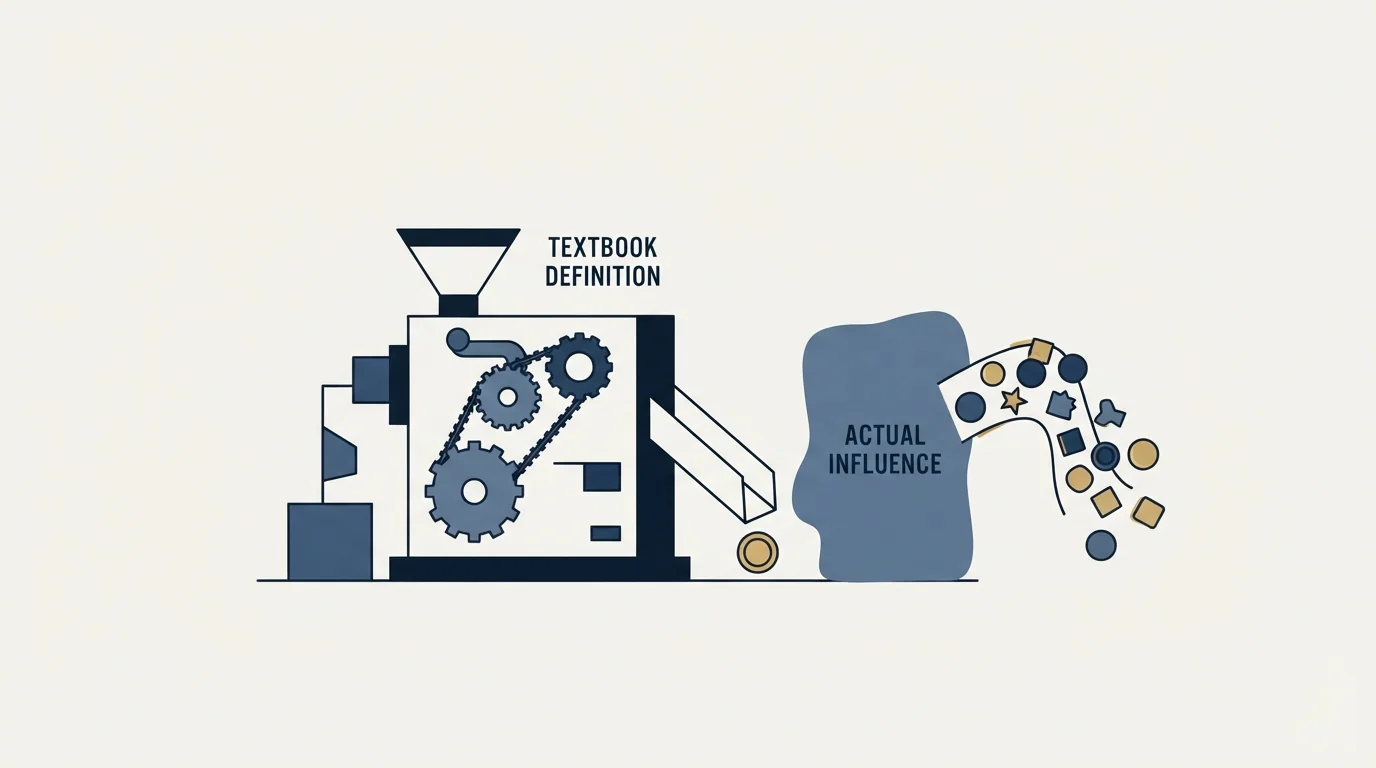
The title on the org chart is not the answer. Seniority correlates loosely with spending authority and it does not determine it. A director in one company signs for more than a vice president in another; a founder-led business may route every spend above a small amount through the founder regardless of function; a large enterprise may push routine approvals well down the hierarchy while reserving anything unbudgeted for a committee. Guessing from a job title produces a name that is plausible, unverifiable and wrong often enough to matter.
Authority moves with the amount. The same person may be the economic buyer at one price and merely a recommender at another, which means the answer changes when the scope of the deal changes. A pilot that fits inside a manager's discretionary spend and an expansion that crosses a threshold are two different sales to two different people, and the second one is frequently discovered late, after the pilot succeeded and everyone assumed the hard part was over.
Authority moves with the calendar. Money that is inside an approved annual budget behaves completely differently from money that is not. A purchase that fits an existing line can often be released by one person in a week. The identical purchase requested three months later, after the allocation is spent, becomes a request for unbudgeted spend and climbs several levels. Nothing about the buyer changed; the question they were asked did.
"I'll take it to the board" is a different shape from a signature. When a decision goes to a committee, a board or an investment forum, the person you have been speaking to becomes a submitter rather than a decider. The real decision then happens in a meeting with an agenda, a queue, a fixed date and a set of competing items you cannot see. The practical consequences are worth naming: the timeline is now governed by a calendar rather than by momentum, the case has to survive being summarised by somebody else, and the questions asked will be the ones that body always asks, which your contact can usually tell you in advance if asked directly.
Being told someone is the economic buyer is not evidence. A helpful contact naming their boss is offering a belief about their own organisation, and beliefs about approval processes are often out of date, particularly after a reorganisation or a change of finance leadership. Confirmation comes from asking how a comparable purchase went through last time, which is a factual question about the past rather than a hypothetical about the future.
- PlanningBefore the budget is set
The ask is to create a line, which is easy to say yes to and easy to defer
- Early periodLine exists and is unspent
One approver with an existing allocation can usually release it
- Late periodAllocation largely committed
The request competes with items already promised, and climbs a level
- Off-cycleNo line at all
Unbudgeted spend, which typically requires a more senior approver or a committee
Signing and paying are separated in most large organisations. An approval can be granted and still take weeks to become a purchase order, because procurement, vendor onboarding and finance operations each run their own process with their own queue. A seller who has the economic buyer's yes and no visibility into that machinery will forecast a close date that is arithmetically impossible, and will hear about the gap only when the date passes.
A single economic buyer is sometimes a fiction. Shared budgets, joint ventures, matrixed reporting and cost allocations across business units all produce purchases where two people each hold part of the authority and neither will proceed without the other. Frameworks with one field for this role quietly force a choice between them, and the field then records a preference rather than a fact.
Finding the right person without guessing

The reliable route runs through process questions rather than through hierarchy questions. Asking who has authority invites a guess. Asking how the last comparable purchase was approved produces a description of something that actually happened, and the names, thresholds and steps fall out of it.
Four questions do most of the work. What did the company last buy that was similar in size, and who signed it. Whether this spend sits inside an existing budget line or would need a new one. What amount triggers a different level of approval. Whether anything about this purchase, such as data handling or a multi-year term, routes it somewhere it would not otherwise go.
The answers also tell you whether you are talking to a champion, a recommender or the buyer, which is usually more useful than the org chart you were trying to reconstruct.
Two habits make those answers more reliable. Ask about the last purchase rather than about this one, because people describe history accurately and forecast their own processes optimistically. And hear the same account from two people, since an approval path is the sort of organisational fact that everyone believes they know and only some of them do. Where the two accounts differ, the difference is the interesting part, and it usually points at a threshold, a committee or a recent change of finance leadership that nobody thought to mention.
It also helps to ask what the money would otherwise be spent on. The economic buyer's real decision is comparative, so the competitor that beats most deals is another project inside the same company rather than another vendor. A seller who knows what they are being compared against can write a case that addresses it. A seller who does not will produce a strong argument for a purchase that was never the question.
- Yes: You can name the amount at which approval moves to somebody else
- Yes: You know whether the spend sits inside an existing budget line
- Yes: You know how a comparable purchase was approved before this one
- Yes: You know whether a committee or board sits above the named person
- Yes: You have heard the answer from more than one person in the account
- Depends: You know what else that budget is being asked to pay for
- Depends: You know what happens to the approval path if the scope grows
Reaching them, and the line we hold

The economic buyer is frequently the hardest person in the account to reach, and the temptation to route around a slow conversation by going over somebody's head is the reason most sellers eventually damage a deal they were winning. It is worth separating two things that look similar from the outside.
Covering distinct roles is ordinary and legitimate. A finance leader, an operations leader and a security lead are accountable for different things, and a message written for one of them is genuinely not the message another needs. Addressing each of them on their own terms, one message each, written for that person's own accountability, is coverage of a buying group. Multithreading early in a high-value pursuit explains why doing it at the start reads as thoroughness while doing it late reads as escalation.
Approaching a second person because the first one went quiet is a different act, and it is not one we perform. Our own outbound runs as one message per campaign: one premise, sent once, and any later approach is a separate campaign that has to justify itself on its own premise rather than on somebody's silence. That rule is what keeps role coverage from turning into pressure applied through a colleague, and our outbound playbook sets out the reasoning in full.
Two practical points follow from all of this. First, the economic buyer usually joins a deal rather than starting it, so the useful preparation is the material your sales champion carries into a room you are not in. Second, the composition of the rest of the buying committee determines how much of the case has to be written down rather than said, because anything that reaches a committee is read rather than heard.
How the two roles are told apart in a live deal, the four ways they get confused and the tests that prove which one you have, is on economic buyer vs champion.
Get the qualification honest before the forecast depends on it. A discovery call that disqualifies well is where the approval path should be established, well before the week a quarter closes. If the constraint is simply reaching senior people who fit at all, the arithmetic in what a booked meeting actually costs is the right place to start, and our pay per qualified meeting offer prices that access by the meeting rather than by the attempt.
Frequently asked questions.
Frequently asked questions- How do I find the economic buyer in an account?
- Ask how the last comparable purchase was approved rather than who has authority. A question about history produces a description of something that happened, with names, thresholds and steps inside it. A question about authority produces a guess, and guesses about approval paths go stale quickly after a reorganisation or a change of finance leadership.
- Is the economic buyer always the most senior person?
- No. Seniority correlates loosely with spending authority and does not determine it. Many organisations push routine approvals well down the hierarchy while reserving anything unbudgeted for a committee, and a founder-led business may route small amounts through the founder. The delegation of authority decides it, and it is written down somewhere internally.
- What is the difference between the economic buyer and the champion?
- The champion argues the case internally and has a personal stake in the outcome. The economic buyer can release the money. Occasionally they are the same person and usually they are not, so a deal review that records one without the other is missing half the qualification and will discover the gap at the commercial stage.
- What does it mean when someone says they will take it to the board?
- That they are a submitter rather than a decider for this amount. The decision then happens in a meeting with a fixed date, an agenda and competing items you cannot see, so the case has to survive being summarised by somebody else. Ask what that body always asks, because your contact usually knows.