Spintax: What It Means and Why the Textbook Definition Misleads
Spintax means writing alternative wordings inside one text so a sending tool picks one per recipient; Instantly's help centre says it creates variations so each lead receives a slightly different email. The classic notation is {Hi|Hello|Hey}. Its value is that a person approved every wording; its risk is combinations nobody read.
Key takeaways
- Spintax is short for spin syntax, or spinning syntax: alternatives in curly braces separated by vertical bars, one chosen per group at send time.
- The syntax differs by tool: Woodpecker uses {option1|option2}, Instantly {{RANDOM | option1 | option2}}, and SmartReach's editor {%spin%} blocks.
- Possible outputs multiply: eight groups of three alternatives produce 6,561 renderings, and groups are chosen independently.
- Sampling renderings tests instances, never the combination space where the defects live, so enumerate the full cross product before sending.
Spintax is a notation for writing several alternative wordings inside one piece of text, so that a sending system can select among them and produce a different version for each recipient. Instantly's help centre puts the meaning in one line: spintax creates multiple variations of sentences or words, so each lead receives a slightly different version of your email. A message using it in a dozen places produces a very large number of distinct final texts from one authored source.
What does spintax mean?
The word is short for spin syntax, or spinning syntax: one text spun into several variations. The classic notation puts the alternatives inside curly braces, separated by vertical bars, so {Hi|Hello|Hey} there renders as one of three openings. Each sending tool then writes it in its own syntax, and that detail matters when copy moves between platforms.
Woodpecker's guide uses exactly that form, {option1|option2|option3}. Instantly's help centre writes the same idea as {{RANDOM | option1 | option2 | option3}}, and it supports variables inside a spin block. SmartReach's help centre describes the format as curly braces and vertical bars, while its editor wraps the block as {%spin%}Hello|Hi{%endspin%}. A block pasted from one tool into another can therefore arrive as literal braces, which is worth a test send before anything goes out.
Because every spintax message is really many messages, most writing about it argues about whether to use it at all, and the more useful questions, about what the notation actually guarantees and what it silently does not, get skipped.
What it actually produces
The mechanism is substitution at send time. Each braced group is evaluated independently, one alternative chosen per group, and the result assembled into the message that goes out. The number of possible outputs is the product of the group sizes, so a message with eight groups of three alternatives has 6,561 possible renderings.
Two things follow immediately, and they are the whole of the topic.
Nobody has read most of what you are sending. That product grows faster than anyone's willingness to check it. A writer approves the source text, sees two or three rendered examples, and ships something capable of producing thousands of variants, of which they have inspected a handful. Whatever proportion of those is bad, the recipients are the ones who find out.
Variation is per group, not per message. Because groups are chosen independently, the alternatives have to work in every combination, not just in the one the author had in mind. An option that reads well beside the first choice in the next group can be ungrammatical beside the second, and nothing in the notation notices.
That second point is the failure everybody hits, and an example makes it concrete. {helping|working with} large enterprises {move|to move} faster has four renderings, of which three read as correct English and one does not. Each individual alternative is fine. The defect exists only in the cross product, which is exactly the thing no one reads.
Source: {helping|working with} large enterprises {move|to move} faster
helping large enterprises move faster
helping large enterprises to move faster
working with large enterprises move faster 1
working with large enterprises to move faster
- 1The only broken rendering, and it appears only when these two choices meet.
Where the textbook definition misleads

The reason vendors give for using it deserves a careful reading. Instantly's help centre says spintax helps avoid spam filters, prevent emails from looking templated, increase deliverability and make outreach feel more personal. That is the vendor's description, and the help article, as read for this page, cites no measurement for it. Mail is also judged on sender reputation, authentication, sending pattern, list quality and recipient behaviour, and varying adjectives repairs none of those. A programme with a reputation problem does not fix it with spintax, and one with a good reputation was not in trouble.
The real benefit is a quality-control benefit, and it is unglamorous. Every alternative in a spintax block is text a human being wrote and approved. That property is worth having, because the alternative approaches to variation are worse: text generated per recipient by a model is text nobody read at all, and an entirely fixed message forgoes variation completely. Spintax lets a writer own every word while still producing different messages.
Validating renderings proves nothing about the message. Sampling a few outputs, or even rendering one per recipient and checking those, tests instances rather than the space they were drawn from. Every rendered sample can be clean while a defective combination sits in the part nobody sampled. The check that actually works is to enumerate the entire cross product and read it, or at minimum to run it through a grammar and punctuation pass, and for a realistic message that is a few thousand strings, which a machine handles in seconds.
Escaping matters more than it looks. The braces and pipe are the notation's own control characters. A company name containing a pipe or a brace, arriving from a data source, will be interpreted rather than printed, producing a message that is corrupted in a way that appears in only some renderings. Any field interpolated into a spintax message needs checking for those characters before the send, and rejecting rows that carry them is cheaper than reasoning about escaping.
Where the variation sits changes what it is worth. Alternating three greetings and leaving the rest identical produces three near-identical messages. Variation at clause level, across the subject, the opening, the body sentences and the closing, produces genuinely different texts. The number of possible renderings says nothing about how different any two of them are.
What it gives you
- Every alternative was written and approved by a person
- A large number of distinct texts from one source
- Variation you can reason about and version
- A way to avoid sending one identical string to a whole list
What it does not give you
- A remedy for a reputation or list problem
- Any assurance that every rendering is grammatical
- Protection against interpolated data breaking the syntax
- Real difference, unless it is written at clause level
What this means when you are writing a campaign
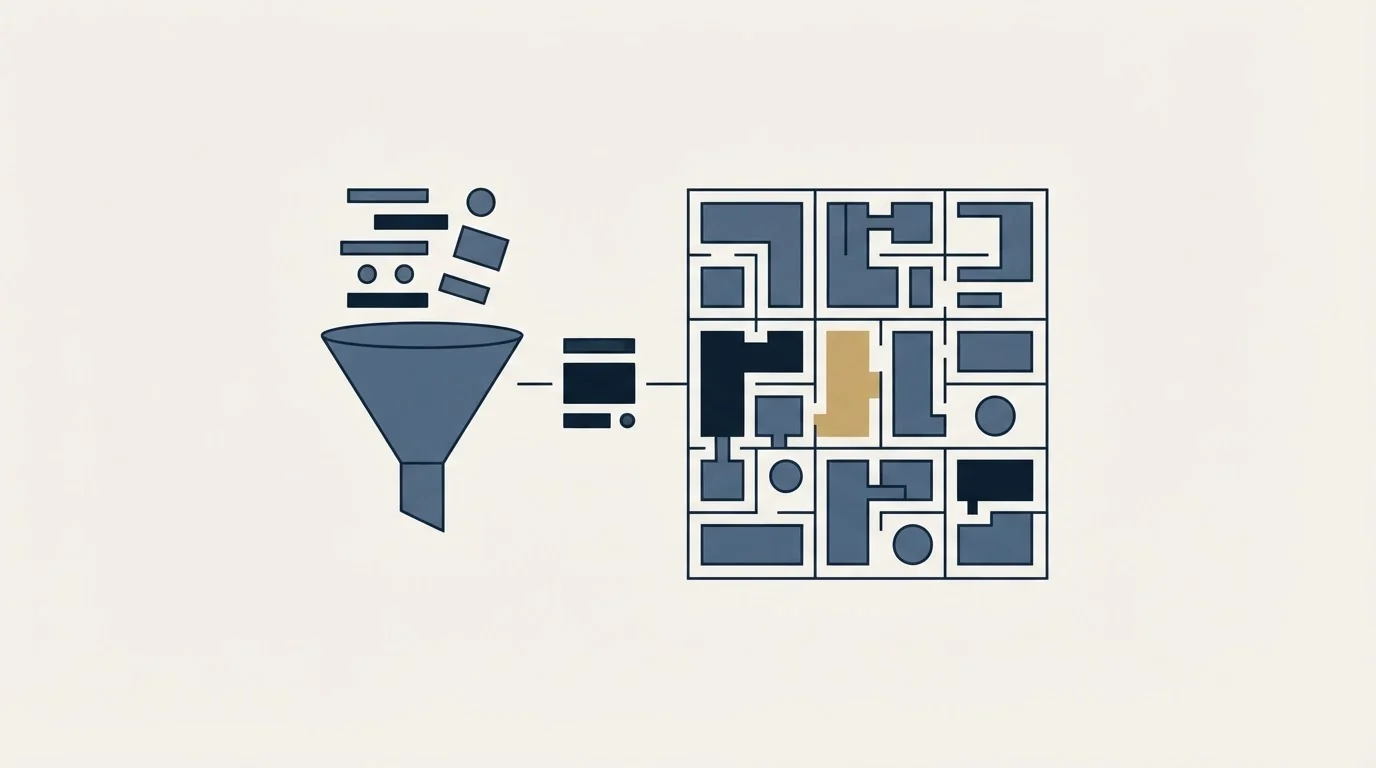
RevenueFlow's position is that a campaign carries one message, written on one premise and sent once, and that heavy clause-level spintax belongs inside it. Those two commitments fit together. A prospect receives a single message, so that message has to be written properly, approved by a person in every wording it can take, and varied enough that a list of several hundred people does not all receive one identical string.
The practices that make it hold are mechanical.
Enumerate before sending. Generate the full cross product and read it, or run it through automated checks for grammar, doubled spaces, doubled punctuation and unbalanced braces. This is the step that separates a message with 6,561 approved renderings from a message with 6,561 unread ones, and it costs seconds. Where the space is genuinely too large to enumerate, reduce the number of groups until it is not, since an unreadable space is a space nobody has approved.
Write alternatives that are interchangeable in every neighbour. Each option in a group must fit whatever the surrounding groups produce. That constrains what a group may contain, and the constraint is the discipline, not an inconvenience. In practice it means alternatives that are grammatically identical in shape and differ only in wording, which is a smaller space than writers expect and a much safer one.
Check interpolated fields for control characters. Any value coming from a data source can carry a brace or a pipe. Reject those rows rather than escaping them, since a rejected row costs one prospect and a corrupted render costs credibility with whoever receives it.
Vary meaningfully or do not bother. Clause-level and sentence-level alternatives change the text a reader experiences. Swapping synonyms produces a large combination count and one message.
Keep the source text under version control and review the diff. Spintax edits are unusually easy to get wrong in review, because adding one alternative to a group multiplies the space rather than adding to it, and a reviewer reading a diff sees a three-word change. Treating the source as code, with the enumeration check run on every edit, keeps the review honest about what actually changed.
The check nobody runs, and why it is cheap
The enumeration step deserves its own paragraph because it is the difference between this notation being safe and being a liability, and because almost nobody does it.
A realistic message has somewhere between five and twelve groups with two to four alternatives each. That is a few hundred to a few tens of thousands of strings. Generating them all is a short script. Reading them all is not always practical, but running them through automated checks is: unbalanced braces, doubled spaces, doubled or missing punctuation at joins, repeated words across a boundary, and a grammar pass. The defects that matter are overwhelmingly of that mechanical kind, and every one of them is findable without judgment.
The reason to insist on it is that the alternative check, rendering per recipient and inspecting a sample, is structurally incapable of finding these. A sample tells you about the instances you drew. The defect lives in the combinations you did not draw, and with thousands of possibilities a clean sample is close to guaranteed whatever the true defect rate is. Enumerating the space is the only check whose result means anything.
Generate every rendering; never sample.
Unbalanced braces, doubled spaces, punctuation at joins, repeated words, a grammar pass.
Reject rows whose data carries a brace or a pipe.
Not only in the greeting.
One new alternative multiplies the space; the count of renderings is not evidence of quality.
The short version
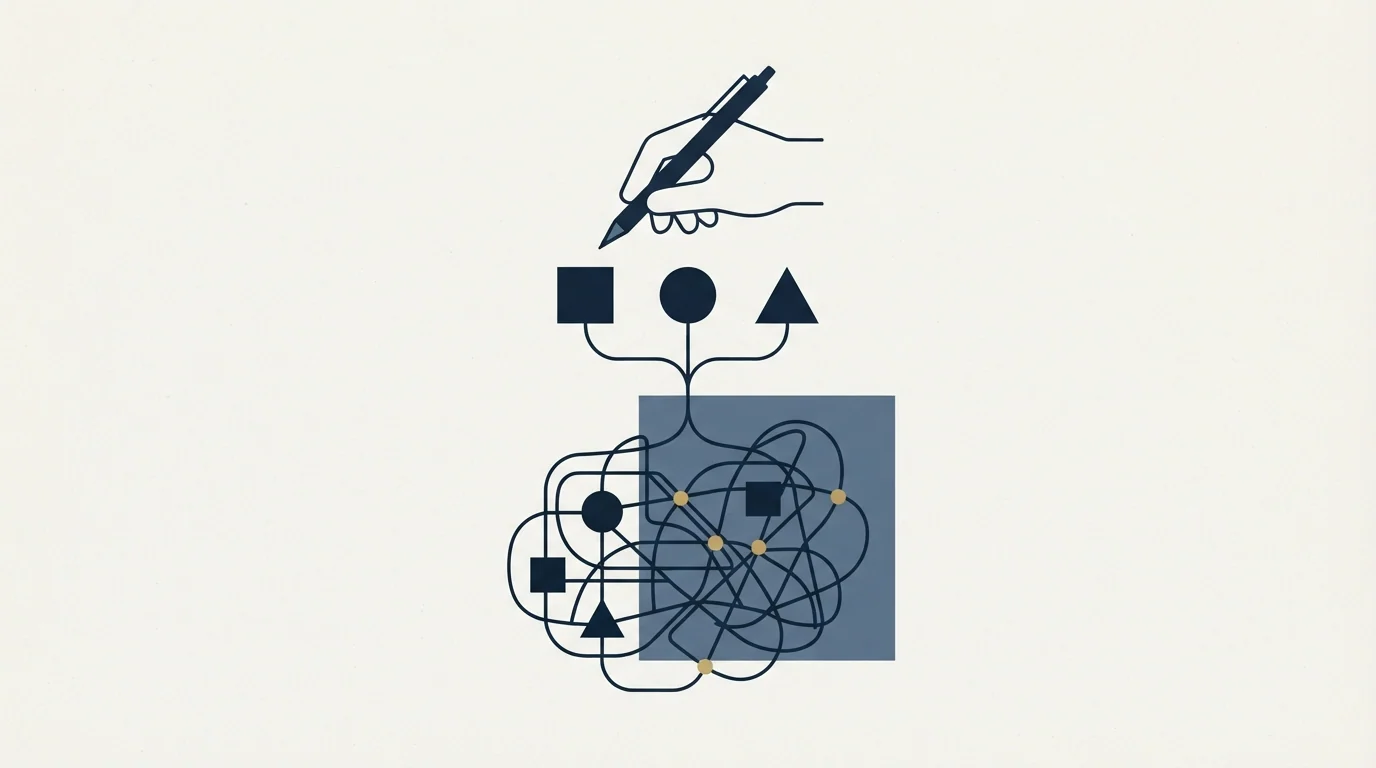
Spintax is a notation, and a notation cannot be good or bad practice by itself. What it does is let one author produce many approved wordings, which is genuinely useful. What it does not do is check that those wordings survive being combined, which is where the defects live.
So the discipline is simple to state: enumerate the space, read it or check it mechanically, and write alternatives that hold in every combination. Do that, and spintax is a way to send a personal-sounding message to several hundred people without sending them one identical string. Skip it, and you have shipped thousands of texts nobody has read. Neither outcome repairs authentication, list quality and verification or sending history, which are where the things that actually move placement live.
RevenueFlow writes and runs cold email and LinkedIn campaigns for B2B teams, one message per campaign, with the variation checked before anything sends. See how a campaign is put together.
Frequently asked questions.
Frequently asked questions- What does spintax mean?
- Spintax is short for spin syntax, or spinning syntax. It means writing several alternative wordings inside one text, so a sending tool picks one for each recipient. Instantly's help centre describes it as creating multiple variations of sentences or words, so each lead receives a slightly different version of your email. The classic form is {Hi|Hello|Hey}.
- Does spintax help emails avoid spam filters?
- Instantly's help centre says it helps avoid spam filters, keep emails from looking templated and increase deliverability, and publishes no measurement behind that. Varying wording does not repair sender reputation, authentication, sending pattern or list quality, which mail is also judged on, so a programme with a reputation problem does not fix it with spintax.
- Is spintax syntax the same in every tool?
- No. The classic form puts alternatives in curly braces separated by vertical bars, and Woodpecker uses exactly that, {option1|option2|option3}. Instantly writes {{RANDOM | option1 | option2}}, and SmartReach's editor wraps a block as {%spin%}Hello|Hi{%endspin%}. Copy moved between tools can arrive as literal braces, so send a test first.
- How do I check spintax before sending?
- Generate the full cross product rather than sampling. For a realistic message that is a few hundred to a few thousand strings, and automated checks catch almost everything that matters: unbalanced braces, doubled spaces, doubled or missing punctuation at joins, repeated words across a boundary, and a grammar pass. It costs seconds.