CMO Email List: What You Are Actually Buying
Seven of the ten results for this phrase sell a file filtered on a title that describes forty percent of the market. What to build instead, and why.

A CMO email list filtered on the exact title reaches a minority of marketing leaders. Spencer Stuart's 2025 study puts forty percent of Fortune 500 marketing leaders in roles titled chief marketing officer, and thirty four percent of those companies have no enterprise marketing leader. Write the title set first, then source and verify.
Key takeaways
- Spencer Stuart's CMO Tenure Study 2025 puts 40% of Fortune 500 marketing leaders in roles titled chief marketing officer, so an exact title filter skips the majority.
- The same study reports 34% of Fortune 500 companies have no enterprise marketing leader, and 11% of the leaders it identifies carry no marketing word in their title at all.
- A vendor stamp of one hundred percent verified is a claim about a batch on a date; a confidence score is a probability attached to a row, and the two are not the same purchase.
- Average Fortune 500 CMO tenure was 4.3 years in 2024, so rows that turned over since the last refresh do not bounce, they quietly record a non-reply.
Reviewed and updated October 1, 2026
A search for a CMO email list, as pulled for this article on 2 September 2026, returns ten results: seven of them are selling a file, two are ranked comparisons of the sellers, and one is a free finder tool. Not one of the ten answers the question underneath the search, which is whether a list of people whose job title contains the string "chief marketing officer" is the list you actually need.
It usually is not, and the reason is published by the people who study the role for a living.
The title you are filtering on describes a minority of the market
Spencer Stuart has tracked chief marketing officers for more than twenty years. Its CMO Tenure Study 2025, published in March 2025, breaks Fortune 500 marketing leadership down by what the title actually says. A newer edition, CMO Tenure 2026, dated January 2026, moves the population to the S&P 500, puts average CMO tenure at 4.1 years against a C-suite average of 5.0 and reports 31 percent of S&P 500 companies without an enterprise CMO, but it does not republish the title breakdown, which is why the 2025 figures are the ones used here. The study reports forty percent of Fortune 500 marketing leaders in roles "simply titled chief marketing officer". It reports sixteen percent carrying marketing plus another function, a chief marketing and communications officer for instance. It publishes another thirty three percent as having marketing in the title without the word chief, an SVP of marketing for example. And it states that eleven percent "do not have the word marketing in their title at all", naming commercial, growth, customer, consumer, brand and strategy as the words that show up instead.
The same study reports that 34 percent of Fortune 500 companies have no enterprise marketing leader at all, and that the industrial sector, the largest in the Fortune 500, is the least likely to have one.
Read those two findings together and a filter on the exact string CMO is doing something specific. It is selecting two of every five marketing leaders at the largest companies in the United States, discarding the SVP who owns the same budget, and returning nothing for a third of the companies because the role sits somewhere else on the org chart. Below the Fortune 500 the dispersion gets wider, not narrower, because a company of two hundred people is more likely to call the job head of marketing or to leave it with a founder.
- Roles titled chief marketing officer and nothing else
- One string, matched literally, across every company size
- No row at all for the third of companies with no enterprise marketing leader
- Thirty three percent with marketing in the title but not the word chief
- Sixteen percent carrying marketing plus another function
- Eleven percent whose titles say commercial, growth, customer, brand or strategy instead
That is the first thing wrong with buying a CMO email list, and it is a targeting problem rather than a data-quality one. Every row in the file can be correct and the file can still be the wrong population, which is the distinction drawn at length in finding and reaching decision makers in outbound: a title is a string, and the person who owns the problem you are writing about is selected by accountability instead.
What the ten results are actually selling
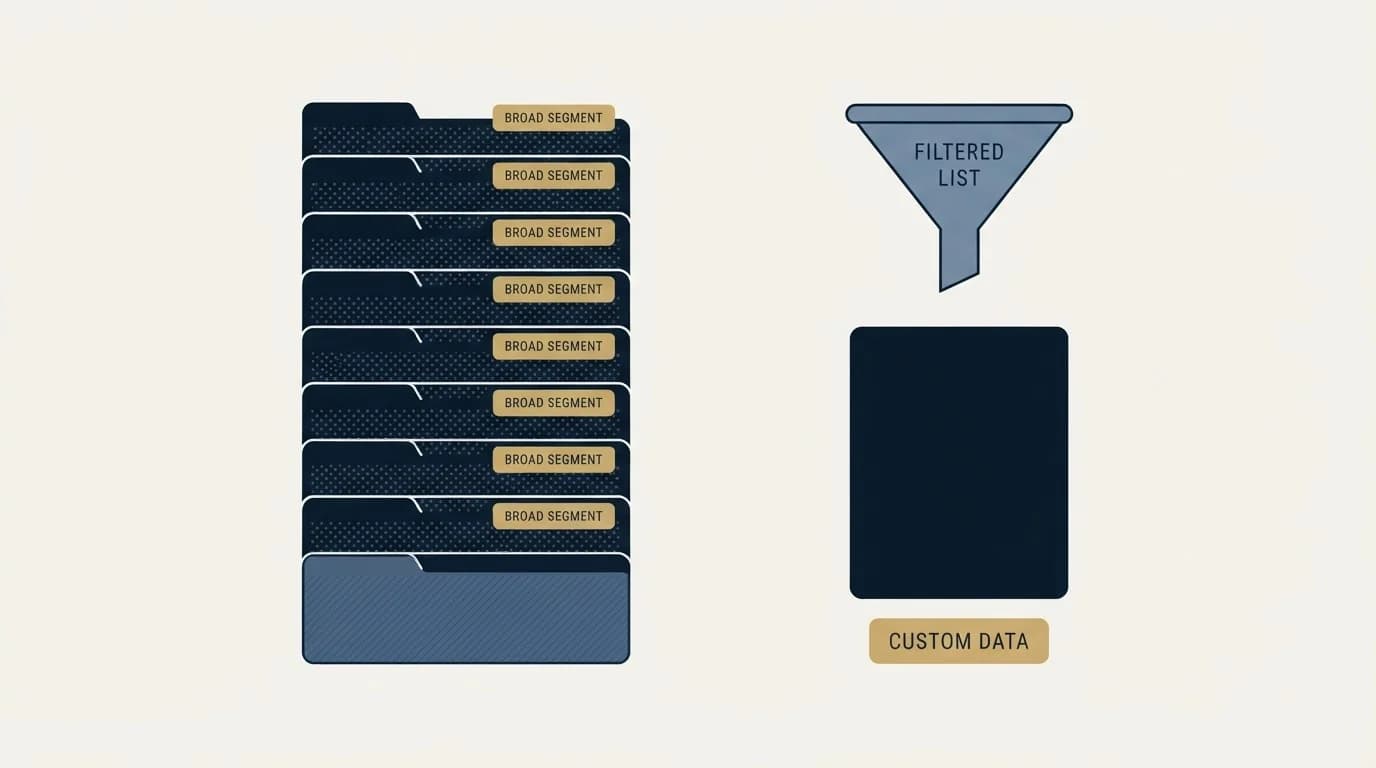
Three different products share this search phrase, and the pricing conversation is different for each.
The static file. A one-time export, filtered to a title and a geography, delivered as a spreadsheet. LakeB2B's CMO email list page, read on 2 September 2026, publishes its counts openly: 36,730 national records of which 32,649 carry an email address, plus 11,994 international records of which 6,747 carry one. The page is stamped "last updated : August 02, 2026". The same page publishes a 100 percent figure labelled Verified Database and a 95 percent figure labelled Delivery Guaranteed, and states the cadence behind them as "Quarterly SMTP and NCOA verified to keep data fresh and active".
Those numbers are worth doing the subtraction on. Of the 11,994 international records the page publishes, 5,247 carry no email address at all, and 4,081 of the national records are in the same state. The freshest claim on the page is a refresh "Quarterly SMTP and NCOA verified to keep data fresh and active", which is a quarterly cadence. On the same page LakeB2B lists its neighbouring files, including 363,574 CEO email addresses and a C-level list of 8,265,990 records, which tells you what kind of asset this is: a warehouse, sold by the segment, to whoever asks for that segment.
The queryable subscription. Access to a database you filter yourself rather than a file you receive. Coverage of your own segment is the product, and everyone selling into your category is running similar filters against it.
The finder. A tool that resolves people to addresses on demand. Hunter's CMO page, read the same day, describes the shape honestly in its own three steps: filter companies to an ICP, reveal contacts, then save and send. Its own FAQ makes the title point without being asked to. Asked what happens when a company has no CMO, the page answers: "Plenty don't, and it isn't only small companies". It recommends filtering for VP of Marketing, Head of Marketing, Marketing Director and founder in the same search so that a company does not drop out because the org chart uses a different word.
- Filtered on the literal title, so it inherits the title problem
- Verification cadence is the vendor's, not yours
- No provenance per field, so a bad row cannot be traced
- Sold to everybody else who asked for the same segment
- The only one of the three with no residual value
- You choose the title set, so you can widen past chief marketing officer
- Coverage of your segment is the thing to test, not the headline record count
- Records are exported under terms, not owned
- Your competitors query it with similar filters
- Built list first, addresses second, which is the right order
- Returns a confidence score rather than a verdict
- Costs scale with how many rows you actually contact
- Coverage is thinnest exactly where the title is unusual
The commercial case against the static file is set out in full, with the platform terms that forbid sending one, in what a bought email marketing database costs. The point specific to this persona is narrower: a CMO file is filtered on the one field that the study above publishes at forty percent of the population.
What a verified CMO address actually means
Hunter's page states plainly that each address "comes with a confidence score that estimates how likely it is to be valid and deliverable", and directs you to run it through a verifier before sending. That is the honest version, and it is worth contrasting with a file whose own page states one hundred percent verified. A score is a probability attached to a row. A stamp is a claim attached to a batch, made on a date, about addresses that started decaying the moment they were captured. Data decay is the mechanism, and executive rows decay faster than most.
Spencer Stuart puts average Fortune 500 CMO tenure in 2024 at 4.3 years, against a C-suite average of 4.9. A four year average tenure means a meaningful share of any CMO file turns over inside the window between the vendor's quarterly refresh and your send, and the rows that turn over do not bounce. The address still resolves. Somebody else reads it, or nobody does, and the campaign records a non-reply that looks exactly like disinterest.
There is a second verification problem that is specific to the top of large companies. Executive mail at enterprises is frequently routed through infrastructure that accepts everything, which returns an inconclusive result rather than a verdict, the mechanism described in catch-all domain. Coverage claims are therefore weakest at precisely the companies a CMO list exists to reach.
Build the list the search should have returned
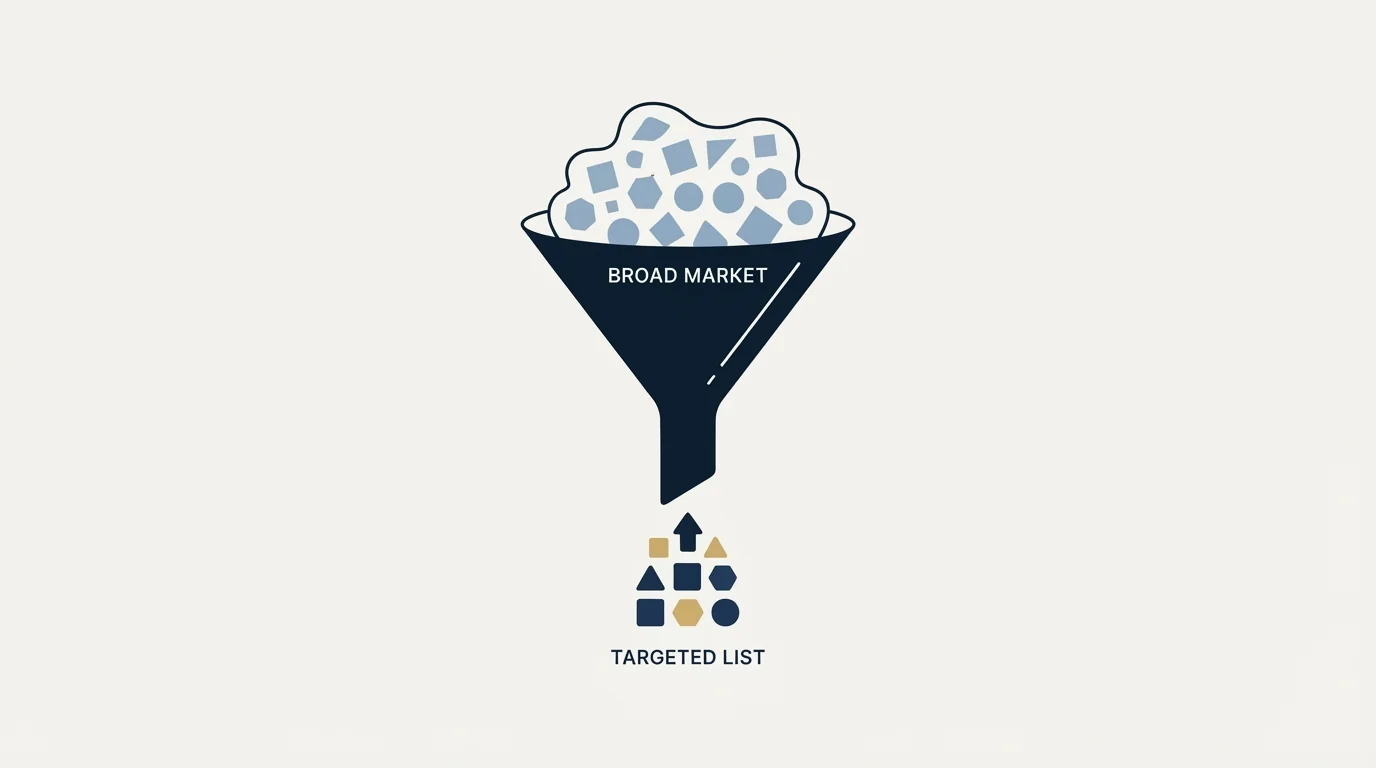
The sequence is the same one any lead list follows, with three decisions this persona forces you to make explicitly.
The same sequence run against a vertical rather than a persona is a different problem, and the state registers that decide who counts in one trade are worked through in our guide to building a travel agency list.
Decide the title set before you decide the tool. Write down every title that owns the thing your message is about, including the ones without the word marketing in them. Spencer Stuart names the substitutes it sees most: commercial, growth, customer or consumer, brand, and strategy. A list built on chief marketing officer alone is a decision to skip those people, and it should be a decision rather than an accident.
Decide which marketing leader you mean. A demand generation leader at a Series B software company and a brand leader at a consumer manufacturer share a title and buy nothing in common. How to cold email CMOs splits the role into four working types and matches each to what it is judged on, which is the segmentation that decides whether your premise is true of the row.
Verify close to send, not at build. Whatever the file says about its own freshness, re-check the addresses immediately before the campaign goes out. What that costs against what a bad send costs is priced in email list cleaning, and the summary is that verification is cheap enough that the interesting decision is never the verification vendor.
- Yes: The title set was written down and includes the substitutes, not just the exact phrase
- Yes: You can say which of the four marketing leader types the premise is true for
- Yes: Every row carries a source and a date the address was last confirmed
- Yes: Addresses were verified immediately before the send rather than at build time
- Yes: Accept-all results have a written rule you already applied
- Yes: The list was sized by the criteria rather than the criteria loosened to hit a size
- No: The count of rows is the number you quote when somebody asks how the list is doing
- No: The file arrived complete, stamped verified, with no field you can trace
The size question, answered the other way round
Every vendor page in this search leads with a count, because a count is the only property visible without work. It is also the property least connected to whether the campaign produces anything.
A list of 36,000 marketing leaders is not a bigger version of a list of 300. It is a decision to write one message that has to be true for 36,000 different companies, which in practice means it is true for none of them specifically. The tighter list is smaller because its criteria were narrow enough to exclude people, and that exclusion is the whole mechanism by which a single message can say something a reader recognises.
That constraint bites harder here than in most personas, because the recipient evaluates marketing for a living. A CMO reads a generic message and correctly identifies it as a generic message, and the sender has spent their one attempt proving they had nothing specific to say.
Where we stand

RevenueFlow builds a list per campaign against one premise and does not buy static files, for ourselves or for clients. We source and verify against providers rather than purchasing an export, we verify addresses close to send rather than trusting a batch stamp, and every campaign carries exactly one message with no bumps and no thread replies.
The reason that position and this search phrase collide is arithmetic. A one message discipline is only affordable when the list is tight enough that the message is true for everybody on it, and a file bought on a title filter cannot meet that condition by construction.
If the honest question is whether a narrow list of the right marketing leaders outperforms a file you can buy this afternoon, we will build one and you can read the replies.
Figures attributed to Spencer Stuart come from its CMO Tenure Study 2025, published March 2025 and read on 2 September 2026, linked above with the 2026 edition. LakeB2B's and Hunter's published counts and claims were read from their own CMO list pages on 2 September 2026, with dated snapshots retained. Vendor pages change; confirm current terms before relying on them.
Frequently asked questions.
Frequently asked questions- Should I buy a CMO email list or build one?
- Build it. A purchased file is filtered on the exact title, which primary research says covers about forty percent of Fortune 500 marketing leaders, and it arrives with no per-field provenance and a vendor-set refresh cadence. Sourcing against a title set you wrote yourself, then verifying immediately before the send, costs more time and produces rows you can trace when something goes wrong.
- What titles should be in a CMO list besides chief marketing officer?
- Spencer Stuart's 2025 study found sixteen percent of Fortune 500 marketing leaders carry marketing plus another function, thirty three percent have marketing in the title without the word chief, and eleven percent have no marketing word at all. The words that appear instead are commercial, growth, customer or consumer, brand and strategy. Below the Fortune 500 add head of marketing, marketing director and founder.
- What does a hundred percent verified CMO list actually mean?
- It means the vendor ran a check on the batch at some point, on a cadence they set. LakeB2B's page advertises a quarterly SMTP and NCOA refresh alongside that claim. Executive addresses decay faster than most because tenure is short, and enterprise mail often sits behind accept-all infrastructure that returns an inconclusive result rather than a verdict. Verify close to send.
- How many CMOs should be on the list?
- However many the criteria return. A list is sized by its targeting rather than the other way round, and a count is the property vendors lead with because it is visible without work. A message that has to be true for thirty six thousand companies is usually specific to none of them, and a CMO evaluates marketing for a living and reads a generic message as one.
About the author.

Ben Carden is CRO at RevenueFlow, which builds and operates outbound revenue engines for B2B companies. Previously at Gartner Enterprise. Studied at London School of Economics.
Ben Carden · CRO
Connect on LinkedIn →Explore more.
Ready to scale your outreach?
We build GTM engines that book real meetings. See the receipts.
Related articles.
Disposable Email: The Data-Quality Class Hiding Inside a Privacy Tool
A disposable email address is a throwaway inbox created to receive one message. In a B2B list it is a row that will accept mail and never be read again.
How to Write a Third Follow Up Email, Line by Line
A third follow up email belongs only in a thread where the person replied or agreed to something. When to send one, and how to write it line by line.
How to Write a New Year Outreach Email, Line by Line
A new year outreach email works only where January is a fact about the account. Who that is, the structure line by line, and two worked examples.
CEO Email Addresses: Finding One That Resolves
Seniority is the thinnest coverage band in every contact database. How an executive address is resolved, why verification is a separate purchase, and when to stop.
No-Reply Email Address: What It Costs a Sender
A no-reply address is defensible on a receipt and indefensible on a cold message, because the reply is the entire product of a first contact.
SMTP Reply Codes: What Each Class Instructs
The digits are a verdict and the text is the reason. Separating an address failure from a policy refusal before reacting is what decides whether the fix works.