Copper vs Gong: Cross-Category Comparison
Compare Copper (crm platform) and Gong (sales engagement platform) side by side. Understand how these tools fit different stages of your sales workflow.
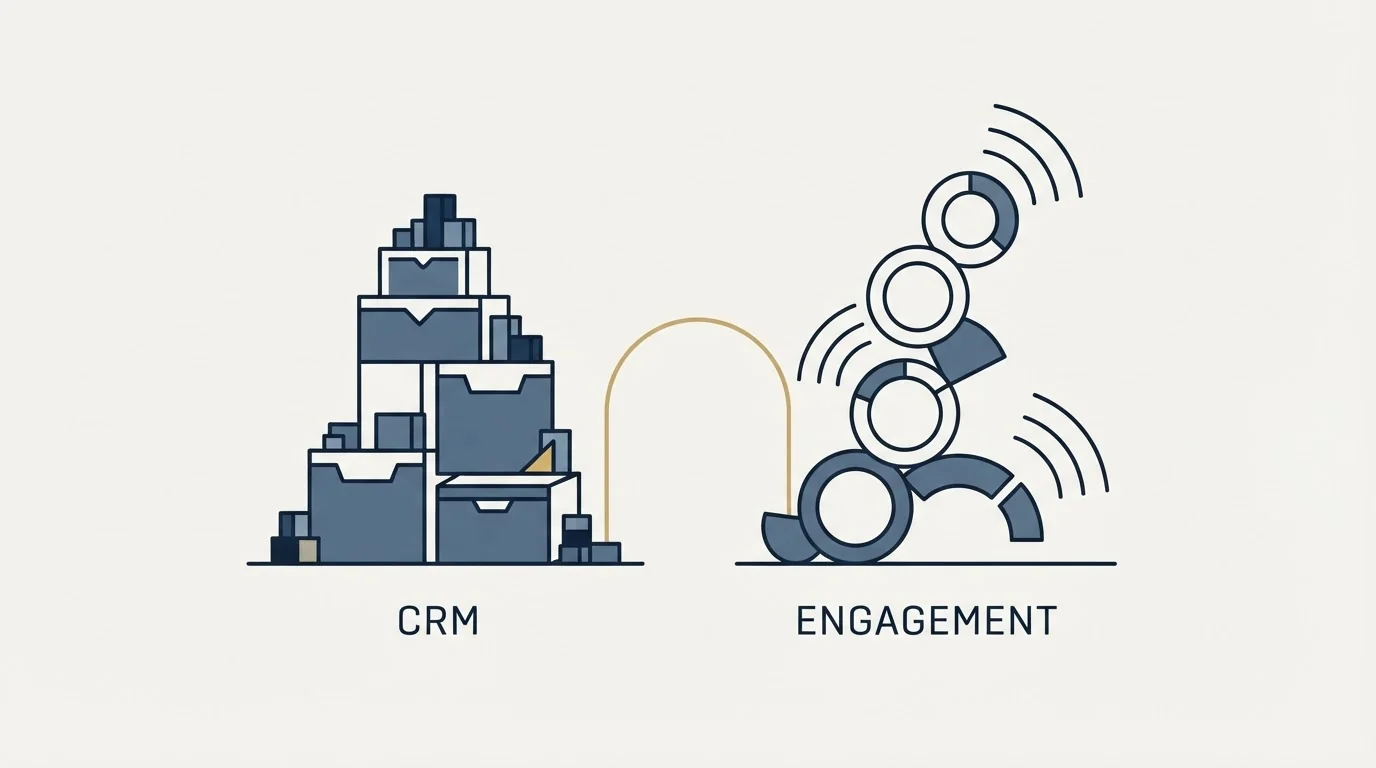
Copper records the relationship and Gong runs the touches, so these two sit at different points in one outbound run rather than competing. Copper enters at $29/mo and Gong publishes no rate at all. Their published capability lists still collide on 2 classes, so decide which system owns the send before connecting them.
Key takeaways
- The entry price is not the price of the capability being compared. Copper lists "Bulk email" and "Workflow automation" on Professional and "Email series" on Business, while Basic carries "Contact enrichment" and a "2,500 contact limit", so an outbound team is looking at Professional at $69/mo rather than the $29/mo on the front of the page.
- Gong publishes no rate on any surface reached today, so half of this budget arrives from a sales call. That is the half more likely to be the larger of the two.
- "Minimal feature overlap" does not hold on this pair. The two published lists collide on 2 classes, starting with outbound email, which is a decision about which system owns that job rather than a feature win for either.
- Agree which system owns contact status before connecting them, and match on email address. Two tools both convinced they own that field is how somebody who already replied keeps being mailed.
Reviewed and updated August 29, 2026
Copper vs Gong: Cross-Category Comparison
A team pricing Copper against Gong usually starts from the two entry figures, and on this pair one of those figures is misleading. Copper lists bulk email on Professional, at $69/mo, so the number a buyer needs is the second one down the page rather than the first.
The Short Answer
Buy for the gap you can name. If deals are being worked and nobody can describe the pipeline, Copper is the purchase. If the pipeline is fine and the top of it is empty, Gong is the purchase. If both are true, the pipeline goes first.
Only one of the two publishes a rate. Gong ends at a form, so the pair cannot be costed without a sales call, which is a reason to buy the side you can price first and get the quote while it runs.
Why Compare These Two Tools?
CRMs track the entire customer lifecycle and deal pipeline, while sales engagement platforms focus on the outreach phase. Many teams debate whether to invest in a CRM with built-in engagement features or use separate best-of-breed tools.
Copper is a CRM platform focused on customer relationship management. A CRM built specifically for Google Workspace users, offering deep integration with Gmail, Google Calendar, and Google Drive. Copper automatically captures and organizes contacts and activities from Google apps, minimizing manual data entry and providing a familiar interface.
Gong is a sales engagement platform focused on multi-channel sales outreach. Revenue AI platform that captures and analyzes customer interactions across calls, emails, and meetings to deliver deal intelligence, forecasting, and sales coaching insights.
Where Each Tool Fits in Your Workflow
- Step 1Outreach orchestration
Gong covers multi-channel sales outreach.
- Step 2Pipeline and deal tracking
Copper covers customer relationship management, from $29/mo.
| Aspect | Copper | Gong |
|---|---|---|
| Category | CRM Platform | Sales Engagement Platform |
| Workflow Stage | Pipeline and deal tracking | Outreach orchestration |
| Primary Focus | Customer relationship management | Multi-channel sales outreach |
| Starting Price | $29/mo | Contact Sales |
| Features Listed | 8 | 10 |
| Integrations | 8 | 12 |
What Each Side Does in a Cold Outbound Run
Neither of these tools sends cold volume for you. Copper is where a conversation gets recorded once it exists, and Gong is where the touch is orchestrated and measured. Cold sending itself happens on separate, warmed sending inventory, which is a different purchase again.
The house rule behind that is one message per campaign. No bump sequences, no thread replies. A second email under the one somebody already ignored reads as a bump whatever the tool calls it, so the lever is a better list and a better first message rather than more touches.
The cost of a bad list is not the wasted send, it is the sender reputation. Cold outbound runs on shared inventory, so one campaign mailing stale records damages placement for every campaign beside it.
Meetings are the other place the two categories separate. A meeting counts when it matches criteria agreed in writing before launch, and neither tool decides that. Copper is where the agreed definition gets recorded against the account so the same standard survives a rep change.
Both categories are wider than the two names on this page, and sales engagement in particular has several tools doing broadly this job; a roundup of Outreach alternatives is a quick way to see the shape of that shelf before committing a budget to one of them.
Pricing Comparison
Copper Pricing
| Plan | Price |
|---|---|
| Basic | $29/mo |
| Professional | $69/mo |
| Business | $134/mo |
Paid annually the same three tiers run $23, $59 and $99 per seat per month, which the page labels "Up to 26% off".
Contact ceilings run 2,500, then 15,000, then unlimited.
Source: Copper Pricing
Gong Pricing
| Plan | Price |
|---|---|
| Gong (platform) | Contact Sales |
Source: Gong Pricing
Pricing Context
A direct price comparison is not available here, because only one of the two publishes a rate on the pages fetched for this page. Gong publishes its pricing model and no rate. Its pricing page says "Licenses are priced per user", that "There is a platform fee based on the number of users supported", and that "You can integrate your existing tech stack for free." The quote form opens by banding team size, starting at "1 - 50".
What the Entry Price Does Not Buy
Copper lists "Bulk email" and "Workflow automation" on Professional and "Email series" on Business, while Basic carries "Contact enrichment" and a "2,500 contact limit". So the $29/mo on the front of the page buys a place to keep records, and the tier that does outbound work is Professional at $69/mo.
Gong publishes no ladder on any of the 3 Gong pages fetched for this page, so there is no entry price to read and nothing is gated in public. A platform fee on top of per seat licensing is the part that matters for a small team, because it means cost per rep does not fall in a straight line as seats are added, and the fee is the half nobody can estimate from outside.
The practical consequence is the same either way. Take the number for the tier that carries the capability being compared, not the number at the top of the page, before either tool goes into a budget.
What the Pair Costs at a Realistic Team Size
The team below is invented, not a client. Five sellers, all needing a seat in both systems, no add-ons, no onboarding fee.
| Line item (illustrative team of five) | Per month | Twelve months |
|---|---|---|
| Copper Professional, 5 seats at $69 | $345 | $4,140 |
| Gong, 5 seats | not published | not published |
| Illustrative total | cannot be computed | cannot be computed |
The Copper rate above is the monthly rate; $59 paid annually. Seat count is the variable that moves this most, and it moves it linearly, so the arithmetic scales cleanly in both directions.
The second line is the point. Every one of the 3 Gong pages fetched for this page carries no price at all, so half of this budget is a quote and it is usually the larger half. A plan that pencils in a number for it is guessing, and the guess is what gets the business case signed off before anyone has seen the real figure.
Feature Highlights
Copper Key Capabilities (CRM Platform)
- Native Google Workspace integration
- Automatic contact and activity capture from Gmail
- Visual pipeline management
- Task automation and workflow builder
- Contact enrichment
- Bulk email and email templates
- Custom reporting and dashboards
- Project management and collaboration
Gong Key Capabilities (Sales Engagement Platform)
- AI-powered call recording and transcription
- Deal intelligence and risk alerts
- Revenue forecasting with pipeline analytics
- Sales engagement sequences (Gong Engage)
- Coaching insights and talk-track analysis
- Email and web conferencing capture
- Smart trackers for competitive mentions
- Team and rep performance dashboards
- Data Cloud for revenue data warehouse
- Ask Anything AI-generated insights
Feature Overlap
The published lists collide on 2 classes, so the two sit closer together than a category label suggests:
- Outbound email. Copper lists "Bulk email and email templates", and Gong lists "Sales engagement sequences (Gong Engage)".
- Reporting dashboards. Copper lists "Custom reporting and dashboards", and Gong lists "Revenue forecasting with pipeline analytics".
Read that as a decision rather than a feature win. On a house that sends one message per campaign, two systems able to mail the same list is something to settle once, by picking which one owns the send and turning the other one off for that job. The caveat is the important half: this compares the exact wording of two vendor lists, so it says what each vendor chose to publish, not what either product can be made to do.
Integration Ecosystem
Copper Integrations
Copper connects with: Google Workspace, Gmail, Google Calendar, Google Drive, Slack, Zapier, Mailchimp, Zendesk.
Gong Integrations
Gong connects with: Salesforce, HubSpot, Microsoft Dynamics 365, Zoom, Microsoft Teams, Google Meet, Webex, Gmail, Microsoft Outlook, Slack, Outreach, Salesloft.
Shared Integrations
Both tools integrate with: Gmail, Slack. This shared ecosystem means they can work together in your tech stack.
Do You Need Both, and in Which Order?
Both on day one is rarely the right shape, and the order matters more than the answer either way. Buy the side that closes the gap you can name, run it for a quarter, then decide whether the second one is still worth its seat cost.
Gong publishes no rate on any of the 3 Gong pages fetched for this page, so the second half of the budget is a quote. Buy the half you can price first and get the quote while it runs, rather than holding the whole decision behind a sales call.
The failure to avoid is buying the second tool to fix a problem the first one was never going to solve. A pipeline nobody updates does not get fixed by better sequencing, and a list that bounces does not get fixed by a tidier deal board.
- Yes: Deals are progressing but nobody can say what is in the pipeline
- No: The pipeline is clean and the top of it is empty
- Depends: Two systems are already mailing the same people
- Depends: Nobody agrees what counts as a qualified meeting
A yes on the first line points at Copper. A yes on the second points at Gong. A yes on the third means the next purchase is a decision about ownership rather than a tool at all.
When to Choose Copper
- Your biggest gap is in pipeline and deal tracking
- You already have a solid sales engagement platform and need specialized customer relationship management capabilities
- You want an affordable entry point ($29/mo)
- Your team's primary bottleneck is customer relationship management
When to Choose Gong
- Your biggest gap is in pipeline and deal tracking
- You already have a solid sales engagement platform and need specialized customer relationship management capabilities
- You want an affordable entry point ($29/mo)
- Your team's primary bottleneck is customer relationship management
- Your biggest gap is in outreach orchestration
- You already have a CRM platform and need better multi-channel sales outreach
- You need enterprise-grade multi-channel sales outreach features
- Your team's primary bottleneck is multi-channel sales outreach
- Your biggest gap is in outreach orchestration
- You already have a CRM platform and need better multi-channel sales outreach
- You need enterprise-grade multi-channel sales outreach features
- Your team's primary bottleneck is multi-channel sales outreach
Rolling the Second Tool In Without Breaking the First
Write down which system owns each field before anything is connected. The common mess is two tools both claiming to own contact status, so a rep marks somebody as replied in one place and the other keeps mailing them.
Pick a matching key and stick to it. Email address is the only key that survives a job change badly but joins reliably; company name does not join at all across two systems that normalise it differently.
Run one segment through the connected pair before the whole list goes near it. Fifty records is enough to read by hand, and reading them by hand is what catches a mapping that looks right in a settings screen and is wrong in the data.
- Days 1 to 3Agree field ownership
One system owns contact status, one owns activity history. Write it down.
- Days 4 to 7Connect on one segment
Fifty records, matched on email address, read by hand.
- Days 8 to 10Read the coverage
Count the records that matched, the ones that duplicated, and the ones that silently did neither.
- Days 11 to 14Widen or stop
Widen only after the fifty read clean. A bad mapping at fifty records is a bad mapping at fifty thousand.
Set a refresh cadence for whichever side holds the contact data, and put a date on it. Records decay whether or not anybody is looking.
Using Both Together
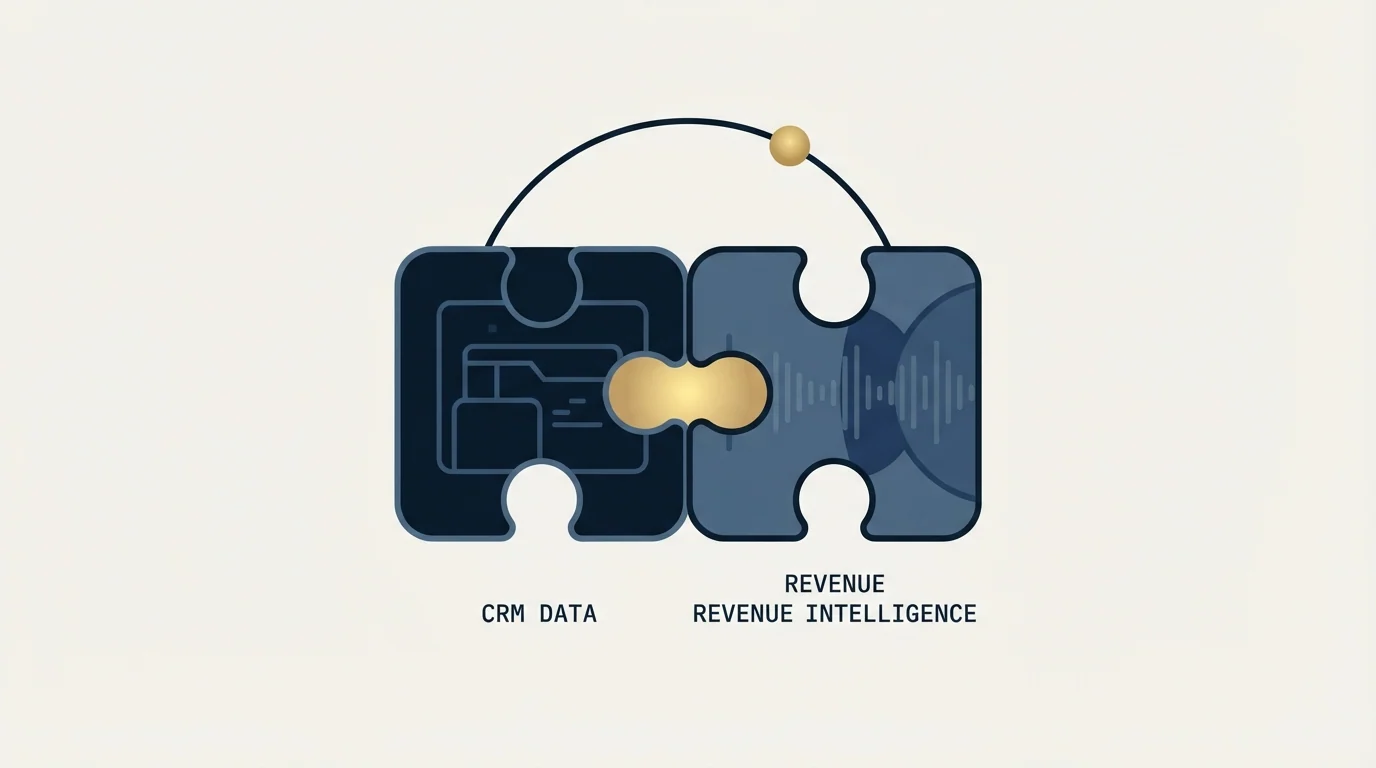
Many sales teams use both a CRM platform and a sales engagement platform as part of their complete workflow. Copper handles pipeline and deal tracking while Gong covers outreach orchestration.
Since both tools integrate with Gmail and Slack, connecting them in your workflow is straightforward.
The part worth deciding before they are connected is which system owns contact status. Two tools both convinced they own it is how somebody who replied keeps getting mailed.
The Decision Shortcut
If the pipeline is the thing nobody can describe, buy Copper. If the top of the pipeline is empty, buy Gong. If both are true, the pipeline goes first, because an outbound push into a system nobody maintains produces conversations that get lost rather than deals that close.
If neither is clearly true, buy neither this quarter and fix the list instead. That is the cheapest of the three options and it is the one most likely to move the number.
How These Figures Were Checked
Vendor figures on this page are attributed to the page they appear on, because vendors contradict themselves across their own surfaces.
- Copper. Every figure on this page was matched against Copper's pricing page as it renders today.
- Gong. Every figure on this page was matched against Gong's pricing page as it renders today.
Any arithmetic above is this page's own, done on those inputs and labelled illustrative where it appears.
Related Reading
- Best Copper Alternatives in 2026
- Best Gong Alternatives in 2026
- Copper vs Salesforce: CRM Platform Comparison
- Copper vs HubSpot CRM: CRM Platform Comparison
- Gong vs Outreach: Sales Engagement Platform Comparison
If you would rather have this run for you, RevenueFlow books qualified meetings on a pay-per-meeting basis and publishes client results.
Pricing and features are taken from the vendors' own pages. Verify current terms with the vendor before relying on them.
Frequently asked questions.
Frequently asked questions- Do I actually need both Copper and Gong?
- Not on day one. Buy the side that closes the gap you can name, run it for a quarter, then decide whether the second one is still worth its seat cost. Teams running continuous outbound usually end up with both, joined on email address, rather than choosing between them once and never revisiting it.
- Which one should I buy first?
- Neither, at the price on the front of the page. Copper lists "Bulk email" and "Workflow automation" on Professional and "Email series" on Business, while Basic carries "Contact enrichment" and a "2,500 contact limit", so the tier that does outbound work on Copper is Professional at $69/mo. Take the number for the tier carrying the capability you are comparing, then decide.
- What does the pair cost for a small team?
- Only half of it can be answered. Copper publishes a ladder, so five seats is simple arithmetic. Gong publishes no rate on any surface reached today, so the second line is a quote. Any total that pencils a number in for it is a guess, and it is usually the larger half of the two.
- How much do these two overlap in practice?
- More than the category labels suggest. The two published lists collide on 2 classes, including outbound email. That is a comparison of what each vendor chose to publish rather than of what either product can do, and the useful response is to pick one owner for the overlapping job.
About the author.

Tim Carden is CMO / CTO at RevenueFlow, which builds and operates outbound revenue engines for B2B companies. Studied at McGill University.
Tim Carden · CMO / CTO
Connect on LinkedIn →Explore more.
Ready to scale your outreach?
We build GTM engines that book real meetings. See the receipts.
Related articles.
Kommo vs Luru: CRM Platform vs Sales Engagement Platform Comparison
Compare Kommo (CRM platform) and Luru (sales engagement platform) side by side. See pricing, features, and integrations to decide which one, or both, your stack needs.
Dripify vs Membrain: Sales Engagement Platform vs CRM Platform Comparison
Compare Dripify (sales engagement platform) and Membrain (CRM platform). See pricing, features, and integrations to decide which one, or both, your stack needs.
Gong vs NeverBounce: Sales Engagement Platform vs Data Enrichment Tool Comparison
Gong vs NeverBounce: what Gong's own pages say about enrichment, what NeverBounce's API returns about an address, and how each vendor prices.
Agile CRM vs Copper: CRM Platform Comparison
Compare Agile CRM and Copper side by side. See pricing, features, and integrations to choose the right CRM platform for your needs.
AroundDeal vs Leadspicker: Data Enrichment Tool vs Sales Engagement Platform Comparison
Compare AroundDeal (data enrichment tool) and Leadspicker (sales engagement platform) side by side. See pricing, features, and integrations to decide which one, or both, your stack needs.
AroundDeal vs Salesflare: Data Enrichment Tool vs CRM Platform Comparison
Compare AroundDeal (data enrichment tool) and Salesflare (CRM platform) side by side. See pricing, features, and integrations to decide which one, or both, your stack needs.