Is Datanyze Legit? What the Store Listing Proves
Datanyze is published by ZoomInfo and its extension shipped in May 2026. Its own website returned 403 to every fetch, which changes what can honestly be claimed.
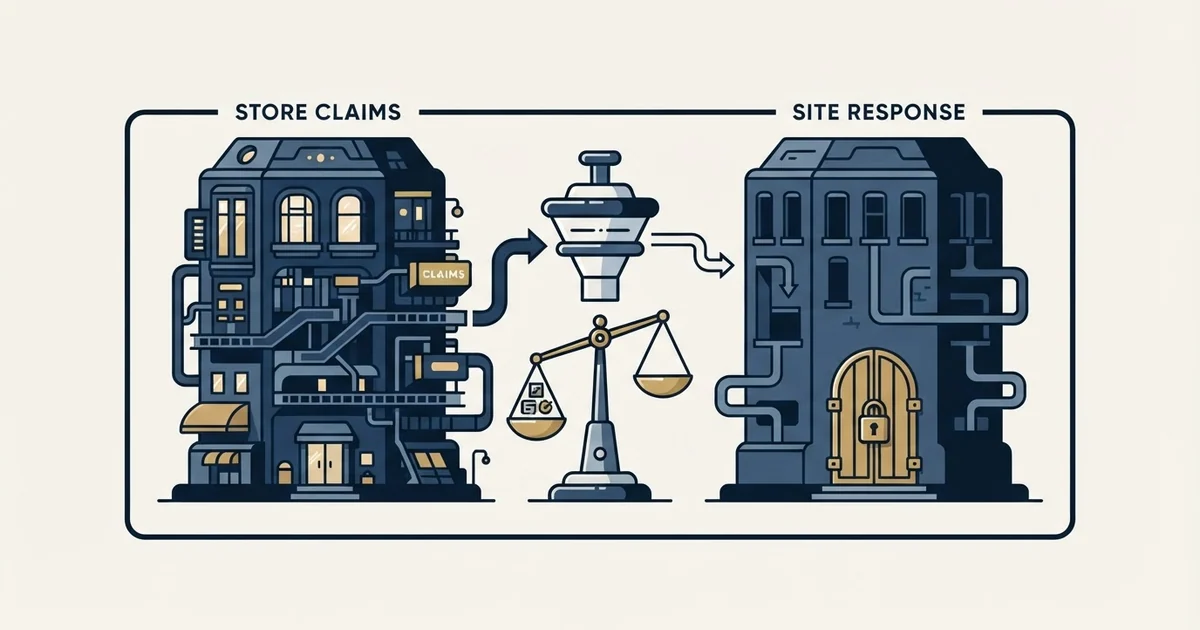
Datanyze is a real product published by ZoomInfo Technologies, with a Chrome extension updated in May 2026, roughly 40,000 stated users and a 3.7 rating from 237 raters. Its own website returned 403 to every fetch, so no current pricing or plan claim is made here. Coverage claims come from the store listing.
Key takeaways
- The Chrome Web Store listing, fetched 16 August 2026, names ZoomInfo Technologies Inc. as publisher with a datanyze@zoominfo.com support address, which settles the ownership question first-hand.
- The extension is maintained: version 6.8.14 shipped 17 May 2026, against a stated 40,000 users and a 3.7 average from 237 ratings, a sample under one percent of the user base.
- Three fetches of datanyze.com returned HTTP 403, so no claim about current pricing, plans or trial terms appears here; the site's sitemap index served normally and carries a lastmod of 21 April 2021.
- Published coverage claims of 120 million contacts, 84 million email addresses and 48 million direct dials are vendor figures and say nothing about fill rate on your own segment.
Reviewed and updated September 1, 2026
The Datanyze Chrome extension listing names its publisher as ZoomInfo Technologies Inc., gives a support address of datanyze@zoominfo.com, and shows a version stamped 6.8.14 updated on 17 May 2026. Fetched on 16 August 2026, that listing answers the legitimacy question more directly than any review site: the product is real, it belongs to one of the largest data companies in the category, and somebody shipped code to it three months ago.
The more interesting part of this evaluation is what happened next. Three attempts to fetch datanyze.com, its pricing page and one of its help-centre articles all returned HTTP 403 to a plain request, while the site's robots.txt and sitemap served normally. That combination shapes what can honestly be said here, and it is worth being precise about which claims rest on which evidence.
The Datanyze cost question is answered on the vendor's own pricing page and nowhere reliable else: the plans are credit-metered, one credit per contact reveal, with a free entry tier and a small monthly ladder above it, so the arithmetic that matters is credits divided by the number of records you actually need rather than the headline figure. Third-party round-ups of this vendor's pricing disagree with each other often enough that the pricing page is the only citation worth using.
What the store listing establishes
The listing is a first-party surface with a publisher identity attached, which makes it the strongest single piece of evidence available without a login.
It names ZoomInfo Technologies Inc. as the developer, with a registered address in Vancouver, Washington, a D-U-N-S number, and a declaration that the publisher has identified itself as a trader under EU rules. It carries a 3.7 average from 237 ratings across a stated 40,000 users. It publishes coverage claims: data on file for over 120 million contacts, including over 84 million email addresses and 48 million direct dial numbers. And it carries the Chrome Web Store's own note that the publisher has a good record with no history of violations, alongside developer declarations that data will not be sold to third parties, used for unrelated purposes, or used to determine creditworthiness.
From 237 ratings on the store listing
The listing's own installed figure
Version 6.8.14 of the extension
None of that makes the data good. It does settle the questions people usually mean by legitimacy: the company exists, the product is owned and maintained, and it is not an anonymous scraper operating from nowhere.
Reading a 3.7 without over-reading it
A 3.7 sits in an awkward band. It is not the near-five of a beloved niche utility, and it is not the sub-three of something broken. Two things make it hard to interpret and both should temper any conclusion drawn from it.
The population is 237 ratings against 40,000 stated users, which is well under one percent. Extension ratings skew towards people motivated enough to write one, which in a paid data tool usually means a billing dispute or a run of bad records rather than a quiet quarter of everything working.
The rating also spans the whole life of a product that changed owners. Datanyze began as a technographics company and its extension now sits under ZoomInfo's publisher account, so a review from several years ago and a review from this year are describing different products with the same name. That is not a reason to dismiss the score. It is a reason to treat it as one weak signal beside the concrete facts on the same page.
What could not be verified, stated as such
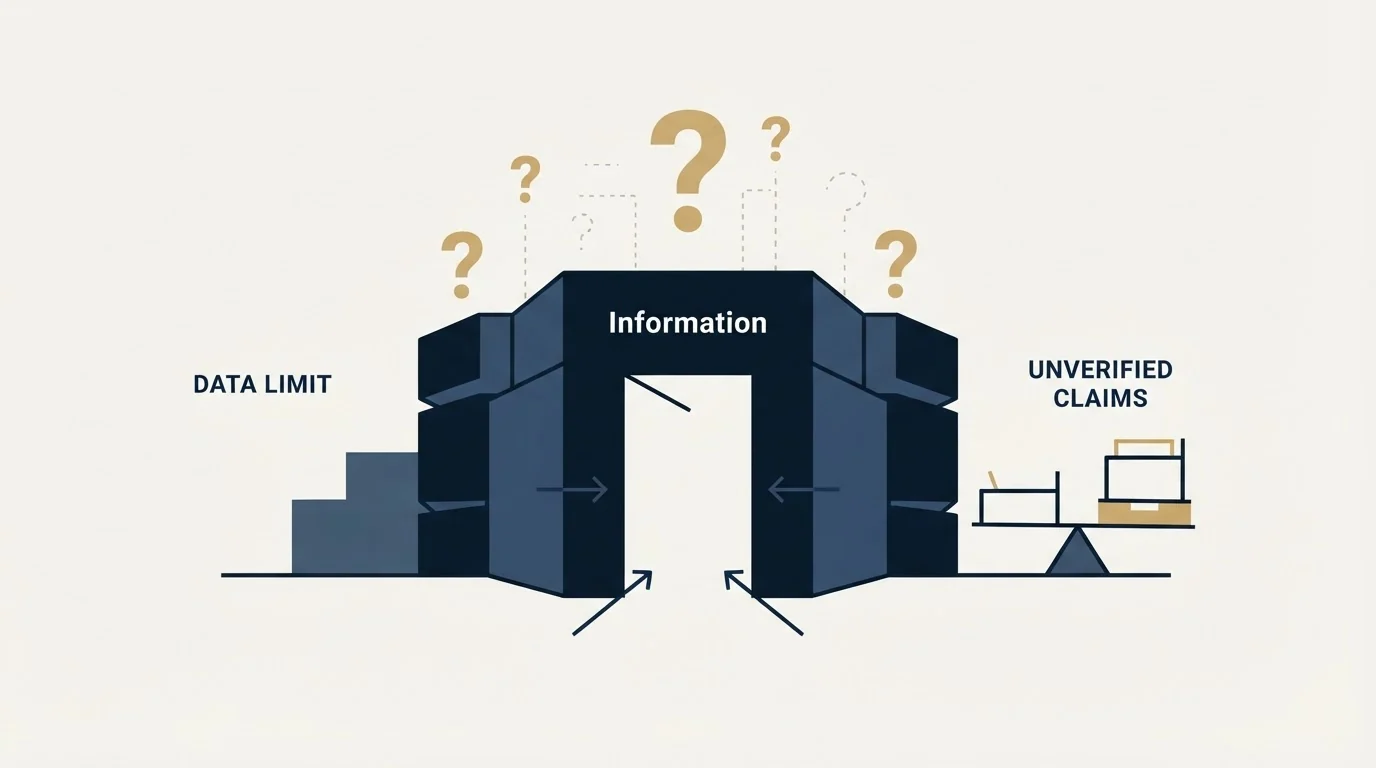
Three fetches of datanyze.com returned 403. A 403 is a statement about the request, not about the site, and specifically not about what the vendor publishes. No claim appears anywhere in this article about Datanyze's current pricing, plan structure, trial terms or free tier, because those pages could not be read.
Two things that did serve are worth recording carefully. The site's robots.txt returned normally and blocks a list of crawlers by name, including ZoomBot and ZoominfoBot, which is a configuration predating the current ownership rather than anything meaningful about the product. The sitemap index also returned normally: it points at a single child sitemap carrying a lastmod date of 21 April 2021.
A lastmod value describes the sitemap, not the site. Plenty of live sites carry stale sitemap metadata while publishing daily. Set beside an extension shipped in May 2026, the honest reading is that the marketing site and the extension are maintained on very different rhythms, and that anyone evaluating Datanyze should get plan and pricing information from the vendor in writing rather than from any page, including this one.
- Yes: Owned and published by ZoomInfo Technologies Inc.
- Yes: Actively maintained as an extension, version 6.8.14 shipped 17 May 2026
- Depends: Coverage claims of 120M contacts, 84M emails, 48M direct dials, published by the vendor
- No: Current pricing, plans and trial terms, which returned 403 to every fetch
- No: Data accuracy on your specific market, which no listing can answer
The extension is the product surface
For most buyers the extension is not an accessory to Datanyze, it is Datanyze. The listing describes the workflow plainly: contact information including email addresses, direct dials and mobile numbers pulled from LinkedIn profiles and company websites without leaving the browser, and, when you open the employee list for a company on LinkedIn, contact details rendered for that list on the page.
That is a per-profile reveal model, and it comes with the constraints every extension of this shape shares. It works where the page works, which means a LinkedIn layout change can break it. It captures one record at a time, so it is not a way to build a ten-thousand-row list. And it sees what you see, which is a permission question worth reading line by line before rolling it out across a team, alongside what LinkedIn's own terms say about extracting data from profiles.
The upside of that model is that judgement stays with a person. A rep looking at a profile decides whether the record is worth spending on, which produces smaller and usually better lists than a bulk export ever does.
Teams wondering whether a CRM like Copper could replace this workflow can see why the two tools actually serve different stages in the CRM versus enrichment tool comparison.
What the Datanyze reviews on page one actually are
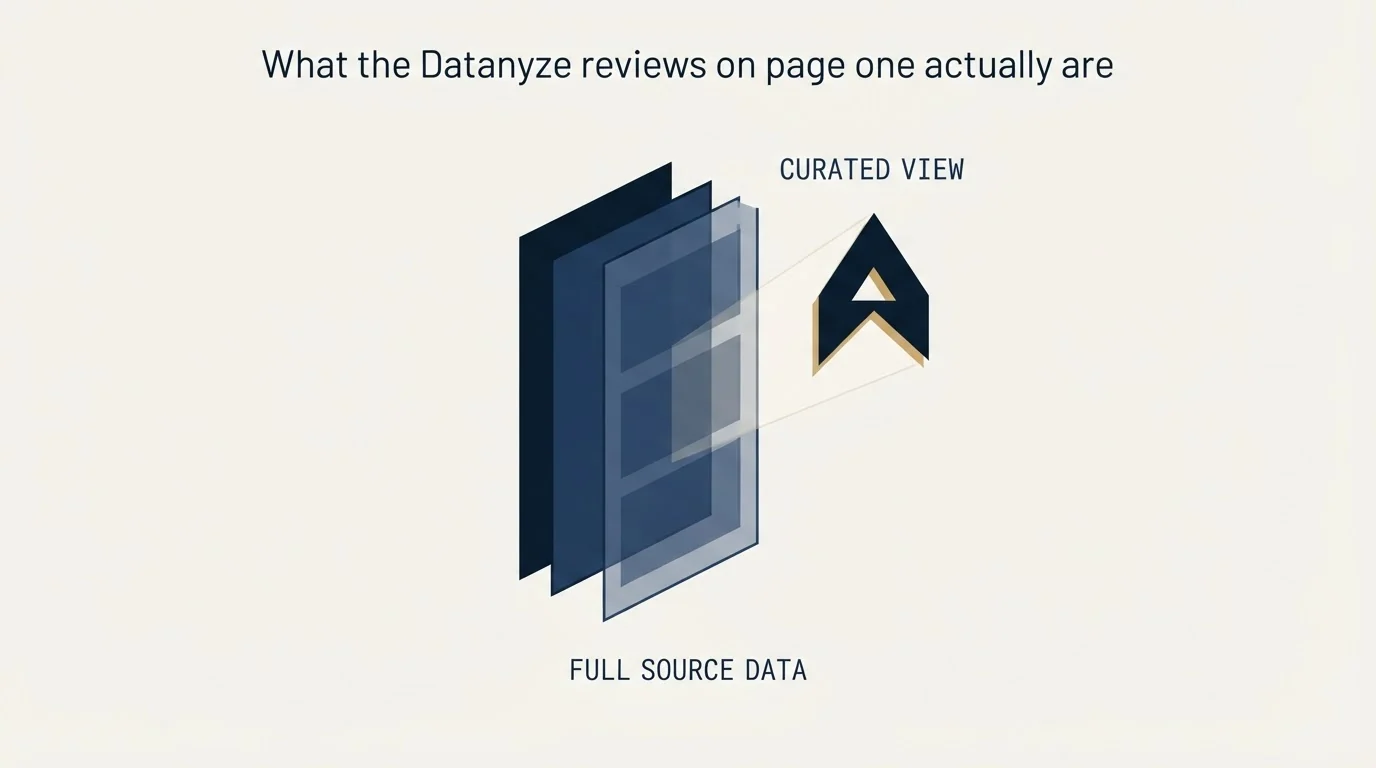
Worth knowing before you read any of them. The organic results for both the legitimacy question and the plain review query are the same set: Trustpilot, G2, Capterra and TrustRadius rating pages, a Reddit thread in a B2B sales community about contact-extraction tools, a security profile of the domain published by a security vendor, a Glassdoor page that rates the employer rather than the product, and a review published on ZoomInfo's own content operation.
That last one is the detail worth pausing on. The company publishing a prominent Datanyze review also owns Datanyze, which means the most authoritative-looking third-party assessment in the results is first-party content in a second-party costume. It is not necessarily wrong, and it is not neutral.
The rating pages themselves return a 403 to a plain fetch, so no score from any of them is quoted here. That is deliberate rather than incidental: a rating copied from a page nobody loaded is not evidence, and the store rating above is quoted only because the listing was fetched and can be grepped for the figure.
What an honest review comes down to
Coverage claims are unfalsifiable from outside. A 120 million contact database and an 84 million email database are perfectly plausible numbers for a ZoomInfo-owned asset, and they tell you nothing about whether the two hundred people in your segment are in it. Every vendor in this category publishes a large number and every buyer discovers the only figure that matters is fill rate on their own list.
So the review question collapses to a test, and the test is the same one that works for any of these tools. Take fifty companies you already know, in the exact segment you sell to. Try to reveal the specific role you target at each. Verify every address that comes back independently, outside the tool. Then compare the count that survives against what the same fifty produce from a second vendor.
That test also catches the failure mode a rating never surfaces: a database that is broad and shallow will return something for almost every company and be wrong about the person, while a narrower database will return fewer records that hold up. Fill rate without independent verification rewards the first behaviour, which is why the verification step is not optional. Records also age, and a list bought in one quarter and mailed in the next is a different list, which is what data decay does to any of these purchases.
Where it fits, and when to look past it

Datanyze fits a rep-driven workflow where prospecting happens on LinkedIn and the requirement is a handful of good records a day rather than a bulk file. Its ZoomInfo ownership means the underlying data is not a hobby project, and the extension being maintained in 2026 means it is not abandonware.
Buyers weighing volume prospecting against LinkedIn-driven tech stack intelligence can size up the tradeoff in a dedicated side-by-side data enrichment comparison.
It fits poorly if you need an API-driven pipeline, a documented rate card, or the enterprise contract terms a procurement team will ask for, since none of that could be read from the vendor's own surfaces here. Teams in that position generally end up comparing it against the alternatives in the same bracket, or against the parent company's own product, where the pricing and terms are at least documented. ZoomInfo's own legitimacy question is answered on considerably more published evidence, which is itself a useful comparison.
Teams weighing Datanyze against a broader contact-search competitor can see how the two tools diverge in focus and pricing in the Seamless.AI comparison.
Whatever tool ends up sourcing the records, the record is the easy part. The list still needs verifying at send time, the sending still needs infrastructure separate from your primary domain, and the campaign is still one message rather than a sequence. If you would rather buy the meetings than assemble that, we run the whole motion on a pay-per-qualified-meeting basis.
Pricing and features verified as of mid-2026. Verify current terms with the vendor before relying on them.
Sources: Datanyze Chrome extension listing, datanyze.com sitemap, datanyze.com robots.txt
Frequently asked questions.
Frequently asked questions- Is Datanyze still in business?
- Yes, as a ZoomInfo product. The Chrome Web Store listing names ZoomInfo Technologies Inc. as the publisher, gives a zoominfo.com support address, and shows version 6.8.14 shipped in May 2026. That is direct evidence of active maintenance, whatever the state of the marketing site, which returned 403 to every fetch attempted here.
- Who owns Datanyze?
- ZoomInfo. The extension's store listing lists ZoomInfo Technologies Inc. as the developer, with a Vancouver, Washington address, a D-U-N-S number and a datanyze@zoominfo.com contact address. That is a first-party surface with a verified publisher identity attached, which is stronger evidence than any third-party article about the acquisition.
- How much does Datanyze cost?
- No figure is quoted here, because the pricing page returned HTTP 403 to every request made for this article. A failed fetch is a statement about the request rather than about the vendor, so treat any price you find elsewhere as unverified and get plan terms from the vendor in writing before committing.
- Is a 3.7 star rating bad for a data tool?
- It is middling and hard to read. The 237 ratings represent well under one percent of the stated 40,000 users, extension reviewers skew towards people with a complaint, and the score spans a period in which the product changed owners. Treat it as one weak signal beside the concrete facts on the same listing.
About the author.

B2B cold email experts helping companies generate qualified leads through done-for-you outreach campaigns.
RevenueFlow Team
Explore more.
Ready to scale your outreach?
We build GTM engines that book real meetings. See the receipts.
Related articles.
Seamless.AI Email Finder: How It Works, What a Credit Buys
How Seamless.AI's email finder resolves a contact in real time, what one Universal Credit buys, the Total AI score on every address, and what the Chrome extension reads.
Firmographic Data Providers: What Six of Them Publish
Six firmographic data providers read from their own pages: the fields each sells, the coverage each states, how the data is delivered, and who prints a price.
Zeliq Pricing: One Seat Rate and a Credit Meter
Zeliq prices one self-serve seat in dollars with a credit meter that never expires. Both billing states, the three credit rates, the top-up ladder and the Custom floor.
Salesgear Pricing: Two Ladders Under One Plan Title
Salesgear's page is titled as one plan and carries a Data ladder and an Outreach ladder. Both at both billing states, what each meters, and the two vendor-side conflicts.
Bookyourdata Pricing: 25 Packs, Priced Per Contact
Bookyourdata sells credits in twenty-five packs with no subscription. The dated ladder, the per-contact rates rendered in the browser, the guarantee rule and BeSpoke.
LinkedIn Chrome Extensions, Sorted by the Job They Do
The category holds four unrelated products. Which job each extension does, what six vendors publish about their own, and what none of them change.