Education Cold Email Benchmarks: 2026 Performance Data
Industry benchmark data for education cold email campaigns, including open rates, reply rates, and conversion metrics for companies targeting K-12 schools, higher education, and corporate training organizations.
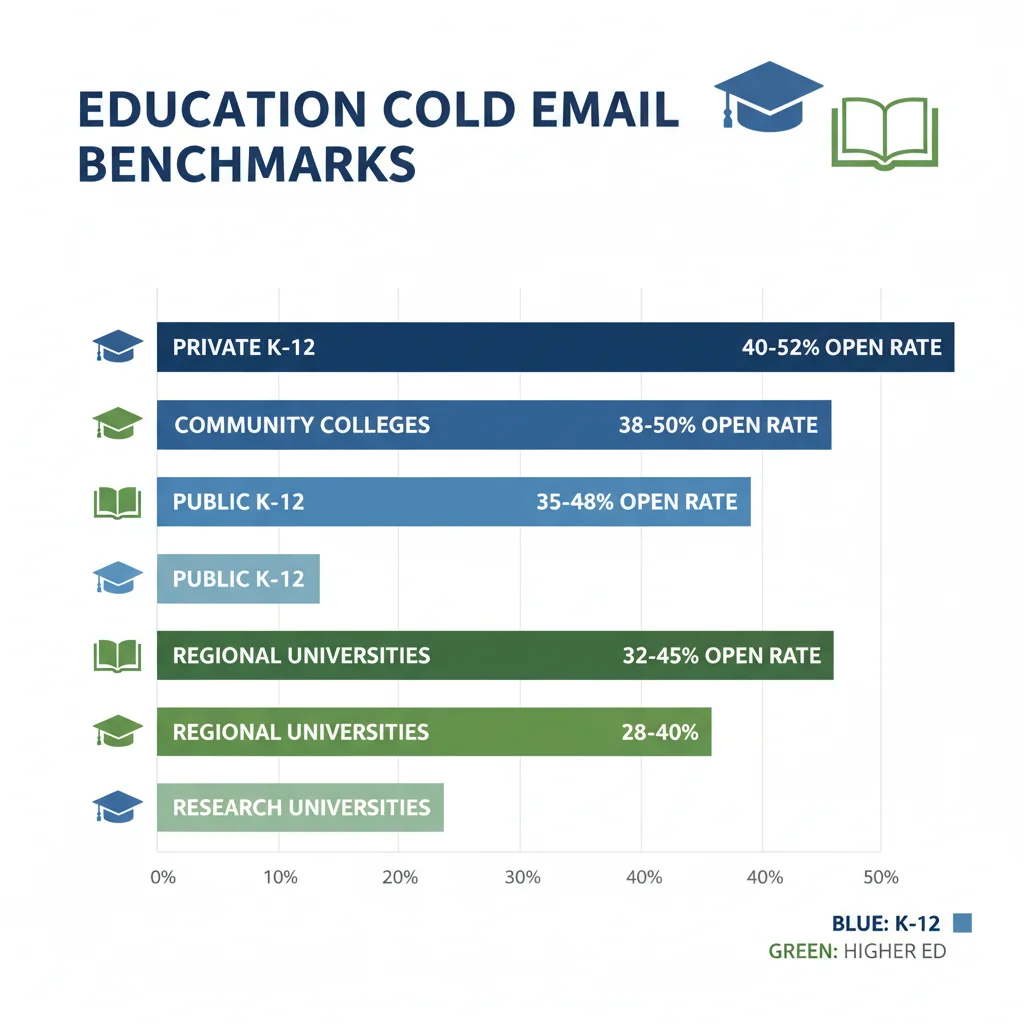
Education cold email benchmarks for 2026 show average open rates of 28-38%, reply rates of 1.5-3%, positive reply rates of 0.8-1.8%, and meeting booking rates of 0.4-1%. Performance varies significantly by institution type, with private K-12 schools achieving the highest engagement (40-52% open rates, 3.5-6% reply rates) while research universities show the lowest (28-40% open rates, 1.5-3% reply rates). Product category also impacts results, with EdTech tools and corporate training platforms outperforming administrative systems.
Key takeaways
- Private K-12 schools deliver the highest cold email engagement with 40-52% open rates and 3.5-6% reply rates, significantly outperforming research universities at 28-40% and 1.5-3% respectively.
- EdTech tools and apps achieve the strongest meeting booking rates at 1-2.3%, nearly double the performance of student information systems at 0.5-1.3%.
- Corporate L&D departments respond more readily than academic institutions, with meeting booking rates of 1.1-2.4% compared to 0.4-1% for research universities.
- Average education cold email performance across all segments includes 28-38% open rates, 1.5-3% reply rates, and 0.4-1% meeting booking rates.
- Curriculum and content solutions generate 1.5-3% positive reply rates, substantially higher than LMS platforms at 1-2.5%, reflecting their direct impact on teaching outcomes.
Reviewed and updated September 5, 2026
The education sector presents unique opportunities and challenges for B2B cold email campaigns. Schools, universities, and corporate training organizations are increasingly adopting technology solutions, but procurement processes, budget cycles, and decision-making structures differ significantly from typical B2B environments.
This benchmark report provides education-specific data to help companies evaluate their cold email performance when targeting educational institutions and training organizations. The metrics represent typical performance ranges observed across companies selling into the education vertical.
Methodology Note
Education encompasses diverse segments from K-12 public schools to elite private universities to corporate learning and development departments. The benchmarks in this report are compiled from industry research and commonly observed performance ranges. Your results will vary based on your specific target segment, product type, and the regulatory environment affecting your target institutions.
Key Education Cold Email Metrics
Education professionals balance pedagogical priorities with operational and budget constraints. Engagement patterns reflect careful evaluation of how solutions impact student outcomes and institutional effectiveness.
Average
Average
Average
Average
Bar widths are equal here because these stage values are not a single comparable measure.
Open Rates
Open rates in education are moderate, with significant variation based on institution type and the recipient's role.
Education Industry Benchmarks:
- Below average: Under 28%
- Average: 28-38%
- Good: 38-48%
- Excellent: 48%+
By Institution Type:
| Institution Type | Typical Open Rate Range |
|---|---|
| Private K-12 Schools | 40-52% |
| Public K-12 Schools | 35-48% |
| Community Colleges | 38-50% |
| Small Private Colleges | 38-50% |
| Regional Universities | 32-45% |
| Research Universities | 28-40% |
| Corporate L&D | 35-48% |
Private schools and community colleges typically show higher open rates because they have more flexibility in vendor evaluation and often have fewer layers of gatekeeping.
Reply Rates
Education professionals tend to be thoughtful in their responses and may engage in preliminary information gathering before committing to meetings.
Education Industry Benchmarks:
- Below average: Under 1.5%
- Average: 1.5-3%
- Good: 3-5%
- Excellent: 5%+
By Institution Type:
| Institution Type | Typical Reply Rate Range |
|---|---|
| Private K-12 Schools | 3.5-6% |
| Public K-12 Schools | 2.5-4.5% |
| Community Colleges | 3-5% |
| Small Private Colleges | 3-5% |
| Regional Universities | 2-4% |
| Research Universities | 1.5-3% |
| Corporate L&D | 3-5.5% |
Positive Reply Rates
Education buyers often request pilot programs, research evidence, or case studies from similar institutions before committing to formal meetings.
Education Industry Benchmarks:
- Below average: Under 0.8%
- Average: 0.8-1.8%
- Good: 1.8-3%
- Excellent: 3%+
Meeting Booking Rates
Converting education interest to scheduled meetings requires accommodating academic schedules and committee-based evaluation processes.
Education Industry Benchmarks:
- Below average: Under 0.4%
- Average: 0.4-1%
- Good: 1-2%
- Excellent: 2%+
By Institution Type:
| Institution Type | Typical Meeting Rate Range |
|---|---|
| Private K-12 Schools | 1.2-2.5% |
| Public K-12 Schools | 0.8-1.8% |
| Community Colleges | 1-2.2% |
| Small Private Colleges | 1-2.2% |
| Regional Universities | 0.6-1.5% |
| Research Universities | 0.4-1% |
| Corporate L&D | 1.1-2.4% |
Benchmarks by Education Product Category
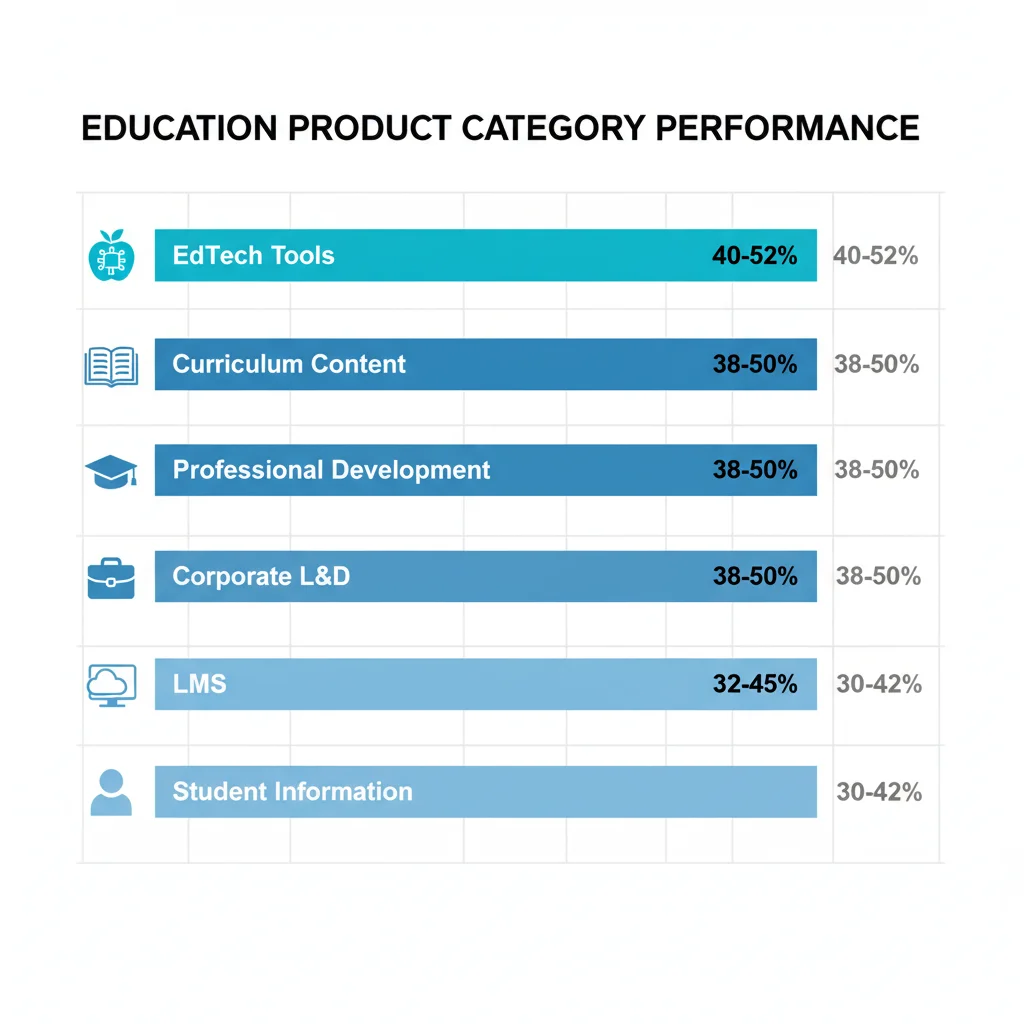
Performance varies significantly based on the type of solution you are selling to educational institutions.
Learning Management Systems (LMS)
Course delivery platforms, LMS, and learning experience platforms.
Typical Performance Ranges:
- Open rates: 32-45%
- Reply rates: 2-4%
- Positive reply rates: 1-2.5%
- Meeting booking rates: 0.6-1.5%
LMS decisions involve significant organizational change and often require extensive stakeholder input.
Student Information and Administration
SIS, enrollment management, and administrative platforms.
Typical Performance Ranges:
- Open rates: 30-42%
- Reply rates: 2-3.5%
- Positive reply rates: 1-2%
- Meeting booking rates: 0.5-1.3%
Curriculum and Content
Digital curriculum, educational content, and assessment tools.
Typical Performance Ranges:
- Open rates: 38-50%
- Reply rates: 3-5%
- Positive reply rates: 1.5-3%
- Meeting booking rates: 0.9-2%
Curriculum solutions often see stronger engagement because they directly impact teaching and learning outcomes.
EdTech Tools and Apps
Classroom technology, educational apps, and supplemental learning tools.
Typical Performance Ranges:
- Open rates: 40-52%
- Reply rates: 3.5-5.5%
- Positive reply rates: 1.8-3.5%
- Meeting booking rates: 1-2.3%
Teacher-facing tools often see higher engagement, particularly when they address clear classroom needs.
Professional Development
Teacher training, professional learning, and certification programs.
Typical Performance Ranges:
- Open rates: 38-50%
- Reply rates: 3-5%
- Positive reply rates: 1.5-3%
- Meeting booking rates: 0.9-2%
Facilities and Operations
School facilities management, safety, and operational tools.
Typical Performance Ranges:
- Open rates: 35-48%
- Reply rates: 2.5-4.5%
- Positive reply rates: 1.2-2.8%
- Meeting booking rates: 0.7-1.6%
Corporate Training and L&D
Corporate learning platforms, training content, and skill development.
Typical Performance Ranges:
- Open rates: 38-50%
- Reply rates: 3.5-5.5%
- Positive reply rates: 1.8-3.5%
- Meeting booking rates: 1.1-2.4%
Corporate L&D typically shows more flexible purchasing processes than academic institutions.
Benchmarks by Target Persona
Education organizations involve numerous decision-makers with different priorities and authority levels.
Superintendents and District Leadership (K-12)
Typical Performance Ranges:
- Open rates: 30-42%
- Reply rates: 2-3.5%
- Positive reply rates: 1-2%
- Meeting booking rates: 0.5-1.2%
District leadership engagement often requires navigation through administrative assistants and formal processes.
Principals and School Leaders
Typical Performance Ranges:
- Open rates: 38-50%
- Reply rates: 3-5%
- Positive reply rates: 1.5-3%
- Meeting booking rates: 0.9-2%
School-level leaders have more direct engagement with classroom needs and may champion solutions.
Teachers and Department Heads
Typical Performance Ranges:
- Open rates: 42-55%
- Reply rates: 3.5-5.5%
- Positive reply rates: 1.5-3%
- Meeting booking rates: 0.8-1.8%
Teachers are accessible but typically lack purchasing authority for significant investments.
Higher Education Administrators
Typical Performance Ranges:
- Open rates: 32-45%
- Reply rates: 2-4%
- Positive reply rates: 1-2.5%
- Meeting booking rates: 0.6-1.5%
Academic Deans and Department Chairs
Typical Performance Ranges:
- Open rates: 35-48%
- Reply rates: 2.5-4.5%
- Positive reply rates: 1.2-2.8%
- Meeting booking rates: 0.7-1.6%
IT Directors and Technology Leaders
Typical Performance Ranges:
- Open rates: 35-48%
- Reply rates: 2.5-4.5%
- Positive reply rates: 1.2-2.8%
- Meeting booking rates: 0.7-1.6%
Technology leaders evaluate integration requirements and technical compatibility.
L&D Directors and Training Managers (Corporate)
Typical Performance Ranges:
- Open rates: 40-52%
- Reply rates: 4-6%
- Positive reply rates: 2-4%
- Meeting booking rates: 1.2-2.6%
Corporate training professionals often have more streamlined purchasing authority.
Seasonal Patterns in Education Outreach
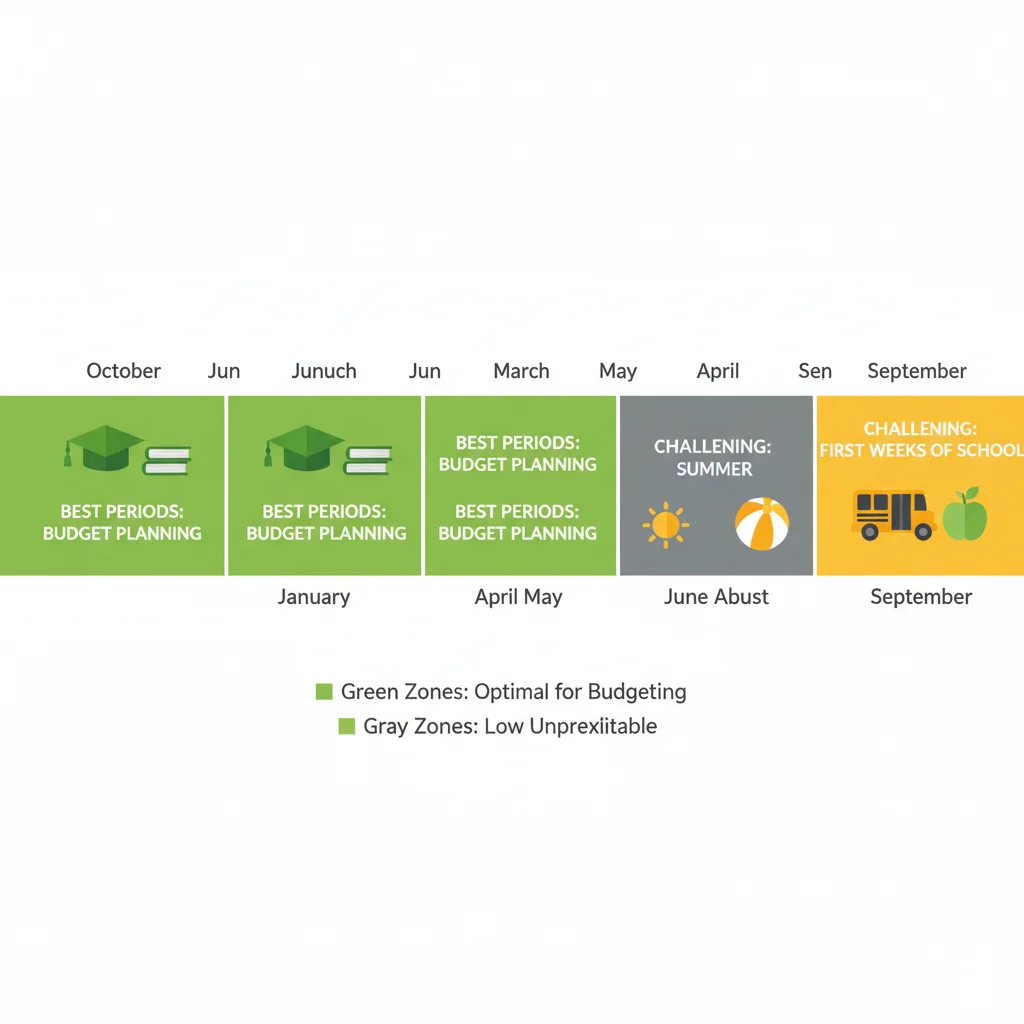
Education cold email performance follows distinct seasonal patterns tied to academic calendars and budget cycles.
Optimal Timing Windows
K-12 Education:
- October-November: Budget planning for next school year begins
- January-March: Active vendor evaluation and purchasing decisions
- April-May: Final purchase decisions before fiscal year end
Higher Education:
- September-November: Academic year budget allocation
- January-February: Spring semester planning
- April-May: Next academic year planning
Challenging Periods:
- Summer months (June-August): Limited staff availability
- First few weeks of school year: Operational focus
- Finals and graduation periods
- Holiday breaks
Day and Time Considerations
Typical Best Performing Times:
- Tuesday through Thursday outperform other days
- Early morning sends (7-8 AM) before classes begin
- Afternoon sends after typical dismissal times
- Avoid sending during instructional hours
What Top Performers Do Differently
Companies achieving top-quartile performance in education cold email share common characteristics.
Evidence of Student Outcomes
Education buyers prioritize solutions with demonstrated impact on student learning, engagement, or success metrics. Research evidence and outcome data significantly strengthen engagement.
Understanding of Education Challenges
Top performers demonstrate knowledge of specific challenges facing different institution types: funding constraints, staffing issues, achievement gaps, and regulatory requirements.
Peer Institution References
Education is a collegial environment where practitioners learn from peers. References to similar institutions (by type, size, demographics, or geography) significantly improve engagement.
Patience for Longer Cycles
Education sales cycles can extend across budget years. Top performers build relationships over time rather than expecting immediate conversion.
Respect for Mission Focus
Successful campaigns acknowledge the mission-driven nature of education and avoid purely commercial or transactional messaging.
- Yes: Evidence of Student Outcomes
- Yes: Understanding of Education Challenges
- Yes: Peer Institution References
- Yes: Patience for Longer Cycles
- Yes: Respect for Mission Focus
Improving Your Education Cold Email Performance
If your metrics fall below these benchmarks, focus on these high-impact areas.
For Below-Average Open Rates
Subject Line Optimization for Education:
- Reference specific educational challenges or outcomes
- Use educator-friendly language, avoiding corporate jargon
- Include relevant institution type or context
- Mention peer institutions or research when appropriate
Deliverability Considerations:
- Educational institutions vary in email infrastructure
- School district email systems may have strict filtering
- Ensure proper domain authentication
- Test deliverability to target institution domains
For Below-Average Reply Rates
Messaging Adjustments:
- Lead with student outcomes or institutional impact
- Reference similar institution success stories
- Keep messages focused on educational value, not features
- Include clear, time-sensitive call to action when appropriate
Targeting Refinements:
- Segment by institution type, size, and demographics
- Target institutions showing change or improvement initiatives
- Consider timing alignment with budget and planning cycles
- Identify schools or districts with specific challenges your solution addresses
For Below-Average Meeting Rates
Response Handling:
- Respond with relevant research or outcome evidence
- Offer flexible meeting formats (15-minute intro vs. full presentation)
- Provide case studies from similar institutions
- Be prepared to engage multiple stakeholders
When Silence Is A Timing Signal:
- Education professionals have limited time during active periods, so no reply usually means the academic calendar is wrong rather than the offer
- Note the point in the academic calendar that fits them and plan the next approach around it
- Reach them again in a separate campaign built on that window, not as a second message under the first
Public vs. Private Institution Considerations
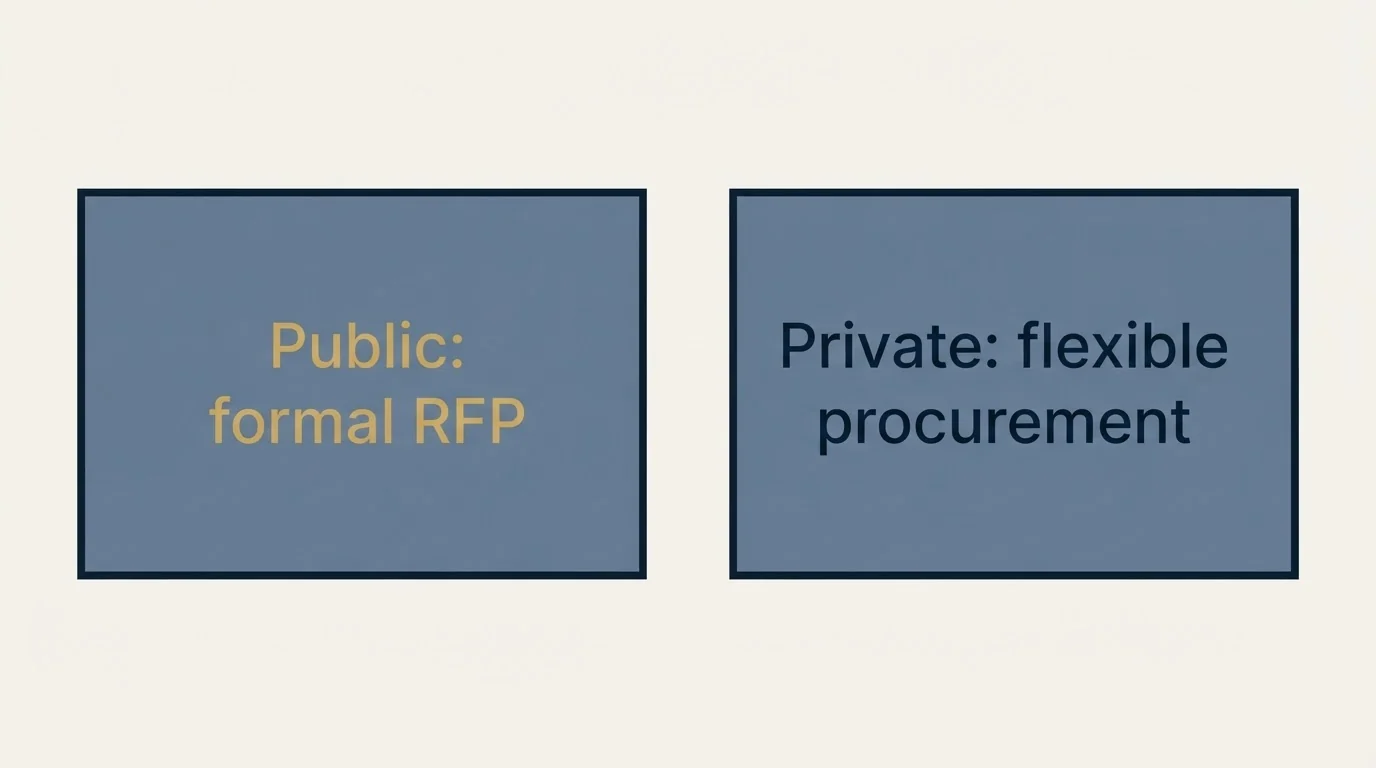
Public and private educational institutions have different procurement requirements.
Public Institution Considerations
Public schools and universities often require:
- Formal RFP or bid processes
- Vendor registration
- Compliance with procurement regulations
- Board or committee approval
- Extended evaluation timelines
Cold email for public institutions often focuses on building relationships and positioning for formal procurement opportunities.
Private Institution Considerations
Private schools and colleges typically have:
- More flexible procurement processes
- Individual decision-maker authority
- Faster evaluation cycles
- Less formal vendor requirements
Private institutions may convert more quickly from cold email outreach.
Grant and Funding Alignment
Education purchasing is often tied to specific funding sources.
Funding-Aligned Outreach
Consider timing and messaging aligned with:
- Federal funding programs (Title I, ESSER, etc.)
- State education technology initiatives
- Foundation and grant cycles
- Capital improvement and bond funding
Awareness of funding availability and requirements can significantly improve response rates.
Benchmarking Your Performance
To effectively benchmark your education cold email campaigns:
Segment Your Data
Break down performance by:
- Institution type (K-12, higher ed, corporate)
- Public vs. private status
- Institution size and demographics
- Target persona and role
- Product category
Track Full Funnel Metrics
Beyond initial response rates, track:
- Time from first reply to pilot or trial
- Pilot to full purchase conversion
- Contract value by institution type
- Expansion within districts or university systems
Account for Budget Cycles
Education purchasing aligns with fiscal years that vary by institution type. Evaluate performance relative to relevant budget cycles rather than calendar periods alone.
The Path Forward
Education cold email requires patience, understanding of institutional dynamics, and messaging focused on student and institutional outcomes. The combination of mission-driven culture, complex procurement, and extended evaluation cycles makes education a unique vertical for outreach.
However, education customers often provide long-term relationships, consistent renewals, and strong referral potential within professional networks.
If your current performance falls below these benchmarks, consider whether your team has the education sector expertise to optimize effectively. Our done-for-you cold email campaigns combine deep understanding of educational institutions with proven outreach methodologies to help companies achieve above-benchmark results in the education market.
Get your free campaign strategy to see how your education cold email metrics compare to industry benchmarks and identify specific opportunities for improvement.
Related Reading
Frequently asked questions.
Frequently asked questions- What are good open rates for cold emails to schools and universities?
- Good open rates for education cold email range from 38-48%, with excellent performance at 48% or higher. Private K-12 schools achieve the highest open rates at 40-52%, while research universities see lower rates at 28-40%. Institution type significantly impacts performance, with smaller and private institutions generally more receptive than large public universities. Corporate L&D departments fall in the middle at 35-48%.
- What reply rate should I expect when cold emailing education institutions?
- Average education cold email reply rates range from 1.5-3%, with good performance at 3-5% and excellent at 5% or above. Private K-12 schools respond most frequently at 3.5-6%, while research universities reply least at 1.5-3%. EdTech tools and corporate training solutions achieve the highest reply rates at 3.5-5.5%, reflecting their direct relevance to teaching and learning outcomes.
- How do meeting booking rates differ between K-12 schools and universities?
- Private K-12 schools achieve meeting booking rates of 1.2-2.5%, significantly higher than research universities at 0.4-1%. Public K-12 schools fall in between at 0.8-1.8%. Community colleges and small private colleges perform similarly at 1-2.2%. The substantial difference reflects decision-making structure, with private schools having more flexible purchasing processes and fewer bureaucratic layers than large universities.
- Which education product categories get the best cold email response?
- EdTech tools and apps achieve the strongest cold email performance with 3.5-5.5% reply rates and 1-2.3% meeting booking rates. Curriculum and content solutions also perform well at 3-5% reply rates and 0.9-2% meeting rates. Administrative systems like LMS and student information platforms see lower engagement, with reply rates of 2-4% and meeting rates of 0.5-1.5%, because they involve more complex organizational change and stakeholder coordination.
- Do corporate training departments respond better than schools to cold emails?
- Corporate L&D departments show stronger engagement than most academic institutions, with 3.5-5.5% reply rates and 1.1-2.4% meeting booking rates. This exceeds public K-12 schools (2.5-4.5% replies, 0.8-1.8% meetings) and research universities (1.5-3% replies, 0.4-1% meetings). Corporate environments have more flexible purchasing processes and faster decision cycles compared to educational institutions bound by academic calendars and committee-based evaluation.
About the author.

Hosun Chung is COO at RevenueFlow, which builds and operates outbound revenue engines for B2B companies. Previously at Gleacher Shacklock LLP. Studied at London School of Economics.
Hosun Chung · COO
Connect on LinkedIn →Explore more.
Ready to scale your outreach?
We build GTM engines that book real meetings. See the receipts.
Related articles.
Cold Email Conversion Benchmarks: 2026 Performance Data
Complete benchmark data for cold email conversion rates from reply to meeting to opportunity. Learn what drives conversions and how to optimize your full funnel.
Automotive Cold Email Benchmarks: 2026 Performance Data
Industry benchmark data for automotive sector cold email campaigns, covering OEMs, suppliers, dealerships, and automotive technology with performance metrics by segment and buyer role.
Real Estate Cold Email Benchmarks: 2026 Performance Data
Comprehensive benchmark data for real estate cold email campaigns, including open rates, reply rates, and conversion metrics for companies targeting brokerages, property managers, developers, and real estate investors.
Fintech Cold Email Benchmarks: 2026 Performance Data
Comprehensive benchmark data for fintech cold email campaigns, including open rates, reply rates, and conversion metrics specific to financial technology companies targeting banks, financial institutions, and businesses.
Media Cold Email Benchmarks: 2026 Performance Data
Comprehensive benchmark data for media and entertainment industry cold email campaigns, covering publishers, streaming platforms, advertising, and content creators.
Ecommerce Cold Email Benchmarks: 2026 Performance Data
Comprehensive benchmark data for ecommerce cold email campaigns, including open rates, reply rates, and conversion metrics for companies targeting online retailers, D2C brands, and marketplace sellers.