Key Account Management Plan Template: The Six Sections
The six sections a key account plan carries, the test that finishes each one, and the two places where a portfolio of these plans contradicts itself.
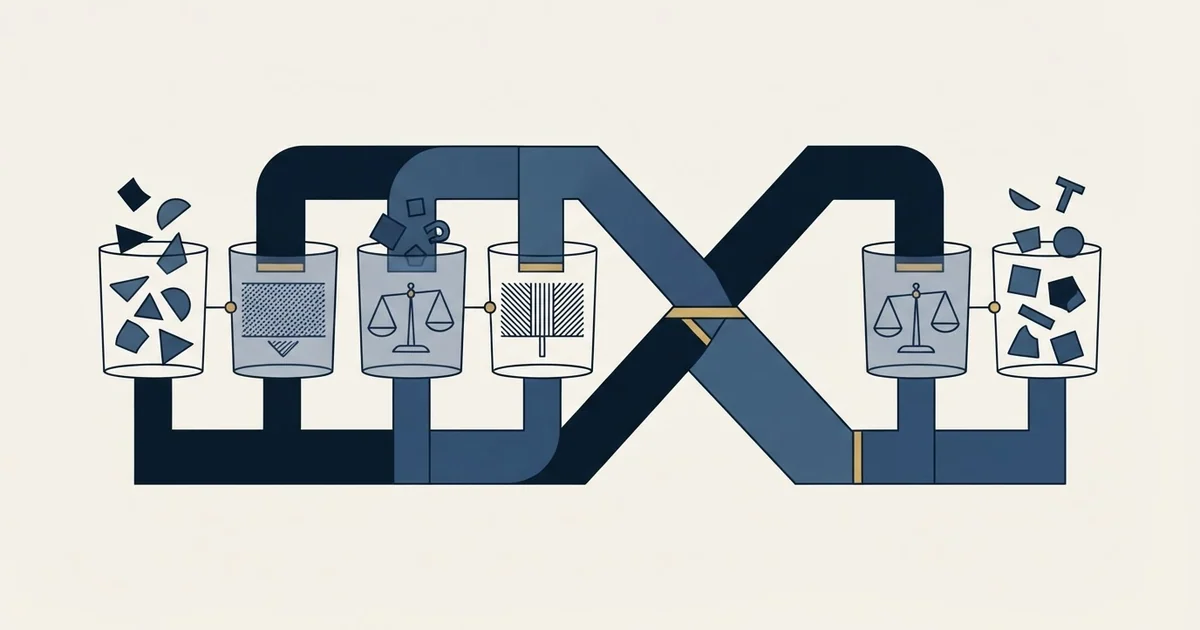
A key account management plan template carries six sections: a snapshot the customer would recognise, a relationship map with the blanks left blank, whitespace lines naming the incumbent, two objectives the period can prove wrong, a contact plan with an owner on your side, and a review inside a meeting that already happens.
Key takeaways
- Three jobs get called account planning and they fail differently: choosing which accounts are in the programme, planning a pursuit that ends at a signature, and growing an account already won. This template serves the third.
- Fill sections two, three and four in that order, because a whitespace claim needs a named contact behind it and an objective needs a named gap behind it.
- An objective that cannot fail gets marked complete every period on somebody's judgement, so the only useful test on the objectives section is whether the period could prove it wrong.
- Read the plans for a portfolio side by side once a period, because the gap between the contact the plans ask for and the contact one person can hold is what decides whether any of it produced growth.
Reviewed and updated September 2, 2026
Search for a key account management plan template on Google and the ten results read on 2 September 2026 divide into three piles: template libraries at Mural, Smartsheet and xGrowth, a SlideGeeks deck, and vendor articles led by DemandFarm's six-step planning template. One pile is workspace and spreadsheet libraries selling a container. One pile is slide decks built to be presented rather than filled in. The third pile is vendor articles that describe a six step framework and put a demo request between the reader and anything they could actually use.
What the person searching usually wanted was one page: the sections a key account plan carries, what belongs in each, and the test that says whether the section is finished. This page carries that template, the reasoning behind each section, and the two places where the numbers on it contradict each other.
What this plan governs, and what it does not
Three jobs get called account planning and they fail differently, so it is worth naming which one this template serves before filling anything in.
Target account selection decides which accounts are in the programme at all. It produces a list, a tier and a sign off, and its failure mode is a list that becomes a wish list because everybody can edit it. That job has its own page in target account selling.
A plan for an account you are trying to win governs a pursuit. It ends at a signature, and its objectives are all versions of the same objective.
A key account plan governs an account you have already won and are trying to grow. It has no signature to end on, the relationship it describes outlives the people who wrote it, and the thing it is trying to change is a share of somebody's spend rather than a decision. That is the plan below.
The distinction that trips teams up sits between the second and the third. A pursuit plan can be judged at the end. A key account plan can only be judged against a period, which means the objectives have to be written so that a period can prove them wrong. Where the native Salesforce framework for this sits, and what it does not close, is covered in account planning in Salesforce.
The template
Six sections, one page per account. Copy it into whatever document the team already opens.
KEY ACCOUNT PLAN: <account>          Owner: ........   Period: ........
Last reviewed: ........              Revenue this period: ........

1. THE SNAPSHOT
   What they sell, to whom: ........................................
   What changed in their business in the last two quarters: ........
   What you currently sell them: ......   Since: ......
   Renewal or reorder date: ........
   Test: is every line here something they would recognise as true?

2. THE RELATIONSHIP MAP
   Role needed               Name           Last real contact
   Economic buyer            ..........     ..........
   Day to day owner          ..........     ..........
   Technical or ops owner    ..........     ..........
   Blocker or sceptic        ..........     ..........
   Roles with no name against them: ......
   Test: is a role with nobody in it written as blank rather than guessed?

3. THE WHITESPACE
   What they buy from you: ...........................................
   What they buy from somebody else that you also sell: .............
   What they do not buy from anyone yet: ............................
   Test: does line two name the incumbent rather than the category?

4. THE OBJECTIVES
   Objective 1: ..................  Measured by: ..........  By: ......
   Objective 2: ..................  Measured by: ..........  By: ......
   What would have to be true for this to fail: .....................
   Test: can this period prove the objective wrong?

5. THE CONTACT PLAN
   Who contacts whom, how often: ....................................
   The conversation you owe them that is not about renewal: .........
   Owner of each: ...................................................
   Test: does the plan name a person on your side for every line?

6. THE REVIEW
   Reviewed in which meeting that already happens: ..................
   What you will change if objective 1 has not moved: ...............
   Test: is the review a meeting that exists without this plan?
Sections two, three and four are the ones most often collapsed into a paragraph of narrative, and they are the three that make the rest of the page load bearing.
The order is not decorative. Section three cannot be filled honestly without section two, because whitespace claims are usually somebody's guess about a part of the business they have no contact in. Section four cannot be written without section three, because an objective with no named gap behind it becomes a revenue number with a date on it.
- Step 1Snapshot
Establish what is true about their business and what you already sell them, in language they would recognise
- Step 2Relationship map
Name a person against each role the account needs covered, and leave the roles nobody can name blank
- Step 3Whitespace
Read what they buy elsewhere against the map, so the gap is attached to somebody who could talk about it
- Step 4Objectives
Write two objectives the period can prove wrong, each grounded in a named gap
- Step 5Contact plan
Assign a person on your side to every conversation the objectives require
- Step 6Review
Attach the page to a meeting that already happens, with a stated response to no movement
Filling each section so it holds

The snapshot, written so the customer would agree with it. The test is unusual and it is the cheapest quality check on the page. A snapshot the account would dispute has been assembled from a website and last year's order, and every section built on it inherits the error. The two quarter window is there because a plan built on what was true at the last renewal is a picture of a company that has since reorganised.
The relationship map, with blanks left blank. The map's value is the empty rows. A plan showing a strong relationship with the day to day owner and nobody named against the economic buyer is telling the reader something specific and actionable, and it disappears the moment somebody fills the row with a plausible name from a directory. Last real contact means a conversation, not a newsletter and not a support ticket. The mechanics of building coverage across a buying group are worked through in multi threading a deal, and the same discipline applies after the sale.
The whitespace, with the incumbent named. Writing that an account does not buy analytics from you is a category statement and it is almost always wrong, because they buy analytics from somebody. Writing who they buy it from converts the line into a competitive question with a real answer, and it usually surfaces that the incumbent has a relationship in a part of the business nobody on your side has met. The method for mapping this properly is whitespace mapping.
The objectives, written so they can fail. This is the section that decides whether the plan is a document or an instrument. An objective to deepen the relationship cannot fail, so it will be marked complete every period regardless of what happened. An objective to have the operations director agree in writing to a pilot in the second site by the end of the period either happened or did not. Two objectives is a deliberate ceiling; a plan with seven objectives has none.
The contact plan, with a name on your side. The plan's most common silent failure is that every line describes something the customer will do. A line owned by the account team is unowned. Naming a person is what turns a cadence into an obligation, and it makes the honest question askable in a review: is this still your conversation, or has it moved.
The review, attached to a meeting that already exists. A plan reviewed in a meeting created for plan reviews will be edited the week before that meeting and untouched otherwise. A plan reviewed inside a forecast or pipeline meeting that happens anyway stays current, because the cost of updating it is a few minutes rather than a calendar slot. The stated response to no movement is the part everybody skips, and it is what stops the review from being a reading exercise.
- Deepen the relationship with the executive team
- Become a strategic partner rather than a supplier
- Increase share of wallet
- No named person and no date
- Marked complete every period on somebody's judgement
- Named person agrees in writing to a scoped pilot in the second site
- Two roles currently blank on the map have had a real conversation
- The incumbent product in one named line is up for review with your team in it
- A measure and a date against each one
- Either it happened or the plan was wrong about something
The arithmetic that contradicts you
Two collisions show up once the plans for a portfolio sit side by side, and both are invisible while each plan sits in its own document.
The figures that follow are invented for the illustration and describe no real company.
Coverage against contact capacity. Suppose a key account manager carries eighteen named accounts, and each plan asks for a real conversation with four roles per quarter. That is seventy two conversations in a quarter, on top of the reactive work the same person absorbs. If the honest answer to how many of those conversations one person can prepare for and hold is nearer thirty, then forty two of them will not happen, and the accounts that get worked will be the ones easiest to see: the loudest, the newest, the one with a support escalation. The plans produced intent and the calendar produced coverage, and they were different facts before the quarter started.
Objectives against the review cadence. Suppose the objectives are written for a twelve month horizon and the review happens quarterly. Nothing on the page can move in a quarter, so every review lands on the same answer, that work is in progress, and the first period in which the objective could have failed is the last one. Objectives sized to the review interval are the fix, and the reason to size them that way is that the review is the only mechanism the plan has.
Both collisions have the same set of honest responses: fewer named accounts per person, fewer roles that need contact, objectives sized to the period, or a motion that reaches part of the map without consuming the account manager's personal attention. The last one is a real option and it is the one least often on the list.
- Depends: Every line of the snapshot is something the account would recognise as true
- Depends: Roles with nobody in them are blank rather than filled with a plausible name
- Depends: The whitespace lines name the incumbent rather than the category
- Depends: Each objective carries a measure and a date, and the period could prove it wrong
- Depends: Every line of the contact plan names a person on your side
- Depends: The review sits inside a meeting that would happen without this plan
What is a field, not a section
The commonest way this page bloats is by promoting attributes into sections. Pricing history becomes a section because a discount conversation went badly. Support tickets become a section because one escalation was painful. Competitor profiles become a section because somebody produced a deck.
Each of those is context for how the six sections get executed rather than a decision the plan makes. Keeping them beneath the page as working detail is what lets two accounts be read side by side, and side by side reading is where the portfolio level collisions above become visible.
A SWOT block sits in the same category. It is a way of preparing section one, and it is not a section, because nothing downstream depends on it. If it helps somebody produce an honest snapshot, use it and leave it out of the page.
When the plan gets rewritten
A key account plan is rewritten when a line stops being true rather than on a calendar. Three triggers are worth naming in advance.
A named person on the relationship map leaves, which invalidates part of section two and often part of section four with it. The account's own business changes in a way that moves the whitespace, such as an acquisition or a new site. Or an objective is met early, which is the pleasant version and the one most often left to rot on the page for another two quarters.
Rewriting on a fixed annual cycle instead produces a document that changes when nothing has happened and holds still when something has. The same reasoning applied to the team level plan, with its own eight lines and tests, is in the sales strategy template.
The short version
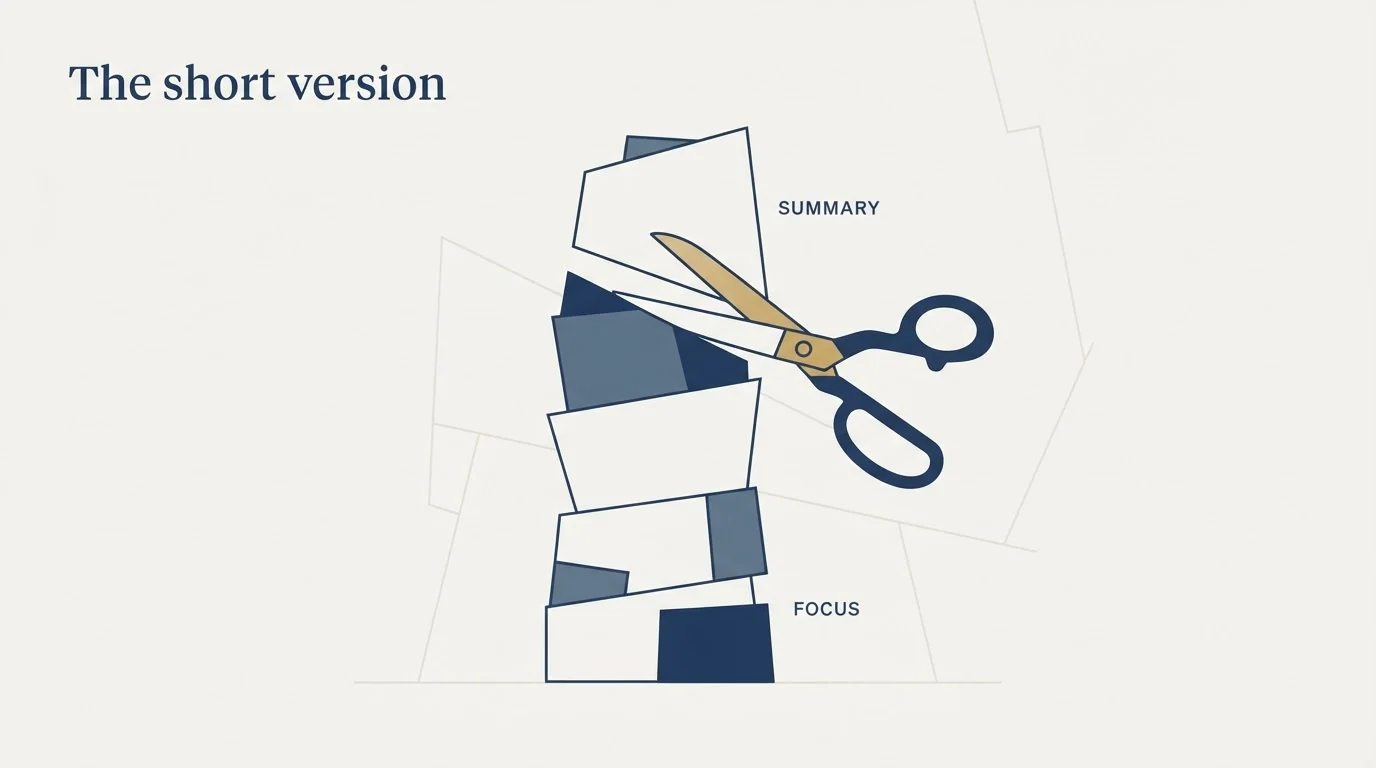
A key account plan is six sections with a test on each: a snapshot the customer would agree with, a relationship map whose blanks are left blank, whitespace lines that name the incumbent, two objectives the period can prove wrong, a contact plan with a person on your side against every line, and a review inside a meeting that already happens.
Fill sections two, three and four in that order, because each supplies a fact the next one needs. Size the objectives to the review interval. And read the plans for a portfolio side by side at least once a period, because the gap between the contact the plans ask for and the contact one person can hold is the number that decides whether any of this produced growth.
If that gap is the problem, the part of the map that will not receive a named person's personal attention needs a motion that does not depend on one. We will build the first campaign against the roles your plans name, priced per qualified meeting against criteria agreed in writing before anything sends.
Frequently asked questions.
Frequently asked questions- What sections should a key account management plan include?
- Six, and each one earns its place by supplying a fact the next section needs. A snapshot of their business and what you already sell them. A relationship map by role. The whitespace, with the incumbent named. Two objectives with a measure and a date. A contact plan with an owner on your side. And a review attached to a meeting that already happens.
- How is a key account plan different from a plan for a deal you are trying to win?
- A pursuit plan ends at a signature and can be judged when it does. A key account plan governs an account you have already won, so it has no ending event, and the thing it is trying to move is a share of somebody's spend rather than one decision. That is why its objectives have to be written against a period instead of an outcome.
- How often should a key account plan be reviewed?
- Inside a meeting that would happen anyway, at whatever interval that meeting runs. A plan reviewed in a session created for plan reviews gets edited the week before and ignored otherwise. Size the objectives to that interval too, because objectives written for a year cannot move between reviews and every review then reports that work is in progress.
- How many objectives should a key account plan carry?
- Two is a deliberate ceiling. A plan carrying seven objectives has none in practice, because nothing on it can be prioritised and the review becomes a status readout. Each objective needs a named measure, a date, and one line saying what would have to be true for it to fail. If that last line cannot be written, the objective is an intention.
About the author.

B2B cold email experts helping companies generate qualified leads through done-for-you outreach campaigns.
RevenueFlow Team
Explore more.
Ready to scale your outreach?
We build GTM engines that book real meetings. See the receipts.
Related articles.
SDR Outsourcing for Business Brokers: The Fee Timing
Whether a success-fee brokerage should rent sales development at all: the fee timing, the texts that limit what an outside person may say about value, and who signs.
SDR Outsourcing for Financial Services: The Third Party
What a bank, broker-dealer, adviser or agency's regulators say about an outside team that speaks for it, the licensed line, and which arrangement survives due diligence.
LinkedIn Outreach for Banks: A Regulated Message
How a bank's relationship managers use LinkedIn to reach business owners: what the FFIEC guidance, FINRA's notices and LinkedIn's own rules require, and where to stop.
Appointment Setting for Business Brokers: The Seller Meeting
What a bought meeting with a business owner has to be for a brokerage: the three-part qualification, the confidentiality rules, the licence line and the owner's reasons.
Land and Expand: The Motion, Its Metrics and Where It Fails
Land and expand as three public companies describe it in their own filings and as the sales publishers teach it: the motion, its retention metrics, and where it fails.
Sales Prospecting for Health Systems: The Public Record
Where health systems are written down in public: the Medicare cost report, the facility list a non-profit system files, and the two gates that follow qualification.