Lead Forensics Alternatives: The Ones That Publish a Price
Lead Forensics names two plans and publishes no figure. Snitcher, Leadfeeder, Leadinfo, Albacross and RB2B all publish a volume ladder you can read.
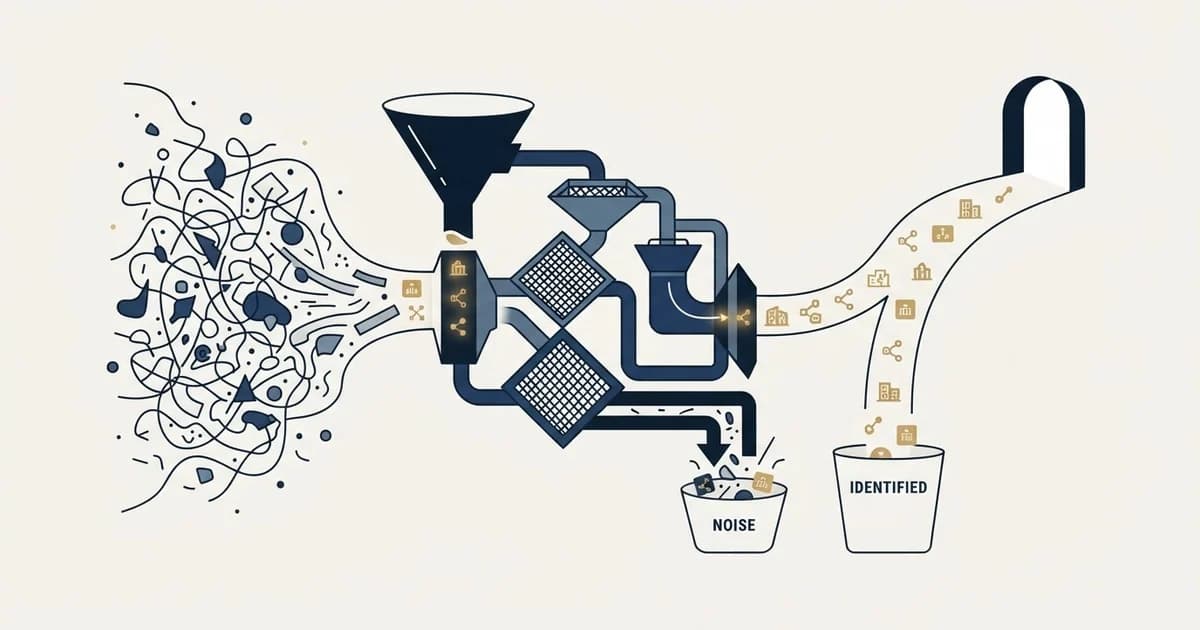
Lead Forensics vs RB2B comes down to geography and disclosure. Lead Forensics names the companies visiting your site and prices on a call after a one-week trial. RB2B publishes every plan, free then from $79 a month, and adds person-level identification that its own pricing page labels US only.
Key takeaways
- Lead Forensics' pricing page names Essentials and Automate with no figure; its FAQ says the trial determines the cost for your business.
- RB2B publishes a free plan with 150 company-level resolutions, then $79, from $149 and from $199 a month, with contact-level ID labelled US only.
- Snitcher prints its whole band table, served here in pounds from £49 to £529 a month on annual billing, with a 14-day trial and no card.
- Crossing 500 identified companies moves Snitcher from £139 to £179 and Leadinfo Scale from €209 to €259, on each page's annual billing.
Reviewed and updated September 21, 2026
Lead Forensics' pricing page names two plans, Essentials and Automate, and the button under each one says Book a demo. The page carries no figure at all. It says instead that "Pricing is calculated based on your website visitors", and its own FAQ repeats the point: the cost is based on how much traffic you generate, and the trial determines the cost for your business.
Every serious alternative to it now publishes a volume ladder you can read in a browser tab, and the one most often weighed against it, RB2B, publishes every plan and names people as well as companies. That difference in disclosure is what a switch actually buys, and it matters more than any feature grid, because it decides whether you can model next year's bill before a sales conversation rather than after one.
Lead Forensics vs RB2B: Company Level Against Person Level
Lead Forensics identifies the companies visiting your site, through a small piece of code its FAQ compares to Google Analytics, and prices on a call after a one-week trial. RB2B's pricing page publishes every plan: a free plan with company-level identification and 150 monthly resolutions, then $79, from $149 and from $199 a month, with contact-level identification labelled US only.
So decide on geography first. RB2B's own feature table labels its two levels "Contact-Level Site ID (US Only)" and "Company-Level Site ID (Global)", and states coverage of 15-20% on the lower paid tiers against 35-45% on PRO+. It also publishes its second meter: overage at 45c a resolution on the starter plan and 25c above it, and additional domains at $99/mo (up to 5). Lead Forensics answers the same questions through a representative, with unlimited users on both plans and a dedicated customer success manager in the plan list. A European or global audience points at company-level tools; a US audience that wants named people points at RB2B, with the compliance questions that come with it.
What Lead Forensics publishes, and what it does not
Start with the anchor vendor honestly, because a switch made on a caricature gets reversed within a year.
Under a heading reading "Plans tailored to your business", Lead Forensics' pricing page lists the capabilities in each of its two plans: website visitor identification, full visitor firmographic insight, decision maker contact data, behavioral insights, real time visitor alerts, a lead and pipeline manager, unlimited user access, a dedicated customer success manager, a customer training academy with certifications, CRM integration, workflow automation with CRM lead creation, automated lead routing and ABM account matching. That is a complete company level identification product with a service wrapper around it, and the last four items are the ones cheaper tools tend to leave out.
Two more things on that page are worth holding onto. Unlimited user access is listed on both plans, and the FAQ answers the login question with "As many as you need. The number of users is unlimited" and adds that it does not affect your price. And the trial is short: the page states that "The Lead Forensics trial is one week long", reached through a demo, with a representative walking you through your own traffic at the end of it.
So the gap is narrow and specific. You cannot compute what Lead Forensics will cost you, at your traffic volume, without booking a call. Every vendor below lets you do exactly that.
Full table on the page
Snitcher, Leadinfo, Leadfeeder, RB2B
- Every volume band and its rate printed
- Find your own volume and read the rate
- A trial starts without a sales conversation
Entry tiers, then talk to us
Albacross
- Starter and Professional carry a rate
- Organisation says talk to us
- Extra contact credits sit on a second table
No figure at all
Lead Forensics
- Two plans named, their contents listed
- Both plan buttons route to a demo
- Price follows visitor volume
The Best Alternatives to Lead Forensics That Publish a Ladder

The best alternatives to Lead Forensics for a buyer who wants the price before the call are Snitcher, Leadinfo, Leadfeeder and Albacross for company-level identification, and RB2B for person-level identification in the US. Each figure below comes from that vendor's own pricing page, read with the billing toggle switched both ways. Currencies appear as each page served them and are not converted, and no figure here comes from a review site or a comparison blog.
Snitcher publishes the whole table. Its pricing page prints a two column table headed Company IDs and Monthly Cost, and from this network it serves pounds, while the page title still reads "Plans from $49/mo". On the default annual view the table runs from 0 to 50 companies at £49, 101 to 250 at £99, 501 to 750 at £179 and 1,001 to 2,000 at £279, ending at 4,001 to 5,000 companies at £529; switched to monthly the same bands read £79 to £779. The page advertises a 14-day free trial with no credit card required, lists unlimited team members, and answers the meter question directly: a unique identification is counted when a company is identified for the first time within your billing period. It states the meter in its own words as well: "Our plans are based on the number of unique companies we ID each month". Its FAQ adds that data is processed under the legitimate interest basis of Article 6(1)(f) of the GDPR.
Leadfeeder publishes bands behind a question. Its pricing page carries a Lite plan at €0 described as free forever, with unlimited users, seven days of visitor history and the last 100 companies a month. The paid cards show starting prices only: Discover from €79 a month billed annually (€113 monthly), Activate from €369 (€527 monthly) with verified emails and phones, and Scale from €599, billed annually only. The band table sits in the page's answer to "How is the price calculated?": up to 50 companies is €79 annual and €113 monthly, 101 to 200 is €139 and €199, and 501 to 1,000 is €309 and €441. The same answer says "Your price tier is based on how many companies we identify monthly" and "We filter out ISPs and low-quality traffic". The site also now carries a post titled "Dealfront is now Leadfeeder", and our Leadfeeder pricing breakdown covers that brand history.
Leadinfo publishes a full grid and four currencies. Its pricing page offers EUR, GBP, USD and DKK, and introduces its matrix of plan against volume band with "Below is the complete pricing list". On annual billing, Starter is €69 a month for up to 50 identified companies and €99 up to 100, before the page directs you to Scale. Scale holds at €159 through the 250 company band, then climbs through €209, €259, €309, €359, €399, €459 and €499 to €539 at the 4,001 to 5,000 band. Pro sits at €359 across every band up to 750 companies and rises to €889 at the top published band. On monthly billing the same grid reads higher, from €99 on Starter to €1159 on Pro's top band. Above 5,000 companies every plan says contact us.
Albacross prices the subscription and the data separately. Its pricing page lists Starter at €59 a month billed yearly, shown as €84 a month on monthly billing, covering up to 100 identified companies. Professional is €149 yearly and €213 monthly, covering up to 500. Organisation says talk to us. Contact data is a second line on the bill: the entry plan includes 10 verified email credits and 5 verified phone credits, which is a sampling allowance rather than a working one, and a separate add-on table prices extra credits by volume, stating that "These add-on credits would be shared across your team". Our Albacross review covers what the company level product does with that data.
RB2B is the person level outlier, and its constraints are published. Beyond the plans and coverage figures above, its page offers a 7-day trial of the paid features and a free plan it describes as free forever. The RB2B review and alternatives page goes deeper on what person level resolution does and does not deliver.
What the ladder actually decides
The reason to care about disclosure is not transparency as a virtue. It is that the only number that ranks these tools is cost per identified company, and you cannot compute it without knowing the band your volume lands in.
Metered categories elsewhere break the same way, and a similar split appears among form builders that count responses in different units, where equal headline rates produce very different bills.
The arithmetic below is invented to show the shape of the calculation rather than measured, because your own resolved volume is the input and no vendor publishes it for you.
Take a site that resolves somewhere between 400 and 600 companies a month. On a published band table you look up both ends of that range, read the two rates, and discover whether crossing 500 moves you one band or three. On a vendor that publishes only a starting figure, the same range could land you anywhere, and you learn which after the quote arrives. Neither vendor is behaving badly. One question is answerable in a browser and the other needs a meeting.
| Vendor, as served | Up to 500 | Just over 500 |
|---|---|---|
| Snitcher (GBP) | £139 | £179 |
| Leadinfo Scale (EUR) | €209 | €259 |
| Leadfeeder Discover (EUR) | €249 | €309 |
| Albacross Professional (EUR) | €149 | Organisation: talk to us |
| Lead Forensics | No figure | No figure |
Read across the rows and the point of disclosure is visible. Crossing 500 moves Snitcher from £139 to £179 and Leadinfo's Scale plan from €209 to €259, moves Leadfeeder's Discover plan from its 401 to 500 band at €249 into a 501 to 1,000 band at €309, and moves Albacross off its published tiers entirely. On Lead Forensics the same question has no answer until a representative sends one.
Volume ceilings bite the same way in adjacent tools, since Typeform's hard response ceiling stops a form collecting mid-month once the plan allowance runs out.
That is also why the first thing to do is measure, rather than shop. Run any free tier or trial on your own traffic for a fortnight, count the distinct companies it resolves, and treat that number as the input to every quote you request afterwards.
What you would be giving up

Three things on Lead Forensics' page are genuinely worth weighing against a lower bill.
The service wrapper is real. A dedicated customer success manager and a training academy with certifications are listed on its pricing page as plan contents, and the self serve tools in this category answer through documentation and chat. If nobody internally owns the rollout, that difference decides whether the tool gets used at all.
Unlimited users is not unique any more, so it is a smaller argument than it once was. Snitcher's page lists unlimited team members, and Leadfeeder's Lite plan lists unlimited users. Any of these lets you add the whole revenue team without rationing logins.
The trial shape differs in a way that matters. Lead Forensics runs a one week trial reached through a demo, with a representative reading your traffic back to you at the end. Snitcher's page offers 14 days with no credit card, and Leadfeeder and RB2B both publish free tiers that keep running. Two weeks on your own traffic tells you more than a guided week does, and it costs you nothing to have both.
Where the identified account actually goes
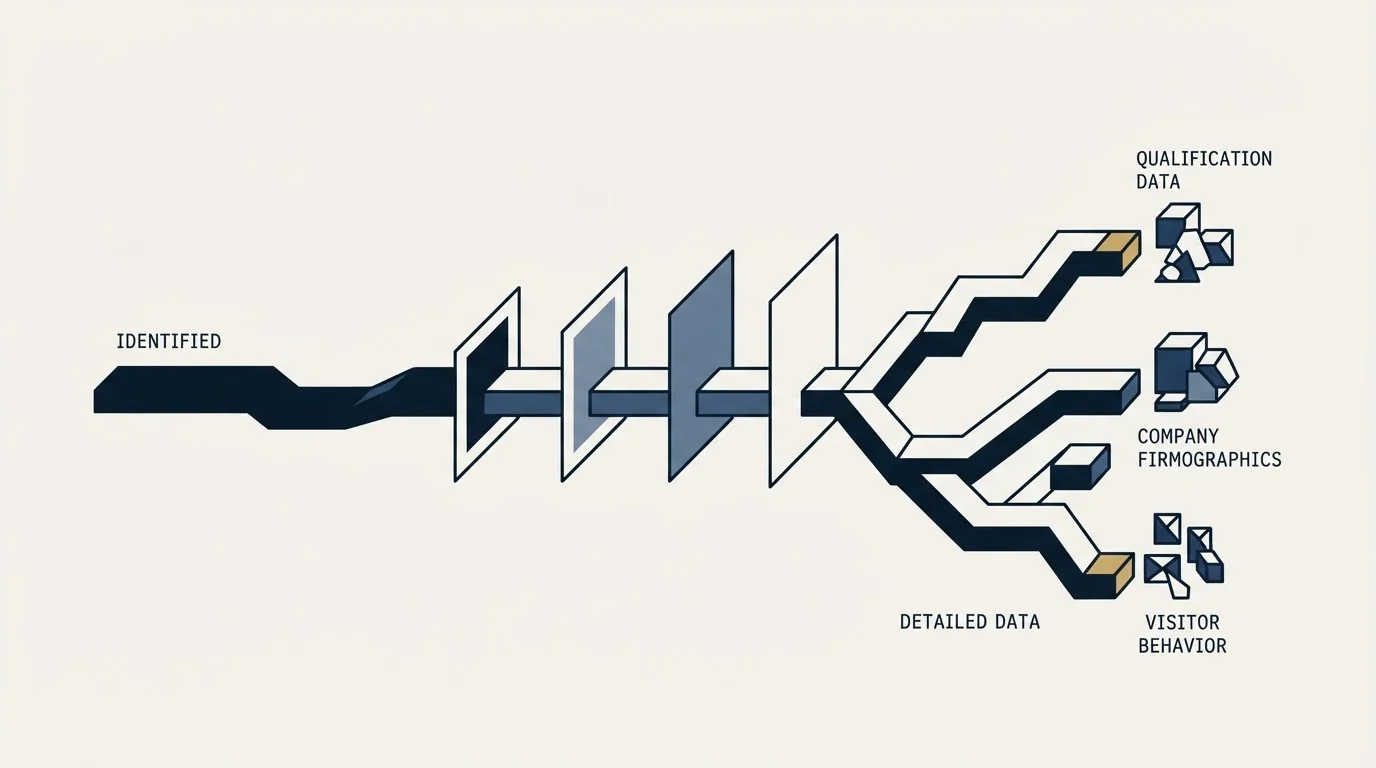
A switch fixes a bill. It does not fix the complaint that usually starts the search, which is that identified accounts are not turning into conversations.
Identification is first party intent, and it is a signal a company already owns, because the account came to you rather than appearing in a purchased feed. How that layer combines with bought intent data is set out in our B2B intent data guide, and the honest sequencing advice is to instrument your own traffic before paying for anyone's topic feed.
Two rules survive every vendor on this page. Filter before you route, because an identified visitor outside your ICP is not a lead and letting those through teaches everyone to ignore the channel. And never mention the surveillance in the first message. Reference the problem the visited page addresses, since the value of the signal is timing rather than an opening line.
If you are shopping because the accounts you already identify are not converting into meetings, the constraint sits downstream of the data. RevenueFlow runs the outbound programme that works an identified account list, against criteria agreed in writing before launch, and you can see the shape of it on a free campaign.
For the neighbouring decision, Leadfeeder alternatives compared on data and price covers the same field from the other anchor, including which two names on most shortlists now resolve to one company.
Pricing and features are taken from the vendors' own pages. Verify current terms with the vendor before relying on them.
Frequently asked questions.
Frequently asked questions- Is Lead Forensics or RB2B better?
- It depends on where your visitors are and whether you need named people. Lead Forensics identifies visiting companies and prices on a call after a one-week trial. RB2B publishes its plans, from a free tier to from $199 a month, and offers person-level identification that its pricing page labels US only. A global audience points at company-level tools.
- What are the best alternatives to Lead Forensics?
- For a buyer who wants the price before the call, Snitcher, Leadinfo, Leadfeeder and Albacross for company-level identification, and RB2B for person-level identification in the US. Each publishes a ladder you can read in a browser: Snitcher and Leadinfo print full band tables, Leadfeeder prints its bands in a pricing FAQ, and Albacross prices its entry tiers.
- How much does Lead Forensics cost?
- Lead Forensics does not publish a price. Its pricing page names two plans, Essentials and Automate, with a Book a demo button under each, and its FAQ says the cost is based on how much traffic you generate, with the one-week trial determining the cost for your business. The number of users is unlimited and does not affect the price.
- How does Snitcher compare with Lead Forensics?
- Snitcher publishes the whole table: served here in pounds, from £49 a month for up to 50 identified companies to £529 at 4,001 to 5,000 on annual billing, with a 14-day free trial and unlimited team members. Lead Forensics publishes no figure and prices after a guided one-week trial, with a dedicated customer success manager listed in its plans.
About the author.

Ben Carden is CRO at RevenueFlow, which builds and operates outbound revenue engines for B2B companies. Previously at Gartner Enterprise. Studied at London School of Economics.
Ben Carden · CRO
Connect on LinkedIn →Explore more.
Ready to scale your outreach?
We build GTM engines that book real meetings. See the receipts.
Related articles.
B2B Database: What to Test Before You Pay
Total record count is the number every vendor leads with and the one that predicts least. The test that replaces it takes a day and settles the purchase.
Drift Competitors: What Replaced It and What Each Costs
Drift is retired and drift.com now serves a Salesloft page. What the successors publish about price, who owns them now, and which one fits which job.
Email Marketing Database: What a Bought One Costs
Three different objects are sold under this one phrase, and the platforms ranking for it forbid the version half the results are selling.
Crunchbase Pricing: The Annual Rate Is Introductory
The annual figure Crunchbase shows a new visitor is a first year rate, and its own help centre says so. Where the price lives, and why the export cap decides it.
Lead Verification: What Each Check Actually Proves
Lead verification covers two different jobs. One asks whether a mailbox will accept mail, the other asks whether the person behind the row is real and lawful to contact.
Typeform Alternatives: Read the Response Meter First
Typeform meters responses with a hard ceiling and counts seats inside the plan. What Tally, Fillout, Formbricks and Jotform count instead, from their own pricing pages.