Lead Generation Ideas: Four Questions to Ask First
The bottleneck is not a shortage of lead generation ideas. It is the absence of a test that tells you which three are worth the quarter.
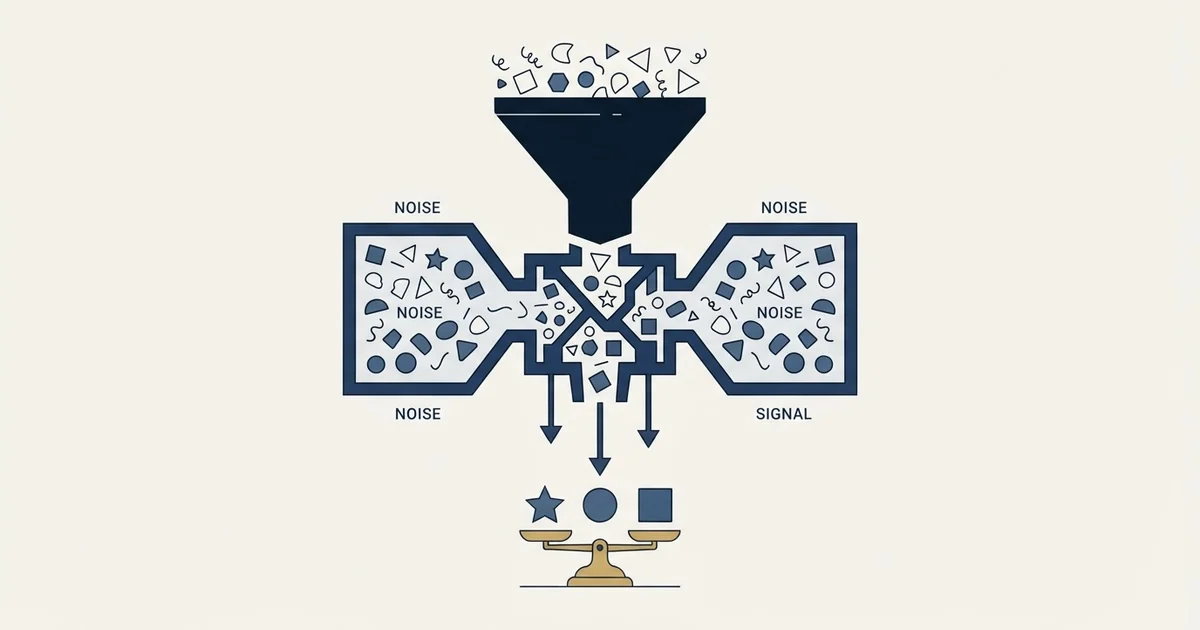
Before trying a lead generation idea, ask four questions: who exactly it reaches and whether they buy, whether it is useful to someone who never becomes a customer, how many attempts it needs before the result is readable, and what it costs the second time. Most published ideas fail the second question.
Key takeaways
- Contests, exit-intent popups and gated checklists were built for purchases a person makes alone and quickly, and they transfer badly to a considered B2B sale.
- The strongest single filter is whether the idea is useful to someone who never buys, because only that survives a purchase that is quarters away.
- An idea needing two hundred instances to produce a readable rate, when you can run four, is not an idea you can evaluate and will absorb budget indefinitely.
- If an existing programme has decayed, a new tactic will not diagnose it, and the likely causes are an exhausted audience or a drifted targeting definition.
Reviewed and updated September 1, 2026
Lead Generation Ideas: The Four Questions to Ask Before You Try One
Search for lead generation ideas and you get lists of thirty. Run a quiz. Add an exit-intent popup. Host a webinar. Build a free tool. Sponsor a newsletter. Send direct mail. Start a podcast. Each item is real, several have worked spectacularly for somebody, and the list format quietly implies that the constraint is inspiration.
The constraint is almost never inspiration. A team with a pipeline problem can generate twenty ideas in an afternoon. What they cannot do is tell which three are worth the quarter, and a list of thirty makes that harder rather than easier by presenting a contest winner and a routine tactic as peers.
The useful thing is not another list. It is a test you can run against any idea in about ten minutes, before it costs anything.
People searching for lead generation examples are usually after this list rather than a taxonomy: the three below are the examples worth copying, and the two after them are the ones most teams write off too early.
Why so many of these ideas do not transfer
Lists of lead generation tactics are easy to find and mostly interchangeable; what decides whether one works for you is not on the list. These get listed as lead generation activities, tactics or ideas interchangeably, and the label changes nothing: the four questions below decide which of them is worth your quarter.
Most published lead generation ideas were developed for a purchase that looks nothing like a considered B2B sale.
A contest, an exit-intent discount, a gated checklist and a quiz all rely on a decision a person can make alone, quickly, at low cost, on impulse. That describes a lot of commerce. It does not describe a forty-thousand-dollar annual contract that needs a second stakeholder, a security review and a budget line, where no popup has ever compressed the timeline.
- Contests and giveaways
- Exit-intent discount popups
- Generic gated PDF checklists
- Personality quizzes
- Countdown timers and scarcity
- Broad follower-growth plays
- A free tool that does real work
- Original data nobody else has
- A narrow event with the right nine people
- Public teardowns of real examples
- Templates a practitioner would actually use
- Partnering with someone who has the trust
The right-hand column has one property in common, and it is the property the test below is built around: each one delivers something the prospect would have wanted even if they never spoke to you. The left-hand column mostly delivers a reason to submit an email address.
That distinction matters more in B2B than in commerce because the delay is longer. An impulse mechanism has to work in the moment or not at all. In a market where the purchase is six months away, the only things that survive the gap are the ones that were genuinely useful on their own.
Teams selling into schools and universities face a longer, calendar-bound version of that delay, and the guide to lead generation in education explains why targeting the budget cycle matters more than institution size.
The four questions

Run these against any idea before it gets a budget or a week of someone's time.
1. Who exactly does this reach, and are they the buyer? Not "marketers" or "operations people". Can you name ten real individuals this would reach, and would any of them be in the room for the purchase? A tactic that reaches an enormous number of the wrong people is worse than one that reaches forty of the right ones, because it produces volume that looks like progress and converts at zero.
Naming that buyer gets trickier in IT departments, and the guide to selling to technical IT buyers explains why generic category language collapses instantly.
2. Is it useful to them if they never buy? This is the strongest single filter. A tool that saves someone an hour, a dataset that answers a question they had, a template that removes real work: these keep their value in a market where the purchase is quarters away. A gated PDF of things they already knew does not, and it also spends a small amount of your credibility.
3. How many attempts before you can read a result, and can you afford that many? An idea that needs two hundred instances before its rate is stable, when you can only run four, is not an idea you can evaluate. This kills more good ideas than it should, and it kills them correctly: an unevaluable programme absorbs budget forever because nobody can prove it is failing.
4. What does it cost the second time? Some ideas cost the same every time you run them, and some are built once and keep working. Neither is wrong, but conflating them is how a team ends up with a calendar full of recurring obligations and nothing that compounds. Ask it explicitly.
- Yes: You can name ten real people it would reach
- Yes: It is useful to them even if they never become a customer
- Yes: You can run it enough times to read a result
- Yes: You know whether it is a one-off cost or a recurring one
- Yes: Someone specific owns it and has the hours
- No: It is on the list because a competitor is doing it
- No: Its main appeal is that it is new
An idea that passes all four is worth a real attempt. An idea that fails question two or three is worth deleting rather than deferring, because it will come back next quarter with the same problems.
The same screen is the one to run over lead generation campaign examples, which are the same tactics written up with a company name attached, and the name is the part that does not transfer.
Three that consistently clear the bar
Not a list of thirty. Three that pass the test for most B2B companies, with the reason each one passes.
A free tool that does actual work. A calculator, a checker, a generator that solves a small real problem in your domain. It passes question two decisively, it is built once and keeps working, and it produces a durable asset rather than a campaign. The failure mode is building a tool that is a lead form with arithmetic attached, which fails question two and everyone can tell.
Original data. Survey your market, or publish what your own operations can honestly show, and you own a fact other people have to cite. It reaches the right people because the people who care about that fact are the people in your market, and it compounds through citation. The constraint is real: the data has to be genuinely yours and genuinely measured. Inventing it is simply a lie with a chart on top, and the people best placed to notice are the practitioners you were trying to reach.
A narrow event. Nine of the right people in a room, or on a call, with a topic they actually have a problem with. It fails question three on volume, which is the honest cost, and it clears questions one and two so decisively that a small number of attempts still produces meetings. The economics beat a large conference for most companies.
Each of those is slow. If the problem is this quarter, the honest answer is that ideas of this shape are not what fixes it, and sorting channels by how fast they answer is the more relevant read.
Two that pass the test more often than their reputation suggests

Worth adding because both get dismissed early and both clear all four questions in the right circumstances.
Writing to people who left a customer. When a champion moves company, they arrive somewhere new already understanding what you do and why it mattered. Question one is answered precisely, since you can name them. Question two is unusual here: the useful thing is the offer to help them repeat something that already worked. It costs almost nothing, it recurs naturally as people move, and at most companies nobody owns it, which is the whole reason it stays available.
Teardowns of real, public examples. Take something visible in your market and analyse it properly in public, with the reasoning shown. It passes question two because the analysis is worth reading on its own, it reaches the right people because only practitioners care, and it is built once. The discipline it demands is that the analysis has to be genuinely fair, since the subject may well read it, and a teardown written to make a sale reads as one immediately.
Both share the property that makes the right-hand column work: somebody gets something real whether or not a purchase ever happens.
When more ideas is the wrong response
Worth naming directly, because a search for ideas is often a symptom rather than a need.
If a programme that used to work has decayed, adding a new tactic will not diagnose it, and the likely causes are a finite audience getting used up, an offer that stopped matching the market, or a targeting definition that drifted. The four frameworks for a broken lead generation system is the diagnostic for that, and it should come first.
If nothing has ever worked, more ideas is definitely the wrong response, because the missing piece is upstream of tactics. An audience defined so loosely it cannot be wrong, or an offer nobody has articulated, will defeat every idea on every list, and the order in which those decisions have to be made is the thing to fix.
And if the idea under consideration is really "contact the same people again, more often", that is not a new idea. Our own position is that a campaign carries one message, built on one premise, and is sent once; a later approach is a separate campaign with a separate premise, which means it has to earn its place with a genuinely different reason to write rather than by repetition. Held honestly, that constraint is a generator of ideas rather than a limit on them, because it forces the question of what would actually be worth saying to this person now.
The short version

The bottleneck is not a shortage of ideas, it is the absence of a test. Ask who it reaches and whether they buy, whether it is useful even to people who never become customers, whether you can run it enough times to read a result, and what it costs the second time. Most published ideas were built for impulse purchases and transfer badly to a considered B2B sale. Free tools, original data and narrow events clear the bar most often. And if an existing programme has decayed, diagnose it before adding anything.
If what you want is the fast half running against a named list while the slow ideas compound, we can build and send the first campaign.
Frequently asked questions.
Frequently asked questions- What is the best lead generation idea for B2B?
- Three clear the bar for most companies: a free tool that does real work, original data you actually measured, and a narrow event with the right handful of people. Each is genuinely useful to someone who never buys, which is what lets it survive a purchase cycle measured in quarters rather than in minutes.
- Why do lead generation tactics from blog lists not work for us?
- Most were developed for purchases a person can make alone, quickly, at low cost. A quiz or a countdown timer relies on compressing a decision that a B2B buyer cannot compress, because a second stakeholder, a security review and a budget line all sit between interest and purchase. The mechanism has nothing to act on.
- How do we know if a lead generation idea is worth testing?
- Run the four questions. Name ten real people it would reach and check whether any would be in the room for the purchase. Ask whether it helps someone who never buys. Work out how many attempts you need for a readable result and whether you can afford them. Then decide whether the cost recurs or is paid once.
- Our lead generation used to work and now it does not. What should we try?
- Diagnose before adding anything. A programme that decayed usually has an exhausted audience, an offer that stopped matching the market, or a targeting definition that drifted, and none of those is visible through a new tactic. Check what share of your defined audience has already been contacted first, because that one is both common and cheap to test.
About the author.

Ben Carden is CRO at RevenueFlow, which builds and operates outbound revenue engines for B2B companies. Previously at Gartner Enterprise. Studied at London School of Economics.
Ben Carden · CRO
Connect on LinkedIn →Explore more.
Ready to scale your outreach?
We build GTM engines that book real meetings. See the receipts.
Related articles.
Allbound: Merging Inbound and Outbound
Allbound runs inbound and outbound as one motion. Merging them creates two decisions: what a signal may trigger, and who is credited when both touched the deal.
5 ABM Campaign Examples and How Each One Is Built
Five worked account-based campaign examples, each built on the same five fields: account set, tier, plays in order, owner and handoff, and the exit condition.
Two Agencies, One Target List: Who Owns Which Accounts
Two outbound suppliers on one market will contact the same companies unless the buyer splits it first. How to cut the list, run the exclusion feed and check the overlap.
Define Content Syndication: Two Purchases Behind One Word
One budget line, two different purchases. Republication buys reach; lead syndication buys contact records produced by a download. The deliverable tells you which.
Last Outbound Agency Did Not Deliver: Locating the Failure
The leads were bad names a symptom and no stage. Four places an outbound engagement fails, the counts that separate them, and what to change in the next purchase.
HR Lead Generation: The Renewal Clock and Who Signs
An HR buyer who agrees with every word still cannot act outside their own renewal window. Which triggers are observable, and who signs.