Lead Generation in Education: A Budget Set Last Year
Schools and universities buy on an academic and fiscal calendar that has nothing to do with your pipeline, and outreach that ignores it arrives in the wrong month.
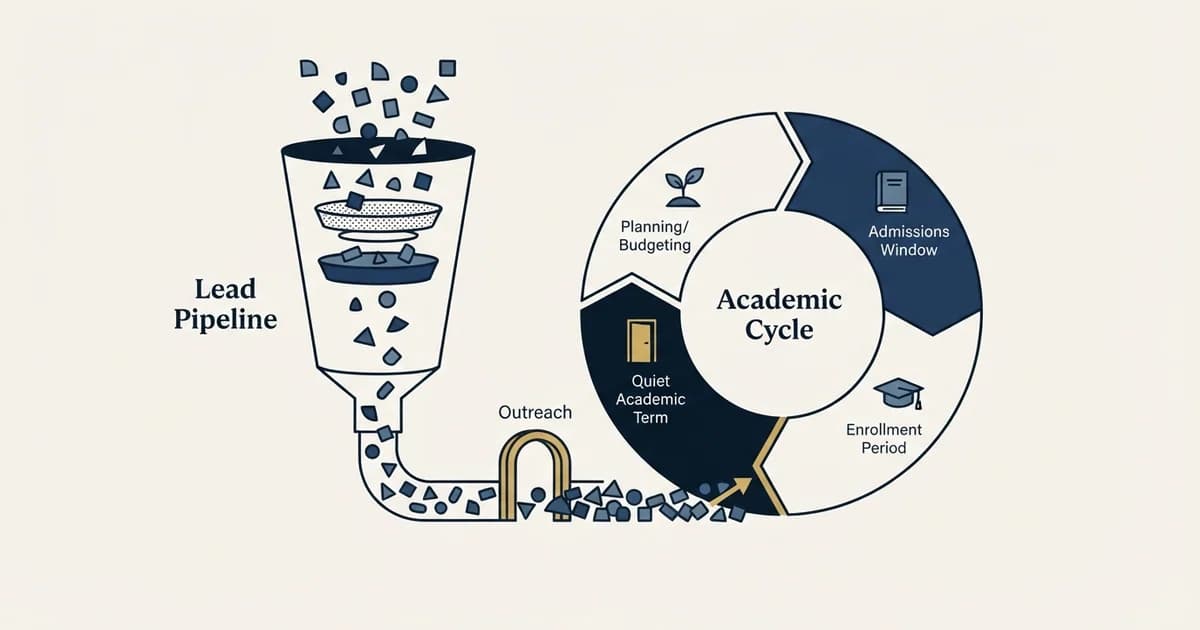
Selling into schools and universities means targeting around two calendars rather than around institution size, because new money is created only during the budget build and decisions stall at term boundaries. The champion cannot buy, a privacy review can stop the deal, and public board minutes, budgets and procurement portals make intent unusually easy to verify.
Key takeaways
- The phrase covers two unrelated jobs, and enrollment marketing shares no method with selling to the institution itself.
- New money is created only during the budget build, so a vendor absent from that window is frequently absent for the whole year.
- The person who champions your product cannot authorise it, and the person who signs has usually never seen a demo.
- Board minutes, adopted budgets, procurement portals and grant awards make education one of the few verticals where buying intent is a matter of public record.
Reviewed and updated September 1, 2026
Lead Generation in Education: Selling Into a Budget That Was Set Last Year
An EdTech company runs a demo for a curriculum director in March. It goes well. The director is enthusiastic, asks for pricing, and says she will take it forward. Nothing happens for seven months. In November a purchase order arrives, for a smaller scope than discussed, from a business office nobody at the vendor had ever spoken to.
The sales team records that as a slow deal. It was actually a fast one. The money that bought it was allocated during a budget process that had already closed by the time of the demo, and the seven months of silence was the organisation doing exactly what it always does.
Selling into schools, districts, colleges and universities runs on a clock that has almost nothing to do with your pipeline, and lead generation that ignores the clock produces interest at the wrong time of year.
First, which business you are in
The phrase lead generation in education covers two completely different jobs, and they share almost no method.
One is enrollment marketing: an institution recruiting prospective students. That is consumer demand generation with a long consideration window, and it belongs to a different discipline.
The other is selling to the institution. EdTech platforms, curriculum and assessment publishers, student information systems, facilities and food service, professional development, campus security, IT and networking. The buyer is an organisation with a procurement process, a fiscal year and a board.
This piece is about the second one. Everything below assumes your customer is the school, district or university itself.
The calendar is a targeting variable, not a scheduling detail
In most B2B markets, timing is a minor optimisation. In education it determines whether a message is read at all, because the institution genuinely cannot act outside certain windows.
Two calendars run at once and they are not aligned. The academic year governs attention: nobody evaluates anything in the fortnight before term starts, and nobody makes decisions in the last weeks before it ends. The fiscal year governs money, and in public education it is frequently offset from both the calendar year and the academic one.
- Budget buildThe only moment new money is created
Requests are assembled for a year that has not started; a vendor absent here is absent all year
- Board approvalThe number becomes real
Published agendas and adopted budgets show what was funded and at what level
- Term startNobody is available
Operational load absorbs everyone; outreach here is spent for nothing
- Mid-yearEvaluation and pilots
The realistic window for demos, trials and procurement processes
- Year endUse it or lose it
Unspent allocations occasionally move quickly, on a much shorter decision path
The practical consequence is that a list for education should carry a date alongside each account, and that sending the same volume every week of the year is close to the worst possible allocation. It also means the honest answer to when will this close is often knowable in advance, which is unusual and useful.
The person who loves it cannot buy it
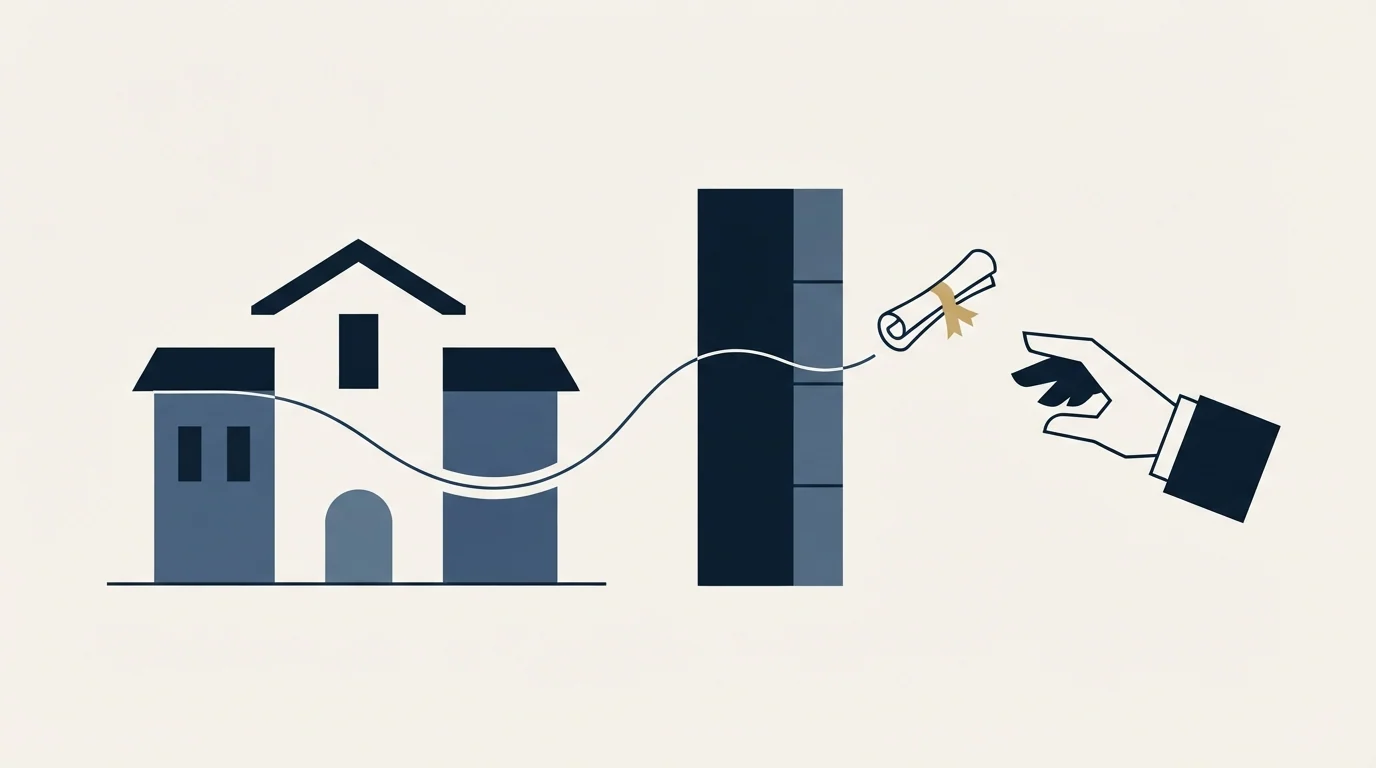
Education buying is committee buying, and the committee is unusually spread out. A teacher or lecturer experiences the problem. A department head or curriculum lead can champion a solution. An IT director decides whether it can be connected to anything. A privacy or data governance reviewer decides whether it is permitted. A business office issues the order. For anything material, a board or a cabinet signs.
- Feels the problem daily
- Can convene a look at options
- Cannot commit money
- Judges you on whether it works in a real classroom or department
- IT integration and access management
- Student data privacy review
- Accessibility and compliance
- Judge you on documentation, not enthusiasm
- Business office, cabinet or board
- Compares against other funded priorities
- Judges you on cost, term and defensibility
- Reads a summary, never your website
The targeting implication is that reaching only the champion caps the deal at whatever the champion can approve, which in most institutions is very little. Reaching only the executive produces a referral back down to the champion, having spent your one good message. The accounts that move are the ones where you have a specific reason to write to two different people about two different things.
The gatekeeper column is also where most first-time education sellers lose deals they thought they had won. A privacy review that starts after the champion has decided adds months, and sometimes ends the process. What procurement professionals actually respond to is covered in how to cold email procurement managers, and the formal end of the same road in marketing RFPs.
Privacy is the gate, and it is worth naming early
Anything that will hold information about students walks into a body of law and policy that the institution takes seriously, because the institution carries the liability.
The core federal statute in the United States is the Family Educational Rights and Privacy Act. The Department of Education's Student Privacy Policy Office describes FERPA as "a federal law that affords parents the right to have access to their children's education records, the right to seek to have the records amended, and the right to have some control over the disclosure of personally identifiable information from the education records", and notes that those rights transfer to the student at eighteen or on entering a postsecondary institution. The statute sits at 20 U.S.C. § 1232g and the regulations at 34 CFR Part 99. That office publishes guidance addressed specifically to education technology vendors, which is a reasonable signal of how routinely this comes up.
State student privacy laws and district-level data agreements sit on top of it, and they vary. The point for lead generation is not that you should become a lawyer. It is that a vendor who raises this unprompted, in the first message, reads as someone who has sold here before, and a vendor who is surprised by it in month four reads as someone who has not.
Public records make this the most researchable vertical you will work in

Here is the compensation for the slow clock. Public institutions publish an extraordinary amount about their own intentions, and almost nobody selling to them reads it.
Board meeting agendas and minutes name what was discussed and what was approved. Adopted budgets show what was funded, at what level, and against which department. Procurement portals list open solicitations, and in many cases the awarded vendor and the contract end date. Strategic plans state priorities in the institution's own language. Grant awards, both federal and state, are frequently published with the amount and the purpose.
That combination is rare. In a private-sector vertical you infer intent from hiring and press releases. Here a district will often tell you, in writing, that it has money for a named purpose, when the current contract expires, and who is responsible.
- Yes: Fiscal year dates and the budget build window
- Yes: Whether a relevant initiative appears in board minutes or the strategic plan
- Yes: Incumbent vendor and, where published, contract end date
- Yes: Named champion, gatekeeper and signing authority as three separate people
- Yes: Whether the institution is a district, a single school, or a consortium buying jointly
- No: Only a job title and a verified email address
- No: An assumption that decisions run on your fiscal year
The consortium line matters more than it looks. A large share of education purchasing runs through cooperative purchasing bodies, state contracts and regional service agencies, which means the entity that signs may not be the entity that uses the product. Selling hard to a school that cannot buy outside its consortium is a common and entirely avoidable waste.
K-12 and higher education are not one market
Treating them as one segment is the other common error, and it shows up in the message immediately.
K-12 buying is centralised at the district. Decisions are made for many schools at once, budgets are heavily shaped by state formulas and categorical grants, and board approval is public. The buying committee is comparatively easy to map because the org structure is standardised across districts, and the same three or four titles do the same jobs almost everywhere.
Which of those desks a phone call reaches, and when a district can talk, is the subject of cold calling for edtech companies.
Which funding stream pays for a category, and the public filings each stream leaves behind, is covered in lead generation for K12 vendors.
Higher education is federated and frequently contradictory. A university can hold a central procurement function, an IT organisation with its own standards, and departments and research groups with independent budgets and a strong habit of buying separately. The same institution can be a slow enterprise buyer and a fast departmental one depending on which door you come through, and a vendor who only knows the central door will conclude the whole sector is slow.
The practical version of that distinction is which unit you put on the list. In K-12 the account is the district. In higher education the account is often the school, the department or the research centre rather than the university, and building the list at university level flattens away the exact variation that decides where you can actually win.
How a university's own purchasing policy sorts a sale between the department, central procurement and an existing contract is worked through in outbound sales for higher education vendors.
What gets a reply, given all of this

The offers that work in education are the ones that reduce risk for a person whose career cost of a failed rollout is higher than their upside from a successful one.
A small, bounded pilot with a defined end date is the strongest, because it is reversible. Evidence from a comparable institution is the second, and comparable is doing real work in that sentence: a district of four thousand students does not consider a case study from a district of ninety thousand to be about them. Willingness to go through the privacy and accessibility review before asking for anything is the third, and it is close to free to offer.
What consistently fails is a message about outcomes for students written to somebody who has heard that claim from every vendor in the category, with nothing attached that makes it checkable.
What this means for how the campaign is built
Three things follow from all of the above.
Targeting should be built around the funding and contract calendar rather than around institution size, because size predicts deal value and the calendar predicts whether anything can happen at all.
The message should be specific to something the institution has published about itself. In a vertical where intent is a matter of public record, generic outreach is a choice.
And the message should go once. Our own position is one message per campaign, built on one premise, sent once. When a different premise appears, because a budget was adopted or a contract came up or a new director arrived, that is a separate campaign with its own reason to exist. In education this is easier to hold to than elsewhere, because the calendar hands you genuinely new reasons to write several times a year, and an institution that hears from you only when something has actually changed on their side is a vendor they start to recognise for the right reason.
For the channel specifics in this market, cold email for EdTech companies and cold email for education go deeper on message construction, and education cold email benchmarks covers what the numbers tend to look like. The nearest structural analogue in another regulated, committee-driven market is healthcare lead generation.
If you would rather see a calendar-aware target list and a first message built against your own institutions, see what a first campaign looks like.
FERPA description and citations verified against the U.S. Department of Education Student Privacy Policy Office as of mid-2026. Confirm current requirements, and any applicable state law, before relying on them.
Frequently asked questions.
Frequently asked questions- When is the best time to contact a school district or university?
- During the budget build, if you want to be funded at all, and mid-year for evaluations, pilots and procurement. Avoid the weeks either side of term boundaries, when operational load absorbs everyone. Year end sometimes moves quickly on unspent allocations, but that path is opportunistic rather than something to plan around.
- Why do education deals stall after a good demo?
- Usually because the enthusiastic contact has no spending authority and the money was allocated in a process that closed before you arrived. What looks like a stalled deal is often the institution working normally: an IT review, a student data privacy review, a business office purchase order and sometimes a board vote, each on its own clock.
- Does student data privacy really affect lead generation?
- It affects whether you reach a pilot at all. Any product holding student information meets FERPA, state student privacy laws and district data agreements, and the institution carries the liability. Raising it unprompted in the first message reads as experience. Being surprised by it in month four reads as the opposite.
- Should we treat K-12 and higher education as one segment?
- No. K-12 is centralised at the district with standardised roles and public board approval, so the account is the district. Higher education is federated, and departments, schools and research groups frequently buy independently of central procurement. Building a higher-ed list at university level flattens away the variation that decides where you can win.
About the author.

Ben Carden is CRO at RevenueFlow, which builds and operates outbound revenue engines for B2B companies. Previously at Gartner Enterprise. Studied at London School of Economics.
Ben Carden · CRO
Connect on LinkedIn →Explore more.
Ready to scale your outreach?
We build GTM engines that book real meetings. See the receipts.
Related articles.
Two Agencies, One Target List: Who Owns Which Accounts
Two outbound suppliers on one market will contact the same companies unless the buyer splits it first. How to cut the list, run the exclusion feed and check the overlap.
HR Lead Generation: The Renewal Clock and Who Signs
An HR buyer who agrees with every word still cannot act outside their own renewal window. Which triggers are observable, and who signs.
IT Lead Generation: The Buyer Runs Your Playbook
Technology buyers evaluate outbound for a living, and their purchases carry a security review nobody in your meeting owns. Which triggers are real.
Allbound: Merging Inbound and Outbound
Allbound runs inbound and outbound as one motion. Merging them creates two decisions: what a signal may trigger, and who is credited when both touched the deal.
5 ABM Campaign Examples and How Each One Is Built
Five worked account-based campaign examples, each built on the same five fields: account set, tier, plays in order, owner and handoff, and the exit condition.
Last Outbound Agency Did Not Deliver: Locating the Failure
The leads were bad names a symptom and no stage. Four places an outbound engagement fails, the counts that separate them, and what to change in the next purchase.