4 Frameworks That Actually Fix Broken Lead Generation
When leads dry up, most founders panic and burn money on ads. But the problem isn't your budget. It's your system. Here are the frameworks that work.
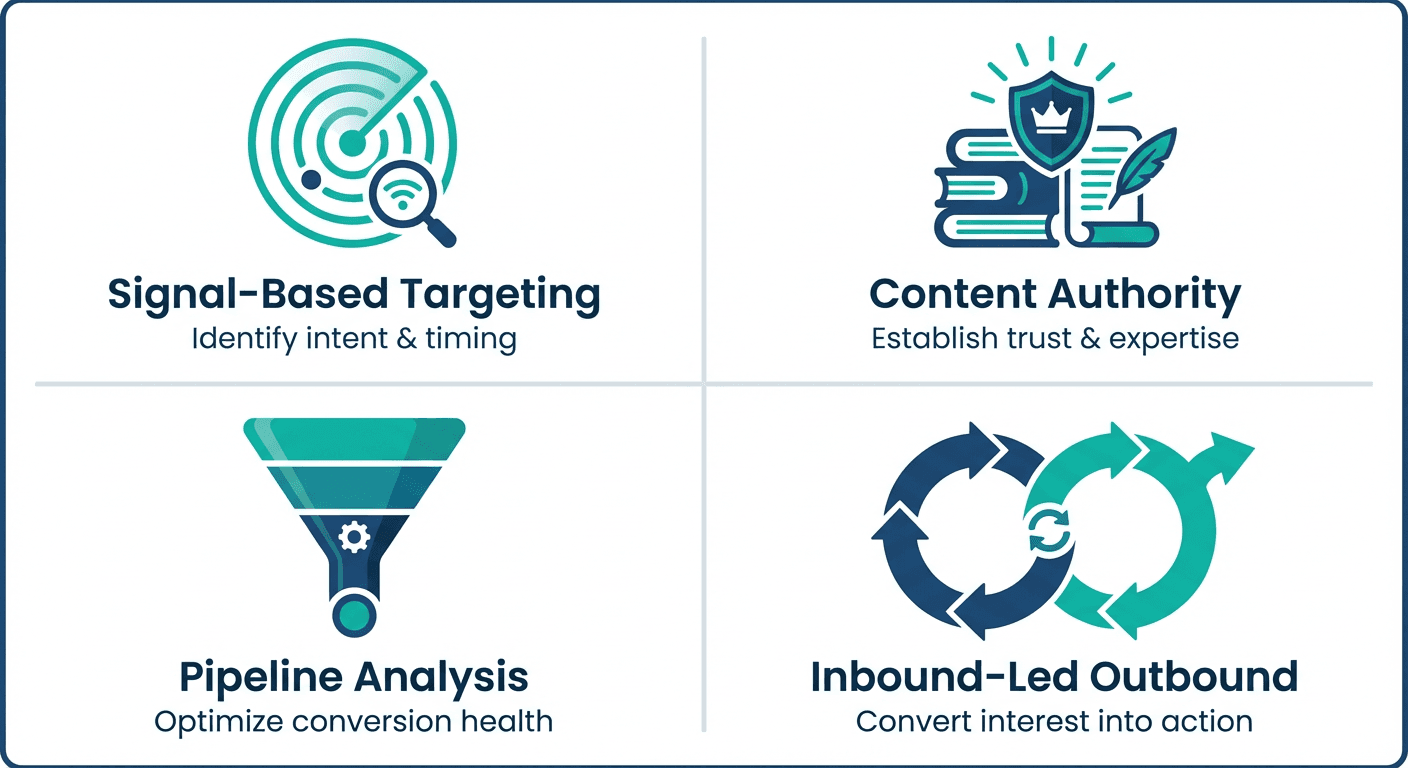
Most B2B lead generation problems stem from broken systems, not insufficient budget. Four frameworks fix this: signal-based targeting tracks behavioral intent using tools like Trigify and RB2B; content authority builds trust through specific, pain-focused content before sales calls; pipeline analysis identifies exact conversion bottlenecks by tracking stage-by-stage rates; and inbound-led outbound uses content engagement data to inform messaging. A complete implementation stack costs under $3k monthly.
Key takeaways
- 73% of the biggest clients in the case study had engaged with content before reaching out, indicating the value of tracking warm signals over cold outreach.
- A complete lead generation technology stack including signal capture, data enrichment, automated outreach, and pipeline management costs under $3,000 per month.
- Pipeline analysis reveals specific conversion breakdowns: in the example provided, a 20% opportunity rate from meetings indicated discovery calls needed improvement, not lead volume.
- Content authority builds trust before sales conversations by addressing specific pain points rather than generic advice, shortening the sales cycle.
- Signal-based targeting tools like Trigify, RB2B, Teamfluence, and HubSpot capture behavioral intent to separate active prospects from tire-kickers.
Reviewed and updated September 5, 2026
4 Frameworks That Actually Fix Broken Lead Generation
When leads dry up, founders panic.
They throw money at ads. They hire agencies. They add channels. They do more of what wasn't working in the first place.
This is like turning up the music when the speakers are broken. You're amplifying a flawed system.
The real problem is usually simpler, and harder to face. Most B2B companies don't have a lead generation system at all. They have a collection of random acts of marketing.
Here are four frameworks that turn acquisition into something repeatable.
Most published lists of lead generation mistakes stop at the symptom, and each of the four frameworks below names the missing system that produced it.
The same diagnosis holds when the activity is called demand generation rather than lead generation. Random acts of demand generation look different on a plan, because they carry channel names and a content calendar, and they fail the same way: no stated audience that can be checked, no single thing being tested, and no stage where a bad result points somewhere specific. The four frameworks below apply unchanged, and the first question is the same one, which is what the activity was supposed to produce and how anybody would know.
Framework 1: Signal-Based Targeting
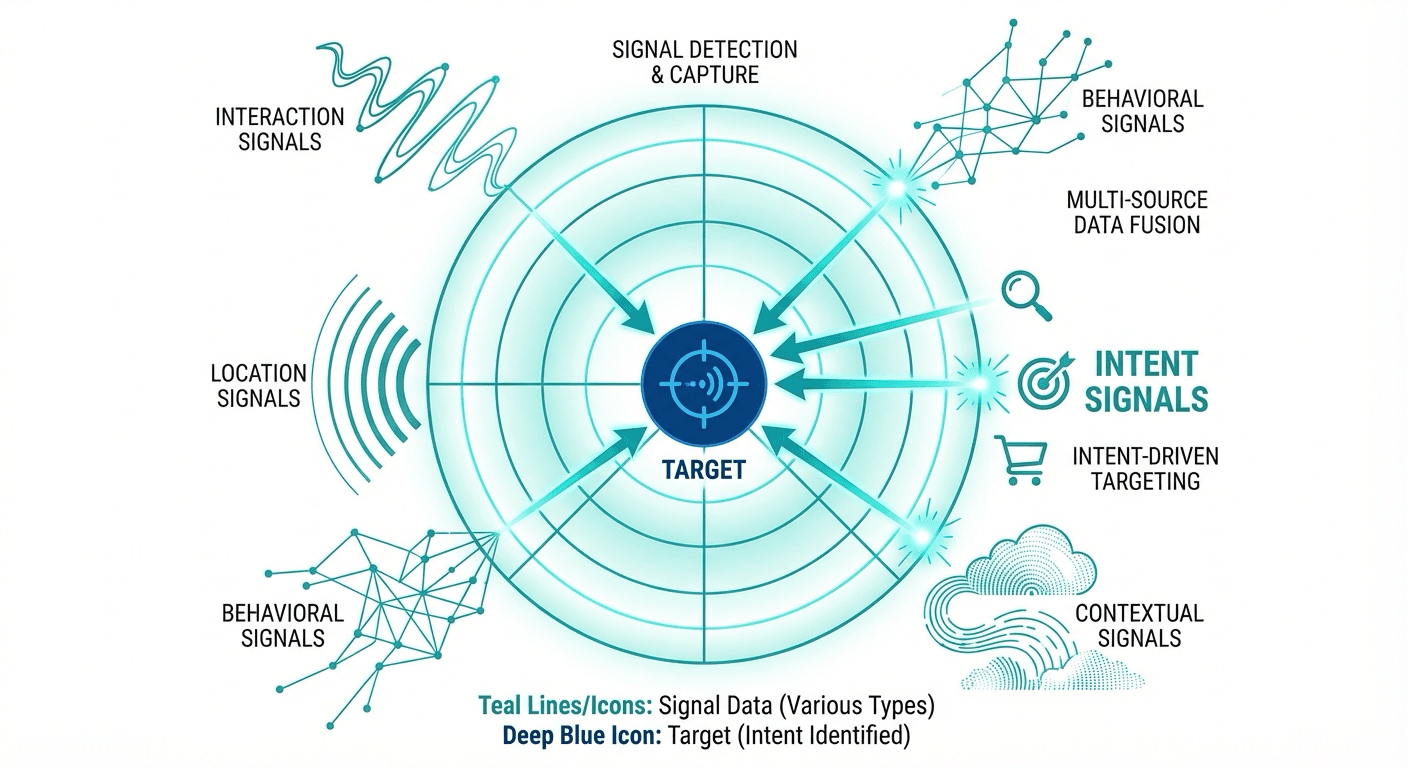
Stop casting wide nets. Start watching for buying signals.
The old approach treats every prospect the same. Build a list of 10,000 contacts. Blast them all. Hope some respond.
Fintech sellers face an added wrinkle here, since segmentation, not messaging, usually decides whether outreach lands, a distinction unpacked in fintech lead generation segmentation.
The new approach watches for behavior that indicates intent.
Someone engages with your content? That's a signal.
Someone visits your website multiple times? Signal.
Someone attends your webinar and opens follow-up emails? Strong signal.
These actions mean something. They separate tire-kickers from people who are actively thinking about the problem you solve.
Tools that capture signals:
Trigify tracks who engages with your posts: likes, comments, shares.
Teamfluence identifies LinkedIn profile visitors.
RB2B unmasks anonymous website visitors.
HubSpot tracks email engagement and website behavior.
Here's what we discovered using these tools: 73% of our biggest clients had engaged with our content before ever reaching out. They were already warm. We just hadn't noticed.
When you start capturing these signals, you stop treating warm leads like cold ones. You reach out to the right people at the right time with the right message.
Framework 2: Content Authority
Your content should sell before your sales calls do.
Here's the test: does your content make prospects think "this person gets my problem"?
If not, you have a content problem, not a lead generation problem.
Weak content: "5 Marketing Tips"
Generic. Forgettable. Could have been written by anyone.
Strong content: "Why Your $50K Marketing Budget Isn't Converting"
Specific. Speaks to a real pain. Positions you as someone who understands.
The difference isn't word count or production value. It's specificity.
Don't say "many companies struggle with X." Say "when your SQL-to-opportunity rate drops below 15% and your SDR team is spending 40 hours a week on manual research, you've got a systems problem."
Don't give generic advice. Show you've solved the specific problem they're dealing with.
Strong content builds trust before you ever get on a call. By the time a prospect talks to you, they should already believe you can help. The conversation becomes about details, not convincing.
Framework 3: Pipeline Analysis
Track conversion rates at every stage. Find where deals die.
Most founders don't know where their funnel breaks. They have a vague sense that "leads aren't converting," but they can't point to the specific problem.
You need actual numbers.
Say you have 100 leads. 20 become qualified. 10 get meetings. 2 become opportunities. 1 closes.
Where's the problem?
20% qualification rate isn't bad. 50% meeting rate is solid. 20% opportunity rate (only 2 of 10 meetings turn into real deals) is the problem. 50% close rate is fine.
The fix isn't more leads. It's improving your discovery calls.
Tools for pipeline analysis:
HubSpot (or any CRM) tracks conversion through each stage.
Clay scores lead quality so you can see if poor leads are causing drop-offs.
Zapier connects tools to ensure accurate tracking.
The insight: fix your weakest link before adding volume. More leads into a broken funnel just means more wasted opportunity.
Framework 4: Inbound-Led Outbound
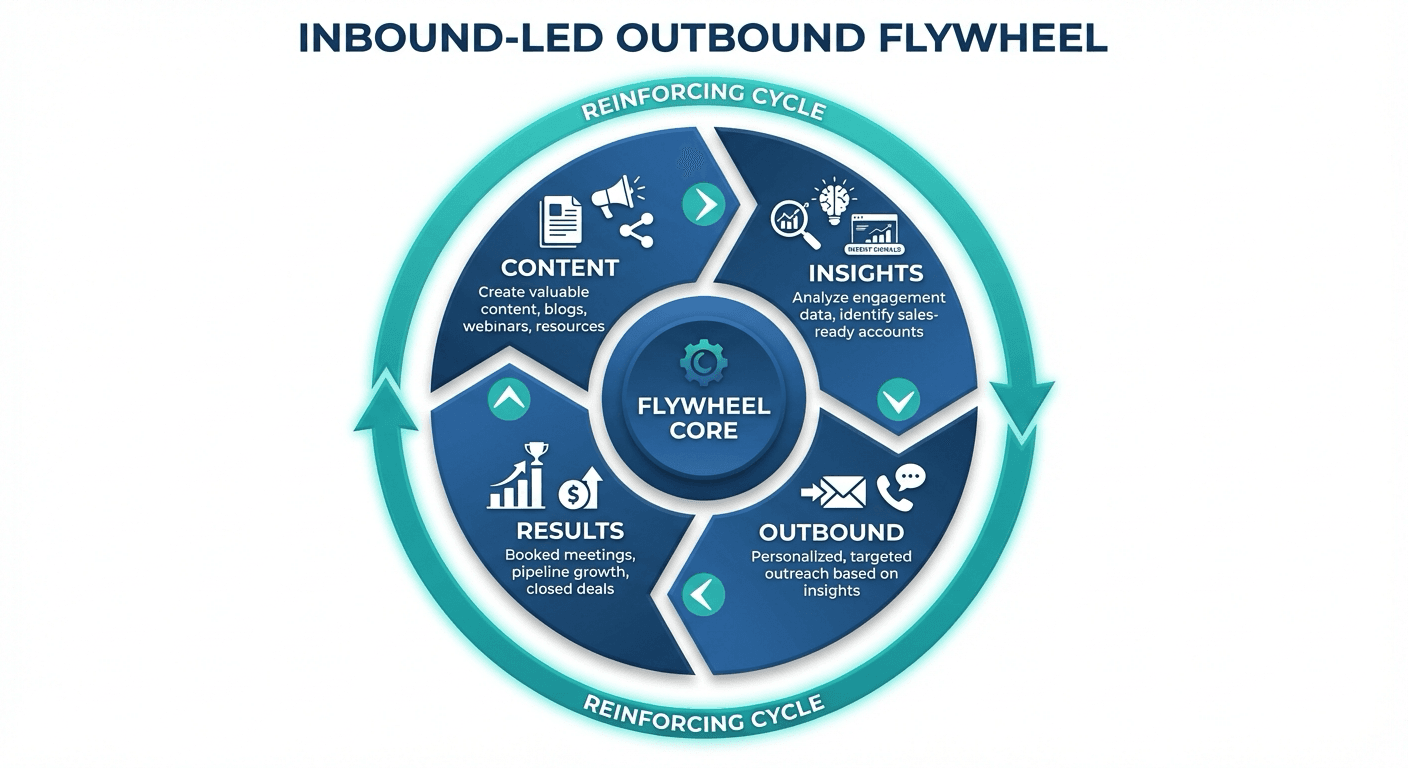
Use what you learn from content to improve your outreach.
Your inbound efforts generate intelligence. What topics get engagement? What pain points resonate? Which industries convert best?
That intelligence should inform your outbound.
If posts about "reducing SDR research time" get 3x more engagement than posts about "improving deliverability," your cold emails should lead with time savings, not deliverability.
If healthcare companies convert at 40% but fintech converts at 5%, focus your outbound on healthcare.
This creates a flywheel:
- Track which content topics get ICP engagement
- Identify which content leads to pipeline
- Use winning topics in outbound messaging
- Test and iterate based on outbound results
- Feed winning outbound insights back into content
Each channel improves the other. Content tells you what resonates. Outbound tests it at scale. Results inform your next content push.
The Stack We Use
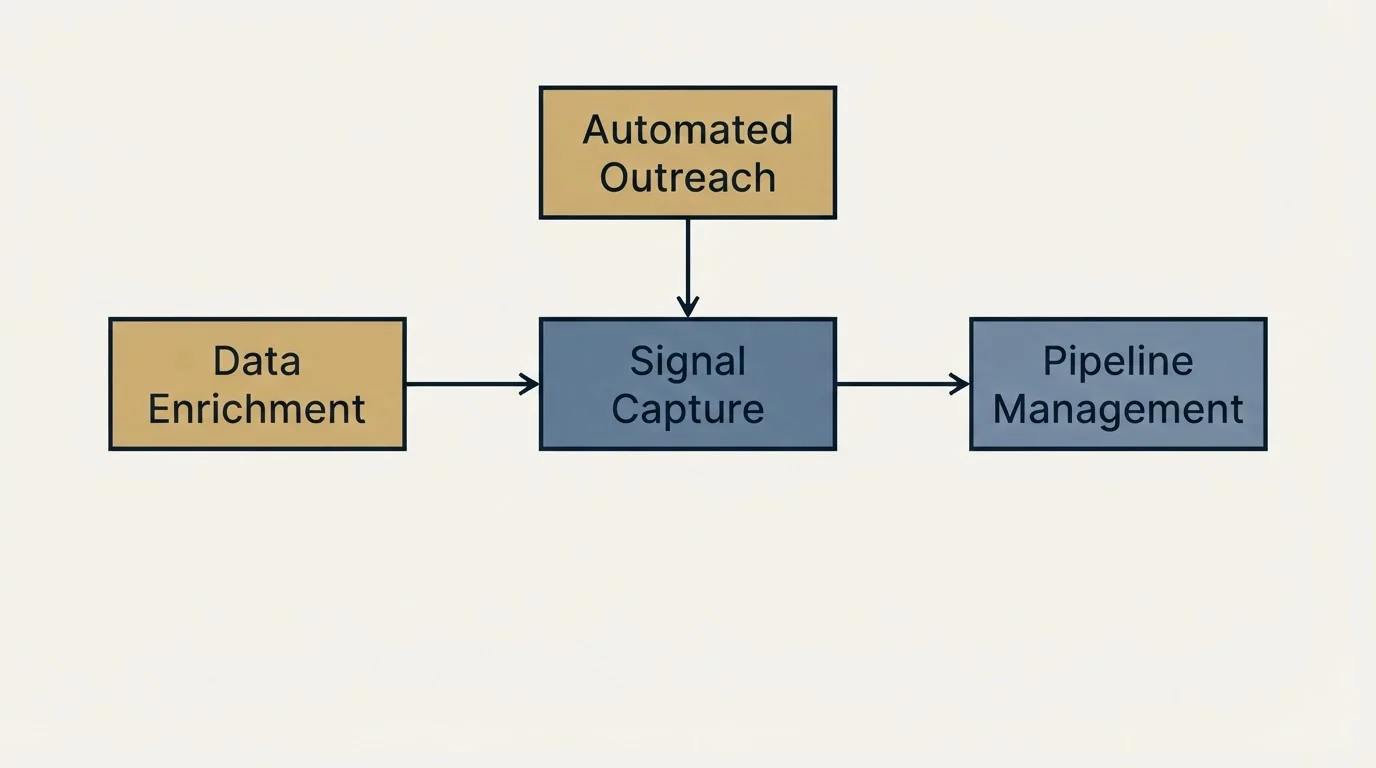
Here's how we implement all four frameworks:
Signal Capture: Trigify, RB2B, Teamfluence, HubSpot
Data Enrichment: Clay, FullEnrich, Apollo
Automated Outreach: HeyReach, Instantly, Make
Pipeline Management: HubSpot, Zapier
Total cost: under $3k/month for a complete system.
The Diagnosis Checklist
Before you spend more money, ask yourself these questions.
Signal-Based Targeting:
- Are you tracking who engages with your content?
- Are you prioritizing warm signals over cold lists?
- Do you know which behaviors predict buying?
Content Authority:
- Does your content address specific pain points?
- Are you building trust before sales conversations?
- Is your expertise evident in what you publish?
Pipeline Analysis:
- Do you know conversion rates at every stage?
- Have you identified where deals die?
- Are you fixing the weakest link first?
Inbound-Led Outbound:
- Are you using content insights in outreach messaging?
- Do you know which topics resonate with your ICP?
- Is there a feedback loop between content and outreach?
If you're answering "no" to most of these, that's your problem. Not your ad budget. Not your agency. Your system, or lack of one.
The Point
Most founders do random acts of marketing. Post some content. Run some ads. Send some emails. Hope it works.
Hope isn't a strategy.
The frameworks work because they create systems instead of one-off efforts:
Signal-based targeting means you're reaching people who already showed interest.
Content authority means prospects trust you before you ever talk.
Pipeline analysis means you fix what's actually broken.
Inbound-led outbound means your channels reinforce each other.
Stop amplifying broken processes with bigger budgets.
Build a system that actually works.
Related Reading
- The Outreach System Behind Our $3M ARR (Full Breakdown)
- Content-Led Outbound: Why Your Content Is Now the Most Powerful Thing in Sales
- The 20-Tool Sales Stack That Built a $50M Investment Pipeline
Want help implementing these frameworks? Book a call to see how we can build this for you.
Frequently asked questions.
Frequently asked questions- What is signal-based targeting and how does it improve lead generation?
- Signal-based targeting identifies prospects showing behavioral intent rather than blasting wide contact lists. It tracks actions like content engagement, multiple website visits, webinar attendance, and email opens to separate active buyers from tire-kickers. Tools like Trigify, RB2B, Teamfluence, and HubSpot capture these signals, allowing teams to reach out to warm leads at the right time with relevant messaging instead of treating all prospects identically.
- How do I find where my lead generation funnel is actually breaking?
- Track conversion rates at every pipeline stage to identify the weakest link. If 100 leads become 20 qualified, 10 meetings, 2 opportunities, and 1 close, the problem isn't lead volume: it's the 20% meeting-to-opportunity rate. This indicates discovery calls need improvement. Use CRM tools like HubSpot to monitor stage-by-stage conversion and lead scoring tools like Clay to assess lead quality. Fix the specific bottleneck before adding more volume.
- What makes B2B content actually generate leads instead of just getting views?
- Effective lead generation content demonstrates specific expertise that makes prospects think you understand their exact problem. Instead of generic advice like "5 Marketing Tips," use specificity like "Why Your $50K Marketing Budget Isn't Converting." Address concrete situations with numbers and thresholds rather than vague statements. Strong content builds trust before sales calls, so conversations focus on details rather than convincing prospects you can help.
- How does inbound-led outbound work as a lead generation strategy?
- Inbound-led outbound uses content engagement data to inform cold outreach messaging. Track which topics get the most ICP engagement, which pain points resonate, and which industries convert best. If posts about reducing SDR research time get 3x more engagement than deliverability topics, lead cold emails with time savings. This creates a feedback loop where content reveals what resonates, outbound tests it at scale, and results inform the next content push.
About the author.

Ben Carden is CRO at RevenueFlow, which builds and operates outbound revenue engines for B2B companies. Previously at Gartner Enterprise. Studied at London School of Economics.
Ben Carden · CRO
Connect on LinkedIn →Explore more.
Ready to scale your outreach?
We build GTM engines that book real meetings. See the receipts.
Related articles.
Allbound: Merging Inbound and Outbound
Allbound runs inbound and outbound as one motion. Merging them creates two decisions: what a signal may trigger, and who is credited when both touched the deal.
Deal Registration: Who Owns a Contested Deal
Deal registration lets a partner claim an opportunity before pursuing it. The policy is tested once, in public, on the first deal your direct team also wants.
Market Development Funds: What the Money Buys
MDF is discretionary marketing money a vendor grants its channel. The allocation model decides how much of it is ever claimed, and how much is unspent.
Lead Verification: What Each Check Actually Proves
Lead verification covers two different jobs. One asks whether a mailbox will accept mail, the other asks whether the person behind the row is real and lawful to contact.
5 ABM Campaign Examples and How Each One Is Built
Five worked account-based campaign examples, each built on the same five fields: account set, tier, plays in order, owner and handoff, and the exit condition.
Two Agencies, One Target List: Who Owns Which Accounts
Two outbound suppliers on one market will contact the same companies unless the buyer splits it first. How to cut the list, run the exclusion feed and check the overlap.