Content-Led Outbound: Why Your Content Is Powerful in Sales
Response rates are falling and most teams respond by cranking up volume, which is like shouting louder in an already deafening room. The alternative is making the outreach arrive from a familiar name.

Content-led outbound replaces cold prospecting with recognition by publishing content that addresses your ideal customer's problems, then reaching out to people who engage with that content. Instead of asking strangers for time, you contact prospects who already know your thinking. The approach takes months to build, requires someone credible to produce content, and works only in markets where buyers are active on public platforms, but it generates compounding returns as older posts continue producing engagement signals.
Key takeaways
- Adam Robinson used content-led outbound to generate 6,500+ users and $500K+ ARR within four months at Retention.com, with prospects reaching out to him rather than the reverse.
- Content-led outbound takes months to produce pipeline, requiring teams to run traditional outbound simultaneously rather than replacing it immediately.
- Every engagement signal (likes, comments, profile views) identifies prospects who have already consumed your thinking, creating warmer outreach targets than cold lists.
- The model requires someone with credible expertise to create content and does not work in markets where target buyers are not active on public platforms.
- Old content continues generating engagement signals indefinitely, creating compounding returns that cold email cannot match since volume resets to zero monthly.
Reviewed and updated September 5, 2026
Content-Led Outbound
The most powerful thing in sales today is not your tech stack, your headcount, or even your product. It is whether the person receiving your email already knows who you are.
B2B sales has changed underneath the playbook. Response rates are in free fall. Inboxes are saturated. Most sales leaders respond by increasing volume: more emails, more SDRs, more sequences.
That is shouting louder in a room where everyone is already shouting.
The Alternative
Adam Robinson was in this trap. Classic outbound playbook, diminishing returns. He bootstrapped Retention.com from zero to $22 million in revenue, so this is not someone who lacks the ability to run traditional outbound.
He changed the order of operations. Instead of sending more outreach, he focused on creating content that addressed his ideal customers' actual problems. Not marketing content. Not product pitches. Specific, opinionated writing about the challenges those people faced daily.
The reported results from that shift, as he described them publicly: 6,500+ users and $500K+ ARR within about four months, with prospects reaching out to him.
Those are his numbers, self-reported, from someone who was already an established operator with an existing audience. Read them as evidence that the mechanism works, not as a forecast for what happens when you start posting.
The Framework
There is a second use for the same material, which is to build a cold list from the content itself: the topics that earn engagement are a statement about which problems an audience will answer a message about, and that is a targeting input rather than a publishing one.
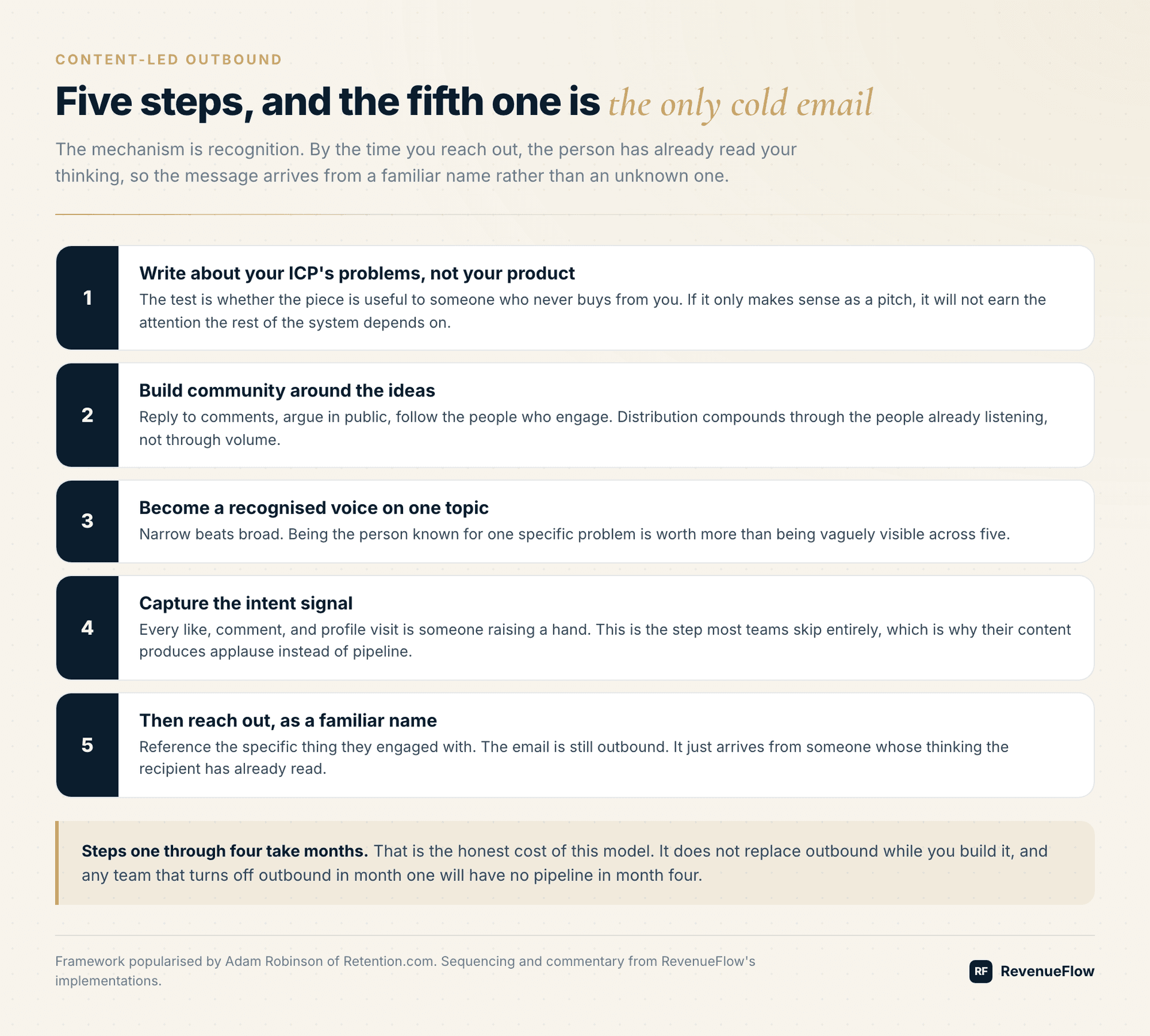
1. Create content that speaks to your ICP's pain points, not your product.
The test is whether the piece is useful to someone who will never buy from you. If it only makes sense as a pitch, it will not earn the attention that the rest of the system depends on.
2. Build community around those ideas.
Reply to comments. Argue in public. Follow the people who engage. This is the step that converts a broadcast into a network, and it does not scale, which is precisely why it works.
3. Establish yourself as a trusted voice in the conversation.
Narrow beats broad. Being the person known for one specific problem is worth considerably more than being vaguely visible across five.
4. Use intent signals to identify when someone engages.
Every like, comment, and profile view is a hand going up. This is the step most teams skip entirely, which is why their content produces applause instead of pipeline.
5. Then reach out, as a familiar voice rather than a cold caller.
Reference the specific thing they engaged with. The email is still outbound. What changed is that it arrives from someone whose thinking the recipient has already read.
Why It Works
This is also the practical answer for teams who want to create problem awareness before a cold email lands: awareness is built where the buyer already is, so that the message arrives from a name they have seen rather than having to do the educating itself in six sentences.
Traditional outbound asks a stranger for time. Content-led outbound asks someone who has already found your thinking useful for a conversation about it.
That is not a small difference in a channel where the primary filter is "do I recognise this name."
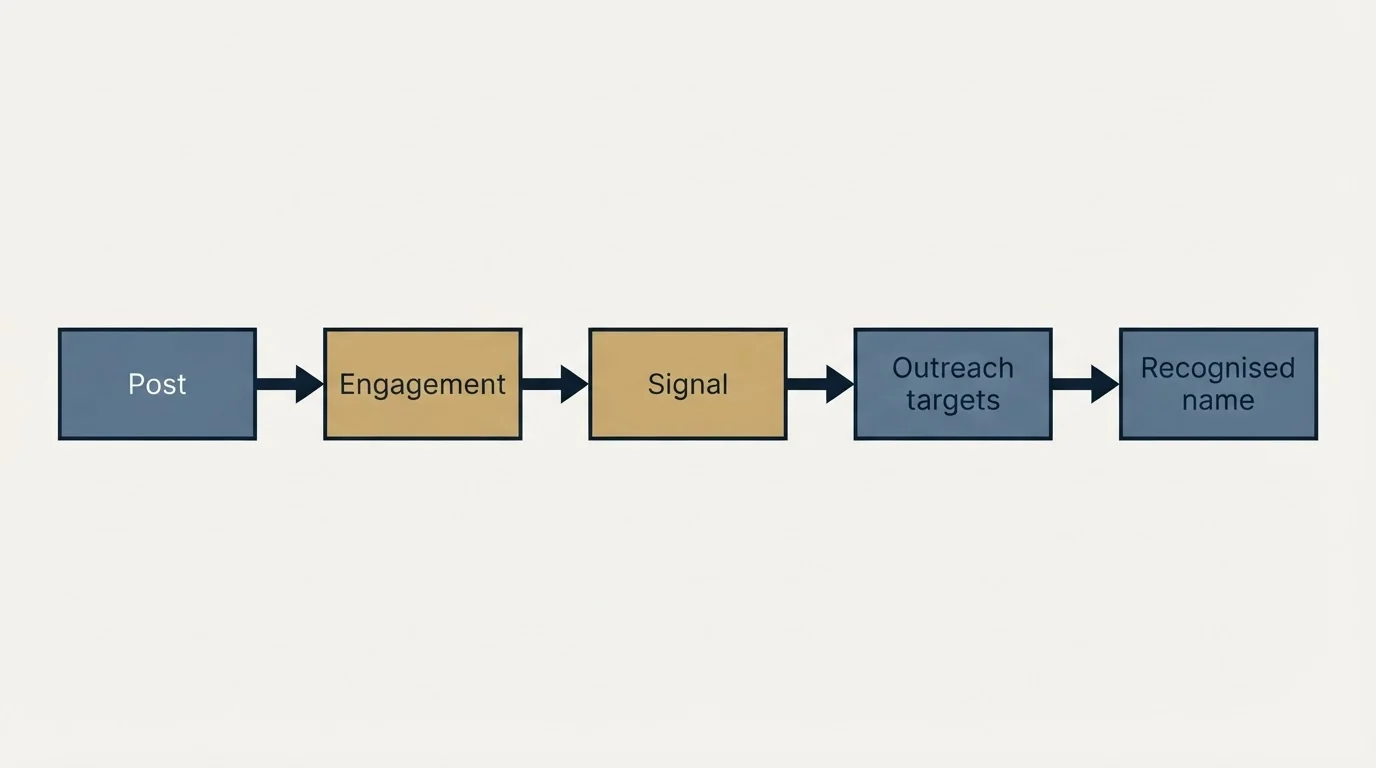
There is also a compounding effect. A post from six months ago still generates engagement, which means it still generates signal, which means it still generates outreach targets. Cold email volume resets to zero every month.
The Honest Costs
A competitor who handles both content and outbound together is selling this combination, and the question worth asking is not whether the bundle makes sense but whether the honest costs below have been priced into it.
This is where most content-led outbound advice stops, and it should not.
- No: Steps one through four take months. Not weeks.
- No: It requires someone with something to say.
- No: Attribution is genuinely hard.
- No: It does not work for every market.
Steps one through four take months. Not weeks. You are building recognition, and recognition accrues slowly. Any team that turns off outbound in month one to focus on content will have no pipeline in month four.
The correct sequencing is to run both, with content as the long-term investment and outbound as the thing paying the bills while it matures.
It requires someone with something to say. This model is founder-dependent or expert-dependent in a way that traditional outbound is not. You cannot hire a junior person to have opinions about your market. If nobody at your company can write credibly about the problem you solve, this framework does not have an entry point.
Attribution is genuinely hard. When a prospect books a call after reading three posts and receiving one email, the email gets credit in your CRM. That undercounts content severely and makes it hard to defend the investment internally.
It does not work for every market. If your buyers are not present and active on a public platform, there is no audience to build. Some of the best B2B markets are like this. Cold email and phone remain the honest answer there.
Where To Start
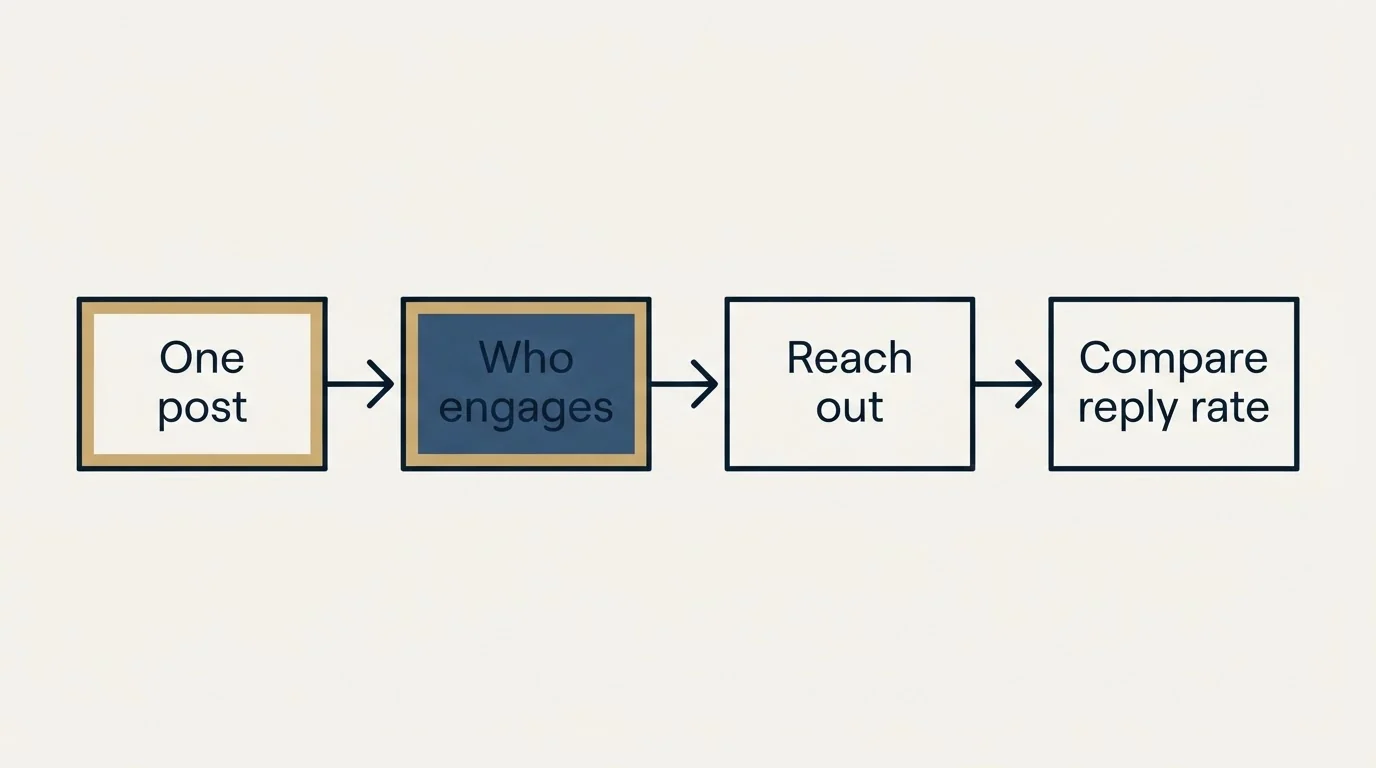
Write one post about the most common mistake you see your ideal customers make. Not the mistake your product fixes, the one you genuinely see.
Watch who engages. Those names are your list.
Reach out to five of them, referencing what they responded to. Compare the reply rate to your cold sequences.
That is a two-week test that costs nothing and tells you whether this model has a foothold in your market before you commit a quarter to it.
Cold Outbound vs Content-Led Outbound
| Cold outbound | Content-led outbound | |
|---|---|---|
| Time to first pipeline | Weeks | Months |
| Volume available | High | Limited by audience size |
| Reply rate | Low, falling | Higher, from a smaller pool |
| Who can run it | Anyone you hire | Someone with a point of view |
| Compounding | None, resets monthly | Old posts keep producing signal |
| Attribution | Clean | Genuinely difficult |
| Works without a public audience | Yes | No |
Frequently Asked Questions
How long before content-led outbound produces pipeline?
Months, not weeks. You are building recognition, and recognition accrues slowly. Run it alongside your existing outbound rather than instead of it, or you will have no pipeline in month four.
What if nobody at my company wants to post publicly?
Then this framework does not have an entry point, and that is a legitimate outcome. The model is founder-dependent or expert-dependent in a way traditional outbound is not. You cannot hire a junior person to have opinions about your market.
How do I capture the intent signal?
Tools like Trigify, Common Room, and RB2B capture engagers, followers, and anonymous site visitors. At small scale you can do it manually by exporting who engaged with each post. The tooling matters less than actually doing the step, which most teams skip.
Does this work in every market?
No. If your buyers are not present and active on a public platform, there is no audience to build. Several excellent B2B markets are like this, and cold email and phone remain the honest answer there.
How should I measure it?
Carefully, and with the knowledge that you will undercount. When a prospect reads three posts and then receives one email, the email gets the credit in your CRM. Track engaged-prospect reply rate against cold reply rate as the cleanest available comparison.
Related Reading
- The Outreach System Behind Our $3M ARR (Full Breakdown)
- 4 Frameworks That Actually Fix Broken Lead Generation
- B2B Account-Based Marketing: The Four Plays Worth Running First
We build AI-native pipeline systems and you pay per qualified meeting, not a retainer. No paying for activity. You only pay when we book you a qualified sales meeting. See if you qualify.
Retention.com figures are as publicly stated by Adam Robinson and have not been independently verified.
Frequently asked questions.
Frequently asked questions- How long does it take for content-led outbound to generate pipeline?
- Content-led outbound takes months, not weeks, to produce pipeline because you are building recognition that accrues slowly. Teams should run it alongside existing outbound rather than replacing traditional methods immediately, or they will have no pipeline in month four. The correct approach is treating content as a long-term investment while outbound pays current bills.
- What makes content-led outbound different from cold email?
- Content-led outbound reaches prospects who already recognize your name and have consumed your thinking, while cold email contacts strangers. The approach asks someone who found your content useful for a conversation about it, rather than asking a stranger for time. This familiarity changes how the outreach is received, since the primary filter in B2B email is whether the recipient recognizes the sender.
- Can I hire someone to run content-led outbound for my company?
- Content-led outbound requires someone with credible expertise and genuine opinions about your market, not a junior hire executing a playbook. If nobody at your company can write credibly about the problem you solve, this framework does not have an entry point. The model is founder-dependent or expert-dependent in a way traditional outbound is not.
- Does content-led outbound work for every B2B market?
- Content-led outbound only works when your target buyers are present and active on public platforms where they engage with content. Some excellent B2B markets lack this characteristic, and cold email and phone remain the appropriate channels there. The framework requires an audience to build, and if that audience does not exist in a public space, the model has no foundation.
- How do I test whether content-led outbound will work for my business?
- Write one post about the most common mistake your ideal customers make, watch who engages, then reach out to five of those people referencing what they responded to. Compare the reply rate to your cold sequences. This two-week test costs nothing and reveals whether the model has a foothold in your market before committing a quarter to it.
About the author.

Ben Carden is CRO at RevenueFlow, which builds and operates outbound revenue engines for B2B companies. Previously at Gartner Enterprise. Studied at London School of Economics.
Ben Carden · CRO
Connect on LinkedIn →Explore more.
Ready to scale your outreach?
We build GTM engines that book real meetings. See the receipts.
Related articles.
Lead Verification: What Each Check Actually Proves
Lead verification covers two different jobs. One asks whether a mailbox will accept mail, the other asks whether the person behind the row is real and lawful to contact.
ABM Metrics: Coverage Decides Every Other Number
Every published ABM metric is a ratio whose denominator somebody chose. Six numbers, the denominator each one needs, and the comparison that settles it.
Foleon Pricing: No Published Price, a 24-Month Term
Foleon publishes no rate on its plans page and publishes the whole commitment behind it. The term, the notice window and what happens to the Docs after.
Warm Lead: What Made It Warm, and When It Expires
Warmth is a property of evidence rather than of a person. Store the action and its date, because a temperature column cannot be turned back into the event behind it.
5 ABM Campaign Examples and How Each One Is Built
Five worked account-based campaign examples, each built on the same five fields: account set, tier, plays in order, owner and handoff, and the exit condition.
Two Agencies, One Target List: Who Owns Which Accounts
Two outbound suppliers on one market will contact the same companies unless the buyer splits it first. How to cut the list, run the exclusion feed and check the overlap.