Warm Lead: What Made It Warm, and When It Expires
Warmth is a property of evidence rather than of a person. Store the action and its date, because a temperature column cannot be turned back into the event behind it.
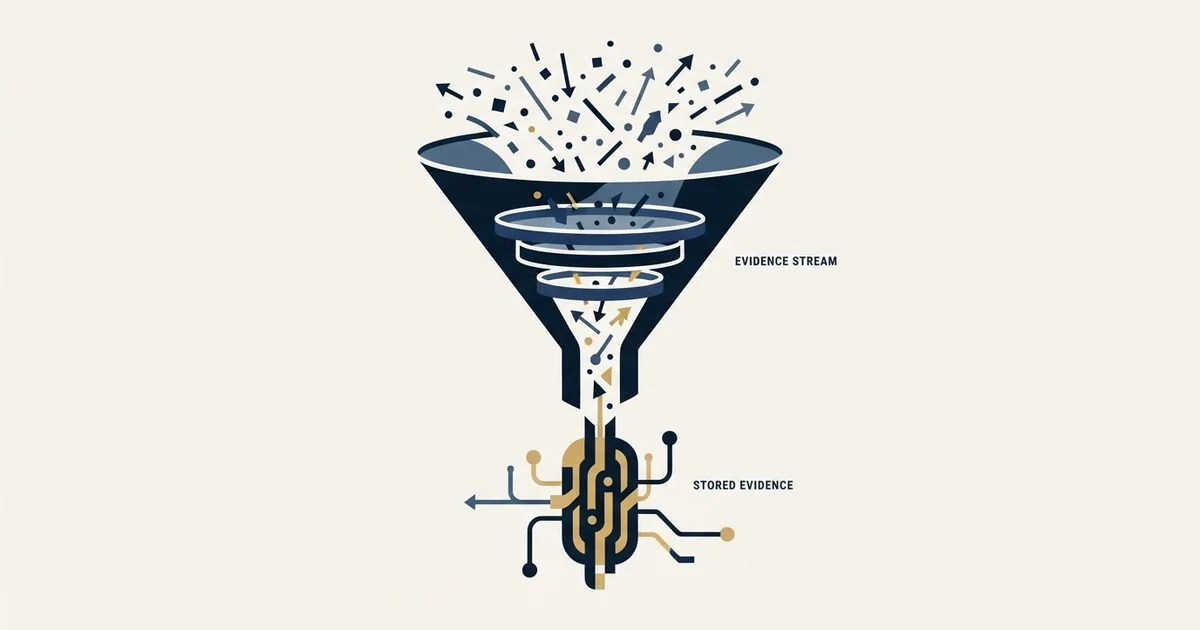
A warm lead is a person or company where a specific, dated action has established a connection with the seller. Warmth belongs to the evidence rather than to the person, so the record should hold the action and its date. A temperature column cannot be turned back into the event behind it.
Key takeaways
- Cold, warm and hot rank the seller's confidence rather than the buyer's intent, and the two come apart whenever a serious evaluation starts without any prior engagement.
- The three sources of warmth are a reply, an observable signal and an introduction, and each one calls for a different next message.
- A signal should decide who to write to and when, never the opening line, because it is often attached to a person who does not buy.
- Engagement says nothing about fit, so a warm row gets the same profile check a cold row gets.
Reviewed and updated September 2, 2026
A column in a spreadsheet is headed Warm. Sixty rows carry a Y. Nobody who reads the file can say what any of the Y values means, and the three people who put them there were using three different rules: one marked a reply, one marked an account that visited a pricing page, and one marked a company where a friend of the founder works. Those three rows call for three different next actions, and the column has erased the difference between them.
A warm lead is a person or company where a specific, dated action has already established some connection between them and the seller. The words doing the work are specific and dated. Warmth is a property of evidence, not a property of a person, and evidence has an origin and an age.
What the temperature ladder is actually measuring
Cold, warm and hot are usually presented as a ladder of buyer interest. They describe the seller's confidence rather than the buyer's intent, and the two come apart constantly. A prospect who downloaded a report six months ago is warmer in a database than a company that started a formal evaluation last week without ever visiting the website, and the second one is far closer to a purchase.
That is the first thing to hold onto. The ladder ranks how much the seller knows, and a scoring model built on it inherits that limitation. Lead scoring compresses several kinds of evidence into one number, and the compression is exactly where the information the ladder was tracking gets lost.
The second thing is that the boundary between cold and warm is a definition rather than a discovery. A team that counts a webinar registration as warm has more warm leads than a team that counts only a reply, and neither count says anything about the market. Any comparison of warm-lead volume between two companies is a comparison of two definitions.
Three sources of warmth, and why they do not behave alike
A row marked warm gets its warmth from one of three places, and treating those three as interchangeable is what makes the label useless in a handover.
A reply. Somebody answered a message. This is the strongest and shortest-lived form, because it establishes that a specific named person read something and chose to respond. It is also the only one where a conversation already exists, which changes what the next message can assume.
A signal. Somebody at the company did something observable: visited a page, registered for an event, downloaded a document, or triggered whatever the tracking layer records. The signal establishes attention rather than intent, and it is frequently attached to a person who has no involvement in buying. Signals also arrive without permission to use them, and a message that leans too heavily on knowing what page somebody read reads as surveillance rather than relevance.
An introduction. A third party has vouched for the seller. This one is different in kind, because the asset is the introducer's credibility rather than anything the prospect did. It survives longer than a signal and it is spent rather than accumulated: a poor first conversation costs the introducer something, and they will not offer twice.
- Establishes that a specific person read and responded
- A conversation already exists to continue
- Decays in days rather than months
- The next message can reference what they said
- The mistake is treating it as permission for a sequence
- Establishes attention, not intent
- Often attached to a person who does not buy
- Decays quickly and repeats meaninglessly
- The next message has to stand on its own reasoning
- The mistake is quoting the signal back at them
- Establishes borrowed credibility, not interest
- The introducer is the asset and the constraint
- Holds longer than a signal and is spent once
- The next message is addressed to a person expecting it
- The mistake is wasting it on an unprepared conversation
Warmth has a half life, and the date is the whole record

The single most common defect in a warm list is an undated one. Every form of warmth above describes something that happened at a moment, and the value of the evidence falls as the distance from that moment grows. A reply from yesterday and a reply from last March are the same value in a boolean column and completely different situations for the person writing the next message.
Warm outreach is the practice built on this record: a message sent because a dated action already connects the two of you, and each of the three sources changes what that message can assume.
The decay rates differ enough to be worth separating. A reply is a live thread for a short window and then becomes history. A page visit is close to worthless within weeks, because the person may have been researching a project that has since been shelved or handed to somebody else. An introduction ages slowly, since the relationship it borrows from does not evaporate, though the introducer's willingness to spend it again does have a limit.
The operational conclusion is unglamorous. Store the event and its date, not a temperature. A field holding what happened and when can produce any temperature you want at read time, and a field holding a temperature cannot produce the event.
- Yes: The record names the specific action, not a category
- Yes: The action has a date and the date is visible to whoever acts on the row
- Yes: The action was taken by the person being contacted, not by somebody else at the company
- Yes: The company still passes the fit criteria you would apply to a cold row
- Yes: You could write the first sentence of the next message using the evidence without sounding like you were watching
- Depends: There is a rule that expires the label rather than leaving it set forever
- Depends: For an introduction, the introducer knows you are about to use it
The fit test still applies, and it is the one that gets skipped
A warm label describes engagement. It says nothing about whether the company is one you can serve, and the temptation to skip the fit check on a warm row is strong precisely because somebody already showed interest.
The opposite flag has the same defect, since an unqualified verdict hides whether a fit failure or a readiness failure produced it, and the two are handled differently.
That is how a pipeline fills with enthusiastic prospects who cannot buy. Interest is cheap to generate and expensive to act on, and a company that engaged for a reason unrelated to purchasing consumes exactly as much of a seller's week as one that can. The same test applies whether a row arrived cold or warm: does this company match the profile, and is there a plausible reason for the conversation to exist. An ideal customer profile with the arithmetic attached is the document that stops the warm label from being treated as a substitute for that answer.
The related trap is the inbound version, where a hand raised is read as a purchase decision already made. What raising a hand does and does not establish covers that case, and the honest summary is that it establishes attention and nothing about fit.
What to do with each kind

With a reply, continue the conversation. A thread already exists, so the next message can refer to what the person said and ask the next question. The most common error is converting the reply into an entry point for a scheduled sequence, which turns a conversation into a campaign and reliably ends it.
With a signal, reason your way to the message rather than quoting the signal back. The message has to make sense to somebody who has forgotten the page they visited, and it will be read by a person who may never have visited it at all. Let the signal decide who is worth contacting and when. Keep it out of the opening line.
With an introduction, prepare properly and go once. The scarce resource is the introducer's credibility. Read the account, have a specific reason for the conversation, and make it easy for the introducer by giving them something forwardable. Templates for the messages that follow an introduction cover the mechanics, and the part that matters is that the first exchange justifies the vouching.
Where we differ
The standard next step for a warm lead is a nurture sequence: a timetable of messages released until the person acts. We do not run those, on any channel. One message per campaign, built on one premise, sent once, and any later approach run as a separate campaign with its own reason to exist.
The reasoning is about what warmth actually licenses. Somebody who engaged and then went quiet has given information about their priorities, and adding scheduled messages does not change those priorities. What changes them is an event with a date: new leadership in the relevant function, a system being replaced, visible hiring for a role the product supports, a market or regulatory change that alters their arithmetic. Each of those supports one specific message that could not have been written in advance, and that message does better work than any position on a timetable. The longer version of the argument is in why we stopped using follow-up emails.
There is a channel-specific consequence worth stating. On LinkedIn a second message lands directly underneath the one the person already read and chose not to answer, so it reads as a bump regardless of how the campaign is structured. We do not send it.
The same logic explains why a single well-aimed message to a cold company frequently outperforms a sequence to a warm one. The premise carries the message, not the previous contact, and why short cold emails get more replies is the same principle applied to length.
The short version
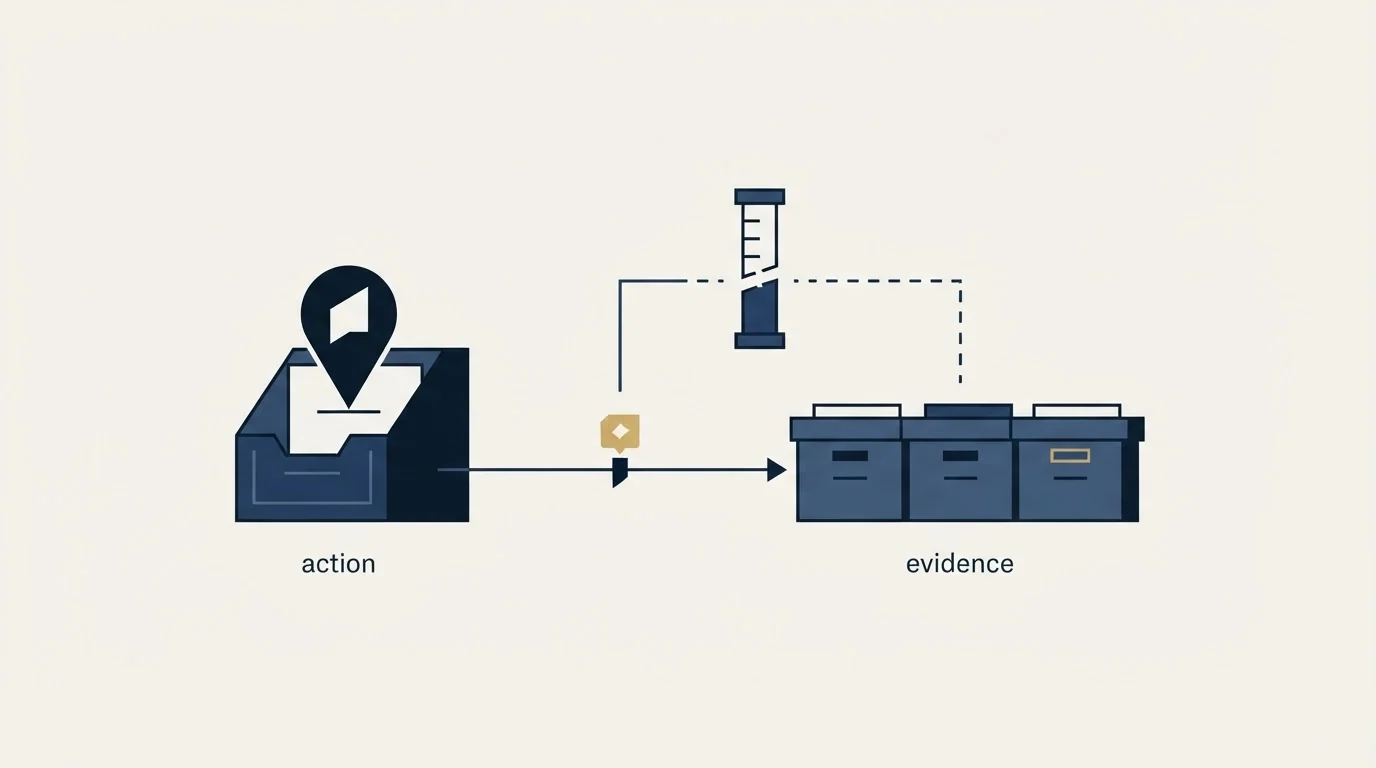
A warm lead is a row where a specific, dated action connects the person to the seller. Store the action and the date rather than a temperature, because the temperature cannot be reconstructed into the event and the event can always be reduced to a temperature.
Separate the three sources. A reply is a live conversation with a short half life. A signal is attention that may belong to the wrong person and should inform timing rather than the opening line. An introduction is borrowed credibility that is spent once and deserves preparation.
Apply the fit test to warm rows exactly as you would to cold ones, since engagement says nothing about whether a company can be served. And when a warm lead goes quiet, wait for something real to change rather than scheduling more messages. If the harder problem is that too few of the right companies know you exist at all, see what one campaign against a tightly built list produces.
Frequently asked questions.
Frequently asked questions- What is a warm lead?
- A person or company where a specific, dated action already connects them to the seller. That action might be a reply to a message, an observable signal such as a page visit or an event registration, or an introduction from a third party. The action and its date are the record worth keeping, since a temperature label loses both.
- What is the difference between a cold lead and a warm lead?
- A cold lead has no prior contact with the seller, so the message has to carry itself entirely on its premise. A warm lead has some prior action attached. The difference is about what the seller knows, not about how close the company is to buying, and a company running a live evaluation with no prior contact is closer than either.
- How long does a warm lead stay warm?
- It depends on which kind of warmth it is. A reply is a live conversation for a short window and then becomes history. A page visit or download is close to worthless within weeks, because the project behind it may have moved or been shelved. An introduction ages slowly, though the introducer's willingness to offer another one does not.
- How should you follow up with a warm lead?
- If they replied, continue the actual conversation and ask the next question. If a signal produced the label, write from your own reasoning and use the signal only to choose timing. If it was an introduction, prepare properly and go once. We do not run scheduled nurture sequences on any channel, so a lead that goes quiet waits for a real event.
About the author.

Ben Carden is CRO at RevenueFlow, which builds and operates outbound revenue engines for B2B companies. Previously at Gartner Enterprise. Studied at London School of Economics.
Ben Carden · CRO
Connect on LinkedIn →Explore more.
Ready to scale your outreach?
We build GTM engines that book real meetings. See the receipts.
Related articles.
B2B Database: What to Test Before You Pay
Total record count is the number every vendor leads with and the one that predicts least. The test that replaces it takes a day and settles the purchase.
Unqualified Lead: Which Test It Actually Failed
One flag covers two opposite verdicts. A fit failure is stable and belongs in an exclusion; a readiness failure expires and belongs on a watch list with its trigger.
Two Agencies, One Target List: Who Owns Which Accounts
Two outbound suppliers on one market will contact the same companies unless the buyer splits it first. How to cut the list, run the exclusion feed and check the overlap.
HR Lead Generation: The Renewal Clock and Who Signs
An HR buyer who agrees with every word still cannot act outside their own renewal window. Which triggers are observable, and who signs.
IT Lead Generation: The Buyer Runs Your Playbook
Technology buyers evaluate outbound for a living, and their purchases carry a security review nobody in your meeting owns. Which triggers are real.
Booking Conference Meetings Before You Arrive
The meetings you hold at an event were booked weeks earlier. The attendee list is the part of the standard method most likely to waste that time.