Fintech Lead Generation: The Missing Assessment Stage
Fintech covers two markets with nothing in common on the buying side, and one of them gates every purchase behind a third-party assessment nobody forecasts.

Fintech lead generation fails on segmentation more often than on copy. Selling into regulated institutions gates every deal behind a third-party risk assessment, so account size and sponsor experience are qualifying criteria. Selling financial products to ordinary companies behaves like normal B2B software, and mixing the two produces a campaign vague to both.
Key takeaways
- Fintech names two markets: vendors selling into regulated institutions, and providers selling financial products to non-regulated companies. Their buyers, cycles and proof requirements do not overlap.
- Third-party risk assessment is a real pipeline stage with its own calendar and queue. A company that cannot clear an institution's threshold is blocked by its own size rather than by its message.
- Security and compliance leaders usually hold vetoes rather than mandates. The buyer is the operating owner with a number your product moves: head of payments, head of fraud, treasurer, controller.
- The strongest timing signals are dated and public: a compliance deadline, an examination finding, a market entry, a new finance leader. Funding rounds work only when the stated use of proceeds implies your category.
Reviewed and updated September 1, 2026
A payments company runs a quarter of outbound into banks and credit unions, books eleven meetings, and forecasts four of them to close inside ninety days. Nine months later two have closed. The meetings were real, the interest was real, and the deals were real. What sat between the meeting and the signature was a vendor risk assessment that the forecast never modelled, run by people the seller never met, on a timetable nobody in the pipeline review could influence.
Fintech lead generation gets described as a copy problem and a compliance-language problem. The structural issue sits earlier, in whether the list has been built with any model of how the purchase completes.
Outbound sales for fintech companies succeeds or stalls on that model, whoever does the sending.
The word covers two different markets
Fintech is used for two businesses that have almost nothing in common on the buying side.
The first sells software or infrastructure into financial institutions: core banking add-ons, fraud and identity tooling, payments rails, compliance and reporting systems. The buyer is a regulated entity, procurement is formal, and a third party gets assessed before it gets paid.
The second sells financial products to ordinary companies: business cards, treasury and cash management, embedded lending, expense platforms, cross-border payments. The buyer is a finance lead at a company that is not itself regulated, and the purchase behaves like any other operational software decision with money attached.
A single list mixing the two produces a campaign that reads as vague to both. The first audience wants to know whether you will survive their assessment. The second wants to know what changes on Monday. Deciding which of the two businesses you are in is the first act of targeting, and firms selling to both should be running two programmes rather than one with a wider list.
Merchant acquiring, where independent sales organizations and agents sell card acceptance to shop owners, is a third business again, and sales prospecting for payments companies covers where those merchants are enumerated and the contract clock that decides when one can move.
- Buyer is regulated and audited
- Third-party risk assessment gates the purchase
- Sponsor must be willing to shepherd you through it
- Evidence of prior institutional deployments is the currency
- Cycle is set by the assessment calendar, not by urgency
- Buyer is a finance or operations lead
- Switching cost is integrations and the incumbent bank relationship
- Trigger events are funding, expansion, a new controller
- Proof needed is operational rather than institutional
- Cycle resembles ordinary B2B software
The assessment is a pipeline stage, and most pipelines do not have it
Selling into a regulated buyer means a due diligence process that examines your company rather than your product. Security posture, data handling, business continuity, financial stability, subcontractors, sometimes an on-site or a questionnaire running to hundreds of items.
Two things follow for lead generation, and both are about the list rather than the message.
The first is that company size on your side is a qualifying criterion, not just theirs. A three-person startup selling into a tier-one bank is not blocked by the message; it is blocked by an assessment it cannot pass yet. Targeting institutions whose threshold you can clear is not a lowering of ambition, it is the difference between a pipeline and a collection of interesting conversations. Smaller institutions, credit unions and community banks frequently run proportionate assessments, and they are the honest starting segment for a young company.
The second is that the sponsor matters more than the title. Somebody inside the institution has to want this enough to walk it through procurement, answer the questionnaire's internal half, and defend the timeline. A sponsor who has done that before knows what it costs and either commits or declines quickly. A sponsor who has not will agree enthusiastically and then discover the process, which is how a forecast quietly slips two quarters.
That gives a list-building instruction that is unusual and useful. Prefer accounts where the person you are writing to has visibly brought in comparable third parties before, which is often readable from public case studies, conference talks, vendor testimonials and their own posting history.
Titles, and the gap between the person who feels it and the person who signs

The compliance-heavy reading of this market puts the chief information security officer and the chief compliance officer at the front. They are genuinely load-bearing, and they are mostly veto holders rather than buyers. A message written to a veto holder asking for a meeting about a product they have no mandate to want is asking the wrong person for the wrong thing.
The mandate usually sits with an operating owner: the head of payments, the head of fraud, the head of lending operations, the treasurer, the controller. Those are the people with a number they are measured on that your product moves. Security and compliance enter later and decide whether the thing the operating owner wants can be had.
At the smaller end of the second market the collapse is total: the finance lead is the buyer, the user and the approver, and the entire structure above disappears. That is the segment where outbound behaves most normally and where a young company usually finds its first thirty customers.
Timing signals that are real, and one that is not
Funding is the most reliable trigger in the second market and the most overused. A company that raised last week is receiving several hundred messages about it, and the round itself says nothing about whether your product is now relevant. The version that works is narrower: a round plus a stated use of proceeds that implies your category, or a round followed by hiring for the function that would own your product.
A new controller, VP finance or CFO is a stronger and quieter signal, because a new finance leader reviews the stack in the first two quarters as a matter of course and has explicit licence to change things the predecessor chose.
Expansion into a new country is the strongest of the three for anything touching payments, treasury or compliance, because it forces a decision rather than inviting one. Entity registrations, new office announcements and job postings in a new market all surface it before the purchase.
Where fintech buying shifts on funding and expansion signals, how biotech purchases lock in early shows a market whose timing is set once the experiment is designed.
In the first market the equivalents are regulatory rather than commercial: a new supervisory expectation with a compliance date, an enforcement action against a peer institution, a published examination finding, or a system-of-record migration that reopens adjacent decisions. These are public and dated, which makes them plannable in a way that funding news is not.
- Step 1Sponsor identified
An operating owner with a number your product moves, and prior experience of onboarding a third party.
- Step 2Internal case
The sponsor builds support with security, compliance and the budget holder. Visible to your pipeline only through the sponsor.
- Step 3Third-party assessment
Your company is examined rather than your product. Timetable set by their calendar and their queue.
- Step 4Commercial and contracting
Terms, and frequently a longer legal pass than the software itself warranted.
Cycle length, and planning that survives it
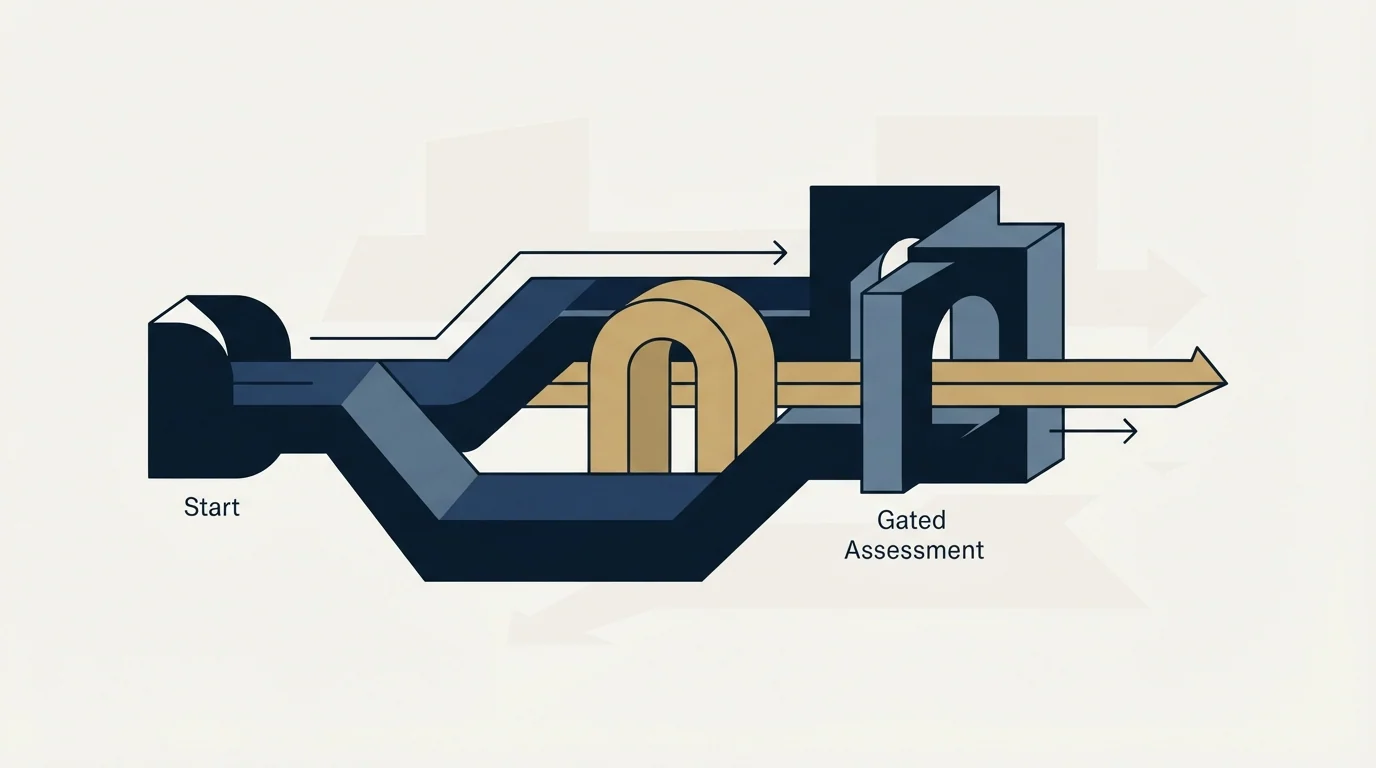
Anything that reaches a third-party assessment should be planned in quarters rather than weeks, and the planning consequence is about volume rather than patience. A programme that needs revenue inside a quarter and is targeting institutions that need three is not underperforming, it is mis-specified.
The workable pattern for a company selling into both markets is to run the second market for near-term revenue and the first for the following year, with separate lists, separate messages and separate expectations. Judging them against one another is how the slower and more valuable programme gets cancelled at month four.
Reply behaviour is the one thing that reads quickly and honestly, and the fintech cold email benchmarks give a reference point for what the top of this funnel looks like before any of the downstream structure applies.
The message the structure implies
Once the list is sorted, the writing gets simpler rather than harder, which is the usual reward for doing targeting properly.
For the regulated half, the useful first message names the operational outcome and quietly signals assessability: comparable institutions already live, the certifications held, the fact that a security package exists and can be sent. Leading with certifications alone reads as a vendor who has nothing to say about the business problem, and leading with the business problem alone leaves the reader wondering whether this is a company their risk team would ever clear. The cold email for fintech guide covers the execution side of that in detail, including how far to go on compliance language before it becomes the whole email.
For the second half, the message is ordinary B2B: a specific operational condition the reader recognises, and what changes when it is fixed.
House practice applies to both. One message per campaign, no bumps and no thread replies. In a market where the same buyers are approached by every payments and treasury vendor in the category, a chain of scheduled reminders is precisely the behaviour that gets a domain filtered. Re-entry belongs to a new signal, and this market generates them on a schedule: a funding round, a new finance leader, a market entry, a compliance date. Each of those is a new campaign with a genuine new reason to write.
- Yes: Every account tagged as regulated buyer or non-regulated company buyer, with no mixed campaign
- Yes: Institution size checked against the assessment threshold your company can realistically clear
- Yes: Named sponsor per account, preferring people who have onboarded a comparable third party before
- Depends: Trigger recorded per account, with funding rounds qualified by stated use of proceeds
- Yes: Security and compliance contacts kept out of the first send and mapped as later participants
- Yes: Qualification criteria for a real opportunity agreed in writing before launch
What to take away

The reason fintech outbound underperforms is rarely the copy. It is a list that treats two markets as one, an assessment stage that exists in reality and not in the forecast, and messages aimed at veto holders instead of the people with a number to move.
Sort the list by which market the account belongs to, then by whether your company can clear their bar, then by sponsor. The lead generation channels comparison covers where each channel earns its keep once that sorting is done, best CRM tools for fintech covers holding the resulting pipeline in something that can model a long assessment stage, and B2B lead generation services sets out what handing the function to an outside team involves. If you would rather see the segmentation applied to your own market before committing a quarter to it, look at what a first campaign would target.
Frequently asked questions.
Frequently asked questions- Why do fintech deals stall after a good first meeting?
- Usually because the purchase has entered a third-party risk assessment that the pipeline never modelled. The institution examines your company rather than your product: security posture, data handling, continuity, financial stability, subcontractors. Its timetable is set by their queue, not by the sponsor's enthusiasm, and forecasting around it is what turns a real deal into a missed quarter.
- Should we target the CISO or the compliance lead first?
- Usually neither. They hold vetoes rather than mandates, so a first message asking them to want a product they have no remit to buy is aimed wrong. Write to the operating owner who is measured on something your product moves, such as the head of payments, fraud or lending operations. Security and compliance decide later whether the thing that owner wants can be had.
- Are funding announcements a good trigger for fintech outbound?
- They are the most overused one. A freshly funded company receives several hundred messages about it, and a round on its own says nothing about whether your category is now relevant. The narrower versions hold up: a round with a stated use of proceeds implying your product, or a round followed by hiring for the function that would own it.
- How long should a fintech outbound programme be given?
- It depends entirely on which of the two markets it targets. Selling financial products to ordinary companies behaves like normal B2B software and can be judged in a quarter. Anything routed through an institutional assessment should be planned in quarters rather than weeks, and run alongside the faster programme rather than judged against it.
About the author.

Ben Carden is CRO at RevenueFlow, which builds and operates outbound revenue engines for B2B companies. Previously at Gartner Enterprise. Studied at London School of Economics.
Ben Carden · CRO
Connect on LinkedIn →Explore more.
Ready to scale your outreach?
We build GTM engines that book real meetings. See the receipts.
Related articles.
Two Agencies, One Target List: Who Owns Which Accounts
Two outbound suppliers on one market will contact the same companies unless the buyer splits it first. How to cut the list, run the exclusion feed and check the overlap.
HR Lead Generation: The Renewal Clock and Who Signs
An HR buyer who agrees with every word still cannot act outside their own renewal window. Which triggers are observable, and who signs.
IT Lead Generation: The Buyer Runs Your Playbook
Technology buyers evaluate outbound for a living, and their purchases carry a security review nobody in your meeting owns. Which triggers are real.
5 ABM Campaign Examples and How Each One Is Built
Five worked account-based campaign examples, each built on the same five fields: account set, tier, plays in order, owner and handoff, and the exit condition.
Last Outbound Agency Did Not Deliver: Locating the Failure
The leads were bad names a symptom and no stage. Four places an outbound engagement fails, the counts that separate them, and what to change in the next purchase.
When Outbound Stops Scaling: What Breaks First
Doubling the budget rarely doubles the meetings. The five constraints that bind in order, the signature each one leaves in the numbers, and what actually buys more.