Sales Contests: The Ranking Is the Design, Not the Prize
A contest bundles a rank, a public standing and a fixed prize pool. The rank is the part that decides whether anybody is still competing in week two.
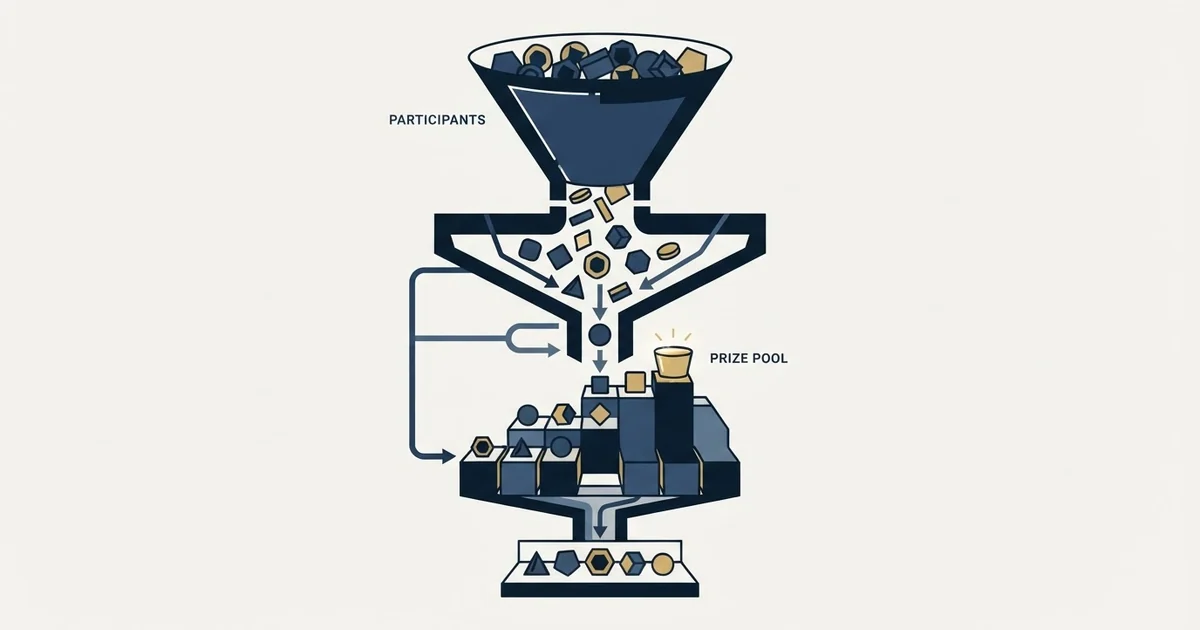
A sales contest attaches a reward to a position in an order rather than to an absolute achievement. That ranking motivates only the people who believe the position is reachable, and on unequal territories it measures the patch rather than the seller. Design responses are structural: rank on improvement, bracket comparable opportunity, or remove the rank.
Key takeaways
- A contest is three separable devices at once: a rank, a public standing and a fixed prize pool, and most teams choose one on purpose and inherit the other two.
- Ranking releases everybody who can see the position is unreachable, usually inside the first week, so attainability rather than prize size is the variable to adjust.
- On unequal territories a ranked order largely reproduces the order of the patches, which is why handicapping or a personal-best basis is the fix that survives.
- Match the window to the sales cycle, keep the counted unit near the top of the funnel, and read the two steps downstream for as long again as the contest ran.
Reviewed and updated September 1, 2026
A contest gets announced on the first Monday of the month. By Thursday of the first week the standings have a shape, and by the middle of the second week that shape has stopped changing. The two people at the top are still working it. Everybody else has quietly gone back to their normal week, because the arithmetic of catching up stopped being plausible several days ago, and nobody in the middle of a leaderboard says so out loud.
That outcome is not a failure of the prize. It is a property of ranking, and ranking is the part of a sales contest that gets the least design attention.
Three mechanisms wearing one name
A contest bundles three separate devices together, and teams usually choose one of them on purpose and inherit the other two.
A rank. Performance is ordered, and the reward attaches to a position in that order rather than to an absolute achievement. This is what makes a contest a contest.
A public standing. The order is visible to everyone in it, continuously, which is a publishing decision with its own effects on the people at both ends of the list.
A fixed prize pool. One prize, or a small number, decided before anyone competes. The cost is known in advance, and the number of people who can benefit is capped by construction.
Each of the three buys something. Ranking creates a reason to do more than the person next to you. Publicity keeps the thing salient past the announcement. A fixed pool makes the programme affordable to approve. Each also carries a cost, and the costs land on different people from the benefits.
- Creates a reason to outperform a colleague
- Motivates only the people who believe the position is reachable
- Stops motivating the moment the order settles
- Measures relative performance, so territory quality is inside the measurement
- Keeps the programme salient after the announcement
- Gives progress a place to be seen
- Publishes a bottom as well as a top, every day
- Changes what people report as much as what they do
- Cost is known before the period starts
- Approval is easy because the ceiling is visible
- Caps the number of people who can benefit
- Sets the odds each person is implicitly offered
The ranking decides who is still competing on day four
The disengagement is not a motivation problem in the people it happens to. It is what a rank does to anyone who can see they are not going to win it.
Pipedrive's article on improving sales contests makes the observation from the other end, and it is worth reading as a design finding rather than as a complaint. Its advice to a manager is to "take a look at your last 15 winners", on the expectation that the same names will be there repeatedly, and its stated consequence is that the people in the lower and middle brackets do not enjoy these programmes the way the winners do. Pipedrive sells a CRM rather than contest software, so the observation cuts against nothing it is selling.
The mechanism is ordinary. A ranked contest offers everyone the same nominal prize and a completely different probability of getting it, and people price that probability quickly. A rep who has watched two colleagues win the last four of these has all the information required to opt out of the fifth, and opting out is rational rather than sulky.
The design responses that actually change this are structural. Pipedrive's own recommendation is a metric change: it argues for activity-based measures on the grounds that "Using activity-based metrics makes winning attainable for every person on the team". Attainability is the variable being adjusted there, not effort. Two other responses do the same work. A threshold that everybody who clears it wins removes the rank entirely and converts the programme into a different instrument, which is the shape covered in sales rep incentive programs. A personal-best measure ranks improvement against the person's own prior period, so the order is not decided by patch quality on the first morning.
A ranked contest measures the territory

This is the failure that survives every attempt to fix it with a better prize, and it is arithmetic.
Rank a team on closed revenue and the order will substantially reproduce the order of their territories. Rank them on meetings booked and the order will substantially reproduce the order of their lists. The seller with the best patch has to work less hard than the seller with the worst patch to finish above them, and the contest reports the difference as performance. Anyone who has watched the same person win repeatedly on an inherited account base has seen the measurement working exactly as designed.
Handicapping is the honest fix and it is unpopular because it requires admitting the patches are unequal. Ranking on percentage change against each person's own baseline, or grouping people into brackets of comparable opportunity, both cost more administration than a raw leaderboard and both make the result mean something. Leaderboarded's guide to competition formats reaches the same conclusion for team contests, warning that uneven teams disengage quickly and that "The team that feels stacked against them will check out by week two."
The alternative is to accept the contest is measuring the patch and to stop calling the result performance. That is a legitimate choice for a recognition programme with a long horizon, which is the argument set out in President's Club in sales, and it is the wrong basis for a short programme meant to change what somebody does this fortnight.
The leaderboard is a publishing decision
A visible standing is usually treated as a mechanic rather than as a choice, and the choice has two halves that can be separated.
Progress visibility answers whether somebody can see how they are doing against the goal. It is close to free, and it is what keeps a programme feeling live rather than announced. Comparative visibility answers whether everybody can see where they sit relative to everybody else. That half publishes a bottom of the table daily, in front of the person sitting in it, and it is the half worth deciding rather than defaulting into.
Both halves can exist independently. A private view of each person's own progress against a target, with only the top of the table published, keeps the salience and removes the daily ranking of colleagues. Whether that trade is right depends on the team, and it is a decision somebody should make in advance rather than discover in a one to one three weeks later.
A note on sourcing here. Leaderboard vendors publish the most detailed guidance on contest formats, and they also sell the thing their guidance recommends making visible. That does not make the advice wrong, and it is a reason to read the recommendation to publish standings as the recommendation of a party with an interest in it.
Formats, and the input that picks one

Leaderboarded's format guide names the selection rule plainly, and it is the same variable that governs almost everything else in a sales motion: "Your sales cycle length is the most reliable signal." Its bands are that "If deals close in under a week, run weekly contests", that one to four weeks points toward a monthly format, and that anything longer needs a quarterly or seasonal shape.
That rule holds for a reason worth stating rather than accepting on authority. A contest window shorter than the thing it measures rewards whoever happened to have deals already in flight when it started, which is a lottery run on last month's work. A window much longer than the cycle stops being salient in its second week and becomes a background condition that costs money and buys no attention.
Structure is a separate axis from duration, and the same guide is direct about the trade: "Pure individual rankings favor your top performers; pure team competitions can let weaker performers hide."
- Deals closing inside a week suit a weekly window
- One to four weeks points toward a monthly window
- Longer cycles need a quarterly or seasonal shape
- A window shorter than the cycle rewards deals already in flight
- Individual ranking rewards the strongest and loses the middle
- Team scoring lets an individual contribution disappear
- Paired formats put a newer seller beside an experienced one
- Personal best ranks improvement rather than position
For a long-cycle B2B motion the practical consequence is that the countable unit has to sit near the top of the funnel, because nothing at the bottom completes inside any window a contest can hold. That constraint is the same one that decides which numbers a seller can be held to at all, worked through in SDR metrics.
The counted unit is where the money leaks
Whatever the contest counts is what improves, and the improvement arrives first in the count and later, if at all, in the thing the count was standing in for.
A contest on meetings booked produces meetings booked. The held rate, the qualified rate and the rate at which those meetings become real opportunities are all free to fall while the headline rises, and none of them is being watched during the window because the leaderboard is. The cost surfaces a fortnight after the programme ends, under a different heading, usually as a complaint from whoever took the calls.
Two habits remove most of this. Publish the counting rule before the start, including what does not count, who adjudicates and how ties break, because a rule invented once somebody is winning reads as the terms changing. And read the two steps downstream of the counted unit for as long again after the contest as it ran, which is the only comparison cheap enough to actually happen and honest enough to find the damage.
When a contest is the wrong instrument
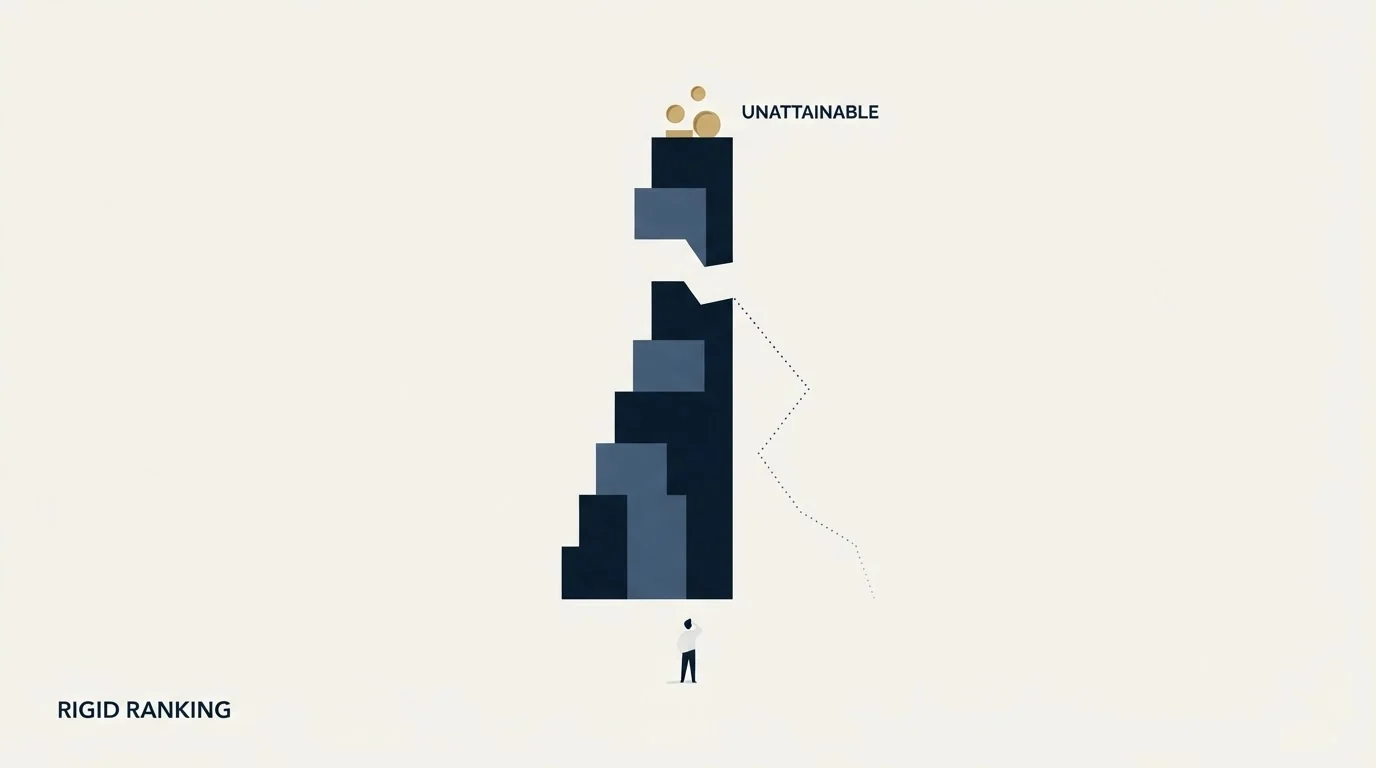
Several problems present as a motivation gap and are something else, and a contest applied to any of them produces a month of numbers followed by the previous baseline.
A team missing target broadly is usually carrying a plan set above what the territories support, which is a compensation question rather than a contest one, and designing an incentive plan backwards from the behaviour is where that gets settled. A single product nobody leads with is the case a short additive incentive was built for, and the instrument for it is a spiff, which pays everybody who does the thing rather than ranking them. And where the constraint is that there are not enough qualified conversations to compete over, no ordering of the sellers creates more of them.
Our own boundary is the one this page recommends for any counted unit: what makes a meeting qualified is agreed in writing before anything sends, so the number being paid on has a definition both sides accepted in advance. See what a first campaign produces if the pipeline rather than the motivation is the thing that is short.
- Yes: The ranking basis is chosen deliberately: raw output, percentage change, or bracket
- Yes: Territory or list quality is either equalised or explicitly inside the measurement
- Yes: The window matches the sales cycle rather than the calendar month
- Yes: Progress visibility and comparative visibility were decided separately
- Yes: The counted unit sits near enough to the top of the funnel to complete inside the window
- Depends: The two steps downstream of the counted unit will be read afterwards, by a named person
- No: The same two or three people have won the last several
The short version
A sales contest is a rank, a public standing and a fixed prize pool, and the rank is the mechanism that decides whether the programme does anything. Ranking motivates the people who believe the position is reachable and releases everybody else, usually within the first week, and on unequal patches it measures the patch rather than the seller.
Fix that structurally rather than with a larger prize. Rank on improvement against a person's own baseline, bracket comparable opportunity together, or drop the rank and pay everyone who clears a threshold. Match the window to the sales cycle, decide separately whether standings are private progress or public comparison, put the counted unit near the top of the funnel where it can complete, publish the rules before anyone is winning, and read the two steps downstream for as long again as the contest ran.
Quotations are verified against Pipedrive's article on improving sales contests and Leaderboarded's guide to sales competition formats, both fetched 28 August 2026. Publishers revise these pages; confirm the current text before relying on them.
Frequently asked questions.
Frequently asked questions- How long should a sales contest run?
- Long enough that the measured thing can happen inside the window and short enough to stay salient. Leaderboarded's format guide ties the choice to sales cycle length, suggesting a weekly window where deals close inside a week and a monthly one where they take one to four weeks, with longer cycles needing a quarterly shape. A window shorter than the cycle rewards deals already in flight.
- Why do the same people keep winning sales contests?
- Usually because the ranking basis measures territory quality alongside effort. Ranking on closed revenue or on meetings booked largely reproduces the order of the patches and the lists behind them. Pipedrive's article on the subject suggests checking the last fifteen winners for repeated names. The structural fixes are ranking on percentage change against each person's own baseline, or bracketing comparable opportunity.
- What is the difference between a sales contest and a spiff?
- A spiff pays everybody who performs a defined action inside a window, so the cost scales with participation and anybody can earn it. A contest attaches the reward to a position in an order, so the cost is fixed in advance and the number of people who can benefit is capped. That difference decides who stays motivated once the standings settle.
- What should a sales contest measure?
- Something inside the seller's control that completes inside the window, which in a long-cycle B2B motion means a unit near the top of the funnel rather than closed revenue. Whatever is counted will improve first in the count, so publish the counting rule before the start and read the two steps downstream of that unit afterwards.
About the author.

B2B cold email experts helping companies generate qualified leads through done-for-you outreach campaigns.
RevenueFlow Team
Explore more.
Ready to scale your outreach?
We build GTM engines that book real meetings. See the receipts.
Related articles.
Sales Rep Scorecard: What the Rep Cannot Control
Most rep scorecards carry lines the rep cannot move. The controllability test, the six lines that earn a place, and the two ways the document stops meaning anything.
President's Club in Sales: How the Criteria Decide Who Goes
A rep finishes at 134 percent of plan and the bar was 135. What a President's Club actually buys, and the two ways to set the criteria.
SDR Outsourcing: The Four Models and What Each Costs
Dedicated team, fractional SDR, offshore staffing or outcome-based agency. What you control in each, how ramp works, and what happens when the person leaves.
Sales Rep Coaching: The Cadence That Survives a Busy Quarter
Coaching that changes behaviour needs an artifact on the table and one named focus. The weekly loop, and the three layers a flat number can be hiding.
Prospecting Methods: Six Ways In, and What Each One Demands
Six prospecting methods, grouped by economics rather than preference: what each one needs before it works, where it stops scaling, and how to choose.
No Show Email Template: What to Send After a No Show
A no-show accepted the meeting, so writing to them is correspondence rather than a bump. The checks to run first, what to send, and the policy behind it.