Cold Calling Sales Training: Diagnose Before You Buy It
Calling results come from the list, the offer and the execution. Training reaches the third, and the third is frequently not the one that broke.
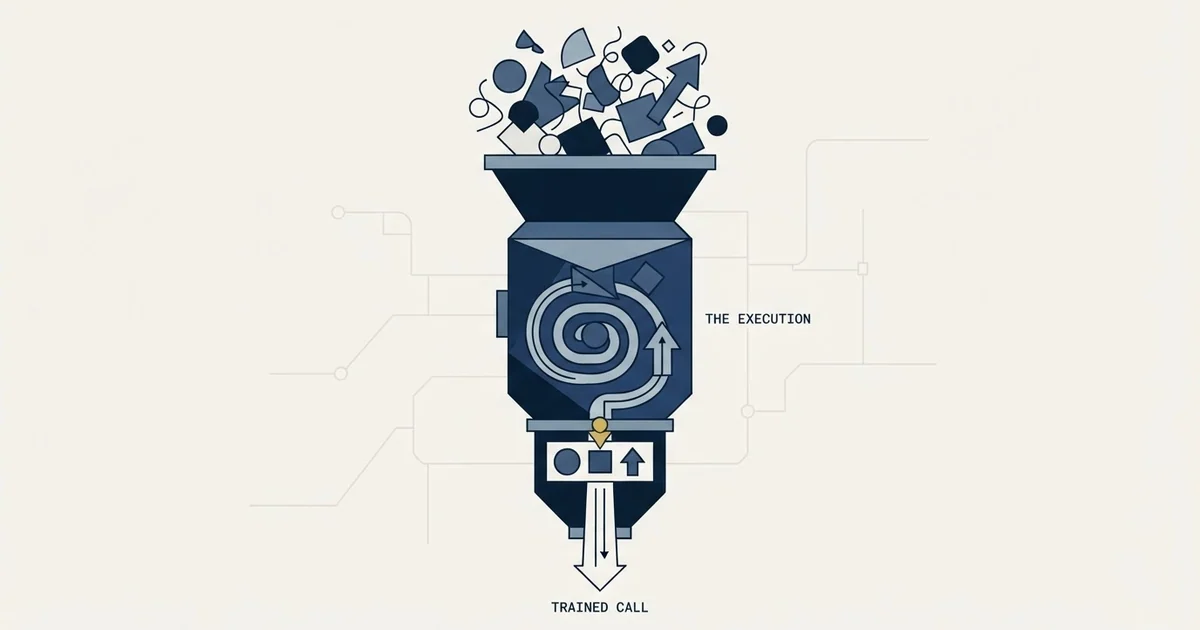
Cold calling output has three inputs: who is on the list, what is being offered, and how the call is executed. Training only reaches execution. Split your dials-to-connects, connects-to-conversations and conversations-to-meetings rates first, and let the weak rate decide whether training, data work or a positioning fix is the purchase.
Key takeaways
- Split the three calling rates before buying anything: a weak dials-to-connects rate is a data problem that no amount of training reaches.
- Training and coaching buy different things. Training transfers a method to a group and then ends; coaching is recurring attention on an individual's own calls and is the one that survives a real territory.
- Useful programmes are built on your own call recordings, practised rather than presented, structured as one method, and measured against a baseline recorded before the programme started.
- Coaching fails at the resourcing step rather than the intention step, because it is the lowest-visibility work in a manager's week and gets dropped silently when the week compresses.
Reviewed and updated August 28, 2026
A team's meeting count falls, stays down through the next review, and a cold calling training programme gets booked. The training is often good. The trainer is often excellent. The number does not move, and the conclusion drawn is that the reps did not apply it.
Sometimes that is what happened. More often the number never depended on the thing the training changed.
Three inputs, and training reaches one of them
Meetings booked from calling are produced by three inputs that are largely independent of each other.
Who is on the list. Whether the people being called have the problem being described, and whether the numbers reach them at all.
What is being offered. Whether the reason for the conversation is worth a stranger's four minutes, and whether it is specific enough to be checkable.
How the call is executed. The opening, the pacing, the handling of a reflex brush-off, the ask.
Training reaches the third one. It reaches the second only slightly, in that a good programme will force a team to articulate its offer out loud and some of them will notice it is weak. It reaches the first one not at all.
- Whether these companies have the problem
- Whether the contact is the right person
- Whether the number reaches a human
- How stale the data is
- Which accounts were selected and why
- Whether the reason to talk is worth four minutes
- Whether it is specific to this company
- Whether it survives being said out loud
- Whether the ask is proportionate
- The opening seconds
- Pacing and talk ratio
- Reflex brush-offs
- Asking for the meeting clearly
- Confidence under repeated rejection
The diagnosis is worth doing before the purchase, and it is cheap. Split the calling numbers into separate rates: dials to connects, connects to conversations, conversations to meetings. A weak dials-to-connects rate is a data problem and training cannot help. A weak conversations-to-meetings rate with healthy conversation volume points at the offer or the targeting. It is the middle rate, connects that die in the first fifteen seconds, where training genuinely is the answer. Our cold calling tips piece works through that split and the connect-rate half in detail.
Training and coaching are two different purchases
The market uses the words interchangeably and they buy different things.
Training is a compressed transfer of a method. A workshop, a course, a programme over a few weeks. It is efficient for getting a group to a common standard, it is the right purchase when several people need the same thing at the same time, and it has a known weakness: it ends.
Coaching is recurring work with an individual against their own calls. Someone listens to what this rep actually did, names one thing, and comes back next week to see whether it changed. It is slower per person and considerably more expensive per head, and it is the only one of the two that reliably survives contact with a real territory.
A third category now sits between them: software that runs practice conversations against a synthetic prospect and scores calls automatically. It is genuinely useful for the repetition problem, which is real. Rehearsing on live accounts spends prospects to build a skill, and a practice environment that spends none is worth having. What it cannot do is exercise judgement about your specific market, because it does not have one.
The distinction that matters when comparing quotes is what each one is actually selling you. Training sells a method and a day. Coaching sells someone's recurring attention. Practice software sells volume of repetition. A team that has no method should not start with repetition software, because it will get very good at repeating something nobody chose. A team with a method that has quietly decayed does not need the method taught again, and buying training for that is the most common misallocation in the category.
Who sells each of those purchases is set out in sales training programs by provider, grouped by what each one teaches.
- Step 1Split the rates
Dials to connects, connects to conversations, conversations to meetings
- Step 2Find the weak one
Each points at a different input, and only one of them is a skills problem
- Step 3If it is execution, pick the shape
Training for a group reaching a common standard, coaching for individuals over time
- Step 4Set the baseline first
Measure the rate you intend to move before the programme starts, not after
What separates useful training from a good day out
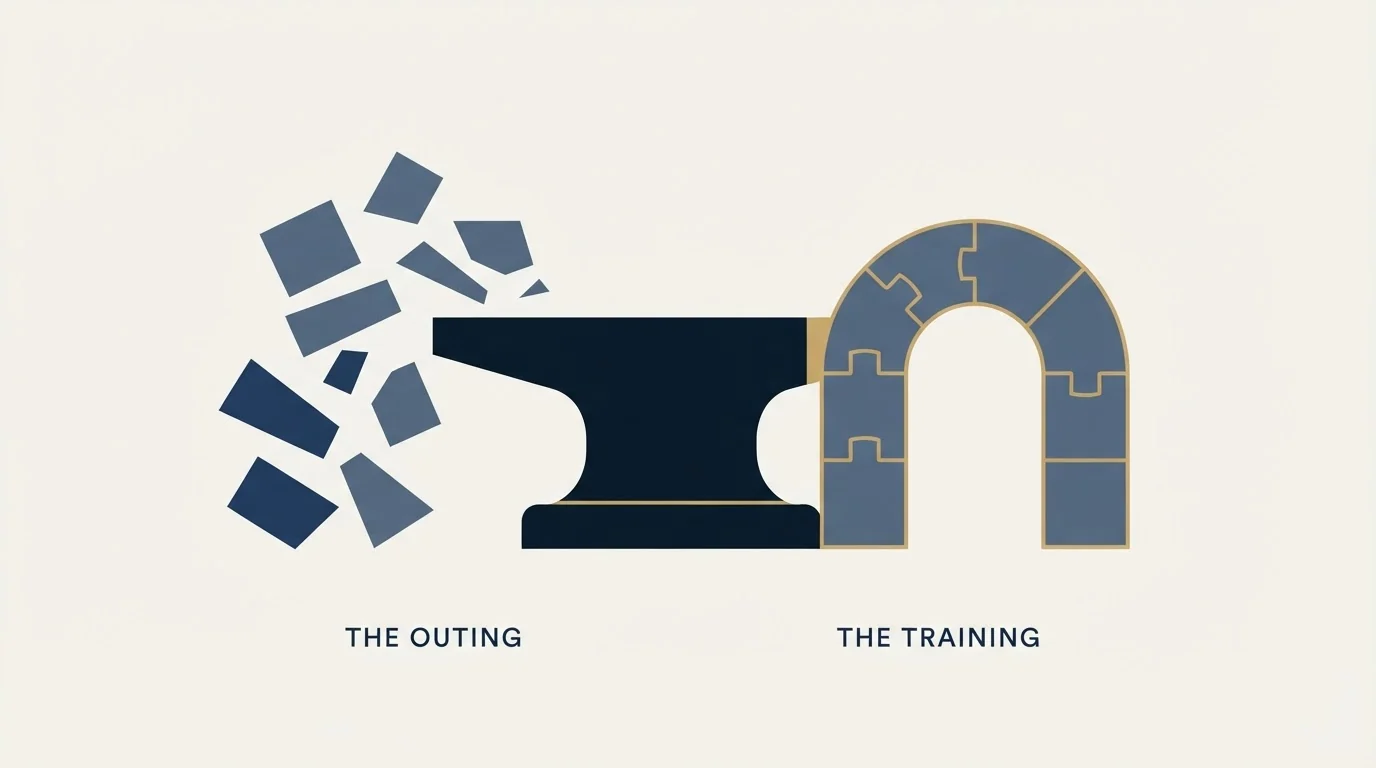
Four things, and a programme missing them will be enjoyed and forgotten.
It uses your recordings. Generic role-play produces generic improvement. The objections your market actually raises, in the words your buyers actually use, are in your own call recordings, and a programme built on them is teaching the job rather than the subject.
It is practised, not presented. Skills that live in the first fifteen seconds of a call are motor skills more than intellectual ones. They are acquired by doing the thing repeatedly under observation, which is uncomfortable, which is why programmes drift toward presentation.
Deciding how much delivery actually matters is easier after seeing what the tonality percentage really measures and where it stops applying.
It has a defined method rather than a collection of tips. A rep can hold one method and apply it under pressure. Twenty tips collapse into nothing at the moment somebody answers. Our cold calling conversion framework is an example of the shape: a small number of connected decisions rather than a list.
It is measured against a baseline that existed beforehand. This one is skipped almost universally, and it is the reason the industry has no honest evidence about what works. Record the three rates for the month before. Compare the month after. Without that, the assessment is a feeling in a room.
The decay problem, and why it argues for coaching
Skills acquired in a workshop and not practised afterwards fade, and calling skills fade faster than most because the environment actively punishes them. Every hour of calling includes repeated rejection, and the natural response to repeated rejection is to retreat to a safer, more scripted, more apologetic version of the call. That drift happens quietly and nobody announces it.
The countermeasure is a practice loop rather than a bigger workshop: someone listening to a small number of real calls regularly and naming one thing. That is the argument for coaching over training for a team that already knows the method, and it is why "we did the training last year" is not evidence that the skill is present now.
Practically, the loop that works is small and boring. A handful of calls a week per rep, one observation each, and the same observation checked the following week. Programmes fail at the checking step rather than the listening step.
The drift described above is what the sales literature calls call reluctance, and naming it that way is useful because it points at the remedy rather than at the person: a rep who is avoiding the phone is responding rationally to an environment of repeated rejection, and the answer is the practice loop, a clear reason for each call, and time blocked to make them, rather than an instruction to be more confident.
Who does the coaching, which is a resourcing question nobody plans

The obvious answer is the sales manager, and the obvious answer breaks for a structural reason worth naming before you rely on it.
A manager coaching calls is spending their scarcest hours on the lowest-visibility work available to them. Listening to four recordings and writing one observation produces nothing anyone else can see this week, while the deal review, the forecast and the escalated account all produce something immediately. When the week compresses, coaching is what gets dropped, and it gets dropped silently because nobody was waiting for its output.
There are three ways teams solve that and each has a real cost. Protecting manager time by putting the sessions in the calendar as fixed commitments works, and it costs the manager something else they were doing. Appointing a senior rep as the coach works, and it costs you their selling hours plus the awkwardness of peer feedback. Buying an external coach works, and it costs money while importing someone who does not know your market and has to be taught it before their observations are worth much.
The choice matters less than making it deliberately. What does not work is assuming the coaching will happen because everyone agrees it should, which is the default state of most teams that have just paid for training and have every intention of following it up.
One measurable test of whether the loop is real: ask whether anyone could name, for a given rep, the single thing they were working on last month and whether it changed. If nobody can, the loop is aspirational regardless of what the calendar says.
When training is the wrong purchase
Three situations where the money is better spent elsewhere, said plainly.
The connect rate is the problem. If most dials never reach a person, the reps are barely getting to demonstrate the skill you are about to invest in. Fix the data first, then train.
The offer does not survive being said out loud. If nobody on the team can state in one sentence why a stranger should give them four minutes, no delivery skill rescues that. This is a positioning problem wearing a sales-skills costume, and it is common.
The list is not selected against anything. If accounts are being called because they came next in an export, the conversations will go nowhere regardless of how well they are conducted. Our cold call appointment setting page argues that the opening line is largely a property of the list, and building an ICP that changes the target list is where that work actually happens.
In all three cases the training will be rated highly by the people who attended it, which is worth knowing in advance, because the satisfaction score is not measuring the thing you are buying.
Another limitation worth noting: the same pull of feeling over evidence appears in sales motivation quotes, where inspiring lines often carry attributions nobody checked.
The short version
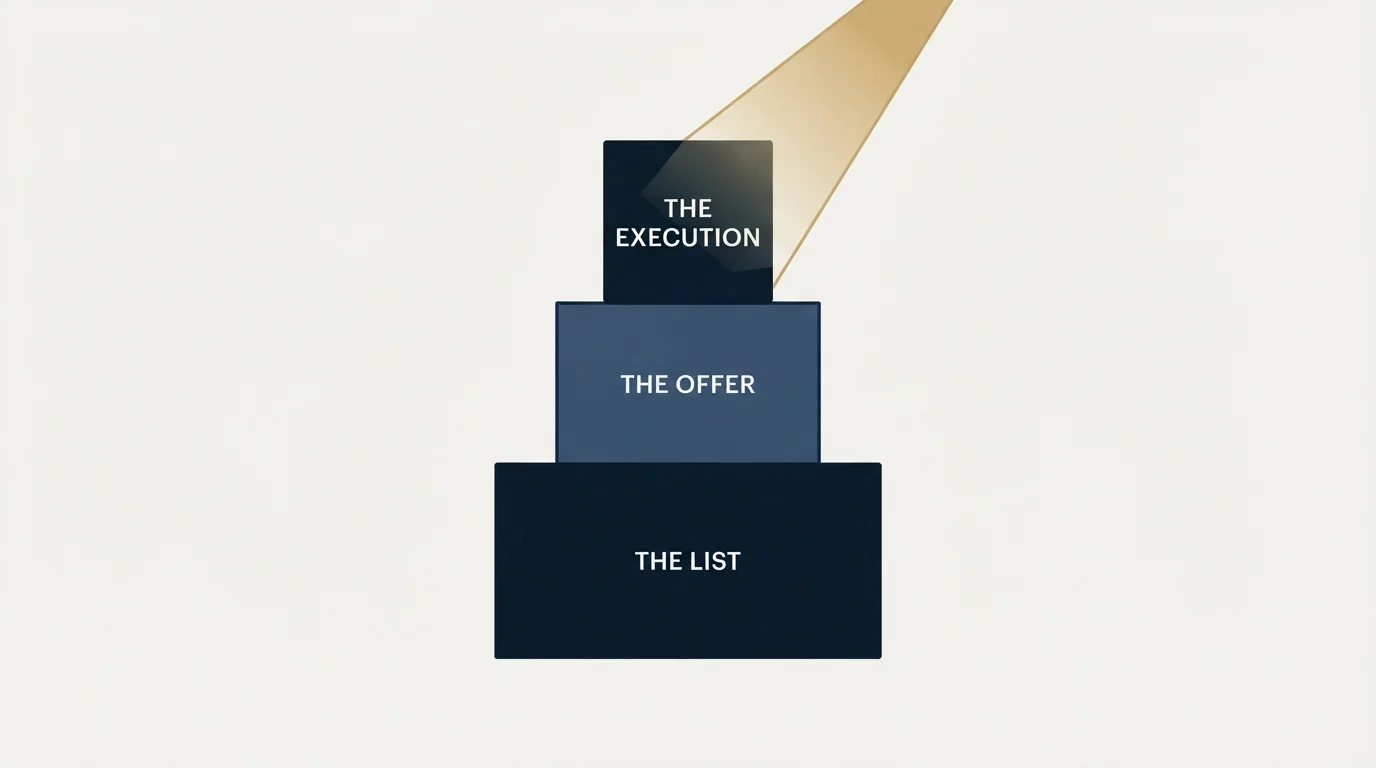
Cold calling training reaches execution, which is one of three inputs and frequently not the one that is broken. Split your rates before buying anything, and let the weak rate choose the purchase. If execution is genuinely the problem, buy the version built on your own recordings, practised rather than presented, structured as one method, and measured against a baseline recorded beforehand. Then keep a small weekly practice loop running, because the skill decays without one.
If the underlying problem is that you need more conversations rather than better ones, we build and run the outreach that produces them, on email and LinkedIn.
Frequently asked questions.
Frequently asked questions- Does cold calling training actually work?
- It reliably improves execution, which is one of three inputs to a calling result. Whether that moves your number depends on whether execution was the constraint. Teams that measure the three rates separately before buying usually find the weak one is connect rate or offer, and training reaches neither. Diagnose first and the training either works or is not bought.
- What is the difference between cold calling training and coaching?
- Training is a compressed transfer of a method to a group, efficient when several people need the same thing, and it ends. Coaching is recurring work with an individual against their own recorded calls, slower and more expensive per person, and the only one of the two that survives contact with a real territory over months.
- Should I hire a cold calling coach or use AI roleplay software?
- They solve different problems. Practice software solves repetition cheaply, which matters because rehearsing on live accounts spends real prospects. A human coach exercises judgement about your specific market, which the software cannot. A team without an agreed method should not start with repetition software, because it will get good at repeating something nobody chose.
- How do I measure whether sales training worked?
- Record dials-to-connects, connects-to-conversations and conversations-to-meetings for the period before the programme, then compare the same three afterwards. Without a pre-existing baseline the assessment is a satisfaction score, which measures how the day felt rather than what changed. Attendee ratings are consistently high even when the numbers do not move.
About the author.

B2B cold email experts helping companies generate qualified leads through done-for-you outreach campaigns.
RevenueFlow Team
Explore more.
Ready to scale your outreach?
We build GTM engines that book real meetings. See the receipts.
Related articles.
Sales Tonality: The 38 Percent Figure and Its Author
Almost every guide to sales tonality opens with the same statistic. Its author published a scope note saying it does not apply, and the genre never carried it.
Cold Calling Prospecting: Start From the Coverage Ceiling
One caller covers accounts in the low hundreds a week, not the low thousands. That ceiling decides whether calling is your coverage channel or a sample.
Inbound vs Outbound Sales: How the Two Motions Differ
Inbound and outbound sales compared as motions: what the rep knows at first touch, what each costs, the team each needs, and the metrics that belong to each.
Readymode Pricing: The Seat Is Dear for What Is Inside It
Readymode publishes $199 and $249 per licence per month, near the top of the dialer range. What the seat includes that others bill separately, and when that pays.
PhoneBurner Pricing: What the Seat Price Covers
PhoneBurner publishes all three seat prices in both billing states. The metered resource is contact imports, not minutes, and the spam layer is an add-on at every tier.
Multi-Threading in Sales: Who the Second Contact Should Be
Six contacts on an opportunity and one real relationship is still single-threaded. Which second person to add, when to ask, and how to tell whether it worked.