Cold Calling Tips: Half of Them Assume Somebody Answered
Booked meetings are two rates multiplied, and published cold calling advice improves only one of them. The connect rate is the larger opportunity.
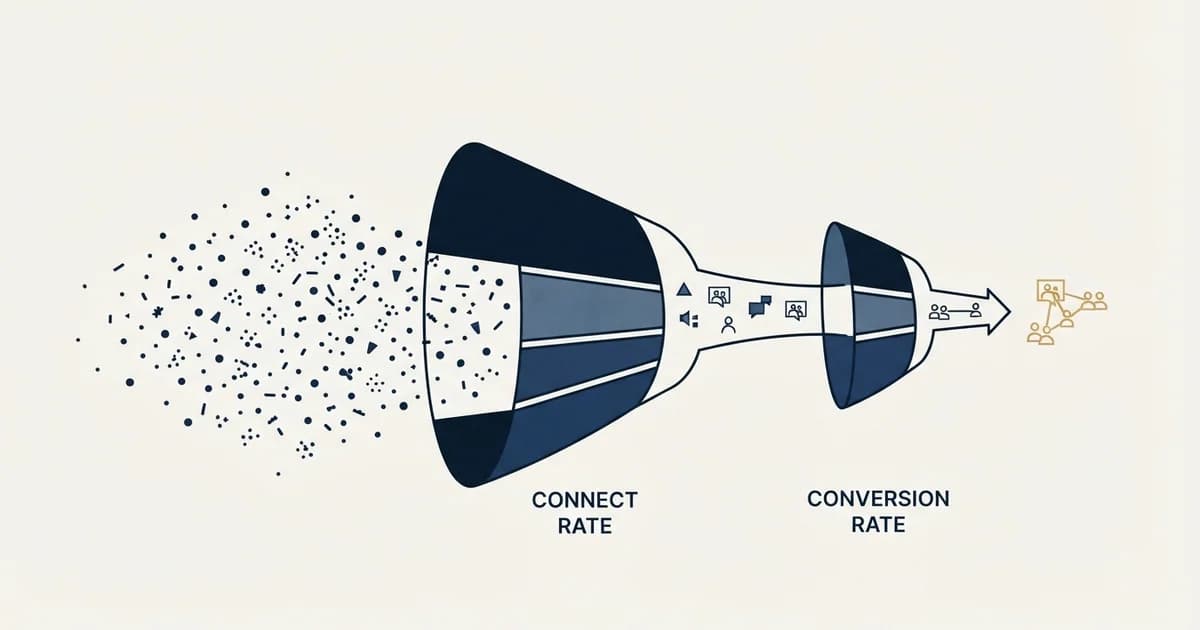
Cold calling results are the connect rate multiplied by the conversation-to-meeting rate. Almost all published tips improve the second, which starts high and moves slowly. The connect rate starts low and is driven by number type, data freshness, caller-ID labelling and calling window, so measure it separately before coaching anyone's opener.
Key takeaways
- Report dials, connects, conversations and meetings separately; a single conversion rate over dials merges three different problems into one number and points every diagnosis at coaching.
- Number type is a real field, not a formatting detail. A switchboard, an unmanned desk line and a verified mobile produce three different connect rates from the same list.
- Caller-ID spam labelling degrades a calling programme silently. Nothing bounces and every dial completes, so the only symptom is a connect rate drifting down.
- The FTC's Telemarketing Sales Rule exempts most business-to-business calls, but the misrepresentation prohibitions still apply and autodialers or artificial voices fall under a separate, stricter FCC consent regime.
Reviewed and updated August 28, 2026
A rep works through eighty numbers in a morning and has four conversations. Every cold calling tip they have ever read is about those four conversations. Almost none of it is about the seventy-six.
That imbalance is the most useful thing to notice about cold calling advice. The published tips are overwhelmingly about the thirty seconds after someone says hello: the opener, the pause, the tone, the objection. Those thirty seconds matter and they are genuinely coachable. They are also the second of two multiplications, and the first one is usually the larger of the two.
The two numbers hiding inside "cold calling results"
Booked meetings from a calling session are the product of two independent rates. How often somebody picks up, and how often a pickup becomes a meeting. A team can be excellent at the second and still produce almost nothing, because the first one collapsed and nobody was watching it.
- Number type: direct dial, mobile, or main switchboard
- Whether the number is still correct
- How the receiving carrier labels your caller ID
- Time of day and day of week
- Whether the account is one where a human answers phones at all
- The opening line
- Whether the reason for calling is specific
- Handling the reflex brush-off
- Asking for the meeting clearly
- Whether the person has the problem you named
Take a rep with a 4% connect rate and a 20% conversation-to-meeting rate. A hundred dials produce four conversations and roughly one meeting. Now improve their opener until conversations convert at 30%, which is a serious coaching achievement over several months. A hundred dials now produce four conversations and 1.2 meetings. Move the connect rate to 8% instead and the same hundred dials produce eight conversations and 1.6 meetings, at the original conversation rate.
Those figures are illustrative arithmetic rather than a benchmark. The point is the shape and the shape holds across whatever your real numbers are: a rate that starts near 4% has far more room in it than a rate that starts near 20%, and the low rate is the one nobody is coaching.
Connect rate is mostly a data question
Four things determine whether the phone gets answered, and three of them are decided before anyone dials.
The number type. A main switchboard number reaches a receptionist whose job includes not putting you through. A desk line reaches a desk that increasingly nobody sits at. A verified mobile reaches the person. These are not three versions of the same field in your CRM, and treating them as one field is why connect rates read as mysteriously low. If your data source does not tell you which type each number is, that distinction is invisible in your reporting and you cannot manage it.
Deciding whether to outsource that dialing to a marketplace seller means confronting what the Fiverr cold calling brief says you must specify before paying for a gig.
Whether the number is still true. Contact data decays continuously as people change roles and companies consolidate phone systems. A list assembled a year ago and never re-verified carries a meaningful share of numbers that ring somewhere irrelevant. Dialling those costs the same as dialling a good number and produces nothing, and it depresses the connect rate in a way that looks exactly like reps calling badly.
How your number appears on the other handset. This is the part most calling advice omits entirely. Carriers and handset makers apply spam labelling to inbound calls, and a number that has generated a high volume of short unanswered calls can end up presented to the recipient as suspected spam. At that point the call is answered less often regardless of who is dialling or what they planned to say.
When you call. Time of day and day of week move connect rates on any list, and the best window is a property of the audience rather than a universal rule. Owner-operators, shift-based businesses and corporate office workers are reachable at different hours. This is measurable from your own call logs within a week or two, and worth measuring rather than inheriting from a listicle.
The audience decides the door as well as the hour: cold calling for food and beverage companies shows a brand reaching a chain's buyer through the switchboard, a distributor through a form and an independent grocer's owner directly.
The published answers to the best time to cold call, and which of them came from dialling strangers rather than from ringing inbound enquiries, are traced in best time to cold call.
What most guides file under pre-call planning is account research, and how much of it to do before dialling is a connect-rate question rather than a matter of taste, because research spent on a number nobody answers is spent at the connect rate rather than once per conversation; the checks that survive that arithmetic are the cheap ones, which are confirming the person is still in the role and taking one specific, checkable reason for calling them.
The part that rhymes with email deliverability
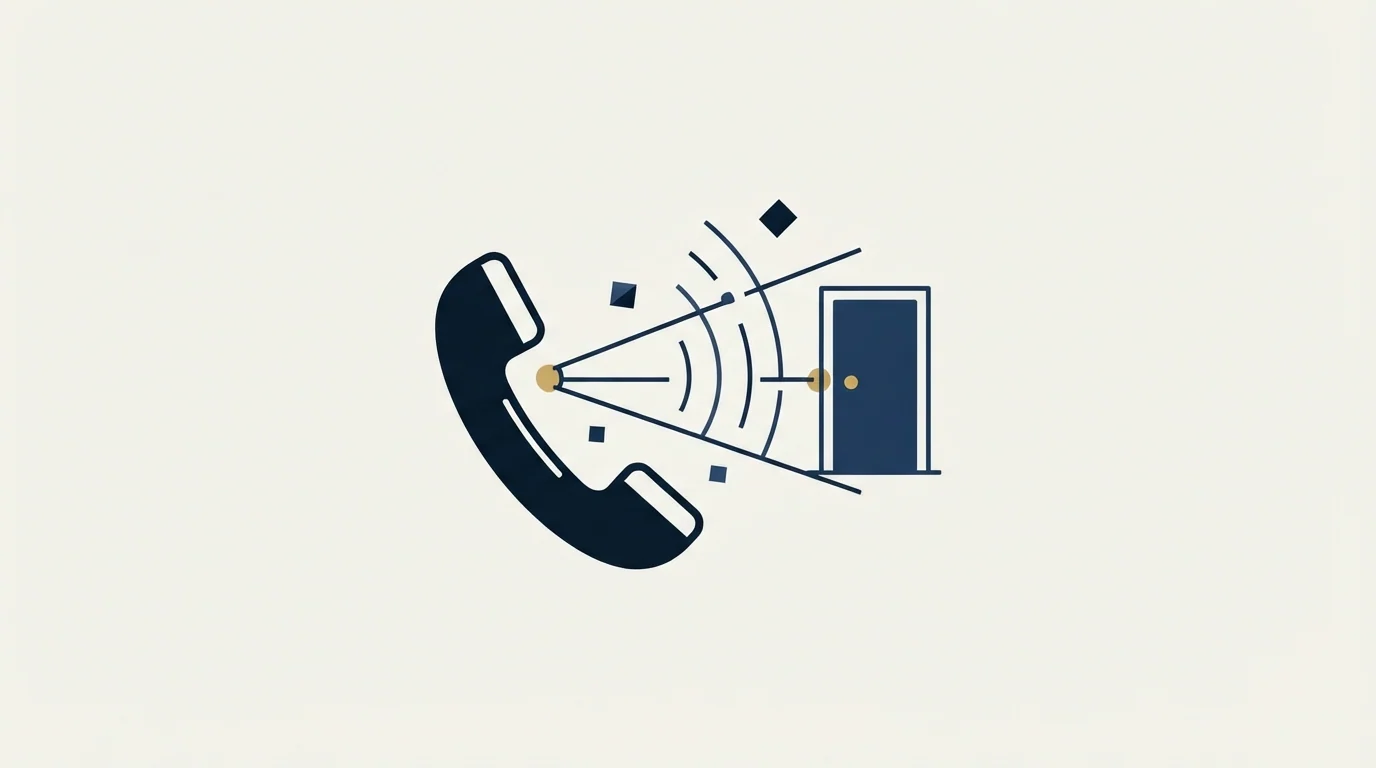
Sellers who run cold email think carefully about sending reputation, because the consequence of ignoring it is obvious and immediate: the message lands in spam and the campaign silently stops working. Phone numbers have an analogous reputation layer, and it gets far less attention because its failure mode is quieter. Nothing bounces. The dials still complete. The connect rate simply drifts down.
The practical response is the same as the email one. Spread volume across numbers rather than hammering one. Use numbers that belong to you and that you can monitor. Check periodically how your outbound numbers are being presented rather than assuming. If you want the full version of that discipline on the email side, our deliverability guide covers the mechanics, and the mental model transfers cleanly even though the systems do not.
- Yes: You know what proportion of your numbers are direct dials or mobiles
- Yes: The list has been verified recently enough that decay is not the story
- Depends: You have checked how your outbound numbers are labelled on arrival
- Yes: Connect rate is reported separately from conversation rate
- Depends: Time-of-day performance has been measured on this audience, not assumed
- No: Dial count is treated as an input and not as a scoreboard
The tips that operate on the conversation, briefly
Once somebody has answered, the advice converges and most of it is sound. Say who you are and why you called this specific person. Give a concrete reason that could not have been sent to a thousand people. Expect the first response to be a reflex rather than a considered position. Ask for the meeting plainly.
Two of our existing pages go deeper than a tips list usefully can. The cold call appointment setting piece argues that the opening is largely decided by the list, because a specific reason for calling is a property of who you selected rather than of how you phrased it. The conversion framework works through the openers, the objection pattern and the offer-led ask in detail. Neither of them needs restating here.
The tip worth adding is about what a listicle cannot give you: your own recordings. Listening to ten of your own calls tells you more about your specific market than any general advice, and it is the only source that knows what your buyers actually say. Two things tend to surface immediately. The first is that the reason for calling, which sounded specific in the script review, arrives on the call as a category rather than a fact about that company. The second is that the brush-off usually lands earlier than anyone remembers, often inside the first eight seconds, which means most of the script being debated was never reached. Both are cheap to fix and neither is visible from a transcript summary or a coaching session held from memory.
Sellers in financial services facing that same recording exercise can compare notes against a bank-focused script breakdown, which explains why generic openers fail when the prospect already has a bank.
The legal frame, which is short and worth knowing

Business-to-business calling in the United States sits in a more permissive position than most sellers assume, and in a stricter one than the permissive summary suggests.
The Federal Trade Commission's Telemarketing Sales Rule exempts most business-to-business calls. Its exemptions section covers "Telephone calls between a telemarketer and any business to induce the purchase of goods or services", with two carve-outs: the Rule's prohibitions on misrepresentation still apply, and calls inducing "retail sale of nondurable office or cleaning supplies" are not exempt (16 CFR 310.6).
The first carve-out is the one worth reading, because it is what remains binding on an ordinary B2B calling programme. It points at the anti-deception provisions, which prohibit "Misrepresenting, directly or by implication" material aspects of what is sold and "Making a false or misleading statement to induce any person to pay for goods or services" (16 CFR 310.3). In practice the residue of the Rule for a B2B caller is the obligation to tell the truth, which is a shorter compliance brief than most teams expect and a harder one to satisfy in a script written to sound compelling.
The general calling-hours provision, which applies where the exemption does not, prohibits calls outside "8:00 a.m. and 9:00 p.m. local time at the called person's location" (16 CFR 310.4). Local time at their location, rather than at yours, is the part people get wrong when they start calling other time zones.
Separately, the moment a system places calls with an autodialer or an artificial or prerecorded voice, a different and much stricter consent regime applies under the Federal Communications Commission's delivery restrictions (47 CFR 64.1200). A human dialling a business number and a machine playing a voice at one are not the same act in law, whatever the software calls itself.
None of this is legal advice, jurisdictions differ, and state rules can be stricter than the federal floor. The reason it belongs in a tips article at all is that compliance questions tend to arrive after a programme is running, when the answer is expensive.
What to measure so the advice has somewhere to land
Report four numbers and keep them separate. Dials attempted. Connects, meaning a human answered. Conversations, meaning the human stayed past the opening. Meetings booked. Three ratios fall out of those, and each one points at a different fix: dials-to-connects is a data and reputation problem, connects-to-conversations is an opening problem, conversations-to-meetings is an offer and targeting problem.
Reporting a single "conversion rate" over dials merges all three, which is why so many calling programmes get diagnosed as a coaching problem. The number went down, coaching is the available lever, so coaching is what happens. Splitting the ratio takes an afternoon and tells you whether you have a script problem at all.
The short version
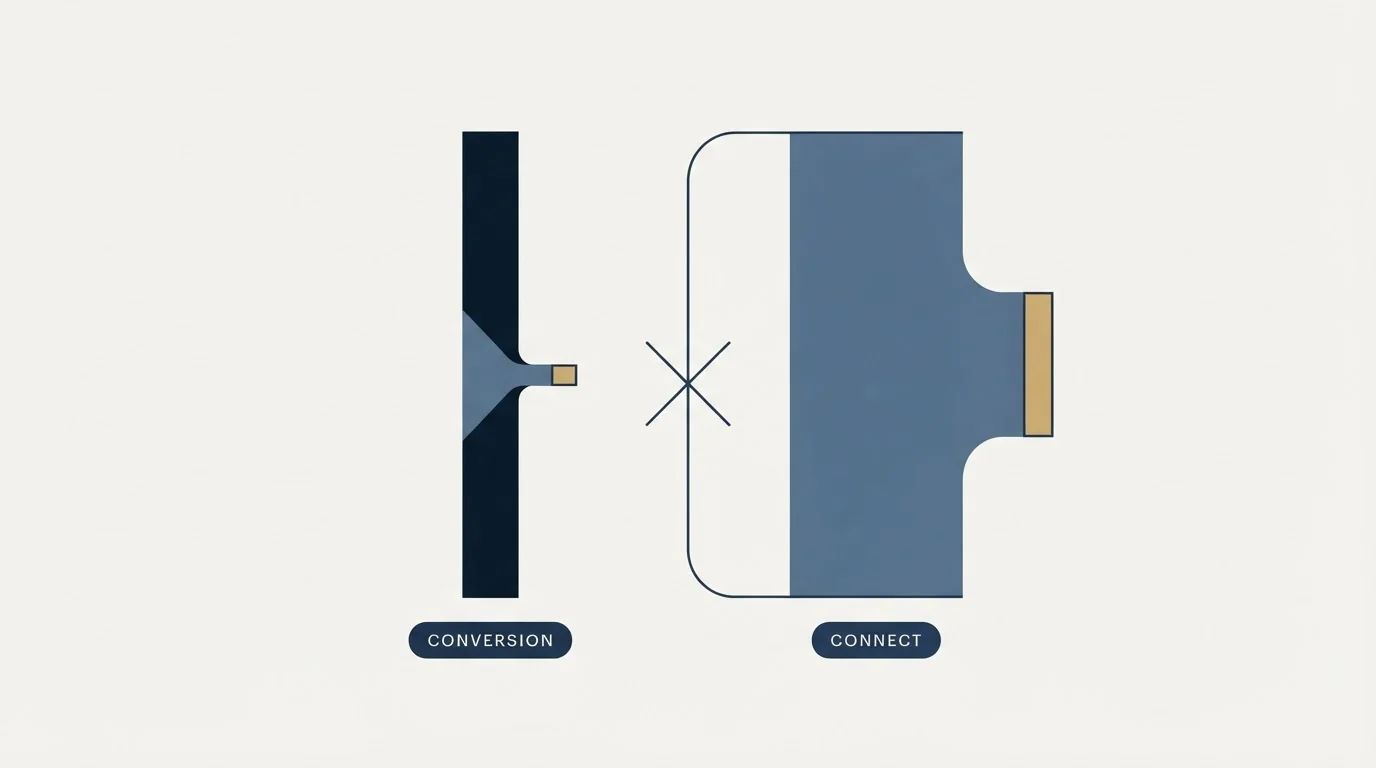
Cold calling tips are almost all about the conversation, and the conversation is the smaller of the two multiplications. Before spending another month on openers, find out how often anyone is answering, what proportion of your numbers can even reach a person, and how your caller ID is being presented on the other end. Those are data and infrastructure questions with concrete answers. Then coach the opener, which is genuinely worth coaching once the calls are connecting.
If you would rather have a team run the list-building and outreach side of this while your reps spend their time in conversations, that is what we do, on email and LinkedIn.
Regulatory citations verified against the current eCFR text as of mid-2026. Rules change and vary by jurisdiction; confirm current requirements before relying on them.
Frequently asked questions.
Frequently asked questions- What is the single most useful cold calling tip?
- Split your reporting before you change anything. Measure how many dials reach a human and how many humans become meetings as two separate numbers. Most teams only track one blended rate, so a data problem and a script problem look identical. The split takes an afternoon and usually shows the bigger opportunity is the one nobody was working on.
- Why is my connect rate so low?
- Usually some mix of four things: too many main switchboard numbers rather than direct dials, contact data old enough that a share of numbers no longer reach the person, caller-ID labelling that presents your number as suspected spam, and a calling window that does not match when this audience is at a desk. All four are measurable from your own call logs.
- Is cold calling businesses legal in the United States?
- Business-to-business calls are exempt from most of the FTC's Telemarketing Sales Rule, with two carve-outs: the misrepresentation prohibitions still apply, and calls selling nondurable office or cleaning supplies at retail are not exempt. Autodialers and artificial or prerecorded voices are governed separately by FCC rules and are much more restricted. State law can be stricter.
- What time of day should I make cold calls?
- Measure it rather than inherit it. The best window is a property of your audience: owner-operators, shift-based businesses and corporate office workers are reachable at genuinely different hours, and the widely-repeated universal windows come from other people's lists. Two weeks of your own call logs, bucketed by hour, will answer it for your market specifically.
About the author.

B2B cold email experts helping companies generate qualified leads through done-for-you outreach campaigns.
RevenueFlow Team
Explore more.
Ready to scale your outreach?
We build GTM engines that book real meetings. See the receipts.
Related articles.
Cold Calling for Food and Beverage Companies: Three Doors
Cold calling for a food or beverage company: who picks up at a chain, a distributor and an independent grocer, where each publishes its door, and when the phone is wrong.
Win Rate Benchmarks: Which Figures State a Population
A catalogue of the published average sales win rates, sorted by whether the page names the population behind its own number. Most do not.
LinkedIn Outreach for Banks: A Regulated Message
How a bank's relationship managers use LinkedIn to reach business owners: what the FFIEC guidance, FINRA's notices and LinkedIn's own rules require, and where to stop.
Cold Calling for PPC Agencies: What You Can See First
A paid media prospect is partly readable before the call and has already been told by the platform what to do when a stranger rings about its ads.
Cold Calling for Consulting Firms: The Partner's Hour
Cold calling for a consulting firm: who it dials and who picks up, why partner-led economics argue against the phone, the client's fiscal year, and when to skip it.
Sales Kickoff Agendas: Five Published, Session by Session
Five publishers print a sales kickoff agenda. They agree on four blocks and disagree on session length, rehearsal and where the agenda comes from.