Fiverr Cold Calling: Deliverable Definition Is the Contract
Marketplaces push sellers toward deliverables they can evidence, like dials and hours. Those are precisely the units that carry none of the value.
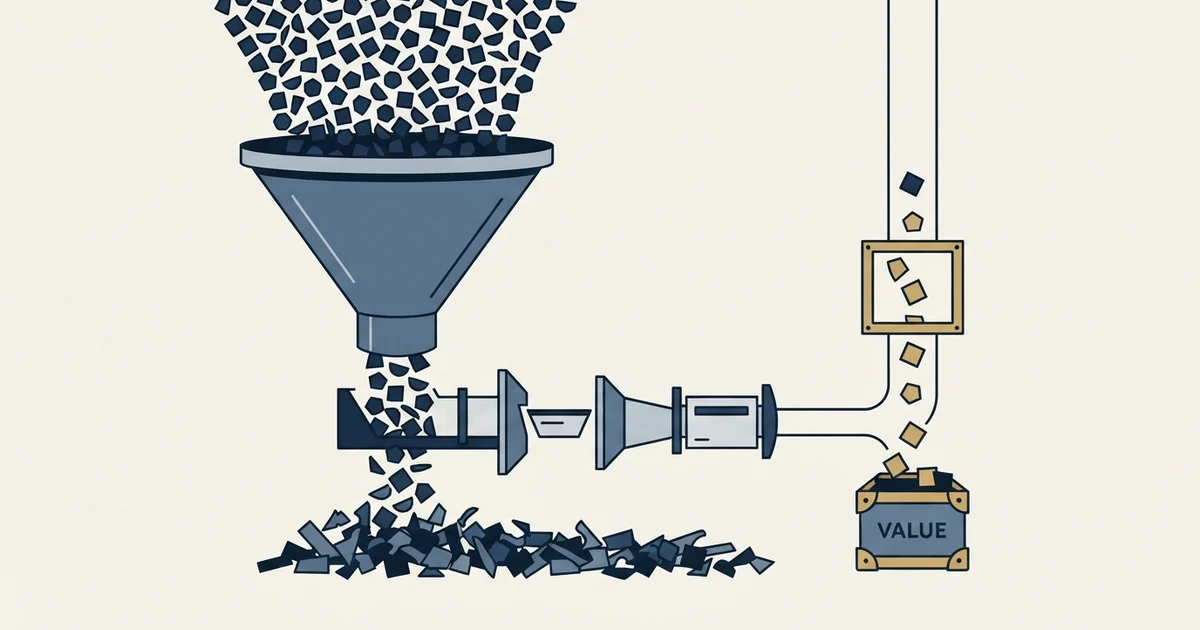
A marketplace has to arbitrate disputes, so gigs are sold in units a seller can evidence: dials, hours, contacts attempted. None of those is what you are buying. Specify the list, phone data, caller ID, script boundaries and data handling in the brief, and treat a gig as a bounded test of your message rather than as a pipeline function.
Key takeaways
- Platforms enforce provable deliverables, so gigs get priced in dials and hours; a seller who logs 200 dials has fully delivered whatever happened on them.
- Five inputs decide the outcome and are usually unassigned on the gig card: whose list, whose phone data, whose caller ID, whose script, and who holds the recordings.
- Ratings measure the transaction rather than the outcome, and were mostly written at delivery by buyers whose market has nothing in common with yours.
- The rational purchase is a bounded test of whether your offer produces conversations at all, with your own list, where the real output is the recordings you listen to yourself.
Reviewed and updated September 1, 2026
A marketplace gig card for cold calling promises something concrete: a number of calls, a number of hours, sometimes a number of appointments, for a fixed price with a stated delivery time. That specificity is the appeal, and it is also where almost everything that goes wrong is already written down.
The unit in that promise is the entire contract. Read it before anything else on the page.
Marketplaces reward deliverables the seller can evidence
A freelance marketplace has to arbitrate disputes between strangers, so its whole structure pushes sellers toward deliverables that can be objectively proven. A call log can be screenshotted. A recording can be uploaded. Hours can be counted.
What cannot be proven that way is whether any of it was worth doing. A seller who delivers 200 logged dials has delivered exactly what the gig said, and the platform will agree with them, whatever happened on those dials.
- Dials placed
- Hours worked
- Contacts attempted
- Call recordings delivered
- A spreadsheet marked complete
- A meeting that happens
- With someone who fits
- Who understood what it is about
- Who was not misled to get there
- And who would take a second call
This is not a criticism of marketplace sellers, most of whom deliver precisely what they advertised. It is a description of what the advertisement can contain. A gig priced on dials will be delivered in dials, because that is the promise the platform can enforce, and a buyer who wanted meetings has simply bought a different product from the one they had in mind.
The five inputs a gig card usually leaves unanswered
Cold calling is roughly one part talking and four parts everything else. On a marketplace those four parts are frequently unassigned.
Whose list. If you supply it, the gig is a labour purchase and the quality of the outcome is mostly your responsibility. If the seller supplies it, ask where it came from, when, and against what criteria. A list assembled quickly to fill an order is the most common reason a technically-delivered gig produces nothing.
Whose phone data. Related and separate. Numbers decay, and a list of main switchboard numbers produces a very different session from a list of verified direct dials. If nobody has specified this, the seller will use whatever is cheapest to obtain.
Whose number appears on the prospect's screen. This matters more than it sounds. If the calls come from the seller's number, you cannot be called back, you inherit none of the recognisability, and you also inherit none of the caller-ID reputation consequences. If they come from a number associated with you, the reverse is true in both directions.
Whose script, and who may deviate from it. A fixed script protects you from misrepresentation and produces stilted calls. Freedom to deviate produces better calls and puts a stranger's judgement in front of your prospects. Both are defensible; not deciding is not.
Who holds the recordings and the data afterwards. Recording obligations vary by jurisdiction and the answer needs to exist before the first call, not after a prospect asks.
- Yes: Who builds the list, and against what written criteria
- Yes: Where the phone numbers come from and how fresh they are
- Yes: Which number the prospect sees, and who owns it
- Yes: Whether the script is fixed, and what may not be said under any circumstances
- Depends: Who holds recordings and contact data at the end of the engagement
- Yes: What the deliverable is, stated in a unit you would pay for again
Reading the price the way the seller wrote it

Gig prices in this category span a very wide range, and the spread is not a quality gradient in any simple sense. It mostly reflects what is inside the package, and packages that look comparable frequently are not.
Three things move a price more than skill does. Whether the seller is supplying the list, which is real work and is sometimes bundled invisibly into a headline that looks like pure dialling. Whether the unit is time or output, since an hourly package transfers all the risk to you while an output package transfers some of it to the seller and gets priced accordingly. And where the seller is working from, which drives the hourly economics and, for some audiences, affects how the call lands.
The practical move is to normalise before comparing. Convert every quote into the same unit, usually cost per conversation you would actually want, using the seller's own stated assumptions. That number is frequently a long way from the headline, and it is occasionally higher than an agency's, at which point the comparison has answered itself.
Be particularly careful with packages quoted in "leads". The word means something different to nearly every seller using it, and on a marketplace it usually means a contact record with a note attached rather than a person who agreed to a conversation. Ask what has to be true about a record before it counts, and get the answer in writing inside the order rather than in chat.
Why cold calling success rates disagree explains how each published figure divides by a different denominator, which matters when judging a marketplace seller's claims.
Ratings tell you about delivery, not about fit
A gig with hundreds of positive reviews is genuinely informative. It tells you the seller shows up, communicates, and produces what was promised on time. Those are real and non-trivial.
It tells you very little about whether they can sell your thing to your market. The reviews were written by buyers whose products, prospects and definitions of success have almost nothing in common with yours, and most were written at delivery, before anyone knew whether the calls produced revenue. A rating measures the transaction rather than the outcome, and cold calling is a category where those two come apart further than usual.
The related trap is that the highest-rated sellers in a category are frequently the ones with the most standardised process, because standardisation is what makes on-time delivery reliable. Standardisation is exactly what a specific, technical, narrow market does not want.
What you are actually exposing

Someone you have not met will speak to your prospects as you. That is the transaction, stated plainly, and it deserves a moment before the convenience of a fixed price closes the decision.
Two consequences worth weighing. The first is representational: whatever they say about your product becomes something your company said, and you will not hear most of it. The second is regulatory: accountability for how calls are made generally attaches to the business on whose behalf they are placed, rather than to whoever was holding the phone. Delegating the dialling does not delegate that. Our page on cold calling with a virtual assistant works through the compliance side of the same arrangement in more detail, along with why the labour model struggles at the judgement half of the call.
When a gig is a genuinely good purchase
There is a version of this that is rational, and it is not the version most people buy.
Buying a small, bounded test of whether a script and an offer produce conversations at all is a legitimate use of a marketplace. It is cheap, fast, involves no hiring, and answers a question that is otherwise expensive to answer. If forty calls into a list you built yourself produce zero interest from anyone, that is worth knowing before a quarter goes into the channel.
What makes it work is treating it as an experiment rather than as a pipeline source. Supply your own list so the variable under test is the message. Define the deliverable in a unit you would pay for again. Listen to every recording yourself, which is affordable at that volume and is where the actual value of the exercise sits. The output you want is not meetings; it is a clear answer about whether the market engages with the way you have framed the problem.
What does not work is buying it as a substitute for a pipeline function. Cold calling produces results through sustained coverage of a chosen set of accounts, and our page on cold calling as a prospecting motion sets out why the capacity arithmetic makes that a staffing question rather than a purchasing one.
If you want the output rather than the labour

The alternative to buying hours is buying the outcome, which is what appointment-setting and outbound agencies sell. It is considerably more expensive per unit and it moves the definition of the deliverable onto ground you care about, provided you insist on a written meeting definition. The trade-offs between the pricing models are worked through in appointment setting agency pricing models, and what a good meeting costs covers the economics.
The honest comparison is not marketplace versus agency on price, because they are not selling the same thing. One sells effort at a low price with the risk on you. The other sells a defined result at a high price with some of the risk on them. Which is correct depends entirely on whether you already know that your offer works on the phone.
Teams that still weigh marketplace hours against agency outcomes will find navigating owner-led sales calls useful, since one person often holds budget, need and authority at once.
The short version
On a marketplace, the deliverable definition is the contract, and platforms push sellers toward units they can evidence rather than units you value. Specify the list, the phone data, the caller ID, the script boundaries and the data handling in the brief, because anything unspecified gets decided by whoever is cheapest. Treat a gig as a bounded experiment in whether your message produces conversations, not as a pipeline function, and read the reviews as evidence of delivery rather than of fit.
If what you need is sustained pipeline rather than a test, we run that on email and LinkedIn with the deliverable defined in meetings.
Frequently asked questions.
Frequently asked questions- Is it worth hiring a cold caller on Fiverr?
- As a bounded experiment, often yes: it answers cheaply whether your offer produces any interest on the phone, with no hiring. As a pipeline function, rarely, because results come from sustained coverage of chosen accounts, which is a staffing question. Supply your own list so the message is the variable being tested.
- What should a cold calling gig brief specify?
- Who builds the list and against what criteria, where the phone numbers come from, which number the prospect sees, whether the script is fixed and what may never be said, who holds recordings and contact data afterwards, and the deliverable stated in a unit you would pay for again. Anything unspecified gets decided by whoever is cheapest.
- Why do marketplace cold calling gigs sell dials rather than meetings?
- Because the platform has to arbitrate disputes between strangers, which pushes sellers toward deliverables that can be objectively proven. A call log is evidence; a qualified meeting is a judgement. Sellers price what the platform can enforce, so a buyer who wanted meetings has bought a different product from the one they imagined.
- Are freelance cold callers cheaper than an agency?
- Per hour, substantially. Per outcome, frequently not, and sometimes more expensive once you normalise both quotes into cost per conversation worth having. They also sell different things: one sells effort with the risk on you, the other sells a defined result with some risk on them. Which is right depends on whether you already know your offer works on the phone.
About the author.

B2B cold email experts helping companies generate qualified leads through done-for-you outreach campaigns.
RevenueFlow Team
Explore more.
Ready to scale your outreach?
We build GTM engines that book real meetings. See the receipts.
Related articles.
Cold Calling for Food and Beverage Companies: Three Doors
Cold calling for a food or beverage company: who picks up at a chain, a distributor and an independent grocer, where each publishes its door, and when the phone is wrong.
Win Rate Benchmarks: Which Figures State a Population
A catalogue of the published average sales win rates, sorted by whether the page names the population behind its own number. Most do not.
LinkedIn Outreach for Banks: A Regulated Message
How a bank's relationship managers use LinkedIn to reach business owners: what the FFIEC guidance, FINRA's notices and LinkedIn's own rules require, and where to stop.
Cold Calling for PPC Agencies: What You Can See First
A paid media prospect is partly readable before the call and has already been told by the platform what to do when a stranger rings about its ads.
Cold Calling for Consulting Firms: The Partner's Hour
Cold calling for a consulting firm: who it dials and who picks up, why partner-led economics argue against the phone, the client's fiscal year, and when to skip it.
Sales Kickoff Agendas: Five Published, Session by Session
Five publishers print a sales kickoff agenda. They agree on four blocks and disagree on session length, rehearsal and where the agenda comes from.