Cold Calling Statistics: Four Numbers, One Success Rate
ZoomInfo publishes a 2-3% cold calling success rate and Cognism publishes 65.6%. Both are correct, and the gap between them is the denominator.
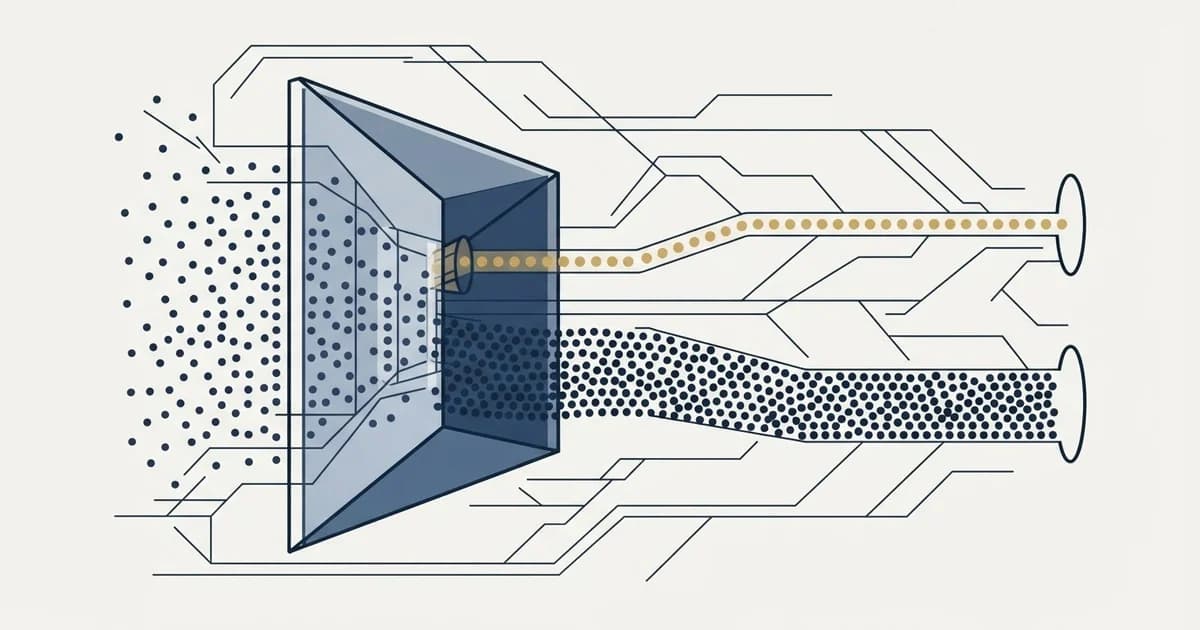
Published cold calling success rates disagree because they divide by different populations. A rate can sit over dials, over connects, over conversations or over contacts, and those bases differ by tens of percentage points. Before comparing your own performance to a figure, find the denominator, the numerator event and the year of the underlying study.
Key takeaways
- ZoomInfo's cold calling statistics page puts the average success rate for booking meetings at 2-3% and separately reports that only 3-10% of calls reach a live person; Cognism's page reports 65.6% for having a conversation, calculated over connects rather than dials.
- A cold call conversion rate has no fixed definition, so three questions decide what any published version is worth: the numerator event, the denominator population, and whether the list was cold or warm.
- Roundups carry older research than their own publication year suggests: Cognism attributes figures to The Bridge Group's 2021 report and LinkedIn's Global State of Sales 2022 inside a page dated 2026.
- Descriptive measurements from recorded calls, such as the 93-second average duration of a successful call, travel better than channel-level rates, which are published by companies selling to callers.
Reviewed and updated September 2, 2026
ZoomInfo's cold calling statistics page says the average success rate for booking meetings is 2-3%. Cognism's says the success rate for having a conversation from a cold call is 65.6%. Both pages were live on 16 August 2026, both are about cold calling, and neither of them is lying. They are dividing by different things.
That is the whole subject. Almost every cold calling statistic in circulation is a fraction whose numerator is stated and whose denominator is left to the reader, and the denominators differ by more than an order of magnitude. A number quoted without its base is not a benchmark you can compare yourself to. It is a sentence with a percentage in it.
The cold call success rate is not one number, and the four populations below are why two sources can both be right and disagree by an order of magnitude.
The four populations a cold calling number can divide by
A calling motion produces four counts, and any of them can sit under the line.
Dials. Every attempt the dialer makes, including the ones that reach a switchboard, a dead number or nobody. This is the largest number and the most flattering denominator to avoid.
Connects. The subset where a human picks up. ZoomInfo's page puts this at 3-10% of calls, which is the step that collapses the population.
Conversations. Connects where the person stayed on the line long enough for the call to be a call. Cognism's 65.6% is calculated over connects, which is why it can sit more than sixty points above a number wearing the same label.
Meetings booked. The outcome anyone actually cares about, and the smallest count.
Every attempt, including dead numbers
A human answers
The call becomes a call
The outcome being paid for
Read the two figures again with the bases attached and the contradiction disappears. ZoomInfo's page states that only 3-10% of calls result in speaking to a live person, and separately that the average success rate for booking meetings is 2-3%. Cognism's page states that the average cold calling success rate is 2.3% and, in a different section, that the success rate for having a conversation from a cold call is 65.6%, attributing that one to its own 2025 State of Cold Calling Report. Two of those four numbers are meetings over dials. One is connects over dials. One is conversations over connects. They agree with each other.
The practical consequence for a team that believes it is not hitting the benchmarks is that the comparison is usually the defect rather than the performance. Before concluding a calling motion is underperforming, establish which of the four counts the published figure divides by and which one your own number divides by, because a team measuring meetings over conversations against a published figure measured over dials is comparing two different fractions and will always look bad. Then compare your own series against itself over several periods, with the definition frozen, which is the only version of this that can detect a real change.
The conversion rate, and why every published version of it disagrees
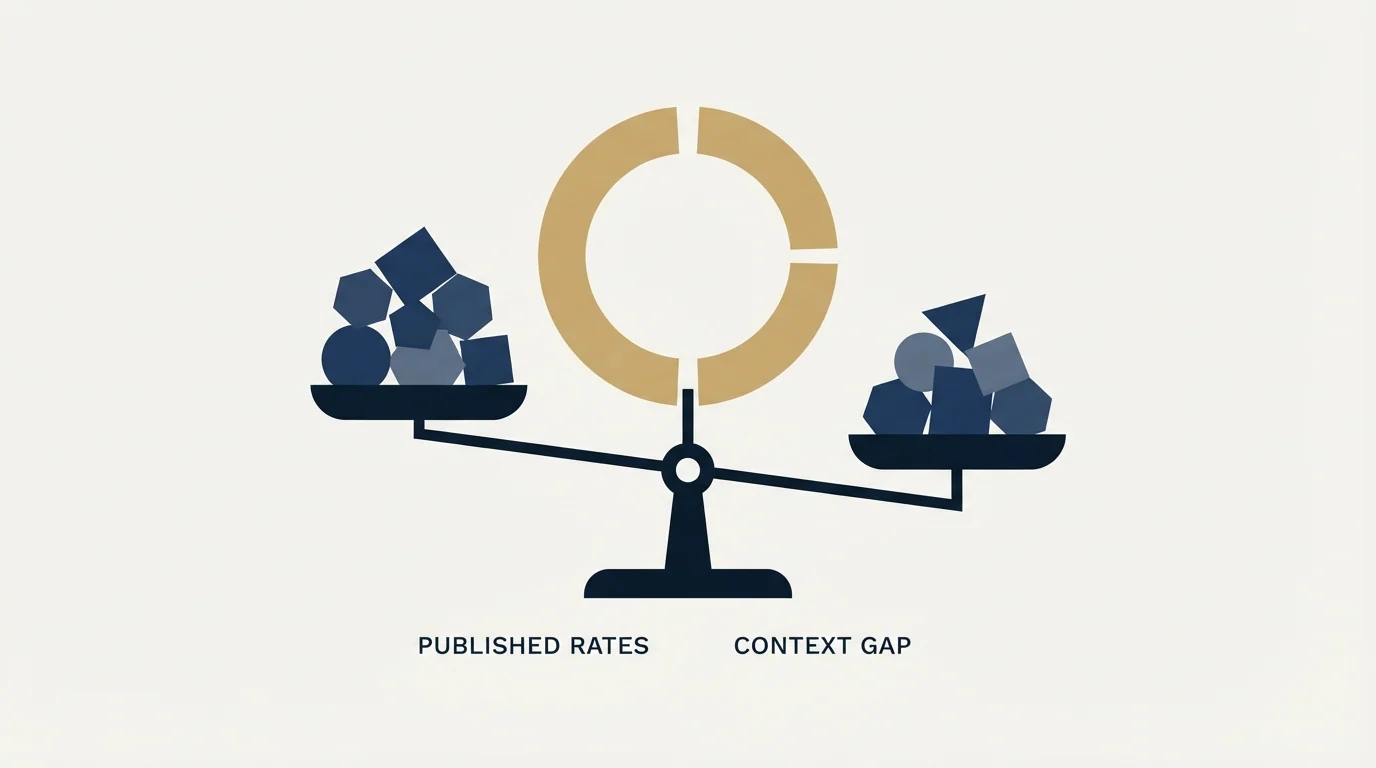
The phrase cold call conversion rate has no fixed meaning, and searching for it returns pages that use it for at least three different fractions. Two pages quoting wildly different percentages can be describing the same calling operation in the same week, and the reader has no way to tell that from either page.
Three questions settle what any given figure is worth to you.
What is the numerator event. A conversation, a qualified conversation, a booked meeting and a held meeting are four different outcomes, and the gap between booked and held is where a lot of published performance quietly lives.
Those properties generalise past this one metric, and which sales statistics name their population and year applies the same test to the pages currently ranking.
What is the denominator. Dials, connects, conversations or contacts attempted at least once. Attempts-per-contact matters here: a number over dials falls as a team calls the same person more often, while the same operation measured over contacts does not move.
Contacts attempted look different when the business is owner-led, because how single-owner authority changes cold outreach explains why one call often settles the outcome outright.
Who is in the population. A rate measured on a list of warm inbound requests and a rate measured on a cold purchased list are not comparable, and neither is labelled. List composition moves these rates further than technique does, which is the case for treating the target definition as the first variable rather than the last one: ideal customer profile covers what a usable one has to contain.
Teams that still treat every cold call as the same population will find the split between candidate and client calls a useful reminder that even the numerator can hide two unrelated goals.
- Depends: The denominator is named: dials, connects, conversations or contacts
- Depends: The numerator event is named, and booked is distinguished from held
- Depends: The population is described: cold list, warm list, existing customers
- Depends: The figure is attributed to a study or dataset rather than to the publisher's own page
- Depends: That study's own year is stated, not the year of the article quoting it
- Depends: The sample size or period is given somewhere the reader can reach
Here is the arithmetic on an invented example, offered only to show how far apart two honest numbers can sit. These figures are illustrative and invented; they are not measurements of anything. Take 1,000 dials. If 6% of them reach a person, that is 60 connects. If two thirds of those become real conversations, that is 40 conversations. If 25 of those 40 turn into a booked meeting, the same week produces a 2.5% success rate over dials and a 62.5% success rate over conversations. Both are true, and a team quoting the second one to a board is not being dishonest so much as unclear.
The attribution chain, and how old the sources actually are
The second problem with this literature is that the pages carrying the figures are rarely the pages that produced them.
Cognism's statistics page is unusually good about this, which is what makes it useful as a specimen: it attributes figures to its own 2025 State of Cold Calling Report in eighteen separate places, and where a figure is not its own it names the source. Reading those attributions in order shows what the genre is made of. RAIN Group's Top Performance in Sales Prospecting Benchmark Report supplies the buyer-preference figures. Orum's State of Sales Development supplies the share of leads from calling. LinkedIn's Global State of Sales 2022 supplies two data-quality figures. The Bridge Group's 2021 State of Sales Development Report supplies the daily dial volumes.
Those last two carry their years in their titles. A 2026 article quoting a 2021 dial-volume survey is quoting a measurement taken five years earlier, and the reader sees only the 2026 date at the top of the page.
The drift is measurable when the same finding appears twice. ZoomInfo's page states that 78% of decision-makers have taken an appointment or attended an event from a cold call. LinkedIn's own sales blog states that, according to a DiscoverOrg survey, 75% of senior executives have taken an appointment or attended an event based on an unexpected sales call or email. The wording is otherwise nearly identical and DiscoverOrg is the same lineage. Between the two renderings, the population narrowed from senior executives to decision-makers, the channel lost its email half, and the number moved three points. Neither page is fabricating. The finding is simply being retyped.
The figures that travel better than the rates
Not everything in this literature is soft. Descriptive measurements taken from recorded calls hold up better than rates, because they have an obvious denominator and no incentive attached.
Gong's cold call statistics page reports that opening a cold call with a particular permission-seeking question makes a rep 40% less likely to book a meeting, and reports it from analysis of recorded calls. Both ZoomInfo's page and Cognism's put the average duration of a successful cold call at 93 seconds. Those are the kind of figures worth carrying into a decision, and it is not a coincidence that they describe behaviour on a call rather than the performance of a channel.
The rates are where the incentive sits. Every publisher of a cold calling success rate sells something to people who make cold calls, and the figure that gets repeated is the one that supports the sale. Cognism's page states plainly that teams using Cognism saw a 6.7% success rate for cold calls that led to booked meetings, well above the industry average it quotes elsewhere on the same page. That is a vendor result, correctly labelled as one, and it is not an industry benchmark.
What we do with any of this
RevenueFlow runs cold email and LinkedIn rather than phone. We do not sell a calling service, we hold no proprietary calling dataset, and nothing above is our measurement. That is the reason this page cites other people's pages by name and date instead of producing numbers of its own.
Two positions from our own documented practice are worth stating because they change how a reader should treat the statistics above. The first is that we agree qualification criteria in writing before a campaign launches, which fixes what counts as a meeting before anyone can be tempted to grade their own work afterwards. A success rate is only as solid as the definition of the success, and that definition is a commercial decision rather than a measurement one.
The second is that we run one message per campaign on email, with no bumps and no thread replies, and re-entry is a new campaign built on a new premise. That is a deliberate position rather than a reading of the calling literature, and it is the reason this article describes the widely republished claim that 80% of sales require five or more follow-up calls rather than recommending it. ZoomInfo's page carries that figure, and it is a good example of the whole problem: it prescribes behaviour without ever saying what population "sales" refers to, over what period, or in which market. A statistic that tells you what to do while withholding what it counted is the one to be most careful with.
If phone belongs in the mix at all is a separate question from what the numbers say, and the honest comparison of the two channels on how each one fails is in email and cold calling. What the calling motion costs to run before any rate applies is in cold calling as a lead source, and the definitional ground is in what cold calling is.
The short version

Every cold calling statistic is a fraction. Find the denominator before you compare yourself to it, because dials, connects, conversations and contacts produce numbers that differ by tens of percentage points while wearing the same label.
Check whether the publisher measured the figure or retyped it, and check the year of the underlying study rather than the year of the article. A 2026 roundup routinely carries a 2021 survey.
Trust descriptive measurements from recorded calls more than channel-level rates, and treat any success rate published by a company selling to callers as a marketing figure until its base is named.
Then define your own numerator before you start, in writing, so that the rate you eventually report means the same thing in month six as it did in month one. If you would rather see what the email side of that looks like on your own market before committing to anything, we will build a campaign and show the reasoning.
Third-party figures above were verified against the publishers' own pages as fetched on 16 August 2026. Verify current figures at the source before relying on them.
Sources: ZoomInfo, Cold Calling Statistics, Cognism, 45+ Key B2B Cold Calling Statistics, Gong, Key Cold Calling Statistics, LinkedIn Sales Blog, Cold Calling is Dead
Frequently asked questions.
Frequently asked questions- What is a good cold call conversion rate?
- The question cannot be answered without a denominator. ZoomInfo publishes 2-3% for meetings booked over dials, with top performers at 6-10% or higher. Cognism publishes 2.3% on the same basis and 65.6% for conversations over connects. Decide which fraction you are measuring first, then compare only to figures measured the same way.
- Why do cold calling statistics contradict each other so often?
- Three reasons stack up. The denominators differ, so meetings over dials and conversations over connects are both called a success rate. The figures are republished from page to page, losing qualifiers at each hop. And the studies underneath are frequently several years older than the article quoting them, with only the article date visible to a reader.
- How old are the studies behind published cold calling statistics?
- Often much older than the page. Cognism names its sources, and reading them in order shows the age: The Bridge Group's 2021 State of Sales Development Report supplies daily dial volumes and LinkedIn's Global State of Sales 2022 supplies data-quality figures, both quoted inside a 2026 article. Check the study year rather than the article year.
- Does RevenueFlow run cold calling?
- No. We run cold email and LinkedIn rather than phone, we sell no calling service, and we hold no proprietary calling dataset. Every figure on this page is a third-party published figure attributed to the page it appears on and dated, which is why this article compares other people's numbers rather than offering numbers of its own.
About the author.

B2B cold email experts helping companies generate qualified leads through done-for-you outreach campaigns.
RevenueFlow Team
Explore more.
Ready to scale your outreach?
We build GTM engines that book real meetings. See the receipts.
Related articles.
Cold Calling for Consulting Firms: The Partner's Hour
Cold calling for a consulting firm: who it dials and who picks up, why partner-led economics argue against the phone, the client's fiscal year, and when to skip it.
Cold Calling for PPC Agencies: What You Can See First
A paid media prospect is partly readable before the call and has already been told by the platform what to do when a stranger rings about its ads.
Cold Calling for Telecom Companies: A Carrier's Own Rules
What only a telecom company meets on the phone: the FTC exemption that stops at its contractor, the verified carrier change, and the CPNI limit on lists.
Cold Calling for Higher Education Vendors: Who Picks Up
Who a published campus number really reaches, what university purchasing pages permit a sales call to do, the quiet period around a bid, and when a campus can talk.
Win Rate Benchmarks: Which Figures State a Population
A catalogue of the published average sales win rates, sorted by whether the page names the population behind its own number. Most do not.
Sales Cycle Length Benchmarks: What Each Figure Counts
The published B2B sales cycle benchmarks, sorted by what each page says it counted. The same number means two different things in two of them.