Turn Content Into Revenue (The View-to-Value Framework)
Most founders can go viral. Almost none of them make money from it. Here's the 5-step framework that turns attention into pipeline.
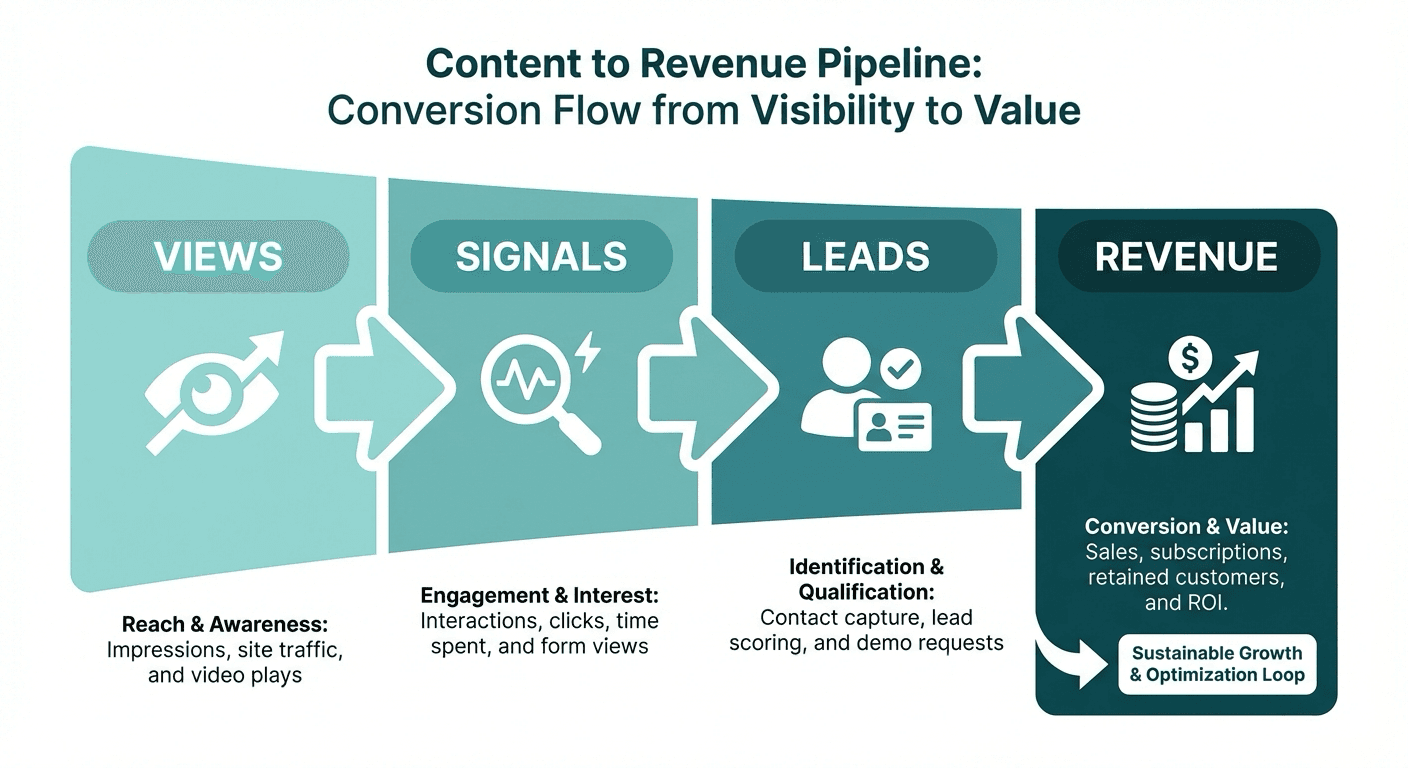
Viral content generates revenue through a five-step View-to-Value Framework: publish content targeting decision-makers rather than mass audiences, automatically capture engagement signals using tools like Trigify and RB2B, enrich and qualify leads through ICP scoring with platforms like Clay, conduct personalized outreach within one hour while engagement is warm (yielding 3x higher response rates), and create evergreen content that compounds authority over time by continuing to generate leads months after publication.
Key takeaways
- Fewer than 10% of your followers see any given post, and most who engage will never buy without systematic follow-up.
- Reaching out within one hour of content engagement produces 3x higher response rates compared to waiting a day or longer.
- Content targeting specific decision-makers (like CFOs at $10M companies) generates lower total engagement but higher-value prospects than generic business advice.
- Automated signal capture tools like Trigify, Teamfluence, RB2B, and Apify log every engagement while enrichment platforms like Clay score leads against ICP criteria.
- Evergreen content that is discoverable, shareable, and connected to next steps continues generating leads weeks or months after original publication without additional effort.
Reviewed and updated September 5, 2026
How to Turn Viral Content Into Revenue
Most founders can go viral.
You craft the perfect hook, it hits the algorithm just right, and suddenly your phone won't stop buzzing. Friends text congratulations. Your follower count spikes. You refresh analytics every ten minutes watching the numbers climb.
Then you check Stripe.
$0.
The views didn't convert. The attention didn't translate. The viral moment came and went, leaving you exactly where you started.
This happens constantly. And after three years of studying why, we found the pattern.
The Real Problem
Here's the brutal truth: fewer than 10% of your followers see any given post. Of those who do see it, most scroll past. Of those who engage, almost none will ever buy from you.
The standard approach (post content and hope something magical happens) isn't a strategy. It's a lottery ticket.
Most founders get caught in the same trap. They post something that performs well, feel validated by the engagement, then immediately move on to creating the next piece. The likes pile up. The revenue stays flat.
What's missing isn't better content. It's a system to capture the value that content creates.
The View-to-Value Framework
Five steps. Each one matters.
- Step 1Publish with Precision
Forget mass appeal. Target buyers.
- Step 2Harvest Every Signal
Every engagement is information.
- Step 3Enrich and Qualify
Not everyone who engages is worth pursuing.
- Step 4Strike While Warm
Reach out within an hour of engagement and you're 3x more likely to get a response.
- Step 5Compound Your Authority
Good content keeps working long after you publish it.
Step 1: Publish with Precision
Forget mass appeal. Target buyers.
Weak: "5 productivity tips"
Strong: "How B2B SaaS founders reduce churn by 47%"
The first version might get more total engagement. The second version gets engagement from people who actually buy B2B SaaS solutions.
When your content targets precisely, each view has potential value. A CFO at a $10M company engaging with your post about financial modeling is worth pursuing. A college student liking your general business advice isn't.
Write for the person who can say yes to a six-figure deal. Not for the masses who'll never buy anything.
Step 2: Harvest Every Signal
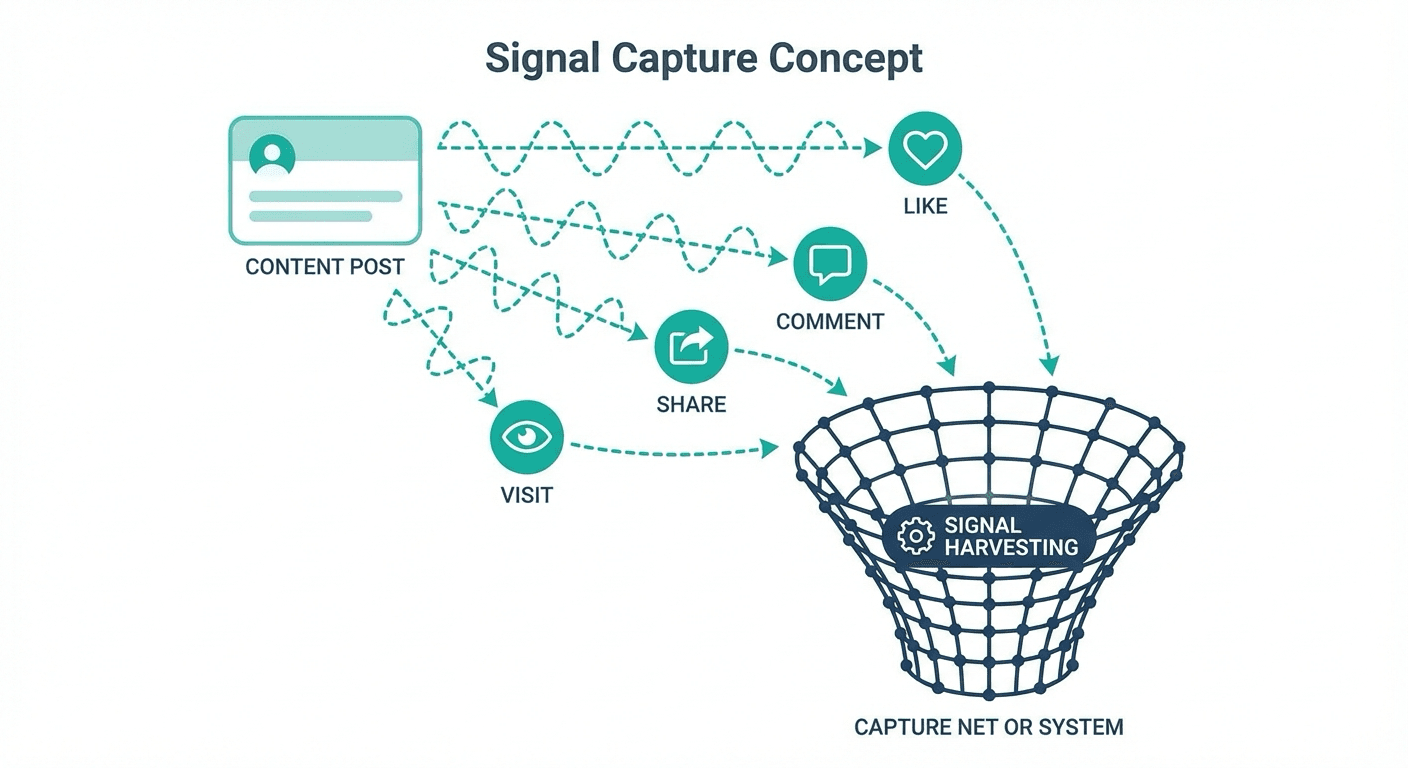
Every engagement is information.
Someone likes your post about reducing CAC? They're thinking about CAC. Someone comments asking for more detail? They want to go deeper. Someone visits your profile three times in a week? They're considering reaching out.
95% of founders miss these signals entirely. They see a notification, feel a small dopamine hit, and move on.
We capture everything:
Trigify logs post engagement: every like, comment, and share.
Teamfluence tracks LinkedIn profile visits.
RB2B identifies anonymous website visitors.
Apify scrapes engagement data at scale.
Set these up once and forget about them. They run constantly, building a database of warm prospects while you focus on creating.
Step 3: Enrich and Qualify
Not everyone who engages is worth pursuing.
The student who liked your post gets filtered out. The VP at a funded startup who liked the same post gets flagged for immediate follow-up.
Clay handles this automatically. Every captured lead gets enriched with company data, scored against ICP criteria, and routed accordingly.
High scores trigger personalized outreach. Low scores enter nurture sequences. Everyone in between gets appropriate treatment based on their potential value.
The key insight: only pursue high-value prospects personally. Let automation handle the rest until they're ready.
Step 4: Strike While Warm
Timing matters more than most people realize.
Reach out within an hour of engagement and you're 3x more likely to get a response. Wait a day and the window is already closing. Wait a week and you're basically cold.
When someone engages with your content, they're in a receptive state. They were thinking about the problem you addressed. They found your perspective interesting enough to interact with. They might even be actively looking for solutions.
That moment passes quickly.
Personalized outreach works because it builds on existing interest:
"Hey John, noticed you engaged with my post about pipeline attribution. Created a more detailed breakdown specifically for SaaS teams. Mind if I send it over?"
This doesn't feel like cold outreach because it isn't. You're continuing a conversation they started.
Step 5: Compound Your Authority
Good content keeps working long after you publish it.
One post gets shared, someone new discovers your profile, they explore your other content, and eventually they become a lead. That sequence can play out weeks or months after the original publication.
The posts that compound share common characteristics:
Discoverable. They target topics people search for.
Shareable. They're valuable enough that others want to associate with them.
Evergreen. They stay relevant beyond this week's news cycle.
Connected. They link to related content and clear next steps.
Over time, your content library becomes an asset. It works while you sleep, generates leads on autopilot, and compounds in value as you add to it.
What This Looks Like in Practice
Here's a real example:
You post about a specific problem your ICP faces. A CFO at a $10M startup engages.
Your system captures that engagement, enriches the data, and reveals she's at a company that just raised funding. High priority.
Within 15 minutes, she gets a personalized message referencing her engagement and offering additional value.
She replies. You have a conversation. A call gets booked.
Three weeks later, you close a $75k contract.
Your input? One post and one follow-up message. The system handled everything in between.
The Metrics That Matter
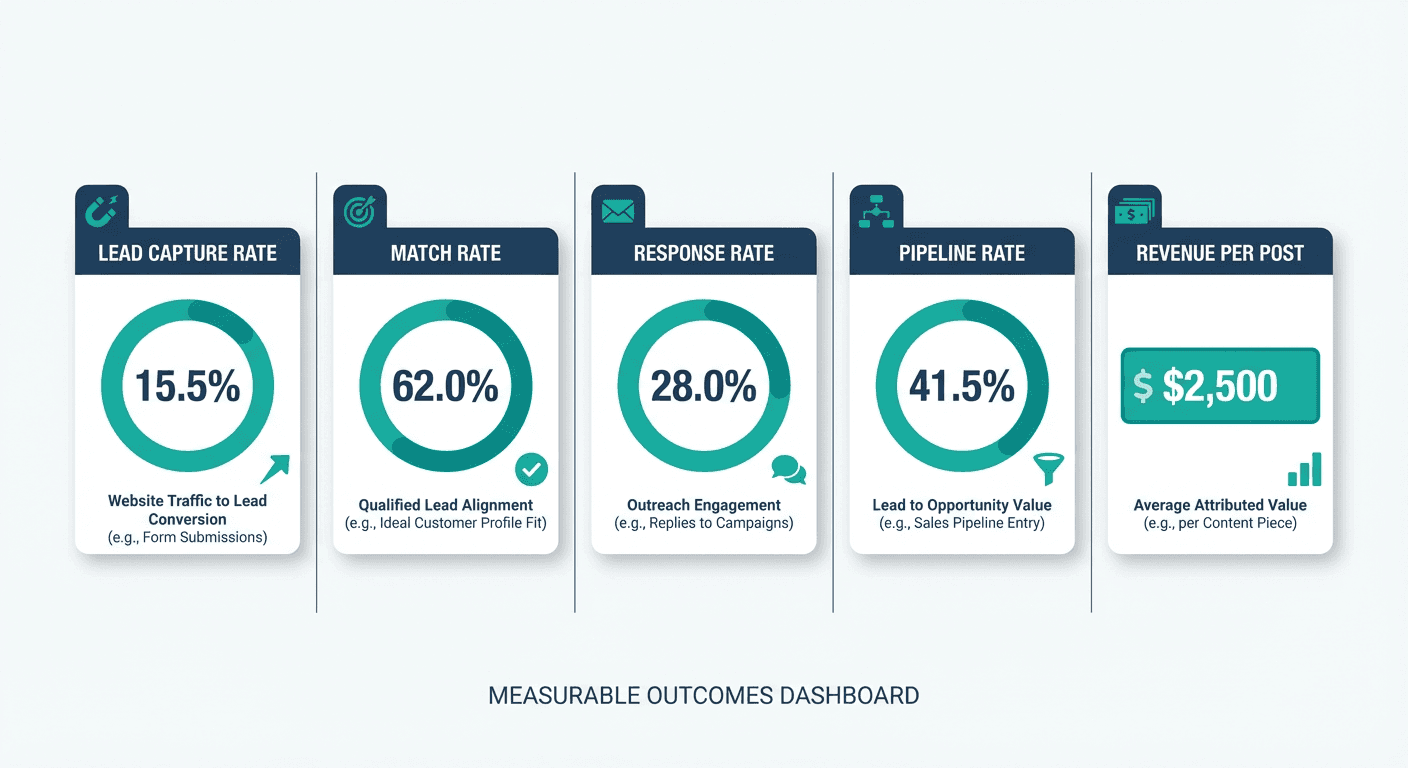
Stop tracking vanity metrics. Start tracking these:
Lead Capture Rate: What percentage of engagers get captured?
Enrichment Match Rate: What percentage fit your ICP?
Outreach Response Rate: What percentage reply positively?
Conversation-to-Pipeline Rate: What percentage become opportunities?
Revenue per Post: How much pipeline does each piece of content generate?
These numbers tell you whether your system works. Everything else is noise.
Where to Start
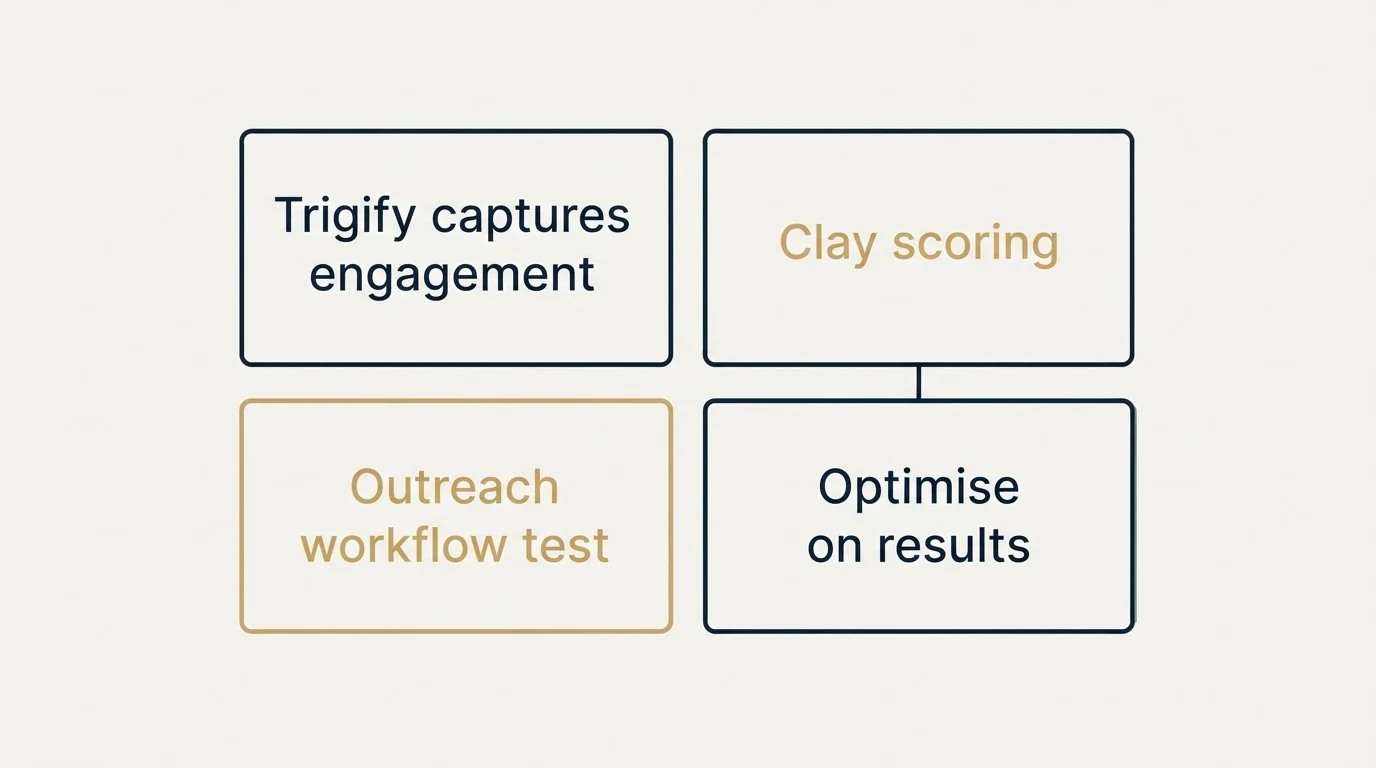
- Week 1Set up Trigify
Start capturing engagement.
- Week 2Connect to Clay
Define scoring criteria.
- Week 3Build outreach workflows
Test end-to-end.
- Week 4Optimize based on results
Week 1: Set up Trigify. Start capturing engagement.
Week 2: Connect to Clay. Define scoring criteria.
Week 3: Build outreach workflows. Test end-to-end.
Week 4: Optimize based on results.
You don't need a perfect system on day one. You need a functional system that you improve over time.
The Point
Content without capture is wasted effort.
You can build a massive following and still struggle to generate revenue. You can go viral regularly and never convert that attention into pipeline.
Or you can build a system that turns every piece of content into a lead generation machine.
The framework is simple: publish with precision, harvest signals, enrich and qualify, strike while warm, compound over time.
The question isn't whether this works. It does.
The question is whether you'll build it.
Related Reading
- 15 Lessons From Growing to 100k Followers and 360% Revenue
- 1.4K to 32K Followers in 5.5 Months: The Distribution Playbook Behind 36.5M Impressions
- The Outreach System Behind Our $3M ARR (Full Breakdown)
Ready to turn your content into pipeline? Book a call to see how we can build this system for you.
Frequently asked questions.
Frequently asked questions- Why doesn't viral content automatically lead to revenue?
- Viral content fails to generate revenue because most founders lack a system to capture the value it creates. They post content, experience high engagement, then immediately move to creating the next piece without following up on the signals. Without harvesting engagement data, qualifying leads, and conducting timely outreach, the attention dissipates. Fewer than 10% of followers see any post, most scroll past, and almost none who engage will buy without systematic follow-up turning that attention into pipeline.
- What tools do I need to capture engagement signals from viral content?
- Essential signal capture tools include Trigify for logging post engagement like likes, comments and shares, Teamfluence for tracking LinkedIn profile visits, RB2B for identifying anonymous website visitors, and Apify for scraping engagement data at scale. Clay then handles automatic enrichment by adding company data to captured leads and scoring them against your ICP criteria. These tools run continuously in the background, building a database of warm prospects while you focus on content creation.
- How quickly should I follow up with someone who engages with my content?
- Follow up within one hour of engagement for optimal results. This timing produces 3x higher response rates compared to waiting a day. When someone engages with your content, they're in a receptive state: actively thinking about the problem you addressed and potentially looking for solutions. That window closes quickly. Personalized outreach referencing their specific engagement feels like continuing a conversation they started rather than cold outreach, making immediate follow-up both effective and natural.
- Should I focus on creating viral content or targeted content for my ICP?
- Focus on creating targeted content for decision-makers in your ICP rather than chasing viral mass appeal. Content like 'How B2B SaaS founders reduce churn by 47%' will generate less total engagement than generic '5 productivity tips,' but every view has potential value. A CFO at a $10M company engaging with specific, relevant content is worth pursuing, while college students liking general business advice aren't qualified buyers. Write for the person who can approve a six-figure deal, not for the masses.
- What metrics should I track to measure content revenue effectiveness?
- Track five key metrics instead of vanity numbers: Lead Capture Rate (percentage of engagers captured by your system), Enrichment Match Rate (percentage fitting your ICP), Outreach Response Rate (percentage replying positively), Conversation-to-Pipeline Rate (percentage becoming opportunities), and Revenue per Post. These metrics directly connect content performance to business outcomes, revealing which posts generate qualified pipeline and actual revenue rather than just likes and shares.
About the author.

Ben Carden is CRO at RevenueFlow, which builds and operates outbound revenue engines for B2B companies. Previously at Gartner Enterprise. Studied at London School of Economics.
Ben Carden · CRO
Connect on LinkedIn →Explore more.
Ready to scale your outreach?
We build GTM engines that book real meetings. See the receipts.
Related articles.
15 Lessons From Growing to 100k Followers and 360% Revenue
Two weeks ago I crossed 100k followers on X and our business grew 360% year-over-year. Here's what actually matters for turning social media into revenue.
B2B Marketing Conversion Rates: Who Published What
Every published B2B conversion benchmark, by channel and by stage, with the publisher, the population, the method and the date beside each figure.
Email Subject Line Capitalization: What the Guides Say
What the style authorities actually rule on subject line case, what the published tests measured, and the default for a one to one sales email.
Best Time to Cold Call: What the Studies Counted
The best time to cold call figures traced to their originals: one inbound study from six companies, three vendor call datasets, and what survives the read.
Best Time to Send a Sales Email: What Was Measured
The send time studies behind the midweek morning answer, what each one actually counted, and why a broadcast finding does not transfer to a sales email.
Sales Enablement Statistics, Traced to Their Sources
The sales enablement figures in circulation, followed to their publishers: which state a population, which are gated, and which are quietly seven years old.