Virtual SDR: One Term Covering Two Different Purchases
One vendor sells a vetted remote person, another sells software from $250 a month. The term does not separate them, and they fail in opposite directions.
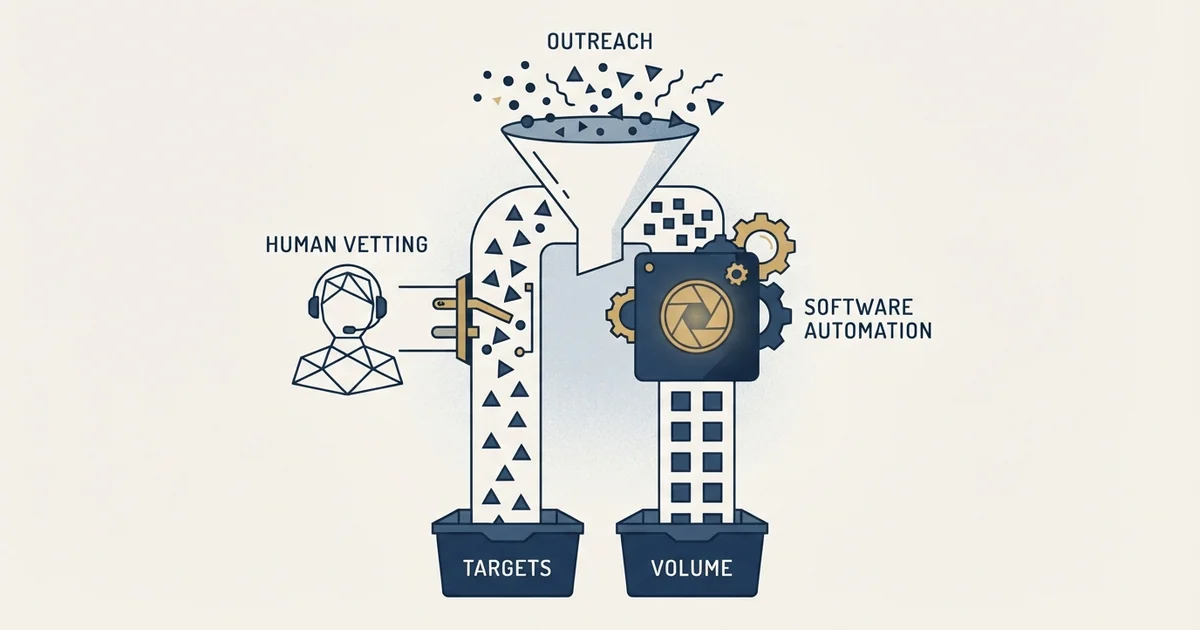
Virtual SDR refers to two different products: a vetted remote person supplied by a staffing firm, and AI software sold on a monthly plan. The human seat fails on management load and on context that leaves with the individual. The software fails on judgement, especially the ambiguous reply that decides whether outbound produces pipeline.
Key takeaways
- The same search term returns a staffing service quoting a flat all inclusive monthly rate and software publishing plans from $250 a month, so the phrase itself distinguishes nothing.
- The two options fail in opposite directions: the human seat on management load and lost context, the agent on judgement about ambiguous replies and account level decisions.
- Compare fully loaded cost divided by meetings actually held, counting your own management or configuration time, because the monthly fee is a smaller share of the total than it appears.
- Market shape decides this more than budget does: large repeatable lists favour throughput, small high value lists favour a person who accumulates an objection library over months.
Reviewed and updated September 1, 2026
Search the term and the first two vendors that answer are selling completely different things. MyOutDesk's page is titled "Hire a Virtual Sales Development Representative" and describes a staffing service with global talent regions in the Philippines, Latin America and Africa, a six stage vetting process with a stated 0.7 percent pass rate, a college degree requirement, and a comparison table whose cost structure row reads "Flat monthly rate, all-inclusive" (MyOutDesk). AiSDR's pricing page, which also ranks for the term, opens with "Plans from $250/mo - cancel anytime" (AiSDR).
One of those is a person. The other is software. Both are legitimate products, they solve overlapping problems in incompatible ways, and the phrase virtual SDR does not distinguish them. Working out which one a vendor is selling is the first task in this purchase, and it is not always answerable from the homepage.
The two products behind one phrase
The remote human seat. A trained person, usually employed or contracted through an offshore or nearshore staffing firm, working your accounts inside your tools. What you are buying is labour with recruitment, vetting and replacement wrapped around it. MyOutDesk's own comparison table makes the pitch explicit against the alternatives it names: time to hire "as little as 1 week" against four to eight weeks for a full time hire, screening described as "6-stage vetting, 0.7% pass rate" against "You run it," and a replacement promise of "We rematch at no extra cost" where a direct hire means starting over.
The AI agent. Software that researches, writes and sends, usually priced per month with a volume allowance. AiSDR publishes plans from $250 a month with cancel anytime terms, alongside a comparison of the point tools it claims to replace. What you are buying is throughput and a workflow, with no recruitment, no timezone question and no notice period.
The reason the term covers both is historical. Virtual originally meant remote rather than artificial, and it was doing useful work when the alternative was a rep at a desk in your office. Once software started performing the same task list, the word had no way to refuse the second meaning.
- Time to hire quoted as little as one week
- Vetting and screening performed by the vendor
- Replacement handled by rematch at no extra cost
- Cost structure quoted as a flat monthly rate, all-inclusive
- Works your timezone, with coverage options
- Plans published from $250 a month, cancel anytime
- No recruitment, ramp measured in configuration time
- Replacement is a settings change
- Volume allowances rather than working hours
- Judgement on ambiguous replies stays with you
They fail in opposite directions

This is the part that decides the purchase, and it does not show up in either pitch.
The human seat fails on depth of context and on management load. A remote rep learns your market at the speed anyone learns a market, which is to say slowly and by reading replies. That learning is the asset, and it stays with the individual. When they leave, it leaves. The staffing firm's rematch promise replaces the seat quickly and does not replace the context, so the second person restarts at month one. Against that, the management load is real: somebody on your side has to run one to ones, review calls or messages, and answer the questions a person asks. Buying a remote seat and managing it like software is the most common way this arrangement produces nothing.
The AI agent fails on judgement and on the reply. Software is excellent at the parts of the job that are volume and pattern: building the list, drafting to a template, sending consistently, never having a slow Friday. It is weakest exactly where the value is, which is the ambiguous reply that could be a real buying signal or could be a polite brush off, and the decision about whether an account is worth a different approach. Those decisions do not disappear when you buy the software; they move to whoever reads the inbox. If nobody is named for that, the agent produces activity and the pipeline does not move.
Neither failure is a reason to avoid the category. Both are reasons to know which failure you are underwriting before you sign.
Cost is not the axis people think it is
The published figures make the software look dramatically cheaper, and on a per month basis it is. That comparison is only useful if the two options produce the same thing, and they do not, so the honest comparison runs one level down.
Build both sides fully loaded and divide by meetings actually held. On the human side, the vendor fee is most of the cost but not all of it: add your own management time at its loaded rate, plus the tooling seats the person consumes, plus the ramp period you pay for and get little from. On the software side, the subscription is a smaller share of the total than it looks: add the data and sending infrastructure if they sit outside the plan, and add the internal hours spent configuring, reviewing output and handling replies, which is the line most often left at zero and is almost never zero.
Here is the shape with invented inputs, chosen only to show why the ranking can flip. These are not observed figures from any engagement, ours or a client's. Suppose the software costs a tenth of the human seat per month, and suppose it books a quarter as many held meetings once replies are handled by somebody with half a day a week to give it. Cost per held meeting is then better for the software by a factor of two and a half. Now suppose the market needs a real conversation to convert, and half the software's meetings do not survive the first call while the human's do. The ranking reverses, and it reverses on a variable that appears in neither vendor's pricing page.
The general method for building both sides of a comparison like this from your own numbers, including the ramp adjustment and the divide by meetings held step, is set out in outsourced SDR versus in-house. The capability boundary specifically for the software option, and what it genuinely replaces, is in AI SDR.
- Step 1Establish which product it is
Ask directly whether a named person works your account, and if so how many other accounts they carry. A vendor that answers with the word flexible is selling something other than a person.
- Step 2Name who owns the reply
One person on your side, with authority to book and a same day response expectation. This is the seam both products fail at, and it is free to fix.
- Step 3Decide what the seat is for
Volume against a large addressable market points one way. Depth against a small, high value list points the other. Buying for the wrong one is not recoverable by working harder.
- Step 4Build both sides fully loaded
Vendor fee plus your management or configuration time plus tooling and infrastructure, divided by meetings actually held rather than booked.
Which one suits which situation
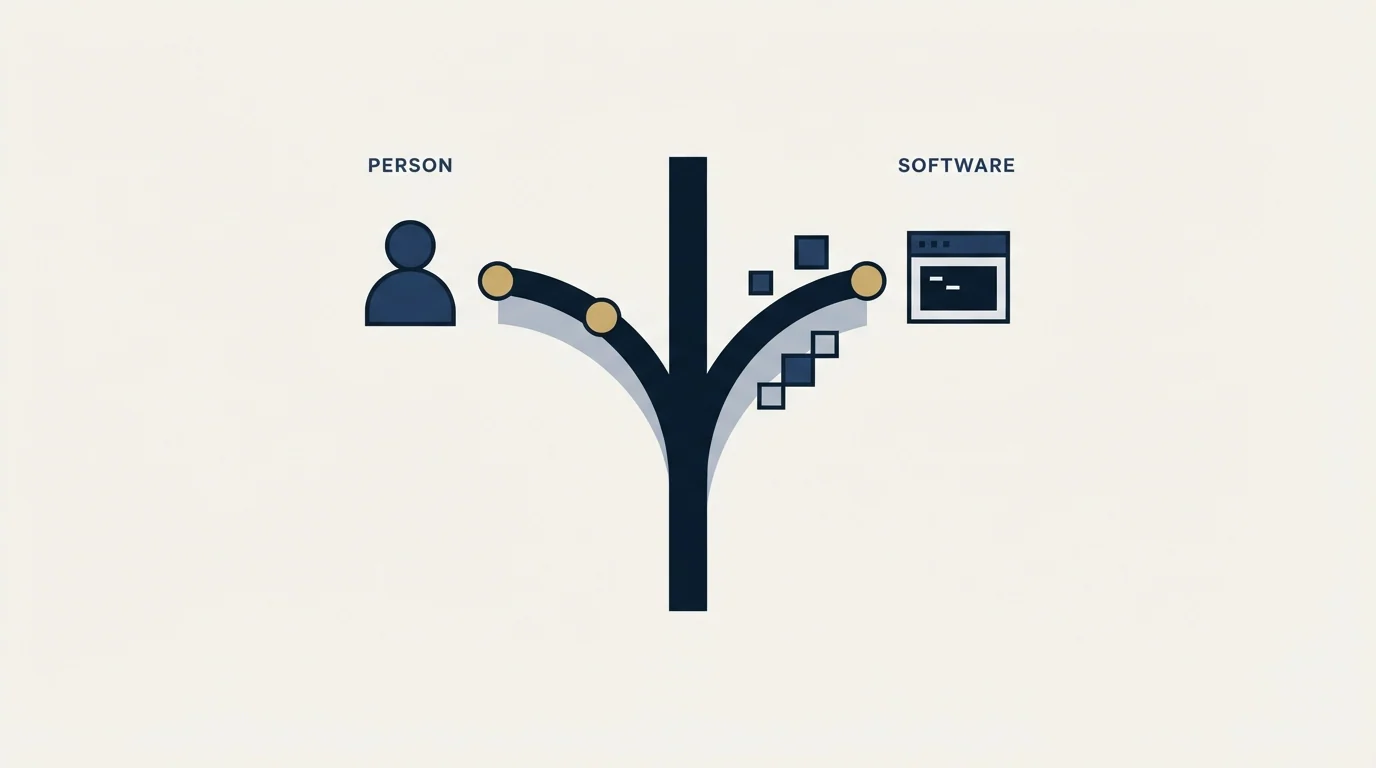
The addressable market size does more work here than budget does.
Where the list is large and the message is repeatable, throughput is the constraint and software is well matched to it. The work is genuinely volume shaped, the judgement calls are a small fraction of the total, and a machine that never has a bad week is worth a great deal.
Where the list is small and each account is valuable, depth is the constraint. A finite list is a resource you can only spend once, which matters more under our own operating rule than under most: we send one message per campaign, with no thread replies and no bumps, so a name that is contacted badly is not recoverable by contacting them again. In that setting a person who accumulates an objection library over months is worth more than throughput, and the case for a shared or part time arrangement sized to the list is made in fractional SDR.
Choosing between a small valuable list and a large repeatable one comes down to how it gets built, which six ways to build a list covers in full.
Where the real question is whether the market responds at all, neither product answers it quickly, because both require you to build the apparatus before you learn anything. That is the situation outcome pricing is best suited to, and the trade offs across all the delivery shapes are compared in SDR outsourcing.
Questions that reveal which product you are being sold
Ask who specifically works the account and whether you can speak with them before signing. A staffing firm will produce a person. A software vendor will produce a customer success manager, which is a different answer and a fine one, but it should be given plainly.
Ask what happens in week one, and what the ramp looks like. Human ramp is measured in weeks of reading replies. Software ramp is measured in configuration and copy approval, and it is genuinely faster.
Ask who writes the message and who can change it mid campaign. Ask what happens to an ambiguous reply, and who is expected to read it. Ask what the vendor does when results are flat for three weeks, because the answer separates a supplier of capacity from a partner with an opinion.
The Agoge Sequence cadence breakdown examines the outbound cadence built at Outreach, offering useful context for whoever ends up writing and pacing your campaign messages.
Finally, ask what leaves with the vendor at the end. A person takes the context. Software takes the workflow, the sequences and, if the infrastructure sits on the vendor's side, potentially the warmed sending domains your deliverability was built on.
The short version
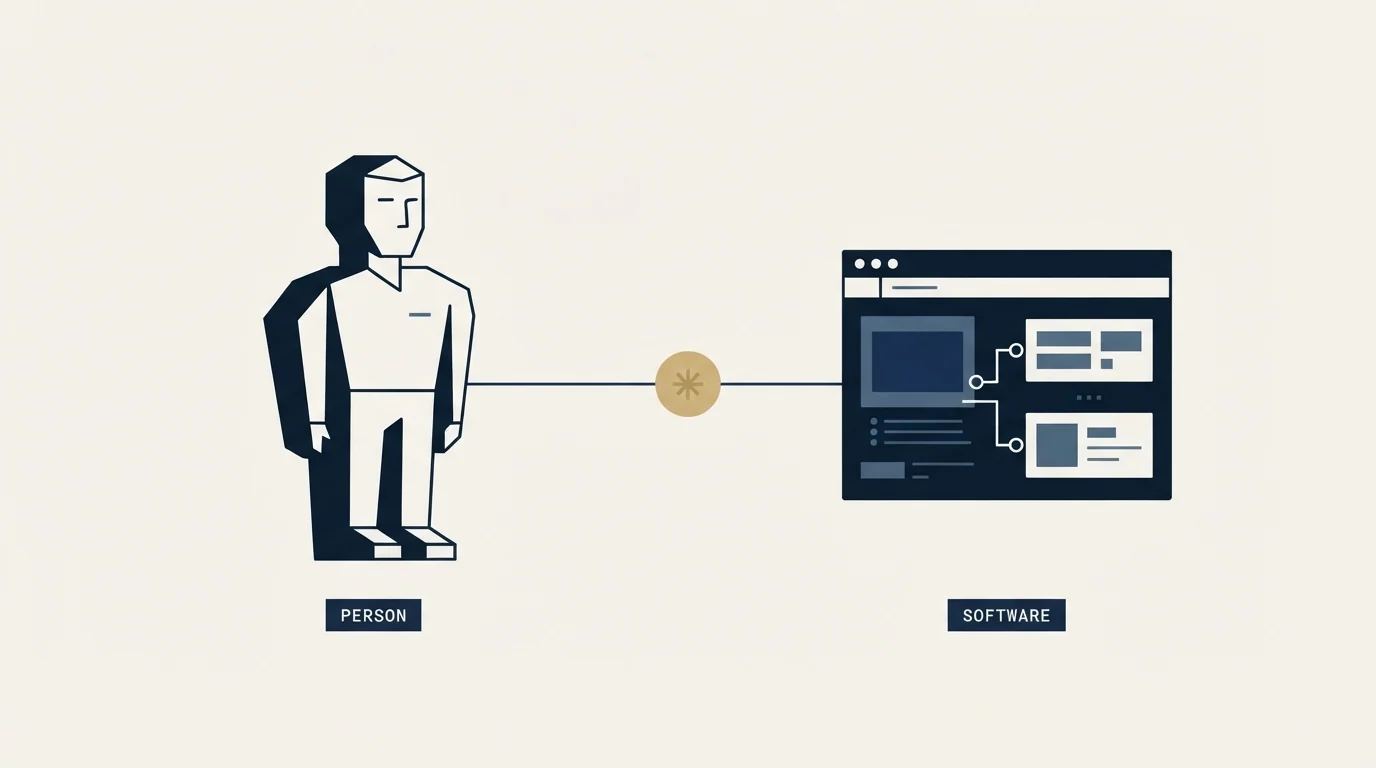
Virtual SDR names two products. One is a vetted remote person supplied by a staffing firm, sold on speed to hire, screening and replacement. The other is software sold on a monthly plan with volume allowances and cancel anytime terms. The published prices are not comparable, because the products are not the same.
They fail in opposite directions. The human seat fails on management load and on context that leaves with the individual. The agent fails on judgement, and specifically on the ambiguous reply that decides whether outbound produces pipeline or produces activity. Choose against the shape of your market rather than against the monthly price, name one person to own the reply either way, and build both sides fully loaded before comparing anything.
RevenueFlow is neither of these. We run email and LinkedIn and are paid on attended meetings that meet criteria agreed in writing before launch, which moves the judgement question onto us rather than onto your inbox. You can see what a campaign would look like for your market.
Vendor page language and pricing verified against each vendor's own page in mid-2026. AiSDR's pricing page carries a monthly and annual toggle, so confirm which state applies before relying on a figure. Verify current terms with the vendor.
Sources: Hire a Virtual Sales Development Representative, MyOutDesk, AiSDR pricing
Frequently asked questions.
Frequently asked questions- What is a virtual SDR?
- The term is used for two things. One is a remote sales development representative supplied through an offshore or nearshore staffing firm, working your accounts in your tools. The other is AI software that researches, writes and sends. Both rank for the same phrase, so ask which one a vendor means.
- Is a virtual SDR cheaper than hiring one?
- On a monthly fee, usually yes, and that comparison is incomplete. Add your own management or configuration time at its loaded rate, plus tooling and sending infrastructure that sits outside the plan, then divide by meetings actually held rather than booked. The ranking often changes at that line.
- What does a virtual SDR staffing firm actually provide?
- Labour with recruitment, screening and replacement wrapped around it. MyOutDesk publishes a six stage vetting process with a stated 0.7 percent pass rate, time to hire as little as one week, and a rematch at no extra cost if the placement does not work out. The market context still has to be learned on your account.
- Can an AI SDR replace a human one?
- It replaces the volume shaped parts reliably: list building, drafting to a template, consistent sending. It does not replace judgement on an ambiguous reply or the decision that an account deserves a different approach. Those move to whoever reads the inbox, so name that person before buying.
About the author.

B2B cold email experts helping companies generate qualified leads through done-for-you outreach campaigns.
RevenueFlow Team
Explore more.
Ready to scale your outreach?
We build GTM engines that book real meetings. See the receipts.
Related articles.
Prospecting Methods: Six Ways In, and What Each One Demands
Six prospecting methods, grouped by economics rather than preference: what each one needs before it works, where it stops scaling, and how to choose.
Sales Prospecting: Most of the Job Happens Before You Send
Prospecting is selection, not sending. The five decisions inside the motion, the one most teams never make, and what changes when you buy it as a service.
Outbound Prospecting: When Nobody Raised Their Hand
Going first means supplying the attention, timing, framing and permission that inbound gets free. Where outbound earns its cost, and what it really charges.
PhoneBurner Pricing: What the Seat Price Covers
PhoneBurner publishes all three seat prices in both billing states. The metered resource is contact imports, not minutes, and the spam layer is an add-on at every tier.
Koncert Dialers: Line Counts Published, Price Is Not
Koncert publishes the parallel line ceiling on every tier, which most of this category will not. It publishes no price. What its pages state, and what the quote decides.
The Agoge Sequence: What Sam Nelson Actually Built
A documented 15-touch, 27-day cadence built by Sam Nelson at Outreach. What the primary sources say, which part transfers, and where our own practice differs.