What Is Callbox? The Campaign Pod Model
Callbox sells outbound in units it calls Campaign Pods, and it is one of the few agencies in the category that puts a monthly price band on its own pricing page.

Callbox Inc is a B2B lead generation agency that runs outreach across phone, email, LinkedIn and web retargeting. It sells in units called Campaign Pods, each covering one segment or persona with a dedicated SDR and a named support team, and its pricing page publishes an estimated monthly band per pod rather than a rate card.
Key takeaways
- Callbox prices in Campaign Pods, each described as a dedicated outreach unit for one market segment or persona, so you scale by adding pods rather than by enlarging one.
- Its pricing page publishes an estimated monthly investment of $15,000 to $30,000 for a single pod, and the page's structured data carries the same two figures per pod per month, which is a stronger corroboration than most vendor pages offer.
- The quoted figure includes the CRM and data platform, so a like-for-like comparison against a cheaper quote has to put tool spend on the same side of the ledger.
- Callbox Inc at callboxinc.com is a different company from Call Box at callbox.com, which sells phone call tracking to dealerships and dental groups.
Reviewed and updated September 1, 2026
Callbox publishes a price. In a category where the standard answer to "how much does this cost" is a calendar link, its pricing page carries an estimator that lands on $15,000 to $30,000 a month for a single unit of service, and the structured data behind the page carries the same two numbers. That combination is rare enough to be the reason this page exists.
One disambiguation before anything else, because two unrelated companies share the name. This article is about Callbox Inc at callboxinc.com, a B2B lead generation and appointment setting agency. There is a separate American company called Call Box at callbox.com that sells phone call tracking to automotive dealerships, dental groups and veterinary practices. If you arrived looking for call tracking software, that is the other one.
A disclosure of our own, since this is a competitor page. RevenueFlow is an outbound agency, so Callbox competes with us for some of the same buyers. We are paid on attended qualified meetings rather than on a monthly subscription, which is a different commercial shape and shapes the view. What follows comes from Callbox's own pages as they rendered on 13 August 2026.
What Callbox sells
Callbox describes itself as a B2B lead generation company running outreach across phone, email, LinkedIn and web retargeting on behalf of client sales teams. Its pricing page states that the company has served 15,000 or more companies, run 10,000 or more campaigns, and operates in 60 or more countries, with offices its FAQ lists across the United States, the United Kingdom, Australia, Colombia, New Zealand, Singapore, Malaysia and Hong Kong. The same FAQ describes 20 or more years of operation.
Almost every agency claims the same label, and the B2B lead generation definition is explicit that the work covers both people who arrive and people you choose.
The service is packaged into what the page calls a Campaign Pod. Each pod is described as a dedicated outreach unit aimed at one market segment or one persona, and you buy more pods to cover more segments rather than buying a bigger version of the same pod.
The page adds that exact pricing is provided after consultation
Listed as a pod inclusion alongside campaign manager oversight
Published as a headline stat on the pricing page
Published on the same page, beside 10,000+ campaigns run
That price band deserves a caveat and then a compliment. The caveat is that it is an estimate the page itself qualifies: it says exact pricing is provided after consultation, so it is a bracket rather than a rate card, and the estimator scales with the number of pods you select. The compliment is that the page's structured data declares the same low and high figures, priced per Campaign Pod per month, for up to ten pods. Vendor pages routinely disagree with their own markup, so when the visible copy and the machine-readable copy match, the number is standing on firmer ground than most in this market.
What one pod includes
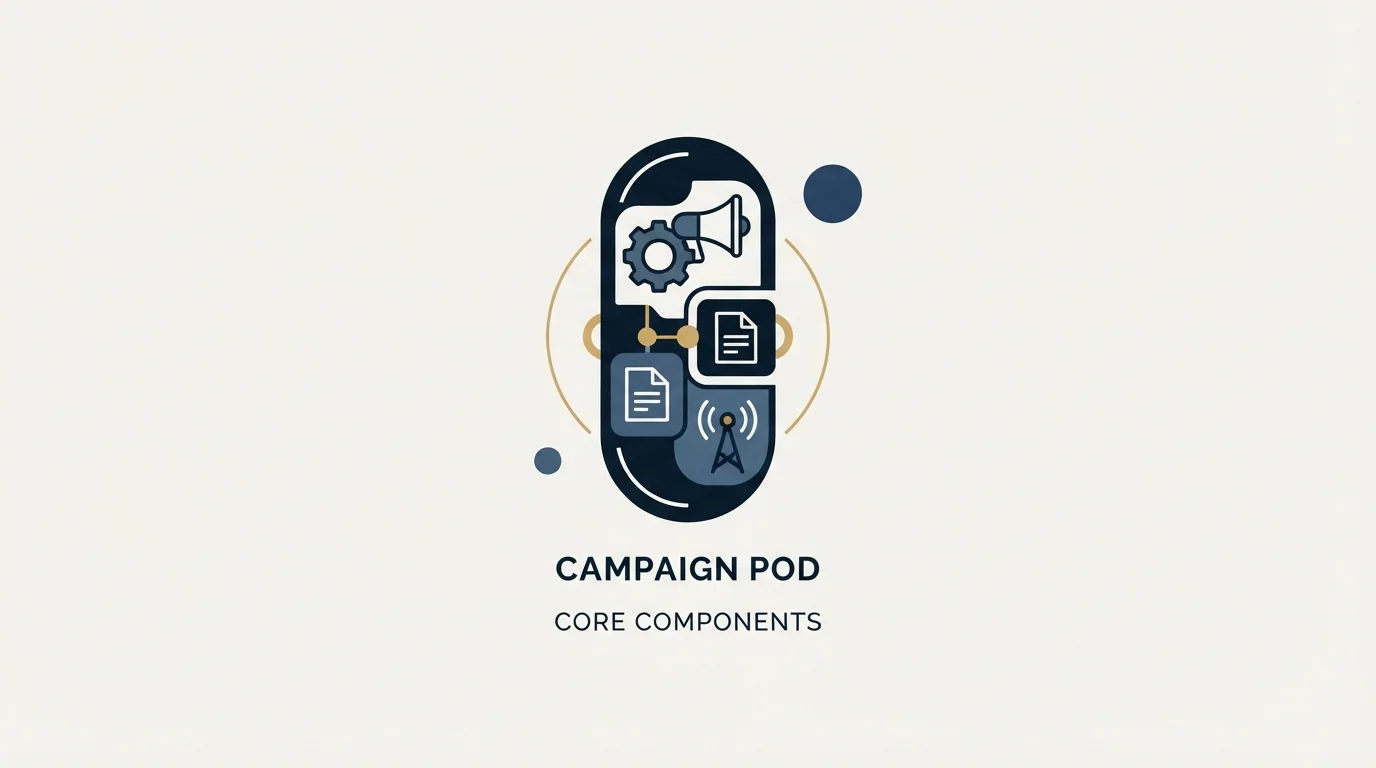
The page lists pod inclusions in three groups, and the grouping is itself informative about what you are buying.
- Dedicated campaign manager
- Sales development representatives
- Copywriters and content specialists
- Data research analysts
- Quality assurance specialists
- Account strategist
- ICP development and buyer persona mapping
- Multi-touch outreach cadence design, in the page's own words
- Account-based marketing framework
- Lead scoring and qualification criteria
- Pipeline forecasting and reporting
- Continuous testing and optimisation
- Callbox Pipeline CRM, stated as included
- AI-powered prospect data platform
- Email deliverability infrastructure
- LinkedIn outreach automation
- Real-time dashboard and analytics
Read the team column against the price and the arithmetic starts to make sense. Six named roles, even at partial allocation, is a meaningful services cost before any tooling is counted, and it explains why the floor sits where it does rather than at the two or three thousand a month you see advertised by single-operator outfits. Whether you need six roles is a separate question, and for a narrow single-segment motion the honest answer is often no.
The tooling group carries a specific commercial point worth noticing. The CRM and the data platform are stated as included rather than as line items, which means the quoted figure is closer to a total cost than a quote that lands on top of tools you still have to buy. When comparing vendors, put the tool spend on the same side of the ledger for both, or the cheaper-looking quote wins on an accounting artefact.
How the commercial model is described
Callbox's pricing FAQ describes a subscription model and draws an explicit contrast with competitors it says charge hourly or use rigid retainer structures. It says contract lengths are flexible and chosen to fit your sales cycle, and that the final figure depends on target industry, campaign complexity, geographic reach and sales cycle length.
The FAQ also answers a question most vendors avoid, on whether pricing varies by the seniority of the people being targeted. Callbox's answer is that the model can be tailored to target audience seniority and qualification criteria, on the reasoning that reaching a C-suite audience takes different resources. That is a straightforward thing to say out loud, and it is worth knowing before you compare a quote aimed at directors against one aimed at chief executives.
There is a second thing the FAQ is unusually direct about. It states that pricing is a subscription rather than a per-lead charge, and the page's headline says as much in plain language, promising to build a sales engine rather than to sell you leads. Whatever you make of the positioning, it sets an expectation that is easy to test in the first conversation: ask whether any part of the fee is contingent on output, and if the answer is no, you have learned where the delivery risk sits. That is not a criticism of subscription pricing, which is the dominant model in this category for defensible reasons. It is simply a fact about the deal that is better established early than discovered in month three.
What is not published is the thing nobody in this category publishes: the meeting definition. The page describes lead scoring and qualification criteria as part of the method, and describes collaborative ICP development with your team, but the standard a booked meeting has to clear in order to count is settled in the conversation rather than on the page.
The question the pricing page cannot answer for you
A price band of $15,000 to $30,000 a month is not expensive or cheap on its own. It becomes one or the other only against two numbers you already have: what a closed customer is worth to you, and how many meetings your team can actually work in a month. A pod that produces meetings your reps cannot get to is an expensive pod at any price.
Before signing with any vendor in this bracket, settle the definition in writing. Which companies are inside the audience, what seniority counts, what the prospect has to agree to, whether they have to attend, and which accounts are excluded because they are already customers or already in your pipeline. Then settle the rejection route: who on your side can reject a booked meeting, within how many days, and on what grounds. Keep budget, timing and purchasing authority out of those grounds, because a prospect who fits the audience and turns up to a real conversation has delivered what you paid for, whatever they decide afterwards.
- Yes: How many pods the quote assumes, since the published band is per pod per month
- Yes: The written definition of a meeting that counts, agreed before launch
- Yes: Which tools are genuinely included, so the comparison against other quotes is like for like
- Yes: The contract length you are actually being offered, since the page says flexible without saying flexible between what and what
- Yes: Your own capacity to work the meetings a pod produces
- No: Assuming the estimator figure is the quote rather than a bracket
Where we differ from standard practice
Much of the advice on this page reflects how outbound is commonly run. We run it differently, and since this page sits on our site it is worth saying where the difference is and what it costs us.
- A sequence of messages to each prospect over several weeks
- Later messages often land in the same email thread
- Every contact is reached more than once, so a distracted reader gets another chance
- The later messages go only to people who did not answer the first
- Reputation cost accrues on the sending domain across everything else it sends
- One message, then that campaign is finished for that contact
- No thread replies and no bumps
- A non-responding audience becomes a new campaign with a genuinely different premise, not a reminder
- More of the work moves into targeting and into the one message
- We reach each contact less often, and that is the cost we accept
The reasoning is mechanical rather than moral. A follow-up arrives underneath a message the recipient has already seen and chosen not to answer, so it is delivered to the population most likely to mark it as spam, and the reputation cost of that lands on the sending domain across every campaign running on it. We set that cost against the replies a sequence recovers and decided the trade was not worth it. The full argument, with the numbers from our own campaigns, is in why we stopped using follow-ups.
Callbox runs the other model and says so plainly on its own page, as the method list quoted earlier shows. A vendor running a full-service programme across four channels is selling something different from what we sell, and a buyer who wants phone and web retargeting alongside email will not get those from us at all. That is a difference in product, not a verdict on either one.
Who it suits

The model fits a company with more than one distinct segment worth its own campaign, a sales team with capacity to work what arrives, and a budget where five figures a month is a considered decision rather than a company-threatening one. The pod structure is genuinely well matched to multi-segment selling, because it stops two audiences sharing one message and one set of numbers.
It fits less well if you have a single narrow ICP, if you want cost to move with results in a slow month, or if you are still working out who your buyer is. That last case is the expensive one. A pod aimed at a persona you have guessed at will produce meetings on the same guess, professionally and at full price.
For comparison across the category, CIENCE publishes a considerably more granular rate card, Belkins publishes an entry configuration on one page and no price on another, and we have surveyed the field in appointment setting companies and B2B appointment setting companies. Our own terms, and what we do and do not guarantee, are on the free campaign page.
Pricing and features verified as of mid-2026. Verify current terms with the vendor before relying on them.
Frequently asked questions.
Frequently asked questions- How much does Callbox cost?
- Callbox's pricing page publishes an estimated monthly investment of $15,000 to $30,000 for one Campaign Pod, and states that exact pricing follows a consultation. The estimator scales with the number of pods, and the page's structured data prices the same band per pod per month. Treat it as a bracket for budgeting rather than as a quote.
- What is a Campaign Pod?
- Callbox describes a Campaign Pod as a dedicated outreach unit aimed at one market segment or one persona. The published inclusions are a dedicated SDR, campaign manager oversight, AI-enriched contact data, multi-channel outreach and weekly reporting, backed by copywriters, data analysts, quality assurance and an account strategist. More segments means more pods.
- Is Callbox the same company as Call Box?
- No. Callbox Inc at callboxinc.com is a B2B lead generation and appointment setting agency working across phone, email and LinkedIn. Call Box at callbox.com is a separate American company selling phone call tracking and call review software to automotive dealerships, dental groups and veterinary practices. The names collide and the businesses do not overlap.
- What should I settle before signing with an outbound agency at this price?
- Settle the meeting definition in writing first: which companies are in the audience, what seniority counts, what the prospect has to agree to, and whether they have to attend. Then settle who can reject a booking, within how long, and on what grounds. Keep budget, timing and buying authority out of those grounds, since a fitting prospect who shows up has delivered the thing you bought.
About the author.

Ben Carden is CRO at RevenueFlow, which builds and operates outbound revenue engines for B2B companies. Previously at Gartner Enterprise. Studied at London School of Economics.
Ben Carden · CRO
Connect on LinkedIn →Explore more.
Ready to scale your outreach?
We build GTM engines that book real meetings. See the receipts.
Related articles.
Blue Zebra Appointment Setting: The Vendor's Pages Are Gone
Search results still describe a B2B appointment setting firm at this address. The pages themselves return 404 and the domain now serves something else entirely.
Belkins Pricing: What the Service Page Publishes
Belkins publishes a starter price and four figures on its service page, and no price at all on its pricing page. Which page a number came from decides what it means.
CIENCE Pricing: What the Published Rate Card Covers
A setup fee, two recurring line items, an SDR rate card by level and region, and the commission formula. The published base is the small half of the cost.
Unbounce Alternatives: Two Boundaries, Four Meters
Teams leave Unbounce at two published boundaries: the 500 visitor entry ceiling and testing starting on the third tier. Each alternative moves one, both or neither.
Goldcast Belongs to Cvent Now: The Buying Question
Cvent announced its Goldcast acquisition in December 2025 and completed its ON24 acquisition in April 2026. Two shortlist names, one owner, one live contract question.
Lead Generation as a Service: What the Service Part Changes
Most vendors selling lead generation as a service have productised the scope and kept the price bespoke. What that trade buys you, and how to tell which half is fixed.