Belkins Pricing: What the Service Page Publishes
Belkins publishes a starter price and four figures on its service page, and no price at all on its pricing page. Which page a number came from decides what it means.
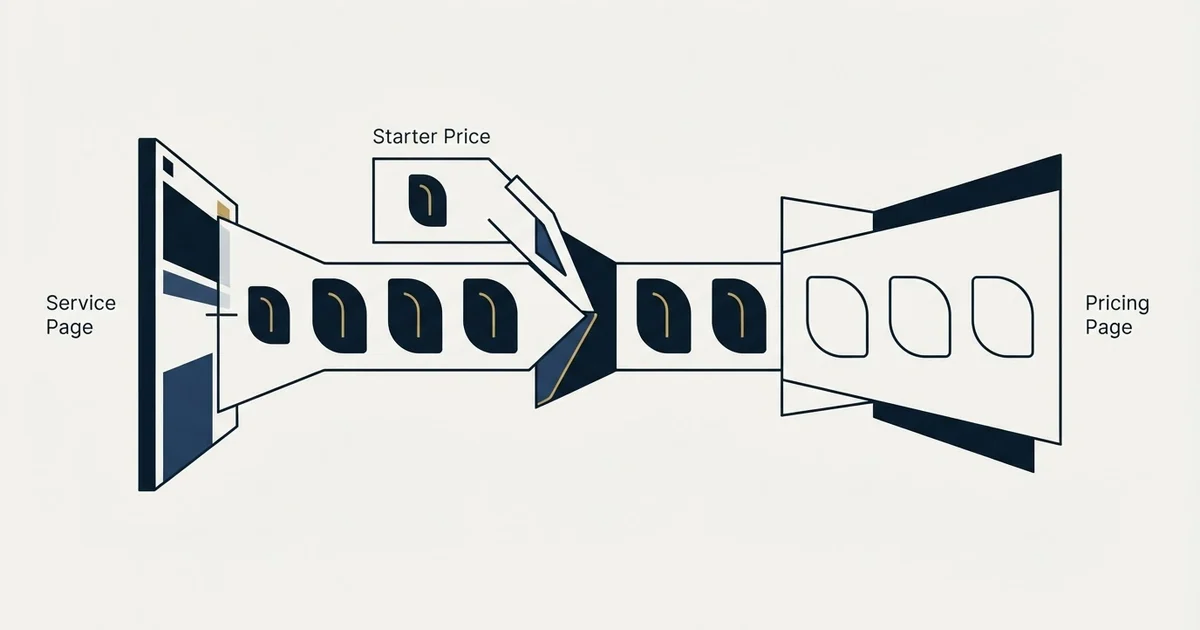
Belkins publishes an entry configuration on its appointment-setting page: a starter price of from $5,000, 1,500 leads a month, three outreach channels and 100 guaranteed appointments a year. Its pricing page states no price and sorts packages by yearly appointment count instead. The qualification standard behind those appointments is supplied by the client.
Key takeaways
- Belkins' appointment-setting page publishes a starter price of from $5,000 alongside 1,500 leads a month, three outreach channels and 100 guaranteed appointments a year, and those four figures describe one configuration rather than four independent facts.
- The page titled Pricing carries no price. It sorts packages by yearly appointment count instead, at 30 or more, 100 or more and 200 or more, plus a bespoke Enterprise tier.
- The entry small-business tier is described on that page as delivered through partnering agencies from the Belkins ecosystem, so the company you sign with may not be the company doing the work.
- The guarantee is a volume commitment. Belkins' page states that lead research and validation follow the client's own qualification criteria, so the quality of those 100 appointments depends on a standard the buyer writes.
Reviewed and updated September 2, 2026
Belkins puts a number on its appointment-setting service page and no number at all on the page called Pricing. Both pages are current, both are linked from the main navigation, and they answer the cost question differently. That split is the most useful thing to understand before you book a call with them, because it tells you which figure you are allowed to plan against and which one is a starting position.
A disclosure first, since it is the fair thing to lead with. RevenueFlow is an outbound agency too, so Belkins is a competitor for some of the same buyers. We are paid on attended qualified meetings rather than on a monthly retainer, which is a different commercial shape and gives us a view. Everything below comes from Belkins' own pages as they rendered on 13 August 2026, not from roundups or review-site summaries, and where the two models genuinely differ we have tried to say what each one costs the buyer.
What the service page publishes
The appointment-setting page carries a headline configuration with four figures attached to it.
The page's words are 'The average starter price: from $5,000'
Stated beside the starter price as part of the same configuration
Channel mix is not specified in the tile itself
Rendered on the page as '100 guaranteed appts/year'
Those four numbers travel together. They describe one entry configuration, so pulling the price out and pairing it with a different volume is not something the page supports.
The same page lists what every package includes regardless of tier: a full sales audit and strategy mapping, total addressable market calculation and buyer profile mapping, manual lead research and validation according to your qualification criteria, transparent reports available 24/7, copywriting and content editing, sales appointment booking, no-show recovery, and continuous refinement with data-driven fixes and tech support.
The clause worth slowing down on is "according to your qualification criteria". That is the sentence that decides what you are buying, and it only appears on this page. It means the qualification standard is an input you supply rather than a definition Belkins publishes, so the quality of the 100 guaranteed appointments depends entirely on how tightly you write those criteria before the campaign starts. A vague criteria document and a strict one produce very different years at the same price.
The page also publishes a launch schedule, and it is specific enough to hold a vendor to. A campaign goes live in 14 days, split into setup and strategy development on days one to five, content and research on days six to nine, and final steps and launch on days ten to fourteen. The first block covers the welcome, the account manager introduction, confirmation of contract details and campaign goals, and the domain rollout.
Two weeks from signature to first send is quick for a managed service, and the allocation is the informative part: most of the fortnight goes on research and copy rather than on tooling, which is the right shape and is also the part that a rushed onboarding tends to compress. If you are comparing vendors, ask each one what happens in those middle four days, because that is where the difference between a researched list and a bought one shows up.
What the pricing page publishes
The page at belkins.io/pricing describes monthly retainer packages and never states a price. It ends by inviting you to talk to an expert to find out which plan suits you.
Pages that price nothing are common enough to have a method, and Optimizely's plans page returning no figure is an answer rather than a gap in the research.
What it does publish is the shape of the packages. They are differentiated by yearly appointment count rather than by spend: a small-business tier at 30 or more yearly appointments, a Growth tier at 100 or more, a Growth Plus tier at 200 or more marked as best value, and a bespoke Enterprise tier. The small-business tier carries a disclosure that is easy to miss and matters a lot: it is "delivered through partnering agencies from the Belkins ecosystem", so at the entry tier the company you sign with and the company doing the work may not be the same one.
Underneath that sits a grid of ten channel rows, covering cold email, LinkedIn outreach, intent-based cold calling, cold calling and voicemails, Messenger and WhatsApp, account-based marketing, paid advertising, an executive dinner series, conference activation and webinar support. Which of those rows each tier actually includes is shown by icons in the grid, so read that grid on the page rather than taking any list of channels second hand, including this one.
One more figure appears there: a claim that you save up to $10,000 annually on premium tools included in the retainer. That is a claimed saving, not a price, and it should not be netted off a quote as though it were a discount.
- A starter price of from $5,000
- 1,500 leads per month
- 3 outreach channels
- 100 guaranteed appointments per year
- A 14-day launch schedule
- Qualification criteria supplied by the client
- No price anywhere on the page
- Tiers set by yearly appointment count: 30+, 100+, 200+
- An Enterprise tier described as bespoke
- A ten-row channel grid
- Entry tier delivered by partner agencies
- A claimed saving of up to $10,000 a year on tools
The number in the markup does not match the number on the page
The appointment-setting page carries structured data for search engines that declares a price of 8000 for the same average starter price the visible page renders as from $5,000. The rendered figure is the one a visitor sees, so that is the one to cite and the one we have used above. We are flagging the discrepancy rather than resolving it, because we cannot tell from outside which of the two is stale, and because it is a decent illustration of a habit worth keeping: quote the page you actually read, and say which page it was.
The same caution applies in reverse. Vendors update pricing pages without announcing it, and a figure that was accurate in August may not be accurate when you read this. Re-read the page before you build a budget on anything here.
What "guaranteed" is doing in that sentence
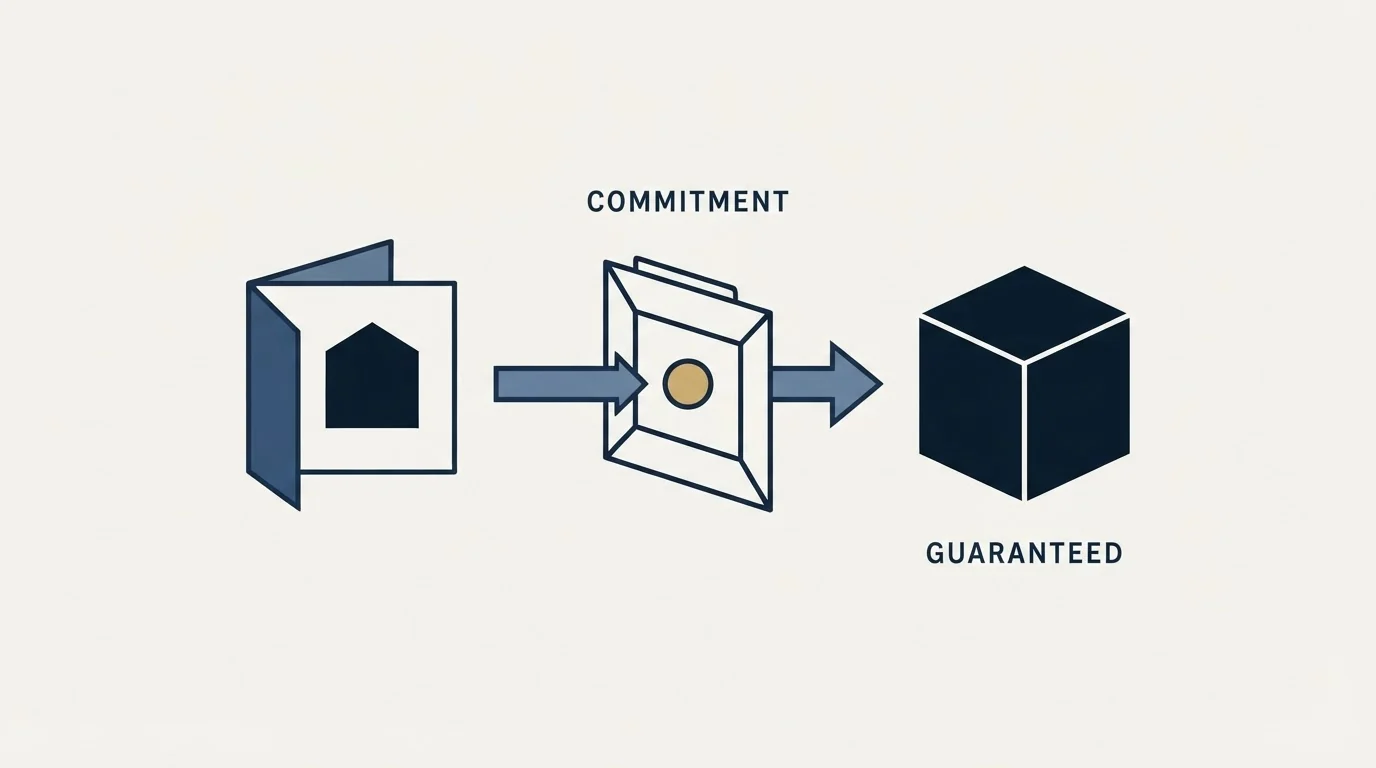
One hundred guaranteed appointments a year is roughly two a week. Read against the entry price, the arithmetic on those published figures is straightforward and we have worked it through already in our pieces on outsourced SDR pricing and B2B appointment setting, so we will not rebuild it here.
The more useful question is what the guarantee covers, and the honest answer is that the published pages do not say. A guarantee on appointment count is a volume commitment. It becomes a quality commitment only when the definition of a qualifying appointment is written down and agreed before launch, and on Belkins' own pages that definition is something you bring rather than something they publish.
It is worth being precise about why that matters, because the failure is not usually dramatic. Nobody sends obviously wrong meetings. What happens instead is drift at the edges: a director instead of a VP, a company at the bottom of the size band, somebody curious rather than somebody with the problem. Each individual booking is arguable, the count keeps climbing, and the argument only surfaces at renewal when your sales team says the meetings were not worth the hours. A written standard converts that argument from a matter of taste into a matter of fact, and it protects the vendor as much as the buyer, because it also stops a client rejecting good meetings because a quarter went badly.
This is where we would push any buyer in this category, including one evaluating us. Get the qualification standard into writing before signature: which companies are in the audience, what seniority counts, what the prospect has to agree to, whether they have to attend, and which accounts are excluded because they are already customers or already in your pipeline. Then get the rejection process in writing too, including who on your side can reject a meeting, within how long, and on what grounds. Budget, timing and purchasing authority should not be among those grounds, because a prospect who fits the audience and turns up to a real conversation has done the thing you paid for.
- Yes: The qualification standard, written down and agreed in advance rather than supplied loosely
- Yes: Who reviews a booked meeting, within how many days, and on what stated grounds
- Yes: Whether the tier you are quoted is delivered by the vendor or by a partner agency
- Yes: Which channels your tier includes, read off the grid rather than off a summary
- Yes: Whether the guarantee is a volume commitment or a quality one, and what happens if it is missed
- No: Budget, timing or authority used as grounds to reject a meeting you paid for
Where we differ from standard practice
Much of the advice on this page reflects how outbound is commonly run. We run it differently, and since this page sits on our site it is worth saying where the difference is and what it costs us.
- A sequence of messages to each prospect over several weeks
- Later messages often land in the same email thread
- Every contact is reached more than once, so a distracted reader gets another chance
- The later messages go only to people who did not answer the first
- Reputation cost accrues on the sending domain across everything else it sends
- One message, then that campaign is finished for that contact
- No thread replies and no bumps
- A non-responding audience becomes a new campaign with a genuinely different premise, not a reminder
- More of the work moves into targeting and into the one message
- We reach each contact less often, and that is the cost we accept
The reasoning is mechanical rather than moral. A follow-up arrives underneath a message the recipient has already seen and chosen not to answer, so it is delivered to the population most likely to mark it as spam, and the reputation cost of that lands on the sending domain across every campaign running on it. We set that cost against the replies a sequence recovers and decided the trade was not worth it. The full argument, with the numbers from our own campaigns, is in why we stopped using follow-ups.
Belkins runs the other model, openly and in detail. Its page describes coordinated outreach across email, phone and LinkedIn, and post-booking contact intended to keep confirmed meetings from slipping. Those are two different practices sharing one word, and it is worth separating them: contacting somebody who has already agreed to a meeting is a scheduling courtesy, and our objection has never been to that. The disagreement is about the cold half, before anyone has answered.
Who the model suits

A retainer with a volume guarantee suits a team that wants a channel run for them, has a defensible qualification standard to hand over, and can absorb a fixed monthly cost while the campaign finds its footing. Ten channel rows are worth paying for only if you intend to use more than two of them, and a fixed fee rewards you when performance is strong in a way a per-meeting price does not.
It suits you less if your ICP is narrow enough that 1,500 leads a month is more list than your market contains, if you need cost to track results in a bad month, or if you cannot articulate what a good meeting looks like yet. That last one is not a vendor problem. No pricing model rescues an undefined qualification standard, which is why it sits at the top of the checklist above rather than at the bottom.
If you are comparing several vendors in this category, the two we have looked at in the same way are CIENCE, which publishes an unusually detailed rate card, and Martal, which publishes a tier structure and no figures at all. Reading three pricing pages side by side is the fastest education available in this market. Our own numbers, and what we do and do not guarantee, are on the free campaign page.
Pricing and features verified as of mid-2026. Verify current terms with the vendor before relying on them.
Frequently asked questions.
Frequently asked questions- How much does Belkins cost?
- Belkins' appointment-setting page publishes an average starter price of from $5,000, quoted alongside 1,500 leads a month, three outreach channels and 100 guaranteed appointments a year. Its pricing page publishes no figure at all and directs you to speak with someone. Treat the $5,000 as an entry point tied to that specific configuration rather than as a quote for your own campaign.
- What does Belkins mean by guaranteed appointments?
- The published pages commit to a count, not to a standard. One hundred guaranteed appointments a year is a volume commitment, and the appointment-setting page states that lead research and validation follow your own qualification criteria. That makes the definition of a good meeting something you supply. Agree it in writing before launch, along with who can reject a booking and on what grounds.
- Why do Belkins' two pages give different pricing answers?
- They serve different purposes. The appointment-setting page sells a specific entry configuration and needs a number to anchor it, while the pricing page presents the package structure and routes you to a conversation. Neither is wrong. When you cite a figure from any vendor, name the page it came from, because vendors in this category routinely carry different numbers on different surfaces.
- Is a retainer or a per-meeting price better for appointment setting?
- A retainer suits buyers who want a channel run for them, can hand over a defensible qualification standard, and can absorb a fixed cost while a campaign finds its footing. Performance pricing suits buyers who want cost to track results. The pricing model matters less than the meeting definition, because no commercial shape rescues an undefined standard.
About the author.

Ben Carden is CRO at RevenueFlow, which builds and operates outbound revenue engines for B2B companies. Previously at Gartner Enterprise. Studied at London School of Economics.
Ben Carden · CRO
Connect on LinkedIn →Explore more.
Ready to scale your outreach?
We build GTM engines that book real meetings. See the receipts.
Related articles.
Blue Zebra Appointment Setting: The Vendor's Pages Are Gone
Search results still describe a B2B appointment setting firm at this address. The pages themselves return 404 and the domain now serves something else entirely.
What Is Callbox? The Campaign Pod Model
Callbox sells outbound in units it calls Campaign Pods, and it is one of the few agencies in the category that puts a monthly price band on its own pricing page.
CIENCE Pricing: What the Published Rate Card Covers
A setup fee, two recurring line items, an SDR rate card by level and region, and the commission formula. The published base is the small half of the cost.
Lead Generation as a Service: What the Service Part Changes
Most vendors selling lead generation as a service have productised the scope and kept the price bespoke. What that trade buys you, and how to tell which half is fixed.
How Much Do Lead Generation Companies Charge: The Structure
A rate is one payment. The structure decides how many there are, when the first lands, what you owe if you leave early, and what you have to re-buy afterwards.
Drift Competitors: What Replaced It and What Each Costs
Drift is retired and drift.com now serves a Salesloft page. What the successors publish about price, who owns them now, and which one fits which job.